Hazardous Materials: Hazardous materials rules and who does what — Part 2
Questions in this part include: “What are the rules called that tell shippers how to package and drivers how to load, move and unload hazmat?” · “When is the shipper's certification on the shipping paper not required?”
Independent educational site · not affiliated with any government agency or DMV
Ready? Test yourself
Answer to start, or tap Start below:
What are the rules called that tell shippers how to package and drivers how to load, move and unload hazmat?
- Instant feedback with an explanation
- Every answer cites its source in the manual
- Your best score is saved on this device
- Keyboard: press 1 to 3 to answer and Enter for the next question
Questions are written in our own words from the CDL manual; they are not the real test's questions. With your state chosen, every answer gives its page in your state's CDL manual. Without a state, answers cite the CDL manual, national model as printed by New Jersey (July 2017).
All 16 questions in this practice test
Take the test above first, then use this list to study. Tap “Show answer” to see the correct answer and explanation.
Show the questions and answersHide the questions
-
What are the rules called that tell shippers how to package and drivers how to load, move and unload hazmat?
- Containment rules
- Routing rules
- Placement rules
Show answer
Correct answer: Containment rules
The packaging, loading, transport and unloading rules are known as containment rules, and they protect people and the environment.
Source: CDL manual, national model as printed by New Jersey, Section 9 (July 2017)
-
Under the intent of the regulations, who must warn drivers and others about a material's hazards?
- The carrier
- The shipper
- The driver
Show answer
Correct answer: The shipper
Shippers carry the duty to communicate the risk, using labels, papers, emergency response information and placards.
Source: CDL manual, national model as printed by New Jersey, Section 9 (July 2017)
-
Which of these must a shipper provide to communicate the hazard?
- Hazard warning labels on the packages
- A cargo insurance certificate
- A weight ticket from a certified scale
Show answer
Correct answer: Hazard warning labels on the packages
Shippers put warning labels on packages and also supply shipping papers, emergency response information and placards.
Source: CDL manual, national model as printed by New Jersey, Section 9 (July 2017)
-
What can happen to a driver who breaks the hazmat regulations?
- Only a written warning
- Loss of the shipment only
- Fines and jail
Show answer
Correct answer: Fines and jail
Breaking the rules is unsafe and can lead to fines and even jail time.
Source: CDL manual, national model as printed by New Jersey, Section 9 (July 2017)
-
When should a hazmat driver inspect the vehicle?
- Only before leaving the yard
- Before and during each trip
- Only when an officer asks
Show answer
Correct answer: Before and during each trip
The vehicle is checked before the trip starts and again while the trip is under way.
Source: CDL manual, national model as printed by New Jersey, Section 9 (July 2017)
-
An officer stops your hazmat vehicle. Which of these may be checked?
- Your fuel purchase receipts
- Your company insurance policy
- Your shipping papers and placards
Show answer
Correct answer: Your shipping papers and placards
Officers may look at the shipping papers, the placards, your hazmat endorsement and what you know about hazardous materials.
Source: CDL manual, national model as printed by New Jersey, Section 9 (July 2017)
-
Who uses the regulations to work out a product's shipping name, hazard class and packing group?
- The carrier
- The shipper
- The driver
Show answer
Correct answer: The shipper
The shipper looks up the identification number, shipping name, hazard class, packing group, packaging, labels, markings and placards.
Source: CDL manual, national model as printed by New Jersey, Section 9 (July 2017)
-
What does the shipper certify on the shipping paper?
- That the vehicle passed its inspection
- That the shipment was prepared per the rules
- That the driver holds an endorsement
Show answer
Correct answer: That the shipment was prepared per the rules
By certifying, the shipper states the shipment was prepared as the regulations require.
Source: CDL manual, national model as printed by New Jersey, Section 9 (July 2017)
-
When is the shipper's certification on the shipping paper not required?
- You pull cargo tanks you or your employer supplied
- The load is small enough for one trip
- The carrier has hauled for that shipper before
Show answer
Correct answer: You pull cargo tanks you or your employer supplied
The certification step is skipped if the cargo tanks you pull come from you or your employer.
Source: CDL manual, national model as printed by New Jersey, Section 9 (July 2017)
-
Before a shipment moves, what must the carrier check?
- That the shipper described and labeled it correctly
- That the receiver is ready to unload the cargo
- That the road ahead is free of other hazmat trucks
Show answer
Correct answer: That the shipper described and labeled it correctly
The carrier confirms that the shipper prepared the shipment correctly before it travels.
Source: CDL manual, national model as printed by New Jersey, Section 9 (July 2017)
-
What should a carrier do with an improperly prepared shipment?
- Refuse it
- Haul it and fix it on the way
- Haul it if the driver agrees
Show answer
Correct answer: Refuse it
A carrier does not accept a shipment that is not properly prepared.
Source: CDL manual, national model as printed by New Jersey, Section 9 (July 2017)
-
You see a package leaking at pickup. What is your job as the driver?
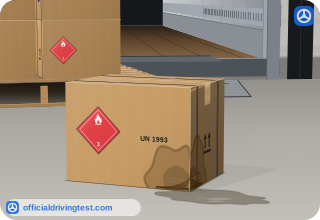
- Load it last and keep it near the door
- Refuse the leaking package
- Wrap it and continue the trip
Show answer
Correct answer: Refuse the leaking package
A driver does not accept leaking packages or shipments.
Source: CDL manual, national model as printed by New Jersey, Section 9 (July 2017)
-
When does the driver put placards on the vehicle, if they are required?
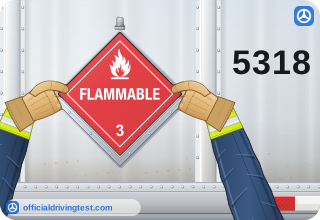
- At the first fuel stop
- While the vehicle is being loaded
- Once the vehicle reaches the destination
Show answer
Correct answer: While the vehicle is being loaded
Required placards go on during loading, before the vehicle leaves.
Source: CDL manual, national model as printed by New Jersey, Section 9 (July 2017)
-
How must a driver carry a hazmat shipment to its destination?
- Safely and without delay
- Stopping often to let the load settle
- Waiting for the shipper to approve each leg
Show answer
Correct answer: Safely and without delay
The driver moves the shipment safely and does not hold it up along the way.
Source: CDL manual, national model as printed by New Jersey, Section 9 (July 2017)
-
What must the driver keep in the proper place in the vehicle besides the shipping papers?
- The emergency response information
- The shipper's invoice copy for the load
- The load's weight ticket from the scale
Show answer
Correct answer: The emergency response information
Hazmat shipping papers and the emergency response information both have to be kept where the rules say.
Source: CDL manual, national model as printed by New Jersey, Section 9 (July 2017)
-
When is a driver responsible for reporting a hazmat accident to the proper government agency?
- Whenever it happens while the driver controls the load
- Any accident on the route, even far from the load
- Only if someone is injured in the accident
Show answer
Correct answer: Whenever it happens while the driver controls the load
The driver reports hazmat accidents and incidents that happen while the shipment is in the driver's physical control.
Source: CDL manual, national model as printed by New Jersey, Section 9 (July 2017)
-
Only in Arizona's manual
Where in federal law (Title 49, CFR) should a driver look for the full hazardous materials transport rules?
- Parts 1-99
- Parts 200-299
- Parts 100-185
Show answer
Correct answer: Parts 100-185
The complete federal rules for moving hazardous materials are in 49 CFR, Parts 100-185.
Source: CDL manual, national model as printed by New Jersey, Section 9 (July 2017)