Arkansas: Signals and vehicle controls
Turn signals, the horn, headlights and high beams, mirrors, brakes and the vehicle checks before the skills test. Split into 4 shorter tests so you're not stuck in one long quiz.
Independent educational site · not affiliated with any government agency or DMV
Choose a part
Signals and vehicle controls — Part 1
Questions in this part include: “The turning diagrams show when a driver should begin to signal and reduce speed before a turn. How far from the corner?”
StartSignals and vehicle controls — Part 2
Questions in this part include: “Is it legal in Arkansas to drive using only your parking lights?”
StartSignals and vehicle controls — Part 3
Questions in this part include: “What should you do with your turn signal after you have made a turn or lane change?”
StartSignals and vehicle controls — Part 4
Questions in this part include: “What does observing tire and vehicle load limits mean?”
StartAll 75 Signals and vehicle controls questions with answers
Choose a part above to take a practice test, or study every question and answer here.
Show the questions and answersHide the questions
-
The turning diagrams show when a driver should begin to signal and reduce speed before a turn. How far from the corner?
- At least 100 feet
- At least 25 feet
- At least 50 feet
- At least 300 feet
Show answer
Correct answer: At least 100 feet
Both turning diagrams say to begin the signal and reduce speed at least 100 feet from the corner.
Source: Arkansas Driver License Study Guide (Volume 1, Edition 10, October 2026), page 33 · Open this page in the manual (Manual page 33)
-
How should the gas pedal be pressed when accelerating?
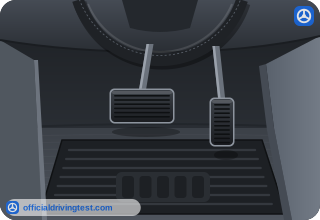
- Quickly and firmly
- Slowly and smoothly
- In short, repeated bursts
- All the way down at once
Show answer
Correct answer: Slowly and smoothly
The manual says acceleration should be pressed slowly and smoothly.
Source: Arkansas Driver License Study Guide (Volume 1, Edition 10, October 2026), page 44 · Open this page in the manual (Manual page 44)
-
What can pressing the gas pedal too fast cause, especially on wet pavement?
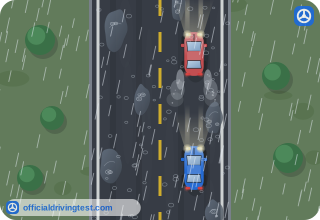
- The brakes to lock up and the vehicle to stop
- The engine to stall and the lights to dim
- The tires to wear out and the engine to overheat
- Drive wheels spinning or the vehicle sliding
Show answer
Correct answer: Drive wheels spinning or the vehicle sliding
The manual says depressing the gas pedal too fast can cause the drive wheels to spin or the vehicle to slide.
Source: Arkansas Driver License Study Guide (Volume 1, Edition 10, October 2026), page 44 · Open this page in the manual (Manual page 44)
-
Why do drivers with manual transmissions need practice with the clutch and accelerator?
- To avoid stalling or over-accelerating the engine
- To avoid wearing out the tires on sharp turns
- To keep the brakes from overheating on hills
- To stay within the speed limit on long trips
Show answer
Correct answer: To avoid stalling or over-accelerating the engine
The manual says manual-transmission drivers need practice to avoid stalling or over-accelerating the engine.
Source: Arkansas Driver License Study Guide (Volume 1, Edition 10, October 2026), page 44 · Open this page in the manual (Manual page 44)
-
Where should your hands be placed on the steering wheel?
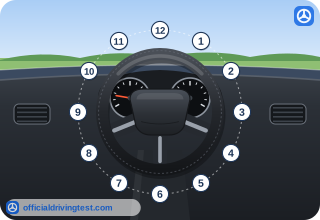
- Both together at the top of the wheel
- Both at the bottom of the wheel
- On opposite sides of the wheel
- One on the wheel and one on the gearshift
Show answer
Correct answer: On opposite sides of the wheel
The manual says hands on opposite sides of the wheel are more comfortable and let you turn without taking your hands off the wheel.
Source: Arkansas Driver License Study Guide (Volume 1, Edition 10, October 2026), page 44 · Open this page in the manual (Manual page 44)
-
Which technique should you use to steer through a sharp turn, such as around the corner of an intersection?
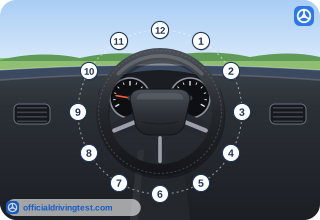
- Turning the wheel in the palm of one hand
- The hand-over-hand technique
- Holding the wheel with one hand at the top
- Letting the wheel slide through your hands
Show answer
Correct answer: The hand-over-hand technique
The manual says to use the "hand-over-hand" technique and not to turn the wheel in the palm of your hand.
Source: Arkansas Driver License Study Guide (Volume 1, Edition 10, October 2026), page 44 · Open this page in the manual (Manual page 44)
-
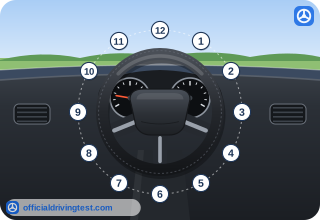
When you complete a turn, what should you do with the steering wheel?
- Hold it in place until the vehicle straightens itself
- Let go of it and let it spin back by itself
- Leave it turned until you reach the next intersection
- Return it to the position for the direction you are moving
Show answer
Correct answer: Return it to the position for the direction you are moving
The manual says to return the steering wheel to the appropriate position in the direction the vehicle should be moving.
Source: Arkansas Driver License Study Guide (Volume 1, Edition 10, October 2026), page 44 · Open this page in the manual (Manual page 44)
-
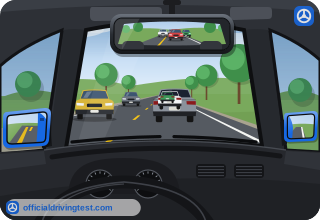
What does checking your mirrors help you see when you look behind you in heavy traffic?
- Only the vehicles that are in your blind spots
- The condition of the road surface behind you
- The lanes that are about to end ahead of you
- Vehicles approaching too fast or following too close
Show answer
Correct answer: Vehicles approaching too fast or following too close
The manual says checking mirrors lets you see rear traffic approaching too fast and vehicles following too close, giving you more time to react.
Source: Arkansas Driver License Study Guide (Volume 1, Edition 10, October 2026), page 49 · Open this page in the manual (Manual page 49)
-
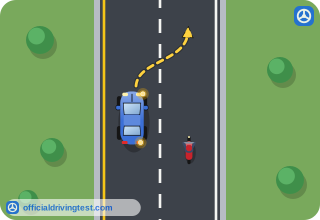
What should you use before making a lane change to be sure it is safe?
- Both mirrors and a look over your shoulder
- The rearview mirror alone, without looking back
- Only your turn signal and the side mirrors
- Your hazard flashers and the side mirrors
Show answer
Correct answer: Both mirrors and a look over your shoulder
The manual says to use the rearview mirror, side mirrors, and look over your shoulder before a lane change.
Source: Arkansas Driver License Study Guide (Volume 1, Edition 10, October 2026), page 49 · Open this page in the manual (Manual page 49)
-
Which of these is counted as a lane change in the manual?
- Staying in your lane while passing an exit
- Slowing down in your own lane
- Merging onto a roadway from an entrance ramp
- Turning your headlights on
Show answer
Correct answer: Merging onto a roadway from an entrance ramp
The manual defines a lane change as moving from one lane to another or merging onto a roadway from an entrance ramp, turn lane, or curb or shoulder entrance.
Source: Arkansas Driver License Study Guide (Volume 1, Edition 10, October 2026), page 49 · Open this page in the manual (Manual page 49)
-
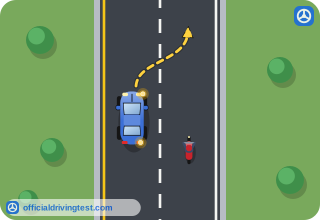
Why must you look over your shoulder in the direction you plan to move before changing lanes?
- Mirrors only show traffic far behind you
- Your signal does not warn drivers in the next lane
- It shows you whether the lane ahead is clear
- Mirrors do not show vehicles in your blind spots
Show answer
Correct answer: Mirrors do not show vehicles in your blind spots
The manual says the rearview and side mirrors will not show vehicles in your blind spots.
Source: Arkansas Driver License Study Guide (Volume 1, Edition 10, October 2026), page 49 · Open this page in the manual (Manual page 49)
-
How should you check your blind spot?
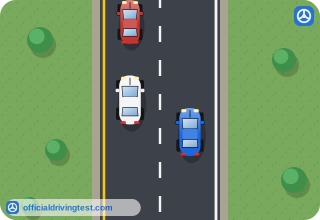
- Turn your head for a quick glance over your shoulder
- Turn your head fully and hold the look until it is clear
- Lean toward the side window and look slowly
- Look in the rearview mirror twice, then move over
Show answer
Correct answer: Turn your head for a quick glance over your shoulder
The manual says to quickly glance over your shoulder because traffic ahead could stop suddenly.
Source: Arkansas Driver License Study Guide (Volume 1, Edition 10, October 2026), page 49 · Open this page in the manual (Manual page 49)
-
What is a blind spot in a vehicle?
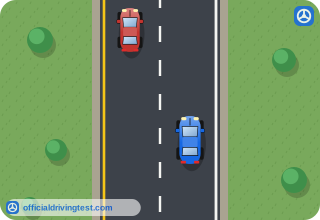
- An area directly in front of the hood lit by the headlights
- An area around the vehicle the driver cannot directly see
- The area on the road more than a quarter mile ahead
- A section of road hidden by fog or darkness
Show answer
Correct answer: An area around the vehicle the driver cannot directly see
The manual defines a blind spot as an area around the vehicle that cannot be directly observed by the driver while at the controls.
Source: Arkansas Driver License Study Guide (Volume 1, Edition 10, October 2026), page 50 · Open this page in the manual (Manual page 50)
-
Before you get into your vehicle to back up, what should you do?
- Adjust your mirrors for a better view of the rear
- Turn on the radio
- Check behind your vehicle
- Leave the door open
Show answer
Correct answer: Check behind your vehicle
The manual says to check behind your vehicle before you get in, because children or small objects cannot be seen from the driver's seat.
Source: Arkansas Driver License Study Guide (Volume 1, Edition 10, October 2026), page 50 · Open this page in the manual (Manual page 50)
-
When backing, how should you look behind you?
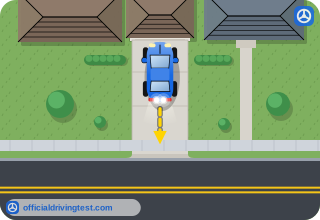
- Rely on your rearview and side mirrors alone
- Turn your body and look through the rear and side windows
- Keep your eyes on the left mirror while turning the wheel
- Look only through the rearview mirror and go slowly
Show answer
Correct answer: Turn your body and look through the rear and side windows
The manual says not to depend on mirrors, because you cannot see directly behind your vehicle.
Source: Arkansas Driver License Study Guide (Volume 1, Edition 10, October 2026), page 50 · Open this page in the manual (Manual page 50)
-
How fast should you back your vehicle?
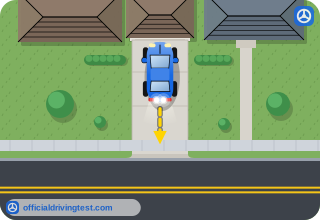
- Quickly, to clear the space sooner
- At the normal speed for the road
- At any speed that finishes in one move
- Slowly, since it is harder to steer
Show answer
Correct answer: Slowly, since it is harder to steer
The manual says to back slowly because your vehicle is much harder to steer while you are backing.
Source: Arkansas Driver License Study Guide (Volume 1, Edition 10, October 2026), page 50 · Open this page in the manual (Manual page 50)
-
Whenever possible, who should help you when backing?
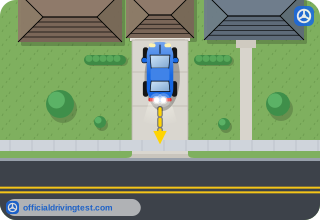
- A person outside the vehicle
- A passenger in the back seat
- A passenger who watches the mirrors
- Nobody; you should do it alone
Show answer
Correct answer: A person outside the vehicle
The manual says to use a person outside the vehicle to help you back whenever possible.
Source: Arkansas Driver License Study Guide (Volume 1, Edition 10, October 2026), page 50 · Open this page in the manual (Manual page 50)
-
According to the manual, when does Arkansas law require drivers to turn on their headlights?
- When windshield wipers are needed
- Only when driving after midnight
- Only on roads that have no streetlights
- Only when driving on a highway or freeway
Show answer
Correct answer: When windshield wipers are needed
Arkansas law requires drivers to turn on their headlights when windshield wipers are needed.
Source: Arkansas Driver License Study Guide (Volume 1, Edition 10, October 2026), page 51 · Open this page in the manual (Manual page 51)
-
When should you turn on your headlights in relation to sunset and sunrise?
- At the moment of sunset and at the moment of sunrise
- One hour after sunset and one hour before sunrise
- A half hour (30 minutes) after sunset and a half hour before sunrise
- Fifteen minutes after sunset and fifteen minutes before sunrise
Show answer
Correct answer: A half hour (30 minutes) after sunset and a half hour before sunrise
The manual says to turn headlights on a half hour after sunset and a half hour before sunrise.
Source: Arkansas Driver License Study Guide (Volume 1, Edition 10, October 2026), page 51 · Open this page in the manual (Manual page 51)
-
Besides the time around sunset and sunrise, you should turn on your headlights anytime you cannot see a person or object clearly within what distance?
- 100 feet
- 500 feet
- 200 feet
- 1,000 feet
Show answer
Correct answer: 500 feet
The manual says to use headlights anytime you cannot see a person or object clearly within 500 feet.
Source: Arkansas Driver License Study Guide (Volume 1, Edition 10, October 2026), page 51 · Open this page in the manual (Manual page 51)
-
Is it legal in Arkansas to drive using only your parking lights?
- Yes, but only in rain, snow or fog
- Yes, but only between dusk and dawn
- Yes, but only on roads with low speed limits
- No, parking lights are for parked cars
Show answer
Correct answer: No, parking lights are for parked cars
Parking lights are for parked cars, and it is illegal in Arkansas to drive using only parking lights.
Source: Arkansas Driver License Study Guide (Volume 1, Edition 10, October 2026), page 51 · Open this page in the manual (Manual page 51)
-
When should you use your high-beam headlights?
- Whenever there are no oncoming vehicles
- Whenever you are following another vehicle closely
- When driving in fog, snow or heavy rain
- Only on roads that are well lit
Show answer
Correct answer: Whenever there are no oncoming vehicles
The manual says to use high beams whenever there are no oncoming vehicles.
Source: Arkansas Driver License Study Guide (Volume 1, Edition 10, October 2026), page 51 · Open this page in the manual (Manual page 51)
-
How far can you see with high beams compared with low beams?
- Half again as far
- Three times as far
- Twice as far
- The same distance
Show answer
Correct answer: Twice as far
The manual says high beams let you see twice as far as low beams.
Source: Arkansas Driver License Study Guide (Volume 1, Edition 10, October 2026), page 51 · Open this page in the manual (Manual page 51)
-
You should dim your high beams whenever you come within what distance of an oncoming vehicle?
- 100 feet
- 500 feet
- 200 feet
- 1,000 feet
Show answer
Correct answer: 500 feet
The manual says to dim high beams within 500 feet of an oncoming vehicle.
Source: Arkansas Driver License Study Guide (Volume 1, Edition 10, October 2026), page 51 · Open this page in the manual (Manual page 51)
-
You should use your low-beam headlights when following another vehicle closer than what distance?
- 100 feet
- 500 feet
- 1,000 feet
- 200 feet
Show answer
Correct answer: 200 feet
The manual says to use low beams when following another vehicle closer than 200 feet.
Source: Arkansas Driver License Study Guide (Volume 1, Edition 10, October 2026), page 51 · Open this page in the manual (Manual page 51)
-
Why should you use your low headlight beams when driving in fog, snow or heavy rain?
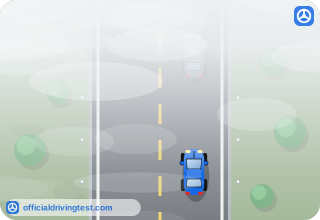
- Light from high beams reflects and causes glare, making it harder to see the road
- High beams use more fuel and wear out the bulbs when the road is wet
- High beams make other drivers think you are about to stop suddenly
- High beams cannot be seen by oncoming drivers in bad weather
Show answer
Correct answer: Light from high beams reflects and causes glare, making it harder to see the road
In fog, snow or heavy rain, high-beam light reflects and causes glare, which makes the road harder to see.
Source: Arkansas Driver License Study Guide (Volume 1, Edition 10, October 2026), page 51 · Open this page in the manual (Manual page 51)
-
What does the manual say you can do with your headlights to alert other drivers if needed?
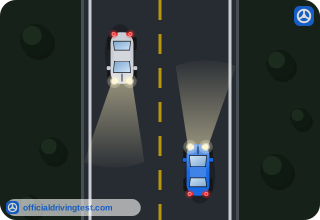
- Switch to your parking lights
- Leave your high beams on continuously
- Flick your headlight
- Turn your headlights off for a few seconds
Show answer
Correct answer: Flick your headlight
The manual says to flick your headlight to alert other drivers if needed.
Source: Arkansas Driver License Study Guide (Volume 1, Edition 10, October 2026), page 51 · Open this page in the manual (Manual page 51)
-
What should the horn be used to alert other drivers of?
- A mistake that another driver has made
- A dangerous situation, such as an accident
- A friend or acquaintance on the road
- A slow vehicle that is blocking traffic
Show answer
Correct answer: A dangerous situation, such as an accident
The horn should be used to alert other drivers of a dangerous situation such as an accident.
Source: Arkansas Driver License Study Guide (Volume 1, Edition 10, October 2026), page 52 · Open this page in the manual (Manual page 52)
-
In which situation should you sound your vehicle horn?
- You want to greet a friend you see on the road
- Another driver has made a mistake and you want to tell them
- Traffic ahead is slow to speed up when the light turns green
- A pedestrian or cyclist appears to be moving into your lane
Show answer
Correct answer: A pedestrian or cyclist appears to be moving into your lane
The manual says to sound the horn when a person on foot or on a bike appears to be moving into your lane of travel.
Source: Arkansas Driver License Study Guide (Volume 1, Edition 10, October 2026), page 52 · Open this page in the manual (Manual page 52)
-
In which situation should you sound your vehicle horn?
- Approaching a sharp curve where you cannot see ahead
- Following a vehicle that is traveling slower than you would like
- Approaching a pedestrian who is blind
- Stopped at a red light behind another vehicle
Show answer
Correct answer: Approaching a sharp curve where you cannot see ahead
The manual lists approaching a location where you cannot see what is ahead, such as a steep hill, a sharp curve or a narrow valley exit, as a time to sound the horn.
Source: Arkansas Driver License Study Guide (Volume 1, Edition 10, October 2026), page 52 · Open this page in the manual (Manual page 52)
-
When should you sound a sharp blast on your horn?
- When a driver ahead is slow to move at a green light
- When you want other drivers to know they made a mistake
- When a child or older person is about to walk into the street
- When you are passing a driver who is driving the speed limit
Show answer
Correct answer: When a child or older person is about to walk into the street
The manual says to sound a sharp blast when a child or older person is about to walk, run or ride into the street.
Source: Arkansas Driver License Study Guide (Volume 1, Edition 10, October 2026), page 52 · Open this page in the manual (Manual page 52)
-
When should you sound a sharp blast on your horn?
- When you are waiting for a pedestrian to cross
- When another car is in danger of hitting you
- When you need to tell a driver to speed up
- When you are parking in a crowded lot
Show answer
Correct answer: When another car is in danger of hitting you
The manual lists another car being in danger of hitting you as a time for a sharp blast of the horn.
Source: Arkansas Driver License Study Guide (Volume 1, Edition 10, October 2026), page 52 · Open this page in the manual (Manual page 52)
-
For which purpose should you NOT use your horn?
- To warn a driver who does not see you
- To warn a person moving into your lane of travel
- To warn a driver who starts to turn into your lane while you pass
- To encourage other vehicles to speed up
Show answer
Correct answer: To encourage other vehicles to speed up
The manual says not to use the horn to encourage other vehicles to speed up.
Source: Arkansas Driver License Study Guide (Volume 1, Edition 10, October 2026), page 52 · Open this page in the manual (Manual page 52)
-
For which purpose should you NOT use your horn?
- To greet a friend on the road
- To warn of danger when you cannot see around a sharp curve
- To alert a driver who is not paying attention
- To warn when you lose control and are moving toward oncoming traffic
Show answer
Correct answer: To greet a friend on the road
The manual lists greeting a friend on the road among the things you should not use the horn for.
Source: Arkansas Driver License Study Guide (Volume 1, Edition 10, October 2026), page 52 · Open this page in the manual (Manual page 52)
-
How far before a lane change, a right turn or a left turn should turn signals be used?
- 25 feet
- 300 feet
- 500 feet
- 100 feet
Show answer
Correct answer: 100 feet
The manual says turn signals should be used 100 feet before a lane change or turn.
Source: Arkansas Driver License Study Guide (Volume 1, Edition 10, October 2026), page 53 · Open this page in the manual (Manual page 53)
-
Besides lane changes and turns, when should turn signals be used?
- Each time you merge into traffic or park
- Only when another vehicle is close behind you
- Only on roads with more than two lanes
- Only when you are slowing down to stop at a red light
Show answer
Correct answer: Each time you merge into traffic or park
The manual says to use turn signals each time you merge into traffic or park.
Source: Arkansas Driver License Study Guide (Volume 1, Edition 10, October 2026), page 53 · Open this page in the manual (Manual page 53)
-
You plan to turn beyond an intersection. When should you start your turn signal?
- Before you reach the intersection
- Right at the middle of the intersection
- Just after you pass through the intersection
- Only after you have started the turn
Show answer
Correct answer: Just after you pass through the intersection
If you signal earlier, another driver may think you are turning at the intersection.
Source: Arkansas Driver License Study Guide (Volume 1, Edition 10, October 2026), page 53 · Open this page in the manual (Manual page 53)
-
Another vehicle is about to enter the street between you and the place where you plan to turn. What should you do?
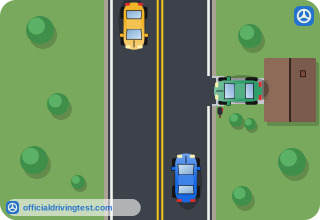
- Signal immediately and keep your speed
- Wait until you have passed it to signal your turn
- Sound your horn and then signal
- Turn on your hazard lights instead of your turn signal
Show answer
Correct answer: Wait until you have passed it to signal your turn
The manual says to wait until you have passed the vehicle before signaling your turn.
Source: Arkansas Driver License Study Guide (Volume 1, Edition 10, October 2026), page 53 · Open this page in the manual (Manual page 53)
-
What should you do with your turn signal after you have made a turn or lane change?
- Leave it on until you reach your destination
- Leave it on for one more block
- Turn it off only if another vehicle is following
- Turn it off, because a false turn signal is unsafe
Show answer
Correct answer: Turn it off, because a false turn signal is unsafe
The manual says to turn the signal off after a turn or lane change because a false turn signal is unsafe.
Source: Arkansas Driver License Study Guide (Volume 1, Edition 10, October 2026), page 53 · Open this page in the manual (Manual page 53)
-
When should you signal before changing lanes or merging with traffic?
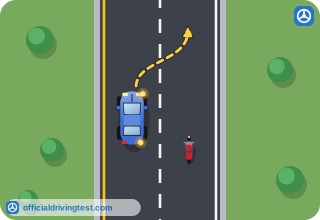
- Always, even if you don't see cars or motorcycles
- Only when you see another car or truck nearby
- Only when a motorcycle is visible in your mirror
- Only on roads that have more than two lanes
Show answer
Correct answer: Always, even if you don't see cars or motorcycles
The manual says to always signal before changing lanes or merging, even if you don't see cars or motorcycles.
Source: Arkansas Driver License Study Guide (Volume 1, Edition 10, October 2026), page 70 · Open this page in the manual (Manual page 70)
-
How far from your driver airbag does the manual say you should place yourself to have a clear margin of safety?
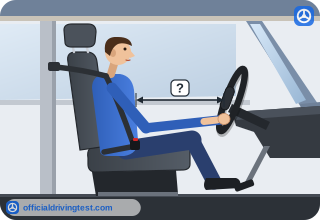
- 10 inches
- 6 inches
- 15 inches
- 20 inches
Show answer
Correct answer: 10 inches
The risk zone is the first 2-3 inches of inflation, so sitting 10 inches away gives a clear margin of safety.
Source: Arkansas Driver License Study Guide (Volume 1, Edition 10, October 2026), page 82 · Open this page in the manual (Manual page 82)
-
What is the risk zone for driver airbags, according to the manual?
- The first 10 inches of inflation
- The last 2-3 inches of inflation
- The first 2-3 inches of inflation
- The first 6 inches of inflation
Show answer
Correct answer: The first 2-3 inches of inflation
The manual states the risk zone is the first 2-3 inches of inflation.
Source: Arkansas Driver License Study Guide (Volume 1, Edition 10, October 2026), page 82 · Open this page in the manual (Manual page 82)
-
Between which two points is your distance from the driver airbag measured?
- From the top of the steering wheel to your chin
- From the center of the steering wheel to your breastbone
- From the edge of the steering wheel to your knees
- From the dashboard to your shoulder
Show answer
Correct answer: From the center of the steering wheel to your breastbone
The manual says the distance is measured from the center of the steering wheel to your breastbone.
Source: Arkansas Driver License Study Guide (Volume 1, Edition 10, October 2026), page 82 · Open this page in the manual (Manual page 82)
-
How should mirrors be adjusted, according to the manual?
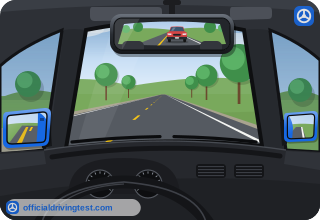
- So they show the exact position and speed of other vehicles ahead
- So they can fully replace checking over your shoulder when changing lanes
- So they show only the lane directly behind you at all times
- So they detect objects, not the position of other vehicles
Show answer
Correct answer: So they detect objects, not the position of other vehicles
The manual says mirrors should be adjusted to detect objects and not for determining the position of other vehicles.
Source: Arkansas Driver License Study Guide (Volume 1, Edition 10, October 2026), page 82 · Open this page in the manual (Manual page 82)
-
When should you adjust your rearview and side mirrors?
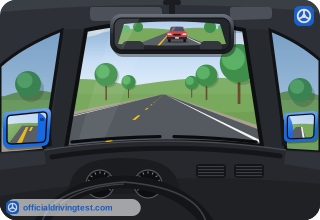
- Before you start driving
- After you reach highway speed
- Only when you change lanes
- Once a week
Show answer
Correct answer: Before you start driving
The manual says to adjust your rearview and side mirrors before you start driving.
Source: Arkansas Driver License Study Guide (Volume 1, Edition 10, October 2026), page 82 · Open this page in the manual (Manual page 82)
-
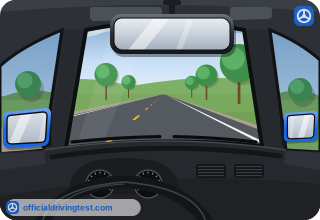
How should the inside mirror be adjusted?
- So you can see the left side window and need to turn your head slightly
- So you can see only the center of the road behind you
- So you can see the entire rear window and only need to move your eyes, not your head
- So you can see the passenger seat and the back seat
Show answer
Correct answer: So you can see the entire rear window and only need to move your eyes, not your head
The inside mirror should show the entire rear window from the driver's seat, so only your eyes move.
Source: Arkansas Driver License Study Guide (Volume 1, Edition 10, October 2026), page 82 · Open this page in the manual (Manual page 82)
-
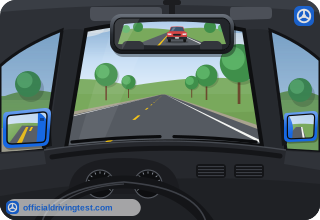
What may drivers 6 feet tall or taller find helpful with the inside mirror, if possible?
- Removing the mirror
- Repositioning the mirror upside down
- Tilting the mirror toward the roof
- Replacing the mirror with a larger one
Show answer
Correct answer: Repositioning the mirror upside down
Turning the mirror upside down usually raises its bottom edge 1 to 2 inches and reduces a major blind area to the front.
Source: Arkansas Driver License Study Guide (Volume 1, Edition 10, October 2026), page 82 · Open this page in the manual (Manual page 82)
-
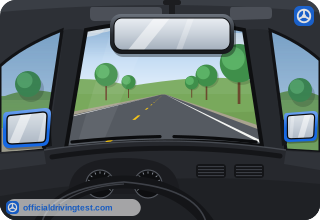
How do you adjust the driver's side-view mirror?
- Sit upright and set the mirror so you cannot see any part of your own car at all
- Position your head above the center console and set the mirror to show the left side of the car
- Set the mirror so that the side of your car fills the whole mirror when you look at it
- Head against the left side window; just barely see the side of your car on the mirror's right side
Show answer
Correct answer: Head against the left side window; just barely see the side of your car on the mirror's right side
The manual describes placing your head against the left side window and just barely seeing the side of the car on the mirror's right side.
Source: Arkansas Driver License Study Guide (Volume 1, Edition 10, October 2026), page 82 · Open this page in the manual (Manual page 82)
-
How do you adjust the passenger's side-view mirror?
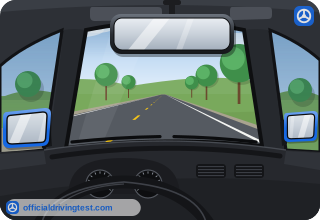
- Head just above the center console; just barely see the side of your car on the mirror's left side
- Place your head against the right side window and set the mirror to show the whole side of the car
- Sit upright and set the mirror so that you cannot see any part of your own car at all
- Position your head above the center console and set the mirror so you cannot see your car at all
Show answer
Correct answer: Head just above the center console; just barely see the side of your car on the mirror's left side
The manual describes positioning your head just above the center console and just barely seeing the side of the car on the mirror's left side.
Source: Arkansas Driver License Study Guide (Volume 1, Edition 10, October 2026), page 82 · Open this page in the manual (Manual page 82)
-
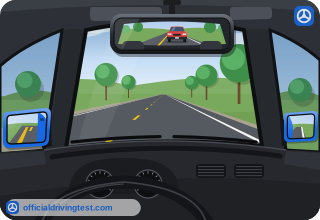
Why should you not hang items from your mirror or clutter the windshield with decals?
- They could damage the windshield glass
- They could prevent the airbag from working
- They could block a portion of your view
- They could make the mirror vibrate
Show answer
Correct answer: They could block a portion of your view
The manual says these items could block a portion of your view.
Source: Arkansas Driver License Study Guide (Volume 1, Edition 10, October 2026), page 83 · Open this page in the manual (Manual page 83)
-
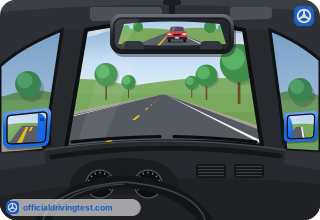
What does the manual say to do with a missing or damaged mirror that obstructs your view?
- Cover it with tape
- Replace it
- Ignore it if the other mirrors work
- Adjust it toward the road
Show answer
Correct answer: Replace it
Any missing or damaged mirror that obstructs your view should be replaced.
Source: Arkansas Driver License Study Guide (Volume 1, Edition 10, October 2026), page 83 · Open this page in the manual (Manual page 83)
-
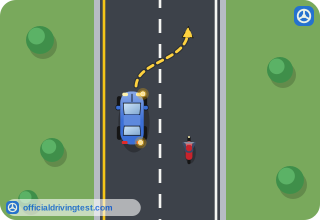
How should you properly check your blind spots?
- Look only in the side-view mirror on the side you are moving toward
- Look only in the rearview mirror and then in the side mirror
- Lean toward the center console and look straight ahead
- Glance over your shoulder in the direction the vehicle is moving
Show answer
Correct answer: Glance over your shoulder in the direction the vehicle is moving
Mirrors do not display objects in blind spots, so you glance over your shoulder in the direction you are moving.
Source: Arkansas Driver License Study Guide (Volume 1, Edition 10, October 2026), page 83 · Open this page in the manual (Manual page 83)
-
If you suspect problems with your brakes, what does the manual say you should do?
- Take your vehicle to a licensed mechanic for an inspection
- Wait to see whether the problem gets worse over time
- Pump the brake pedal until the problem stops
- Drive slowly until the noise goes away
Show answer
Correct answer: Take your vehicle to a licensed mechanic for an inspection
The manual says to take the vehicle to a licensed mechanic for an inspection.
Source: Arkansas Driver License Study Guide (Volume 1, Edition 10, October 2026), page 83 · Open this page in the manual (Manual page 83)
-
Which of these is listed in the manual as an indicator of a potential brake issue?
- Headlights dimming when you brake
- A weak sound from the horn
- A foul smell during heavy braking
- A bright glow from the tires
Show answer
Correct answer: A foul smell during heavy braking
The manual lists a noise from underneath the vehicle, a foul smell during heavy braking, and little or no braking action when pressing the pedal.
Source: Arkansas Driver License Study Guide (Volume 1, Edition 10, October 2026), page 83 · Open this page in the manual (Manual page 83)
-
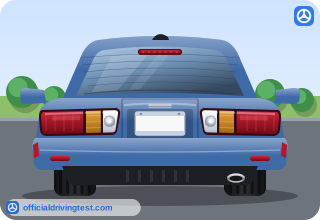
How do you check your vehicle's lights, according to the manual?
- Look at the dashboard warning lights only, without leaving the seat
- Turn them on from inside, then step outside and look for non-working lights
- Drive at night and watch for reflections of the lights on the road ahead
- Take the vehicle to a mechanic every time you need to check the lights
Show answer
Correct answer: Turn them on from inside, then step outside and look for non-working lights
The manual says to turn the lights on from inside, then step outside and look for any that do not work.
Source: Arkansas Driver License Study Guide (Volume 1, Edition 10, October 2026), page 83 · Open this page in the manual (Manual page 83)
-
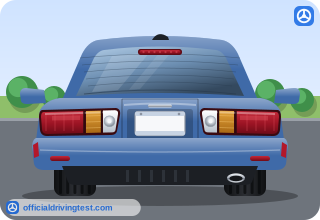
What do you need to inspect your brake lights?
- A second mirror placed behind the vehicle so you can see the brake lights
- A flashlight to shine on the brake pedal while you sit in the driver's seat
- Nothing, because the dashboard always shows whether the brake lights work
- A partner to press the brake while you check the rear for red lights on each side
Show answer
Correct answer: A partner to press the brake while you check the rear for red lights on each side
You need a partner to press the brake while you check for red lights on each side at the rear.
Source: Arkansas Driver License Study Guide (Volume 1, Edition 10, October 2026), page 83 · Open this page in the manual (Manual page 83)
-
When should you replace or repair a damaged windshield?
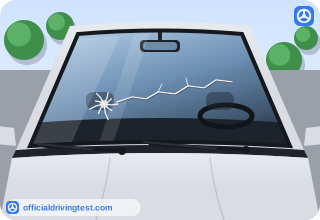
- As soon as possible
- Only when it fails an inspection
- Only after it has more than one crack
- Once a year
Show answer
Correct answer: As soon as possible
Damaged glass can break more easily in a minor collision or when an object hits the windshield.
Source: Arkansas Driver License Study Guide (Volume 1, Edition 10, October 2026), page 83 · Open this page in the manual (Manual page 83)
-
How often should wiper blades be replaced, according to the manual?
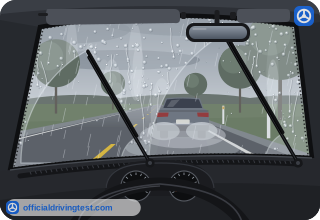
- Every two to three years, whatever the visibility
- Every five years, or when the wipers stop moving
- Every six months to a year, or when visibility changes
- Only after the wipers stop working completely
Show answer
Correct answer: Every six months to a year, or when visibility changes
The manual says to replace wiper blades every six months to a year or when visibility changes.
Source: Arkansas Driver License Study Guide (Volume 1, Edition 10, October 2026), page 83 · Open this page in the manual (Manual page 83)
-
Under the manual's windshield guide, a vehicle should be rejected if it lacks safety glass in all doors, windows and windshields after which date?
- January 1, 1951
- July 1, 1951
- July 1, 1971
- January 1, 1981
Show answer
Correct answer: July 1, 1951
The reject rule applies to a vehicle not equipped with safety glass in all doors, windows and windshields after July 1, 1951.
Source: Arkansas Driver License Study Guide (Volume 1, Edition 10, October 2026), page 83 · Open this page in the manual (Manual page 83)
-
Under the manual's windshield guide, a windshield should be rejected if how many cracks or visual impairments are present in an 8-inch-wide area through the center under the driver's side wiper area?
- More than three
- More than five
- Any chip, even a very small one
- More than one
Show answer
Correct answer: More than one
The guide rejects a windshield with more than one crack or other visual impairment in that eight-inch-wide area.
Source: Arkansas Driver License Study Guide (Volume 1, Edition 10, October 2026), page 83 · Open this page in the manual (Manual page 83)
-
Under the manual's inspection guide, when should glass in the windshield, side or rear windows be rejected?
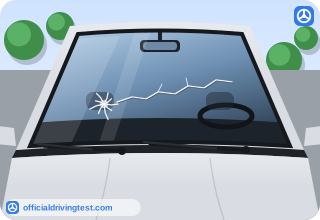
- When damage obscures the driver's view to the front left, right or rear
- When it has any scratch on its surface, however small or shallow
- When it has any tint at all, even if the driver's view is clear
- When it is more than five years old, whatever its condition
Show answer
Correct answer: When damage obscures the driver's view to the front left, right or rear
The guide rejects glass damaged to the extent that the driver's view to the front left, right or rear is obscured.
Source: Arkansas Driver License Study Guide (Volume 1, Edition 10, October 2026), page 83 · Open this page in the manual (Manual page 83)
-
What does the manual mean by a "cold" tire when checking tire pressure?
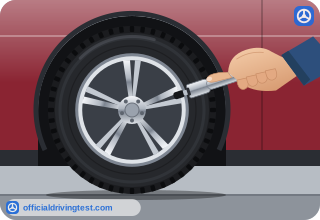
- A tire that has been parked in below-freezing weather
- A tire that has not been driven on for at least 30 minutes
- A tire that has not been driven on for at least three hours
- A tire whose outside surface feels cool to the touch
Show answer
Correct answer: A tire that has not been driven on for at least three hours
The term cold does not relate to outside temperature; a cold tire has not been driven on for at least three hours.
Source: Arkansas Driver License Study Guide (Volume 1, Edition 10, October 2026), page 84 · Open this page in the manual (Manual page 84)
-
Why should you measure tire pressure when the tires are cold?
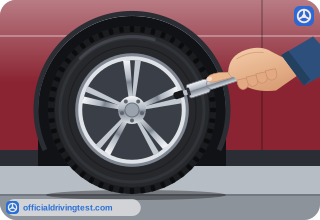
- Driving lowers the air pressure inside the tires
- Driving warms the tires and raises the pressure inside
- Cold tires hold more air than warm tires
- Warm tires cannot be measured with a gauge
Show answer
Correct answer: Driving warms the tires and raises the pressure inside
The manufacturer's recommended pressure reflects a cold tire, and driving makes the pressure increase, so you measure cold or compensate.
Source: Arkansas Driver License Study Guide (Volume 1, Edition 10, October 2026), page 84 · Open this page in the manual (Manual page 84)
-
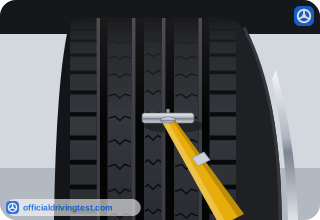
According to the manual, tires are in general not safe and should be replaced when the tread is worn down to how much?
- 1/4 of an inch
- 1/8 of an inch
- 1/2 of an inch
- 1/16 of an inch
Show answer
Correct answer: 1/16 of an inch
The manual states tires should be replaced when the tread is worn down to 1/16 of an inch.
Source: Arkansas Driver License Study Guide (Volume 1, Edition 10, October 2026), page 84 · Open this page in the manual (Manual page 84)
-
When you place a penny in the tread with Lincoln's head upside down and facing you, what does it mean if you can see the top of Lincoln's head?
- You are ready for new tires
- The tires are safe for another year
- The tire pressure is too low
- The tires are balanced correctly
Show answer
Correct answer: You are ready for new tires
The manual says that if you can see the top of Lincoln's head, you are ready for new tires.
Source: Arkansas Driver License Study Guide (Volume 1, Edition 10, October 2026), page 84 · Open this page in the manual (Manual page 84)
-
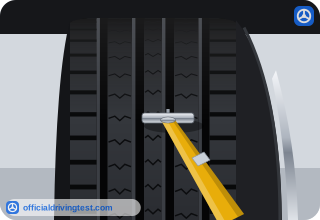
What does tire tread provide, especially when the road is wet or icy?
- A quieter ride and better fuel economy for the vehicle
- Extra air pressure for the tire
- Gripping action and traction that prevent slipping or sliding
- Protection from cuts and slashes
Show answer
Correct answer: Gripping action and traction that prevent slipping or sliding
The tread gives gripping action and traction that prevent slipping or sliding.
Source: Arkansas Driver License Study Guide (Volume 1, Edition 10, October 2026), page 84 · Open this page in the manual (Manual page 84)
-
What does observing tire and vehicle load limits mean?
- Not driving faster than the speed rating printed on the tires
- Not carrying more weight than the tires or vehicle can safely handle
- Not parking on soft ground
- Not filling the tires above 30 psi
Show answer
Correct answer: Not carrying more weight than the tires or vehicle can safely handle
The manual explains load limits as not carrying more weight than your tires or vehicle can safely handle.
Source: Arkansas Driver License Study Guide (Volume 1, Edition 10, October 2026), page 84 · Open this page in the manual (Manual page 84)
-
A steering system that does not move when the steering wheel is first turned may need what?
- To be driven for several miles to warm up
- To have the tire pressure lowered
- To be left alone until it gets worse
- To be checked by a mechanic
Show answer
Correct answer: To be checked by a mechanic
The manual says such a steering system may need to be checked by a mechanic.
Source: Arkansas Driver License Study Guide (Volume 1, Edition 10, October 2026), page 84 · Open this page in the manual (Manual page 84)
-
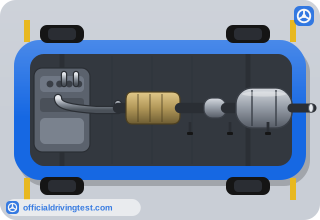
Which of these is a job of the exhaust system, according to the manual?
- Removing toxic gases from the engine
- Supplying fresh air to the cabin
- Charging the battery
- Cooling the brake fluid
Show answer
Correct answer: Removing toxic gases from the engine
The manual says the exhaust system removes toxic gases, aids in reducing engine noise and helps cool the hot gases.
Source: Arkansas Driver License Study Guide (Volume 1, Edition 10, October 2026), page 84 · Open this page in the manual (Manual page 84)
-
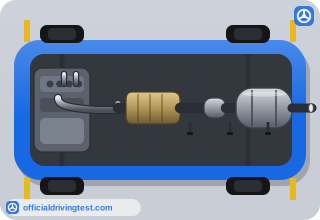
What can fumes from a leaky exhaust cause?
- Only a bad smell inside the vehicle
- Damage to the tires
- Death in a very short time
- A weaker horn
Show answer
Correct answer: Death in a very short time
The manual warns that fumes from a leaky exhaust can cause death in a very short time.
Source: Arkansas Driver License Study Guide (Volume 1, Edition 10, October 2026), page 84 · Open this page in the manual (Manual page 84)
-
What should you never allow the engine to do in your garage or an enclosed area without an open window?
- Cool down
- Idle
- Be turned off
- Be washed
Show answer
Correct answer: Idle
Fumes from a leaky exhaust can cause death in a very short time, so never let the engine idle in a garage or enclosed area without an open window.
Source: Arkansas Driver License Study Guide (Volume 1, Edition 10, October 2026), page 84 · Open this page in the manual (Manual page 84)
-
What does the manual suggest doing occasionally during the winter to reduce the risk of toxic exhaust fumes entering the moving vehicle?
- Keep all windows closed and the heater on high
- Idle the engine for several minutes before driving
- Turn off the heater
- Open a window to let fresh air fill the cabin
Show answer
Correct answer: Open a window to let fresh air fill the cabin
The manual says it is a good idea to occasionally open a window and allow fresh air into the cabin.
Source: Arkansas Driver License Study Guide (Volume 1, Edition 10, October 2026), page 84 · Open this page in the manual (Manual page 84)
-
What should you always make sure of before starting the engine?
- That your parking brake is set
- That your seat belt is unbuckled
- That your headlights are on
- That the radio is turned off
Show answer
Correct answer: That your parking brake is set
The manual says to always make sure the parking brake is set before starting the engine.
Source: Arkansas Driver License Study Guide (Volume 1, Edition 10, October 2026), page 84 · Open this page in the manual (Manual page 84)
-
What does the manual say you should use to become familiar with your vehicle's basic operations?
- A friend's advice
- An internet video
- The Owner's Manual
- The examiner's checklist
Show answer
Correct answer: The Owner's Manual
The manual says to use the Owner's Manual to become familiar with basic operations.
Source: Arkansas Driver License Study Guide (Volume 1, Edition 10, October 2026), page 84 · Open this page in the manual (Manual page 84)
-
Why is the horn described as an important safety device?
- It tells police where you are
- It warns other drivers and could save your life
- It shows other drivers your speed
- It lets you pass vehicles without signaling
Show answer
Correct answer: It warns other drivers and could save your life
The manual says the horn warns other drivers and should always be in working condition.
Source: Arkansas Driver License Study Guide (Volume 1, Edition 10, October 2026), page 84 · Open this page in the manual (Manual page 84)