Arkansas: Signals and vehicle controls — Part 3 Practice Test
Questions in this part include: “What should you do with your turn signal after you have made a turn or lane change?” · “If you suspect problems with your brakes, what does the manual say you should do?”
Independent educational site · not affiliated with any government agency or DMV
Ready? Test yourself
- Instant feedback with an explanation
- Every answer cites its source in the manual
- Your best score is saved on this device
Questions are original and based on the official manual "Arkansas Driver License Study Guide" (Volume 1, Edition 10, October 2026), Arkansas State Police (ASP).
All 19 questions in this practice test
Take the test above first, then use this list to study. Tap “Show answer” to see the correct answer and explanation.
Show the questions and answersHide the questions
-
What should you do with your turn signal after you have made a turn or lane change?
- Leave it on until you reach your destination
- Leave it on for one more block
- Turn it off only if another vehicle is following
- Turn it off, because a false turn signal is unsafe
Show answer
Correct answer: Turn it off, because a false turn signal is unsafe
The manual says to turn the signal off after a turn or lane change because a false turn signal is unsafe.
Source: Arkansas Driver License Study Guide (Volume 1, Edition 10, October 2026), page 53 · Open this page in the manual (Manual page 53)
-
When should you signal before changing lanes or merging with traffic?
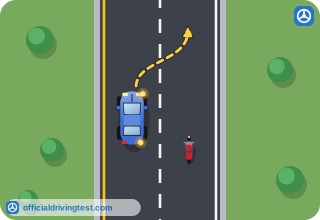
- Always, even if you don't see cars or motorcycles
- Only when you see another car or truck nearby
- Only when a motorcycle is visible in your mirror
- Only on roads that have more than two lanes
Show answer
Correct answer: Always, even if you don't see cars or motorcycles
The manual says to always signal before changing lanes or merging, even if you don't see cars or motorcycles.
Source: Arkansas Driver License Study Guide (Volume 1, Edition 10, October 2026), page 70 · Open this page in the manual (Manual page 70)
-
How far from your driver airbag does the manual say you should place yourself to have a clear margin of safety?
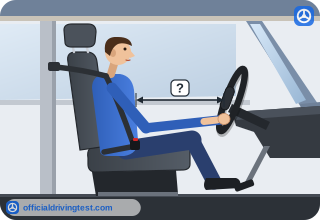
- 10 inches
- 6 inches
- 15 inches
- 20 inches
Show answer
Correct answer: 10 inches
The risk zone is the first 2-3 inches of inflation, so sitting 10 inches away gives a clear margin of safety.
Source: Arkansas Driver License Study Guide (Volume 1, Edition 10, October 2026), page 82 · Open this page in the manual (Manual page 82)
-
What is the risk zone for driver airbags, according to the manual?
- The first 10 inches of inflation
- The last 2-3 inches of inflation
- The first 2-3 inches of inflation
- The first 6 inches of inflation
Show answer
Correct answer: The first 2-3 inches of inflation
The manual states the risk zone is the first 2-3 inches of inflation.
Source: Arkansas Driver License Study Guide (Volume 1, Edition 10, October 2026), page 82 · Open this page in the manual (Manual page 82)
-
Between which two points is your distance from the driver airbag measured?
- From the top of the steering wheel to your chin
- From the center of the steering wheel to your breastbone
- From the edge of the steering wheel to your knees
- From the dashboard to your shoulder
Show answer
Correct answer: From the center of the steering wheel to your breastbone
The manual says the distance is measured from the center of the steering wheel to your breastbone.
Source: Arkansas Driver License Study Guide (Volume 1, Edition 10, October 2026), page 82 · Open this page in the manual (Manual page 82)
-
How should mirrors be adjusted, according to the manual?
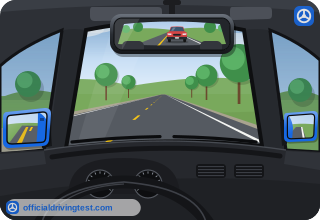
- So they show the exact position and speed of other vehicles ahead
- So they can fully replace checking over your shoulder when changing lanes
- So they show only the lane directly behind you at all times
- So they detect objects, not the position of other vehicles
Show answer
Correct answer: So they detect objects, not the position of other vehicles
The manual says mirrors should be adjusted to detect objects and not for determining the position of other vehicles.
Source: Arkansas Driver License Study Guide (Volume 1, Edition 10, October 2026), page 82 · Open this page in the manual (Manual page 82)
-
When should you adjust your rearview and side mirrors?
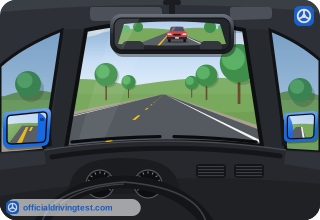
- Before you start driving
- After you reach highway speed
- Only when you change lanes
- Once a week
Show answer
Correct answer: Before you start driving
The manual says to adjust your rearview and side mirrors before you start driving.
Source: Arkansas Driver License Study Guide (Volume 1, Edition 10, October 2026), page 82 · Open this page in the manual (Manual page 82)
-
How should the inside mirror be adjusted?
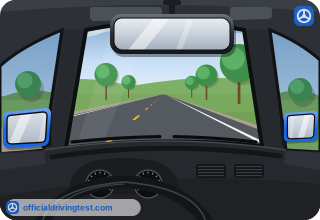
- So you can see the left side window and need to turn your head slightly
- So you can see only the center of the road behind you
- So you can see the entire rear window and only need to move your eyes, not your head
- So you can see the passenger seat and the back seat
Show answer
Correct answer: So you can see the entire rear window and only need to move your eyes, not your head
The inside mirror should show the entire rear window from the driver's seat, so only your eyes move.
Source: Arkansas Driver License Study Guide (Volume 1, Edition 10, October 2026), page 82 · Open this page in the manual (Manual page 82)
-
What may drivers 6 feet tall or taller find helpful with the inside mirror, if possible?
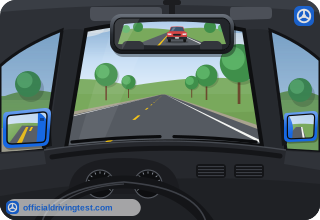
- Removing the mirror
- Repositioning the mirror upside down
- Tilting the mirror toward the roof
- Replacing the mirror with a larger one
Show answer
Correct answer: Repositioning the mirror upside down
Turning the mirror upside down usually raises its bottom edge 1 to 2 inches and reduces a major blind area to the front.
Source: Arkansas Driver License Study Guide (Volume 1, Edition 10, October 2026), page 82 · Open this page in the manual (Manual page 82)
-
How do you adjust the driver's side-view mirror?
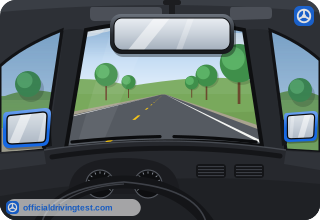
- Sit upright and set the mirror so you cannot see any part of your own car at all
- Position your head above the center console and set the mirror to show the left side of the car
- Set the mirror so that the side of your car fills the whole mirror when you look at it
- Head against the left side window; just barely see the side of your car on the mirror's right side
Show answer
Correct answer: Head against the left side window; just barely see the side of your car on the mirror's right side
The manual describes placing your head against the left side window and just barely seeing the side of the car on the mirror's right side.
Source: Arkansas Driver License Study Guide (Volume 1, Edition 10, October 2026), page 82 · Open this page in the manual (Manual page 82)
-
How do you adjust the passenger's side-view mirror?
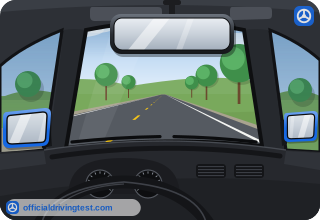
- Head just above the center console; just barely see the side of your car on the mirror's left side
- Place your head against the right side window and set the mirror to show the whole side of the car
- Sit upright and set the mirror so that you cannot see any part of your own car at all
- Position your head above the center console and set the mirror so you cannot see your car at all
Show answer
Correct answer: Head just above the center console; just barely see the side of your car on the mirror's left side
The manual describes positioning your head just above the center console and just barely seeing the side of the car on the mirror's left side.
Source: Arkansas Driver License Study Guide (Volume 1, Edition 10, October 2026), page 82 · Open this page in the manual (Manual page 82)
-
Why should you not hang items from your mirror or clutter the windshield with decals?
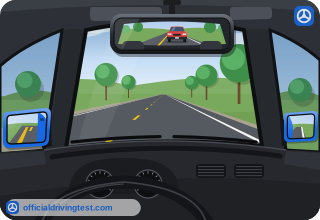
- They could damage the windshield glass
- They could prevent the airbag from working
- They could block a portion of your view
- They could make the mirror vibrate
Show answer
Correct answer: They could block a portion of your view
The manual says these items could block a portion of your view.
Source: Arkansas Driver License Study Guide (Volume 1, Edition 10, October 2026), page 83 · Open this page in the manual (Manual page 83)
-
What does the manual say to do with a missing or damaged mirror that obstructs your view?
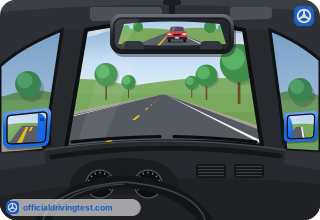
- Cover it with tape
- Replace it
- Ignore it if the other mirrors work
- Adjust it toward the road
Show answer
Correct answer: Replace it
Any missing or damaged mirror that obstructs your view should be replaced.
Source: Arkansas Driver License Study Guide (Volume 1, Edition 10, October 2026), page 83 · Open this page in the manual (Manual page 83)
-
How should you properly check your blind spots?
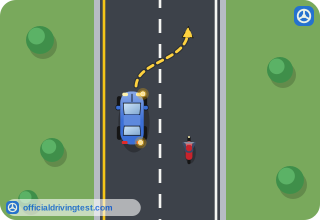
- Look only in the side-view mirror on the side you are moving toward
- Look only in the rearview mirror and then in the side mirror
- Lean toward the center console and look straight ahead
- Glance over your shoulder in the direction the vehicle is moving
Show answer
Correct answer: Glance over your shoulder in the direction the vehicle is moving
Mirrors do not display objects in blind spots, so you glance over your shoulder in the direction you are moving.
Source: Arkansas Driver License Study Guide (Volume 1, Edition 10, October 2026), page 83 · Open this page in the manual (Manual page 83)
-
If you suspect problems with your brakes, what does the manual say you should do?
- Take your vehicle to a licensed mechanic for an inspection
- Wait to see whether the problem gets worse over time
- Pump the brake pedal until the problem stops
- Drive slowly until the noise goes away
Show answer
Correct answer: Take your vehicle to a licensed mechanic for an inspection
The manual says to take the vehicle to a licensed mechanic for an inspection.
Source: Arkansas Driver License Study Guide (Volume 1, Edition 10, October 2026), page 83 · Open this page in the manual (Manual page 83)
-
Which of these is listed in the manual as an indicator of a potential brake issue?
- Headlights dimming when you brake
- A weak sound from the horn
- A foul smell during heavy braking
- A bright glow from the tires
Show answer
Correct answer: A foul smell during heavy braking
The manual lists a noise from underneath the vehicle, a foul smell during heavy braking, and little or no braking action when pressing the pedal.
Source: Arkansas Driver License Study Guide (Volume 1, Edition 10, October 2026), page 83 · Open this page in the manual (Manual page 83)
-
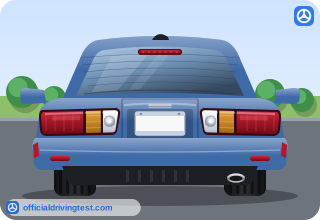
How do you check your vehicle's lights, according to the manual?
- Look at the dashboard warning lights only, without leaving the seat
- Turn them on from inside, then step outside and look for non-working lights
- Drive at night and watch for reflections of the lights on the road ahead
- Take the vehicle to a mechanic every time you need to check the lights
Show answer
Correct answer: Turn them on from inside, then step outside and look for non-working lights
The manual says to turn the lights on from inside, then step outside and look for any that do not work.
Source: Arkansas Driver License Study Guide (Volume 1, Edition 10, October 2026), page 83 · Open this page in the manual (Manual page 83)
-
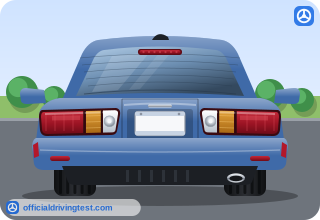
What do you need to inspect your brake lights?
- A second mirror placed behind the vehicle so you can see the brake lights
- A flashlight to shine on the brake pedal while you sit in the driver's seat
- Nothing, because the dashboard always shows whether the brake lights work
- A partner to press the brake while you check the rear for red lights on each side
Show answer
Correct answer: A partner to press the brake while you check the rear for red lights on each side
You need a partner to press the brake while you check for red lights on each side at the rear.
Source: Arkansas Driver License Study Guide (Volume 1, Edition 10, October 2026), page 83 · Open this page in the manual (Manual page 83)
-
When should you replace or repair a damaged windshield?
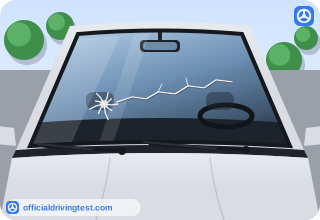
- As soon as possible
- Only when it fails an inspection
- Only after it has more than one crack
- Once a year
Show answer
Correct answer: As soon as possible
Damaged glass can break more easily in a minor collision or when an object hits the windshield.
Source: Arkansas Driver License Study Guide (Volume 1, Edition 10, October 2026), page 83 · Open this page in the manual (Manual page 83)