Arkansas: Sharing the road
School buses, trucks and their no-zones, bicycles and motorcycles on Arkansas roads. Split into 4 shorter tests so you're not stuck in one long quiz.
Independent educational site · not affiliated with any government agency or DMV
Choose a part
Sharing the road — Part 1
Questions in this part include: “When is a driver NOT required to stop for a school bus with its red lights flashing?”
StartSharing the road — Part 2
Questions in this part include: “How far in front of the cab can a car disappear from a tractor-trailer driver's view?”
StartSharing the road — Part 3
Questions in this part include: “Where are bicycles required to travel on the road?”
StartSharing the road — Part 4
Questions in this part include: “Which is listed as an unsafe roadway condition that lets a bicyclist take the full lane?”
StartAll 78 Sharing the road questions with answers
Choose a part above to take a practice test, or study every question and answer here.
Show the questions and answersHide the questions
-
What must you do when approaching a stopped school bus with its red lights flashing?
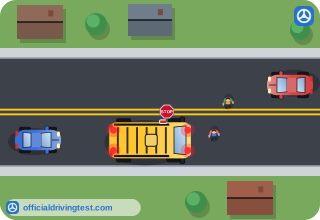
- Slow down and pass with caution once the road ahead is clear
- Make a complete stop and stay stopped until the lights are turned off
- Stop only if you are in the same lane of traffic as the bus
- Stop only if you are behind the bus or approaching an intersection
Show answer
Correct answer: Make a complete stop and stay stopped until the lights are turned off
A driver must make a complete stop until the lights are turned off, wherever the vehicle is positioned relative to the bus.
Source: Arkansas Driver License Study Guide (Volume 1, Edition 10, October 2026), page 12 · Open this page in the manual (Manual page 12)
-
When may a driver pass a stopped school bus?
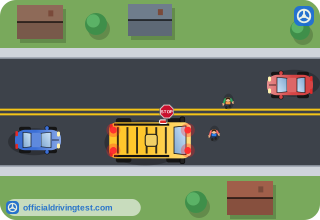
- As soon as all the children have safely crossed the road in front of the bus
- When the bus driver waves you past after checking for children
- Once you have slowed to a crawl and checked carefully for children nearby
- After the bus finishes loading and unloading and starts moving with no red lights flashing
Show answer
Correct answer: After the bus finishes loading and unloading and starts moving with no red lights flashing
The driver must never pass in any direction until the bus has finished receiving or discharging passengers and begins moving without its red lights flashing.
Source: Arkansas Driver License Study Guide (Volume 1, Edition 10, October 2026), page 12 · Open this page in the manual (Manual page 12)
-
When is a driver NOT required to stop for a school bus with its red lights flashing?
- When the bus is approaching in an opposite lane separated by a median 20 feet or more wide
- When the bus is approaching in an opposite lane separated by a painted center line
- When the bus is stopped at an intersection
- When the bus is approaching in an opposite lane of any divided road
Show answer
Correct answer: When the bus is approaching in an opposite lane separated by a median 20 feet or more wide
Drivers are not required to stop if the bus approaches along an opposite lane separated by a median twenty feet or more in width.
Source: Arkansas Driver License Study Guide (Volume 1, Edition 10, October 2026), page 12 · Open this page in the manual (Manual page 12)
-
On a two-lane roadway with a center turning lane, which traffic must stop when a school bus stops for passengers?
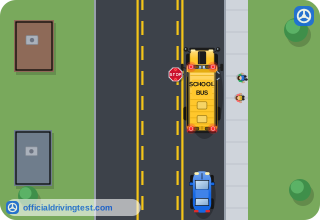
- Only traffic following the bus
- All traffic from both directions
- Only traffic in the bus's lane
- Only traffic in the center turning lane
Show answer
Correct answer: All traffic from both directions
The diagram caption says that on a two-lane roadway with a center turning lane, all traffic from both directions must stop.
Source: Arkansas Driver License Study Guide (Volume 1, Edition 10, October 2026), page 13 · Open this page in the manual (Manual page 13)
-
On a four-lane roadway without a median separation, which traffic must stop when a school bus stops for passengers?
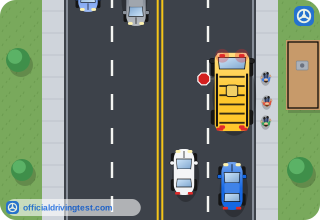
- Only traffic following the bus
- Only traffic in the right lane behind the bus
- Only traffic coming toward the bus
- All traffic from both directions
Show answer
Correct answer: All traffic from both directions
The diagram caption says that on a four-lane roadway without a median separation, all traffic from both directions must stop.
Source: Arkansas Driver License Study Guide (Volume 1, Edition 10, October 2026), page 13 · Open this page in the manual (Manual page 13)
-
On a divided highway of four lanes or more with a median separation of 20 feet or more, which traffic must stop when a school bus stops for passengers?
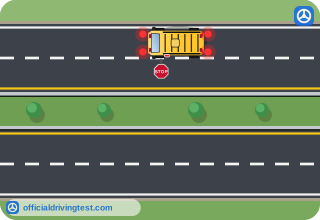
- Only traffic following the bus
- All traffic from both directions
- Only traffic coming toward the bus
- No traffic needs to stop
Show answer
Correct answer: Only traffic following the bus
The diagram caption says that on a divided highway of four lanes or more with a median separation, only traffic following the bus must stop.
Source: Arkansas Driver License Study Guide (Volume 1, Edition 10, October 2026), page 13 · Open this page in the manual (Manual page 13)
-
How is a driver who passes a stopped school bus with its red lights flashing charged, and what is the minimum fine upon conviction?
- With a misdemeanor and a minimum fine of $100
- With a felony and a minimum fine of $500
- With a misdemeanor and a minimum fine of $250
- With a traffic infraction and a minimum fine of $50
Show answer
Correct answer: With a misdemeanor and a minimum fine of $250
Drivers passing a stopped school bus with red lights flashing are charged with a misdemeanor and, upon conviction, fined a minimum of $250.
Source: Arkansas Driver License Study Guide (Volume 1, Edition 10, October 2026), page 13 · Open this page in the manual (Manual page 13)
-
Passing a stopped school bus with its red lights flashing can bring up to how many days in jail?
- Thirty days
- Ninety days
- Sixty days
- One hundred eighty days
Show answer
Correct answer: Ninety days
The penalty can include up to ninety days in jail, a fine of $250 to $1,000, or both.
Source: Arkansas Driver License Study Guide (Volume 1, Edition 10, October 2026), page 13 · Open this page in the manual (Manual page 13)
-
With what are drivers charged who fail to obey the school bus law and cause the death of a person?
- A misdemeanor
- A traffic infraction
- A fine only
- A felony
Show answer
Correct answer: A felony
Drivers who fail to obey the law and cause the death of a person will be charged with a felony.
Source: Arkansas Driver License Study Guide (Volume 1, Edition 10, October 2026), page 13 · Open this page in the manual (Manual page 13)
-
Under Isaac's Law, what is a person who negligently causes the death of another person subject to?
- A Class C felony for negligent homicide
- A Class A misdemeanor for reckless driving
- A Class B felony for manslaughter
- A Class D felony for vehicular assault
Show answer
Correct answer: A Class C felony for negligent homicide
Isaac's Law makes a person who negligently causes the death of another person subject to a Class C felony for negligent homicide.
Source: Arkansas Driver License Study Guide (Volume 1, Edition 10, October 2026), page 13 · Open this page in the manual (Manual page 13)
-
What should drivers do when large vehicles like trucks or buses are in the roundabout?
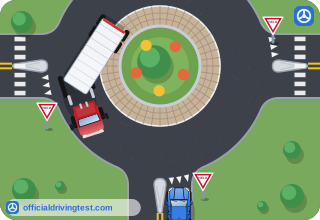
- Drive alongside them to pass quickly
- Follow as closely as possible behind them
- Stop in the roundabout until they have left
- Give them space and avoid driving next to them
Show answer
Correct answer: Give them space and avoid driving next to them
The roundabout page says to give large vehicles space and avoid driving next to them inside the roundabout.
Source: Arkansas Driver License Study Guide (Volume 1, Edition 10, October 2026), page 38 · Open this page in the manual (Manual page 38)
-
Which road users does the manual say can be especially hard to see when you are entering the roadway from the curb or driveway?
- Tractor-trailers, buses and school buses
- Police vehicles, ambulances and fire trucks
- Motorcycles, bicycles and pedestrians
- Parked cars, mailboxes and utility poles
Show answer
Correct answer: Motorcycles, bicycles and pedestrians
The manual says to look carefully for motorcycles, bicycles and pedestrians, which are especially hard to see when entering the roadway from the curb or driveway.
Source: Arkansas Driver License Study Guide (Volume 1, Edition 10, October 2026), page 49 · Open this page in the manual (Manual page 49)
-
Where does the manual say you should not drive in relation to other vehicles?
- Directly behind other vehicles in your lane
- More than 100 feet from other vehicles
- In the center lane of a multi-lane road
- Alongside or slightly behind other vehicles
Show answer
Correct answer: Alongside or slightly behind other vehicles
The blind spot tips say not to drive on either side or slightly in the rear of other vehicles.
Source: Arkansas Driver License Study Guide (Volume 1, Edition 10, October 2026), page 50 · Open this page in the manual (Manual page 50)
-
When passing another vehicle, what should you avoid?
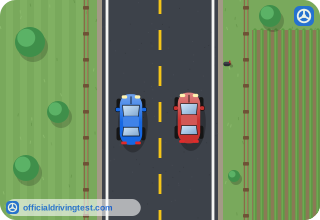
- Staying in the other driver's blind spot
- Using your turn signal
- Looking at the other vehicle
- Moving back into your lane after passing
Show answer
Correct answer: Staying in the other driver's blind spot
The blind spot tips say not to stay in another driver's blind spot when passing.
Source: Arkansas Driver License Study Guide (Volume 1, Edition 10, October 2026), page 50 · Open this page in the manual (Manual page 50)
-
What should you never do around a large vehicle such as a tractor-trailer or bus?
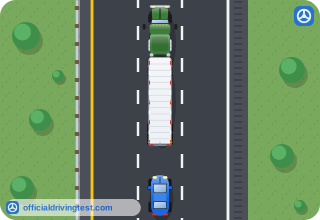
- Pass it on the left
- Follow it at a distance
- Stay alongside it
- Signal near it
Show answer
Correct answer: Stay alongside it
The blind spot tips say never to stay alongside a large vehicle such as a tractor-trailer or bus.
Source: Arkansas Driver License Study Guide (Volume 1, Edition 10, October 2026), page 50 · Open this page in the manual (Manual page 50)
-
How can you get out of another driver's blind spot?
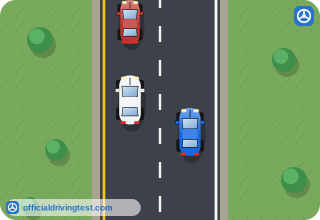
- By staying alongside and honking
- By speeding up or slowing down
- By staying in the same position
- By changing lanes without signaling
Show answer
Correct answer: By speeding up or slowing down
The blind spot tips say to get out of the other driver's blind spot as soon as possible by speeding up or slowing down.
Source: Arkansas Driver License Study Guide (Volume 1, Edition 10, October 2026), page 50 · Open this page in the manual (Manual page 50)
-
What should you do when following a motorcycle?
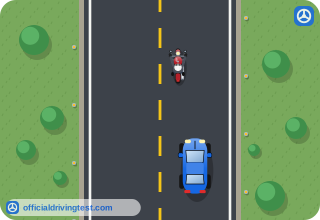
- Follow at the same distance as for a car
- Allow an extra cushion of space
- Stay close behind so it can see you
- Drive beside it in the same lane
Show answer
Correct answer: Allow an extra cushion of space
The manual says to allow an extra cushion of space when following a motorcycle.
Source: Arkansas Driver License Study Guide (Volume 1, Edition 10, October 2026), page 59 · Open this page in the manual (Manual page 59)
-
Which road conditions can increase a motorcyclist's chance of falling, according to the manual?
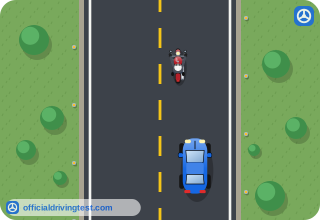
- Dry, smooth asphalt and freshly painted lane lines
- Wide shoulders and long straight roads with no traffic
- Roads with a median divider and several lanes
- Wet, icy or gravel roads, and bridges or railroad tracks
Show answer
Correct answer: Wet, icy or gravel roads, and bridges or railroad tracks
The manual lists wet, icy or gravel roads and metal surfaces such as bridges, gratings, and streetcar and railroad tracks.
Source: Arkansas Driver License Study Guide (Volume 1, Edition 10, October 2026), page 59 · Open this page in the manual (Manual page 59)
-
Why should you be prepared when following trucks, buses, vans, or vehicles pulling campers or trailers?
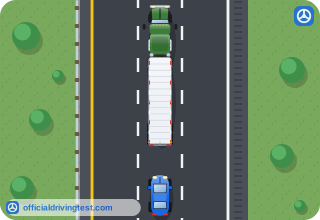
- Their drivers may not see you behind them and could stop suddenly
- They are required to stop at every intersection they approach
- They always travel faster than the traffic around them on highways
- Their brake lights cannot be seen from behind in daylight
Show answer
Correct answer: Their drivers may not see you behind them and could stop suddenly
The manual says these drivers may not see you behind them and could suddenly stop.
Source: Arkansas Driver License Study Guide (Volume 1, Edition 10, October 2026), page 59 · Open this page in the manual (Manual page 59)
-
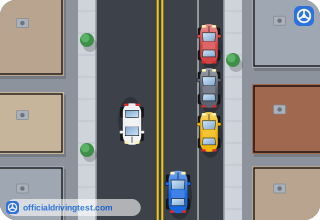
Why should you keep extra space between your vehicle and parked cars?
- Parked cars are required to move over when you pass
- Parked cars always have their doors locked and windows up
- The road is always wider beside a row of parked cars
- A pedestrian could step out or a car could pull out
Show answer
Correct answer: A pedestrian could step out or a car could pull out
The manual says a pedestrian could step out from a parked vehicle or between vehicles, or a vehicle could be pulling out of a space.
Source: Arkansas Driver License Study Guide (Volume 1, Edition 10, October 2026), page 60 · Open this page in the manual (Manual page 60)
-
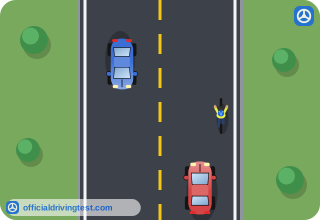
You are overtaking a bicycle and an oncoming vehicle is approaching. What does the manual say to do?
- Speed up to pass the bicycle before the vehicle arrives
- Pass the bicycle and the vehicle together
- Honk to warn the bicyclist and pass anyway
- Slow down and let the vehicle pass before you pass the bicycle
Show answer
Correct answer: Slow down and let the vehicle pass before you pass the bicycle
The manual says to take potential hazards one at a time, so let the oncoming vehicle pass before you pass the bicycle.
Source: Arkansas Driver License Study Guide (Volume 1, Edition 10, October 2026), page 60 · Open this page in the manual (Manual page 60)
-
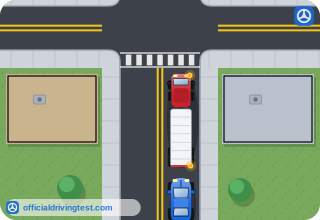
How do the rear wheels of a turning vehicle travel compared with its front wheels?
- They follow a longer path than the front wheels
- They follow a shorter path than the front wheels
- They follow exactly the same path as the front wheels
- They swing wider than the front wheels on every turn
Show answer
Correct answer: They follow a shorter path than the front wheels
Any turning vehicle's rear wheels follow a shorter path, and the longer the vehicle the greater the difference.
Source: Arkansas Driver License Study Guide (Volume 1, Edition 10, October 2026), page 64 · Open this page in the manual (Manual page 64)
-
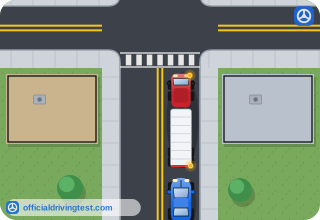
What do tractor-trailer drivers often do as the first step in making a right turn?
- Move over to the far right
- Stop and wait in the lane
- Back up a short distance
- Swing out to the left
Show answer
Correct answer: Swing out to the left
Because the rear wheels follow a shorter path, tractor-trailer drivers must often swing out to the left first.
Source: Arkansas Driver License Study Guide (Volume 1, Edition 10, October 2026), page 64 · Open this page in the manual (Manual page 64)
-
When following a tractor-trailer, what should you do before trying to pass?
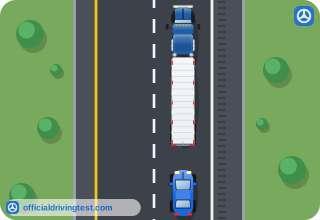
- Watch the turn signals
- Sound your horn twice
- Flash your headlights
- Pass without waiting
Show answer
Correct answer: Watch the turn signals
The manual says to watch the turn signals before trying to pass, and to check which way the driver is signaling if a left turn is imminent.
Source: Arkansas Driver License Study Guide (Volume 1, Edition 10, October 2026), page 64 · Open this page in the manual (Manual page 64)
-
How far in front of the cab can a car disappear from a tractor-trailer driver's view?
- Up to 5 feet
- Up to 50 feet
- Up to 20 feet
- Up to 100 feet
Show answer
Correct answer: Up to 20 feet
The manual says a car can disappear up to 20 feet in front of the cab.
Source: Arkansas Driver License Study Guide (Volume 1, Edition 10, October 2026), page 65 · Open this page in the manual (Manual page 65)
-
How far behind a truck can a car disappear from the truck driver's view?
- Up to 20 feet
- Up to 200 feet
- Up to 100 feet
- Up to 500 feet
Show answer
Correct answer: Up to 200 feet
The manual says a car can disappear up to 200 feet in the rear of the truck.
Source: Arkansas Driver License Study Guide (Volume 1, Edition 10, October 2026), page 65 · Open this page in the manual (Manual page 65)
-
What does the manual say about tractor-trailer drivers, who have a better forward view and bigger mirrors than car drivers?
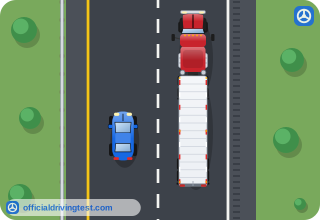
- They have no blind spots on either side
- They can easily see cars right behind the trailer
- They can see a car alongside the cab
- They still have serious blind spots
Show answer
Correct answer: They still have serious blind spots
Despite their view from the cab and bigger mirrors, tractor-trailer drivers still have serious blind spots.
Source: Arkansas Driver License Study Guide (Volume 1, Edition 10, October 2026), page 65 · Open this page in the manual (Manual page 65)
-
According to the manual, what is an excellent rule for sharing the road with a tractor-trailer?
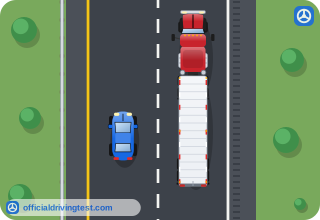
- If you can't see the truck driver in the side mirror, the driver can't see you
- Stay beside the cab so the truck driver always knows where you are
- If the truck driver can see your car, you can stay as close as you like
- Stay in the blind spot so the truck driver cannot pull in front of you
Show answer
Correct answer: If you can't see the truck driver in the side mirror, the driver can't see you
The manual's rule is that if you cannot see the truck driver in the tractor side mirror, the driver cannot see you.
Source: Arkansas Driver License Study Guide (Volume 1, Edition 10, October 2026), page 66 · Open this page in the manual (Manual page 66)
-
Why is cutting into the open space in front of a truck dangerous?
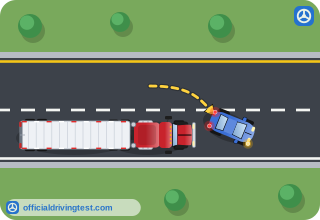
- It makes the truck's brakes lock up suddenly
- It forces the truck onto the road shoulder
- It removes the truck driver's cushion of safety
- It makes the trailer swing out to the right
Show answer
Correct answer: It removes the truck driver's cushion of safety
Cutting into the open space in front of a truck removes the truck driver's cushion of safety.
Source: Arkansas Driver License Study Guide (Volume 1, Edition 10, October 2026), page 66 · Open this page in the manual (Manual page 66)
-
Instead of cutting off a truck to reach an exit or turn, what does the manual advise?
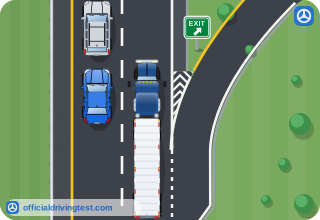
- Speed up and pass it on the right
- Slow down and exit behind the truck
- Flash your lights so the truck slows
- Stay beside the truck until the exit
Show answer
Correct answer: Slow down and exit behind the truck
The manual says to take a moment to slow down and exit behind the truck, which only takes a few extra seconds.
Source: Arkansas Driver License Study Guide (Volume 1, Edition 10, October 2026), page 66 · Open this page in the manual (Manual page 66)
-
How should you pass a tractor-trailer?
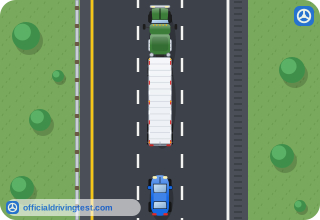
- On the right side, to stay out of its path
- Slowly, staying beside the cab
- Partly, then stay alongside the trailer
- Completely, and on the left side
Show answer
Correct answer: Completely, and on the left side
The manual says to always pass a tractor-trailer completely and on the left side.
Source: Arkansas Driver License Study Guide (Volume 1, Edition 10, October 2026), page 66 · Open this page in the manual (Manual page 66)
-
Why should you not linger alongside a truck when passing?
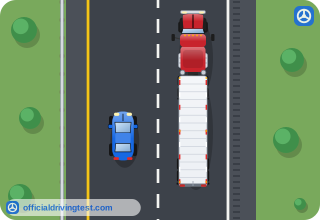
- The truck driver cannot take evasive action if an obstacle appears
- The truck's air brakes may be damaged by the side draft
- The truck's turn signals will stop working correctly
- The truck driver is required by law to slow down for you
Show answer
Correct answer: The truck driver cannot take evasive action if an obstacle appears
If you linger, the truck driver cannot take evasive action if an obstacle appears in the road ahead.
Source: Arkansas Driver License Study Guide (Volume 1, Edition 10, October 2026), page 66 · Open this page in the manual (Manual page 66)
-
When you are following behind a truck and cannot see the truck driver's rear-view mirrors, what is true?
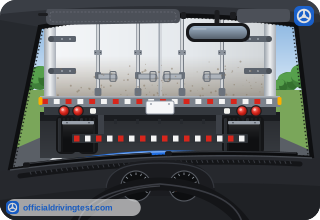
- The truck driver can see you with the larger mirrors
- You are in the safest following position
- The truck driver has no way to see you
- You may safely follow closer than usual
Show answer
Correct answer: The truck driver has no way to see you
If you can't see the truck driver's rear-view mirrors, there is no way the truck driver can see you.
Source: Arkansas Driver License Study Guide (Volume 1, Edition 10, October 2026), page 66 · Open this page in the manual (Manual page 66)
-
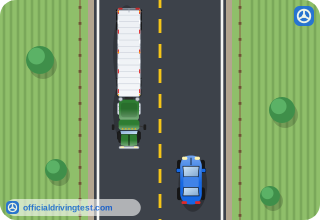
Because of its size, how can an approaching tractor-trailer appear to a driver?
- To be traveling faster than it really is
- To be stopped when it is moving
- To be smaller than it really is
- To be traveling slower than it really is
Show answer
Correct answer: To be traveling slower than it really is
The size of a tractor-trailer can make it appear to be traveling at a slower speed than reality.
Source: Arkansas Driver License Study Guide (Volume 1, Edition 10, October 2026), page 66 · Open this page in the manual (Manual page 66)
-
Why do a large number of car-truck collisions take place at intersections?
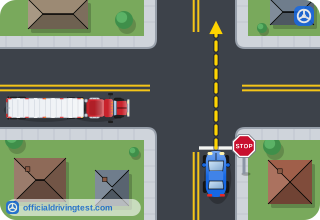
- The car driver does not realize how close the truck is or how fast it comes
- The truck driver cannot see traffic signals from the cab at intersections
- Trucks are required to stop twice at every intersection they enter
- Car drivers cannot see trucks that are waiting to make a turn there
Show answer
Correct answer: The car driver does not realize how close the truck is or how fast it comes
The manual says the car driver does not realize how close the truck is or how quickly it is approaching.
Source: Arkansas Driver License Study Guide (Volume 1, Edition 10, October 2026), page 66 · Open this page in the manual (Manual page 66)
-
How do trucks differ from cars in stopping, acceleration and turning?
- They have shorter stopped distances but need wider areas to turn
- They have longer stopped distances but need narrower areas to turn
- They have longer stopped and acceleration distances and turn wider
- They accelerate faster and weigh about the same as cars do
Show answer
Correct answer: They have longer stopped and acceleration distances and turn wider
Trucks have longer stopped and acceleration distances, take wider areas to turn, and weigh much more than cars.
Source: Arkansas Driver License Study Guide (Volume 1, Edition 10, October 2026), page 66 · Open this page in the manual (Manual page 66)
-
In the Chapter 6 picture of a tractor-trailer rig, what maximum overall length limit is shown?
- 45 feet
- 65 feet
- 55 feet
- 75 feet
Show answer
Correct answer: 65 feet
The picture at the top of Chapter 6 labels a 65 ft maximum overall length limit for a tractor-trailer rig.
Source: Arkansas Driver License Study Guide (Volume 1, Edition 10, October 2026), page 64 · Open this page in the manual (Manual page 64)
-
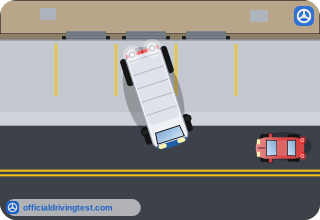
What does the No-Zone graphic say never to do behind a truck that is backing up?
- Sound your horn
- Wait in the right lane
- Flash your headlights
- Cross behind it
Show answer
Correct answer: Cross behind it
The graphic says never to cross behind a truck that is backing up, because the driver may not see you.
Source: Arkansas Driver License Study Guide (Volume 1, Edition 10, October 2026), page 65 · Open this page in the manual (Manual page 65)
-
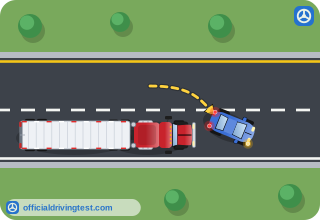
According to the No-Zone graphic, what should you look for before pulling in front of a truck after passing?
- The truck's headlights in your side mirror
- The truck driver waving you on ahead of him
- The whole front of the truck in your mirror
- The truck's turn signal in your rear-view mirror
Show answer
Correct answer: The whole front of the truck in your mirror
The graphic says to look for the whole front of the truck in your rear-view mirror before pulling in front, and then not to slow down.
Source: Arkansas Driver License Study Guide (Volume 1, Edition 10, October 2026), page 65 · Open this page in the manual (Manual page 65)
-
How do the rights and responsibilities of bicycles on the street compare with those of other vehicles?
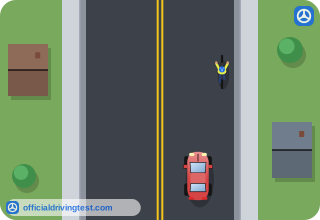
- Bicycles have fewer rights
- They are the same
- Bicycles have more rights
- Bicycles have no responsibilities
Show answer
Correct answer: They are the same
The manual says bicycles have the same rights and responsibilities on the streets as other vehicles.
Source: Arkansas Driver License Study Guide (Volume 1, Edition 10, October 2026), page 67 · Open this page in the manual (Manual page 67)
-
Where are bicycles required to travel on the road?
- On the left-hand side, facing oncoming traffic
- On whichever side the rider prefers
- In the center of the road at all times
- On the right-hand side, with other traffic
Show answer
Correct answer: On the right-hand side, with other traffic
Bicycles must travel on the right-hand side of the road with other traffic, and may not travel facing oncoming traffic.
Source: Arkansas Driver License Study Guide (Volume 1, Edition 10, October 2026), page 67 · Open this page in the manual (Manual page 67)
-
What should you always expect when you share the road with bicycles?
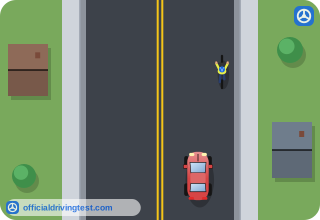
- The rider to make sudden moves
- The rider to stay in a straight line
- The rider to stop at every driveway
- The rider to use a horn before swerving
Show answer
Correct answer: The rider to make sudden moves
The manual says you should always expect the rider to make sudden moves, such as swerving around trash, a pothole or a car door.
Source: Arkansas Driver License Study Guide (Volume 1, Edition 10, October 2026), page 67 · Open this page in the manual (Manual page 67)
-
Why do cyclists passing parked cars tend to move toward the center of the lane?
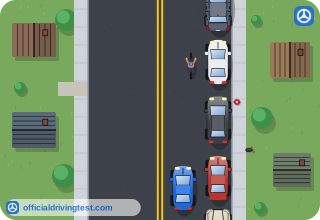
- To signal the driver behind to pass on the right side of the lane
- To avoid the wind created by cars passing close beside them
- To avoid injuring, or being injured by, people getting out of cars
- Because the right edge of the road is closed to bicycles
Show answer
Correct answer: To avoid injuring, or being injured by, people getting out of cars
Cyclists move toward the center to avoid injuring, or being injured by, people getting out of cars, and this is proper operation.
Source: Arkansas Driver License Study Guide (Volume 1, Edition 10, October 2026), page 67 · Open this page in the manual (Manual page 67)
-
When a cyclist moves toward the center of the lane to pass parked cars, what should drivers do if possible?
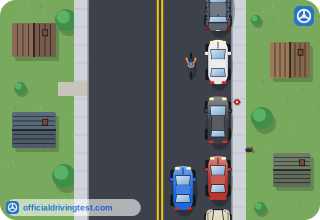
- Pass within the same lane beside the cyclist
- Give the cyclist the entire lane
- Honk to make the cyclist move over
- Follow closely and flash the headlights
Show answer
Correct answer: Give the cyclist the entire lane
The manual says drivers should give the cyclist the entire lane, if possible, and pass with extreme caution when they cannot.
Source: Arkansas Driver License Study Guide (Volume 1, Edition 10, October 2026), page 67 · Open this page in the manual (Manual page 67)
-
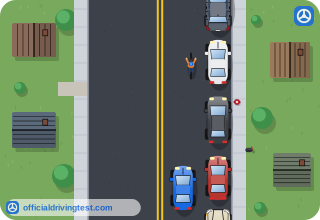
What does the manual say about cyclists who are not riding on the right side of the lane?
- They are being careless and breaking the rules of the road
- They are deliberately trying to block cars behind them
- They are signaling that drivers should honk and pass
- They are accounting for traffic conditions or preparing to turn left
Show answer
Correct answer: They are accounting for traffic conditions or preparing to turn left
They are not being careless but attempting to account for traffic conditions and/or preparing to make a left turn.
Source: Arkansas Driver License Study Guide (Volume 1, Edition 10, October 2026), page 67 · Open this page in the manual (Manual page 67)
-
What is the most common cause of a collision between a car and a bicycle?
- A driver turning left in front of an oncoming bicycle or right across its path
- A driver passing a bicycle too closely on a long straight stretch of road
- A driver backing out of a parking space without checking behind the car
- A bicyclist riding through a stop sign at high speed on the sidewalk
Show answer
Correct answer: A driver turning left in front of an oncoming bicycle or right across its path
The manual says the most common cause is a driver turning left in front of an oncoming bicycle or turning right across the bicycle's path.
Source: Arkansas Driver License Study Guide (Volume 1, Edition 10, October 2026), page 67 · Open this page in the manual (Manual page 67)
-
After overtaking a bicyclist, what should you do before turning right in front of the cyclist?
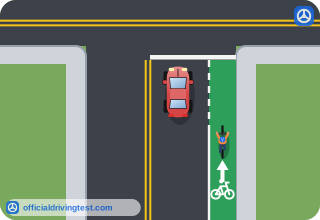
- Look right twice, then turn
- Look only in your rear-view mirror
- Look left, then right and left again
- Sound your horn, then turn
Show answer
Correct answer: Look left, then right and left again
The manual says to look left, then right and left again to see the cyclist and know his speed before you turn.
Source: Arkansas Driver License Study Guide (Volume 1, Edition 10, October 2026), page 67 · Open this page in the manual (Manual page 67)
-
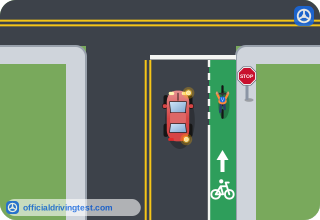
How should you prepare for a right turn when bicycle traffic is beside you?
- Turn directly across the cyclist's path
- Merge with the bicycle traffic
- Speed up to get ahead of the cyclist
- Pull far to the left before turning
Show answer
Correct answer: Merge with the bicycle traffic
The manual says to merge with bicycle traffic when preparing for a right turn and not to turn directly across a cyclist's path.
Source: Arkansas Driver License Study Guide (Volume 1, Edition 10, October 2026), page 67 · Open this page in the manual (Manual page 67)
-
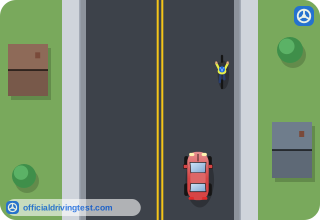
Which bicycle riders may turn in front of you without looking or signaling?
- Riders on racing bikes
- Riders who are using a bike lane
- Adult riders wearing helmets
- Young riders, especially children
Show answer
Correct answer: Young riders, especially children
The manual says to watch for young bicycle riders turning in front of you, who may not look or signal, especially children.
Source: Arkansas Driver License Study Guide (Volume 1, Edition 10, October 2026), page 67 · Open this page in the manual (Manual page 67)
-
Before turning near a cyclist, what should a driver attempt to do?
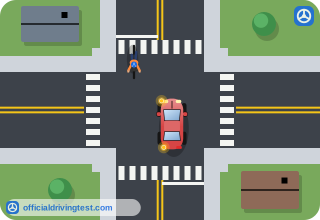
- Gain and maintain eye contact with the cyclist
- Flash the headlights to get the cyclist's attention
- Wave the cyclist through ahead of you at the corner
- Tap the horn to warn the cyclist of the turn
Show answer
Correct answer: Gain and maintain eye contact with the cyclist
Most bicyclists keep eye contact with drivers when turning, so the driver should gain and keep eye contact for a safer turn.
Source: Arkansas Driver License Study Guide (Volume 1, Edition 10, October 2026), page 67 · Open this page in the manual (Manual page 67)
-
You are overtaking a bicycle on a two-lane road and an oncoming car is approaching. What should you do?
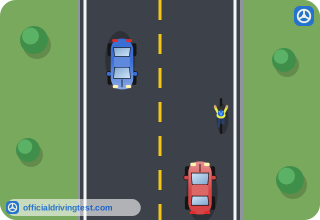
- Pass between the bicyclist and the oncoming car
- Speed up to pass before the oncoming car arrives
- Slow down and let the oncoming car pass first
- Sound your horn so the bicyclist pulls off the road
Show answer
Correct answer: Slow down and let the oncoming car pass first
A driver should never pass between a bicyclist and oncoming vehicles on a two-lane road; slow down and let the vehicle pass first.
Source: Arkansas Driver License Study Guide (Volume 1, Edition 10, October 2026), page 67 · Open this page in the manual (Manual page 67)
-
When should you never pass a bicycle?
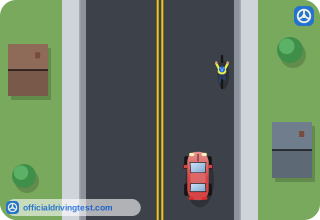
- If the bicyclist is riding on the right side of the road
- If it could force the bicyclist too close to parked vehicles
- If the bicyclist is wearing a helmet or bright clothing
- If the bicycle is traveling slower than other traffic
Show answer
Correct answer: If it could force the bicyclist too close to parked vehicles
The manual says never to pass a bicycle if the street is too narrow or you could force the bicyclist too close to parked vehicles.
Source: Arkansas Driver License Study Guide (Volume 1, Edition 10, October 2026), page 67 · Open this page in the manual (Manual page 67)
-
How should you use your horn to signal a bicyclist on a narrow road who may not know you are coming?
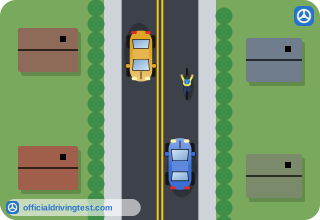
- Sound it long and loud
- Hold it down until the rider moves
- Do not use it at all
- Tap it gently and briefly
Show answer
Correct answer: Tap it gently and briefly
The manual says to tap your horn gently and briefly, and not to blast it or otherwise startle or intimidate the rider.
Source: Arkansas Driver License Study Guide (Volume 1, Edition 10, October 2026), page 67 · Open this page in the manual (Manual page 67)
-
What may bicyclists do in neighborhood streets that makes residential areas danger zones?
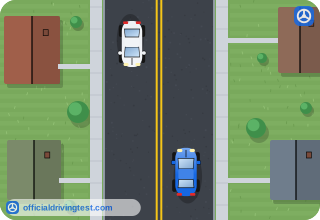
- Ride in the middle of the street and disregard stop signs and traffic signals
- Ride only on the left edge of the street and ignore turn signals
- Ride on the sidewalk and cross streets without stopping at corners
- Ride in large groups across several lanes and ignore bike lanes
Show answer
Correct answer: Ride in the middle of the street and disregard stop signs and traffic signals
The manual warns that in residential areas bicyclists may ride in the middle of the street and disregard stop signs and traffic signals.
Source: Arkansas Driver License Study Guide (Volume 1, Edition 10, October 2026), page 68 · Open this page in the manual (Manual page 68)
-
Why should drivers be alert to sudden movement and changes in direction when children are riding bicycles?
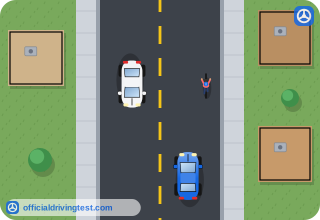
- Children's bicycles cannot be steered in a straight line at any speed
- Children are required to ride in the middle of the lane at all times
- Children are not capable of proper judgment in determining traffic conditions
- Children always ride faster than adult bicyclists on residential streets
Show answer
Correct answer: Children are not capable of proper judgment in determining traffic conditions
The manual says children are not capable of proper judgment in determining traffic conditions.
Source: Arkansas Driver License Study Guide (Volume 1, Edition 10, October 2026), page 68 · Open this page in the manual (Manual page 68)
-
From where should drivers watch for bikes to appear in residential areas?
- Bike lanes, crosswalks, and railroad crossings
- Driveways, behind parked cars, or other obstructions
- Overpasses, tunnels, and freeway ramps
- School zones, bus stops, and rest areas
Show answer
Correct answer: Driveways, behind parked cars, or other obstructions
The manual says to watch out for bikes coming out of driveways, behind parked cars, or from other obstructions.
Source: Arkansas Driver License Study Guide (Volume 1, Edition 10, October 2026), page 68 · Open this page in the manual (Manual page 68)
-
What are bicyclists required to have when riding at night?
- A bell, a reflective vest, and a rear warning flag
- A horn, a mirror, and two red lights on the rear
- A flag on the bike, a helmet, and a loud bell
- Proper illumination, a front light, and a rear reflector
Show answer
Correct answer: Proper illumination, a front light, and a rear reflector
The manual says bicyclists are required to have proper illumination, a front light, and a rear reflector.
Source: Arkansas Driver License Study Guide (Volume 1, Edition 10, October 2026), page 68 · Open this page in the manual (Manual page 68)
-
What does a red or orange pennant flag attached to a bicycle indicate?
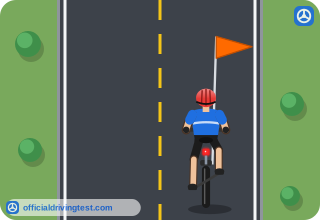
- The rider has impaired hearing
- The rider has impaired vision
- The rider is a beginner
- The rider is carrying a child
Show answer
Correct answer: The rider has impaired hearing
The manual says the flag is a symbol that the rider has impaired hearing, and drivers should slow down.
Source: Arkansas Driver License Study Guide (Volume 1, Edition 10, October 2026), page 68 · Open this page in the manual (Manual page 68)
-
In which situation should a bicyclist be allowed full use of the lane?
- When riding downhill at a higher speed than traffic
- When overtaking and passing another vehicle going the same way
- When riding in a group of two or more other bicyclists
- When riding at night with a front light and rear reflector
Show answer
Correct answer: When overtaking and passing another vehicle going the same way
A bicyclist should be allowed the full lane when overtaking and passing another vehicle going in the same direction.
Source: Arkansas Driver License Study Guide (Volume 1, Edition 10, October 2026), page 68 · Open this page in the manual (Manual page 68)
-
How may drivers use a lane marked and signed for bicycle use only?
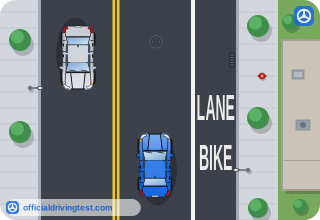
- They may use it as a turning lane when no bicycles are in sight
- They may use it for parking if the stop lasts only a few minutes
- They may use it as a passing lane when it is empty of bicycles
- They must never use it as a turning lane, passing lane, or for parking
Show answer
Correct answer: They must never use it as a turning lane, passing lane, or for parking
If a lane is marked and signed for bicycle use only, drivers must never use it as a turning lane, passing lane or for parking.
Source: Arkansas Driver License Study Guide (Volume 1, Edition 10, October 2026), page 68 · Open this page in the manual (Manual page 68)
-
When a bicyclist is getting in place for a left turn at an intersection, what does the manual say about the lane?
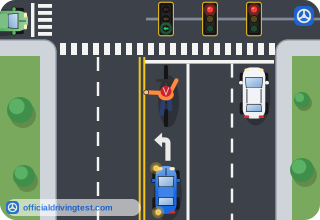
- The bicyclist should be allowed full use of the lane
- The bicyclist must stay at the right edge of the lane
- The bicyclist must yield to all following vehicles
- The bicyclist must move to the center of the road
Show answer
Correct answer: The bicyclist should be allowed full use of the lane
A bicyclist should be allowed full use of the lane when getting in place for a left turn or turning left into a private road or driveway.
Source: Arkansas Driver License Study Guide (Volume 1, Edition 10, October 2026), page 68 · Open this page in the manual (Manual page 68)
-
Which is listed as an unsafe roadway condition that lets a bicyclist take the full lane?
- A newly painted center line
- A dry and smooth road surface
- Parked cars, potholes, or debris
- Light traffic in clear weather
Show answer
Correct answer: Parked cars, potholes, or debris
Unsafe conditions in the roadway such as parked cars, obstacles, pedestrians, animals, potholes or debris justify full use of the lane.
Source: Arkansas Driver License Study Guide (Volume 1, Edition 10, October 2026), page 68 · Open this page in the manual (Manual page 68)
-
If a lane is too narrow for both a car and a bicycle to share safely, what is safest?
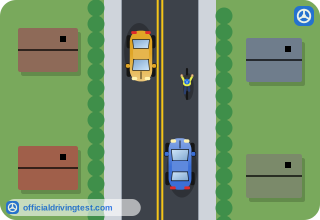
- To pass the bicycle within the lane
- To let the bicycle take the full lane
- To let the car stay on the lane edge
- To let the bicycle ride on the shoulder
Show answer
Correct answer: To let the bicycle take the full lane
The manual says that when the lane is too narrow, it is safest to let the bicycle take the full lane.
Source: Arkansas Driver License Study Guide (Volume 1, Edition 10, October 2026), page 68 · Open this page in the manual (Manual page 68)
-
In the manual's bicycle hand signal pictures, which arm position is labeled STOP?
- The arm extended straight out to the side
- The arm bent at the elbow with the hand pointing up
- Both arms raised above the head
- The arm bent at the elbow with the hand pointing down
Show answer
Correct answer: The arm bent at the elbow with the hand pointing down
The picture labeled STOP shows the arm bent at the elbow with the hand pointing down.
Source: Arkansas Driver License Study Guide (Volume 1, Edition 10, October 2026), page 68 · Open this page in the manual (Manual page 68)
-
In the manual's bicycle hand signal pictures, which arm position is shown for a RIGHT turn?
- Left arm bent upward, or right arm extended out
- Left arm bent downward at the elbow
- Both arms extended straight out to the sides
- Both arms crossed in front of the body
Show answer
Correct answer: Left arm bent upward, or right arm extended out
The picture labeled RIGHT shows two options, the left arm bent upward at the elbow or the right arm extended straight out.
Source: Arkansas Driver License Study Guide (Volume 1, Edition 10, October 2026), page 68 · Open this page in the manual (Manual page 68)
-
How does a motorcyclist compare with a car driver when involved in an accident?
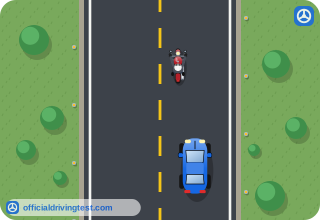
- The motorcyclist is equally likely to be injured
- The motorcyclist is less likely to be injured
- The motorcyclist is more vulnerable to injury
- The motorcyclist is protected by a larger frame
Show answer
Correct answer: The motorcyclist is more vulnerable to injury
The manual says motorcyclists are more vulnerable to injury than a car driver if involved in an accident.
Source: Arkansas Driver License Study Guide (Volume 1, Edition 10, October 2026), page 69 · Open this page in the manual (Manual page 69)
-
Which is a common reason drivers may not see a motorcyclist?
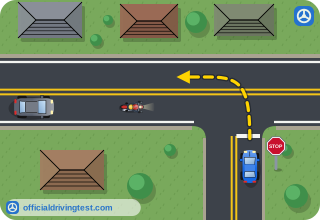
- Motorcycles usually travel faster than any other vehicle
- Many drivers tend to look for other cars, not for motorcyclists
- Motorcycles are not allowed to use the lane markings
- Motorcyclists usually ride on the shoulder
Show answer
Correct answer: Many drivers tend to look for other cars, not for motorcyclists
The manual lists that many drivers tend to look for other cars, not for motorcyclists.
Source: Arkansas Driver License Study Guide (Volume 1, Edition 10, October 2026), page 69 · Open this page in the manual (Manual page 69)
-
Which is a common reason an approaching motorcyclist is harder to see?
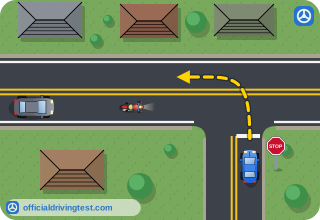
- A motorcycle's headlight is always switched off
- A motorcycle stays in the driver's mirror too long
- A motorcycle has the same profile as a bicycle
- The profile of a motorcycle is much smaller than a car
Show answer
Correct answer: The profile of a motorcycle is much smaller than a car
The manual says the profile of a motorcycle is much smaller than a car, making an approaching motorcyclist harder to see.
Source: Arkansas Driver License Study Guide (Volume 1, Edition 10, October 2026), page 69 · Open this page in the manual (Manual page 69)
-
Compared with a car, what is more difficult for a driver to do with a motorcycle?
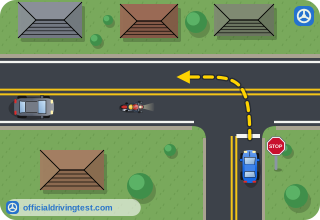
- Estimate its speed and distance
- Estimate its weight and engine size
- Estimate the rider's age and height
- Hear its horn over traffic noise
Show answer
Correct answer: Estimate its speed and distance
The manual says estimating the distance and speed of a motorcycle is more difficult than for a car.
Source: Arkansas Driver License Study Guide (Volume 1, Edition 10, October 2026), page 69 · Open this page in the manual (Manual page 69)
-
Why does motorcycle riding require frequent lane movements?
- To pass every car on the road
- To avoid using turn signals
- To adjust to changing road conditions
- To keep the engine from stalling
Show answer
Correct answer: To adjust to changing road conditions
The manual says motorcycle riding requires frequent lane movements to adjust to changing road conditions.
Source: Arkansas Driver License Study Guide (Volume 1, Edition 10, October 2026), page 69 · Open this page in the manual (Manual page 69)
-
What is the most common crash between cars and motorcycles?
- A car rear-ending a motorcycle on a freeway entrance ramp
- A car making a left turn in front of a motorcycle at an intersection
- A car backing into a motorcycle in a parking lot space
- A car changing lanes onto a motorcycle on a long bridge
Show answer
Correct answer: A car making a left turn in front of a motorcycle at an intersection
The manual says it is a car driver making a left turn in front of a motorcycle at an intersection (failure to yield right of way).
Source: Arkansas Driver License Study Guide (Volume 1, Edition 10, October 2026), page 69 · Open this page in the manual (Manual page 69)
-
When should you check mirrors and blind spots for motorcycles?
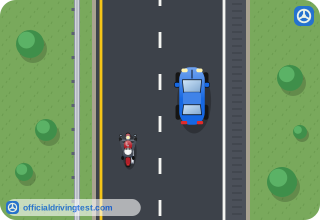
- Before braking hard and when signaling to park
- Once per trip, just before you start the engine
- When driving on a freeway at night or in rain
- Before entering or leaving a lane and at intersections
Show answer
Correct answer: Before entering or leaving a lane and at intersections
The manual says to check mirrors and blind spots before entering or leaving a lane of traffic and at intersections.
Source: Arkansas Driver License Study Guide (Volume 1, Edition 10, October 2026), page 69 · Open this page in the manual (Manual page 69)
-
Why might a motorcyclist suddenly change speed or position within a lane?
- To react to potholes, gravel, or wet surfaces
- To show the driver behind how to pass safely
- To avoid using the brakes when at an intersection
- To let other motorcycles pass on the right
Show answer
Correct answer: To react to potholes, gravel, or wet surfaces
Motorcyclists may adjust to weather and road conditions that impair their braking and handling, and drivers should allow room.
Source: Arkansas Driver License Study Guide (Volume 1, Edition 10, October 2026), page 69 · Open this page in the manual (Manual page 69)
-
What can a strong gust of wind do to a motorcycle if the rider isn't prepared?
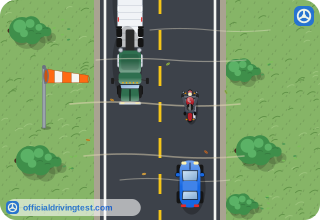
- Stop its engine
- Turn off its headlight
- Move it across an entire lane
- Push it onto the sidewalk
Show answer
Correct answer: Move it across an entire lane
The manual says a strong gust of wind can move a motorcycle across an entire lane if the rider isn't prepared.
Source: Arkansas Driver License Study Guide (Volume 1, Edition 10, October 2026), page 69 · Open this page in the manual (Manual page 69)
-
Why can a large vehicle such as a van, bus, or truck be a hazard to a motorcyclist?
- It forces the motorcycle to travel on the lane edge at all times
- It can hide the motorcycle so the rider suddenly appears from nowhere
- It prevents the motorcyclist from using the brakes in a turn
- It makes the motorcycle's engine overheat on long trips
Show answer
Correct answer: It can hide the motorcycle so the rider suddenly appears from nowhere
A large vehicle can block a motorcycle from a driver's view, causing the motorcyclist to suddenly appear from nowhere.
Source: Arkansas Driver License Study Guide (Volume 1, Edition 10, October 2026), page 69 · Open this page in the manual (Manual page 69)
-
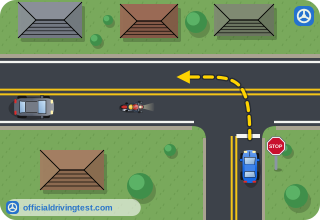
Before turning at an intersection, even if you see no cars coming, what should you do?
- Assume any motorcycle will yield to you at the intersection
- Sound your horn to warn any motorcycles that may be near
- Turn quickly before a motorcycle has time to arrive
- Take a second look for a motorcycle, especially before left turns
Show answer
Correct answer: Take a second look for a motorcycle, especially before left turns
The manual says to look twice for motorcyclists and take a second look before turning at an intersection, particularly for left turns.
Source: Arkansas Driver License Study Guide (Volume 1, Edition 10, October 2026), page 69 · Open this page in the manual (Manual page 69)
-
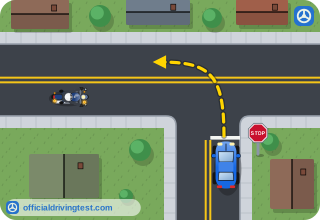
Why should you not be fooled by a flashing turn signal on a motorcycle?
- Motorcycle signals flash only when the rider is braking
- Motorcycle signals work only in the daytime
- Motorcycle signals don't cancel by themselves
- Motorcycle riders flash the signal to ask you to pass
Show answer
Correct answer: Motorcycle signals don't cancel by themselves
The manual says motorcycle signals do not cancel automatically, so wait and see if the motorcycle is going to turn before you proceed.
Source: Arkansas Driver License Study Guide (Volume 1, Edition 10, October 2026), page 70 · Open this page in the manual (Manual page 70)
-
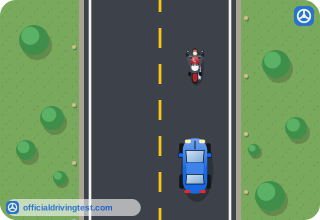
How much of the traffic lane is a motorcycle entitled to?
- Half of the lane
- A full lane
- The left part of the lane
- The right part of the lane
Show answer
Correct answer: A full lane
The manual says the motorcycle is entitled to a full lane, and drivers should not attempt to share the lane with it.
Source: Arkansas Driver License Study Guide (Volume 1, Edition 10, October 2026), page 70 · Open this page in the manual (Manual page 70)