Arkansas: Sharing the road — Part 4 Practice Test
Questions in this part include: “Which is listed as an unsafe roadway condition that lets a bicyclist take the full lane?” · “Why does motorcycle riding require frequent lane movements?”
Independent educational site · not affiliated with any government agency or DMV
Ready? Test yourself
- Instant feedback with an explanation
- Every answer cites its source in the manual
- Your best score is saved on this device
Questions are original and based on the official manual "Arkansas Driver License Study Guide" (Volume 1, Edition 10, October 2026), Arkansas State Police (ASP).
All 19 questions in this practice test
Take the test above first, then use this list to study. Tap “Show answer” to see the correct answer and explanation.
Show the questions and answersHide the questions
-
How may drivers use a lane marked and signed for bicycle use only?
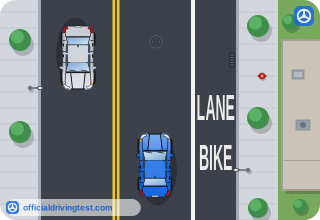
- They may use it as a turning lane when no bicycles are in sight
- They may use it for parking if the stop lasts only a few minutes
- They may use it as a passing lane when it is empty of bicycles
- They must never use it as a turning lane, passing lane, or for parking
Show answer
Correct answer: They must never use it as a turning lane, passing lane, or for parking
If a lane is marked and signed for bicycle use only, drivers must never use it as a turning lane, passing lane or for parking.
Source: Arkansas Driver License Study Guide (Volume 1, Edition 10, October 2026), page 68 · Open this page in the manual (Manual page 68)
-
When a bicyclist is getting in place for a left turn at an intersection, what does the manual say about the lane?
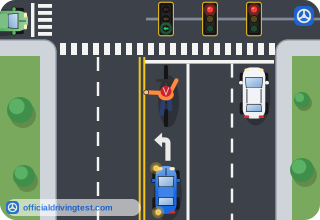
- The bicyclist should be allowed full use of the lane
- The bicyclist must stay at the right edge of the lane
- The bicyclist must yield to all following vehicles
- The bicyclist must move to the center of the road
Show answer
Correct answer: The bicyclist should be allowed full use of the lane
A bicyclist should be allowed full use of the lane when getting in place for a left turn or turning left into a private road or driveway.
Source: Arkansas Driver License Study Guide (Volume 1, Edition 10, October 2026), page 68 · Open this page in the manual (Manual page 68)
-
Which is listed as an unsafe roadway condition that lets a bicyclist take the full lane?
- A newly painted center line
- A dry and smooth road surface
- Parked cars, potholes, or debris
- Light traffic in clear weather
Show answer
Correct answer: Parked cars, potholes, or debris
Unsafe conditions in the roadway such as parked cars, obstacles, pedestrians, animals, potholes or debris justify full use of the lane.
Source: Arkansas Driver License Study Guide (Volume 1, Edition 10, October 2026), page 68 · Open this page in the manual (Manual page 68)
-
If a lane is too narrow for both a car and a bicycle to share safely, what is safest?
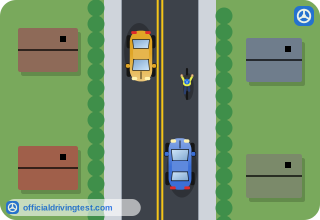
- To pass the bicycle within the lane
- To let the bicycle take the full lane
- To let the car stay on the lane edge
- To let the bicycle ride on the shoulder
Show answer
Correct answer: To let the bicycle take the full lane
The manual says that when the lane is too narrow, it is safest to let the bicycle take the full lane.
Source: Arkansas Driver License Study Guide (Volume 1, Edition 10, October 2026), page 68 · Open this page in the manual (Manual page 68)
-
In the manual's bicycle hand signal pictures, which arm position is labeled STOP?
- The arm extended straight out to the side
- The arm bent at the elbow with the hand pointing up
- Both arms raised above the head
- The arm bent at the elbow with the hand pointing down
Show answer
Correct answer: The arm bent at the elbow with the hand pointing down
The picture labeled STOP shows the arm bent at the elbow with the hand pointing down.
Source: Arkansas Driver License Study Guide (Volume 1, Edition 10, October 2026), page 68 · Open this page in the manual (Manual page 68)
-
In the manual's bicycle hand signal pictures, which arm position is shown for a RIGHT turn?
- Left arm bent upward, or right arm extended out
- Left arm bent downward at the elbow
- Both arms extended straight out to the sides
- Both arms crossed in front of the body
Show answer
Correct answer: Left arm bent upward, or right arm extended out
The picture labeled RIGHT shows two options, the left arm bent upward at the elbow or the right arm extended straight out.
Source: Arkansas Driver License Study Guide (Volume 1, Edition 10, October 2026), page 68 · Open this page in the manual (Manual page 68)
-
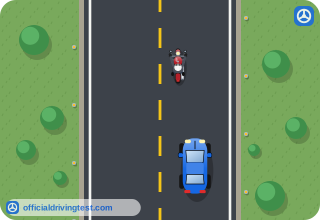
How does a motorcyclist compare with a car driver when involved in an accident?
- The motorcyclist is equally likely to be injured
- The motorcyclist is less likely to be injured
- The motorcyclist is more vulnerable to injury
- The motorcyclist is protected by a larger frame
Show answer
Correct answer: The motorcyclist is more vulnerable to injury
The manual says motorcyclists are more vulnerable to injury than a car driver if involved in an accident.
Source: Arkansas Driver License Study Guide (Volume 1, Edition 10, October 2026), page 69 · Open this page in the manual (Manual page 69)
-
Which is a common reason drivers may not see a motorcyclist?
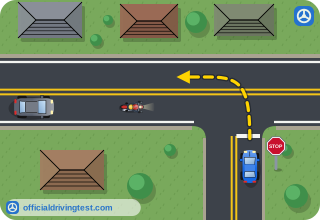
- Motorcycles usually travel faster than any other vehicle
- Many drivers tend to look for other cars, not for motorcyclists
- Motorcycles are not allowed to use the lane markings
- Motorcyclists usually ride on the shoulder
Show answer
Correct answer: Many drivers tend to look for other cars, not for motorcyclists
The manual lists that many drivers tend to look for other cars, not for motorcyclists.
Source: Arkansas Driver License Study Guide (Volume 1, Edition 10, October 2026), page 69 · Open this page in the manual (Manual page 69)
-
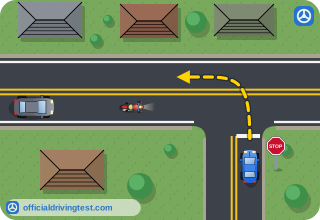
Which is a common reason an approaching motorcyclist is harder to see?
- A motorcycle's headlight is always switched off
- A motorcycle stays in the driver's mirror too long
- A motorcycle has the same profile as a bicycle
- The profile of a motorcycle is much smaller than a car
Show answer
Correct answer: The profile of a motorcycle is much smaller than a car
The manual says the profile of a motorcycle is much smaller than a car, making an approaching motorcyclist harder to see.
Source: Arkansas Driver License Study Guide (Volume 1, Edition 10, October 2026), page 69 · Open this page in the manual (Manual page 69)
-
Compared with a car, what is more difficult for a driver to do with a motorcycle?
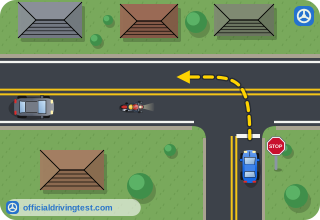
- Estimate its speed and distance
- Estimate its weight and engine size
- Estimate the rider's age and height
- Hear its horn over traffic noise
Show answer
Correct answer: Estimate its speed and distance
The manual says estimating the distance and speed of a motorcycle is more difficult than for a car.
Source: Arkansas Driver License Study Guide (Volume 1, Edition 10, October 2026), page 69 · Open this page in the manual (Manual page 69)
-
Why does motorcycle riding require frequent lane movements?
- To pass every car on the road
- To avoid using turn signals
- To adjust to changing road conditions
- To keep the engine from stalling
Show answer
Correct answer: To adjust to changing road conditions
The manual says motorcycle riding requires frequent lane movements to adjust to changing road conditions.
Source: Arkansas Driver License Study Guide (Volume 1, Edition 10, October 2026), page 69 · Open this page in the manual (Manual page 69)
-
What is the most common crash between cars and motorcycles?
- A car rear-ending a motorcycle on a freeway entrance ramp
- A car making a left turn in front of a motorcycle at an intersection
- A car backing into a motorcycle in a parking lot space
- A car changing lanes onto a motorcycle on a long bridge
Show answer
Correct answer: A car making a left turn in front of a motorcycle at an intersection
The manual says it is a car driver making a left turn in front of a motorcycle at an intersection (failure to yield right of way).
Source: Arkansas Driver License Study Guide (Volume 1, Edition 10, October 2026), page 69 · Open this page in the manual (Manual page 69)
-
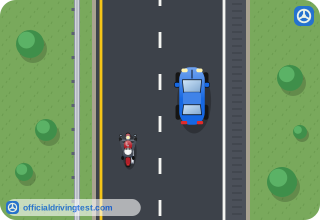
When should you check mirrors and blind spots for motorcycles?
- Before braking hard and when signaling to park
- Once per trip, just before you start the engine
- When driving on a freeway at night or in rain
- Before entering or leaving a lane and at intersections
Show answer
Correct answer: Before entering or leaving a lane and at intersections
The manual says to check mirrors and blind spots before entering or leaving a lane of traffic and at intersections.
Source: Arkansas Driver License Study Guide (Volume 1, Edition 10, October 2026), page 69 · Open this page in the manual (Manual page 69)
-
Why might a motorcyclist suddenly change speed or position within a lane?
- To react to potholes, gravel, or wet surfaces
- To show the driver behind how to pass safely
- To avoid using the brakes when at an intersection
- To let other motorcycles pass on the right
Show answer
Correct answer: To react to potholes, gravel, or wet surfaces
Motorcyclists may adjust to weather and road conditions that impair their braking and handling, and drivers should allow room.
Source: Arkansas Driver License Study Guide (Volume 1, Edition 10, October 2026), page 69 · Open this page in the manual (Manual page 69)
-
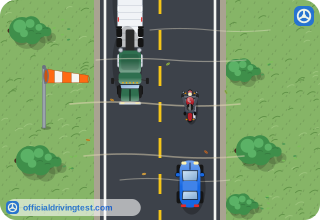
What can a strong gust of wind do to a motorcycle if the rider isn't prepared?
- Stop its engine
- Turn off its headlight
- Move it across an entire lane
- Push it onto the sidewalk
Show answer
Correct answer: Move it across an entire lane
The manual says a strong gust of wind can move a motorcycle across an entire lane if the rider isn't prepared.
Source: Arkansas Driver License Study Guide (Volume 1, Edition 10, October 2026), page 69 · Open this page in the manual (Manual page 69)
-
Why can a large vehicle such as a van, bus, or truck be a hazard to a motorcyclist?
- It forces the motorcycle to travel on the lane edge at all times
- It can hide the motorcycle so the rider suddenly appears from nowhere
- It prevents the motorcyclist from using the brakes in a turn
- It makes the motorcycle's engine overheat on long trips
Show answer
Correct answer: It can hide the motorcycle so the rider suddenly appears from nowhere
A large vehicle can block a motorcycle from a driver's view, causing the motorcyclist to suddenly appear from nowhere.
Source: Arkansas Driver License Study Guide (Volume 1, Edition 10, October 2026), page 69 · Open this page in the manual (Manual page 69)
-
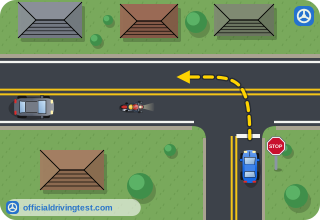
Before turning at an intersection, even if you see no cars coming, what should you do?
- Assume any motorcycle will yield to you at the intersection
- Sound your horn to warn any motorcycles that may be near
- Turn quickly before a motorcycle has time to arrive
- Take a second look for a motorcycle, especially before left turns
Show answer
Correct answer: Take a second look for a motorcycle, especially before left turns
The manual says to look twice for motorcyclists and take a second look before turning at an intersection, particularly for left turns.
Source: Arkansas Driver License Study Guide (Volume 1, Edition 10, October 2026), page 69 · Open this page in the manual (Manual page 69)
-
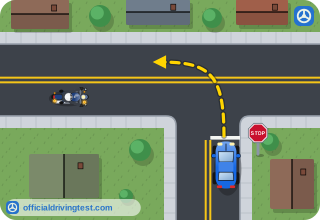
Why should you not be fooled by a flashing turn signal on a motorcycle?
- Motorcycle signals flash only when the rider is braking
- Motorcycle signals work only in the daytime
- Motorcycle signals don't cancel by themselves
- Motorcycle riders flash the signal to ask you to pass
Show answer
Correct answer: Motorcycle signals don't cancel by themselves
The manual says motorcycle signals do not cancel automatically, so wait and see if the motorcycle is going to turn before you proceed.
Source: Arkansas Driver License Study Guide (Volume 1, Edition 10, October 2026), page 70 · Open this page in the manual (Manual page 70)
-
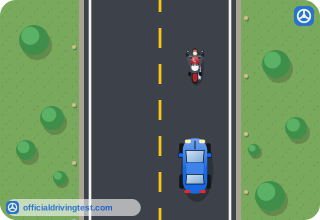
How much of the traffic lane is a motorcycle entitled to?
- Half of the lane
- A full lane
- The left part of the lane
- The right part of the lane
Show answer
Correct answer: A full lane
The manual says the motorcycle is entitled to a full lane, and drivers should not attempt to share the lane with it.
Source: Arkansas Driver License Study Guide (Volume 1, Edition 10, October 2026), page 70 · Open this page in the manual (Manual page 70)