Arizona: Speed and following distance
Arizona speed limits, following distance, scanning and driving at night and in bad weather. Split into 5 shorter tests so you're not stuck in one long quiz.
Independent educational site · not affiliated with any government agency or DMV
Choose a part
Speed and following distance — Part 1
Questions in this part include: “According to the manual, driving defensively will help protect what?”
StartSpeed and following distance — Part 2
Questions in this part include: “What causes most rear end crashes?”
StartSpeed and following distance — Part 3
Questions in this part include: “What should you do when you are driving slower than the traffic around you?”
StartSpeed and following distance — Part 4
Questions in this part include: “What may you need to do when driving into a strong head wind?”
StartSpeed and following distance — Part 5
Questions in this part include: “Which equipment does the manual suggest to help prevent skidding and reduce stopping distances in winter?”
StartAll 84 Speed and following distance questions with answers
Choose a part above to take a practice test, or study every question and answer here.
Show the questions and answersHide the questions
-
According to the manual, driving defensively will help protect what?
- Your insurance rate and registration
- Your vehicle's resale value and warranty
- Your life and your driving record
- Your license plate and vehicle title
Show answer
Correct answer: Your life and your driving record
The manual says driving defensively will help protect your life and your driving record.
Source: Arizona Driver License Manual and Customer Service Guide (Revised March 2026), page 22
-
According to the manual, which driving attitudes are the most important you can develop?
- Courtesy and consideration toward others
- Confidence and speed in traffic
- Assertiveness toward slower drivers
- Independence from other road users
Show answer
Correct answer: Courtesy and consideration toward others
The manual says courtesy and consideration toward others are the most important driving attitudes and the key to safe driving.
Source: Arizona Driver License Manual and Customer Service Guide (Revised March 2026), page 23
-
What does the manual mean by foresight?
- Memorizing all traffic laws well before you take the driving test
- Sizing up traffic situations quickly and being ready to take corrective action
- Planning your route before every trip to avoid unfamiliar roads
- Knowing how long a trip will take in normal traffic conditions
Show answer
Correct answer: Sizing up traffic situations quickly and being ready to take corrective action
Foresight means sizing up traffic situations as quickly as possible and being prepared to take corrective action.
Source: Arizona Driver License Manual and Customer Service Guide (Revised March 2026), page 23
-
What is the best way to prepare yourself for unpredictable events on the road?
- Drive only on familiar roads
- Drive faster than the traffic around you
- Avoid driving in bad weather
- Drive defensively
Show answer
Correct answer: Drive defensively
The manual says the best way to prepare for unpredictable events is to drive defensively.
Source: Arizona Driver License Manual and Customer Service Guide (Revised March 2026), page 23
-
As a defensive driver, what should you constantly do?
- Look ahead of you and around you, and always check your mirrors
- Watch only the road surface directly ahead of your hood
- Keep your eyes on your mirrors while approaching hazards
- Concentrate on the vehicle in front and ignore other traffic
Show answer
Correct answer: Look ahead of you and around you, and always check your mirrors
A defensive driver constantly looks ahead and around and always checks the mirrors, staying aware of hazards in front, to the sides and behind.
Source: Arizona Driver License Manual and Customer Service Guide (Revised March 2026), page 23
-
According to the manual, what problems do experienced drivers often face?
- Fear of driving at night and in bad weather conditions
- Carelessness, overconfidence and bad driving habits
- Difficulty understanding new vehicle technology and gadgets
- Poor eyesight and slower reactions than new drivers have
Show answer
Correct answer: Carelessness, overconfidence and bad driving habits
Experienced drivers often face carelessness, overconfidence and bad driving habits that develop over time.
Source: Arizona Driver License Manual and Customer Service Guide (Revised March 2026), page 24
-
What will determine how safe a driver you really are?
- The number of years you have been driving
- The type of vehicle that you drive
- Your record of crash-free miles driven
- Your ability to adjust and adapt to changes
Show answer
Correct answer: Your ability to adjust and adapt to changes
The manual says your ability to adjust and adapt to changes in rules, techniques and traffic determines how safe you really are.
Source: Arizona Driver License Manual and Customer Service Guide (Revised March 2026), page 24
-
How does the manual define a skill?
- A well-rehearsed driving strategy of anticipation and reaction
- A natural talent for driving that practice and instruction cannot improve
- A set of driving rules that must be memorized before the written test
- A technique for handling the vehicle in emergencies such as skids or blowouts
Show answer
Correct answer: A well-rehearsed driving strategy of anticipation and reaction
A skill is a well-rehearsed driving strategy involving anticipation, reaction and the constant changing of the space between vehicles.
Source: Arizona Driver License Manual and Customer Service Guide (Revised March 2026), page 24
-
According to the manual, how can your improvement as a driver be measured?
- How quickly you can reach your destination
- The number of years you have held your license
- Eliminating risk-taking and obeying speed limits
- How many hours of driving you log each month
Show answer
Correct answer: Eliminating risk-taking and obeying speed limits
The manual says improvement is measured in your elimination of risk-taking, adherence to speed limits and ability to take corrective action.
Source: Arizona Driver License Manual and Customer Service Guide (Revised March 2026), page 24
-
What is the proper way to stay in your lane of travel?
- Keep your eyes on the pavement directly in front of your car
- Look well ahead and make only slight steering corrections as needed
- Make frequent firm steering adjustments to stay centered
- Follow closely behind the vehicle ahead to match its path
Show answer
Correct answer: Look well ahead and make only slight steering corrections as needed
The manual says to look well ahead and make only slight steering corrections as needed.
Source: Arizona Driver License Manual and Customer Service Guide (Revised March 2026), page 24
-
Drivers tend to steer toward what?
- What they are hearing
- The center of their lane
- The vehicle ahead of them
- What they are looking at
Show answer
Correct answer: What they are looking at
The manual says drivers tend to steer towards what they are looking at.
Source: Arizona Driver License Manual and Customer Service Guide (Revised March 2026), page 24
-
When driving in a curve, where should you look to be more likely to stay within your lane?
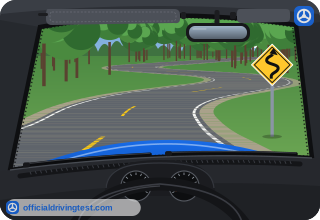
- Generally to the outside of your lane of travel
- Toward the inside edge of the curve ahead of you
- At the center line of the road until the curve ends
- Directly at the rear bumper of the vehicle ahead
Show answer
Correct answer: Generally to the outside of your lane of travel
Looking generally to the outside of your lane while in a curve makes you more likely to stay within your lane.
Source: Arizona Driver License Manual and Customer Service Guide (Revised March 2026), page 24
-
Which of these is named as an area where cars, people or animals may cross your path?
- Tunnels
- Mountain passes
- Playgrounds
- Interstate bridges
Show answer
Correct answer: Playgrounds
The manual names intersections, crosswalks, shopping centers, construction areas and playgrounds as such areas.
Source: Arizona Driver License Manual and Customer Service Guide (Revised March 2026), page 24
-
To avoid the need for last-minute decision making, how far ahead should you look?
- About one city block
- About one mile
- About two car lengths
- About one-half mile
Show answer
Correct answer: About one city block
The manual says to look ahead for a distance of about one city block.
Source: Arizona Driver License Manual and Customer Service Guide (Revised March 2026), page 25
-
What will frequently checking the traffic behind you tell you?
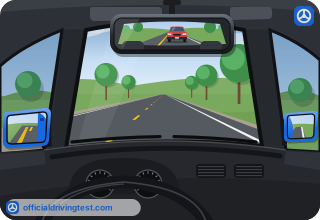
- When a vehicle ahead of you is about to change lanes
- When someone is tailgating or moving up too quickly
- Whether the road behind you has any hazards or potholes
- How fast the vehicle ahead of you is traveling
Show answer
Correct answer: When someone is tailgating or moving up too quickly
Checking traffic behind you frequently lets you know when someone is tailgating or moving up too quickly.
Source: Arizona Driver License Manual and Customer Service Guide (Revised March 2026), page 25
-
In the "3-6 second" rule, what does it mean if you pass the same point before you finish counting?
- You have the correct following distance
- The vehicle ahead is traveling too slowly
- You are following too closely
- You are driving at a safe speed
Show answer
Correct answer: You are following too closely
The manual says that passing the same point before you finish counting means you are following too closely.
Source: Arizona Driver License Manual and Customer Service Guide (Revised March 2026), page 25
-
How does the manual say to create a space cushion around your vehicle?
- By staying close to the right edge of your lane
- By driving slightly faster than surrounding traffic
- By keeping close to the vehicle ahead of you
- By staying in the middle of your lane
Show answer
Correct answer: By staying in the middle of your lane
The manual says to create a space cushion by staying in the middle of your lane.
Source: Arizona Driver License Manual and Customer Service Guide (Revised March 2026), page 25
-
What causes most rear end crashes?
- Sudden lane changes
- Following too closely
- Poor road conditions
- Brake failure
Show answer
Correct answer: Following too closely
The manual states that most rear end crashes are caused by following too closely.
Source: Arizona Driver License Manual and Customer Service Guide (Revised March 2026), page 25
-
At high speeds, what happens to the distance your vehicle travels while you are reacting to a problem?
- It is shorter, so your margin for error is greater
- It is greater, and your margin for error is less
- It stays the same at every speed
- It is greater, but your margin for error is also greater
Show answer
Correct answer: It is greater, and your margin for error is less
At high speeds the distance traveled while reacting is greater and the margin for error is less.
Source: Arizona Driver License Manual and Customer Service Guide (Revised March 2026), page 25
-
At faster speeds, how should your following distance compare with your distance at slower speeds?
- It should be the same
- It should be smaller
- It should be shorter on freeways
- It should be greater
Show answer
Correct answer: It should be greater
The manual says that at faster speeds the following distance should be greater.
Source: Arizona Driver License Manual and Customer Service Guide (Revised March 2026), page 25
-
How can you help the driver behind you maintain a safe following distance?
- Tap your brakes repeatedly to warn the driver to drop back
- Drive at the lowest speed that traffic conditions allow
- Drive at a constant speed and signal before slowing
- Stay in the left lane so the driver can pass you easily
Show answer
Correct answer: Drive at a constant speed and signal before slowing
The manual says to drive at a constant speed and signal in advance whenever you are slowing or stopping.
Source: Arizona Driver License Manual and Customer Service Guide (Revised March 2026), page 25
-
If another driver is following you too closely, what should you do first?
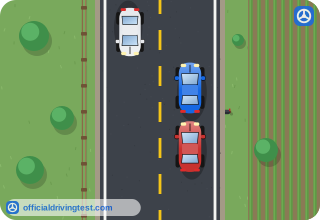
- Gradually slow down and increase the space in front of you
- Speed up quickly to open a gap between you and the driver
- Brake hard for a moment to warn the driver to back off
- Stay at the same speed and ignore the driver behind you
Show answer
Correct answer: Gradually slow down and increase the space in front of you
The manual says to gradually slow down and give additional cushion between you and the vehicle in front.
Source: Arizona Driver License Manual and Customer Service Guide (Revised March 2026), page 25
-
When it is safe, what can you do to encourage a tailgater to pass?
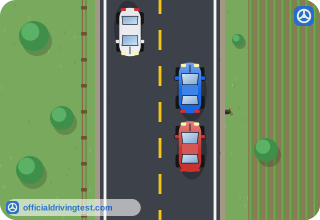
- Flash your brake lights repeatedly
- Speed up until you leave the driver behind
- Move to another lane
- Stop on the shoulder until the driver passes
Show answer
Correct answer: Move to another lane
The manual says that when safe you can move to another lane to encourage the tailgater to pass.
Source: Arizona Driver License Manual and Customer Service Guide (Revised March 2026), page 26
-
What are blind spots?
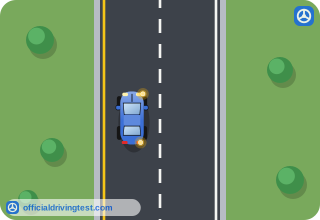
- Areas directly in front of your vehicle hidden by the hood
- Areas to the left and right of your vehicle not visible in your mirror
- Areas behind your vehicle that cannot be seen through the rear window
- Areas on the road ahead that are hidden by curves or hills
Show answer
Correct answer: Areas to the left and right of your vehicle not visible in your mirror
Blind spots are areas on the left and right sides of your vehicle that are not visible in your mirror.
Source: Arizona Driver License Manual and Customer Service Guide (Revised March 2026), page 26
-
Vehicles parked too close to an intersection block your view. What should you do?
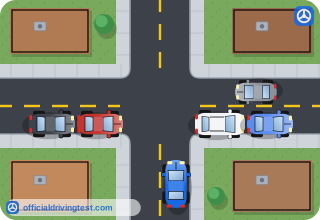
- Sound your horn and cross the intersection quickly
- Accelerate through the intersection before traffic arrives
- Back up and turn onto a different street
- Slowly inch your vehicle forward until you have a clear view
Show answer
Correct answer: Slowly inch your vehicle forward until you have a clear view
In situations where parked vehicles, bushes, trees or buildings block your view, slowly inch forward until you have a clear view, then proceed when the way is clear.
Source: Arizona Driver License Manual and Customer Service Guide (Revised March 2026), page 26
-
What should you do if you find yourself in another driver's blind spot?
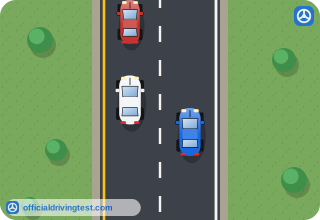
- Stay alongside and match the speed of the other vehicle
- Flash your headlights while staying next to the vehicle
- Speed up or drop back; never stay there for an extended time
- Stay in place and sound your horn until the driver sees you
Show answer
Correct answer: Speed up or drop back; never stay there for an extended time
The manual says to speed up or drop back and never stay in a blind spot area for an extended time.
Source: Arizona Driver License Manual and Customer Service Guide (Revised March 2026), page 26
-
What is “tailgating”?
- Driving too slowly in the left lane
- Merging without signaling
- Following the car ahead of you too closely
- Passing on the right
Show answer
Correct answer: Following the car ahead of you too closely
The manual defines tailgating as following the car ahead of you too closely.
Source: Arizona Driver License Manual and Customer Service Guide (Revised March 2026), page 32
-
When no speed limit is posted, what is the speed limit in any business or residential district?
- 20 mph
- 30 mph
- 25 mph
- 35 mph
Show answer
Correct answer: 25 mph
The manual lists 25 mph in any business or residential district when no limit is posted.
Source: Arizona Driver License Manual and Customer Service Guide (Revised March 2026), page 40
-
When no speed limit is posted, what is the speed limit on open highways or city freeways?
- 45 mph
- 55 mph
- 50 mph
- 60 mph
Show answer
Correct answer: 55 mph
The manual lists 55 mph on open highways or city freeways when no limit is posted.
Source: Arizona Driver License Manual and Customer Service Guide (Revised March 2026), page 40
-
When no speed limit is posted, what is the speed limit on designated open highways?
- 50 mph
- 60 mph
- 70 mph
- 65 mph
Show answer
Correct answer: 65 mph
The manual lists 65 mph on designated open highways when no limit is posted.
Source: Arizona Driver License Manual and Customer Service Guide (Revised March 2026), page 40
-
When no speed limit is posted, what is the speed limit on rural freeways?
- 75 mph
- 60 mph
- 70 mph
- 80 mph
Show answer
Correct answer: 75 mph
The manual lists 75 mph on rural freeways when no limit is posted.
Source: Arizona Driver License Manual and Customer Service Guide (Revised March 2026), page 40
-
How long should you stay slowed down at a place marked with an orange recommended-speed sign?
- Until you pass the next white speed limit sign
- For one mile after the sign
- Until the vehicles behind you pass
- Until you are assured of safely navigating the location
Show answer
Correct answer: Until you are assured of safely navigating the location
The manual says to slow down until you are assured of safely navigating the location.
Source: Arizona Driver License Manual and Customer Service Guide (Revised March 2026), page 40
-
For which driving conditions are speed limits set?
- The best driving conditions
- Average traffic and weather conditions
- Heavy rain and fog
- Nighttime driving on open roads
Show answer
Correct answer: The best driving conditions
Speed limits are set for the best driving conditions, so you must reduce your speed to a reasonable level in bad weather.
Source: Arizona Driver License Manual and Customer Service Guide (Revised March 2026), page 40
-
What should you do about the distance between you and the vehicle in front when driving in bad weather?
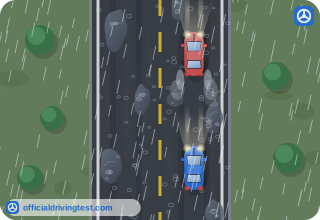
- Keep the same distance and use your headlights
- Increase it by one car length only
- Double the following distance and reduce speed
- Reduce it so you can see the road better
Show answer
Correct answer: Double the following distance and reduce speed
When driving in bad weather, double the following distance from the vehicle in front of you and reduce speed appropriately.
Source: Arizona Driver License Manual and Customer Service Guide (Revised March 2026), page 40
-
What should you do when you are driving slower than the traffic around you?
- Stay in the left lane with your hazard lights on
- Drive in the right lane and allow faster vehicles to pass
- Drive in the center of the road
- Speed up to the limit whatever the conditions
Show answer
Correct answer: Drive in the right lane and allow faster vehicles to pass
Remember to drive in the right lane and allow faster moving vehicles to pass whenever you are driving slower than traffic around you.
Source: Arizona Driver License Manual and Customer Service Guide (Revised March 2026), page 40
-
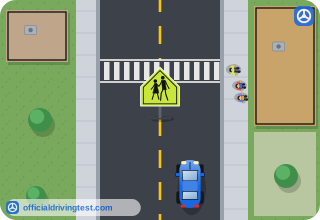
What is the maximum speed from the first portable school crossing sign to past the school crossing sign?
- 10 mph
- 15 mph
- 20 mph
- 30 mph
Show answer
Correct answer: 15 mph
The maximum speed from the first portable sign to past the school crossing sign is 15 mph.
Source: Arizona Driver License Manual and Customer Service Guide (Revised March 2026), page 42
-
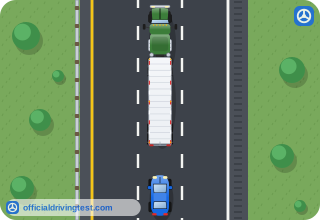
Why should you follow trucks at a safe distance?
- A truck’s load may fall on a car that follows at any distance
- Following too closely leaves too little time to react to changes
- A truck’s brake lights cannot be seen from a safe distance
- Trucks must be passed within a few seconds
Show answer
Correct answer: Following too closely leaves too little time to react to changes
Trucks are almost as wide as some lanes of travel. If you follow too closely behind, you won't be able to react quickly enough to changing traffic conditions.
Source: Arizona Driver License Manual and Customer Service Guide (Revised March 2026), page 52
-
According to the manual, what is the average driver reaction time (the time from perception of danger to the start of braking)?
- 0.75 seconds
- 0.25 seconds
- 1.5 seconds
- 3 seconds
Show answer
Correct answer: 0.75 seconds
The manual gives 0.75 seconds as the average driver reaction time.
Source: Arizona Driver License Manual and Customer Service Guide (Revised March 2026), page 53
-
On average, how long does it take a person to perceive a threat in the roadway and react to that threat?
- 0.75 seconds
- 3 seconds
- 1.5 seconds
- 6 seconds
Show answer
Correct answer: 1.5 seconds
The manual says it takes an average of 1.5 seconds to perceive a threat and react to it.
Source: Arizona Driver License Manual and Customer Service Guide (Revised March 2026), page 53
-
Which of these is listed in the manual as something braking distance is directly related to?
- The color and age of the vehicle
- Vehicle weight, including when loaded or towing
- The number of passengers wearing seat belts
- The brand of the vehicle's headlights
Show answer
Correct answer: Vehicle weight, including when loaded or towing
Braking distance depends on vehicle weight, including when the vehicle is loaded or towing.
Source: Arizona Driver License Manual and Customer Service Guide (Revised March 2026), page 53
-
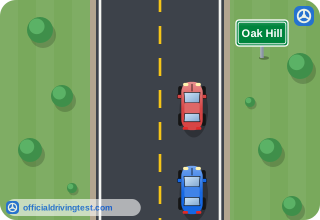
What following distance does the manual say to allow for most driving situations?
- At least 1 second
- At least 2 seconds
- At least 5 seconds
- At least 3 seconds
Show answer
Correct answer: At least 3 seconds
The manual says to allow at least a 3-second following distance for most driving situations.
Source: Arizona Driver License Manual and Customer Service Guide (Revised March 2026), page 53
-
A driver behind you wishes to pass. What does the manual say reducing your speed will do?
- Make the passing driver slow down too
- Warn the driver that you plan to turn
- Let that driver pass more quickly
- Raise the chance of being hit from behind
Show answer
Correct answer: Let that driver pass more quickly
Reducing your speed allows the driver behind you to pass more quickly.
Source: Arizona Driver License Manual and Customer Service Guide (Revised March 2026), page 53
-
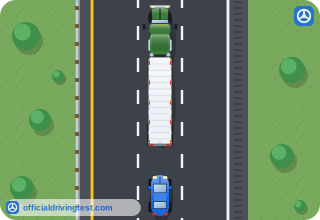
Why do you need extra following distance behind a tractor-trailer that blocks your view of the road ahead?
- To leave room in case it backs up
- To see around the vehicle ahead
- To stay clear of debris from its tires
- Because its brake lights are hard to see
Show answer
Correct answer: To see around the vehicle ahead
A large vehicle that blocks your field of vision means you need extra distance to see around it.
Source: Arizona Driver License Manual and Customer Service Guide (Revised March 2026), page 54
-
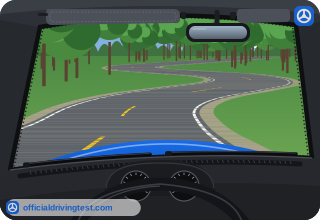
What should you do when approaching curves or hills that block your view of the roadway ahead on a rural highway?
- Keep your speed up so you clear the hill quickly
- Move to the center of the road for a better view
- Sound your horn and keep the same speed
- Stay alert, watch for warning signs, and slow down
Show answer
Correct answer: Stay alert, watch for warning signs, and slow down
The manual says to stay alert, watch for warning signs and slow down when curves or hills block your view.
Source: Arizona Driver License Manual and Customer Service Guide (Revised March 2026), page 54
-
What is the first rule of driving when bad weather reduces visibility and traction?
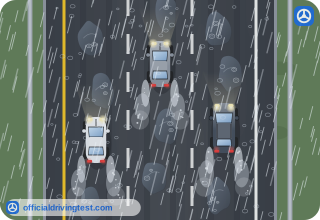
- Slow down
- Turn on your hazard lights
- Pull off the road at once
- Switch to high beams
Show answer
Correct answer: Slow down
The first rule is to slow down to make up for reduced visibility and reaction time.
Source: Arizona Driver License Manual and Customer Service Guide (Revised March 2026), page 54
-
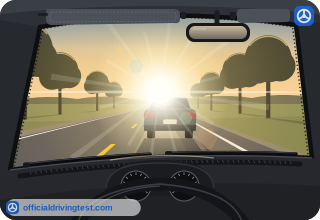
Which of these helps reduce sun glare when you drive into the sun?
- Turning on your high beams
- Driving with the windows down
- Keeping your windows clean
- Using your parking lights
Show answer
Correct answer: Keeping your windows clean
Glare can be reduced by wearing sunglasses, keeping windows clean and using sun visors.
Source: Arizona Driver License Manual and Customer Service Guide (Revised March 2026), page 54
-
When the sun is behind you, what problem may oncoming drivers have?
- Their headlights may not switch to low beam
- Glare that may hide your signals and your car
- Their windshields may fog up from the heat
- They may mistake your car for a parked one
Show answer
Correct answer: Glare that may hide your signals and your car
Oncoming drivers may have the glare problem and may not be able to see your signals or your car.
Source: Arizona Driver License Manual and Customer Service Guide (Revised March 2026), page 54
-
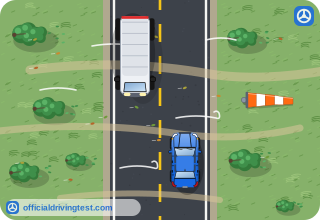
What should you do to gain more control over your vehicle in a strong wind?
- Speed up
- Drive near the center line
- Turn on your hazard flashers
- Slow down
Show answer
Correct answer: Slow down
The manual says to slow down to gain more control in a strong wind.
Source: Arizona Driver License Manual and Customer Service Guide (Revised March 2026), page 54
-
Which of these is very dangerous in strong winds, especially crosswinds?
- Driving a camper or large recreational vehicle
- Driving a car with new tires and a full tank
- Driving a vehicle with the windows closed
- Driving in the right lane of a highway
Show answer
Correct answer: Driving a camper or large recreational vehicle
Wind is very dangerous if you drive a camper or large recreational vehicle, or tow a trailer.
Source: Arizona Driver License Manual and Customer Service Guide (Revised March 2026), page 54
-
Which vehicles does the manual say are also more difficult to control in strong winds?
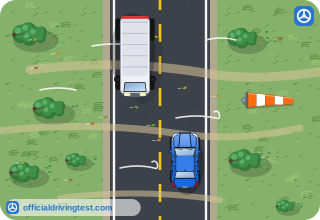
- Vehicles with four-wheel drive
- Vehicles with new tires
- Lightweight vehicles
- Vehicles with automatic gearboxes
Show answer
Correct answer: Lightweight vehicles
The manual says lightweight vehicles are more difficult to control in strong winds.
Source: Arizona Driver License Manual and Customer Service Guide (Revised March 2026), page 54
-
You drive from a protected area into an open space in a strong wind. What should you be alert for?
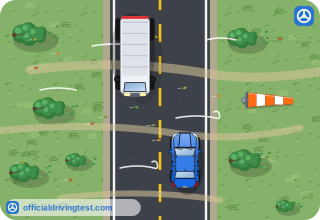
- Gusts that push your vehicle only toward the shoulder
- Crosswinds that push you to the side or middle of the road
- Dust that covers the lane markings on the road
- A sudden calm that makes the vehicle drift forward
Show answer
Correct answer: Crosswinds that push you to the side or middle of the road
After a protected area, crosswinds can push you to the side or middle of the road.
Source: Arizona Driver License Manual and Customer Service Guide (Revised March 2026), page 54
-
If you are pulling a trailer in a strong wind, what may the wind cause your vehicle to do?
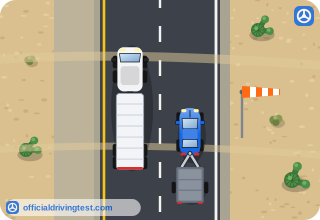
- Stall
- Stop suddenly
- Lose its brakes
- Sway
Show answer
Correct answer: Sway
The manual says the wind may cause a vehicle pulling a trailer to sway.
Source: Arizona Driver License Manual and Customer Service Guide (Revised March 2026), page 54
-
If you are pulling a trailer, what can the wind currents from large trucks or buses cause your vehicle to do?
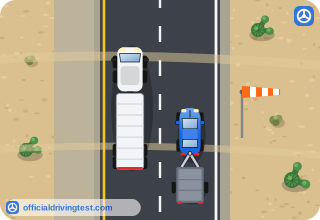
- Jackknife
- Roll backward
- Lose all braking power
- Hydroplane
Show answer
Correct answer: Jackknife
The manual warns that wind currents can cause a vehicle pulling a trailer to jackknife.
Source: Arizona Driver License Manual and Customer Service Guide (Revised March 2026), page 55
-
What should you do when a truck or bus is passing you on the left?
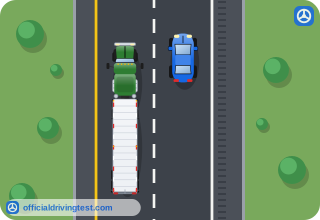
- Move toward the left side of your lane and hold speed
- Speed up so that you stay beside the vehicle
- Move as far right in your lane as possible and slow down
- Brake hard and stop in your lane
Show answer
Correct answer: Move as far right in your lane as possible and slow down
You move as far as possible to the right of your lane and slow down while the truck or bus passes.
Source: Arizona Driver License Manual and Customer Service Guide (Revised March 2026), page 55
-
While pulling a trailer, how should you accelerate as a truck or bus passes you?
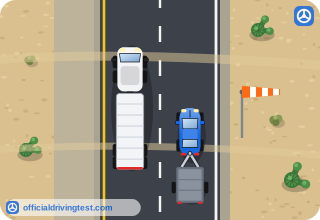
- Quickly, to pull away from the gusts
- Slowly, to keep the trailer in a straight path
- Not at all, until the vehicle is far ahead
- Gradually at first and then hard
Show answer
Correct answer: Slowly, to keep the trailer in a straight path
As the vehicle passes, you accelerate slowly to keep the trailer pulling in a straight path.
Source: Arizona Driver License Manual and Customer Service Guide (Revised March 2026), page 55
-
What may you need to do when driving into a strong head wind?
- Brake earlier before every stop
- Drive in the center of the road
- Turn on your high beams
- Accelerate more
Show answer
Correct answer: Accelerate more
Driving into a strong head wind may require more acceleration, and steering is more difficult.
Source: Arizona Driver License Manual and Customer Service Guide (Revised March 2026), page 55
-
A tailwind increases your speed. What does the manual say you will have to do?
- Decelerate and begin braking earlier to stop
- Accelerate more to keep a steady speed
- Brake later because the tires grip better
- Steer more firmly toward the road center
Show answer
Correct answer: Decelerate and begin braking earlier to stop
With a tailwind you must decelerate and begin braking earlier to stop.
Source: Arizona Driver License Manual and Customer Service Guide (Revised March 2026), page 55
-
Why should you wait a short time after rain begins before using your wipers?
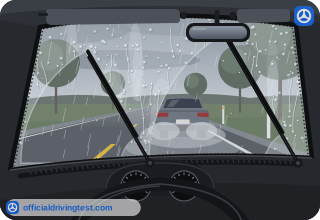
- The blades may freeze to a cold windshield
- The blades may smear a dirty windshield
- The wiper motor may overheat when dry
- Water on the glass makes your lights dim
Show answer
Correct answer: The blades may smear a dirty windshield
The blades may cause smearing if you have a dirty windshield.
Source: Arizona Driver License Manual and Customer Service Guide (Revised March 2026), page 55
-
How long after rain begins should you be extra careful because grime and oil mix with water on the road?
- 30 minutes
- 5 minutes
- 10 minutes
- 2 hours
Show answer
Correct answer: 30 minutes
Grime and oil on the road mix with water and make it slippery during the first 30 minutes after rain begins.
Source: Arizona Driver License Manual and Customer Service Guide (Revised March 2026), page 55
-
In a heavy rain, at what speed can your tires lose all contact with the road?
- 30 mph
- 40 mph
- 50 mph
- 70 mph
Show answer
Correct answer: 50 mph
At 50 mph in heavy rain your tires can lose all contact with the road.
Source: Arizona Driver License Manual and Customer Service Guide (Revised March 2026), page 55
-
How do under-inflated, worn or bald tires behave when the road is wet?
- They lose contact only above 70 mph
- They lose contact with the road at much lower speeds
- They grip as well as properly inflated tires
- They keep better contact because of more friction
Show answer
Correct answer: They lose contact with the road at much lower speeds
Under-inflated, worn or bald tires lose contact with the road at much lower speeds.
Source: Arizona Driver License Manual and Customer Service Guide (Revised March 2026), page 55
-
What is the best way to prevent hydroplaning?
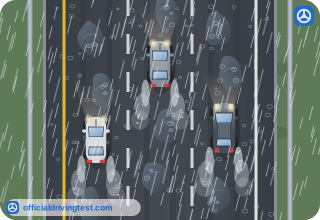
- Speed up
- Brake hard in every turn
- Steer firmly from side to side
- Slow down
Show answer
Correct answer: Slow down
The manual says the best way to prevent hydroplaning is to slow down.
Source: Arizona Driver License Manual and Customer Service Guide (Revised March 2026), page 55
-
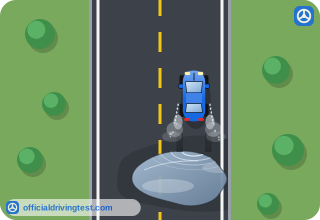
At what speed must you drive through water?
- At a slow and steady speed
- As fast as you can to avoid stalling
- Slowly at first, then faster in the middle
- At the speed of nearby traffic
Show answer
Correct answer: At a slow and steady speed
The manual says driving through water must be done at a slow and steady speed.
Source: Arizona Driver License Manual and Customer Service Guide (Revised March 2026), page 56
-
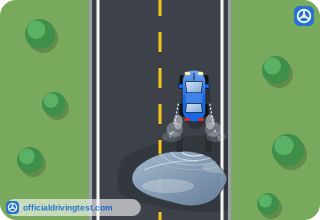
What may help keep your brakes dry while you drive through water?
- Keeping your feet completely off the pedals
- Applying the parking brake lightly
- Applying the brakes gently with your left foot
- Pumping the brakes hard with your right foot
Show answer
Correct answer: Applying the brakes gently with your left foot
Applying the brakes gently with your left foot may help keep them dry.
Source: Arizona Driver License Manual and Customer Service Guide (Revised March 2026), page 56
-
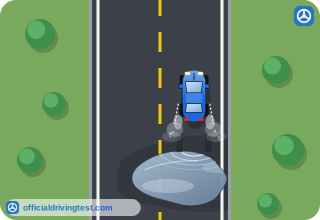
What should you do after you leave the water?
- Turn off the engine for a minute
- Check that your brakes will stop the car
- Speed up to dry the tires
- Turn on the wipers to dry the windshield
Show answer
Correct answer: Check that your brakes will stop the car
The manual says to check your brakes after leaving the water to see if they will stop the car.
Source: Arizona Driver License Manual and Customer Service Guide (Revised March 2026), page 56
-
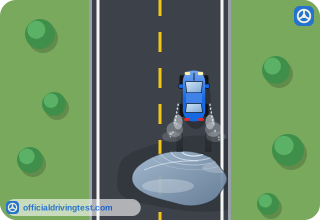
What may wet brakes do?
- Stay locked until the car has stopped
- Make the engine stall at once
- Wear the tires out evenly
- Suddenly grab or pull to one side
Show answer
Correct answer: Suddenly grab or pull to one side
If the brakes are wet, they may suddenly grab or pull to one side.
Source: Arizona Driver License Manual and Customer Service Guide (Revised March 2026), page 56
-
How do you dry wet brakes?
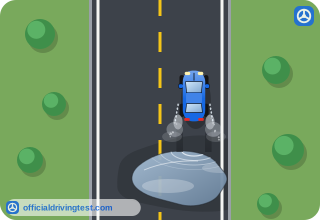
- Accelerate slowly while gently holding down the brake pedal
- Stop and wait with the engine off for an hour or more
- Press the brake pedal hard several times in a row
- Drive at high speed with your foot off both pedals
Show answer
Correct answer: Accelerate slowly while gently holding down the brake pedal
You dry them by accelerating slowly while gently holding down the brake pedal.
Source: Arizona Driver License Manual and Customer Service Guide (Revised March 2026), page 56
-
Which headlight setting should you use when driving in fog?
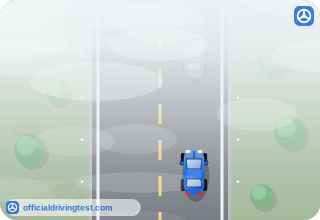
- High beams only
- Parking lights only
- Hazard flashers only
- Low beams only
Show answer
Correct answer: Low beams only
In fog you use low beams only and look for road edge markings to guide you.
Source: Arizona Driver License Manual and Customer Service Guide (Revised March 2026), page 56
-
What can fog do to your own headlights?
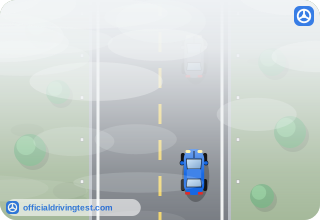
- Reflect them into your eyes
- Make them look dimmer to other drivers
- Turn them off automatically
- Spread their light evenly across the road
Show answer
Correct answer: Reflect them into your eyes
Fog reflects light and can reflect your own headlights into your eyes.
Source: Arizona Driver License Manual and Customer Service Guide (Revised March 2026), page 56
-
Even light fog reduces visibility and which other ability?
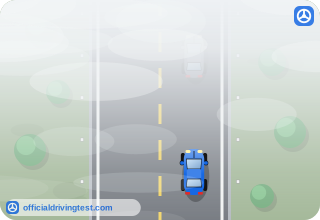
- Your ability to hear other horns
- Your ability to steer on dry pavement
- Your ability to judge distance
- Your ability to read dashboard gauges
Show answer
Correct answer: Your ability to judge distance
Even light fog reduces visibility and your ability to judge distance, so it is very important to slow down.
Source: Arizona Driver License Manual and Customer Service Guide (Revised March 2026), page 56
-
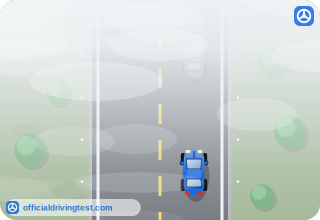
If you must pull off the road in fog, what should you do with your headlights?
- Leave them on high beam to be seen
- Turn them off and stay until the fog lifts
- Switch to parking lights and continue slowly
- Flash them to signal passing drivers
Show answer
Correct answer: Turn them off and stay until the fog lifts
The manual says to pull off the road and turn your headlights off, then stay there until the fog lifts.
Source: Arizona Driver License Manual and Customer Service Guide (Revised March 2026), page 56
-
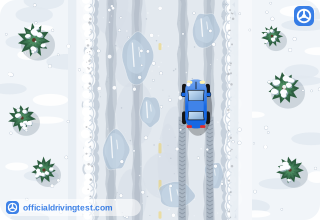
Why is turning on your headlights necessary when it is snowing?
- To melt snow on the windshield
- To warm the road ahead of you
- To keep the battery from freezing
- To see and to be seen
Show answer
Correct answer: To see and to be seen
Snow limits visibility, so headlights are necessary to see and to be seen.
Source: Arizona Driver License Manual and Customer Service Guide (Revised March 2026), page 56
-
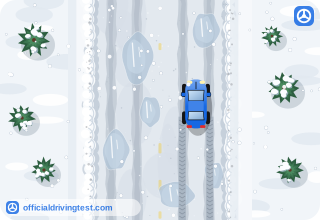
In snow, what may drivers tend to do that makes them pass closer to each other?
- Move away from the edge of the road
- Move onto the shoulder
- Drive on the center line
- Stop in the middle of the lane
Show answer
Correct answer: Move away from the edge of the road
Snow often covers lane markings, so drivers may move away from the road edge and pass closer to each other.
Source: Arizona Driver License Manual and Customer Service Guide (Revised March 2026), page 56
-
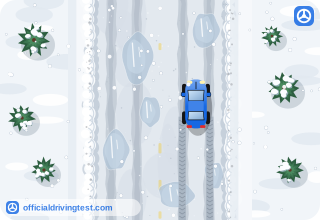
On slippery surfaces, your vehicle will respond better to what?
- Braking than to steering
- Acceleration than to steering
- Steering than to braking
- Steering and braking equally
Show answer
Correct answer: Steering than to braking
On slippery surfaces the front tires have the most traction and control when rolling, so steering works better than braking.
Source: Arizona Driver License Manual and Customer Service Guide (Revised March 2026), page 56
-
If you decide to brake on ice or other slippery surfaces, how should you apply the brakes?
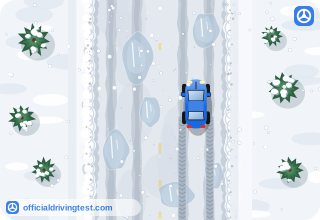
- Firmly at first, then ease off once the car slows
- Gently, increasing pressure as the tires grip the road
- Quickly pumping them as hard as you possibly can
- Hard enough to lock the wheels briefly to bite
Show answer
Correct answer: Gently, increasing pressure as the tires grip the road
You apply the brakes gently, increasing pressure as you feel the tires grip the road.
Source: Arizona Driver License Manual and Customer Service Guide (Revised March 2026), page 57
-
If your wheels lock while braking on ice, what should you do?
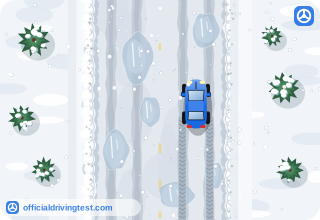
- Release the brakes completely and coast to a stop
- Press harder on the brakes until the car stops
- Shift into neutral and wait for the grip to return
- Ease slightly off the brakes, not releasing them fully
Show answer
Correct answer: Ease slightly off the brakes, not releasing them fully
You ease slightly off the brakes but do not release them completely, then apply and ease off again.
Source: Arizona Driver License Manual and Customer Service Guide (Revised March 2026), page 57
-
Before you start driving in winter, from which parts of your car should you clear snow or ice?
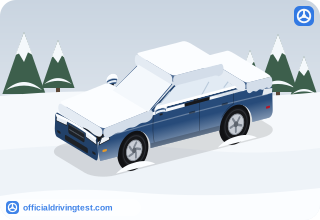
- All windows and lights
- Only the windshield
- Only the windshield and mirrors
- Only the headlights and taillights
Show answer
Correct answer: All windows and lights
The manual says to clear snow or ice from all windows and lights so you can see and be seen.
Source: Arizona Driver License Manual and Customer Service Guide (Revised March 2026), page 57
-
Which equipment does the manual suggest to help prevent skidding and reduce stopping distances in winter?
- Lower tire pressure
- Extra weight on the passenger seat
- Snow tires or chains
- Wider side mirrors
Show answer
Correct answer: Snow tires or chains
The manual suggests equipping your car with snow tires or chains.
Source: Arizona Driver License Manual and Customer Service Guide (Revised March 2026), page 57
-
Driving on packed snow is much like driving on what?
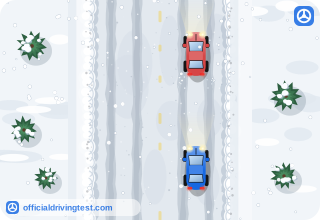
- Wet sand
- Ice
- Loose gravel
- Wet pavement
Show answer
Correct answer: Ice
The manual says driving on packed snow is much like driving on ice, so slow down before stopping or turning.
Source: Arizona Driver License Manual and Customer Service Guide (Revised March 2026), page 57
-
Which road surfaces freeze before other road surfaces?
- Tunnel floors
- Surfaces in sunny areas
- Surfaces at intersections
- Bridge surfaces
Show answer
Correct answer: Bridge surfaces
The manual says bridge surfaces freeze before other road surfaces.
Source: Arizona Driver License Manual and Customer Service Guide (Revised March 2026), page 57
-
Which of these is advised for safe winter driving?
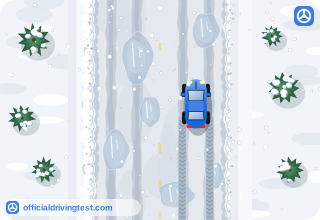
- Do not change speed or direction suddenly
- Make quick steering corrections on ice
- Accelerate in short bursts to keep traction
- Brake hard whenever the car begins to slide
Show answer
Correct answer: Do not change speed or direction suddenly
The manual advises not to change speed or direction suddenly.
Source: Arizona Driver License Manual and Customer Service Guide (Revised March 2026), page 57
-
How fast does the manual say you should drive at night?
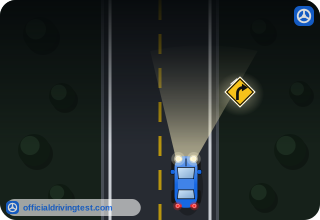
- No faster than the speed limit allows in the daytime
- Fast enough that you keep up with other traffic on the road
- Slow enough to stop within the distance you can see ahead
- As fast as the pavement allows when no cars are ahead of you
Show answer
Correct answer: Slow enough to stop within the distance you can see ahead
Headlights are a poor substitute for daylight, so you must be able to stop within the distance you can see ahead.
Source: Arizona Driver License Manual and Customer Service Guide (Revised March 2026), page 57
-
Along with committing a series of acts that present an immediate hazard, what else must you do to be cited for aggressive driving?
- Exceed the posted speed limit by at least 20 miles per hour
- Commit all of the listed violations in a single trip
- Exceed the posted speed limit and commit two of the listed violations
- Fail to yield to an emergency vehicle at least once
Show answer
Correct answer: Exceed the posted speed limit and commit two of the listed violations
The manual says aggressive driving requires a hazardous series of acts, exceeding the posted speed limit and committing two of the listed violations.
Source: Arizona Driver License Manual and Customer Service Guide (Revised March 2026), page 60
-
Which of these is one of the violations listed in the manual's definition of aggressive driving?
- Driving with a burned-out headlight
- Passing another vehicle on the right side
- Parking in a no-parking zone
- Failing to signal a turn into a driveway
Show answer
Correct answer: Passing another vehicle on the right side
The manual's list of aggressive driving violations includes passing another vehicle on the right side.
Source: Arizona Driver License Manual and Customer Service Guide (Revised March 2026), page 60