Washington: Seatbelts and child safety Practice Test
Washington’s seatbelt rules, child seats and airbags, and children and animals in a vehicle.
Independent educational site · not affiliated with any government agency or DMV
Ready? Test yourself
Answer to start, or tap Start below:
Who must wear a seat belt or be securely fastened into an approved child restraint device?
- Instant feedback with an explanation
- Every answer cites its source in the manual
- Your best score is saved on this device
- Keyboard: press 1 to 4 to answer and Enter for the next question
Questions are original and based on the official manual "Washington Driver Guide" (© 2025), Washington State Department of Licensing (DOL).
All 22 questions in this practice test
Take the test above first, then use this list to study. Tap “Show answer” to see the correct answer and explanation.
Show the questions and answersHide the questions
-
Where should a seat belt never be placed?
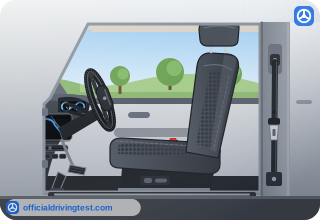
- Behind your back or under your arm
- Across the middle of your chest
- Snug across your shoulder and chest
- Falling across your midshoulder
Show answer
Correct answer: Behind your back or under your arm
The belt should cross the middle of the chest; it should never go behind your back or under your arm.
Source: Washington Driver Guide (© 2025), page 52 · Open this page in the manual (Manual page 52)
-
How should the shoulder belt lie?
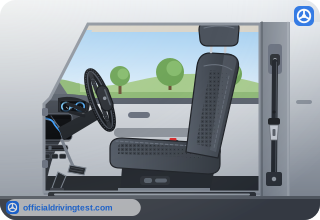
- Loosely across the shoulder and neck
- Snug across the neck and face
- Snug across the shoulder and chest
- Tucked under the arm closest to the door
Show answer
Correct answer: Snug across the shoulder and chest
The shoulder belt lies snug across the shoulder and chest and should not cross the neck or face.
Source: Washington Driver Guide (© 2025), page 52 · Open this page in the manual (Manual page 52)
-
Who must wear a seat belt or be securely fastened into an approved child restraint device?
- Only the driver and front-seat passengers
- Every person in a moving vehicle
- Only passengers under 18 years old
- Only people riding on highways
Show answer
Correct answer: Every person in a moving vehicle
Everyone in a moving vehicle must wear a seat belt or be fastened into an approved child restraint.
Source: Washington Driver Guide (© 2025), page 52 · Open this page in the manual (Manual page 52)
-
To use a seat belt properly, where should your knees bend?
- Against the back of the seat
- Past the front edge of the seat
- Underneath the dashboard
- At the edge of the seat
Show answer
Correct answer: At the edge of the seat
Your knees should bend at the edge of the seat and your feet should touch the floor.
Source: Washington Driver Guide (© 2025), page 53 · Open this page in the manual (Manual page 53)
-
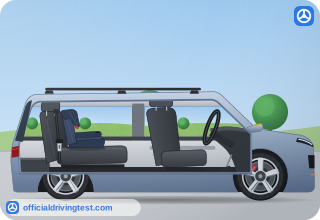
What should determine the correct seat for a child passenger?
- The child's preference
- The length of the trip
- The child's age and size
- The make of the vehicle
Show answer
Correct answer: The child's age and size
The guide says to use the correct seat for the child's age and size every time.
Source: Washington Driver Guide (© 2025), page 53 · Open this page in the manual (Manual page 53)
-
Child restraint systems must comply with which standards?
- Federal Motor Vehicle Safety Standards
- State Patrol seat inspection standards
- Department of Licensing booster standards
- International child seat standards
Show answer
Correct answer: Federal Motor Vehicle Safety Standards
Child restraint systems must comply with Federal Motor Vehicle Safety Standards.
Source: Washington Driver Guide (© 2025), page 53 · Open this page in the manual (Manual page 53)
-
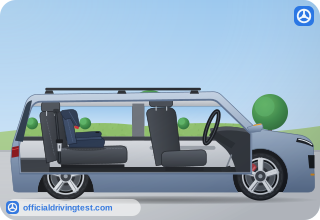
How must a child restraint system be secured in the vehicle?
- Following whatever method you find easiest to use
- Following the instructions of the nearest licensing office
- Following the guidance of a driver training instructor
- Following vehicle and child seat manufacturer instructions
Show answer
Correct answer: Following vehicle and child seat manufacturer instructions
A child restraint is secured as the vehicle maker and the child restraint maker instruct.
Source: Washington Driver Guide (© 2025), page 53 · Open this page in the manual (Manual page 53)
-
Who can check the installation of your child restraint system?
- A Department of Licensing driver examiner
- A certified child passenger safety technician
- A licensed vehicle maintenance technician
- A volunteer from the local school district
Show answer
Correct answer: A certified child passenger safety technician
A certified child passenger safety technician can check how your child restraint is installed.
Source: Washington Driver Guide (© 2025), page 53 · Open this page in the manual (Manual page 53)
-
How long should a child remain in each stage of restraint?
- As long as the seat allows for the best protection
- Until the child reaches the minimum age for the next stage
- Until the child asks to move to the next stage
- For exactly one year before moving to the next stage
Show answer
Correct answer: As long as the seat allows for the best protection
A child should stay in each stage as long as the seat allows, because that gives the best protection.
Source: Washington Driver Guide (© 2025), page 53 · Open this page in the manual (Manual page 53)
-
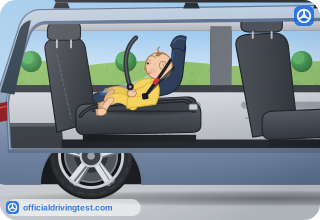
Up to what age must children ride in a rear-facing car seat?
- Up to age 1
- Up to age 3
- Up to age 2
- Up to age 4
Show answer
Correct answer: Up to age 2
Children up to age 2 must ride in a rear-facing car seat.
Source: Washington Driver Guide (© 2025), page 53 · Open this page in the manual (Manual page 53)
-
What must children ages 2 to 4 years ride in?
- A booster seat that uses the vehicle lap and shoulder belt
- A car seat with a rear- or forward-facing harness
- Only a rear-facing car seat, until they turn 4
- The vehicle's regular lap and shoulder belt alone
Show answer
Correct answer: A car seat with a rear- or forward-facing harness
Children from 2 to 4 years old must be in a car seat with a rear- or forward-facing harness.
Source: Washington Driver Guide (© 2025), page 54 · Open this page in the manual (Manual page 54)
-
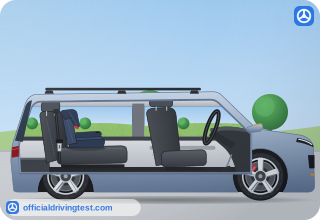
Children ages 4 and older must ride in a car or booster seat until when?
- Until they can sit in the front seat of the vehicle
- Until they turn 6 years old and can buckle themselves
- Until they are tall enough to see over the dashboard
- Until the vehicle lap and shoulder seat belts fit properly
Show answer
Correct answer: Until the vehicle lap and shoulder seat belts fit properly
Children 4 and older stay in a car or booster seat until the vehicle's lap and shoulder belts fit them properly.
Source: Washington Driver Guide (© 2025), page 54 · Open this page in the manual (Manual page 54)
-
At what ages do the vehicle lap and shoulder belts typically fit properly, ending the need for a booster seat?
- Between 4 and 6 years of age
- Between 5 and 7 years of age
- Between 8 and 12 years of age
- Between 13 and 15 years of age
Show answer
Correct answer: Between 8 and 12 years of age
The guide says the belts typically fit properly between the ages of 8 and 12.
Source: Washington Driver Guide (© 2025), page 54 · Open this page in the manual (Manual page 54)
-
In the guide's child restraint stages, what size is listed for using the vehicle seat belt?
- Over 4'9"
- Over 3'6"
- Over 4'0"
- Over 5'6"
Show answer
Correct answer: Over 4'9"
The seat belt stage is listed for occupants over 4 feet 9 inches tall.
Source: Washington Driver Guide (© 2025), page 54 · Open this page in the manual (Manual page 54)
-
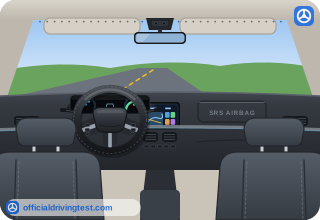
What is the risk if you are not wearing your seat belt when an airbag deploys?
- Only minor bruising
- Being fully protected by the airbag
- Nothing, because airbags replace seat belts
- Serious injury or death
Show answer
Correct answer: Serious injury or death
Airbags and seat belts work together; without the belt, a deploying airbag can seriously injure or kill you.
Source: Washington Driver Guide (© 2025), page 54 · Open this page in the manual (Manual page 54)
-
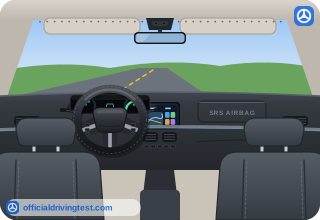
Children under what age should never ride in the front seat because of airbags?
- Under the age of 8
- Under the age of 13
- Under the age of 10
- Under the age of 15
Show answer
Correct answer: Under the age of 13
An airbag could seriously injure or kill a child under 13, so they should never ride in the front seat.
Source: Washington Driver Guide (© 2025), page 54 · Open this page in the manual (Manual page 54)
-
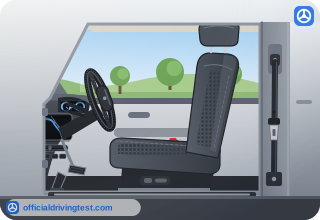
As part of safe, respectful, and responsible driver behavior, who should use safety restraints?
- Only the driver
- Only the front-seat passengers
- Only passengers younger than 16
- All people in the vehicle
Show answer
Correct answer: All people in the vehicle
The guide lists making sure all people in the vehicle use safety restraints as part of responsible driver behavior.
Source: Washington Driver Guide (© 2025), page 89 · Open this page in the manual (Manual page 89)
-
It is a crime to leave a child under what age unattended in a parked vehicle while the motor is running?
- 8
- 10
- 14
- 16
Show answer
Correct answer: 16
Leaving a child under 16 unattended in a parked vehicle with the motor running is a crime.
Source: Washington Driver Guide (© 2025), page 145 · Open this page in the manual (Manual page 145)
-
It is a crime to leave a child under what age unattended in a parked vehicle?
- 6
- 8
- 12
- 10
Show answer
Correct answer: 12
Leaving a child under 12 unattended in a parked vehicle is a crime.
Source: Washington Driver Guide (© 2025), page 145 · Open this page in the manual (Manual page 145)
-
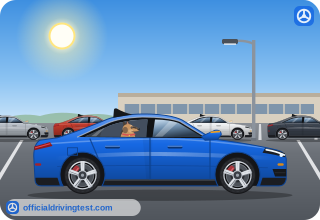
If no one nearby has access to a vehicle with a child or animal inside, what is law enforcement authorized to do?
- Wait for the owner to return before taking any action
- Only leave a warning notice on the windshield
- Only call the owner and wait for a reply
- Immediately remove them by any reasonable means
Show answer
Correct answer: Immediately remove them by any reasonable means
Law enforcement may immediately remove children or animals by any reasonable means to protect their health and safety.
Source: Washington Driver Guide (© 2025), page 145 · Open this page in the manual (Manual page 145)
-
An officer must remove a child or animal from a vehicle for legal or safety reasons. Who is responsible for damage to the vehicle?
- The officer’s agency alone
- Neither the officer nor the officer’s agency
- The officer who removed them
- The city or county where the vehicle is parked
Show answer
Correct answer: Neither the officer nor the officer’s agency
The officer and the agency employing the officer are not responsible for vehicle damage in such a removal.
Source: Washington Driver Guide (© 2025), page 145 · Open this page in the manual (Manual page 145)
-
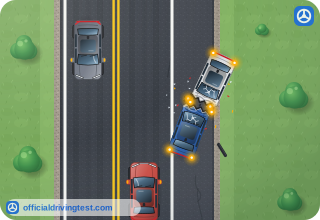
Which of these is listed as a common factor in fatal crashes?
- Poor road lighting
- Unrestrained occupants
- Older vehicles
- Rear-seat passengers
Show answer
Correct answer: Unrestrained occupants
The guide lists speed, impairment, distractions, unrestrained occupants and inexperience as common factors in fatal crashes.
Source: Washington Driver Guide (© 2025), page 154 · Open this page in the manual (Manual page 154)