Washington: Distracted and tired driving — Part 1 Practice Test
Questions in this part include: “When may an intermediate driver license holder use a phone while driving?” · “What should you do when driving if you are required to wear corrective lenses?”
Independent educational site · not affiliated with any government agency or DMV
Ready? Test yourself
Answer to start, or tap Start below:
When may an intermediate driver license holder use a phone while driving?
- Instant feedback with an explanation
- Every answer cites its source in the manual
- Your best score is saved on this device
- Keyboard: press 1 to 4 to answer and Enter for the next question
Questions are original and based on the official manual "Washington Driver Guide" (© 2025), Washington State Department of Licensing (DOL).
All 17 questions in this practice test
Take the test above first, then use this list to study. Tap “Show answer” to see the correct answer and explanation.
Show the questions and answersHide the questions
-
When may an intermediate driver license holder use a phone while driving?
- Only when using a hands-free device
- Only during daylight hours
- Only to report an emergency
- Only when the call is with a parent or guardian
Show answer
Correct answer: Only to report an emergency
Intermediate license laws restrict phone use even when hands-free, allowing it only to report an emergency.
Source: Washington Driver Guide (© 2025), page 29 · Open this page in the manual (Manual page 29)
-
As part of checking your internal adjustments, what should you confirm about your phone?
- It is silenced and put away
- It is charging in the cup holder
- It is within reach in case someone calls
- It is set to a loud ringtone
Show answer
Correct answer: It is silenced and put away
The routine asks whether your phone is silenced and put away before you drive.
Source: Washington Driver Guide (© 2025), page 66 · Open this page in the manual (Manual page 66)
-
What can stress affect while you are behind the wheel?
- Your ability to read road signs in other languages
- The air pressure in your tires
- Your ability to make wise decisions
- How quickly your engine warms up
Show answer
Correct answer: Your ability to make wise decisions
The guide says stress can impact your ability to make wise decisions behind the wheel.
Source: Washington Driver Guide (© 2025), page 68 · Open this page in the manual (Manual page 68)
-
What should you do if you are concerned about health conditions that might affect your driving ability?
- Wait until your next license renewal to mention it
- Talk to your doctor
- Drive only on roads you know well
- Avoid driving on freeways only
Show answer
Correct answer: Talk to your doctor
The guide advises talking to your doctor about any condition that might affect your driving.
Source: Washington Driver Guide (© 2025), page 68 · Open this page in the manual (Manual page 68)
-
You do not feel well but need to go somewhere. What does the guide ask you to do?
- Drive slowly and stay in the right lane
- Take a short drive first to see if you feel better
- Drive with the windows open for fresh air
- Let someone else drive
Show answer
Correct answer: Let someone else drive
The guide says that if you are not feeling well but need to go somewhere, you should let someone else drive.
Source: Washington Driver Guide (© 2025), page 69 · Open this page in the manual (Manual page 69)
-
What should you do when driving if you are required to wear corrective lenses?
- Wear them only when driving at night
- Wear them only on highways
- Always wear them
- Keep them in the glove box for emergencies
Show answer
Correct answer: Always wear them
The guide says that drivers required to wear corrective lenses should always wear them when driving.
Source: Washington Driver Guide (© 2025), page 69 · Open this page in the manual (Manual page 69)
-
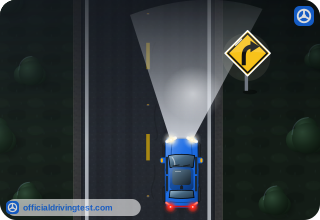
What should you avoid using at night if you wear corrective lenses?
- Clear glasses with thin frames
- Dark or tinted corrective lenses
- Contact lenses of any type
- Bifocal lenses of any kind
Show answer
Correct answer: Dark or tinted corrective lenses
The guide says to avoid dark or tinted corrective lenses at night.
Source: Washington Driver Guide (© 2025), page 69 · Open this page in the manual (Manual page 69)
-
What is peripheral vision?
- Reading road signs from a long distance away when the light is good
- Seeing clearly at night without any glare from oncoming headlights
- Keeping your eyes fixed straight ahead without ever moving them
- Spotting vehicles and trouble out of the corner of your eye while looking ahead
Show answer
Correct answer: Spotting vehicles and trouble out of the corner of your eye while looking ahead
Peripheral vision lets you notice vehicles and other possible trouble at the edge of your sight while you keep looking ahead.
Source: Washington Driver Guide (© 2025), page 69 · Open this page in the manual (Manual page 69)
-
How can you avoid the glare of oncoming lights when driving at night?
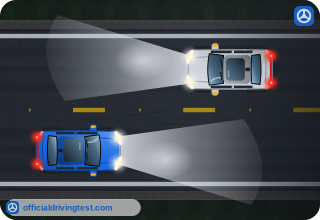
- Watch the right edge of the road and use it as a steering guide
- Look directly at the oncoming headlights to adjust your eyes
- Flash your high beams at the oncoming driver
- Turn off your headlights for a moment as the vehicle passes
Show answer
Correct answer: Watch the right edge of the road and use it as a steering guide
The guide says to avoid glare by watching the right edge of the road and steering by it.
Source: Washington Driver Guide (© 2025), page 70 · Open this page in the manual (Manual page 70)
-
What can the sound of horns, sirens, or screeching tires do for a driver?
- Show that a traffic signal is about to change
- Tell you that your vehicle needs service
- Signal that it is safe to change lanes
- Provide direction or warn you of danger
Show answer
Correct answer: Provide direction or warn you of danger
The guide says these sounds can give direction or warn you of danger, which is why hearing matters when driving.
Source: Washington Driver Guide (© 2025), page 70 · Open this page in the manual (Manual page 70)
-
How can drivers who are deaf or hard of hearing often adjust?
- By learning to rely more on vision and staying more alert
- By sounding the horn more often at every intersection
- By driving only during daylight hours on familiar roads
- By driving only on freeways where there are few vehicles
Show answer
Correct answer: By learning to rely more on vision and staying more alert
The guide says drivers who are deaf or hard of hearing can often adjust by relying more on vision and staying more alert.
Source: Washington Driver Guide (© 2025), page 70 · Open this page in the manual (Manual page 70)
-
What does the guide say about cell phone use for a driver with an instruction permit or intermediate license?
- Hands-free calls are allowed while the vehicle is moving
- Only texting is prohibited while the vehicle is moving
- Calls are allowed on residential streets with low speed limits
- No cell phone or mobile electronic device while driving, even hands-free
Show answer
Correct answer: No cell phone or mobile electronic device while driving, even hands-free
Instruction permit and intermediate license holders cannot use a cell phone or any mobile electronic device while driving, even if it is hands-free. An intermediate license holder may use a phone only to report an emergency.
Source: Washington Driver Guide (© 2025), page 70 · Open this page in the manual (Manual page 70)
-
Which of these can cause fatigue?
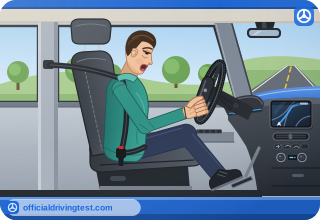
- Lack of sleep
- Driving with a travel companion
- Eating a light meal
- Wearing corrective lenses
Show answer
Correct answer: Lack of sleep
The guide lists physical or mental strain, repetitive tasks, illness, and lack of sleep as causes of fatigue.
Source: Washington Driver Guide (© 2025), page 75 · Open this page in the manual (Manual page 75)
-
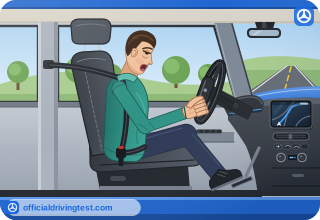
Like alcohol and drugs, fatigue impairs which two things?
- Your hearing and sense of smell
- Your muscle strength and balance
- Your vision and judgment
- Your handwriting and sense of time
Show answer
Correct answer: Your vision and judgment
The guide says that like alcohol and drugs, fatigue impairs your vision and judgment.
Source: Washington Driver Guide (© 2025), page 75 · Open this page in the manual (Manual page 75)
-
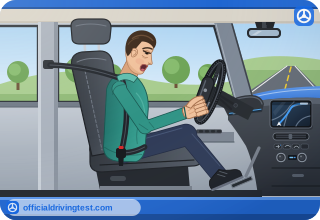
Which is a sign of fatigue that means you should pull over and rest?
- Feeling more alert with each mile
- Missing exits or traffic signs
- Seeing every exit well ahead of time
- Staying centered in your lane
Show answer
Correct answer: Missing exits or traffic signs
The guide lists missing exits or traffic signs among the signs of fatigue, and says to pull over and rest if you notice them.
Source: Washington Driver Guide (© 2025), page 75 · Open this page in the manual (Manual page 75)
-
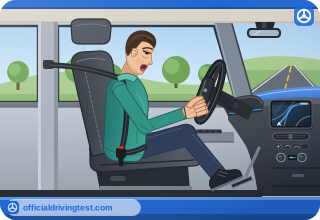
If you are traveling alone and start to feel tired, what should you do?
- Open the windows and keep driving to the next exit
- Turn up the radio and continue to your destination
- Slow down and keep driving until you arrive
- Pull off the road and take a 20-minute nap
Show answer
Correct answer: Pull off the road and take a 20-minute nap
The guide says a tired driver traveling alone should pull off the road and nap for 20 minutes, because stopping to sleep is better than risking a crash.
Source: Washington Driver Guide (© 2025), page 76 · Open this page in the manual (Manual page 76)
-
What does the guide suggest if you are traveling with another driver and start to feel tired?
- Take turns driving
- Keep driving while the passenger talks to you
- Drive faster to arrive sooner
- Let the passenger give directions while you keep driving
Show answer
Correct answer: Take turns driving
The guide says that when traveling with another driver, you should take turns driving.
Source: Washington Driver Guide (© 2025), page 76 · Open this page in the manual (Manual page 76)