Washington: Licensing basics — Part 6 Practice Test
Questions in this part include: “Because good vision is so important for safe driving, what does the law require before you get your driver license?” · “How does the guide say you can reduce the number of cars on the road?”
Independent educational site · not affiliated with any government agency or DMV
Ready? Test yourself
Answer to start, or tap Start below:
Because good vision is so important for safe driving, what does the law require before you get your driver license?
- Instant feedback with an explanation
- Every answer cites its source in the manual
- Your best score is saved on this device
- Keyboard: press 1 to 4 to answer and Enter for the next question
Questions are original and based on the official manual "Washington Driver Guide" (© 2025), Washington State Department of Licensing (DOL).
All 19 questions in this practice test
Take the test above first, then use this list to study. Tap “Show answer” to see the correct answer and explanation.
Show the questions and answersHide the questions
-
Because good vision is so important for safe driving, what does the law require before you get your driver license?
- Passing a vision test
- Passing a hearing test
- Passing a reaction-time test
- Passing a night-driving test
Show answer
Correct answer: Passing a vision test
The guide says the law requires you to pass a vision test before you get your driver license.
Source: Washington Driver Guide (© 2025), page 69 · Open this page in the manual (Manual page 69)
-
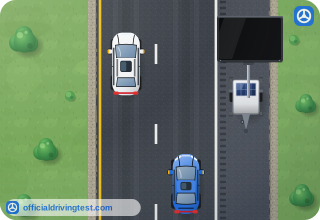
What are traffic advisories?
- Notices that tell drivers about upcoming changes to traffic laws and driving rules in their area
- Notifications that warn vehicle owners about vehicle recalls and repairs that are needed
- Notifications or alerts about current or upcoming traffic conditions, incidents, or road closures
- Alerts that tell drivers only about the weather conditions along a road that is used often
Show answer
Correct answer: Notifications or alerts about current or upcoming traffic conditions, incidents, or road closures
The guide defines traffic advisories as notifications or alerts about current or upcoming traffic conditions, incidents, or road closures.
Source: Washington Driver Guide (© 2025), page 89 · Open this page in the manual (Manual page 89)
-
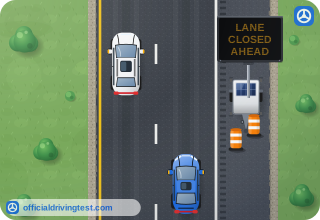
According to the guide, where do traffic advisories come from?
- Vehicle dealers, insurance companies, or tow truck operators
- Transportation officials, traffic management centers, or navigation apps
- Local schools, hospitals, or community centers
- Vehicle manufacturers, parts stores, or repair shops
Show answer
Correct answer: Transportation officials, traffic management centers, or navigation apps
The guide says advisories come from transportation officials, traffic management centers, or navigation apps.
Source: Washington Driver Guide (© 2025), page 89 · Open this page in the manual (Manual page 89)
-
Which of these is one way traffic advisories are provided?
- Printed letters mailed to drivers
- Notices attached to parked vehicles
- Stickers issued with vehicle registration
- Electronic road signs
Show answer
Correct answer: Electronic road signs
The guide lists electronic road signs, social media, radio broadcasts, traffic websites, and mobile apps.
Source: Washington Driver Guide (© 2025), page 89 · Open this page in the manual (Manual page 89)
-
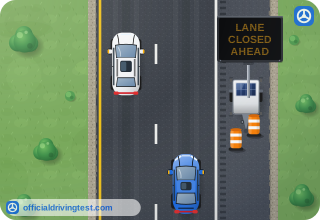
What can finding traffic advisories help you do?
- Make informed decisions about your travel routes
- Avoid having to obey signs that are posted
- Skip checking your mirrors on your trip
- Shorten the distance it takes you to stop
Show answer
Correct answer: Make informed decisions about your travel routes
The guide says advisories help you make informed route decisions and avoid delays or hazards.
Source: Washington Driver Guide (© 2025), page 89 · Open this page in the manual (Manual page 89)
-
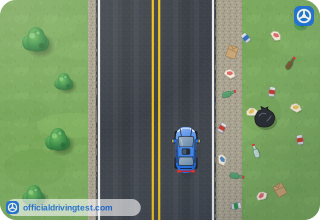
What can flammable or inflamed litter do?
- Damage the engine of passing vehicles
- Block storm drains
- Spark wildfires
- Make road signs hard to read
Show answer
Correct answer: Spark wildfires
The guide warns that flammable or inflamed litter can spark wildfires that damage the environment and can cause deaths.
Source: Washington Driver Guide (© 2025), page 90 · Open this page in the manual (Manual page 90)
-
Who is responsible for securing the items being transported and properly throwing away trash?
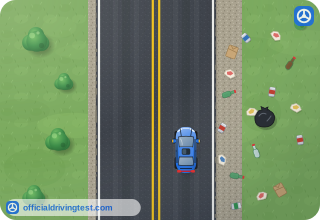
- Only the driver
- You and your passengers
- Only the registered owner of the vehicle
- Only the passengers
Show answer
Correct answer: You and your passengers
The guide says you and your passengers are responsible for securing transported items and disposing of trash properly.
Source: Washington Driver Guide (© 2025), page 90 · Open this page in the manual (Manual page 90)
-
What does Washington State law set for littering and illegal dumping?
- Maximum jail terms only
- Mandatory license suspensions
- Mandatory community service only
- Minimum fines
Show answer
Correct answer: Minimum fines
The guide says state law sets minimum fines for littering and illegal dumping.
Source: Washington Driver Guide (© 2025), page 90 · Open this page in the manual (Manual page 90)
-
How can local littering ordinances in cities and counties relate to state law?
- They may differ from state law
- They must be identical to state law
- They replace state law everywhere
- They do not exist in Washington
Show answer
Correct answer: They may differ from state law
The guide says many cities and counties have local ordinances that differ from state law.
Source: Washington Driver Guide (© 2025), page 90 · Open this page in the manual (Manual page 90)
-
What harmful gas can be released when you leave your car running while parked, especially in a garage?
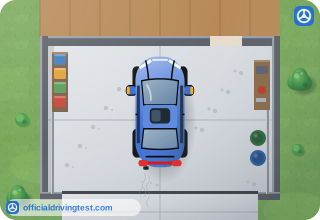
- Hydrogen
- Methane
- Carbon monoxide
- Ammonia
Show answer
Correct answer: Carbon monoxide
The guide warns that a running car in a garage can release carbon monoxide, which can be lethal.
Source: Washington Driver Guide (© 2025), page 90 · Open this page in the manual (Manual page 90)
-
To help lower vehicle emissions, what should you do with your engine if you are parked for a while?
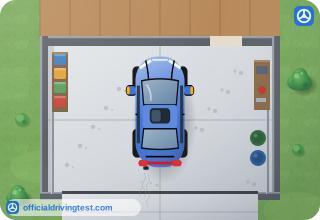
- Leave it idling so it stays warm
- Turn it off
- Run it at a low speed
- Let it idle for a few minutes first
Show answer
Correct answer: Turn it off
The guide says to turn off your engine if you will be parked for a while; idling adds pollution to the air.
Source: Washington Driver Guide (© 2025), page 90 · Open this page in the manual (Manual page 90)
-
What does keeping your tires properly inflated help improve?
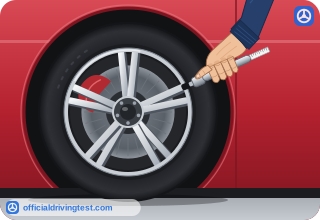
- Gas mileage
- Engine horsepower
- Brake light brightness
- Windshield visibility
Show answer
Correct answer: Gas mileage
The guide says properly inflated tires give better gas mileage.
Source: Washington Driver Guide (© 2025), page 90 · Open this page in the manual (Manual page 90)
-
How does the guide say you can reduce the number of cars on the road?
- Drive only during off-peak hours
- Leave the engine running while you wait
- Carpool or use public transport when possible
- Take the longest route available
Show answer
Correct answer: Carpool or use public transport when possible
The guide lists carpooling or using public transport as a way to cut the number of cars on the road and lower emissions.
Source: Washington Driver Guide (© 2025), page 90 · Open this page in the manual (Manual page 90)
-
Washington’s Clean Car Law requires vehicles made in which years to meet strict clean air standards before they can be registered, licensed, or sold?
- 1995 and later
- 2009 and later
- 2000 and later
- 2015 and later
Show answer
Correct answer: 2009 and later
The guide says the Clean Car Law applies to vehicles made in 2009 and later.
Source: Washington Driver Guide (© 2025), page 91 · Open this page in the manual (Manual page 91)
-
Who does the guide say to contact if you need to dispose of a vehicle or vehicle parts in an environmentally conscious way?
- Your local police department
- Your local sheriff’s office
- Your local county or city clerk’s office
- A vehicle disposal recycling center
Show answer
Correct answer: A vehicle disposal recycling center
The guide says to contact a vehicle disposal recycling center.
Source: Washington Driver Guide (© 2025), page 91 · Open this page in the manual (Manual page 91)
-
When can you do a self-evaluation of your driving?
- During or after the drive
- Only before you start a drive
- Only after receiving a ticket
- Only once a year
Show answer
Correct answer: During or after the drive
The guide says self-evaluation can be done during or after the drive.
Source: Washington Driver Guide (© 2025), page 91 · Open this page in the manual (Manual page 91)
-
What does the guide say happens to driving skills over time?
- They improve without practice
- They stay the same once learned
- They deteriorate
- They can never be lost
Show answer
Correct answer: They deteriorate
The guide says skills deteriorate over time, so regular evaluation helps you keep driving at your best.
Source: Washington Driver Guide (© 2025), page 91 · Open this page in the manual (Manual page 91)
-
To keep your driving skills fresh, which of these does the guide say you should identify?
- Changes in the price of fuel
- Changes in traffic laws
- Changes in your insurance company
- Changes in the color of your vehicle
Show answer
Correct answer: Changes in traffic laws
The guide lists changes in traffic laws, driving practices, and vehicle technology among the things to identify.
Source: Washington Driver Guide (© 2025), page 91 · Open this page in the manual (Manual page 91)
-
For as long as you drive, what is your responsibility regarding the rules of the road?
- To stay informed about the most current rules
- To retake the knowledge exam when rules change
- To report law changes to the Department of Licensing
- To renew your knowledge each time you renew your license
Show answer
Correct answer: To stay informed about the most current rules
Traffic laws can change, and it is your responsibility to stay informed about the most current rules of the road.
Source: Washington Driver Guide (© 2025), page 108 · Open this page in the manual (Manual page 108)