Washington: Alcohol and drugs
Impaired driving, BAC limits, implied consent, DUI consequences and the open container law. Split into 2 shorter tests so you're not stuck in one long quiz.
Independent educational site · not affiliated with any government agency or DMV
Choose a part
Alcohol and drugs — Part 1
Questions in this part include: “What is true about alcohol or drug offenses for a 16- or 17-year-old applying for a first driver license?”
Alcohol and drugs — Part 2
Questions in this part include: “Which penalties does the guide list for impaired driving under the influence of alcohol or drugs?”
Questions are original and based on the official manual "Washington Driver Guide" (© 2025), Washington State Department of Licensing (DOL).
All 36 Alcohol and drugs questions with answers
Choose a part above to take a practice test, or study every question and answer here.
Show the questions and answersHide the questions
1Part 118 questions
-
What is true about alcohol or drug offenses for a 16- or 17-year-old applying for a first driver license?
- One offense is allowed if you completed driver training
- Only offenses in the last 6 months before applying count
- They are ignored if a parent signs the authorization form
- None may have occurred while driving with the instruction permit
Show answer
Correct answer: None may have occurred while driving with the instruction permit
The applicant must have no alcohol or drug offenses while driving with the instruction permit.
Source: Washington Driver Guide (© 2025), page 26 · Open this page in the manual (Manual page 26)
-
What risk do minors who receive an alcohol, drug, or firearm offense run?
- Delaying their license until they are 16
- Delaying their license until they are 18
- Delaying their license until they are 21
- Delaying their license until they are 17
Show answer
Correct answer: Delaying their license until they are 17
Such an offense can delay a minor’s license until age 17.
Source: Washington Driver Guide (© 2025), page 36 · Open this page in the manual (Manual page 36)
-
When you are eligible to get your driver license back after an alcohol, drug, or firearm violation, what must you do about the exams?
- Take the knowledge and skills exams again
- Take only the skills exam, not the knowledge exam
- Take no exams if you have passed them before
- Take only the knowledge exam, not the skills exam
Show answer
Correct answer: Take the knowledge and skills exams again
Both exams must be taken again to get the license back, even if already passed.
Source: Washington Driver Guide (© 2025), page 36 · Open this page in the manual (Manual page 36)
-
If you are under 18 and eligible to get your license back after a violation, what else do you need?
- A letter from your school principal
- Proof of a second driver training course
- The consent of a parent or guardian
- A signed statement from a police officer
Show answer
Correct answer: The consent of a parent or guardian
Applicants under 18 need a parent or guardian’s consent in addition to the exams and fees.
Source: Washington Driver Guide (© 2025), page 36 · Open this page in the manual (Manual page 36)
-
DUI also applies to what situation, even if the vehicle is parked?
- Sitting in a vehicle that is turned off with the keys out of reach
- Being in control of a vehicle
- Leaving a vehicle parked overnight
- Riding as a passenger in a parked vehicle
Show answer
Correct answer: Being in control of a vehicle
A DUI can apply to being in control of a vehicle even when it is parked.
Source: Washington Driver Guide (© 2025), page 37 · Open this page in the manual (Manual page 37)
-
When are you considered in physical control of a vehicle?
- Only when the vehicle is moving
- Only when you hold the keys while the engine is running
- Only when you are in the driver seat with the lights on
- When you can take control of its engine or operation
Show answer
Correct answer: When you can take control of its engine or operation
Having the ability to take control of the engine or operation counts as physical control.
Source: Washington Driver Guide (© 2025), page 37 · Open this page in the manual (Manual page 37)
-
Under the Implied Consent Law, what does everyone who drives in Washington agree to?
- To be tested if an officer suspects impairment by alcohol or drugs
- To let any officer search the vehicle at a traffic stop
- To take the drive test again every time you renew your license
- To keep a spare driver license card in the vehicle
Show answer
Correct answer: To be tested if an officer suspects impairment by alcohol or drugs
Driving in Washington means you agree to be tested if an officer suspects alcohol or drug impairment.
Source: Washington Driver Guide (© 2025), page 37 · Open this page in the manual (Manual page 37)
-
For a driver age 21 or older, what BAC is considered a DUI?
- .02% or higher
- .04% or higher
- .08% or higher
- .10% or higher
Show answer
Correct answer: .08% or higher
Drivers 21 and older are considered DUI at a BAC of .08% or higher.
Source: Washington Driver Guide (© 2025), page 37 · Open this page in the manual (Manual page 37)
-
For a driver under age 21, what is the lowest BAC that carries the same potential consequences as a DUI?
- 0.00%
- 0.02%
- 0.04%
- 0.08%
Show answer
Correct answer: 0.02%
Drivers under 21 face the same potential consequences at a BAC of 0.02%.
Source: Washington Driver Guide (© 2025), page 37 · Open this page in the manual (Manual page 37)
-
If you refuse to be tested, how long could you lose your driving privilege?
- 90 to 730 days, or until you reach age 21, whichever is longer
- 30 to 90 days, or until you reach age 18, whichever is longer
- 180 to 365 days, or until you reach age 19, whichever is shorter
- 1 to 4 years, or until you reach age 25, whichever is longer
Show answer
Correct answer: 90 to 730 days, or until you reach age 21, whichever is longer
A refusal can mean a suspension of 90 to 730 days or until age 21, whichever is longer, depending on factors such as prior violations.
Source: Washington Driver Guide (© 2025), page 37 · Open this page in the manual (Manual page 37)
-
For how long can driving privileges be suspended after a DUI conviction?
- 30 days to 1 year
- 90 days to 4 years
- 6 months to 2 years
- 1 to 10 years
Show answer
Correct answer: 90 days to 4 years
A conviction can include a suspension of driving privileges for 90 days to 4 years.
Source: Washington Driver Guide (© 2025), page 38 · Open this page in the manual (Manual page 38)
-
Which of these can be part of a DUI conviction?
- Mandatory sale of the vehicle
- A lifetime ban on owning a vehicle
- Required service as a driver training instructor
- An ignition interlock device needed to drive the vehicle
Show answer
Correct answer: An ignition interlock device needed to drive the vehicle
An ignition interlock device is one of the possible consequences listed for a conviction.
Source: Washington Driver Guide (© 2025), page 38 · Open this page in the manual (Manual page 38)
-
Under the open container law, what kind of offense is it for a person in a vehicle on the road to drink alcohol or consume cannabis?
- A traffic infraction
- A felony
- A criminal misdemeanor punishable by jail
- A parking violation
Show answer
Correct answer: A traffic infraction
The open container law makes these acts a traffic infraction.
Source: Washington Driver Guide (© 2025), page 38 · Open this page in the manual (Manual page 38)
-
Who can commit an open container traffic infraction?
- Only the driver
- Only the driver and the front passenger
- Any person in a vehicle on the road
- Only people under age 21
Show answer
Correct answer: Any person in a vehicle on the road
The law applies to any person in a vehicle on the road, not only the driver.
Source: Washington Driver Guide (© 2025), page 38 · Open this page in the manual (Manual page 38)
-
Possessing which of these is an open container traffic infraction?
- Alcohol containers that are empty and stored at home
- Alcohol containers that are partially consumed
- Cannabis products bought and not yet taken to a vehicle
- A closed water bottle in a storage compartment
Show answer
Correct answer: Alcohol containers that are partially consumed
Possessing opened, broken-seal or partially consumed alcohol containers or cannabis products in a vehicle is a traffic infraction.
Source: Washington Driver Guide (© 2025), page 38 · Open this page in the manual (Manual page 38)
-
Which action is also an open container traffic infraction?
- Driving after buying alcohol at a store
- Driving with a passenger who is under age 21
- Parking overnight with an empty bottle left in the vehicle
- Hiding alcohol or cannabis in unlabeled or mislabeled containers
Show answer
Correct answer: Hiding alcohol or cannabis in unlabeled or mislabeled containers
The law also covers hiding alcohol or cannabis in unlabeled or mislabeled containers.
Source: Washington Driver Guide (© 2025), page 38 · Open this page in the manual (Manual page 38)
-
Where can open alcohol and cannabis products be transported?
- Only in a trunk or truck bed
- In the glove compartment
- Under the front seat
- In the back seat
Show answer
Correct answer: Only in a trunk or truck bed
Open alcohol and cannabis products can only be carried in a trunk or truck bed, never in storage compartments the driver can reach.
Source: Washington Driver Guide (© 2025), page 39 · Open this page in the manual (Manual page 39)
-
What does the guide say to do before you go out, so you can get home safe?
- Plan a sober ride
- Eat a full meal before driving home
- Ask a friend to follow you in their car
- Choose the shortest route home
Show answer
Correct answer: Plan a sober ride
The message in the guide is to get home safe by planning a sober ride before you go out.
Source: Washington Driver Guide (© 2025), page 71 · Open this page in the manual (Manual page 71)
2Part 218 questions
-
Which penalties does the guide list for impaired driving under the influence of alcohol or drugs?
- A written warning for a first offense, with no other penalty and no record
- Expensive fines, higher insurance rates, license suspension or withdrawal, and jail
- Community service only, with no effect on your license or insurance rates
- A short delay when you renew your driver license, but no fine or jail
Show answer
Correct answer: Expensive fines, higher insurance rates, license suspension or withdrawal, and jail
The guide calls the penalties very tough and lists fines, higher insurance rates, license suspension or withdrawal, and jail.
Source: Washington Driver Guide (© 2025), page 72 · Open this page in the manual (Manual page 72)
-
Who can drive safely after drinking alcohol or using drugs?
- An experienced driver who drives slowly
- Anyone who has eaten a full meal first
- Anyone who has had only a small amount
- No one, not even an experienced driver
Show answer
Correct answer: No one, not even an experienced driver
The guide says even an experienced driver cannot drive safely after drinking alcohol or using drugs.
Source: Washington Driver Guide (© 2025), page 72 · Open this page in the manual (Manual page 72)
-
Which of these can alcohol cause in a driver?
- Overconfidence, which can lead to risky driving behavior
- Sharper concentration on the road and the vehicles ahead
- Faster reaction times than you normally have when sober
- A better ability to scan the environment around you
Show answer
Correct answer: Overconfidence, which can lead to risky driving behavior
The guide lists overconfidence leading to risky driving behavior among alcohol effects, along with reduced reaction time and concentration.
Source: Washington Driver Guide (© 2025), page 72 · Open this page in the manual (Manual page 72)
-
Alcohol can make it difficult to do multiple tasks at once. Which example does the guide give?
- Checking your speedometer and changing the radio
- Reading a map and finding a parking space
- Staying in a lane and avoiding other traffic
- Backing up and listening for sirens
Show answer
Correct answer: Staying in a lane and avoiding other traffic
The guide gives staying in a lane while avoiding other traffic as the example of multitasking that alcohol makes harder.
Source: Washington Driver Guide (© 2025), page 72 · Open this page in the manual (Manual page 72)
-
What should you do about other drivers who show impaired driving behavior?
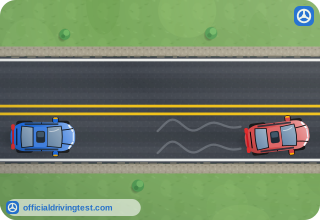
- Follow closely so you can report their plate number
- Be alert and give them lots of room
- Pass them quickly and flash your headlights
- Honk repeatedly to get their attention
Show answer
Correct answer: Be alert and give them lots of room
The guide tells you to be alert for impaired driving behavior of others and give them lots of room.
Source: Washington Driver Guide (© 2025), page 72 · Open this page in the manual (Manual page 72)
-
How much of an impairing substance must a driver have had before you should refuse to ride with them?
- Only a large amount
- Enough to make them feel dizzy
- Enough to slur their speech
- Any kind or amount
Show answer
Correct answer: Any kind or amount
The guide says not to ride with a driver who has had any kind or amount of impairing substances.
Source: Washington Driver Guide (© 2025), page 73 · Open this page in the manual (Manual page 73)
-
At what age is recreational use of marijuana, THC, and other cannabis products legal, according to the guide?
- 21 years or over
- 18 years or over
- 19 years or over
- 16 years or over
Show answer
Correct answer: 21 years or over
The guide says recreational use of cannabis products is legal for those 21 years or over.
Source: Washington Driver Guide (© 2025), page 73 · Open this page in the manual (Manual page 73)
-
According to the guide, how much cannabis is safe for driving?
- A small amount if you drive slowly
- Any amount taken as an edible instead of smoked
- No amount is safe
- An amount that does not make you feel drowsy
Show answer
Correct answer: No amount is safe
The guide states there is no safe amount of cannabis for driving.
Source: Washington Driver Guide (© 2025), page 73 · Open this page in the manual (Manual page 73)
-
Which of these can cannabis cause in a driver?
- Improved hand-eye coordination
- Inability to judge distances
- Faster reaction times than usual
- Less drowsiness than usual
Show answer
Correct answer: Inability to judge distances
Research cited in the guide says cannabis can cause an inability to judge distances, along with reduced attention and coordination.
Source: Washington Driver Guide (© 2025), page 73 · Open this page in the manual (Manual page 73)
-
What does the guide say about driving after using a drug that is legal?
- Legal drugs never affect your driving
- Only illegal drugs count as impaired driving
- A drug is safe to use if its label does not mention driving
- A drug being legal does not mean it is safe to use while driving
Show answer
Correct answer: A drug being legal does not mean it is safe to use while driving
The guide says that just because a drug is legal does not mean it is safe to use while driving.
Source: Washington Driver Guide (© 2025), page 74 · Open this page in the manual (Manual page 74)
-
How does the guide describe impaired driving, even when the drug is prescribed or bought over the counter?
- A criminal behavior
- A minor paperwork matter
- A civil dispute with your insurer
- Acceptable with a doctor’s note
Show answer
Correct answer: A criminal behavior
The guide says impaired driving is a criminal behavior regardless of whether the drug is prescribed, over-the-counter, or illicit.
Source: Washington Driver Guide (© 2025), page 74 · Open this page in the manual (Manual page 74)
-
What can over-the-counter drugs taken for headaches, colds, or allergies do?
- Increase your alertness for several hours
- Improve your judgment while driving
- Make a person drowsy, which could affect driving
- Sharpen your reflexes for a short time
Show answer
Correct answer: Make a person drowsy, which could affect driving
The guide notes these common drugs can make a person drowsy, which could affect driving.
Source: Washington Driver Guide (© 2025), page 74 · Open this page in the manual (Manual page 74)
-
What should you do before driving after you start taking a new prescription medicine?
- Drive only in daylight until you feel normal again after each dose
- Wait until you know how it affects your judgment, coordination, and reaction time
- Drive only on short trips close to home until you feel normal again
- Drive only with another adult in the vehicle for the first few weeks
Show answer
Correct answer: Wait until you know how it affects your judgment, coordination, and reaction time
The guide says to wait until you know how a new medicine affects your judgment, coordination, and reaction time.
Source: Washington Driver Guide (© 2025), page 74 · Open this page in the manual (Manual page 74)
-
Warnings on medicine against “operating heavy machinery” include which activity?
- Operating only farm equipment
- Driving only commercial vehicles
- Using power tools only
- Driving a vehicle
Show answer
Correct answer: Driving a vehicle
The guide says warnings against operating heavy machinery include driving a vehicle.
Source: Washington Driver Guide (© 2025), page 74 · Open this page in the manual (Manual page 74)
-
What can happen when a medication that is harmless on its own is taken with a second medication or alcohol?
- It could cause severe impairment
- It always cancels out the effect of the alcohol
- It makes you more alert
- Nothing, because each drug works separately
Show answer
Correct answer: It could cause severe impairment
The guide warns that some medications that do not affect you alone could cause severe impairment when taken with a second medication or alcohol.
Source: Washington Driver Guide (© 2025), page 74 · Open this page in the manual (Manual page 74)
-
What is polydrug use?
- Taking a single drug in a very large dose
- Using a drug that was prescribed for someone else
- Mixing or taking more than one type of drug
- Taking a drug for longer than recommended
Show answer
Correct answer: Mixing or taking more than one type of drug
The guide defines polydrug use as the mixing or taking of more than one type of drug.
Source: Washington Driver Guide (© 2025), page 75 · Open this page in the manual (Manual page 75)
-
What can mixing alcohol, cannabis, or other drugs produce?
- Weaker effects than either drug alone
- Effects greater than any drug on its own
- Effects that last only a few minutes
- The same effects as one drug taken alone
Show answer
Correct answer: Effects greater than any drug on its own
The guide says mixing drugs can produce effects greater than any drug on its own.
Source: Washington Driver Guide (© 2025), page 75 · Open this page in the manual (Manual page 75)
-
Polydrug use can lead to an increased probability of which of these?
- Lower insurance rates
- Faster reaction times
- Better judgment
- Overdose
Show answer
Correct answer: Overdose
The guide says polydrug use can lead to increased probability of overdose, mental health troubles, risky behavior, serious injuries, and crashes.
Source: Washington Driver Guide (© 2025), page 75 · Open this page in the manual (Manual page 75)