Work zone signs in Texas
The Texas Driver Handbook shows or names everything on this page: 24 in all, on pages 35–36.
Independent educational site · not affiliated with any government agency or DMV
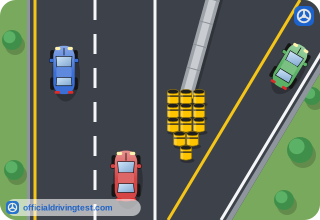
Crash-cushion barrels
Barrels that are engineered to act as an impact cushion reduce the seriousness of crashes. These barrels are usually installed in front of a solid obstacle and in areas of high crash frequency.
Manual page 35
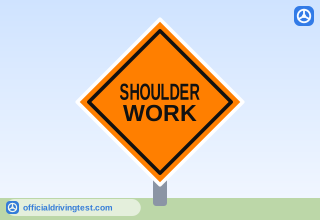
SHOULDER WORK
Construction and maintenance signs are used to alert drivers of unusual or potentially dangerous conditions in or near work zones.
Manual page 35
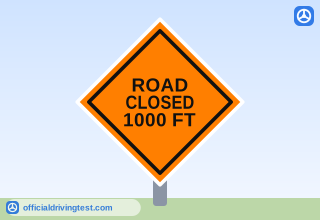
ROAD CLOSED 1000 FT
Construction and maintenance signs are used to alert drivers of unusual or potentially dangerous conditions in or near work zones.
Manual page 35
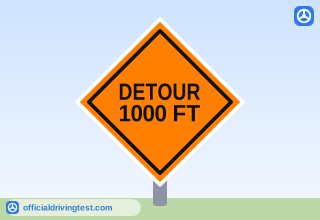
DETOUR 1000 FT
Construction and maintenance signs are used to alert drivers of unusual or potentially dangerous conditions in or near work zones.
Manual page 35
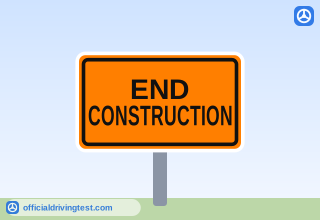
END CONSTRUCTION
Construction and maintenance signs are used to alert drivers of unusual or potentially dangerous conditions in or near work zones. (p.36: "There should be a sign indicating you are leaving the construction zone.")
Manual page 35
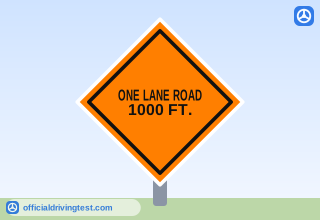
ONE LANE ROAD 1000 FT
Construction and maintenance signs are used to alert drivers of unusual or potentially dangerous conditions in or near work zones.
Manual page 35
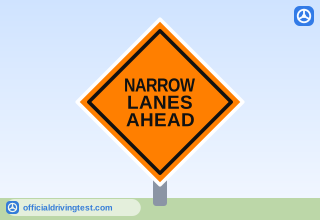
NARROW LANES AHEAD
Construction and maintenance signs are used to alert drivers of unusual or potentially dangerous conditions in or near work zones.
Manual page 35
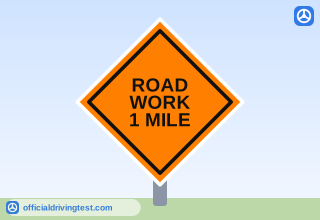
ROAD WORK 1 MILE
Construction and maintenance signs are used to alert drivers of unusual or potentially dangerous conditions in or near work zones.
Manual page 35
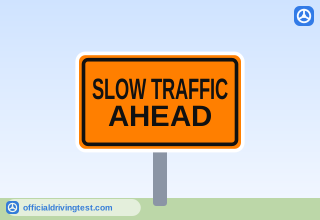
SLOW TRAFFIC AHEAD
Construction and maintenance signs are used to alert drivers of unusual or potentially dangerous conditions in or near work zones.
Manual page 35
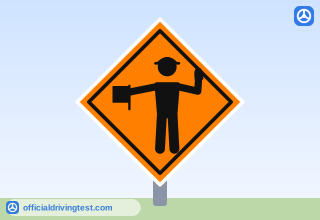
Flagger ahead 500 FEET
Construction and maintenance signs are used to alert drivers of unusual or potentially dangerous conditions in or near work zones.
Manual page 35
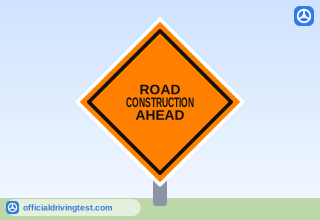
ROAD CONSTRUCTION AHEAD
Construction and maintenance signs are used to alert drivers of unusual or potentially dangerous conditions in or near work zones.
Manual page 35
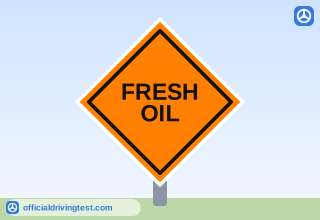
FRESH OIL
Construction and maintenance signs are used to alert drivers of unusual or potentially dangerous conditions in or near work zones.
Manual page 35
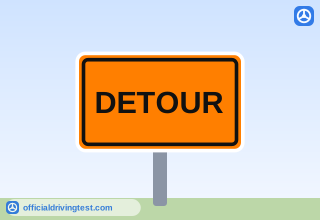
DETOUR
Construction and maintenance signs are used to alert drivers of unusual or potentially dangerous conditions in or near work zones.
Manual page 35
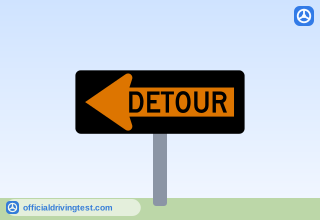
DETOUR arrow
Construction and maintenance signs are used to alert drivers of unusual or potentially dangerous conditions in or near work zones.
Manual page 35
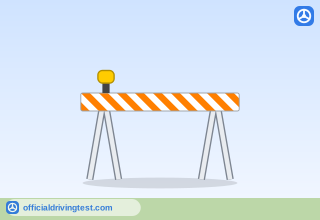
Barricade, one rail
Barricades, vertical panels, drums, cones, and tubes are the most commonly used devices to alert drivers of unusual or potentially dangerous conditions in highway and street work zones, and to guide drivers safely through the work zone. At night channelizing devices are often equipped with flashing or steady burn lights.
Manual page 36
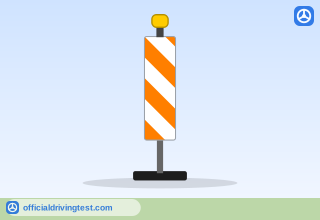
Vertical panel
Barricades, vertical panels, drums, cones, and tubes are the most commonly used devices to alert drivers of unusual or potentially dangerous conditions in highway and street work zones, and to guide drivers safely through the work zone.
Manual page 36
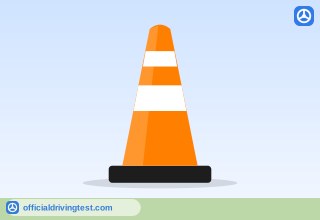
Traffic cone
Barricades, vertical panels, drums, cones, and tubes are the most commonly used devices to alert drivers of unusual or potentially dangerous conditions in highway and street work zones, and to guide drivers safely through the work zone.
Manual page 36
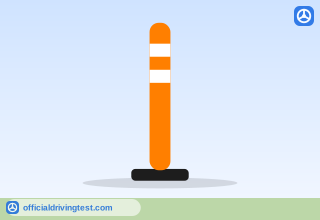
Tubular marker
Barricades, vertical panels, drums, cones, and tubes are the most commonly used devices to alert drivers of unusual or potentially dangerous conditions in highway and street work zones, and to guide drivers safely through the work zone.
Manual page 36
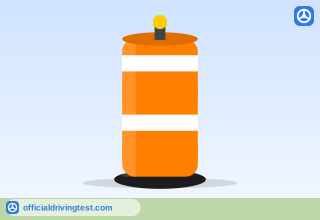
Drum
Barricades, vertical panels, drums, cones, and tubes are the most commonly used devices to alert drivers of unusual or potentially dangerous conditions in highway and street work zones, and to guide drivers safely through the work zone.
Manual page 36
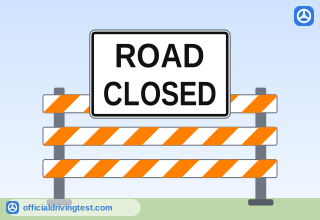
Road closed barricade
Barricades, vertical panels, drums, cones, and tubes are the most commonly used devices to alert drivers of unusual or potentially dangerous conditions in highway and street work zones, and to guide drivers safely through the work zone.
Manual page 36
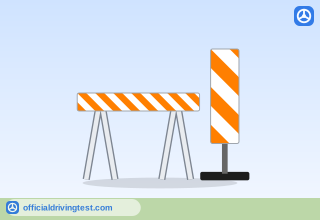
Pass to the right
The diagonal stripes on the barricade or vertical panel guide the driver towards the direction to where the traffic is to pass. Stripes sloping downward to the right means the driver should bear to the right.
Manual page 36
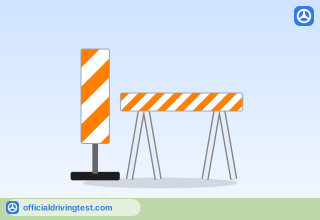
Pass to the left
The diagonal stripes on the barricade or vertical panel guide the driver towards the direction to where the traffic is to pass. Stripes sloping downward to the left means the driver should bear to the left.
Manual page 36
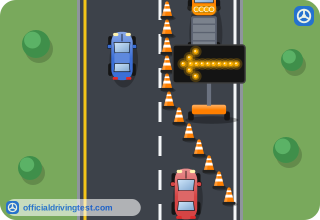
Flashing arrow panel
Large flashing or sequencing arrow panels may be used in work zones day and night to guide drivers into certain traffic lanes and to inform them part of the road ahead is closed.
Manual page 36
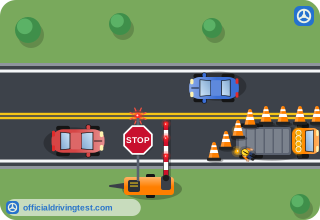
Automated flagger assistance device
An automated flagger assistance device (AFAD) is used to control road users through temporary traffic zones. An AFAD is designed to be remotely operated, allowing a flag person to be positioned out of the lane of traffic.
Manual page 36