Tennessee: Pedestrians — Part 3 Practice Test
Questions in this part include: “Which pedestrians does the manual describe as often the least predictable and the most difficult to see?” · “There is no sidewalk. Which side of the road should a pedestrian walk on?”
Independent educational site · not affiliated with any government agency or DMV
Ready? Test yourself
- Instant feedback with an explanation
- Every answer cites its source in the manual
- Your best score is saved on this device
- Keyboard: press 1 to 4 to answer and Enter for the next question
Questions are original and based on the official manual "Tennessee Comprehensive Driver License Manual" (March 2025 printing), Tennessee Department of Safety and Homeland Security.
All 16 questions in this practice test
Take the test above first, then use this list to study. Tap “Show answer” to see the correct answer and explanation.
Show the questions and answersHide the questions
-
Which pedestrians does the manual describe as often the least predictable and the most difficult to see?
- Elderly pedestrians
- Children
- Joggers in the road
- People who use wheelchairs
Show answer
Correct answer: Children
Children are often the least predictable and hardest-to-see pedestrians, so drivers need to take extra care around them.
Source: Tennessee Comprehensive Driver License Manual (March 2025 printing), page 103 · Open this page in the manual (Manual page 103)
-
Which of these is a place where the manual says to take extra care for children?
- On interstate highway entrance ramps
- Near ice cream or snack vendor vehicles or carts
- Near truck loading docks on industrial roads
- Along rural roads that have no houses
Show answer
Correct answer: Near ice cream or snack vendor vehicles or carts
The manual lists school zones, school bus stops, playgrounds, parks and areas near ice cream or snack vendors as places children are likely to be.
Source: Tennessee Comprehensive Driver License Manual (March 2025 printing), page 103 · Open this page in the manual (Manual page 103)
-
You are entering or leaving a driveway, alley or parking lot and your path crosses the sidewalk. What should you do?
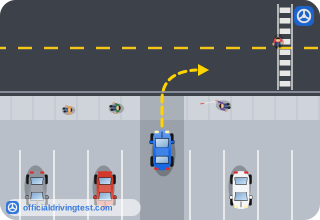
- Sound your horn and cross the sidewalk quickly
- Cross first if you have already started to move
- Yield only if the sidewalk is marked with a crosswalk
- Yield to pedestrians walking on the sidewalk
Show answer
Correct answer: Yield to pedestrians walking on the sidewalk
A driver whose path crosses a sidewalk when entering or leaving a driveway, garage, alley or parking lot must yield to pedestrians on it.
Source: Tennessee Comprehensive Driver License Manual (March 2025 printing), page 103 · Open this page in the manual (Manual page 103)
-
Even if you have the legal right-of-way, which action toward a pedestrian in front of your car should you avoid?
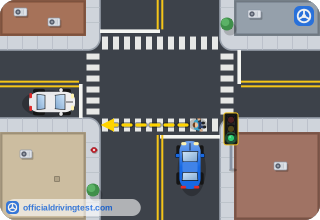
- Honking or revving your engine to rush the pedestrian
- Waiting until the pedestrian has finished crossing
- Slowing down to give the pedestrian extra room
- Watching the pedestrian’s movements closely
Show answer
Correct answer: Honking or revving your engine to rush the pedestrian
Drivers should not honk, rev the engine or do anything else to rush or frighten a pedestrian, even with the right-of-way.
Source: Tennessee Comprehensive Driver License Manual (March 2025 printing), page 103 · Open this page in the manual (Manual page 103)
-
What does the manual say about pedestrians walking in the road where there are sidewalks?
- It is allowed if they walk facing traffic
- It is allowed if they walk in single file
- It is unlawful where sidewalks are available
- It is allowed at night if they carry a flashlight
Show answer
Correct answer: It is unlawful where sidewalks are available
Pedestrians must use sidewalks when they are available, and walking in the road where there are sidewalks is unlawful.
Source: Tennessee Comprehensive Driver License Manual (March 2025 printing), page 104 · Open this page in the manual (Manual page 104)
-
There is no sidewalk. Which side of the road should a pedestrian walk on?
- The left side, facing traffic
- The right side, with the traffic
- The right side, facing traffic
- Either side, as long as they walk in the center
Show answer
Correct answer: The left side, facing traffic
Walking on the left facing traffic lets the pedestrian see sudden dangers coming toward them.
Source: Tennessee Comprehensive Driver License Manual (March 2025 printing), page 104 · Open this page in the manual (Manual page 104)
-
How should two or more pedestrians walk when there are no sidewalks?
- Side by side, so drivers can see them
- In a pair, with one walking on each side of the lane
- In a group, in the middle of the lane
- In single file, never side by side
Show answer
Correct answer: In single file, never side by side
Two or more pedestrians should walk in single file and never side by side.
Source: Tennessee Comprehensive Driver License Manual (March 2025 printing), page 104 · Open this page in the manual (Manual page 104)
-
Why is it not a good idea to walk or jog along busy roadways while wearing audio headphones?
- Drivers cannot see a pedestrian who is wearing them
- You may not hear important traffic sounds that warn of danger
- They are unlawful for pedestrians to wear on busy roads
- They reduce a pedestrian’s ability to see the signals
Show answer
Correct answer: You may not hear important traffic sounds that warn of danger
Headphones can keep a pedestrian from hearing traffic sounds that would warn of danger.
Source: Tennessee Comprehensive Driver License Manual (March 2025 printing), page 104 · Open this page in the manual (Manual page 104)
-
Why should a pedestrian keep a safe distance from the curb when standing on a street corner?
- Cars are required to stop at least six feet from the corner
- Trucks and buses always turn left from the curb lane there
- Trucks and buses make wide right turns and may run up onto the corner
- Pedestrians who wait close to the curb can be fined
Show answer
Correct answer: Trucks and buses make wide right turns and may run up onto the corner
Trucks and buses make wide right turns and occasionally run up onto the corner of the sidewalk, so pedestrians should move back.
Source: Tennessee Comprehensive Driver License Manual (March 2025 printing), page 104 · Open this page in the manual (Manual page 104)
-
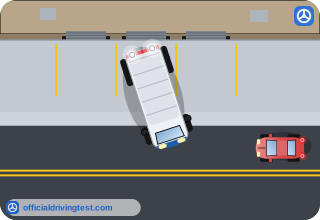
Why should a pedestrian never walk behind a truck that is backing up?
- The truck can stop faster than a passenger car
- Trucks back up faster than they move forward
- Truck drivers cannot see directly behind the truck
- The truck’s horn may damage hearing
Show answer
Correct answer: Truck drivers cannot see directly behind the truck
A truck driver cannot see directly behind the truck, so a person walking there could be seriously injured.
Source: Tennessee Comprehensive Driver License Manual (March 2025 printing), page 104 · Open this page in the manual (Manual page 104)
-
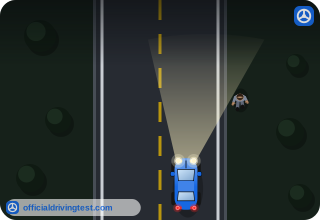
What does the manual say a pedestrian should wear, especially when walking at night?
- Dark clothing that blends in with the road
- Bright or reflective clothing
- Light-colored shoes with no other changes
- Headphones to listen for approaching traffic
Show answer
Correct answer: Bright or reflective clothing
Bright or reflective clothing makes a pedestrian easier for drivers to see.
Source: Tennessee Comprehensive Driver License Manual (March 2025 printing), page 104 · Open this page in the manual (Manual page 104)
-
What does the manual call a pedestrian’s safest bet for being seen at night?
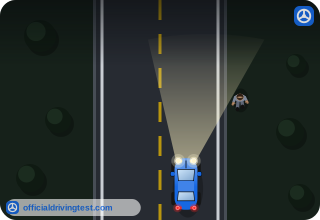
- Wearing dark clothing
- Walking near parked cars
- Walking in the roadway
- Carrying a flashlight
Show answer
Correct answer: Carrying a flashlight
Besides bright clothing, carrying a flashlight is the manual’s safest way for a pedestrian to be seen at night.
Source: Tennessee Comprehensive Driver License Manual (March 2025 printing), page 104 · Open this page in the manual (Manual page 104)
-
In what order should a pedestrian look for traffic before crossing the street?
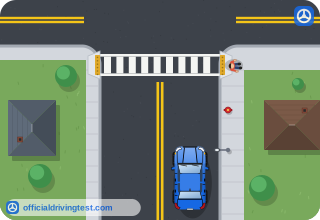
- Left, right, then left again
- Right, left, then right again
- Left, then straight ahead, then right
- Straight ahead only, then cross
Show answer
Correct answer: Left, right, then left again
The crossing steps are to stop at the curb, look left-right-left, and then begin crossing if it is clear.
Source: Tennessee Comprehensive Driver License Manual (March 2025 printing), page 104 · Open this page in the manual (Manual page 104)
-
A pedestrian is in the middle of the street when the DON’T WALK signal starts flashing. What should the pedestrian do?
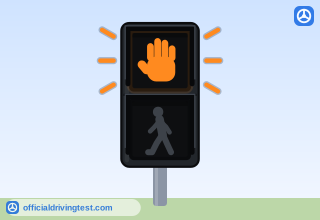
- Stop and wait where they are until the next signal comes
- Continue walking; there is time to complete the crossing
- Turn around and walk back to the curb they started from
- Wait in the street until a driver waves them across
Show answer
Correct answer: Continue walking; there is time to complete the crossing
A flashing DON’T WALK signal leaves enough time to finish crossing, so the pedestrian keeps walking.
Source: Tennessee Comprehensive Driver License Manual (March 2025 printing), page 104 · Open this page in the manual (Manual page 104)
-
Although drivers must yield to pedestrians, what must a pedestrian not do?
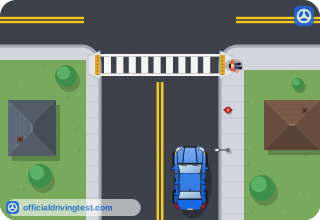
- Suddenly step from the curb into the path of a vehicle that is very close
- Wait at the curb while a vehicle is still a long way down the road
- Look both ways before they begin to cross the roadway at a corner
- Stop at the edge of the road and look before they proceed
Show answer
Correct answer: Suddenly step from the curb into the path of a vehicle that is very close
Vehicles cannot stop at once, so a pedestrian must not step into the path of traffic that is too close.
Source: Tennessee Comprehensive Driver License Manual (March 2025 printing), page 105 · Open this page in the manual (Manual page 105)
-
When are children at greatest risk around a school bus?
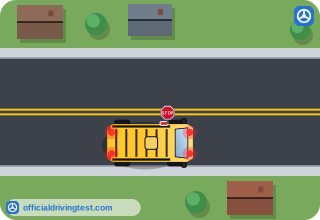
- While riding on the bus
- While the bus is at the school
- When they are getting on or off the bus
- While the bus is driving on the highway
Show answer
Correct answer: When they are getting on or off the bus
Most danger comes when children load and unload, not while they ride.
Source: Tennessee Comprehensive Driver License Manual (March 2025 printing), page 111 · Open this page in the manual (Manual page 111)