Tennessee: Pedestrians
Yielding to pedestrians at crosswalks, blind and deaf pedestrians, children near schools, and pedestrian signals. Split into 3 shorter tests so you're not stuck in one long quiz.
Independent educational site · not affiliated with any government agency or DMV
Choose a part
Pedestrians — Part 1
Questions in this part include: “What does Tennessee law say about standing on a roadway to ask for a ride?”
StartPedestrians — Part 2
Questions in this part include: “Which of these identifies a hearing impaired pedestrian that you must yield to anywhere on the roadway?”
StartPedestrians — Part 3
Questions in this part include: “Which pedestrians does the manual describe as often the least predictable and the most difficult to see?”
StartAll 48 Pedestrians questions with answers
Choose a part above to take a practice test, or study every question and answer here.
Show the questions and answersHide the questions
-
What does Tennessee law say about standing on a roadway to ask for a ride?
- It is legal in daylight
- It is legal on rural roads
- It is illegal
- It is legal off the interstate
Show answer
Correct answer: It is illegal
In Tennessee it is illegal to stand on a roadway to solicit a ride; hitchhiking is also dangerous for the driver who stops.
Source: Tennessee Comprehensive Driver License Manual (March 2025 printing), page 37 · Open this page in the manual (Manual page 37)
-
Under Tennessee law, who is defined as a pedestrian?
- Only a person walking along a marked crosswalk
- Any person on foot, but not a person using a wheelchair
- Only a person on foot who is crossing at an intersection
- Any person afoot or using a motorized or non-motorized wheelchair
Show answer
Correct answer: Any person afoot or using a motorized or non-motorized wheelchair
Tennessee law defines a pedestrian as any person afoot or using a motorized or non-motorized wheelchair.
Source: Tennessee Comprehensive Driver License Manual (March 2025 printing), page 42 · Open this page in the manual (Manual page 42)
-
A pedestrian began crossing when the WALK signal appeared. What should the pedestrian do as the signal is about to change to DON’T WALK?
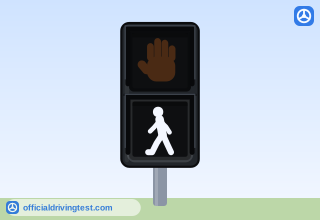
- Stop and wait in the street until the next WALK signal
- Continue as quickly as possible to the other side of the street
- Return to the starting curb before the signal changes
- Stop at the center line and wait for traffic to clear
Show answer
Correct answer: Continue as quickly as possible to the other side of the street
Pedestrians who started crossing on the WALK signal should keep going quickly to the other side before the signal changes.
Source: Tennessee Comprehensive Driver License Manual (March 2025 printing), page 42 · Open this page in the manual (Manual page 42)
-
At some intersections there is a button near the base of the pedestrian signal. What does a pedestrian use it for?
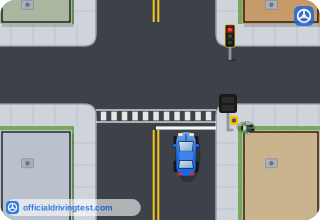
- To make the traffic light turn green for vehicles at once
- To stop all traffic with a flashing red light
- To sound a warning for approaching drivers
- To activate the pedestrian signal so it shows the WALK sign
Show answer
Correct answer: To activate the pedestrian signal so it shows the WALK sign
At some intersections the pedestrian must push the button to activate the pedestrian signal to show WALK.
Source: Tennessee Comprehensive Driver License Manual (March 2025 printing), page 42 · Open this page in the manual (Manual page 42)
-
A pedestrian signal shows the words DON’T WALK or a raised hand. What does it mean?
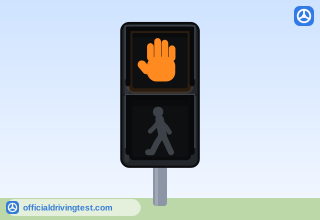
- It is not safe to begin crossing the street
- Pedestrians already in the crosswalk must stop where they are
- Vehicles must stop for pedestrians in the crosswalk
- It is safe to cross if no vehicles are approaching
Show answer
Correct answer: It is not safe to begin crossing the street
DON’T WALK or a raised hand means it is not safe to begin crossing.
Source: Tennessee Comprehensive Driver License Manual (March 2025 printing), page 42 · Open this page in the manual (Manual page 42)
-
As a driver, why should you pay attention to pedestrian signals as well as traffic signals?
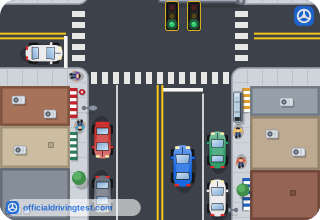
- To know when to turn on your headlights at the crossing
- To learn the speed limit that applies at the crossing
- To anticipate when a pedestrian may begin to cross
- To choose which lane to enter before making a turn
Show answer
Correct answer: To anticipate when a pedestrian may begin to cross
Watching both kinds of signals helps you predict when a pedestrian will start to cross.
Source: Tennessee Comprehensive Driver License Manual (March 2025 printing), page 42 · Open this page in the manual (Manual page 42)
-
What do white crosswalk lines painted across a road indicate?
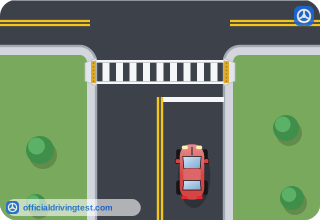
- Pedestrian crossing areas
- Where vehicles must stop for a school bus
- The beginning of a no-passing zone
- The right edge of the traffic lane
Show answer
Correct answer: Pedestrian crossing areas
White crosswalk lines show the areas where pedestrians cross the road.
Source: Tennessee Comprehensive Driver License Manual (March 2025 printing), page 43 · Open this page in the manual (Manual page 43)
-
Where may crosswalks be located?
- Only at intersections with traffic signals
- Only where they are painted on the road
- At intersections or in the middle of a block
- Only near schools and parks
Show answer
Correct answer: At intersections or in the middle of a block
Crosswalks may be at intersections or mid-block, and not all of them are marked.
Source: Tennessee Comprehensive Driver License Manual (March 2025 printing), page 43 · Open this page in the manual (Manual page 43)
-
Near a crosswalk, to which pedestrians must you yield the right-of-way?
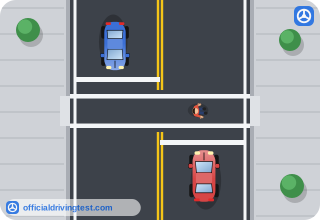
- Only those who are already in the marked crosswalk
- Those who are in or about to enter the crosswalk or street
- Only those who have a WALK signal showing for them
- Only those who are crossing with children
Show answer
Correct answer: Those who are in or about to enter the crosswalk or street
You must yield to pedestrians who are in, or about to enter, the crosswalk or street.
Source: Tennessee Comprehensive Driver License Manual (March 2025 printing), page 43 · Open this page in the manual (Manual page 43)
-
A stop sign has a crosswalk marked on the pavement. Where must you stop?
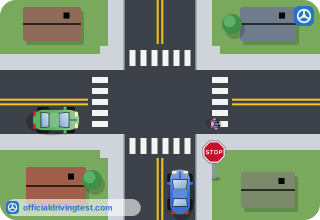
- At the curb of the cross street, past the crosswalk
- After you have crossed the crosswalk completely
- Ten feet before the crosswalk, whatever the markings
- Before the front of your vehicle reaches the crosswalk line
Show answer
Correct answer: Before the front of your vehicle reaches the crosswalk line
You must stop before the front of the vehicle reaches the nearest white line at the border of the crosswalk.
Source: Tennessee Comprehensive Driver License Manual (March 2025 printing), page 50 · Open this page in the manual (Manual page 50)
-
At a stop sign, what must you do if there are pedestrians in the crosswalk or about to enter it?
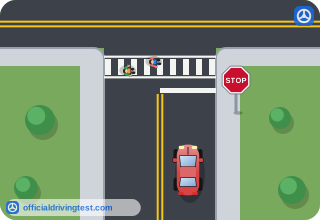
- Proceed if you can pass behind them
- Wait for them to cross before proceeding
- Sound your horn and move forward slowly
- Proceed when they reach the middle of the crosswalk
Show answer
Correct answer: Wait for them to cross before proceeding
You must wait for pedestrians in or about to enter the crosswalk to cross before you proceed.
Source: Tennessee Comprehensive Driver License Manual (March 2025 printing), page 50 · Open this page in the manual (Manual page 50)
-
How does the manual define a pedestrian?
- Any person afoot, not including those using a wheelchair of any kind
- Any person afoot or using a motorized or non-motorized wheelchair
- Any person afoot or riding a bicycle on the roadway or shoulder
- Any person who is walking on a sidewalk beside the road
Show answer
Correct answer: Any person afoot or using a motorized or non-motorized wheelchair
The manual defines a pedestrian as anyone afoot or using a motorized or non-motorized wheelchair.
Source: Tennessee Comprehensive Driver License Manual (March 2025 printing), page 53 · Open this page in the manual (Manual page 53)
-
For which crosswalks must you yield to pedestrians?
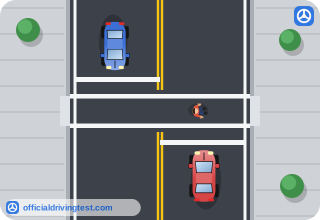
- Marked crosswalks only
- Crosswalks with a pedestrian signal only
- Crosswalks near schools only
- Both marked and unmarked crosswalks
Show answer
Correct answer: Both marked and unmarked crosswalks
The manual says to yield to pedestrians in a crosswalk, marked or unmarked.
Source: Tennessee Comprehensive Driver License Manual (March 2025 printing), page 53 · Open this page in the manual (Manual page 53)
-
In a marked school zone with a warning flasher operating, a pedestrian is crossing in a crosswalk. How long must you remain stopped?
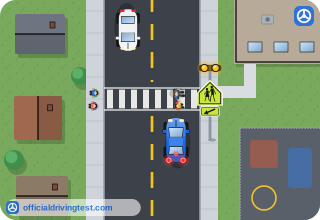
- Until the pedestrian has reached the center of the road ahead of you
- Until the school zone warning flasher has stopped operating
- Until the pedestrian has crossed the roadway on which you are stopped
- Until the pedestrian has walked past the front of your vehicle
Show answer
Correct answer: Until the pedestrian has crossed the roadway on which you are stopped
You must stay stopped until the pedestrian has crossed the whole roadway on which you stopped.
Source: Tennessee Comprehensive Driver License Manual (March 2025 printing), page 53 · Open this page in the manual (Manual page 53)
-
You are turning a corner and pedestrians are crossing with the light. What must you do?
- Yield to the pedestrians
- Turn first if you have signaled
- Honk and turn behind them
- Turn ahead of them if there is room
Show answer
Correct answer: Yield to the pedestrians
The manual lists turning a corner while pedestrians cross with the light as a situation where you yield to them.
Source: Tennessee Comprehensive Driver License Manual (March 2025 printing), page 53 · Open this page in the manual (Manual page 53)
-
When may a vehicle be driven on a sidewalk?
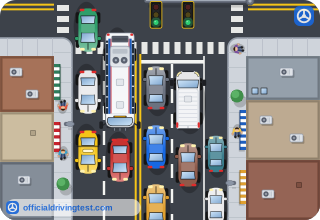
- To drive around a long line of stopped traffic for a short distance
- Only to cross it when entering or exiting a driveway, alley or parking lot
- To pass a turning vehicle on its right side when the sidewalk is clear
- To get out of the way of an approaching emergency vehicle in traffic
Show answer
Correct answer: Only to cross it when entering or exiting a driveway, alley or parking lot
It is illegal to drive on a sidewalk except to cross it, and you must yield to pedestrians when crossing.
Source: Tennessee Comprehensive Driver License Manual (March 2025 printing), page 53 · Open this page in the manual (Manual page 53)
-
A blind pedestrian with a white cane or a guide dog is crossing the roadway, even away from a crosswalk. How far away must you stop?
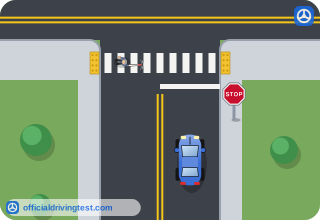
- At least 5 feet
- At least 15 feet
- At least 10 feet
- At least 25 feet
Show answer
Correct answer: At least 10 feet
The manual says to stop at least 10 feet away until the person is off the roadway.
Source: Tennessee Comprehensive Driver License Manual (March 2025 printing), page 53 · Open this page in the manual (Manual page 53)
-
Why should you not use your horn near a blind pedestrian who is crossing?
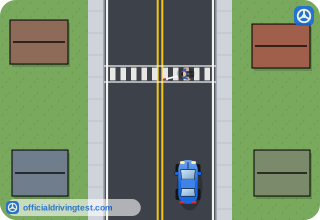
- It could startle the pedestrian
- It might be mistaken for an emergency vehicle
- It could distract other drivers
- It does not carry far enough to be useful
Show answer
Correct answer: It could startle the pedestrian
The manual says not to use your horn because it could startle the blind pedestrian.
Source: Tennessee Comprehensive Driver License Manual (March 2025 printing), page 53 · Open this page in the manual (Manual page 53)
-
Which of these identifies a hearing impaired pedestrian that you must yield to anywhere on the roadway?
- A dog on a bright yellow leash
- A dog wearing a green vest
- A dog wearing a red harness
- A dog on a blaze orange leash
Show answer
Correct answer: A dog on a blaze orange leash
The manual names a hearing impaired person with a dog on a blaze orange leash.
Source: Tennessee Comprehensive Driver License Manual (March 2025 printing), page 53 · Open this page in the manual (Manual page 53)
-
Where does the manual say you should slow down because children are likely to be present?
- Near schools, playgrounds and residential areas
- Only in marked school zones
- Only on roads with a posted limit above 35 miles per hour
- Only in downtown business districts
Show answer
Correct answer: Near schools, playgrounds and residential areas
You must drive with extreme caution when children are present and slow down near schools, playgrounds and residential areas.
Source: Tennessee Comprehensive Driver License Manual (March 2025 printing), page 53 · Open this page in the manual (Manual page 53)
-
A car ahead of you has stopped for pedestrians in a marked or unmarked crosswalk. What does the manual say about passing it?
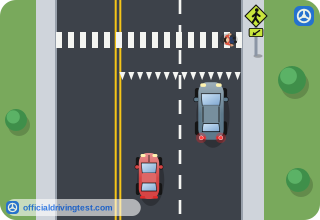
- You may pass it if you slow down first
- You may pass it if the crosswalk is unmarked
- Do not pass it
- You may pass it if no one is on your side
Show answer
Correct answer: Do not pass it
Passing a car stopped for pedestrians is not allowed and is a frequent cause of pedestrian deaths.
Source: Tennessee Comprehensive Driver License Manual (March 2025 printing), page 63 · Open this page in the manual (Manual page 63)
-
On a multi-lane road, about how far before a crosswalk should you stop so you do not block other drivers' view of the crossing pedestrians?
- About 30 feet
- About 10 feet
- About 20 feet
- About 50 feet
Show answer
Correct answer: About 30 feet
Stopping about 30 feet back keeps drivers in other lanes able to see the pedestrians crossing.
Source: Tennessee Comprehensive Driver License Manual (March 2025 printing), page 63 · Open this page in the manual (Manual page 63)
-
Why should you be alert near schools, playgrounds and residential streets?
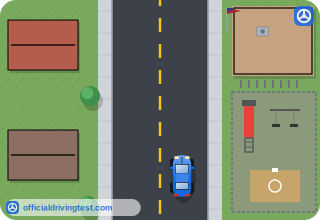
- Speed limits there are never posted
- Drivers there must stop at every driveway
- Children may be crossing, running or riding into the street without looking
- Parked cars are not allowed on those streets at any time of day
Show answer
Correct answer: Children may be crossing, running or riding into the street without looking
These areas often have children present who may run or ride into the street without looking.
Source: Tennessee Comprehensive Driver License Manual (March 2025 printing), page 102 · Open this page in the manual (Manual page 102)
-
Which pedestrians are the most frequent victims in auto-pedestrian collisions?
- Joggers and runners who use the shoulder of the road
- Pedestrians who walk in groups of two or more
- Young, elderly, disabled and intoxicated pedestrians
- Adults who carry a flashlight at night
Show answer
Correct answer: Young, elderly, disabled and intoxicated pedestrians
The manual says drivers should be especially alert for young, elderly, disabled and intoxicated pedestrians, who are hit most often.
Source: Tennessee Comprehensive Driver License Manual (March 2025 printing), page 103 · Open this page in the manual (Manual page 103)
-
Where is there a crosswalk, even if no painted lines mark the crossing?
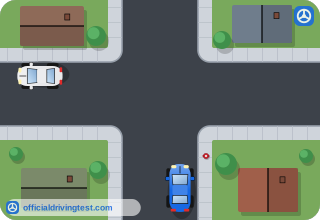
- Only at intersections that have traffic lights
- At every intersection
- Only where a school zone sign is posted
- Only at intersections with a stop sign
Show answer
Correct answer: At every intersection
Every intersection has a crosswalk, whether or not paint marks it.
Source: Tennessee Comprehensive Driver License Manual (March 2025 printing), page 103 · Open this page in the manual (Manual page 103)
-
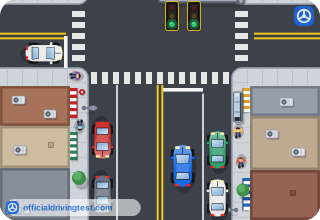
In general, how do pedestrians stand on right-of-way at intersections?
- They have it only at intersections with a marked crosswalk
- They never have it unless a police officer directs traffic
- They have it only at intersections with a traffic light
- They generally have the right-of-way at all intersections
Show answer
Correct answer: They generally have the right-of-way at all intersections
The manual states that pedestrians generally have the right-of-way at all intersections.
Source: Tennessee Comprehensive Driver License Manual (March 2025 printing), page 103 · Open this page in the manual (Manual page 103)
-
Regardless of the rules of the road or right-of-way, what does the law specifically require of a driver where pedestrians are concerned?
- Sound the horn before passing any pedestrian on the road
- Stop only for pedestrians who are inside a marked crosswalk
- Slow down only when a pedestrian is facing the vehicle
- Exercise great care and extreme caution to avoid striking pedestrians
Show answer
Correct answer: Exercise great care and extreme caution to avoid striking pedestrians
Even when a driver has the right-of-way, the law requires great care and extreme caution to avoid striking pedestrians.
Source: Tennessee Comprehensive Driver License Manual (March 2025 printing), page 103 · Open this page in the manual (Manual page 103)
-
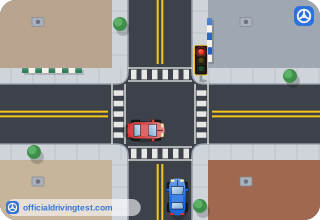
You are stopped at a red light. What should you do about the crosswalk?
- Stop with your front wheels over it to see the cross traffic
- Not block it and not stop with any part of your vehicle over it
- Stop in it if no pedestrians are waiting at the curb
- Stop partly over it if you plan to turn when it turns green
Show answer
Correct answer: Not block it and not stop with any part of your vehicle over it
Blocking the crosswalk, or stopping with part of the vehicle over it, forces pedestrians around the vehicle and into danger.
Source: Tennessee Comprehensive Driver License Manual (March 2025 printing), page 103 · Open this page in the manual (Manual page 103)
-
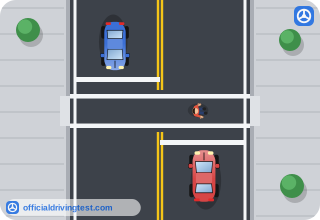
When must a driver slow down or stop to yield to a pedestrian in a crosswalk?
- Only when the pedestrian has already crossed the center line of the road toward your side of it
- Only when the pedestrian is on the half of the road farthest from your vehicle and stays in the crosswalk
- When the pedestrian is on your half of the roadway or coming so close from the other half as to be in danger
- Only when the pedestrian is on the opposite half of the road and has raised a hand to stop you
Show answer
Correct answer: When the pedestrian is on your half of the roadway or coming so close from the other half as to be in danger
A driver must yield to a pedestrian in the crosswalk who is on the driver’s half of the roadway, or who is coming from the other half so closely as to be in danger.
Source: Tennessee Comprehensive Driver License Manual (March 2025 printing), page 103 · Open this page in the manual (Manual page 103)
-
You are making a right turn. Which pedestrians should you be especially watchful for?
- Pedestrians on the left side of your vehicle only
- Only pedestrians who are directly behind your vehicle
- Pedestrians to the right of your vehicle
- Only pedestrians who are waiting at a bus stop
Show answer
Correct answer: Pedestrians to the right of your vehicle
The manual says to be alert to pedestrians on the right of the vehicle, especially when turning right.
Source: Tennessee Comprehensive Driver License Manual (March 2025 printing), page 103 · Open this page in the manual (Manual page 103)
-
A pedestrian steps off the curb into the roadway on your half of the road. When must you yield?
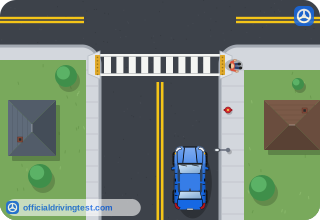
- Immediately, as soon as the pedestrian steps off the curb
- After the pedestrian has walked past the middle of the road
- After you have honked your horn to warn the pedestrian
- After the pedestrian has been in the roadway for a few seconds
Show answer
Correct answer: Immediately, as soon as the pedestrian steps off the curb
A driver must yield immediately when a pedestrian steps off the curb onto the driver’s half of the road or so close to it that the pedestrian is in danger.
Source: Tennessee Comprehensive Driver License Manual (March 2025 printing), page 103 · Open this page in the manual (Manual page 103)
-
What must a driver always do for a blind pedestrian carrying a white, metallic, red tipped white cane or using a guide dog?
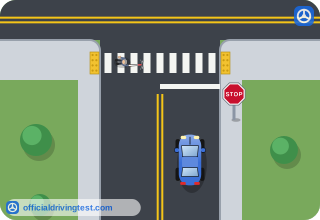
- Sound the horn so the pedestrian knows the car is near
- Pass quickly on the left so the pedestrian can cross
- Stop only if the pedestrian raises the cane
- Always yield to the pedestrian
Show answer
Correct answer: Always yield to the pedestrian
The manual says to always yield to blind pedestrians who carry a white cane or use a guide dog.
Source: Tennessee Comprehensive Driver License Manual (March 2025 printing), page 103 · Open this page in the manual (Manual page 103)
-
Which pedestrians does the manual describe as often the least predictable and the most difficult to see?
- Elderly pedestrians
- Children
- Joggers in the road
- People who use wheelchairs
Show answer
Correct answer: Children
Children are often the least predictable and hardest-to-see pedestrians, so drivers need to take extra care around them.
Source: Tennessee Comprehensive Driver License Manual (March 2025 printing), page 103 · Open this page in the manual (Manual page 103)
-
Which of these is a place where the manual says to take extra care for children?
- On interstate highway entrance ramps
- Near ice cream or snack vendor vehicles or carts
- Near truck loading docks on industrial roads
- Along rural roads that have no houses
Show answer
Correct answer: Near ice cream or snack vendor vehicles or carts
The manual lists school zones, school bus stops, playgrounds, parks and areas near ice cream or snack vendors as places children are likely to be.
Source: Tennessee Comprehensive Driver License Manual (March 2025 printing), page 103 · Open this page in the manual (Manual page 103)
-
You are entering or leaving a driveway, alley or parking lot and your path crosses the sidewalk. What should you do?
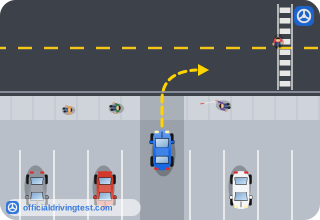
- Sound your horn and cross the sidewalk quickly
- Cross first if you have already started to move
- Yield only if the sidewalk is marked with a crosswalk
- Yield to pedestrians walking on the sidewalk
Show answer
Correct answer: Yield to pedestrians walking on the sidewalk
A driver whose path crosses a sidewalk when entering or leaving a driveway, garage, alley or parking lot must yield to pedestrians on it.
Source: Tennessee Comprehensive Driver License Manual (March 2025 printing), page 103 · Open this page in the manual (Manual page 103)
-
Even if you have the legal right-of-way, which action toward a pedestrian in front of your car should you avoid?
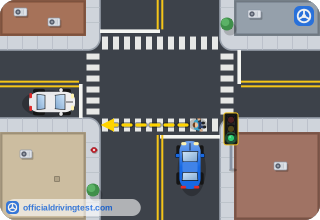
- Honking or revving your engine to rush the pedestrian
- Waiting until the pedestrian has finished crossing
- Slowing down to give the pedestrian extra room
- Watching the pedestrian’s movements closely
Show answer
Correct answer: Honking or revving your engine to rush the pedestrian
Drivers should not honk, rev the engine or do anything else to rush or frighten a pedestrian, even with the right-of-way.
Source: Tennessee Comprehensive Driver License Manual (March 2025 printing), page 103 · Open this page in the manual (Manual page 103)
-
What does the manual say about pedestrians walking in the road where there are sidewalks?
- It is allowed if they walk facing traffic
- It is allowed if they walk in single file
- It is unlawful where sidewalks are available
- It is allowed at night if they carry a flashlight
Show answer
Correct answer: It is unlawful where sidewalks are available
Pedestrians must use sidewalks when they are available, and walking in the road where there are sidewalks is unlawful.
Source: Tennessee Comprehensive Driver License Manual (March 2025 printing), page 104 · Open this page in the manual (Manual page 104)
-
There is no sidewalk. Which side of the road should a pedestrian walk on?
- The left side, facing traffic
- The right side, with the traffic
- The right side, facing traffic
- Either side, as long as they walk in the center
Show answer
Correct answer: The left side, facing traffic
Walking on the left facing traffic lets the pedestrian see sudden dangers coming toward them.
Source: Tennessee Comprehensive Driver License Manual (March 2025 printing), page 104 · Open this page in the manual (Manual page 104)
-
How should two or more pedestrians walk when there are no sidewalks?
- Side by side, so drivers can see them
- In a pair, with one walking on each side of the lane
- In a group, in the middle of the lane
- In single file, never side by side
Show answer
Correct answer: In single file, never side by side
Two or more pedestrians should walk in single file and never side by side.
Source: Tennessee Comprehensive Driver License Manual (March 2025 printing), page 104 · Open this page in the manual (Manual page 104)
-
Why is it not a good idea to walk or jog along busy roadways while wearing audio headphones?
- Drivers cannot see a pedestrian who is wearing them
- You may not hear important traffic sounds that warn of danger
- They are unlawful for pedestrians to wear on busy roads
- They reduce a pedestrian’s ability to see the signals
Show answer
Correct answer: You may not hear important traffic sounds that warn of danger
Headphones can keep a pedestrian from hearing traffic sounds that would warn of danger.
Source: Tennessee Comprehensive Driver License Manual (March 2025 printing), page 104 · Open this page in the manual (Manual page 104)
-
Why should a pedestrian keep a safe distance from the curb when standing on a street corner?
- Cars are required to stop at least six feet from the corner
- Trucks and buses always turn left from the curb lane there
- Trucks and buses make wide right turns and may run up onto the corner
- Pedestrians who wait close to the curb can be fined
Show answer
Correct answer: Trucks and buses make wide right turns and may run up onto the corner
Trucks and buses make wide right turns and occasionally run up onto the corner of the sidewalk, so pedestrians should move back.
Source: Tennessee Comprehensive Driver License Manual (March 2025 printing), page 104 · Open this page in the manual (Manual page 104)
-
Why should a pedestrian never walk behind a truck that is backing up?
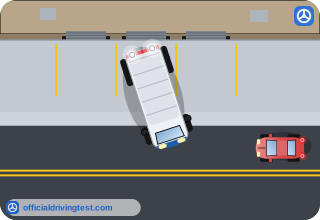
- The truck can stop faster than a passenger car
- Trucks back up faster than they move forward
- Truck drivers cannot see directly behind the truck
- The truck’s horn may damage hearing
Show answer
Correct answer: Truck drivers cannot see directly behind the truck
A truck driver cannot see directly behind the truck, so a person walking there could be seriously injured.
Source: Tennessee Comprehensive Driver License Manual (March 2025 printing), page 104 · Open this page in the manual (Manual page 104)
-
What does the manual say a pedestrian should wear, especially when walking at night?
- Dark clothing that blends in with the road
- Bright or reflective clothing
- Light-colored shoes with no other changes
- Headphones to listen for approaching traffic
Show answer
Correct answer: Bright or reflective clothing
Bright or reflective clothing makes a pedestrian easier for drivers to see.
Source: Tennessee Comprehensive Driver License Manual (March 2025 printing), page 104 · Open this page in the manual (Manual page 104)
-
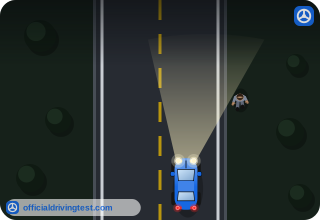
What does the manual call a pedestrian’s safest bet for being seen at night?
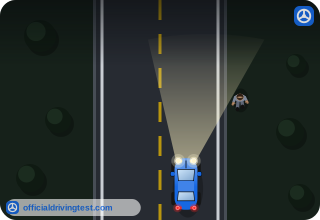
- Wearing dark clothing
- Walking near parked cars
- Walking in the roadway
- Carrying a flashlight
Show answer
Correct answer: Carrying a flashlight
Besides bright clothing, carrying a flashlight is the manual’s safest way for a pedestrian to be seen at night.
Source: Tennessee Comprehensive Driver License Manual (March 2025 printing), page 104 · Open this page in the manual (Manual page 104)
-
In what order should a pedestrian look for traffic before crossing the street?
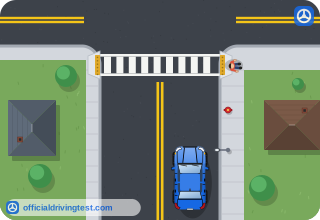
- Left, right, then left again
- Right, left, then right again
- Left, then straight ahead, then right
- Straight ahead only, then cross
Show answer
Correct answer: Left, right, then left again
The crossing steps are to stop at the curb, look left-right-left, and then begin crossing if it is clear.
Source: Tennessee Comprehensive Driver License Manual (March 2025 printing), page 104 · Open this page in the manual (Manual page 104)
-
A pedestrian is in the middle of the street when the DON’T WALK signal starts flashing. What should the pedestrian do?
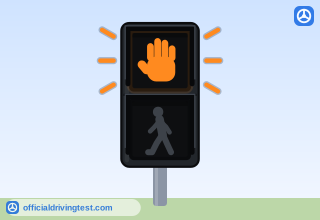
- Stop and wait where they are until the next signal comes
- Continue walking; there is time to complete the crossing
- Turn around and walk back to the curb they started from
- Wait in the street until a driver waves them across
Show answer
Correct answer: Continue walking; there is time to complete the crossing
A flashing DON’T WALK signal leaves enough time to finish crossing, so the pedestrian keeps walking.
Source: Tennessee Comprehensive Driver License Manual (March 2025 printing), page 104 · Open this page in the manual (Manual page 104)
-
Although drivers must yield to pedestrians, what must a pedestrian not do?
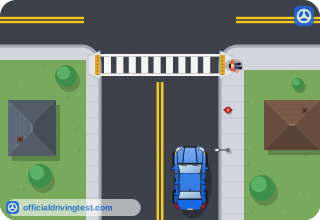
- Suddenly step from the curb into the path of a vehicle that is very close
- Wait at the curb while a vehicle is still a long way down the road
- Look both ways before they begin to cross the roadway at a corner
- Stop at the edge of the road and look before they proceed
Show answer
Correct answer: Suddenly step from the curb into the path of a vehicle that is very close
Vehicles cannot stop at once, so a pedestrian must not step into the path of traffic that is too close.
Source: Tennessee Comprehensive Driver License Manual (March 2025 printing), page 105 · Open this page in the manual (Manual page 105)
-
When are children at greatest risk around a school bus?
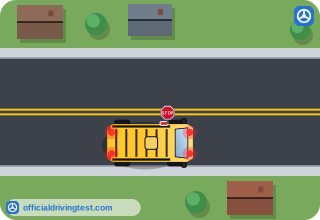
- While riding on the bus
- While the bus is at the school
- When they are getting on or off the bus
- While the bus is driving on the highway
Show answer
Correct answer: When they are getting on or off the bus
Most danger comes when children load and unload, not while they ride.
Source: Tennessee Comprehensive Driver License Manual (March 2025 printing), page 111 · Open this page in the manual (Manual page 111)