Tennessee: Emergency vehicles and work zones — Part 1 Practice Test
Questions in this part include: “What does the Tennessee Highway Patrol's Project CAR do?” · “What do temporary traffic control zones allow at an incident on the road?”
Independent educational site · not affiliated with any government agency or DMV
Ready? Test yourself
- Instant feedback with an explanation
- Every answer cites its source in the manual
- Your best score is saved on this device
- Keyboard: press 1 to 4 to answer and Enter for the next question
Questions are original and based on the official manual "Tennessee Comprehensive Driver License Manual" (March 2025 printing), Tennessee Department of Safety and Homeland Security.
All 18 questions in this practice test
Take the test above first, then use this list to study. Tap “Show answer” to see the correct answer and explanation.
Show the questions and answersHide the questions
-
What does the manual say about speed limits in work zones?
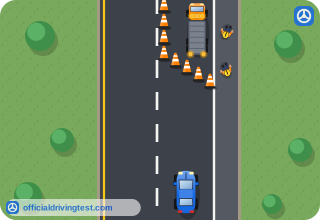
- They are always the same as on the road before the zone
- They apply only when workers can be seen
- They are usually reduced, so drive within the posted limits
- They are raised at night
Show answer
Correct answer: They are usually reduced, so drive within the posted limits
The tip is to slow down and drive within the posted limits, which are usually reduced in work zones.
Source: Tennessee Comprehensive Driver License Manual (March 2025 printing), page 18 · Open this page in the manual (Manual page 18)
-
What does the Tennessee Highway Patrol's Project CAR do?
- Gives free driver education classes to teenage drivers
- Inspects vehicles entering work zones
- Rewards drivers who obey work zone limits
- Puts troopers in work zones to target traffic-law violators
Show answer
Correct answer: Puts troopers in work zones to target traffic-law violators
Project CAR (Construction Accident Reduction) puts troopers in work zones to target violators when workers are present.
Source: Tennessee Comprehensive Driver License Manual (March 2025 printing), page 18 · Open this page in the manual (Manual page 18)
-
According to the manual, what causes most work zone accidents?
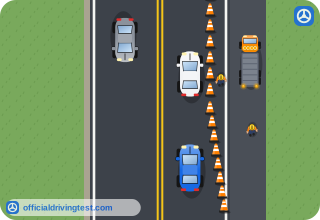
- Head-on collisions
- Rear-end collisions
- Collisions with animals
- Collisions with backing trucks
Show answer
Correct answer: Rear-end collisions
The tip to not tailgate is given because most work zone accidents are caused by rear-end collisions.
Source: Tennessee Comprehensive Driver License Manual (March 2025 printing), page 18 · Open this page in the manual (Manual page 18)
-
What can happen to a driver who waits and merges at the last chance in a work zone?
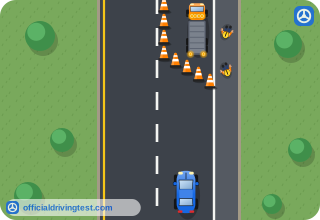
- The driver gets the right of way over other cars
- Nothing, because late merging keeps traffic moving
- The driver can be ticketed and cause an accident
- The driver loses the license for 90 days
Show answer
Correct answer: The driver can be ticketed and cause an accident
The tip says to merge early because a last chance merger can be ticketed and cause an accident.
Source: Tennessee Comprehensive Driver License Manual (March 2025 printing), page 18 · Open this page in the manual (Manual page 18)
-
What should a driver do about lane changes when a flagger is in a work zone?
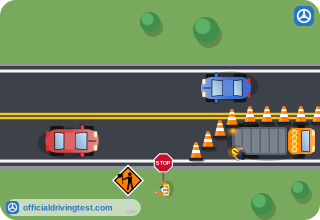
- Follow flagger signals; change lanes only when told to
- Change lanes freely to get around slow-moving traffic
- Ignore the flagger when no workers are close
- Move to the left lane before the flagger
Show answer
Correct answer: Follow flagger signals; change lanes only when told to
The tip is to follow flaggers' signals and not change lanes in the zone unless instructed.
Source: Tennessee Comprehensive Driver License Manual (March 2025 printing), page 18 · Open this page in the manual (Manual page 18)
-
What should a driver turn on before entering a work zone to be more visible to workers and other motorists?
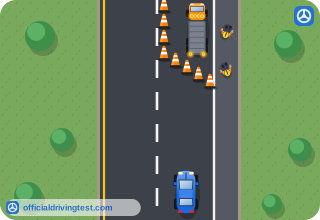
- The vehicle's headlights
- The hazard flashers
- Only the parking lights
- The horn
Show answer
Correct answer: The vehicle's headlights
Headlights make the vehicle more visible to workers and other motorists.
Source: Tennessee Comprehensive Driver License Manual (March 2025 printing), page 18 · Open this page in the manual (Manual page 18)
-
Why does the manual say to expect the unexpected in work zones?
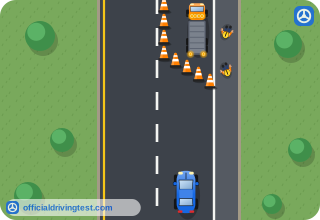
- Work zones are always closed at night
- Work zones never have flaggers
- Work zones change constantly
- Speed limits are removed in work zones
Show answer
Correct answer: Work zones change constantly
Conditions in a work zone change constantly, so drivers should stay ready.
Source: Tennessee Comprehensive Driver License Manual (March 2025 printing), page 18 · Open this page in the manual (Manual page 18)
-
What do temporary traffic control zones allow at an incident on the road?
- Drivers to pass slower cars on the shoulder
- Drivers to park near the scene to help
- Traffic to flow safely through the incident
- Traffic to go faster to clear the area
Show answer
Correct answer: Traffic to flow safely through the incident
Temporary traffic control zones let traffic move safely through incidents while reasonably protecting motorists, responders, vehicles and equipment.
Source: Tennessee Comprehensive Driver License Manual (March 2025 printing), page 36 · Open this page in the manual (Manual page 36)
-
What do orange work area signs warn you about?
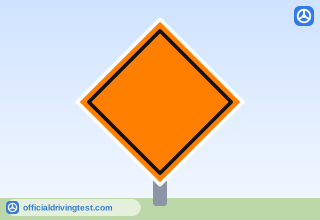
- A school zone a short way ahead
- People working on or near the roadway
- A railroad crossing just ahead
- A recreation area at the next exit
Show answer
Correct answer: People working on or near the roadway
Construction, maintenance and emergency operations signs warn that people are working on or near the road.
Source: Tennessee Comprehensive Driver License Manual (March 2025 printing), page 39 · Open this page in the manual (Manual page 39)
-
In a work area, a person with a sign or flag is directing traffic. What must you do?
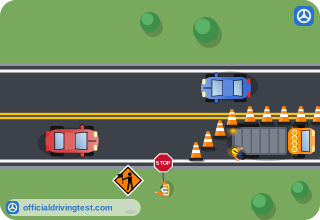
- Follow the posted signs instead
- Obey only if police are present
- Treat the signals as advice only
- Obey that person’s directions
Show answer
Correct answer: Obey that person’s directions
In work areas a person with a sign or flag may control traffic, and drivers must obey that person.
Source: Tennessee Comprehensive Driver License Manual (March 2025 printing), page 39 · Open this page in the manual (Manual page 39)
-
Electronic message or arrow signs on some roads give advance warning of what?
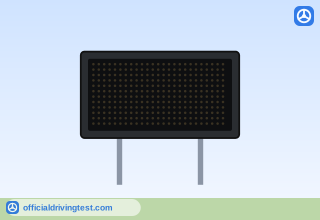
- Gas stations, food and lodging at the next exit
- Speed cameras and police checkpoints ahead
- Construction, road closures or weather hazards
- Sports and concert events in the nearby area
Show answer
Correct answer: Construction, road closures or weather hazards
These mobile signs warn ahead of construction zones, special traffic directions, road closures and sometimes weather hazards.
Source: Tennessee Comprehensive Driver License Manual (March 2025 printing), page 39 · Open this page in the manual (Manual page 39)
-
What do flashing arrow panels alert approaching drivers to?
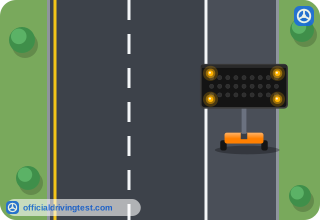
- Speed cameras
- Lane closures
- School crossings
- Railroad crossings
Show answer
Correct answer: Lane closures
Flashing arrow panels warn drivers that a lane is closed ahead.
Source: Tennessee Comprehensive Driver License Manual (March 2025 printing), page 39 · Open this page in the manual (Manual page 39)
-
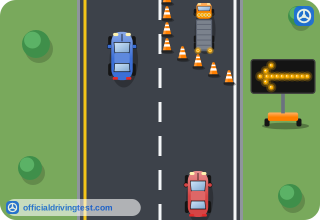
When must you begin to merge into the open lane at a flashing arrow panel?
- Right when you reach the sign
- Just after you pass the sign
- At the last cone before the closure
- Well in advance of the sign
Show answer
Correct answer: Well in advance of the sign
You must start merging into the remaining open lane well before you reach the arrow panel.
Source: Tennessee Comprehensive Driver License Manual (March 2025 printing), page 39 · Open this page in the manual (Manual page 39)
-
What are barricades, vertical panels, concrete barriers, drums and cones most commonly used for?
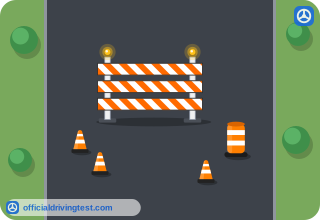
- Guiding drivers safely through work zones
- Marking where trucks must stop and wait
- Closing roads during school hours only
- Showing where drivers may park for free
Show answer
Correct answer: Guiding drivers safely through work zones
These channeling devices are the most common tools for guiding drivers safely through work zones.
Source: Tennessee Comprehensive Driver License Manual (March 2025 printing), page 39 · Open this page in the manual (Manual page 39)
-
When driving near barricades, drums and cones in a work zone, what should you do?
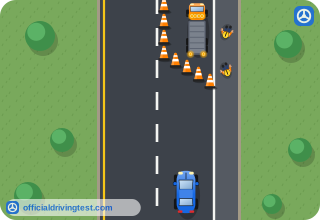
- Move onto the shoulder to give the workers more room
- Speed up so you get through the work zone quickly
- Keep in the middle of your lane and obey the speed limit
- Drive close to the devices so others can pass you
Show answer
Correct answer: Keep in the middle of your lane and obey the speed limit
Near channeling devices, keep your vehicle in the middle of the lane and obey the posted speed limit.
Source: Tennessee Comprehensive Driver License Manual (March 2025 printing), page 39 · Open this page in the manual (Manual page 39)
-
As you leave a work zone, what should you do?
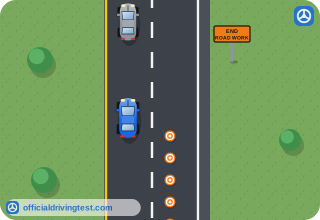
- Change lanes at once to pass slow traffic
- Stay in your lane and maintain your speed
- Speed up right away to make up for lost time
- Slow down until all the traffic has cleared
Show answer
Correct answer: Stay in your lane and maintain your speed
When leaving a work zone, stay in your lane and keep your speed steady.
Source: Tennessee Comprehensive Driver License Manual (March 2025 printing), page 39 · Open this page in the manual (Manual page 39)
-
When leaving a work zone marked with channeling devices, when may you change lanes?
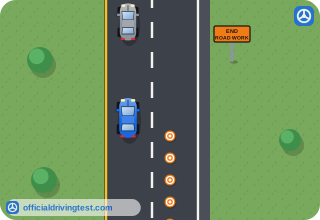
- As soon as you pass the last worker you see
- As soon as the lane next to you is empty
- As soon as the reduced speed limit ends
- Once you are completely clear of the work zone
Show answer
Correct answer: Once you are completely clear of the work zone
Do not change lanes until you are completely clear of the work zone.
Source: Tennessee Comprehensive Driver License Manual (March 2025 printing), page 39 · Open this page in the manual (Manual page 39)
-
During traffic-related emergencies, what do law enforcement officers wear so drivers can see them?
- Fluorescent yellow-green vests and rain coats
- Fluorescent pink vests and rain coats
- Dark blue reflective vests and rain jackets
- White reflective vests and hard helmets
Show answer
Correct answer: Fluorescent yellow-green vests and rain coats
Officers wear fluorescent yellow-green vests and rain coats at traffic emergencies so they can be seen, even in low light and poor weather.
Source: Tennessee Comprehensive Driver License Manual (March 2025 printing), page 39 · Open this page in the manual (Manual page 39)