South Carolina: Emergency vehicles, police stops and work zones
Yielding to emergency vehicles, the Move-Over law, what to do when a law enforcement officer stops you, and work zones. Split into 3 shorter tests so you're not stuck in one long quiz.
Independent educational site · not affiliated with any government agency or DMV
Choose a part
Emergency vehicles, police stops and work zones — Part 1
Questions in this part include: “What may happen if you endanger a highway worker?”
StartEmergency vehicles, police stops and work zones — Part 2
Questions in this part include: “What should concealed weapons permit (CWP) holders do during a traffic stop?”
StartEmergency vehicles, police stops and work zones — Part 3
Questions in this part include: “What should you not make toward an officer during a traffic stop?”
StartAll 53 Emergency vehicles, police stops and work zones questions with answers
Choose a part above to take a practice test, or study every question and answer here.
Show the questions and answersHide the questions
-
Which of these do work zone signs warn you about?
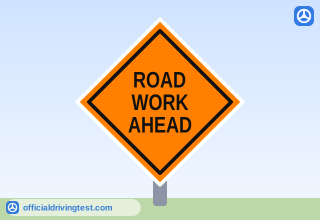
- Poor or suddenly changing road surfaces
- Hospital services at the next exit ahead
- A mandatory hurricane evacuation route
- Places where parking is allowed ahead
Show answer
Correct answer: Poor or suddenly changing road surfaces
Work zone signs warn of workers ahead, reduced speed zones, detours, slow-moving equipment, and poor or suddenly changing road surfaces.
Source: South Carolina Driver's Manual (2026 (posted April 2026)), page 6-7 · Open this page in the manual (Manual page 6-7)
-
An orange diamond sign shows a person holding out a small flag on a stick. What does it warn you of?
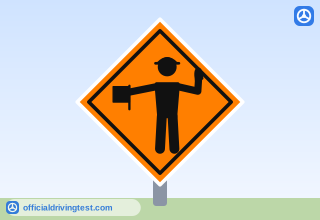
- Workers Ahead
- One Lane Road Ahead
- Road Construction Ahead
- Flagger Ahead
Show answer
Correct answer: Flagger Ahead
An orange diamond with a figure holding a flag warns that a flagger is ahead.
Source: South Carolina Driver's Manual (2026 (posted April 2026)), page 6-8 · Open this page in the manual (Manual page 6-8)
-
An orange diamond sign shows a person digging with a shovel. What does it warn you of?
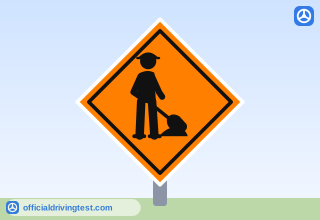
- Flagger Ahead
- Workers Ahead
- One Lane Road Ahead
- Detour
Show answer
Correct answer: Workers Ahead
An orange diamond with a figure digging warns that workers are ahead.
Source: South Carolina Driver's Manual (2026 (posted April 2026)), page 6-8 · Open this page in the manual (Manual page 6-8)
-
In a work zone, a person with a sign or flag tells you which way to travel or to slow down or stop. What must you do?
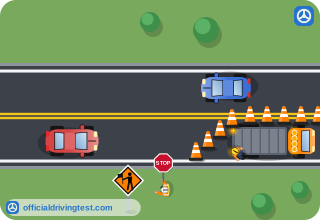
- Follow the person's instructions
- Follow them only when workers are close to the road
- Follow them unless the road ahead looks clear
- Follow them only if the signs match the road markings
Show answer
Correct answer: Follow the person's instructions
Traffic in work zones may be controlled by a person with a sign or flag, and you must follow their instructions.
Source: South Carolina Driver's Manual (2026 (posted April 2026)), page 6-8 · Open this page in the manual (Manual page 6-8)
-
What are barriers such as drums, cones, and tubes (panels) used for in work zones?
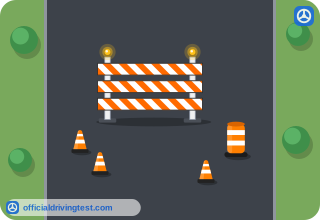
- To mark places where workers may park their vehicles
- To show drivers the speed limit in the work zone
- To warn drivers of an upcoming railroad crossing
- To keep traffic out of hazardous work zones
Show answer
Correct answer: To keep traffic out of hazardous work zones
Drums, cones, and tubes keep traffic out of hazardous work zones and, with signs and road markings, guide you through safely.
Source: South Carolina Driver's Manual (2026 (posted April 2026)), page 6-8 · Open this page in the manual (Manual page 6-8)
-
You see a warning sign showing the symbol of a traffic signal in a work zone. Where do you stop for the temporary signal?
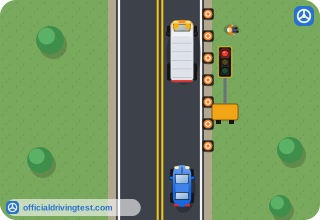
- Beside the signal pole, whether or not there is a line
- Past the signal, if the intersection looks clear
- At the white line, if one is present
- At the point where you first see the red light
Show answer
Correct answer: At the white line, if one is present
Temporary traffic signals may be used in work zones; stop at the white line, if it is present.
Source: South Carolina Driver's Manual (2026 (posted April 2026)), page 6-8 · Open this page in the manual (Manual page 6-8)
-
How should you drive in a work zone?
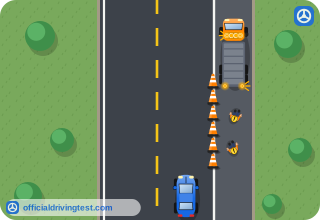
- Keep your speed but be ready to change lanes
- Speed up to leave the workers behind quickly
- Slow down only when workers are in view
- Reduce your speed and be prepared to stop suddenly
Show answer
Correct answer: Reduce your speed and be prepared to stop suddenly
The manual tells you to give workers a brake: reduce your speed and be prepared to stop suddenly.
Source: South Carolina Driver's Manual (2026 (posted April 2026)), page 6-9 · Open this page in the manual (Manual page 6-9)
-
Which of these should you not do in a work zone?
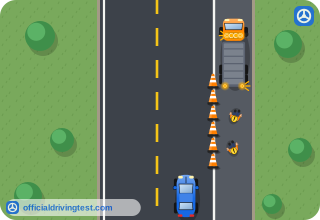
- Reduce your speed
- Follow a flagger's instructions
- Tailgate the vehicle ahead
- Be prepared to stop suddenly
Show answer
Correct answer: Tailgate the vehicle ahead
The manual says not to tailgate in work zones, where traffic may need to stop suddenly.
Source: South Carolina Driver's Manual (2026 (posted April 2026)), page 6-9 · Open this page in the manual (Manual page 6-9)
-
What may happen if you endanger a highway worker?
- Your driver's license is revoked automatically for a full year
- You may be fined and have points assessed against your driving record
- Your vehicle is taken away at the scene by the highway patrol
- You must retake the written test within ten days of the incident
Show answer
Correct answer: You may be fined and have points assessed against your driving record
Endangering a highway worker may bring a fine and points on your driving record.
Source: South Carolina Driver's Manual (2026 (posted April 2026)), page 6-9 · Open this page in the manual (Manual page 6-9)
-
Why are emergency vehicles equipped with sirens, flashing lights, and special horns?
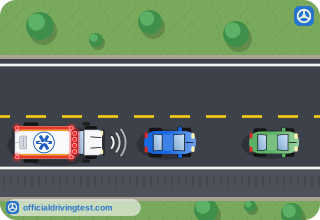
- To tell nearby drivers to stop where they are
- To show that the vehicle is parked
- To help them move more efficiently through traffic
- To warn drivers that a road is closed
Show answer
Correct answer: To help them move more efficiently through traffic
This equipment helps emergency vehicles move through traffic more efficiently.
Source: South Carolina Driver's Manual (2026 (posted April 2026)), page 10-11 · Open this page in the manual (Manual page 10-11)
-
What must you do when an emergency vehicle approaches with its flashing lights and siren on?
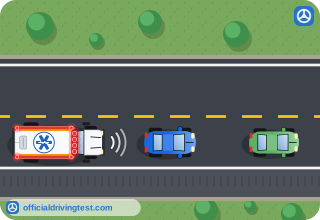
- Speed up to stay ahead of it
- Pull over to the edge of the road to yield
- Stop in your lane right where you are
- Continue at your speed and stay in your lane
Show answer
Correct answer: Pull over to the edge of the road to yield
You must yield right-of-way by pulling over to the edge of the road so the emergency vehicle can pass more easily.
Source: South Carolina Driver's Manual (2026 (posted April 2026)), page 10-12 · Open this page in the manual (Manual page 10-12)
-
When you pull over for an emergency vehicle, what should you avoid whenever possible?
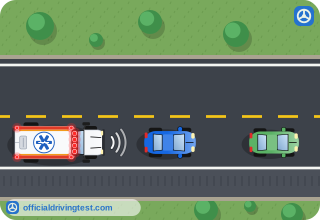
- Pulling over to the edge of the road to let it pass
- Yielding the right-of-way to the emergency vehicle
- Stopping for the emergency vehicle as it passes
- Blocking intersections, roadways, or driveways
Show answer
Correct answer: Blocking intersections, roadways, or driveways
While making way for an emergency vehicle, try not to block intersections, roadways or driveways.
Source: South Carolina Driver's Manual (2026 (posted April 2026)), page 10-12 · Open this page in the manual (Manual page 10-12)
-
When does a law enforcement officer conduct a traffic stop?
- Only when a driver is suspected of impaired driving
- Only when the driver is a first-time offender
- Only when a vehicle is parked on the shoulder
- When a violation is seen or an investigation is under way
Show answer
Correct answer: When a violation is seen or an investigation is under way
An officer stops a vehicle because he or she sees a traffic violation or is conducting a police investigation.
Source: South Carolina Driver's Manual (2026 (posted April 2026)), page 10-12 · Open this page in the manual (Manual page 10-12)
-
What should you do when you see emergency lights behind you?
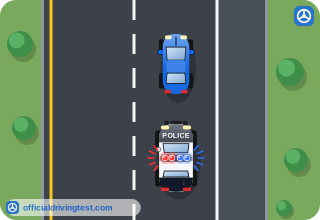
- Speed up until you reach a well-lit place where you can stop
- Stay calm, signal, and pull over as soon and safely as possible
- Stop immediately in your lane and wait for the officer to come
- Turn on your high beams and keep driving at the same speed
Show answer
Correct answer: Stay calm, signal, and pull over as soon and safely as possible
You should stay calm, signal and pull to the side of the roadway as soon as you safely can.
Source: South Carolina Driver's Manual (2026 (posted April 2026)), page 10-12 · Open this page in the manual (Manual page 10-12)
-
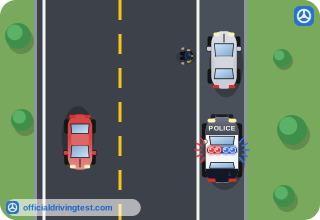
After pulling over for a traffic stop, what should you turn off?
- Only the headlights
- The hazard flashers
- The ignition and the radio
- Nothing, leave the engine running
Show answer
Correct answer: The ignition and the radio
After stopping, turn off the ignition and the radio.
Source: South Carolina Driver's Manual (2026 (posted April 2026)), page 10-12 · Open this page in the manual (Manual page 10-12)
-
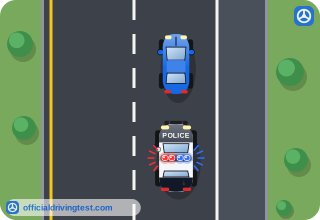
After pulling over for a traffic stop, what should you turn on?
- Your hazard flashers
- Your high beams
- Your windshield wipers
- Your fog lights
Show answer
Correct answer: Your hazard flashers
The manual tells you to turn on your hazard flashers once you have stopped.
Source: South Carolina Driver's Manual (2026 (posted April 2026)), page 10-12 · Open this page in the manual (Manual page 10-12)
-
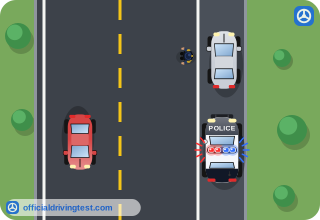
During a traffic stop, what should you do unless the officer directs you to exit?
- Walk back to the officer's vehicle
- Step out and stand beside your door
- Stay in your vehicle
- Stand at the rear of your vehicle
Show answer
Correct answer: Stay in your vehicle
Remain in the vehicle unless the officer tells you to get out.
Source: South Carolina Driver's Manual (2026 (posted April 2026)), page 10-12 · Open this page in the manual (Manual page 10-12)
-
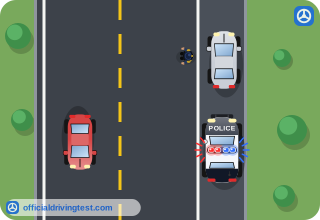
Where should you keep your hands during a traffic stop?
- On the steering wheel
- On the dashboard
- In your lap
- Reaching toward the glove box
Show answer
Correct answer: On the steering wheel
Hands on the steering wheel can be easily seen by the officer.
Source: South Carolina Driver's Manual (2026 (posted April 2026)), page 10-12 · Open this page in the manual (Manual page 10-12)
-
During a traffic stop, what should you and your passengers do about seatbelts?
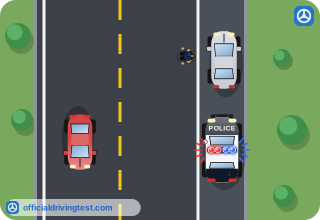
- Unfasten them so the officer can see you
- Take them off so you can step out quickly
- Unfasten them only after the officer arrives
- Keep them fastened
Show answer
Correct answer: Keep them fastened
Everyone should keep his or her seatbelt fastened and stay in the vehicle during the stop.
Source: South Carolina Driver's Manual (2026 (posted April 2026)), page 10-12 · Open this page in the manual (Manual page 10-12)
-
During a traffic stop, who should avoid using cell phones and mobile devices?
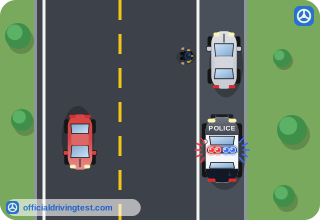
- Only the driver
- You and all of your passengers
- Only passengers in the back seat
- Only passengers under 18
Show answer
Correct answer: You and all of your passengers
Neither the driver nor any passenger should use a phone or mobile device during the stop.
Source: South Carolina Driver's Manual (2026 (posted April 2026)), page 10-12 · Open this page in the manual (Manual page 10-12)
-
While waiting for the officer during a traffic stop, what should you not do?
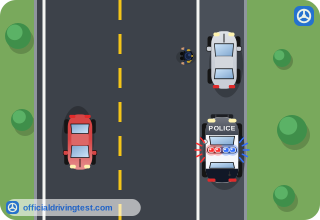
- Keep your hands on the steering wheel
- Search for your license or vehicle documents
- Give the officer your full attention
- Ask your passengers to remain calm
Show answer
Correct answer: Search for your license or vehicle documents
Do not make sudden movements or look for your license or documents; wait for the officer's instructions.
Source: South Carolina Driver's Manual (2026 (posted April 2026)), page 10-12 · Open this page in the manual (Manual page 10-12)
-
If you have a weapon in the vehicle during a traffic stop, what should you do?
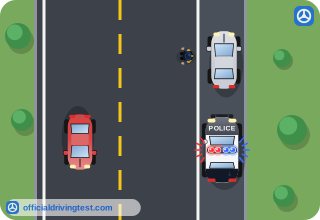
- Stay silent unless the officer asks about it
- Place it on the dashboard in plain view
- Wait until the officer asks to search the vehicle
- Inform the officer of all weapons upon first contact
Show answer
Correct answer: Inform the officer of all weapons upon first contact
You should tell the officer about every weapon in the vehicle when contact begins.
Source: South Carolina Driver's Manual (2026 (posted April 2026)), page 10-12 · Open this page in the manual (Manual page 10-12)
-
What should concealed weapons permit (CWP) holders do during a traffic stop?
- Follow CWP procedures
- Exit the vehicle with the permit in hand
- Place the weapon on the seat beside them
- Say nothing about the permit unless asked
Show answer
Correct answer: Follow CWP procedures
The manual says CWP holders should follow CWP procedures.
Source: South Carolina Driver's Manual (2026 (posted April 2026)), page 10-12 · Open this page in the manual (Manual page 10-12)
-
At night, what should you do as soon as you stop for an officer?
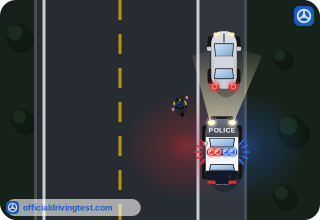
- Turn on your high beams
- Switch off all of your lights
- Turn on your interior lights
- Get out and face the officer's spotlight
Show answer
Correct answer: Turn on your interior lights
Interior lights help the officer see inside your vehicle when a spotlight is used at night.
Source: South Carolina Driver's Manual (2026 (posted April 2026)), page 10-13 · Open this page in the manual (Manual page 10-13)
-
Why should you roll down your window during a traffic stop?
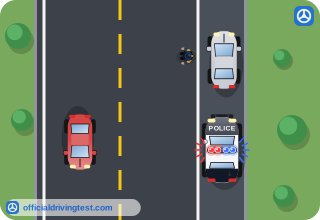
- So that you and the officer can communicate
- So the officer can reach inside the vehicle
- So you can hand over your keys
- So the officer can check every passenger's identification
Show answer
Correct answer: So that you and the officer can communicate
Rolling the window down lets you and the officer talk to each other.
Source: South Carolina Driver's Manual (2026 (posted April 2026)), page 10-13 · Open this page in the manual (Manual page 10-13)
-
What should you do if the officer who stops you is driving an unmarked vehicle or is not in uniform?
- Refuse to roll down your window
- Stay in the car and say nothing
- Ask to see the officer's credentials
- Step out to inspect the vehicle
Show answer
Correct answer: Ask to see the officer's credentials
When an officer is in an unmarked vehicle or out of uniform, you may ask to see his or her credentials.
Source: South Carolina Driver's Manual (2026 (posted April 2026)), page 10-13 · Open this page in the manual (Manual page 10-13)
-
Which documents may an officer ask to see during a traffic stop?
- Driver's license, birth certificate, and vehicle title
- Driver's license, proof of insurance, and vehicle registration
- Proof of insurance, Social Security card, and passport
- Vehicle registration, vehicle title, and inspection report
Show answer
Correct answer: Driver's license, proof of insurance, and vehicle registration
The manual lists the driver's license, proof of insurance and vehicle registration.
Source: South Carolina Driver's Manual (2026 (posted April 2026)), page 10-13 · Open this page in the manual (Manual page 10-13)
-
If the documents an officer asks for are out of your reach, what should you do?
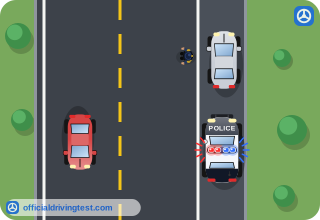
- Reach for them quickly to avoid delay
- Ask a passenger to search for them while you talk
- Step out and look for them in the trunk
- Tell the officer where they are and ask to reach for them
Show answer
Correct answer: Tell the officer where they are and ask to reach for them
Tell the officer where the documents are and ask if you may reach for them; do not make sudden movements or search for them.
Source: South Carolina Driver's Manual (2026 (posted April 2026)), page 10-13 · Open this page in the manual (Manual page 10-13)
-
If an officer asks you to exit the vehicle, what should you do?
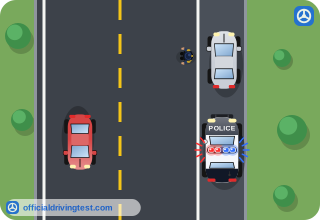
- Stand in the traffic lane so the officer can see you
- Put your hands in your pockets while you wait
- Lean on your car door with your back to traffic
- Stay safely away from traffic, hands in plain view
Show answer
Correct answer: Stay safely away from traffic, hands in plain view
When asked to step out, move safely away from traffic and keep your hands where they can be seen.
Source: South Carolina Driver's Manual (2026 (posted April 2026)), page 10-13 · Open this page in the manual (Manual page 10-13)
-
If you disagree with an officer's decision to issue a traffic ticket, what should you avoid?
- Asking the officer to clarify the action being taken
- Prolonging the contact by arguing with the officer
- Asking questions politely
- Asking where the ticket's information can be found
Show answer
Correct answer: Prolonging the contact by arguing with the officer
Arguing only drags out the stop; you can state your case in court instead.
Source: South Carolina Driver's Manual (2026 (posted April 2026)), page 10-13 · Open this page in the manual (Manual page 10-13)
-
If you wish to contest a traffic ticket, where will you have the opportunity to explain your point?
- At the roadside, to the officer
- At the SCDMV
- In court
- By mail, to the officer's supervisor
Show answer
Correct answer: In court
A driver who wants to contest a ticket can explain his or her point in court.
Source: South Carolina Driver's Manual (2026 (posted April 2026)), page 10-13 · Open this page in the manual (Manual page 10-13)
-
How is your acceptance of a traffic ticket treated?
- It is not considered an admission of guilt
- It is considered an admission of guilt
- It cancels your right to contest the ticket
- It counts as payment of the fine
Show answer
Correct answer: It is not considered an admission of guilt
Accepting a ticket document is not an admission of guilt.
Source: South Carolina Driver's Manual (2026 (posted April 2026)), page 10-13 · Open this page in the manual (Manual page 10-13)
-
What does the manual say about signing a traffic ticket in SC?
- A driver must sign it within 24 hours
- A driver must sign it only for a speeding ticket
- It is not a requirement that a driver sign it
- A driver must sign it in front of a witness
Show answer
Correct answer: It is not a requirement that a driver sign it
In SC a driver does not have to sign a traffic ticket, though other states may arrest a driver who refuses.
Source: South Carolina Driver's Manual (2026 (posted April 2026)), page 10-13 · Open this page in the manual (Manual page 10-13)
-
If you believe an officer acted inappropriately, what should you do?
- Report it to the officer's agency in a timely manner
- Argue with the officer about it right at the scene
- Say nothing about it to anyone
- Mention it only if you are given a court date
Show answer
Correct answer: Report it to the officer's agency in a timely manner
A complaint about an officer should be made to that officer's agency promptly.
Source: South Carolina Driver's Manual (2026 (posted April 2026)), page 10-14 · Open this page in the manual (Manual page 10-14)
-
Where can you find the name of the officer and the law enforcement agency?
- On your vehicle registration
- On the back of your driver's license
- On the SCDMV website
- On the ticket, or ask the officer
Show answer
Correct answer: On the ticket, or ask the officer
The ticket carries the officer's name and agency, and you may also ask the officer.
Source: South Carolina Driver's Manual (2026 (posted April 2026)), page 10-14 · Open this page in the manual (Manual page 10-14)
-
According to the manual, what is the purpose of a warning or ticket for a traffic violation?
- To raise money for law enforcement agencies
- To deter illegal and/or unsafe behavior
- To punish drivers who disagree with the officer
- To record the driver's name for the SCDMV
Show answer
Correct answer: To deter illegal and/or unsafe behavior
A warning or ticket is meant to discourage illegal or unsafe driving.
Source: South Carolina Driver's Manual (2026 (posted April 2026)), page 10-14 · Open this page in the manual (Manual page 10-14)
-
If an officer believes a crime has been committed, when can the officer search your vehicle without a court-issued warrant?
- Never, a warrant is always required
- As long as the officer has probable cause
- Only if you give written permission
- Only during daylight hours
Show answer
Correct answer: As long as the officer has probable cause
The manual says an officer with probable cause may search the vehicle without a court-issued warrant.
Source: South Carolina Driver's Manual (2026 (posted April 2026)), page 10-14 · Open this page in the manual (Manual page 10-14)
-
What should you not make toward an officer during a traffic stop?
- Polite requests for clarification
- Respectful questions about the ticket
- Statements about where your documents are
- Threatening motions or statements
Show answer
Correct answer: Threatening motions or statements
The manual says never to make threatening motions or statements to an officer.
Source: South Carolina Driver's Manual (2026 (posted April 2026)), page 10-14 · Open this page in the manual (Manual page 10-14)
-
If an officer arrests someone who is with you, what should you never do?
- Attempt to interfere with the arrest
- Keep your emotions under control
- Keep your hands where they can be seen
- Politely ask for clarification
Show answer
Correct answer: Attempt to interfere with the arrest
You must never try to interfere with the arrest of others who are with you.
Source: South Carolina Driver's Manual (2026 (posted April 2026)), page 10-14 · Open this page in the manual (Manual page 10-14)
-
How do the consequences of running from law enforcement compare with an initial traffic citation?
- They are about the same
- They are less severe
- They are more severe
- They apply only if you cause a collision
Show answer
Correct answer: They are more severe
The manual says the consequences of running from law enforcement are more severe than any initial traffic citation.
Source: South Carolina Driver's Manual (2026 (posted April 2026)), page 10-14 · Open this page in the manual (Manual page 10-14)
-
What do move-over laws require drivers to do when approaching emergency vehicles?
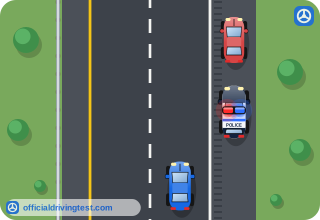
- Slow down and change lanes
- Stop and wait for the vehicle to leave
- Speed up and pass quickly
- Stop on the shoulder with hazard flashers on
Show answer
Correct answer: Slow down and change lanes
Move-over laws require drivers to slow down and change lanes when they approach emergency vehicles.
Source: South Carolina Driver's Manual (2026 (posted April 2026)), page 10-14 · Open this page in the manual (Manual page 10-14)
-
Which of these workers does the manual list as being struck while performing duties on the road?
- School bus drivers
- Mail carriers
- Tow truck operators
- Taxi drivers
Show answer
Correct answer: Tow truck operators
The manual names law enforcement officers, emergency medical services, fire department personnel and tow truck operators.
Source: South Carolina Driver's Manual (2026 (posted April 2026)), page 10-14 · Open this page in the manual (Manual page 10-14)
-
What should you do when you approach a stopped authorized emergency vehicle?
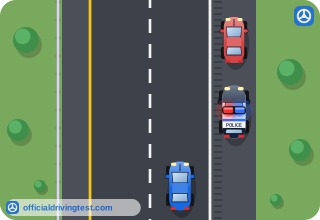
- Maintain your speed and stay in your lane
- Slow down and change to a lane away from it, if safe
- Stop behind it and wait until it drives away
- Speed up to get past it before traffic closes in
Show answer
Correct answer: Slow down and change to a lane away from it, if safe
You should slow down and yield the right-of-way by changing to a lane away from the emergency vehicle when that is safe.
Source: South Carolina Driver's Manual (2026 (posted April 2026)), page 10-15 · Open this page in the manual (Manual page 10-15)
-
If you cannot safely change lanes when approaching a stopped authorized emergency vehicle, what should you do?
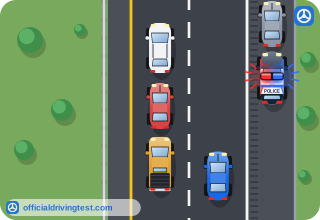
- Stop in your lane until the vehicle leaves
- Change lanes anyway to obey the law
- Speed up to get past it quickly
- Slow down and proceed with caution at a safe speed
Show answer
Correct answer: Slow down and proceed with caution at a safe speed
If a lane change is unsafe, slow down and continue with caution at a speed safe for traffic conditions.
Source: South Carolina Driver's Manual (2026 (posted April 2026)), page 10-15 · Open this page in the manual (Manual page 10-15)
-
What is a work zone?
- A road closed to every kind of vehicle
- Any road with a reduced speed limit
- A parking area for road crews
- An area where roadwork takes place
Show answer
Correct answer: An area where roadwork takes place
A work zone is an area where roadwork takes place and may involve a lane closure, a detour, and moving equipment.
Source: South Carolina Driver's Manual (2026 (posted April 2026)), page 11-3 · Open this page in the manual (Manual page 11-3)
-
When should you reduce your speed in a work zone?
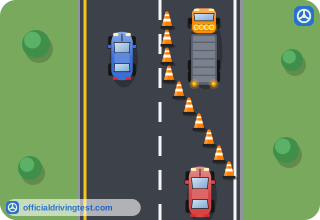
- Only when workers are present
- Always, even if there are no workers
- Only when the work zone has a lane closure
- Only when driving at night
Show answer
Correct answer: Always, even if there are no workers
You should always slow down in a work zone, even with no workers in sight.
Source: South Carolina Driver's Manual (2026 (posted April 2026)), page 11-3 · Open this page in the manual (Manual page 11-3)
-
Why can a work zone be hazardous even when no workers are present?
- Its traffic signals are turned off
- The speed limit is always raised there
- It may have narrower lanes and rough pavement
- Lane markings are not allowed there
Show answer
Correct answer: It may have narrower lanes and rough pavement
Narrower lanes and rough pavement can create hazardous conditions in a work zone.
Source: South Carolina Driver's Manual (2026 (posted April 2026)), page 11-3 · Open this page in the manual (Manual page 11-3)
-
Which of these should you do when driving through a work zone?
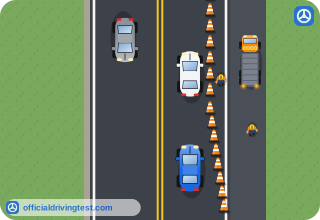
- Increase your following distance and be prepared to stop
- Keep up your speed so you do not delay other traffic
- Move up close behind the car ahead to save space
- Pass slower vehicles before the lanes narrow
Show answer
Correct answer: Increase your following distance and be prepared to stop
In a work zone you should slow down, leave more following distance, watch the traffic around you, and be ready to stop.
Source: South Carolina Driver's Manual (2026 (posted April 2026)), page 11-4 · Open this page in the manual (Manual page 11-4)
-
How should you drive through a work zone at night?
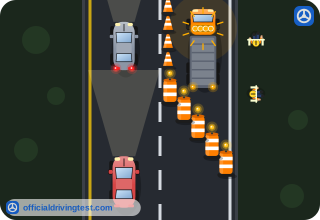
- Normally, unless workers are visible near the road
- With extra caution only when workers are present
- With extreme caution, workers present or not
- Faster, because there is less traffic at night
Show answer
Correct answer: With extreme caution, workers present or not
Night work zones call for extreme caution whether or not workers are there.
Source: South Carolina Driver's Manual (2026 (posted April 2026)), page 11-4 · Open this page in the manual (Manual page 11-4)
-
Why should you adjust your lane position in a work zone?
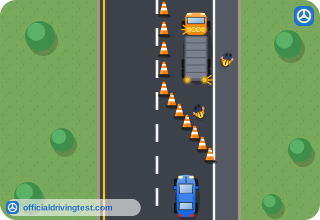
- To stay as close to the cones as you can
- To give workers and equipment space
- To get ahead of slower construction vehicles
- To line up for a faster lane early
Show answer
Correct answer: To give workers and equipment space
Adjusting your lane position leaves room for workers and construction vehicles.
Source: South Carolina Driver's Manual (2026 (posted April 2026)), page 11-4 · Open this page in the manual (Manual page 11-4)
-
Until when should you observe the posted work zone signs?
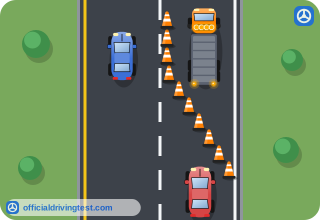
- Until you pass the last orange cone
- Until you can no longer see any workers
- Until the road surface becomes smooth
- Until you see the End Road Work sign
Show answer
Correct answer: Until you see the End Road Work sign
Keep following the posted work zone signs until you reach the sign reading End Road Work.
Source: South Carolina Driver's Manual (2026 (posted April 2026)), page 11-4 · Open this page in the manual (Manual page 11-4)
-
What should you do about possible delays in a work zone?
- Drive faster outside the zone to make up the time
- Count on a detour to avoid any delay
- Wait to leave until work crews have finished
- Expect delays, plan for them, and leave earlier
Show answer
Correct answer: Expect delays, plan for them, and leave earlier
The manual says to expect delays, plan for them, and leave earlier to reach your destination.
Source: South Carolina Driver's Manual (2026 (posted April 2026)), page 11-4 · Open this page in the manual (Manual page 11-4)
-
When possible, what should you do about work zones?
- Drive through them at night when traffic is lighter
- Use alternate routes and avoid them
- Enter them early to get ahead of slower traffic
- Treat them like any other road
Show answer
Correct answer: Use alternate routes and avoid them
When possible, you should use alternate routes and stay out of work zones.
Source: South Carolina Driver's Manual (2026 (posted April 2026)), page 11-4 · Open this page in the manual (Manual page 11-4)