South Carolina: Emergencies and winter driving — Part 2 Practice Test
Questions in this part include: “The engine shuts off while you are driving. What should you know about the steering wheel?” · “If your vehicle breaks down and you have a cell phone or other device, what does the manual say to do?”
Independent educational site · not affiliated with any government agency or DMV
Ready? Test yourself
- Instant feedback with an explanation
- Every answer cites its source in the manual
- Your best score is saved on this device
- Keyboard: press 1 to 4 to answer and Enter for the next question
Questions are original and based on the official manual "South Carolina Driver's Manual" (2026 (posted April 2026)), South Carolina Department of Motor Vehicles.
All 20 questions in this practice test
Take the test above first, then use this list to study. Tap “Show answer” to see the correct answer and explanation.
Show the questions and answersHide the questions
-
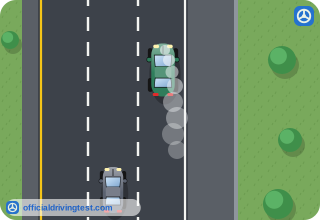
What happens if a rear tire blows out?
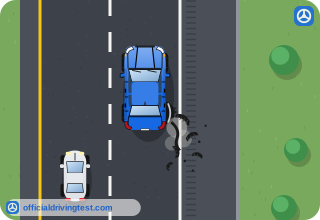
- The vehicle wobbles, shakes, and pulls some in the direction of the blowout
- The vehicle shoots forward and pulls sharply away from the blowout
- The vehicle drifts straight with no change in feel
- The vehicle speeds up and pulls to the center line
Show answer
Correct answer: The vehicle wobbles, shakes, and pulls some in the direction of the blowout
A rear-tire blowout makes the vehicle wobble and shake and pull somewhat toward the blowout.
Source: South Carolina Driver's Manual (2026 (posted April 2026)), page 9-4 · Open this page in the manual (Manual page 9-4)
-
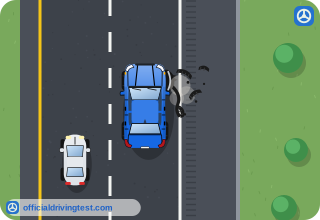
A tire blows out or suddenly goes flat. How should you hold the steering wheel?
- Grip it lightly and let the vehicle drift
- Turn it sharply toward the shoulder
- Grip it firmly and keep the vehicle going straight
- Hold it with one hand and signal with the other
Show answer
Correct answer: Grip it firmly and keep the vehicle going straight
The first step in a tire blowout is to grip the wheel firmly and keep the vehicle going straight.
Source: South Carolina Driver's Manual (2026 (posted April 2026)), page 9-4 · Open this page in the manual (Manual page 9-4)
-
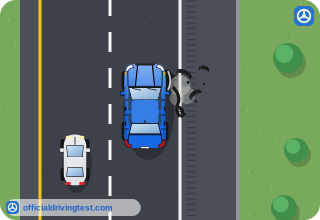
After a tire blowout, what should you do about your speed?
- Press the accelerator to keep the vehicle straight
- Take your foot off the accelerator and slow down gradually
- Slam on the brake pedal to stop quickly
- Shift into neutral and coast to a stop at once
Show answer
Correct answer: Take your foot off the accelerator and slow down gradually
After a blowout you slow down gradually by taking your foot off the accelerator pedal.
Source: South Carolina Driver's Manual (2026 (posted April 2026)), page 9-4 · Open this page in the manual (Manual page 9-4)
-
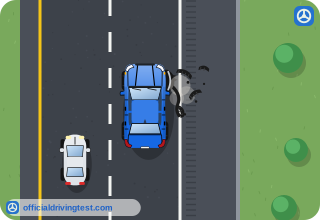
After a tire blowout, where should you stop?
- Stop in your lane so that other drivers are able to see you well
- Stop on the road right where the blowout happened
- Stop in the nearest intersection
- Pull off the road in a safe place and turn on the emergency flashers
Show answer
Correct answer: Pull off the road in a safe place and turn on the emergency flashers
You should not stop on the road if at all possible; pull off in a safe place and turn on your emergency flashers.
Source: South Carolina Driver's Manual (2026 (posted April 2026)), page 9-4 · Open this page in the manual (Manual page 9-4)
-
The engine shuts off while you are driving. What should you know about the steering wheel?
- It may be difficult to turn, but it can still be turned
- It will lock in place and cannot be turned at all
- It will turn more easily than usual
- It will turn only to the right
Show answer
Correct answer: It may be difficult to turn, but it can still be turned
After a power failure the wheel may be hard to turn but can still be turned, so you keep a strong grip.
Source: South Carolina Driver's Manual (2026 (posted April 2026)), page 9-4 · Open this page in the manual (Manual page 9-4)
-
The engine shuts off while you are driving. How should you brake?
- Hard, to stop as quickly as possible
- Not at all until the vehicle stops by itself
- With steady pressure on the pedal, not hard
- In quick taps to keep the wheels turning
Show answer
Correct answer: With steady pressure on the pedal, not hard
After a power failure the manual says not to brake hard, but to use steady pressure, slow down and pull off the roadway.
Source: South Carolina Driver's Manual (2026 (posted April 2026)), page 9-4 · Open this page in the manual (Manual page 9-4)
-
You have stopped after your engine shut off and could not restart it. What should you do?
- Leave the hood down and wait inside for another driver to stop
- Raise the hood, turn on the emergency flashers, and call for help
- Turn off the emergency flashers to save the battery
- Keep trying to restart it while parked on the road
Show answer
Correct answer: Raise the hood, turn on the emergency flashers, and call for help
If the engine will not restart, the manual says to raise the hood, turn on the emergency flashers and call for help.
Source: South Carolina Driver's Manual (2026 (posted April 2026)), page 9-5 · Open this page in the manual (Manual page 9-5)
-
Your vehicle is accelerating out of control. What should you do with the engine?
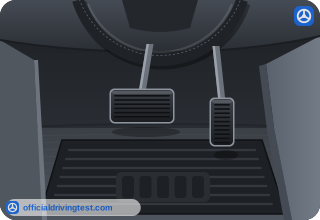
- Rev it to burn off fuel
- Leave it on and brake hard
- Leave it on and shift to park
- Turn it off
Show answer
Correct answer: Turn it off
For a stuck accelerator, the first step is to turn off the engine.
Source: South Carolina Driver's Manual (2026 (posted April 2026)), page 9-5 · Open this page in the manual (Manual page 9-5)
-
Your vehicle is accelerating out of control. What should you do with the gear shift?
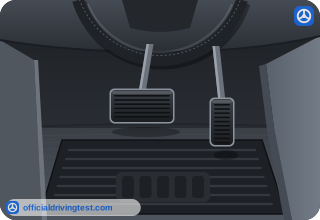
- Shift to neutral and search for an escape path
- Shift to park and wait for the vehicle to stop
- Shift to a lower gear and keep driving
- Shift to reverse to slow the vehicle
Show answer
Correct answer: Shift to neutral and search for an escape path
With a stuck accelerator you shift to neutral while looking for an escape path.
Source: South Carolina Driver's Manual (2026 (posted April 2026)), page 9-5 · Open this page in the manual (Manual page 9-5)
-
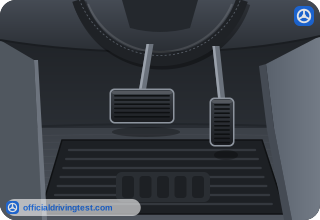
With a stuck accelerator, how should you steer and brake as you pull off the roadway?
- Steer sharply and brake hard
- Steer smoothly and do not brake at all
- Steer smoothly and brake gently
- Steer sharply and brake gently
Show answer
Correct answer: Steer smoothly and brake gently
The manual says to steer smoothly, brake gently and pull off the roadway.
Source: South Carolina Driver's Manual (2026 (posted April 2026)), page 9-5 · Open this page in the manual (Manual page 9-5)
-
What should be done about a stuck accelerator pedal before you drive again?
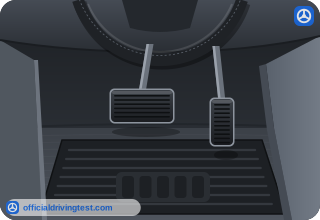
- Drive carefully and watch whether it sticks again
- Have the pedal repaired at a service center
- Spray the pedal with oil and keep driving
- Nothing, because it only happens once
Show answer
Correct answer: Have the pedal repaired at a service center
The pedal must be repaired at a service center before the vehicle is driven again.
Source: South Carolina Driver's Manual (2026 (posted April 2026)), page 9-5 · Open this page in the manual (Manual page 9-5)
-
If your vehicle breaks down on the highway, what should you make sure of?
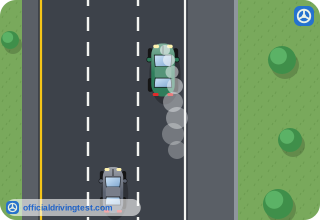
- That other drivers can hear your horn
- That your vehicle stays in the middle of the travel lane
- That your headlights are turned off
- That other roadway users can see your disabled vehicle
Show answer
Correct answer: That other roadway users can see your disabled vehicle
Collisions happen when drivers do not see a disabled vehicle until too late, so you make sure it can be seen.
Source: South Carolina Driver's Manual (2026 (posted April 2026)), page 9-5 · Open this page in the manual (Manual page 9-5)
-
If your vehicle breaks down and you have a cell phone or other device, what does the manual say to do?
- Use it to notify authorities that the vehicle has broken down
- Use it to call a friend so you are not alone
- Use it only after you have walked away to a safe place
- Use it to record video of other drivers passing
Show answer
Correct answer: Use it to notify authorities that the vehicle has broken down
The manual says to use a cell phone or other device, if available, to notify authorities of the breakdown.
Source: South Carolina Driver's Manual (2026 (posted April 2026)), page 9-5 · Open this page in the manual (Manual page 9-5)
-
If you have vehicle trouble and have to stop, where should you try to put your vehicle?
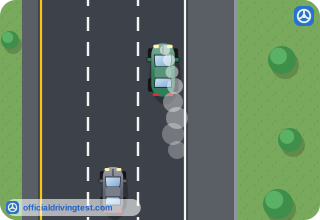
- In the center of the travel lane
- In the travel lane, so that others see it
- Off the road and away from traffic, if possible
- On the road, to warn others
Show answer
Correct answer: Off the road and away from traffic, if possible
You should get the vehicle off the road and away from traffic if possible.
Source: South Carolina Driver's Manual (2026 (posted April 2026)), page 9-5 · Open this page in the manual (Manual page 9-5)
-
Your vehicle is disabled and you have to stop. What should you turn on to show that it is disabled?
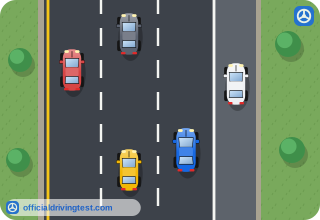
- Your high-beam headlights
- Your emergency flashers
- Your turn signal
- Your windshield wipers
Show answer
Correct answer: Your emergency flashers
Turning on your emergency flashers shows other drivers that your vehicle is disabled.
Source: South Carolina Driver's Manual (2026 (posted April 2026)), page 9-5 · Open this page in the manual (Manual page 9-5)
-
If you have emergency flares and your vehicle is disabled, where should you place them?
- About 10 to 20 feet behind the vehicle
- About 50 to 75 feet in front of the vehicle
- About 500 to 600 feet behind the vehicle
- About 200 to 300 feet behind the vehicle
Show answer
Correct answer: About 200 to 300 feet behind the vehicle
Flares go about 200 to 300 feet behind the vehicle so other drivers have time to change lanes.
Source: South Carolina Driver's Manual (2026 (posted April 2026)), page 9-5 · Open this page in the manual (Manual page 9-5)
-
Which parts of the road tend to freeze first?
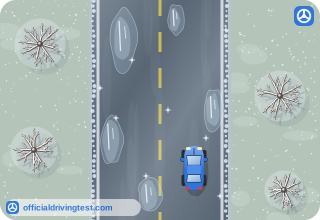
- Wide highways, tunnels, and heavily traveled streets
- Sunny roads, hills, and paved shoulders
- Bridges, overpasses, and infrequently traveled roadways
- Residential streets, parking lots, and driveways
Show answer
Correct answer: Bridges, overpasses, and infrequently traveled roadways
Bridges, overpasses, and roads that are not often traveled tend to freeze before other roads.
Source: South Carolina Driver's Manual (2026 (posted April 2026)), page 11-6 · Open this page in the manual (Manual page 11-6)
-
When might you find ice in shady areas or on exposed roadways like bridges?
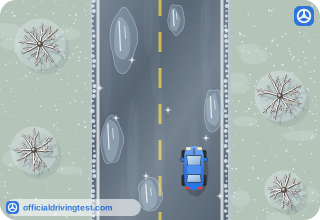
- Even above freezing, if the road is wet
- Only when the temperature is below freezing
- Only while snow is actively falling
- Only between midnight and sunrise
Show answer
Correct answer: Even above freezing, if the road is wet
Even at temperatures above freezing, wet conditions can leave ice in shady spots and on bridges.
Source: South Carolina Driver's Manual (2026 (posted April 2026)), page 11-6 · Open this page in the manual (Manual page 11-6)
-
If you must drive in winter conditions, what is recommended for your vehicle?
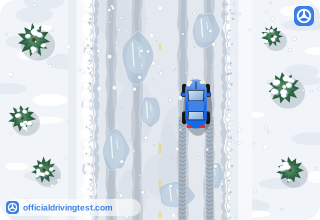
- Tire chains or special snow tires
- Lowered tire pressure for more grip
- A heavier engine oil for cold starts
- Higher tire pressure to cut road contact
Show answer
Correct answer: Tire chains or special snow tires
The manual recommends tire chains or special snow tires if you must drive in winter weather.
Source: South Carolina Driver's Manual (2026 (posted April 2026)), page 11-6 · Open this page in the manual (Manual page 11-6)
-
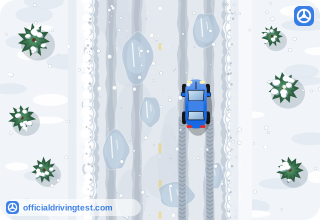
Why should you use the defroster in winter driving?
- It warms the engine faster
- It keeps the tires from freezing
- It improves driver visibility
- It shortens your braking distance
Show answer
Correct answer: It improves driver visibility
The defroster improves driver visibility, especially during cold weather.
Source: South Carolina Driver's Manual (2026 (posted April 2026)), page 11-6 · Open this page in the manual (Manual page 11-6)