South Carolina: Emergencies and winter driving
Braking, steering and accelerating to avoid a collision, blowouts, brake and engine trouble, flooded roads, ice and snow, and towing a trailer. Split into 3 shorter tests so you're not stuck in one long quiz.
Independent educational site · not affiliated with any government agency or DMV
Choose a part
Emergencies and winter driving — Part 1
Questions in this part include: “In the event of a hurricane, for which areas of SC may a mandatory evacuation be declared?”
StartEmergencies and winter driving — Part 2
Questions in this part include: “The engine shuts off while you are driving. What should you know about the steering wheel?”
StartEmergencies and winter driving — Part 3
Questions in this part include: “How can you make sure the defroster is working properly?”
StartAll 61 Emergencies and winter driving questions with answers
Choose a part above to take a practice test, or study every question and answer here.
Show the questions and answersHide the questions
-
In the event of a hurricane, for which areas of SC may a mandatory evacuation be declared?
- The coastal areas
- The mountain areas
- The entire state
- Only the largest cities
Show answer
Correct answer: The coastal areas
A mandatory evacuation may be declared for the coastal areas of SC when a hurricane threatens.
Source: South Carolina Driver's Manual (2026 (posted April 2026)), page 6-12 · Open this page in the manual (Manual page 6-12)
-
Which list names the three options a driver has to avoid a collision or reduce its impact?
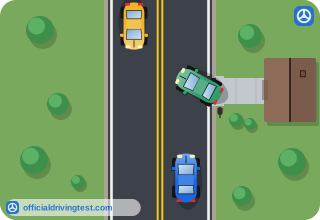
- Braking, steering, or accelerating
- Braking, honking, or flashing the lights
- Steering, signaling, or slowing to a stop
- Stopping, reversing, or sounding the horn
Show answer
Correct answer: Braking, steering, or accelerating
The manual names three options for avoiding a collision or reducing its impact: braking, steering, or accelerating.
Source: South Carolina Driver's Manual (2026 (posted April 2026)), page 9-1 · Open this page in the manual (Manual page 9-1)
-
What does an anti-lock braking system (ABS) allow you to do?
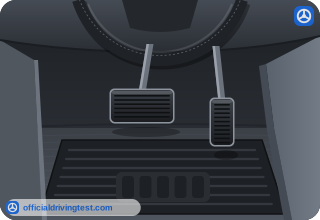
- Stop in half the distance on any surface
- Brake while taking both hands off the wheel
- Stop without skidding and keep steering control
- Skip the need to read the owner’s manual
Show answer
Correct answer: Stop without skidding and keep steering control
ABS lets you stop the vehicle without skidding while you keep steering control.
Source: South Carolina Driver's Manual (2026 (posted April 2026)), page 9-1 · Open this page in the manual (Manual page 9-1)
-
When you brake hard in a vehicle with ABS, how should you use the brake pedal?
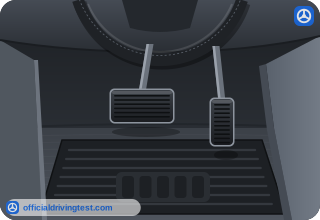
- Pump it repeatedly so that the wheels keep turning
- Press as hard as you can and keep constant pressure on it
- Tap it lightly and release it several times
- Press it only until you feel it vibrate
Show answer
Correct answer: Press as hard as you can and keep constant pressure on it
With ABS you press hard and hold constant pressure; pumping the brakes would deactivate ABS.
Source: South Carolina Driver's Manual (2026 (posted April 2026)), page 9-1 · Open this page in the manual (Manual page 9-1)
-
Why should you not pump the brakes in a vehicle that has ABS?
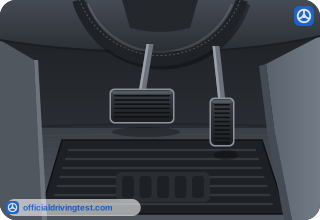
- Pumping the brakes will overheat the brake fluid
- Pumping the brakes will lock the steering wheel
- Pumping the brakes will turn on the brake light
- Pumping the brakes will deactivate ABS
Show answer
Correct answer: Pumping the brakes will deactivate ABS
The manual says pumping the brakes deactivates ABS, so you should hold steady pressure instead.
Source: South Carolina Driver's Manual (2026 (posted April 2026)), page 9-1 · Open this page in the manual (Manual page 9-1)
-
You are braking hard in a vehicle with ABS. The pedal vibrates and you hear a clicking noise. What does this mean?
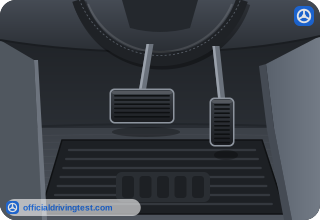
- It is normal
- The ABS has failed
- The brakes are overheated
- The tires are about to skid
Show answer
Correct answer: It is normal
A vibrating pedal and a clicking noise are normal while ABS is working.
Source: South Carolina Driver's Manual (2026 (posted April 2026)), page 9-1 · Open this page in the manual (Manual page 9-1)
-
What must you do for ABS to keep working while you stop?
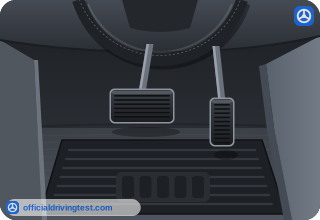
- Release the pedal every few seconds
- Shift the vehicle into neutral
- Keep the pressure on the brake pedal
- Steer straight and take your foot off the pedal
Show answer
Correct answer: Keep the pressure on the brake pedal
ABS works only while you keep pressure on the brake pedal.
Source: South Carolina Driver's Manual (2026 (posted April 2026)), page 9-1 · Open this page in the manual (Manual page 9-1)
-
To quickly steer around a problem in the road, how should you hold the steering wheel?
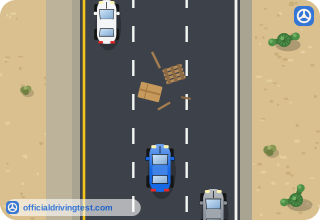
- With one hand, keeping the other free to signal
- With a good grip using both hands
- With a light grip so the wheel can turn freely
- With both hands at the very bottom of the wheel
Show answer
Correct answer: With a good grip using both hands
The manual says to make sure you have a good grip with both hands on the steering wheel when swerving.
Source: South Carolina Driver's Manual (2026 (posted April 2026)), page 9-2 · Open this page in the manual (Manual page 9-2)
-
You have swerved around a problem and cleared it. What should you do next?
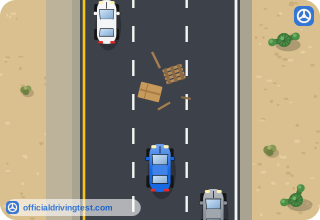
- Keep steering the same way until the vehicle comes to a stop
- Brake as hard as you can right away
- Let go of the wheel so it straightens itself
- Steer in the opposite direction to straighten out and regain control
Show answer
Correct answer: Steer in the opposite direction to straighten out and regain control
After clearing the problem, you steer the other way to straighten the vehicle, regain control and adjust your speed.
Source: South Carolina Driver's Manual (2026 (posted April 2026)), page 9-2 · Open this page in the manual (Manual page 9-2)
-
When might it be necessary to accelerate to avoid a collision?
- When another vehicle is about to hit you from behind or the side
- When another vehicle is stopped in the lane ahead of you
- When you are driving on a wet road
- When a pedestrian is crossing ahead of you
Show answer
Correct answer: When another vehicle is about to hit you from behind or the side
The manual gives a vehicle about to hit you from behind or the side as a time when accelerating may be needed.
Source: South Carolina Driver's Manual (2026 (posted April 2026)), page 9-2 · Open this page in the manual (Manual page 9-2)
-
Which of these can cause a skid?
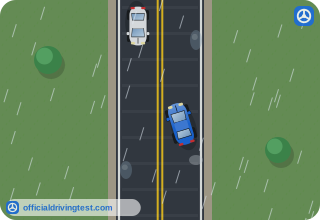
- Using your turn signal
- Turning on your headlights
- Stopping suddenly
- Driving below the speed limit on a dry road
Show answer
Correct answer: Stopping suddenly
Skids are caused by traveling too fast for road conditions, stopping suddenly, or tires that can no longer grip the road.
Source: South Carolina Driver's Manual (2026 (posted April 2026)), page 9-2 · Open this page in the manual (Manual page 9-2)
-
If your vehicle begins to skid, what should you do with the accelerator?
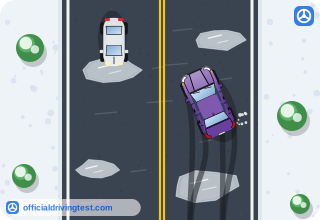
- Press it harder to regain control
- Take your foot off the accelerator
- Hold it steady at the same speed
- Shift the vehicle into neutral first
Show answer
Correct answer: Take your foot off the accelerator
When a vehicle begins to skid, take your foot off the accelerator.
Source: South Carolina Driver's Manual (2026 (posted April 2026)), page 9-2 · Open this page in the manual (Manual page 9-2)
-
While your vehicle is skidding, where should you look and steer?
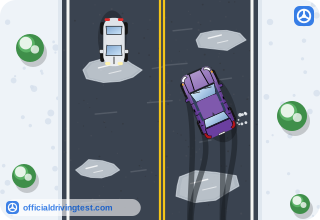
- Look at the front wheels and steer the opposite way
- Look at the center line and steer toward it
- Look at the obstacle and steer away from it
- Look where you want to go and steer that way
Show answer
Correct answer: Look where you want to go and steer that way
During a skid, look where you want to go and steer the vehicle in that direction.
Source: South Carolina Driver's Manual (2026 (posted April 2026)), page 9-2 · Open this page in the manual (Manual page 9-2)
-
What is panic steering?
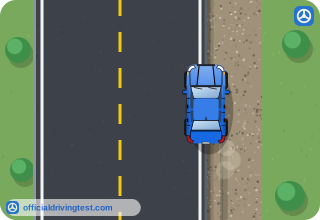
- Trying to return to the pavement as soon as the wheels leave it
- Turning sharply away from a stopped vehicle in your lane
- Steering with only one hand when a tire blows out
- Swerving back and forth to keep the vehicle straight
Show answer
Correct answer: Trying to return to the pavement as soon as the wheels leave it
Panic steering is steering back to the pavement immediately after the wheels leave it, and the manual says to avoid it.
Source: South Carolina Driver's Manual (2026 (posted April 2026)), page 9-3 · Open this page in the manual (Manual page 9-3)
-
Your vehicle leaves the paved road surface because of an uneven surface drop-off. What should you do?
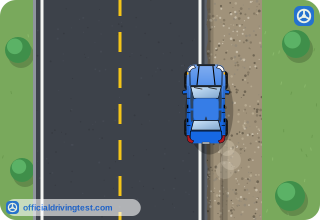
- Brake hard and turn the wheel sharply back onto the pavement
- Stay on the shoulder until traffic clears completely
- Slow down gradually when safe and steer gently back onto the pavement
- Accelerate so the tires climb back onto the pavement
Show answer
Correct answer: Slow down gradually when safe and steer gently back onto the pavement
The manual says to slow gradually when safe and steer gently back, with only a slight turn of the wheel.
Source: South Carolina Driver's Manual (2026 (posted April 2026)), page 9-3 · Open this page in the manual (Manual page 9-3)
-
Which maintenance schedule does the manual say you should follow to reduce the chance of a vehicle problem?
- A schedule set by the SCDMV
- The recommended schedule in the vehicle owner’s manual
- A schedule printed on the vehicle’s registration
- A schedule set by your insurance company
Show answer
Correct answer: The recommended schedule in the vehicle owner’s manual
The manual says to follow the recommended maintenance schedule listed in the vehicle owner’s manual.
Source: South Carolina Driver's Manual (2026 (posted April 2026)), page 9-3 · Open this page in the manual (Manual page 9-3)
-
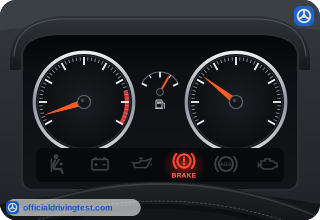
A brake warning light tells you that your brakes are not working properly. What does the manual say to do?
- Drive to the nearest exit and keep going
- Drive slowly with the emergency flashers on
- Wait for the light to turn off, then drive
- Do not drive
Show answer
Correct answer: Do not drive
The brake warning light means the brakes are not working properly, and the manual says not to drive when you see it.
Source: South Carolina Driver's Manual (2026 (posted April 2026)), page 9-3 · Open this page in the manual (Manual page 9-3)
-
If your brakes stop working while driving, how should you apply the parking brake?
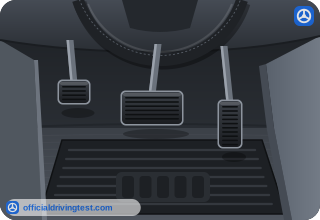
- Slowly, so you will not lock the rear wheels and cause a skid
- Quickly and fully, to stop the vehicle as fast as possible
- Only after the vehicle has stopped completely
- Only after you shift the vehicle into park
Show answer
Correct answer: Slowly, so you will not lock the rear wheels and cause a skid
The parking brake is applied slowly so the rear wheels do not lock and cause a skid.
Source: South Carolina Driver's Manual (2026 (posted April 2026)), page 9-3 · Open this page in the manual (Manual page 9-3)
-
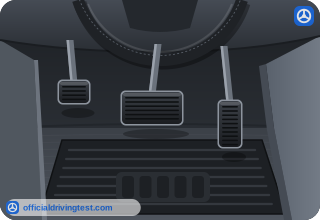
After applying the parking brake because your brakes failed, what should you be ready to do if the vehicle starts to skid?
- Pull the parking brake harder
- Shift the vehicle into park
- Release the parking brake
- Turn off the engine
Show answer
Correct answer: Release the parking brake
You should be ready to release the parking brake if the vehicle begins to skid.
Source: South Carolina Driver's Manual (2026 (posted April 2026)), page 9-3 · Open this page in the manual (Manual page 9-3)
-
Your brakes have failed and the parking brake does not work. What should you do?
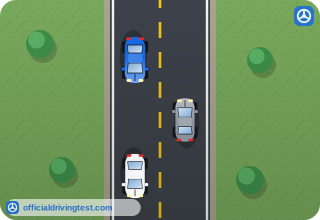
- Keep driving carefully until you reach the nearest service center
- Turn off the engine and look for a safe place to slow to a stop
- Shift into park at once while still moving
- Pump the brake pedal until the brakes recover
Show answer
Correct answer: Turn off the engine and look for a safe place to slow to a stop
If the parking brake does not work, turn off the engine and find a safe place to slow to a stop, getting off the roadway.
Source: South Carolina Driver's Manual (2026 (posted April 2026)), page 9-4 · Open this page in the manual (Manual page 9-4)
-
What happens if a front tire blows out?
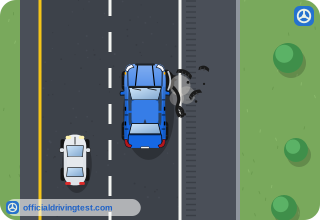
- The vehicle pulls sharply away from the blowout
- The vehicle stops almost at once with no steering change
- The vehicle spins around in the opposite direction
- The vehicle pulls sharply in the direction of the blowout
Show answer
Correct answer: The vehicle pulls sharply in the direction of the blowout
A front-tire blowout makes the vehicle pull sharply toward the side of the blowout.
Source: South Carolina Driver's Manual (2026 (posted April 2026)), page 9-4 · Open this page in the manual (Manual page 9-4)
-
What happens if a rear tire blows out?
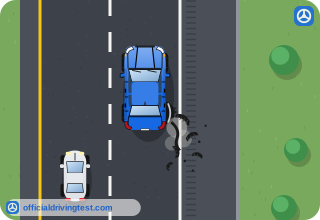
- The vehicle wobbles, shakes, and pulls some in the direction of the blowout
- The vehicle shoots forward and pulls sharply away from the blowout
- The vehicle drifts straight with no change in feel
- The vehicle speeds up and pulls to the center line
Show answer
Correct answer: The vehicle wobbles, shakes, and pulls some in the direction of the blowout
A rear-tire blowout makes the vehicle wobble and shake and pull somewhat toward the blowout.
Source: South Carolina Driver's Manual (2026 (posted April 2026)), page 9-4 · Open this page in the manual (Manual page 9-4)
-
A tire blows out or suddenly goes flat. How should you hold the steering wheel?
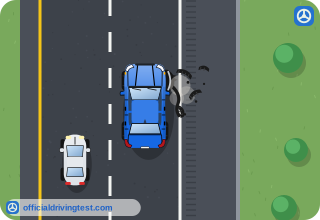
- Grip it lightly and let the vehicle drift
- Turn it sharply toward the shoulder
- Grip it firmly and keep the vehicle going straight
- Hold it with one hand and signal with the other
Show answer
Correct answer: Grip it firmly and keep the vehicle going straight
The first step in a tire blowout is to grip the wheel firmly and keep the vehicle going straight.
Source: South Carolina Driver's Manual (2026 (posted April 2026)), page 9-4 · Open this page in the manual (Manual page 9-4)
-
After a tire blowout, what should you do about your speed?
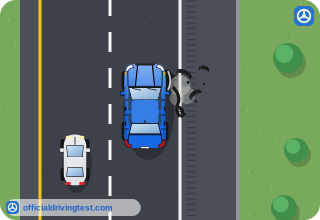
- Press the accelerator to keep the vehicle straight
- Take your foot off the accelerator and slow down gradually
- Slam on the brake pedal to stop quickly
- Shift into neutral and coast to a stop at once
Show answer
Correct answer: Take your foot off the accelerator and slow down gradually
After a blowout you slow down gradually by taking your foot off the accelerator pedal.
Source: South Carolina Driver's Manual (2026 (posted April 2026)), page 9-4 · Open this page in the manual (Manual page 9-4)
-
After a tire blowout, where should you stop?
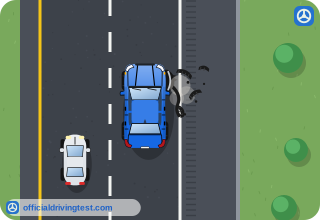
- Stop in your lane so that other drivers are able to see you well
- Stop on the road right where the blowout happened
- Stop in the nearest intersection
- Pull off the road in a safe place and turn on the emergency flashers
Show answer
Correct answer: Pull off the road in a safe place and turn on the emergency flashers
You should not stop on the road if at all possible; pull off in a safe place and turn on your emergency flashers.
Source: South Carolina Driver's Manual (2026 (posted April 2026)), page 9-4 · Open this page in the manual (Manual page 9-4)
-
The engine shuts off while you are driving. What should you know about the steering wheel?
- It may be difficult to turn, but it can still be turned
- It will lock in place and cannot be turned at all
- It will turn more easily than usual
- It will turn only to the right
Show answer
Correct answer: It may be difficult to turn, but it can still be turned
After a power failure the wheel may be hard to turn but can still be turned, so you keep a strong grip.
Source: South Carolina Driver's Manual (2026 (posted April 2026)), page 9-4 · Open this page in the manual (Manual page 9-4)
-
The engine shuts off while you are driving. How should you brake?
- Hard, to stop as quickly as possible
- Not at all until the vehicle stops by itself
- With steady pressure on the pedal, not hard
- In quick taps to keep the wheels turning
Show answer
Correct answer: With steady pressure on the pedal, not hard
After a power failure the manual says not to brake hard, but to use steady pressure, slow down and pull off the roadway.
Source: South Carolina Driver's Manual (2026 (posted April 2026)), page 9-4 · Open this page in the manual (Manual page 9-4)
-
You have stopped after your engine shut off and could not restart it. What should you do?
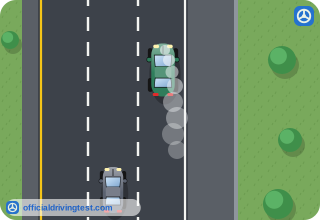
- Leave the hood down and wait inside for another driver to stop
- Raise the hood, turn on the emergency flashers, and call for help
- Turn off the emergency flashers to save the battery
- Keep trying to restart it while parked on the road
Show answer
Correct answer: Raise the hood, turn on the emergency flashers, and call for help
If the engine will not restart, the manual says to raise the hood, turn on the emergency flashers and call for help.
Source: South Carolina Driver's Manual (2026 (posted April 2026)), page 9-5 · Open this page in the manual (Manual page 9-5)
-
Your vehicle is accelerating out of control. What should you do with the engine?
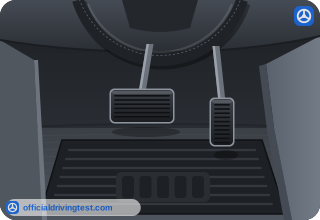
- Rev it to burn off fuel
- Leave it on and brake hard
- Leave it on and shift to park
- Turn it off
Show answer
Correct answer: Turn it off
For a stuck accelerator, the first step is to turn off the engine.
Source: South Carolina Driver's Manual (2026 (posted April 2026)), page 9-5 · Open this page in the manual (Manual page 9-5)
-
Your vehicle is accelerating out of control. What should you do with the gear shift?
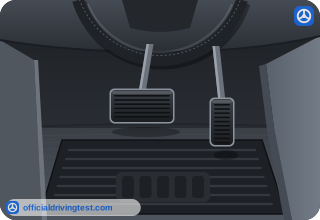
- Shift to neutral and search for an escape path
- Shift to park and wait for the vehicle to stop
- Shift to a lower gear and keep driving
- Shift to reverse to slow the vehicle
Show answer
Correct answer: Shift to neutral and search for an escape path
With a stuck accelerator you shift to neutral while looking for an escape path.
Source: South Carolina Driver's Manual (2026 (posted April 2026)), page 9-5 · Open this page in the manual (Manual page 9-5)
-
With a stuck accelerator, how should you steer and brake as you pull off the roadway?
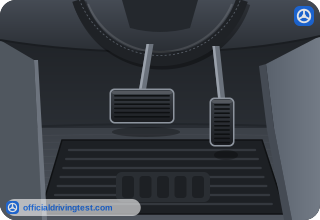
- Steer sharply and brake hard
- Steer smoothly and do not brake at all
- Steer smoothly and brake gently
- Steer sharply and brake gently
Show answer
Correct answer: Steer smoothly and brake gently
The manual says to steer smoothly, brake gently and pull off the roadway.
Source: South Carolina Driver's Manual (2026 (posted April 2026)), page 9-5 · Open this page in the manual (Manual page 9-5)
-
What should be done about a stuck accelerator pedal before you drive again?
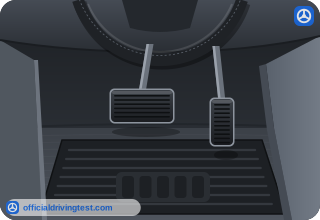
- Drive carefully and watch whether it sticks again
- Have the pedal repaired at a service center
- Spray the pedal with oil and keep driving
- Nothing, because it only happens once
Show answer
Correct answer: Have the pedal repaired at a service center
The pedal must be repaired at a service center before the vehicle is driven again.
Source: South Carolina Driver's Manual (2026 (posted April 2026)), page 9-5 · Open this page in the manual (Manual page 9-5)
-
If your vehicle breaks down on the highway, what should you make sure of?
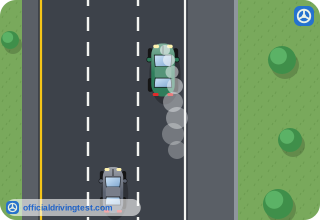
- That other drivers can hear your horn
- That your vehicle stays in the middle of the travel lane
- That your headlights are turned off
- That other roadway users can see your disabled vehicle
Show answer
Correct answer: That other roadway users can see your disabled vehicle
Collisions happen when drivers do not see a disabled vehicle until too late, so you make sure it can be seen.
Source: South Carolina Driver's Manual (2026 (posted April 2026)), page 9-5 · Open this page in the manual (Manual page 9-5)
-
If your vehicle breaks down and you have a cell phone or other device, what does the manual say to do?
- Use it to notify authorities that the vehicle has broken down
- Use it to call a friend so you are not alone
- Use it only after you have walked away to a safe place
- Use it to record video of other drivers passing
Show answer
Correct answer: Use it to notify authorities that the vehicle has broken down
The manual says to use a cell phone or other device, if available, to notify authorities of the breakdown.
Source: South Carolina Driver's Manual (2026 (posted April 2026)), page 9-5 · Open this page in the manual (Manual page 9-5)
-
If you have vehicle trouble and have to stop, where should you try to put your vehicle?
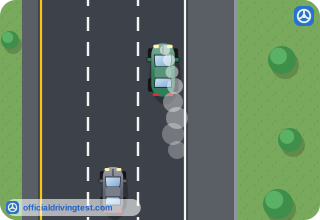
- In the center of the travel lane
- In the travel lane, so that others see it
- Off the road and away from traffic, if possible
- On the road, to warn others
Show answer
Correct answer: Off the road and away from traffic, if possible
You should get the vehicle off the road and away from traffic if possible.
Source: South Carolina Driver's Manual (2026 (posted April 2026)), page 9-5 · Open this page in the manual (Manual page 9-5)
-
Your vehicle is disabled and you have to stop. What should you turn on to show that it is disabled?
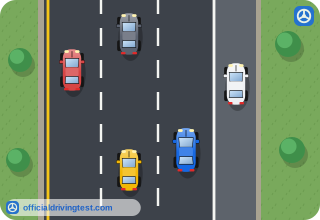
- Your high-beam headlights
- Your emergency flashers
- Your turn signal
- Your windshield wipers
Show answer
Correct answer: Your emergency flashers
Turning on your emergency flashers shows other drivers that your vehicle is disabled.
Source: South Carolina Driver's Manual (2026 (posted April 2026)), page 9-5 · Open this page in the manual (Manual page 9-5)
-
If you have emergency flares and your vehicle is disabled, where should you place them?
- About 10 to 20 feet behind the vehicle
- About 50 to 75 feet in front of the vehicle
- About 500 to 600 feet behind the vehicle
- About 200 to 300 feet behind the vehicle
Show answer
Correct answer: About 200 to 300 feet behind the vehicle
Flares go about 200 to 300 feet behind the vehicle so other drivers have time to change lanes.
Source: South Carolina Driver's Manual (2026 (posted April 2026)), page 9-5 · Open this page in the manual (Manual page 9-5)
-
Which parts of the road tend to freeze first?
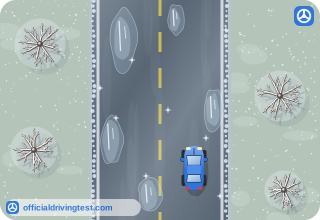
- Wide highways, tunnels, and heavily traveled streets
- Sunny roads, hills, and paved shoulders
- Bridges, overpasses, and infrequently traveled roadways
- Residential streets, parking lots, and driveways
Show answer
Correct answer: Bridges, overpasses, and infrequently traveled roadways
Bridges, overpasses, and roads that are not often traveled tend to freeze before other roads.
Source: South Carolina Driver's Manual (2026 (posted April 2026)), page 11-6 · Open this page in the manual (Manual page 11-6)
-
When might you find ice in shady areas or on exposed roadways like bridges?
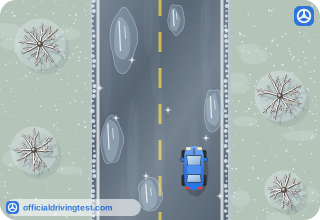
- Even above freezing, if the road is wet
- Only when the temperature is below freezing
- Only while snow is actively falling
- Only between midnight and sunrise
Show answer
Correct answer: Even above freezing, if the road is wet
Even at temperatures above freezing, wet conditions can leave ice in shady spots and on bridges.
Source: South Carolina Driver's Manual (2026 (posted April 2026)), page 11-6 · Open this page in the manual (Manual page 11-6)
-
If you must drive in winter conditions, what is recommended for your vehicle?
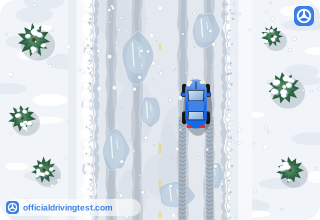
- Tire chains or special snow tires
- Lowered tire pressure for more grip
- A heavier engine oil for cold starts
- Higher tire pressure to cut road contact
Show answer
Correct answer: Tire chains or special snow tires
The manual recommends tire chains or special snow tires if you must drive in winter weather.
Source: South Carolina Driver's Manual (2026 (posted April 2026)), page 11-6 · Open this page in the manual (Manual page 11-6)
-
Why should you use the defroster in winter driving?
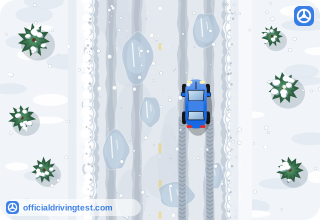
- It warms the engine faster
- It keeps the tires from freezing
- It improves driver visibility
- It shortens your braking distance
Show answer
Correct answer: It improves driver visibility
The defroster improves driver visibility, especially during cold weather.
Source: South Carolina Driver's Manual (2026 (posted April 2026)), page 11-6 · Open this page in the manual (Manual page 11-6)
-
How can you make sure the defroster is working properly?
- Wipe the inside of the windshield with a cloth
- Activate the fan and place your hand on the dashboard
- Turn on the wipers and watch the glass clear
- Switch on the headlights and check the dash lights
Show answer
Correct answer: Activate the fan and place your hand on the dashboard
Running the fan and feeling the dashboard with your hand confirms that the defroster is working.
Source: South Carolina Driver's Manual (2026 (posted April 2026)), page 11-6 · Open this page in the manual (Manual page 11-6)
-
What can help give a rear wheel drive car traction in winter?
- Removing all weight from the trunk
- Putting extra weight on the roof rack
- Keeping the fuel tank nearly empty
- Loading extra weight into the trunk
Show answer
Correct answer: Loading extra weight into the trunk
Extra weight in the trunk helps a rear wheel drive car grip the road.
Source: South Carolina Driver's Manual (2026 (posted April 2026)), page 11-6 · Open this page in the manual (Manual page 11-6)
-
Why should you keep a full tank of gasoline in winter driving?
- To keep the engine from overheating in cold air
- To reduce wear on the tires in snow
- To make the battery charge more quickly in cold
- To prevent condensation that may freeze in the tank
Show answer
Correct answer: To prevent condensation that may freeze in the tank
A full tank prevents condensation inside the gas tank, which may freeze and cause further problems.
Source: South Carolina Driver's Manual (2026 (posted April 2026)), page 11-7 · Open this page in the manual (Manual page 11-7)
-
When possible, where should you travel on snowy roads?
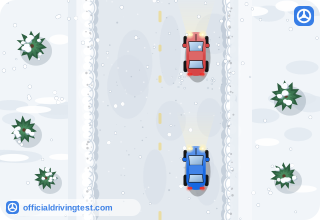
- In the untouched snow beside the other tracks
- In the tracks where other vehicles have gone
- In the deepest snow to slow the vehicle down
- Along the shoulder where snow is packed down
Show answer
Correct answer: In the tracks where other vehicles have gone
When possible, travel in the tracks where other vehicles have gone before.
Source: South Carolina Driver's Manual (2026 (posted April 2026)), page 11-7 · Open this page in the manual (Manual page 11-7)
-
What should you avoid using in winter driving conditions?
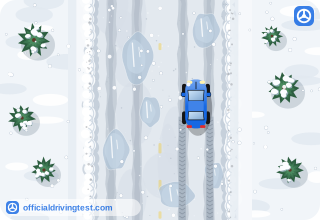
- Cruise control
- The defroster
- Your low beams
- Tire chains
Show answer
Correct answer: Cruise control
The manual says to avoid cruise control in winter driving conditions.
Source: South Carolina Driver's Manual (2026 (posted April 2026)), page 11-7 · Open this page in the manual (Manual page 11-7)
-
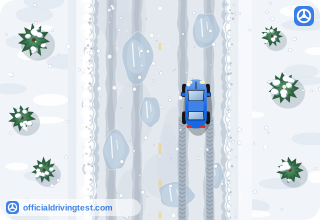
How should you approach intersections in winter driving conditions?
- Faster, to avoid stopping on ice
- With your high beams on
- With caution
- Without braking at all
Show answer
Correct answer: With caution
The manual lists approaching intersections with caution as a winter driving technique.
Source: South Carolina Driver's Manual (2026 (posted April 2026)), page 11-7 · Open this page in the manual (Manual page 11-7)
-
Why should you generally avoid hills in winter conditions?
- The engine will overheat when climbing in cold weather
- A stopped vehicle may be unable to get going again
- Tire chains cannot be used when driving on hills
- Downhill braking is impossible once snow has fallen
Show answer
Correct answer: A stopped vehicle may be unable to get going again
If you stop on a hill, it is extremely difficult, if not impossible, to get going again.
Source: South Carolina Driver's Manual (2026 (posted April 2026)), page 11-7 · Open this page in the manual (Manual page 11-7)
-
If you must drive on a hill in winter conditions, what should you do?
- Accelerate hard at the bottom to reach the top
- Stop partway up to check your traction
- Switch on cruise control to hold a steady pace
- Drive slowly, keep a steady pace, and leave space ahead
Show answer
Correct answer: Drive slowly, keep a steady pace, and leave space ahead
On a hill you should drive slowly, keep a steady pace, and keep a good distance from the vehicle ahead.
Source: South Carolina Driver's Manual (2026 (posted April 2026)), page 11-7 · Open this page in the manual (Manual page 11-7)
-
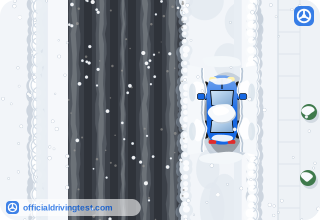
What happens if you spin your wheels when your vehicle is stuck in snow?
- It melts the snow under the tires
- It warms the tires so they grip better
- It packs the snow into a firm track
- It digs the vehicle in deeper
Show answer
Correct answer: It digs the vehicle in deeper
Spinning the wheels only digs the vehicle in deeper.
Source: South Carolina Driver's Manual (2026 (posted April 2026)), page 11-7 · Open this page in the manual (Manual page 11-7)
-
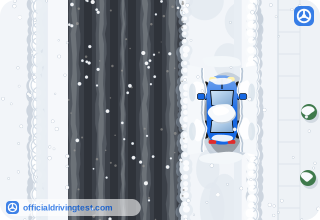
What can you do to push snow out of the way when your vehicle is stuck?
- Keep the wheels straight and press the gas hard
- Turn your wheels from side to side a few times
- Let air out of the tires until they are soft
- Shift into park and rev the engine
Show answer
Correct answer: Turn your wheels from side to side a few times
Turning the wheels from side to side a few times pushes snow out of the way.
Source: South Carolina Driver's Manual (2026 (posted April 2026)), page 11-7 · Open this page in the manual (Manual page 11-7)
-
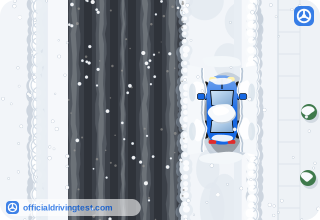
How should you use the gas pedal to ease a stuck car out of snow?
- With a steady hard push
- With quick bursts of full throttle
- With a light touch
- Not at all
Show answer
Correct answer: With a light touch
A light touch on the gas eases the car out without digging it in.
Source: South Carolina Driver's Manual (2026 (posted April 2026)), page 11-7 · Open this page in the manual (Manual page 11-7)
-
Which tool can you use to clear snow away from the wheels and the underside of a stuck car?
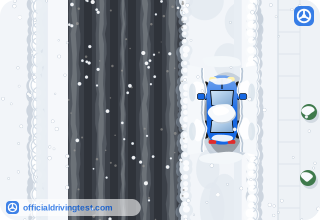
- A shovel
- A jack
- A tow strap
- A tire gauge
Show answer
Correct answer: A shovel
A shovel clears snow from around the wheels and under the car.
Source: South Carolina Driver's Manual (2026 (posted April 2026)), page 11-7 · Open this page in the manual (Manual page 11-7)
-
Which of these can you pour in the path of the wheels to help get traction?
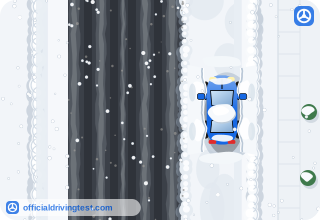
- Cat litter
- Motor oil
- Water
- Antifreeze
Show answer
Correct answer: Cat litter
Sand, cat litter, gravel, or salt poured in the path of the wheels can help get traction.
Source: South Carolina Driver's Manual (2026 (posted April 2026)), page 11-8 · Open this page in the manual (Manual page 11-8)
-
Which item can you place under the wheels of a stuck vehicle to help get traction?
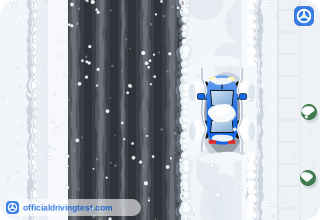
- Plastic sheeting
- Wet towels
- Newspaper
- Soap
Show answer
Correct answer: Newspaper
Cardboard, newspaper, or brush under the wheels can help a stuck vehicle get traction.
Source: South Carolina Driver's Manual (2026 (posted April 2026)), page 11-8 · Open this page in the manual (Manual page 11-8)
-
In which direction should you steer if your vehicle starts to skid?
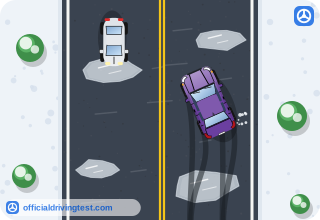
- Away from the direction you want to go
- Toward the nearest edge of the road
- Straight ahead without turning at all
- The direction you want the front to go
Show answer
Correct answer: The direction you want the front to go
You steer in the direction you want the front of the vehicle to go.
Source: South Carolina Driver's Manual (2026 (posted April 2026)), page 11-8 · Open this page in the manual (Manual page 11-8)
-
What does the manual say about abandoning your vehicle in the roadway during winter driving?
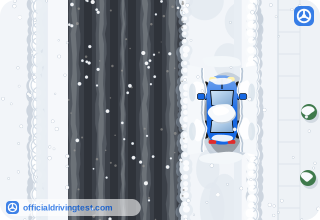
- Do not do it, if possible
- Do it so rescuers can find you
- Do it only if the engine stalls
- Do it whenever snow falls
Show answer
Correct answer: Do not do it, if possible
You should not abandon your vehicle in the roadway, if possible.
Source: South Carolina Driver's Manual (2026 (posted April 2026)), page 11-8 · Open this page in the manual (Manual page 11-8)
-
If a trailer begins to sway or whip, what should you do?
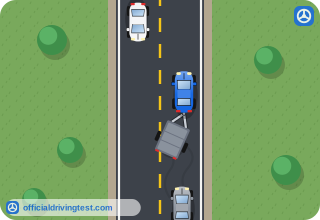
- Brake hard and steer toward the shoulder
- Speed up to pull the trailer straight
- Steer straight and reduce speed gradually
- Steer sharply in the opposite direction
Show answer
Correct answer: Steer straight and reduce speed gradually
You steer straight and slow down gradually, without braking, and never speed up.
Source: South Carolina Driver's Manual (2026 (posted April 2026)), page 11-10 · Open this page in the manual (Manual page 11-10)
-
After stopping a swaying trailer, what does the manual say to check first?
- Whether the trailer is loaded heavier in front
- Whether the hitch-ball has been greased
- Whether the brake fluid is at the full mark
- Whether the trailer has the correct license plate
Show answer
Correct answer: Whether the trailer is loaded heavier in front
The cargo should be checked first to be sure the trailer is loaded heavier in front, and reloaded if necessary.
Source: South Carolina Driver's Manual (2026 (posted April 2026)), page 11-11 · Open this page in the manual (Manual page 11-11)
-
If the trailer starts to jackknife while you are backing, what should you do?
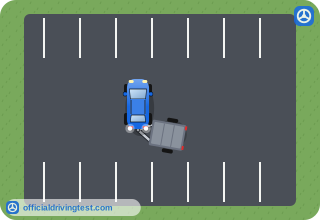
- Stop and pull ahead to straighten out
- Keep backing and turn the wheel harder
- Speed up to pull the trailer back in line
- Stop, then keep backing up in the same direction
Show answer
Correct answer: Stop and pull ahead to straighten out
You stop, pull ahead to straighten the trailer, and then start again.
Source: South Carolina Driver's Manual (2026 (posted April 2026)), page 11-12 · Open this page in the manual (Manual page 11-12)
-
If you hear an unusual noise or suspect trouble while towing, what should you do?
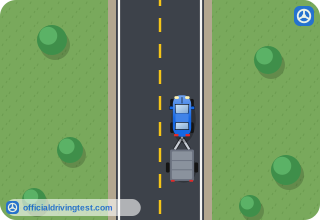
- Keep driving until you reach your destination
- Slow down and turn on your hazard flashers
- Stop in the right lane and check immediately
- Stop at a safe place off the roadway to check
Show answer
Correct answer: Stop at a safe place off the roadway to check
You stop at a safe place off the roadway to check the problem.
Source: South Carolina Driver's Manual (2026 (posted April 2026)), page 11-12 · Open this page in the manual (Manual page 11-12)