South Carolina: Emergencies and winter driving — Part 1 Practice Test
Questions in this part include: “In the event of a hurricane, for which areas of SC may a mandatory evacuation be declared?” · “When might it be necessary to accelerate to avoid a collision?”
Independent educational site · not affiliated with any government agency or DMV
Ready? Test yourself
- Instant feedback with an explanation
- Every answer cites its source in the manual
- Your best score is saved on this device
- Keyboard: press 1 to 4 to answer and Enter for the next question
Questions are original and based on the official manual "South Carolina Driver's Manual" (2026 (posted April 2026)), South Carolina Department of Motor Vehicles.
All 21 questions in this practice test
Take the test above first, then use this list to study. Tap “Show answer” to see the correct answer and explanation.
Show the questions and answersHide the questions
-
In the event of a hurricane, for which areas of SC may a mandatory evacuation be declared?
- The coastal areas
- The mountain areas
- The entire state
- Only the largest cities
Show answer
Correct answer: The coastal areas
A mandatory evacuation may be declared for the coastal areas of SC when a hurricane threatens.
Source: South Carolina Driver's Manual (2026 (posted April 2026)), page 6-12 · Open this page in the manual (Manual page 6-12)
-
Which list names the three options a driver has to avoid a collision or reduce its impact?
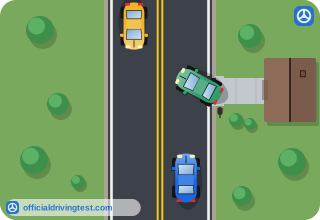
- Braking, steering, or accelerating
- Braking, honking, or flashing the lights
- Steering, signaling, or slowing to a stop
- Stopping, reversing, or sounding the horn
Show answer
Correct answer: Braking, steering, or accelerating
The manual names three options for avoiding a collision or reducing its impact: braking, steering, or accelerating.
Source: South Carolina Driver's Manual (2026 (posted April 2026)), page 9-1 · Open this page in the manual (Manual page 9-1)
-
What does an anti-lock braking system (ABS) allow you to do?
- Stop in half the distance on any surface
- Brake while taking both hands off the wheel
- Stop without skidding and keep steering control
- Skip the need to read the owner’s manual
Show answer
Correct answer: Stop without skidding and keep steering control
ABS lets you stop the vehicle without skidding while you keep steering control.
Source: South Carolina Driver's Manual (2026 (posted April 2026)), page 9-1 · Open this page in the manual (Manual page 9-1)
-
When you brake hard in a vehicle with ABS, how should you use the brake pedal?
- Pump it repeatedly so that the wheels keep turning
- Press as hard as you can and keep constant pressure on it
- Tap it lightly and release it several times
- Press it only until you feel it vibrate
Show answer
Correct answer: Press as hard as you can and keep constant pressure on it
With ABS you press hard and hold constant pressure; pumping the brakes would deactivate ABS.
Source: South Carolina Driver's Manual (2026 (posted April 2026)), page 9-1 · Open this page in the manual (Manual page 9-1)
-
Why should you not pump the brakes in a vehicle that has ABS?
- Pumping the brakes will overheat the brake fluid
- Pumping the brakes will lock the steering wheel
- Pumping the brakes will turn on the brake light
- Pumping the brakes will deactivate ABS
Show answer
Correct answer: Pumping the brakes will deactivate ABS
The manual says pumping the brakes deactivates ABS, so you should hold steady pressure instead.
Source: South Carolina Driver's Manual (2026 (posted April 2026)), page 9-1 · Open this page in the manual (Manual page 9-1)
-
You are braking hard in a vehicle with ABS. The pedal vibrates and you hear a clicking noise. What does this mean?
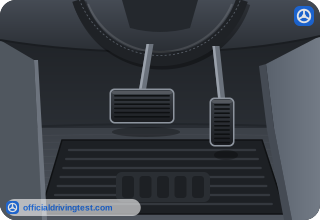
- It is normal
- The ABS has failed
- The brakes are overheated
- The tires are about to skid
Show answer
Correct answer: It is normal
A vibrating pedal and a clicking noise are normal while ABS is working.
Source: South Carolina Driver's Manual (2026 (posted April 2026)), page 9-1 · Open this page in the manual (Manual page 9-1)
-
What must you do for ABS to keep working while you stop?
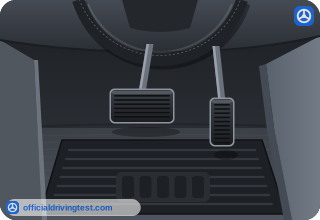
- Release the pedal every few seconds
- Shift the vehicle into neutral
- Keep the pressure on the brake pedal
- Steer straight and take your foot off the pedal
Show answer
Correct answer: Keep the pressure on the brake pedal
ABS works only while you keep pressure on the brake pedal.
Source: South Carolina Driver's Manual (2026 (posted April 2026)), page 9-1 · Open this page in the manual (Manual page 9-1)
-
To quickly steer around a problem in the road, how should you hold the steering wheel?
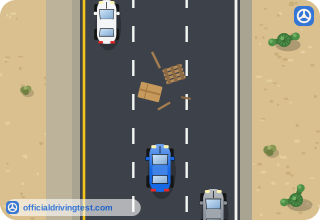
- With one hand, keeping the other free to signal
- With a good grip using both hands
- With a light grip so the wheel can turn freely
- With both hands at the very bottom of the wheel
Show answer
Correct answer: With a good grip using both hands
The manual says to make sure you have a good grip with both hands on the steering wheel when swerving.
Source: South Carolina Driver's Manual (2026 (posted April 2026)), page 9-2 · Open this page in the manual (Manual page 9-2)
-
You have swerved around a problem and cleared it. What should you do next?
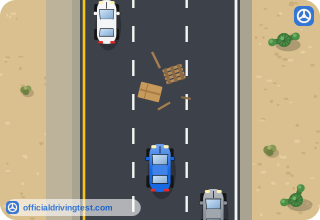
- Keep steering the same way until the vehicle comes to a stop
- Brake as hard as you can right away
- Let go of the wheel so it straightens itself
- Steer in the opposite direction to straighten out and regain control
Show answer
Correct answer: Steer in the opposite direction to straighten out and regain control
After clearing the problem, you steer the other way to straighten the vehicle, regain control and adjust your speed.
Source: South Carolina Driver's Manual (2026 (posted April 2026)), page 9-2 · Open this page in the manual (Manual page 9-2)
-
When might it be necessary to accelerate to avoid a collision?
- When another vehicle is about to hit you from behind or the side
- When another vehicle is stopped in the lane ahead of you
- When you are driving on a wet road
- When a pedestrian is crossing ahead of you
Show answer
Correct answer: When another vehicle is about to hit you from behind or the side
The manual gives a vehicle about to hit you from behind or the side as a time when accelerating may be needed.
Source: South Carolina Driver's Manual (2026 (posted April 2026)), page 9-2 · Open this page in the manual (Manual page 9-2)
-
Which of these can cause a skid?
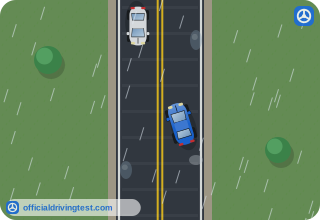
- Using your turn signal
- Turning on your headlights
- Stopping suddenly
- Driving below the speed limit on a dry road
Show answer
Correct answer: Stopping suddenly
Skids are caused by traveling too fast for road conditions, stopping suddenly, or tires that can no longer grip the road.
Source: South Carolina Driver's Manual (2026 (posted April 2026)), page 9-2 · Open this page in the manual (Manual page 9-2)
-
If your vehicle begins to skid, what should you do with the accelerator?
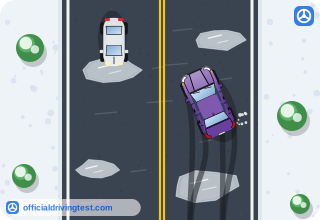
- Press it harder to regain control
- Take your foot off the accelerator
- Hold it steady at the same speed
- Shift the vehicle into neutral first
Show answer
Correct answer: Take your foot off the accelerator
When a vehicle begins to skid, take your foot off the accelerator.
Source: South Carolina Driver's Manual (2026 (posted April 2026)), page 9-2 · Open this page in the manual (Manual page 9-2)
-
While your vehicle is skidding, where should you look and steer?
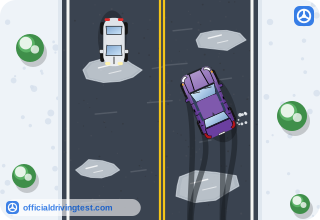
- Look at the front wheels and steer the opposite way
- Look at the center line and steer toward it
- Look at the obstacle and steer away from it
- Look where you want to go and steer that way
Show answer
Correct answer: Look where you want to go and steer that way
During a skid, look where you want to go and steer the vehicle in that direction.
Source: South Carolina Driver's Manual (2026 (posted April 2026)), page 9-2 · Open this page in the manual (Manual page 9-2)
-
What is panic steering?
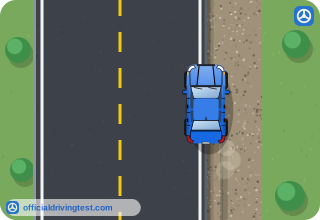
- Trying to return to the pavement as soon as the wheels leave it
- Turning sharply away from a stopped vehicle in your lane
- Steering with only one hand when a tire blows out
- Swerving back and forth to keep the vehicle straight
Show answer
Correct answer: Trying to return to the pavement as soon as the wheels leave it
Panic steering is steering back to the pavement immediately after the wheels leave it, and the manual says to avoid it.
Source: South Carolina Driver's Manual (2026 (posted April 2026)), page 9-3 · Open this page in the manual (Manual page 9-3)
-
Your vehicle leaves the paved road surface because of an uneven surface drop-off. What should you do?
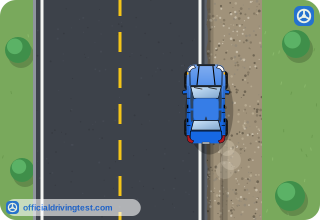
- Brake hard and turn the wheel sharply back onto the pavement
- Stay on the shoulder until traffic clears completely
- Slow down gradually when safe and steer gently back onto the pavement
- Accelerate so the tires climb back onto the pavement
Show answer
Correct answer: Slow down gradually when safe and steer gently back onto the pavement
The manual says to slow gradually when safe and steer gently back, with only a slight turn of the wheel.
Source: South Carolina Driver's Manual (2026 (posted April 2026)), page 9-3 · Open this page in the manual (Manual page 9-3)
-
Which maintenance schedule does the manual say you should follow to reduce the chance of a vehicle problem?
- A schedule set by the SCDMV
- The recommended schedule in the vehicle owner’s manual
- A schedule printed on the vehicle’s registration
- A schedule set by your insurance company
Show answer
Correct answer: The recommended schedule in the vehicle owner’s manual
The manual says to follow the recommended maintenance schedule listed in the vehicle owner’s manual.
Source: South Carolina Driver's Manual (2026 (posted April 2026)), page 9-3 · Open this page in the manual (Manual page 9-3)
-
A brake warning light tells you that your brakes are not working properly. What does the manual say to do?
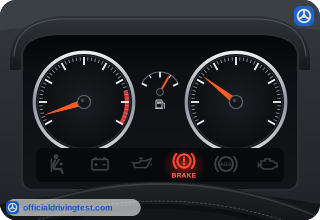
- Drive to the nearest exit and keep going
- Drive slowly with the emergency flashers on
- Wait for the light to turn off, then drive
- Do not drive
Show answer
Correct answer: Do not drive
The brake warning light means the brakes are not working properly, and the manual says not to drive when you see it.
Source: South Carolina Driver's Manual (2026 (posted April 2026)), page 9-3 · Open this page in the manual (Manual page 9-3)
-
If your brakes stop working while driving, how should you apply the parking brake?
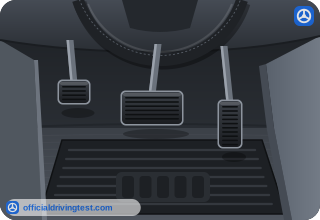
- Slowly, so you will not lock the rear wheels and cause a skid
- Quickly and fully, to stop the vehicle as fast as possible
- Only after the vehicle has stopped completely
- Only after you shift the vehicle into park
Show answer
Correct answer: Slowly, so you will not lock the rear wheels and cause a skid
The parking brake is applied slowly so the rear wheels do not lock and cause a skid.
Source: South Carolina Driver's Manual (2026 (posted April 2026)), page 9-3 · Open this page in the manual (Manual page 9-3)
-
After applying the parking brake because your brakes failed, what should you be ready to do if the vehicle starts to skid?
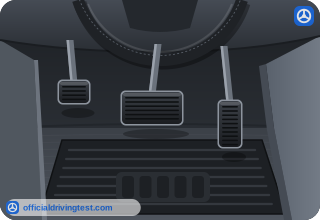
- Pull the parking brake harder
- Shift the vehicle into park
- Release the parking brake
- Turn off the engine
Show answer
Correct answer: Release the parking brake
You should be ready to release the parking brake if the vehicle begins to skid.
Source: South Carolina Driver's Manual (2026 (posted April 2026)), page 9-3 · Open this page in the manual (Manual page 9-3)
-
Your brakes have failed and the parking brake does not work. What should you do?
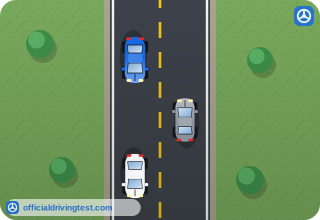
- Keep driving carefully until you reach the nearest service center
- Turn off the engine and look for a safe place to slow to a stop
- Shift into park at once while still moving
- Pump the brake pedal until the brakes recover
Show answer
Correct answer: Turn off the engine and look for a safe place to slow to a stop
If the parking brake does not work, turn off the engine and find a safe place to slow to a stop, getting off the roadway.
Source: South Carolina Driver's Manual (2026 (posted April 2026)), page 9-4 · Open this page in the manual (Manual page 9-4)
-
What happens if a front tire blows out?
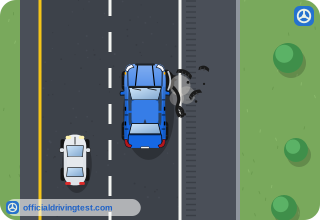
- The vehicle pulls sharply away from the blowout
- The vehicle stops almost at once with no steering change
- The vehicle spins around in the opposite direction
- The vehicle pulls sharply in the direction of the blowout
Show answer
Correct answer: The vehicle pulls sharply in the direction of the blowout
A front-tire blowout makes the vehicle pull sharply toward the side of the blowout.
Source: South Carolina Driver's Manual (2026 (posted April 2026)), page 9-4 · Open this page in the manual (Manual page 9-4)