Pennsylvania: Pedestrian rights Practice Test
Crosswalks, school zones, and sharing the road with people on foot.
Independent educational site · not affiliated with any government agency or DMV
Ready? Test yourself
Answer to start, or tap Start below:
Compared to signs and other roadside objects, which of the following is hardest to see at night?
- Instant feedback with an explanation
- Every answer cites its source in the manual
- Your best score is saved on this device
- Keyboard: press 1 to 4 to answer and Enter for the next question
Questions are original and based on the official manual "Pennsylvania Driver's Manual" (Pub 95), Pennsylvania Department of Transportation (PennDOT), Bureau of Driver Licensing.
All 14 questions in this practice test
Take the test above first, then use this list to study. Tap “Show answer” to see the correct answer and explanation.
Show the questions and answersHide the questions
-
When driving near a blind pedestrian who is carrying a white cane or walking with a guide dog, you must:
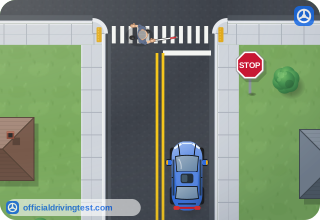
- Sound your horn to alert them of your presence
- Maintain your normal speed but watch closely
- Slow down, always yield, and proceed with caution
- Only yield if they are already in the crosswalk
Show answer
Correct answer: Slow down, always yield, and proceed with caution
Near a blind pedestrian with a white cane or guide dog, you must slow down, always yield the right-of-way, proceed with caution, and be prepared to stop.
Source: Pennsylvania Driver's Manual (Pub 95), page 9 · Open this page in the manual (Manual page 9)
-
A PEDESTRIAN CROSSING sign is used:
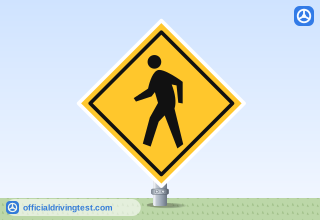
- only at intersections controlled by traffic signals
- only in commercial zones
- in place of a marked crosswalk
- at a marked crosswalk or where pedestrians may cross ahead
Show answer
Correct answer: at a marked crosswalk or where pedestrians may cross ahead
This sign is used at a marked crosswalk or in advance of locations where pedestrians may be crossing your path.
Source: Pennsylvania Driver's Manual (Pub 95), page 17 · Open this page in the manual (Manual page 17)
-
Compared to signs and other roadside objects, which of the following is hardest to see at night?
- Road signs
- Parked cars
- Pedestrians
- Guardrails
Show answer
Correct answer: Pedestrians
Compared to signs and other roadside objects, pedestrians are hardest to see at night.
Source: Pennsylvania Driver's Manual (Pub 95), page 40 · Open this page in the manual (Manual page 40)
-
Drivers must always yield to which type of pedestrian, regardless of the situation?
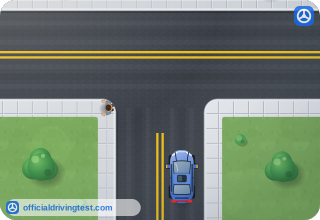
- Any pedestrian wearing reflective clothing
- Any pedestrian who makes eye contact with the driver
- A blind pedestrian with a white cane or a guide dog
- Only pedestrians in a marked crosswalk
Show answer
Correct answer: A blind pedestrian with a white cane or a guide dog
Drivers must always yield to any blind pedestrian carrying a white cane or being led by a guide dog.
Source: Pennsylvania Driver's Manual (Pub 95), page 48 · Open this page in the manual (Manual page 48)
-
Motorists using a roundabout must yield to pedestrians:
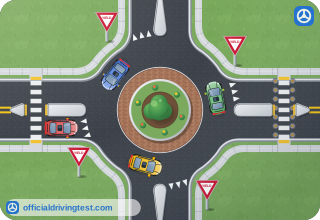
- Only when exiting, not entering
- Only if a crossing guard is present
- When entering and exiting the roundabout
- Only during school hours
Show answer
Correct answer: When entering and exiting the roundabout
Motorists must yield to pedestrians when entering and exiting a roundabout.
Source: Pennsylvania Driver's Manual (Pub 95), page 50 · Open this page in the manual (Manual page 50)
-
When must you yield to pedestrians, according to the manual?
- When crossing at intersections or in crosswalks
- Only during school hours in a school zone
- Only when they are jogging
- Only if they wave or signal to you first
Show answer
Correct answer: When crossing at intersections or in crosswalks
The manual instructs drivers to yield to pedestrians crossing at intersections or in crosswalks.
Source: Pennsylvania Driver's Manual (Pub 95), page 55 · Open this page in the manual (Manual page 55)
-
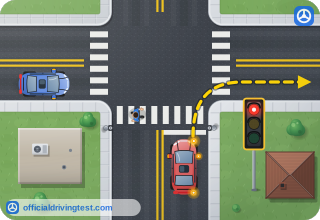
When making a right turn on red, what must you do first?
- Honk to warn pedestrians
- Stop, look in all directions, and turn only when safe
- Flash your headlights and proceed into the turn
- Turn right away if no cars are coming from the left
Show answer
Correct answer: Stop, look in all directions, and turn only when safe
Right turn on red means stop, look in all directions, and then turn when it is safe, allowing pedestrians ample time to clear the crosswalk.
Source: Pennsylvania Driver's Manual (Pub 95), page 55 · Open this page in the manual (Manual page 55)
-
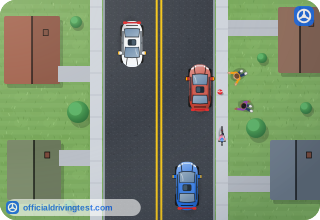
What extra precaution does the manual say to take when children are in the vicinity?
- Sound your horn continuously
- Drive normally since children are trained to watch traffic
- Reduce speed and use extra caution
- Turn on your hazard lights
Show answer
Correct answer: Reduce speed and use extra caution
The manual says to always reduce speed and use extra caution when children are nearby, since they may run out without looking.
Source: Pennsylvania Driver's Manual (Pub 95), page 55 · Open this page in the manual (Manual page 55)
-
What must you observe near schools, and when must you stop for school buses, according to this section?
- School zone speed limits; stop when red signals are flashing
- Only the general speed limit; buses have no special rule
- School zone speed limits only after 6 p.m.
- There is no special school zone requirement
Show answer
Correct answer: School zone speed limits; stop when red signals are flashing
You must observe school zone speed limits and stop for school buses when red signals are flashing.
Source: Pennsylvania Driver's Manual (Pub 95), page 55 · Open this page in the manual (Manual page 55)
-
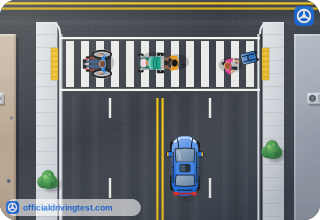
How does the manual say you should treat elderly pedestrians or pedestrians with disabilities?
- Drive past them quickly before they step out
- Ignore them if the light is green for you
- Honk to hurry them along across the street
- Be patient; they need extra time to cross
Show answer
Correct answer: Be patient; they need extra time to cross
The manual asks drivers to be patient with elderly pedestrians and pedestrians with disabilities, since they need extra time to cross.
Source: Pennsylvania Driver's Manual (Pub 95), page 55 · Open this page in the manual (Manual page 55)
-
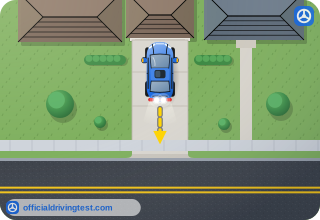
Before backing up your vehicle, what should you always check for?
- Your mirrors' angle only
- Your seat position
- Pedestrians in your path
- Your fuel level
Show answer
Correct answer: Pedestrians in your path
The manual instructs drivers to always check for pedestrians in their path before backing up.
Source: Pennsylvania Driver's Manual (Pub 95), page 55 · Open this page in the manual (Manual page 55)
-
How should you respond when you see a blind pedestrian with a white cane or guide dog, or being led by others?
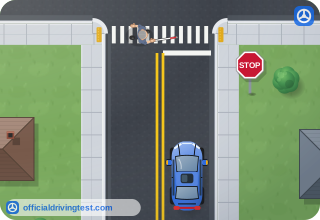
- Proceed at normal speed since they cannot see you
- Honk to alert them of your presence
- Flash your headlights
- Yield the right-of-way: slow down and prepare to stop
Show answer
Correct answer: Yield the right-of-way: slow down and prepare to stop
The manual instructs drivers to yield the right-of-way — slow down and prepare to stop — to blind pedestrians.
Source: Pennsylvania Driver's Manual (Pub 95), page 55 · Open this page in the manual (Manual page 55)
-
When approaching a stopped vehicle from behind, what should you do before passing it?
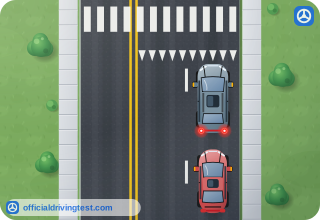
- Honk and pass quickly before it starts to move
- Pass immediately using the shoulder on the right
- Flash your high beams to warn the stopped driver
- Slow down and be sure no one is crossing in front of it
Show answer
Correct answer: Slow down and be sure no one is crossing in front of it
The manual instructs drivers to slow down and not pass a stopped vehicle from behind until sure there are no pedestrians crossing in front of it.
Source: Pennsylvania Driver's Manual (Pub 95), page 55 · Open this page in the manual (Manual page 55)
-
Is it ever safe to wave a pedestrian into the line of traffic, especially at unmarked or mid-block locations?
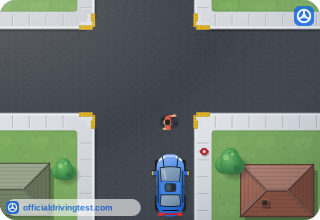
- Yes, as long as you make eye contact
- No, it is never safe to do so
- Yes, if you are stopped anyway
- Yes, only during the day
Show answer
Correct answer: No, it is never safe to do so
The manual states it is never safe to wave a pedestrian into the line of traffic, especially at unmarked or mid-block locations.
Source: Pennsylvania Driver's Manual (Pub 95), page 55 · Open this page in the manual (Manual page 55)