Oklahoma: Speed and following distance — Part 2 Practice Test
Questions in this part include: “What does the manual say about speed limits that cities and towns set?” · “Which of these does your stopping distance depend on?”
Independent educational site · not affiliated with any government agency or DMV
Ready? Test yourself
- Instant feedback with an explanation
- Every answer cites its source in the manual
- Your best score is saved on this device
- Keyboard: press 1 to 4 to answer and Enter for the next question
Questions are original and based on the official manual "Oklahoma Driver Manual" (2025 (updated November 24, 2025)), Service Oklahoma.
All 17 questions in this practice test
Take the test above first, then use this list to study. Tap “Show answer” to see the correct answer and explanation.
Show the questions and answersHide the questions
-
What does the manual say about speed limits that cities and towns set?
- Only counties can change the speed limits set by the state
- Cities and towns must always use the state speed limits
- Under state law, cities and towns can set their own speed limits
- Cities and towns may set limits only inside school zones
Show answer
Correct answer: Under state law, cities and towns can set their own speed limits
State law lets cities and towns set their own limits, so you must watch for posted signs.
Source: Oklahoma Driver Manual (2025 (updated November 24, 2025)), page 41 · Open this page in the manual (Manual page 41)
-
Where does the manual tell you to watch carefully for speed limit signs because city and town limits change according to the zones?
- Only in school zones
- In business, residential and school zones
- Only on highways outside of cities
- Only where construction crews are working
Show answer
Correct answer: In business, residential and school zones
Limits change by zone, so you must watch for and obey signs in business, residential and school zones.
Source: Oklahoma Driver Manual (2025 (updated November 24, 2025)), page 41 · Open this page in the manual (Manual page 41)
-
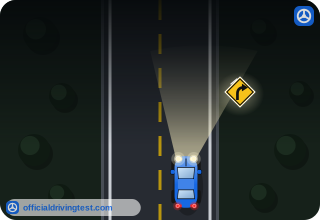
Why is night driving especially dangerous on poorly lit highways and country roads?
- Other drivers are required to drive slower at night
- Headlights make the road surface slippery
- The distance that you can see clearly is greatly reduced
- Road signs are not allowed to be reflective
Show answer
Correct answer: The distance that you can see clearly is greatly reduced
At night you can see far less clearly, so hazards appear later.
Source: Oklahoma Driver Manual (2025 (updated November 24, 2025)), page 41 · Open this page in the manual (Manual page 41)
-
Which of these is hard to see when driving at night?
- People walking or riding bikes dressed in dark clothing
- Vehicles that have their headlights turned on low beam
- Road signs with reflective lettering and bright colors
- People wearing bright orange safety vests at the roadside
Show answer
Correct answer: People walking or riding bikes dressed in dark clothing
Dark-colored animals, dark objects on the road and people in dark clothing are hard to see at night.
Source: Oklahoma Driver Manual (2025 (updated November 24, 2025)), page 41 · Open this page in the manual (Manual page 41)
-
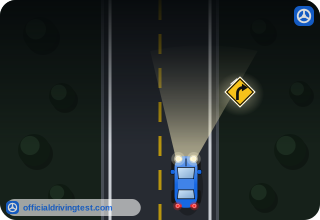
What does "overdriving your lights" at night mean you cannot do?
- Turn on your high beams in time
- Keep up with the flow of traffic
- See the lane lines clearly
- Stop within the distance you can see
Show answer
Correct answer: Stop within the distance you can see
If you drive too fast for your lights, you cannot stop within the distance they let you see.
Source: Oklahoma Driver Manual (2025 (updated November 24, 2025)), page 41 · Open this page in the manual (Manual page 41)
-
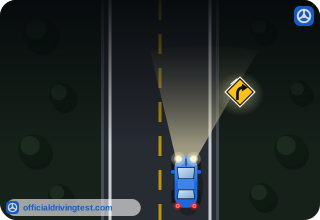
When adjusting your speed at night, which two things should you consider?
- How old your tires are and how much fuel you have in the tank
- How powerful your lights are and how responsive your brakes are
- How wide the road is and how many lanes it has in each direction
- How heavy your car is and how long your trip will take today
Show answer
Correct answer: How powerful your lights are and how responsive your brakes are
The manual says to consider the power of your lights and the responsiveness of your brakes.
Source: Oklahoma Driver Manual (2025 (updated November 24, 2025)), page 41 · Open this page in the manual (Manual page 41)
-
What does the manual say about wearing sunglasses or colored glasses when driving at night or on dark days?
- Don't wear them
- Wear them only to cut glare from oncoming headlights
- Wear them only on poorly lit country roads
- Wear them to help your eyes adjust faster
Show answer
Correct answer: Don't wear them
The manual says not to wear sunglasses or colored glasses at night or on dark days.
Source: Oklahoma Driver Manual (2025 (updated November 24, 2025)), page 41 · Open this page in the manual (Manual page 41)
-
How do colored lenses affect your eyes when you drive at night?
- They cause your eyes to adjust faster to the glare of oncoming headlights
- They completely remove the glare from street lights and billboards
- They cause your eyes to adjust even more slowly and can reduce your vision
- They make dark objects and animals on the road easier to see
Show answer
Correct answer: They cause your eyes to adjust even more slowly and can reduce your vision
Colored lenses slow the eyes down even more in adjusting to changes in light and can reduce vision.
Source: Oklahoma Driver Manual (2025 (updated November 24, 2025)), page 41 · Open this page in the manual (Manual page 41)
-
Which of these can interfere with your night driving vision because your eyes take longer to adjust?
- Reflective paint on the lane lines and on the road signs ahead
- Glare from oncoming headlights and billboard and advertising lights
- The warning lights and gauges on your own dashboard at night
- Your own headlights when they are set on the low beam position
Show answer
Correct answer: Glare from oncoming headlights and billboard and advertising lights
Glare from oncoming headlights, billboards and advertising lights and sometimes street lights makes your eyes slower to adjust.
Source: Oklahoma Driver Manual (2025 (updated November 24, 2025)), page 41 · Open this page in the manual (Manual page 41)
-
Which of these does your stopping distance depend on?
- The weight of your vehicle
- The color of your vehicle
- The type of fuel your vehicle uses
- The number of lanes on the road
Show answer
Correct answer: The weight of your vehicle
Stopping distance depends on your reaction time, weather and road conditions, the weight of your vehicle and the condition of your brakes.
Source: Oklahoma Driver Manual (2025 (updated November 24, 2025)), page 42 · Open this page in the manual (Manual page 42)
-
What are the three steps in stopping your vehicle?
- Perception, signaling and braking
- Observation, steering and braking
- Perception, reaction and braking
- Reaction, signaling and parking
Show answer
Correct answer: Perception, reaction and braking
Stopping takes three steps: perception, reaction and braking.
Source: Oklahoma Driver Manual (2025 (updated November 24, 2025)), page 42 · Open this page in the manual (Manual page 42)
-
About how long does the perception step of stopping take?
- About 1 second
- About .5 seconds
- About 1.5 seconds
- About 2 seconds
Show answer
Correct answer: About .5 seconds
The manual gives perception, when you see or hear danger, as about .5 seconds.
Source: Oklahoma Driver Manual (2025 (updated November 24, 2025)), page 42 · Open this page in the manual (Manual page 42)
-
About how long does the reaction step of stopping take?
- About .25 seconds
- About 1 second
- About 2 seconds
- About .66 seconds
Show answer
Correct answer: About .66 seconds
The manual gives reaction, when your brain tells your foot to brake, as about .66 seconds.
Source: Oklahoma Driver Manual (2025 (updated November 24, 2025)), page 42 · Open this page in the manual (Manual page 42)
-
In the stopping process, which step is when your brain tells your foot to brake?
- Perception
- Braking
- Reaction
- Skidding
Show answer
Correct answer: Reaction
Reaction is the step in which the brain tells the foot to brake; perception is seeing or hearing the danger.
Source: Oklahoma Driver Manual (2025 (updated November 24, 2025)), page 42 · Open this page in the manual (Manual page 42)
-
How long does the braking step of stopping take?
- It depends on speed
- About 1 second at any speed
- About 1.5 seconds at any speed
- About 2 seconds at any speed
Show answer
Correct answer: It depends on speed
The braking time depends on speed, while perception and reaction are about .5 and .66 seconds.
Source: Oklahoma Driver Manual (2025 (updated November 24, 2025)), page 42 · Open this page in the manual (Manual page 42)
-
Using the estimated emergency stopping distances in the manual, how many feet does the driver travel during reaction time at 30 mph?
- 44 feet
- 88 feet
- 110 feet
- 66 feet
Show answer
Correct answer: 66 feet
The estimated driver reaction distance is 66 feet at 30 mph.
Source: Oklahoma Driver Manual (2025 (updated November 24, 2025)), page 42 · Open this page in the manual (Manual page 42)
-
Using the estimated emergency stopping distances in the manual, how many feet does the driver travel during reaction time at 70 mph?
- 110 feet
- 154 feet
- 132 feet
- 176 feet
Show answer
Correct answer: 154 feet
The estimated driver reaction distance is 154 feet at 70 mph.
Source: Oklahoma Driver Manual (2025 (updated November 24, 2025)), page 42 · Open this page in the manual (Manual page 42)