North Dakota: Emergencies and winter driving — Part 2 Practice Test
Questions in this part include: “Where do frost and ice form quicker and stay longer than on the rest of the roadway?” · “What does the manual say to do about “whiteouts” caused by crosswinds or plowing light snow?”
Independent educational site · not affiliated with any government agency or DMV
Ready? Test yourself
- Instant feedback with an explanation
- Every answer cites its source in the manual
- Your best score is saved on this device
- Keyboard: press 1 to 4 to answer and Enter for the next question
Questions are original and based on the official manual "North Dakota Noncommercial Driver License Manual" (2025-2027), North Dakota Department of Transportation (NDDOT).
All 17 questions in this practice test
Take the test above first, then use this list to study. Tap “Show answer” to see the correct answer and explanation.
Show the questions and answersHide the questions
-
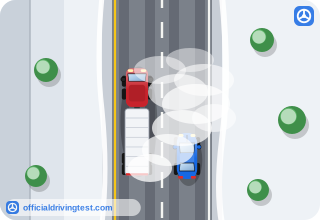
What should you do when a passing truck creates snow fog?
- Stop in the traffic lane until the fog clears
- Stay close behind the truck so you can follow its taillights
- Look ahead for curves, look behind for following vehicles, and slow down
- Move onto the shoulder and turn off your headlights
Show answer
Correct answer: Look ahead for curves, look behind for following vehicles, and slow down
Snow fog greatly reduces visibility, so the manual says to look ahead for curves, look behind for vehicles following, and slow down.
Source: North Dakota Noncommercial Driver License Manual (2025-2027), page 28 · Open this page in the manual (Manual page 28)
-
Where do frost and ice form quicker and stay longer than on the rest of the roadway?
- On wide, straight stretches of highway
- On bridges and in shaded spots
- On roads that were recently sanded
- On long, uphill stretches of road
Show answer
Correct answer: On bridges and in shaded spots
The manual says frost and ice form quicker and are retained longer on bridges and shaded spots than on the rest of the roadway.
Source: North Dakota Noncommercial Driver License Manual (2025-2027), page 28 · Open this page in the manual (Manual page 28)
-
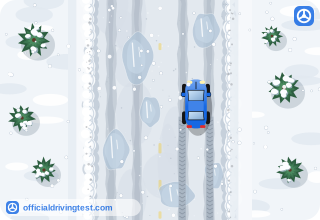
To stop on ice in a vehicle with drum-type brakes on all four wheels, what should you do?
- Press the pedal to the floor and hold it
- Stay off the brakes entirely
- Release the pedal and coast to a stop
- Pump the brakes
Show answer
Correct answer: Pump the brakes
The manual says to pump the brakes on vehicles equipped with drum-type brakes on all four wheels.
Source: North Dakota Noncommercial Driver License Manual (2025-2027), page 28 · Open this page in the manual (Manual page 28)
-
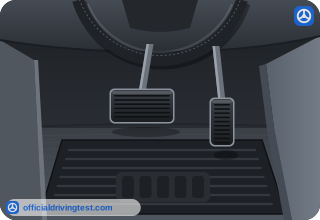
What kind of braking do vehicles with disc brakes require when stopping on ice?
- A slow, intermittent action, fully on and then fully off
- One hard application held until the vehicle stops
- Light, continuous pressure with the pedal half down
- Quick taps on the pedal as fast as you can
Show answer
Correct answer: A slow, intermittent action, fully on and then fully off
For disc brakes the manual calls for a slow, intermittent braking action, fully on and then fully off, long enough to let the brakes release so all wheels are rolling again.
Source: North Dakota Noncommercial Driver License Manual (2025-2027), page 28 · Open this page in the manual (Manual page 28)
-
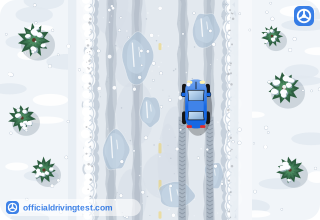
What happens if you slam on your brakes when stopping on ice?
- The vehicle will stop in a shorter distance
- The tires will grip the ice better
- Your wheels will lock and your tires will skid
- The brakes will release by themselves
Show answer
Correct answer: Your wheels will lock and your tires will skid
The manual says that if you slam on your brakes on ice, your wheels will lock and your tires will skid.
Source: North Dakota Noncommercial Driver License Manual (2025-2027), page 28 · Open this page in the manual (Manual page 28)
-
How should you use antilock brakes (ABS) when you need to stop?
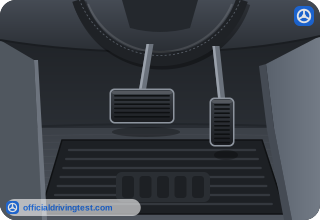
- Pump them repeatedly
- Keep firm and continuous pressure
- Let up on them and press again
- Tap them in short bursts
Show answer
Correct answer: Keep firm and continuous pressure
The manual says to keep firm and continuous pressure on antilock brakes (ABS).
Source: North Dakota Noncommercial Driver License Manual (2025-2027), page 28 · Open this page in the manual (Manual page 28)
-
According to the manual, what does manually pumping antilock brakes do to the system?
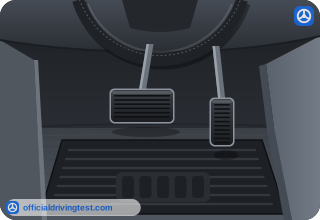
- It overheats the brake fluid
- It locks the wheels permanently
- It wears down the brake pads
- It turns the system off and on
Show answer
Correct answer: It turns the system off and on
Manually pumping antilock brakes, or letting up on them, decreases their effectiveness because it turns the system off and on.
Source: North Dakota Noncommercial Driver License Manual (2025-2027), page 28 · Open this page in the manual (Manual page 28)
-
Which of these does the manual list for a winter survival kit?
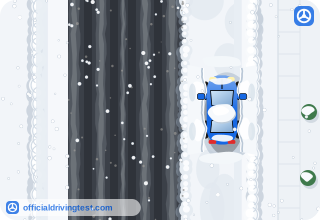
- A shovel
- A tow rope
- Jumper cables
- A tire jack
Show answer
Correct answer: A shovel
The manual lists warm clothing, footwear, a shovel and energy food, among other things, for a winter survival kit.
Source: North Dakota Noncommercial Driver License Manual (2025-2027), page 28 · Open this page in the manual (Manual page 28)
-
What should you do if your vehicle becomes stuck in a snowstorm?
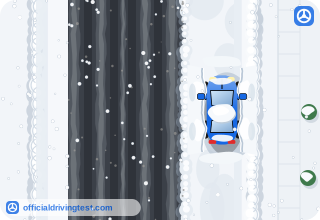
- Walk to the nearest town for help
- Leave the vehicle and follow the road
- Stay with the vehicle
- Leave the vehicle once the snow slows down
Show answer
Correct answer: Stay with the vehicle
The manual says to stay with the vehicle, because most deaths occur when people leave their vehicles and get lost.
Source: North Dakota Noncommercial Driver License Manual (2025-2027), page 28 · Open this page in the manual (Manual page 28)
-
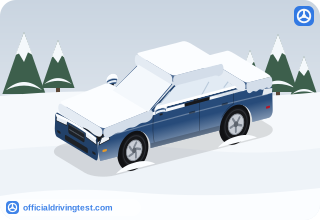
How should you run the vehicle and heater when stuck in a snowstorm to avoid carbon monoxide poisoning?
- Continuously, with all the windows closed tight
- For only short periods, with the windows open slightly
- Once, for a full hour, with the windows closed
- Only while the vehicle is moving slowly
Show answer
Correct answer: For only short periods, with the windows open slightly
The manual says to open your windows slightly and run the vehicle and heater for only short periods of time to avoid carbon monoxide poisoning.
Source: North Dakota Noncommercial Driver License Manual (2025-2027), page 28 · Open this page in the manual (Manual page 28)
-
What does the manual say to do about “whiteouts” caused by crosswinds or plowing light snow?
- Never drive through them; be patient and wait until you can see
- Drive through them slowly with your high beams and flashers on
- Follow a snowplow closely until the whiteout has cleared away
- Drive through them only on Interstate highways or other main roads
Show answer
Correct answer: Never drive through them; be patient and wait until you can see
The manual says never to drive through whiteouts caused by crosswinds or plowing light snow, and to be patient and wait until you can see.
Source: North Dakota Noncommercial Driver License Manual (2025-2027), page 28 · Open this page in the manual (Manual page 28)
-
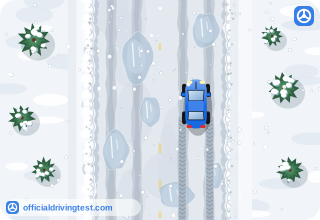
Why should you not assume you will have good traction on a road that looks sanded?
- The sand freezes into a layer of ice on the surface
- The sand can sink into the snow-pack, leaving a slick surface
- Passing traffic sweeps the sand off the road within minutes
- The sand makes the snow-pack melt into slush
Show answer
Correct answer: The sand can sink into the snow-pack, leaving a slick surface
The manual warns that sand can sink into the snow-pack, leaving a slick surface.
Source: North Dakota Noncommercial Driver License Manual (2025-2027), page 28 · Open this page in the manual (Manual page 28)
-
According to the manual, what is the cause of most skids?
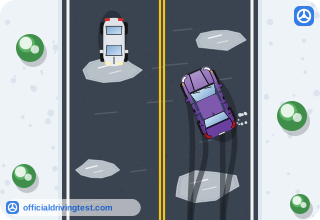
- Driving too fast for the road conditions on slippery roadways
- Braking too lightly when approaching a slippery roadway
- Steering too slowly on a wet or icy roadway
- Tires that are overinflated for the roadway
Show answer
Correct answer: Driving too fast for the road conditions on slippery roadways
The manual says most skids result from driving too fast for the road conditions on slippery roadways, and that slower speeds are the key to safe vehicle operation.
Source: North Dakota Noncommercial Driver License Manual (2025-2027), page 29 · Open this page in the manual (Manual page 29)
-
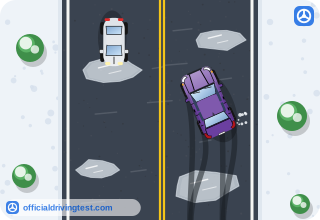
In a rear-wheel drive automobile that starts to skid, what should you do with the brakes and the accelerator?
- Brake hard and keep your foot down on the accelerator
- Press the brakes gently and accelerate slightly
- Stay off the brakes and gradually ease off the accelerator
- Pump the brakes quickly and accelerate briefly
Show answer
Correct answer: Stay off the brakes and gradually ease off the accelerator
For a rear-wheel drive automobile the manual says to stay off the brakes and gradually ease off the accelerator.
Source: North Dakota Noncommercial Driver License Manual (2025-2027), page 29 · Open this page in the manual (Manual page 29)
-
The rear end of your rear-wheel drive vehicle is skidding to the right. Which way should you steer?
- To the left
- To the right
- Straight ahead
- Alternately left and right
Show answer
Correct answer: To the right
The manual says to turn your wheels in the direction the rear end is skidding: if it skids right, steer right.
Source: North Dakota Noncommercial Driver License Manual (2025-2027), page 29 · Open this page in the manual (Manual page 29)
-
A front-wheel drive vehicle starts to skid at moderate speeds. What should you do?
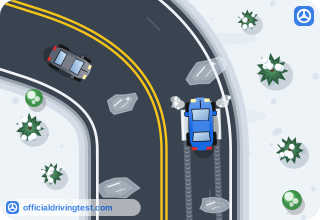
- Brake hard and steer toward the shoulder
- Ease off the accelerator and steer the opposite way
- Shift into park and release the steering wheel
- Accelerate slightly and steer in the direction you want to go
Show answer
Correct answer: Accelerate slightly and steer in the direction you want to go
For front-wheel drive vehicles skidding at moderate speeds, the manual says to accelerate slightly and steer in the direction you want to go.
Source: North Dakota Noncommercial Driver License Manual (2025-2027), page 29 · Open this page in the manual (Manual page 29)
-
If there is no room to accelerate while a front-wheel drive vehicle is skidding, what should you do?
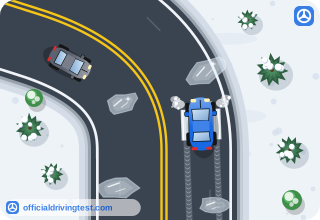
- Shift into neutral or push in the clutch
- Brake as hard as possible
- Turn the wheel sharply to the right
- Turn off the ignition
Show answer
Correct answer: Shift into neutral or push in the clutch
The manual says that if there is no room to accelerate, shift into neutral or push in the clutch.
Source: North Dakota Noncommercial Driver License Manual (2025-2027), page 29 · Open this page in the manual (Manual page 29)