New Mexico: Signals and vehicle controls — Part 2 Practice Test
Questions in this part include: “When you check traffic around you before changing lanes, how long may you take your eyes off the road ahead?” · “How far do high beams let you see compared with low beams?”
Independent educational site · not affiliated with any government agency or DMV
Ready? Test yourself
- Instant feedback with an explanation
- Every answer cites its source in the manual
- Your best score is saved on this device
- Keyboard: press 1 to 4 to answer and Enter for the next question
Questions are original and based on the official manual "New Mexico Driver Manual" (Version 11.19.19), New Mexico Motor Vehicle Division (MVD).
All 18 questions in this practice test
Take the test above first, then use this list to study. Tap “Show answer” to see the correct answer and explanation.
Show the questions and answersHide the questions
-
What are "blind spots" when you drive?
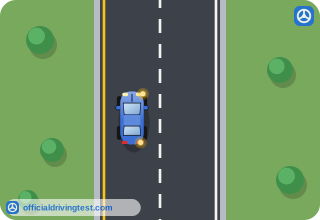
- Areas near the rear corners of your vehicle that you cannot see through your mirrors
- Areas directly in front of your vehicle that are hidden by the hood and dashboard
- Areas far behind your vehicle that are hidden by following traffic
- Areas of the road that are not lit by your headlights at night
Show answer
Correct answer: Areas near the rear corners of your vehicle that you cannot see through your mirrors
The manual says the areas near the rear corners of your vehicle are called blind spots because you cannot see them through your mirrors.
Source: New Mexico Driver Manual (Version 11.19.19), page 17
-
How can you see vehicles in your blind spot?
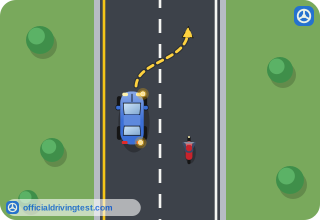
- Adjust your side mirrors outward
- Use only your rear-view mirror
- You must turn your head and look
- Check your side mirrors twice
Show answer
Correct answer: You must turn your head and look
The manual says you cannot see blind spots through your mirrors, so you must turn your head and look to see vehicles in your blind spot.
Source: New Mexico Driver Manual (Version 11.19.19), page 17
-
When you check traffic around you before changing lanes, how long may you take your eyes off the road ahead?
- Up to three seconds at a time
- No more than an instant
- Up to five seconds if traffic is light
- As long as it takes to see the whole lane
Show answer
Correct answer: No more than an instant
The manual says not to take your eyes off the road ahead for more than an instant.
Source: New Mexico Driver Manual (Version 11.19.19), page 17
-
Why should you not take your eyes off the road ahead for more than an instant while checking traffic to the sides or rear?
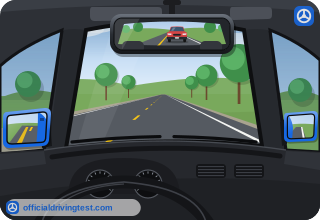
- Your vehicle could drift into the far lane
- Your mirrors could become misaligned
- Your headlights could switch off automatically
- Traffic ahead of you could stop suddenly
Show answer
Correct answer: Traffic ahead of you could stop suddenly
The manual says traffic ahead of you could stop suddenly while you are checking traffic to the sides, rear or over your shoulder.
Source: New Mexico Driver Manual (Version 11.19.19), page 17
-
If you need more time to check traffic when changing lanes, what does the manual say to do?
- Look several times instead of looking for too long at once
- Take one long look over your shoulder before moving
- Stop in your lane until all the traffic has cleared
- Look once and then change lanes as quickly as you can
Show answer
Correct answer: Look several times instead of looking for too long at once
The manual says to look several times if you need to, so as not to look for too long a period at any one time.
Source: New Mexico Driver Manual (Version 11.19.19), page 17
-
Why should you check the far lane, if there is one, before changing lanes?
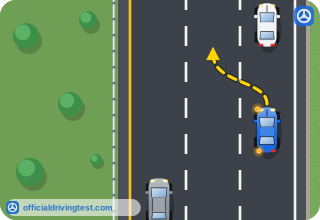
- Vehicles in that lane may be slowing down to let you move in ahead of them
- That lane is the only one that is controlled by traffic signals ahead
- Someone in that lane may be planning to move into the same lane you want to enter
- Drivers in that lane may be planning to leave the road at the next exit
Show answer
Correct answer: Someone in that lane may be planning to move into the same lane you want to enter
The manual says to check the far lane because someone in that lane may be planning to move into the same lane you want to enter.
Source: New Mexico Driver Manual (Version 11.19.19), page 17
-
What must you check whenever you slow down?
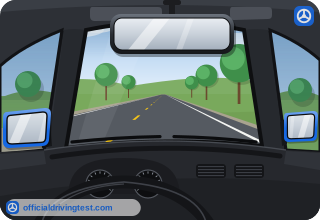
- Behind your vehicle
- Only the road ahead
- Your fuel gauge
- The vehicles in the far lane ahead
Show answer
Correct answer: Behind your vehicle
The manual says you must check behind your vehicle whenever you slow down.
Source: New Mexico Driver Manual (Version 11.19.19), page 17
-
At which points is it very important to check behind you before slowing down, because a following driver would not expect you to slow?
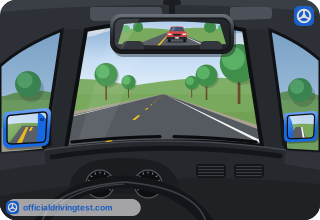
- Intersections with a stop sign
- Traffic signals that turn red
- Private driveways or parking spaces
- Railroad crossings with flashing lights
Show answer
Correct answer: Private driveways or parking spaces
The manual says checking behind is very important at points where a following driver would not expect you to slow down, such as private driveways or parking spaces.
Source: New Mexico Driver Manual (Version 11.19.19), page 17
-
In a shopping center, what kind of parking space should you try to find so you do as little backing as possible?
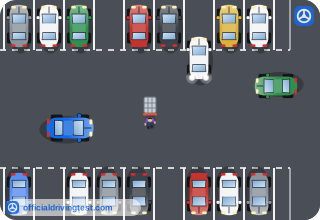
- A space close to the store entrance
- A space you can drive through
- A space at the far end of the lot
- A space with a curb behind it
Show answer
Correct answer: A space you can drive through
The manual says to find a parking space you can drive through so you can drive forward when you leave.
Source: New Mexico Driver Manual (Version 11.19.19), page 17
-
Why should you check behind your vehicle before you get in to back it up?
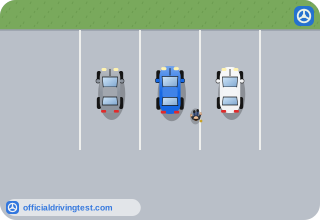
- The rear window may be fogged over after the vehicle has been parked
- Cold engines need to warm up before reverse gear is used safely
- Parked vehicles may have left their lights on behind your vehicle
- Children or small objects cannot be seen from the driver's seat
Show answer
Correct answer: Children or small objects cannot be seen from the driver's seat
The manual says to check behind your vehicle before you get in because children or small objects cannot be seen from the driver's seat.
Source: New Mexico Driver Manual (Version 11.19.19), page 17
-
Where should you place your right arm when you back your vehicle?
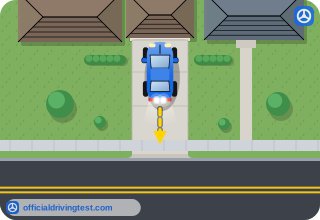
- On the back of the seat
- On the steering wheel
- Out of the open window
- On the gearshift
Show answer
Correct answer: On the back of the seat
The manual says to place your right arm on the back of the seat and turn around so you can look directly through the rear window.
Source: New Mexico Driver Manual (Version 11.19.19), page 17
-
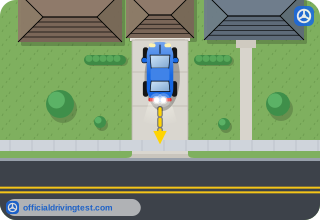
When you back up, how should you check behind you?
- Watch only your rearview mirror and side mirrors
- Look only at the side mirror on your left side
- Turn around and look directly through the rear window
- Keep your eyes on the dashboard gauges
Show answer
Correct answer: Turn around and look directly through the rear window
The manual says to turn around and look directly through the rear window, not to depend on your rearview or side mirrors, because you cannot see directly behind your vehicle.
Source: New Mexico Driver Manual (Version 11.19.19), page 17
-
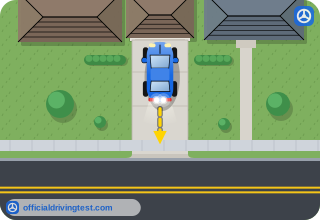
Why should you back slowly?
- Your brake lights do not work in reverse gear
- Your vehicle is much harder to steer while you are backing
- Your vehicle uses more fuel when it is going backward
- Reverse gear can only be used at low engine speeds
Show answer
Correct answer: Your vehicle is much harder to steer while you are backing
The manual says to back slowly because your vehicle is much harder to steer while you are backing.
Source: New Mexico Driver Manual (Version 11.19.19), page 17
-
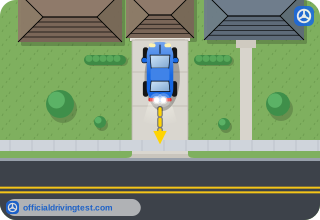
Whenever possible, what can help you back your vehicle?
- Sounding the horn continuously
- Turning on your hazard flashers
- Turning on your high beams
- A person outside the vehicle
Show answer
Correct answer: A person outside the vehicle
The manual says that whenever possible you should use a person outside the vehicle to help you back.
Source: New Mexico Driver Manual (Version 11.19.19), page 17
-
Why should you check your mirrors when you go down a long or steep hill?
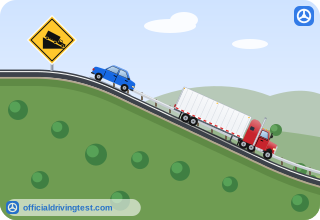
- Vehicles often build up speed going down a steep grade
- Your own brakes cool down faster when you are on a hill
- Vehicles on a hill always stay in the right-hand lane
- Your mirrors may shift out of position on rough grades
Show answer
Correct answer: Vehicles often build up speed going down a steep grade
The manual says to check your mirrors on hills or mountains because vehicles often build up speed going down a steep grade.
Source: New Mexico Driver Manual (Version 11.19.19), page 17
-
When should you use your high beams?
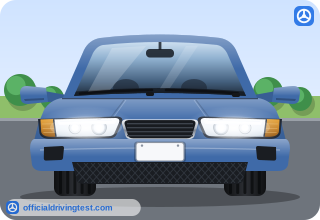
- Whenever you are following another vehicle
- Whenever there are no oncoming vehicles
- Whenever it is snowing or raining hard
- Whenever you are in heavy traffic
Show answer
Correct answer: Whenever there are no oncoming vehicles
The manual says to use your high beams whenever there are no oncoming vehicles.
Source: New Mexico Driver Manual (Version 11.19.19), page 18
-
How far do high beams let you see compared with low beams?
- Half as far
- Three times as far
- The same distance
- Twice as far
Show answer
Correct answer: Twice as far
The manual says high beams let you see twice as far as low beams.
Source: New Mexico Driver Manual (Version 11.19.19), page 18
-
Where is it important to use high beams when there are no oncoming vehicles?
- On unfamiliar roads
- In heavy fog
- In heavy traffic
- In falling snow
Show answer
Correct answer: On unfamiliar roads
The manual says it is important to use high beams on unfamiliar roads, in construction areas or where people may be along the side of the road.
Source: New Mexico Driver Manual (Version 11.19.19), page 18