New Mexico: Signals and vehicle controls
Starting and steering, mirrors and blind spots, changing lanes, backing, headlights, the horn, turn and brake signals and emergency flashers. Split into 4 shorter tests so you're not stuck in one long quiz.
Independent educational site · not affiliated with any government agency or DMV
Choose a part
Signals and vehicle controls — Part 1
Questions in this part include: “Where should you look when you steer?”
StartSignals and vehicle controls — Part 2
Questions in this part include: “When you check traffic around you before changing lanes, how long may you take your eyes off the road ahead?”
StartSignals and vehicle controls — Part 3
Questions in this part include: “Within what distance should you use your low beams when following another vehicle or when in heavy traffic?”
StartSignals and vehicle controls — Part 4
Questions in this part include: “After you have made a turn or lane change, what should you make sure of?”
StartAll 72 Signals and vehicle controls questions with answers
Choose a part above to take a practice test, or study every question and answer here.
Show the questions and answersHide the questions
-
What must you make sure of before you start a vehicle?
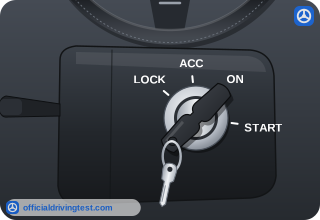
- The parking brake is on
- The parking brake is off
- The vehicle is in first gear
- The radio is turned off
Show answer
Correct answer: The parking brake is on
The manual says to make sure the parking brake is on before you start the vehicle.
Source: New Mexico Driver Manual (Version 11.19.19), page 14
-
Before you start a vehicle that has a manual transmission, what must be true of the transmission?
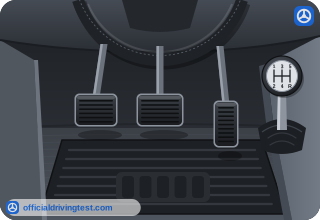
- It must be in first gear
- It must be in reverse
- It must not be in gear
- It must be in the highest gear
Show answer
Correct answer: It must not be in gear
With a manual transmission the vehicle must not be in gear when you start it, and in some vehicles the clutch must be depressed.
Source: New Mexico Driver Manual (Version 11.19.19), page 14
-
Before you start a vehicle that has an automatic transmission, where must you put the shift selector?
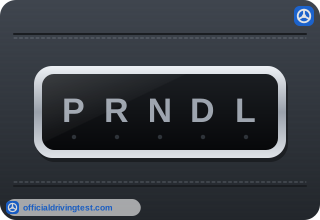
- In "drive"
- In "park"
- In "reverse"
- In "low"
Show answer
Correct answer: In "park"
For a vehicle with an automatic transmission, you must put the shift selector in "park" before starting it.
Source: New Mexico Driver Manual (Version 11.19.19), page 14
-
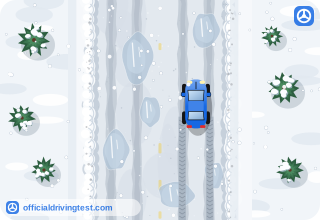
What can happen if you try to start too fast, particularly on slippery surfaces?
- The engine can overheat and the headlights can dim
- The tires can grip better and the vehicle can stop sooner
- The brakes can lock and the steering wheel can freeze
- The drive wheels can spin and the vehicle can slide
Show answer
Correct answer: The drive wheels can spin and the vehicle can slide
Starting too fast can make the drive wheels spin and the vehicle slide, particularly on slippery surfaces, so accelerate gradually and smoothly.
Source: New Mexico Driver Manual (Version 11.19.19), page 14
-
With a manual-shift vehicle, what should you practice so that the engine does not go too fast or stall when shifting between gears?
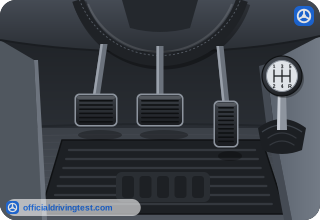
- Using the clutch and the accelerator
- Using the parking brake and the horn
- Using the brake and the steering wheel
- Using the mirrors and the turn signal
Show answer
Correct answer: Using the clutch and the accelerator
The manual says to practice using the clutch and accelerator so the engine does not go too fast or stall when shifting between gears.
Source: New Mexico Driver Manual (Version 11.19.19), page 14
-
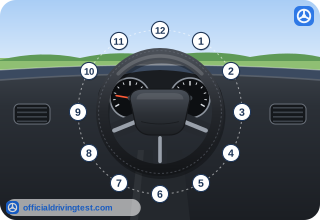
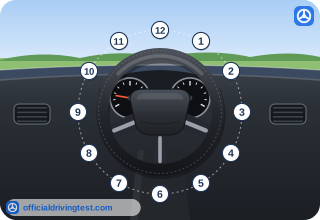
Imagining the steering wheel as the face of a clock, which is one balanced hand position for steering control?
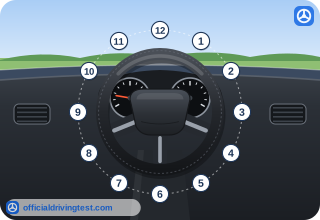
- 8 o'clock and 4 o'clock
- 11 o'clock and 1 o'clock
- 10 o'clock and 2 o'clock
- 12 o'clock and 6 o'clock
Show answer
Correct answer: 10 o'clock and 2 o'clock
The manual gives the 10 o'clock and 2 o'clock positions as one balanced position for steering control.
Source: New Mexico Driver Manual (Version 11.19.19), page 14
-
Besides 10 and 2 o'clock, which hand positions on the steering wheel do some drivers prefer?
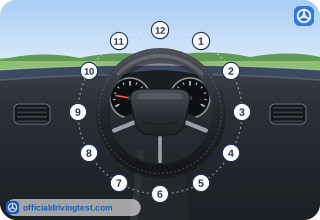
- 8 and 4 o'clock
- 9 and 3 o'clock
- 11 and 1 o'clock
- 12 and 6 o'clock
Show answer
Correct answer: 9 and 3 o'clock
The manual says some drivers prefer placing their hands at 9 and 3 o'clock.
Source: New Mexico Driver Manual (Version 11.19.19), page 14
-
Where should you always keep your knuckles when you hold the steering wheel?
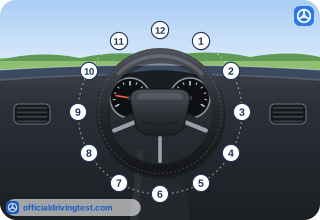
- Inside the rim of the wheel
- Pressed against the spokes
- Resting on top of the wheel
- Outside the rim of the wheel
Show answer
Correct answer: Outside the rim of the wheel
The manual says to always keep your knuckles outside the rim of the wheel.
Source: New Mexico Driver Manual (Version 11.19.19), page 14
-
Where should you look when you steer?
- Only at the road just in front of your vehicle
- Mostly at the vehicles directly behind you
- Well down the road and on both sides of the road
- At the center line just ahead of your hood
Show answer
Correct answer: Well down the road and on both sides of the road
The manual says to look well down the road and on both sides, not at the road just in front, so you have time to steer smoothly and safely.
Source: New Mexico Driver Manual (Version 11.19.19), page 15
-
Which technique should you use to turn the steering wheel when you turn sharp corners?
- One-handed turning from the top of the wheel
- Hand-over-hand
- Letting the wheel slip through your fingers
- Pushing the wheel with the palm of one hand
Show answer
Correct answer: Hand-over-hand
The manual says to use the "hand-over-hand" technique when turning sharp corners.
Source: New Mexico Driver Manual (Version 11.19.19), page 15
-
When you complete a turn, how should you straighten out the steering wheel?
- By letting it slip through your fingers
- By releasing it so it spins back on its own
- By braking gently until it straightens itself
- By hand, not letting it slip through your fingers
Show answer
Correct answer: By hand, not letting it slip through your fingers
The manual says to straighten the wheel by hand because letting it slip through your fingers could be dangerous.
Source: New Mexico Driver Manual (Version 11.19.19), page 15
-
What does looking well down the road help you do when you steer?
- Turn corners without slowing down
- Steer without using both hands
- Steer straighter with less weaving
- Steer without checking the mirrors
Show answer
Correct answer: Steer straighter with less weaving
The manual says looking well down the road will help you to steer straighter with less weaving.
Source: New Mexico Driver Manual (Version 11.19.19), page 15
-
Which of these is a time when it is very important to look for vehicles behind you?
- When you are parked with the engine off
- When you drive down a long or steep hill
- When you drive on an empty, flat, straight road
- When you are reading a guide sign far ahead
Show answer
Correct answer: When you drive down a long or steep hill
The manual says it is very important to look for vehicles behind you when you change lanes, slow down, back up or are driving down a long or steep hill.
Source: New Mexico Driver Manual (Version 11.19.19), page 16
-
When do you need to check traffic behind you more often?
- When traffic is light
- When you are parked
- When the road is dry
- When traffic is heavy
Show answer
Correct answer: When traffic is heavy
The manual says you need to check behind you more often when traffic is heavy.
Source: New Mexico Driver Manual (Version 11.19.19), page 16
-
What is the only way you will know if someone is following too closely or coming up too fast?
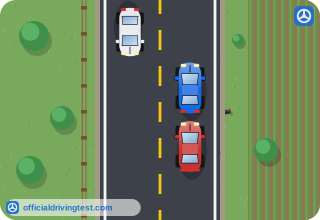
- Checking the traffic behind you
- Listening for other drivers' horns
- Watching the brake lights of the vehicle ahead
- Checking your speedometer
Show answer
Correct answer: Checking the traffic behind you
The manual says checking traffic behind you is the only way to know if someone is following too closely or coming up too fast, and it gives you time to do something about it.
Source: New Mexico Driver Manual (Version 11.19.19), page 16
-
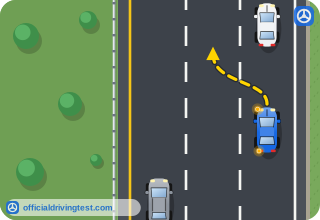
Which of these does the manual say counts as changing lanes?
- Driving through an intersection in your own lane
- Following a curve while staying in your lane
- Merging onto a roadway from an entrance ramp
- Slowing down while staying in your lane
Show answer
Correct answer: Merging onto a roadway from an entrance ramp
The manual says changing lanes includes changing from one lane to another, merging onto a roadway from an entrance ramp and entering the roadway from the curb or shoulder.
Source: New Mexico Driver Manual (Version 11.19.19), page 16
-
Before you change lanes, what must you check?
- That your hazard flashers are on and working properly
- That there are no vehicles in the lane you want to enter
- That the vehicle ahead of you is also changing lanes
- That the lane you want to enter has a lower speed limit
Show answer
Correct answer: That there are no vehicles in the lane you want to enter
The manual says that whenever you want to change lanes you must check that there are no vehicles in the lane you want to enter.
Source: New Mexico Driver Manual (Version 11.19.19), page 16
-
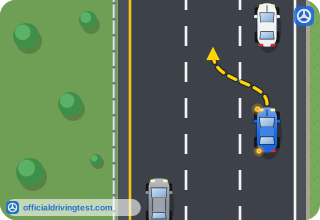
When you look in your mirrors before changing lanes, what else should you make sure of besides no vehicles in the lane?
- That no vehicle is stopped on the shoulder
- That your own lane is clear for at least a block
- That no traffic signal is visible in the next block
- That nobody is about to pass you
Show answer
Correct answer: That nobody is about to pass you
The manual says to look in your rear-view and side mirrors and make sure nobody is about to pass you.
Source: New Mexico Driver Manual (Version 11.19.19), page 16
-
What are "blind spots" when you drive?
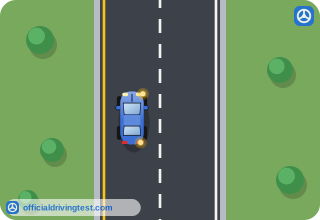
- Areas near the rear corners of your vehicle that you cannot see through your mirrors
- Areas directly in front of your vehicle that are hidden by the hood and dashboard
- Areas far behind your vehicle that are hidden by following traffic
- Areas of the road that are not lit by your headlights at night
Show answer
Correct answer: Areas near the rear corners of your vehicle that you cannot see through your mirrors
The manual says the areas near the rear corners of your vehicle are called blind spots because you cannot see them through your mirrors.
Source: New Mexico Driver Manual (Version 11.19.19), page 17
-
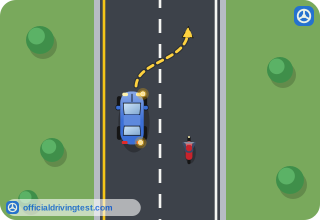
How can you see vehicles in your blind spot?
- Adjust your side mirrors outward
- Use only your rear-view mirror
- You must turn your head and look
- Check your side mirrors twice
Show answer
Correct answer: You must turn your head and look
The manual says you cannot see blind spots through your mirrors, so you must turn your head and look to see vehicles in your blind spot.
Source: New Mexico Driver Manual (Version 11.19.19), page 17
-
When you check traffic around you before changing lanes, how long may you take your eyes off the road ahead?
- Up to three seconds at a time
- No more than an instant
- Up to five seconds if traffic is light
- As long as it takes to see the whole lane
Show answer
Correct answer: No more than an instant
The manual says not to take your eyes off the road ahead for more than an instant.
Source: New Mexico Driver Manual (Version 11.19.19), page 17
-
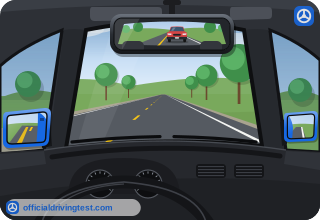
Why should you not take your eyes off the road ahead for more than an instant while checking traffic to the sides or rear?
- Your vehicle could drift into the far lane
- Your mirrors could become misaligned
- Your headlights could switch off automatically
- Traffic ahead of you could stop suddenly
Show answer
Correct answer: Traffic ahead of you could stop suddenly
The manual says traffic ahead of you could stop suddenly while you are checking traffic to the sides, rear or over your shoulder.
Source: New Mexico Driver Manual (Version 11.19.19), page 17
-
If you need more time to check traffic when changing lanes, what does the manual say to do?
- Look several times instead of looking for too long at once
- Take one long look over your shoulder before moving
- Stop in your lane until all the traffic has cleared
- Look once and then change lanes as quickly as you can
Show answer
Correct answer: Look several times instead of looking for too long at once
The manual says to look several times if you need to, so as not to look for too long a period at any one time.
Source: New Mexico Driver Manual (Version 11.19.19), page 17
-
Why should you check the far lane, if there is one, before changing lanes?
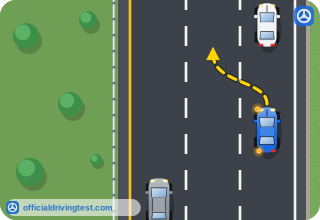
- Vehicles in that lane may be slowing down to let you move in ahead of them
- That lane is the only one that is controlled by traffic signals ahead
- Someone in that lane may be planning to move into the same lane you want to enter
- Drivers in that lane may be planning to leave the road at the next exit
Show answer
Correct answer: Someone in that lane may be planning to move into the same lane you want to enter
The manual says to check the far lane because someone in that lane may be planning to move into the same lane you want to enter.
Source: New Mexico Driver Manual (Version 11.19.19), page 17
-
What must you check whenever you slow down?
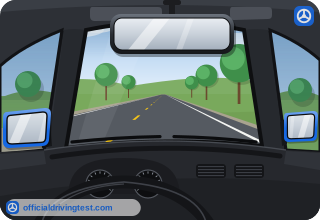
- Behind your vehicle
- Only the road ahead
- Your fuel gauge
- The vehicles in the far lane ahead
Show answer
Correct answer: Behind your vehicle
The manual says you must check behind your vehicle whenever you slow down.
Source: New Mexico Driver Manual (Version 11.19.19), page 17
-
At which points is it very important to check behind you before slowing down, because a following driver would not expect you to slow?
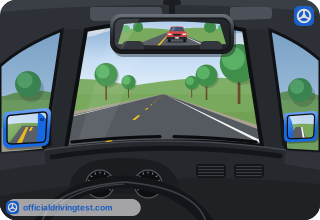
- Intersections with a stop sign
- Traffic signals that turn red
- Private driveways or parking spaces
- Railroad crossings with flashing lights
Show answer
Correct answer: Private driveways or parking spaces
The manual says checking behind is very important at points where a following driver would not expect you to slow down, such as private driveways or parking spaces.
Source: New Mexico Driver Manual (Version 11.19.19), page 17
-
In a shopping center, what kind of parking space should you try to find so you do as little backing as possible?
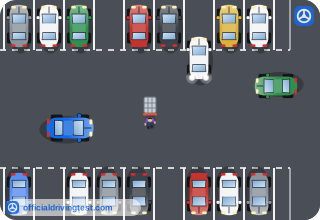
- A space close to the store entrance
- A space you can drive through
- A space at the far end of the lot
- A space with a curb behind it
Show answer
Correct answer: A space you can drive through
The manual says to find a parking space you can drive through so you can drive forward when you leave.
Source: New Mexico Driver Manual (Version 11.19.19), page 17
-
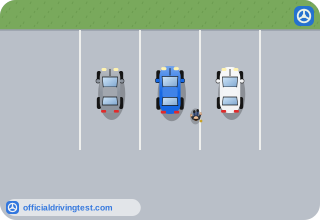
Why should you check behind your vehicle before you get in to back it up?
- The rear window may be fogged over after the vehicle has been parked
- Cold engines need to warm up before reverse gear is used safely
- Parked vehicles may have left their lights on behind your vehicle
- Children or small objects cannot be seen from the driver's seat
Show answer
Correct answer: Children or small objects cannot be seen from the driver's seat
The manual says to check behind your vehicle before you get in because children or small objects cannot be seen from the driver's seat.
Source: New Mexico Driver Manual (Version 11.19.19), page 17
-
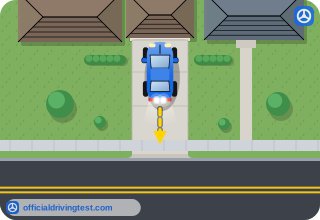
Where should you place your right arm when you back your vehicle?
- On the back of the seat
- On the steering wheel
- Out of the open window
- On the gearshift
Show answer
Correct answer: On the back of the seat
The manual says to place your right arm on the back of the seat and turn around so you can look directly through the rear window.
Source: New Mexico Driver Manual (Version 11.19.19), page 17
-
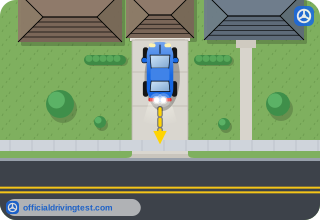
When you back up, how should you check behind you?
- Watch only your rearview mirror and side mirrors
- Look only at the side mirror on your left side
- Turn around and look directly through the rear window
- Keep your eyes on the dashboard gauges
Show answer
Correct answer: Turn around and look directly through the rear window
The manual says to turn around and look directly through the rear window, not to depend on your rearview or side mirrors, because you cannot see directly behind your vehicle.
Source: New Mexico Driver Manual (Version 11.19.19), page 17
-
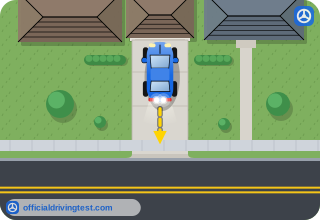
Why should you back slowly?
- Your brake lights do not work in reverse gear
- Your vehicle is much harder to steer while you are backing
- Your vehicle uses more fuel when it is going backward
- Reverse gear can only be used at low engine speeds
Show answer
Correct answer: Your vehicle is much harder to steer while you are backing
The manual says to back slowly because your vehicle is much harder to steer while you are backing.
Source: New Mexico Driver Manual (Version 11.19.19), page 17
-
Whenever possible, what can help you back your vehicle?
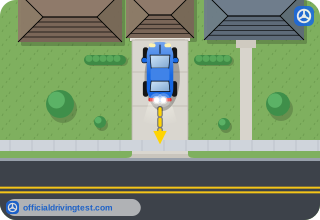
- Sounding the horn continuously
- Turning on your hazard flashers
- Turning on your high beams
- A person outside the vehicle
Show answer
Correct answer: A person outside the vehicle
The manual says that whenever possible you should use a person outside the vehicle to help you back.
Source: New Mexico Driver Manual (Version 11.19.19), page 17
-
Why should you check your mirrors when you go down a long or steep hill?
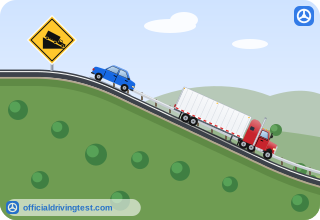
- Vehicles often build up speed going down a steep grade
- Your own brakes cool down faster when you are on a hill
- Vehicles on a hill always stay in the right-hand lane
- Your mirrors may shift out of position on rough grades
Show answer
Correct answer: Vehicles often build up speed going down a steep grade
The manual says to check your mirrors on hills or mountains because vehicles often build up speed going down a steep grade.
Source: New Mexico Driver Manual (Version 11.19.19), page 17
-
When should you use your high beams?
- Whenever you are following another vehicle
- Whenever there are no oncoming vehicles
- Whenever it is snowing or raining hard
- Whenever you are in heavy traffic
Show answer
Correct answer: Whenever there are no oncoming vehicles
The manual says to use your high beams whenever there are no oncoming vehicles.
Source: New Mexico Driver Manual (Version 11.19.19), page 18
-
How far do high beams let you see compared with low beams?
- Half as far
- Three times as far
- The same distance
- Twice as far
Show answer
Correct answer: Twice as far
The manual says high beams let you see twice as far as low beams.
Source: New Mexico Driver Manual (Version 11.19.19), page 18
-
Where is it important to use high beams when there are no oncoming vehicles?
- On unfamiliar roads
- In heavy fog
- In heavy traffic
- In falling snow
Show answer
Correct answer: On unfamiliar roads
The manual says it is important to use high beams on unfamiliar roads, in construction areas or where people may be along the side of the road.
Source: New Mexico Driver Manual (Version 11.19.19), page 18
-
Within what distance should you use your low beams when following another vehicle or when in heavy traffic?
- Within 50 feet
- Within 200 feet
- Within 100 feet
- Within 300 feet
Show answer
Correct answer: Within 200 feet
The manual says to use your low beams within 200 feet when following another vehicle or when in heavy traffic.
Source: New Mexico Driver Manual (Version 11.19.19), page 18
-
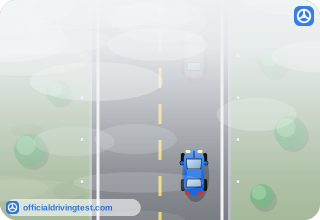
Which beams should you use in fog or when it is snowing or raining hard?
- High beams
- Parking lights only
- Flashing hazard lights
- Low beams
Show answer
Correct answer: Low beams
The manual says to use the low beams in fog or when it is snowing or raining hard.
Source: New Mexico Driver Manual (Version 11.19.19), page 18
-
Why should you not use high beams in fog or when it is snowing or raining hard?
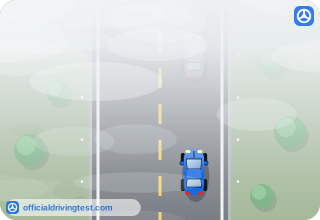
- Their light reflects back, causing glare and making it harder to see ahead
- Their light is too dim to be of much use when the weather is bad
- They make the other drivers think that you are going to turn soon
- They can freeze and stop working in snow or in very cold weather
Show answer
Correct answer: Their light reflects back, causing glare and making it harder to see ahead
The manual says light from high beams reflects back, causing glare and making it more difficult to see ahead.
Source: New Mexico Driver Manual (Version 11.19.19), page 18
-
If your vehicle has fog lights, when should you also use them?
- Whenever you drive at night on any road
- Whenever an oncoming vehicle is within one block
- In fog or when it is snowing or raining hard
- Only when you are parked at the roadside
Show answer
Correct answer: In fog or when it is snowing or raining hard
The manual says some vehicles have fog lights that you also should use in fog or when it is snowing or raining hard.
Source: New Mexico Driver Manual (Version 11.19.19), page 18
-
When is it acceptable to drive with only your parking lights on?
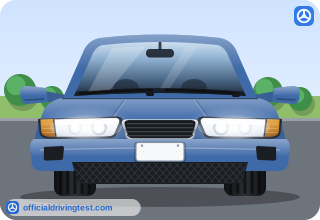
- At dusk
- At no time
- In light rain
- On a street with streetlights
Show answer
Correct answer: At no time
The manual says not to drive at any time with only your parking lights on, because parking lights are for parking only.
Source: New Mexico Driver Manual (Version 11.19.19), page 18
-
According to the manual, why do crashes often happen?
- A driver does not see another, or does something unexpected
- Drivers use their horns too often when they are in a hurry
- Drivers keep too much space between their vehicle and others
- Drivers check their mirrors too often while driving
Show answer
Correct answer: A driver does not see another, or does something unexpected
The manual says crashes often happen because one driver does not see another driver, or when one driver does something the other does not expect.
Source: New Mexico Driver Manual (Version 11.19.19), page 18
-
What should you do whenever you turn on your windshield wipers?
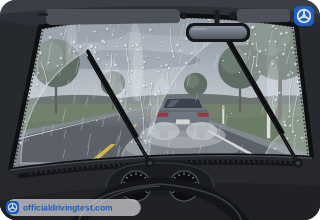
- Turn on your parking lights only
- Turn on your high beams
- Turn on your headlights
- Turn on your emergency flashers
Show answer
Correct answer: Turn on your headlights
The manual says that if you turn on your wipers, you should turn on your headlights, because they make your vehicle easier to see in rain, snow or fog.
Source: New Mexico Driver Manual (Version 11.19.19), page 18
-
When does the manual say you should turn on your headlights as evening comes?
- Only after it is completely dark
- When it begins to get dark
- Only when you can no longer see the road ahead
- Only when another driver flashes their lights at you
Show answer
Correct answer: When it begins to get dark
The manual says to turn on your headlights when it begins to get dark, and that turning them on a little early helps other drivers see you.
Source: New Mexico Driver Manual (Version 11.19.19), page 18
-
What should you do when driving away from a rising or setting sun?
- Keep your headlights off because the sun gives light
- Turn on your parking lights so drivers behind see you
- Turn on your headlights so oncoming drivers can see you
- Flash your brake lights to warn the drivers who are behind you
Show answer
Correct answer: Turn on your headlights so oncoming drivers can see you
Drivers coming toward you may have trouble seeing your vehicle in that light, and your headlights help them see you.
Source: New Mexico Driver Manual (Version 11.19.19), page 18
-
If needed, how can you use your lights to alert other road users that you are there?
- Flick your headlights
- Leave your parking lights on
- Turn on your interior dome light
- Keep your high beams on at all times
Show answer
Correct answer: Flick your headlights
The manual says that, if needed, you can flick your headlights to alert other road users you are there.
Source: New Mexico Driver Manual (Version 11.19.19), page 18
-
If there is no immediate danger, how should you use your horn?
- Hold it down until the other driver reacts
- Sound a sharp blast
- Do not use it at all
- Give it a light tap
Show answer
Correct answer: Give it a light tap
The manual says that when there is no immediate danger, a light tap on the horn should be all you need.
Source: New Mexico Driver Manual (Version 11.19.19), page 18
-
If there is danger, what does the manual say to do with your horn?
- Give it a light tap
- Sound a sharp blast
- Flash your headlights instead
- Avoid using it
Show answer
Correct answer: Sound a sharp blast
The manual says that if there is danger, you should not be afraid to sound a sharp blast on your horn.
Source: New Mexico Driver Manual (Version 11.19.19), page 18
-
In which situation should you give your horn a light tap?
- When you are waiting behind a car at a red light
- When a driver starts to turn into your lane as you pass
- When another driver is following you at a safe distance
- When you see a vehicle parked at the curb ahead
Show answer
Correct answer: When a driver starts to turn into your lane as you pass
The manual lists passing a driver who starts to turn into your lane as a time for a light tap on the horn.
Source: New Mexico Driver Manual (Version 11.19.19), page 18
-
In which situation does the manual say to sound a sharp blast on your horn?
- A driver ahead is traveling slower than you
- A bicyclist is riding at the edge of the road
- You are waiting at a red light
- A child is about to run into the street
Show answer
Correct answer: A child is about to run into the street
The manual lists a child or older person about to walk, run or ride into the street as a time to sound a sharp blast.
Source: New Mexico Driver Manual (Version 11.19.19), page 19
-
What do other drivers generally expect you to do?
- Keep doing what you are doing
- Slow down at every intersection
- Move over for faster traffic
- Signal before every stop
Show answer
Correct answer: Keep doing what you are doing
The manual says other drivers generally expect you to keep doing what you are doing, so you must warn them when you change direction or slow down.
Source: New Mexico Driver Manual (Version 11.19.19), page 19
-
According to the manual, when should you use your turn signals?
- Only before turning right or left at intersections
- Only when you see another vehicle nearby
- Only when changing lanes on a freeway
- Before you change lanes, turn, merge or park
Show answer
Correct answer: Before you change lanes, turn, merge or park
The manual says to use your turn signals before you change lanes, turn right or left, merge into traffic or park.
Source: New Mexico Driver Manual (Version 11.19.19), page 19
-
What does the manual say about signaling when you do not see anyone else around?
- Signaling is not needed on empty roads or highways
- Signal anyway; it is easy to miss someone
- Signal only after dark
- Signal only before left turns
Show answer
Correct answer: Signal anyway; it is easy to miss someone
The manual says to get into the habit of signaling every time you change direction, even when you see no one else around.
Source: New Mexico Driver Manual (Version 11.19.19), page 19
-
At least how far before your turn should you signal?
- 25 feet
- 100 feet
- 50 feet
- 300 feet
Show answer
Correct answer: 100 feet
The manual says to signal at least 100 feet before you make your turn.
Source: New Mexico Driver Manual (Version 11.19.19), page 19
-
If another vehicle is about to enter the street between you and where you plan to turn, what should you do?
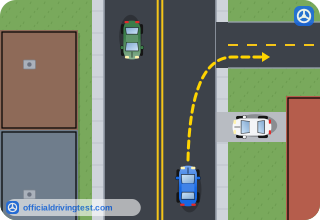
- Signal right away so the other driver knows your plan
- Flash your headlights, then signal after turning
- Slow down and signal as soon as it turns in
- Wait until you have passed it to signal your turn
Show answer
Correct answer: Wait until you have passed it to signal your turn
If you signal earlier, the other driver may think you plan to turn where they are and might pull into your path.
Source: New Mexico Driver Manual (Version 11.19.19), page 19
-
After you have made a turn or lane change, what should you make sure of?
- That your turn signal is off
- That your emergency flashers are on
- That your high beams are on
- That your horn is working
Show answer
Correct answer: That your turn signal is off
After small turns the signal may not turn off by itself, and if it stays on others might think you plan to turn again.
Source: New Mexico Driver Manual (Version 11.19.19), page 19
-
What do your brake lights tell other people?
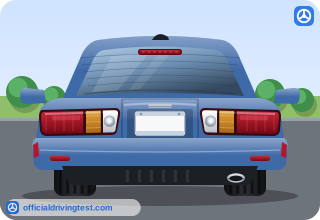
- That you are about to turn
- That you are about to park
- That you are slowing down
- That you are speeding up
Show answer
Correct answer: That you are slowing down
The manual says your brake lights let people know that you are slowing down.
Source: New Mexico Driver Manual (Version 11.19.19), page 20
-
When should you slow down, according to the manual?
- Only at the last moment before stopping
- Only after the driver behind you honks
- Only after you have passed the hazard
- As early as it is safe to do so
Show answer
Correct answer: As early as it is safe to do so
The manual says to always slow down as early as it is safe to do so.
Source: New Mexico Driver Manual (Version 11.19.19), page 20
-
If you have time, what should you do before you slow down or stop suddenly?
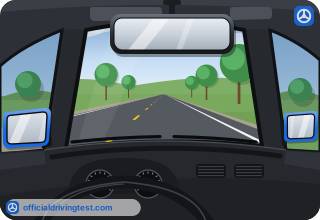
- Sound your horn
- Signal the driver behind you
- Move over into the left lane
- Turn on your high beams
Show answer
Correct answer: Signal the driver behind you
The manual says not to slow down or stop suddenly without signaling to the driver behind you, if you have time.
Source: New Mexico Driver Manual (Version 11.19.19), page 20
-
How should a motorcyclist use the front and rear brakes?
- Use only the rear brake for normal stops
- Use only the front brake for every stop
- Use both brakes at the same time
- Use the rear brake first, then add the front brake later
Show answer
Correct answer: Use both brakes at the same time
The motorcycle has two brakes and the manual says to use both of them at the same time.
Source: New Mexico Driver Manual (Version 11.19.19), page 35
-
Up to how much of a motorcycle's total stopping power can the front brake provide?
- One-quarter
- Three-quarters
- One-half
- All of it
Show answer
Correct answer: Three-quarters
The front brake is more powerful and can provide as much as three-quarters of the total stopping power.
Source: New Mexico Driver Manual (Version 11.19.19), page 35
-
Why should a motorcyclist not use only the rear brake for "normal" stops?
- The rear brake wears out much faster than the front brake does
- Using the rear brake alone for normal stops is against New Mexico law
- The rear brake cannot slow a motorcycle on dry pavement at all
- It will not build the habit of using the front brake in an emergency
Show answer
Correct answer: It will not build the habit of using the front brake in an emergency
Using only the rear brake for normal stops will not let the rider develop the habit or skill of using the front brake properly in an emergency.
Source: New Mexico Driver Manual (Version 11.19.19), page 35
-
What can happen if a rider grabs at the front brake or jams down on the rear brake?
- The brake can lock, resulting in control problems
- The motorcycle will stop in a shorter distance
- The brake lights will stay on after the brake is released
- The integrated braking system will shut off
Show answer
Correct answer: The brake can lock, resulting in control problems
Grabbing at the front brake or jamming down on the rear can cause the brake to lock, resulting in control problems.
Source: New Mexico Driver Manual (Version 11.19.19), page 35
-
Why should a rider use both brakes in a turn only very carefully?
- Brakes do not work at all while the motorcycle is leaning
- The front brake cannot be used until the motorcycle is upright
- Some traction is used for cornering, so less is available for stopping
- Both brakes lock together as soon as the rider leans
Show answer
Correct answer: Some traction is used for cornering, so less is available for stopping
When leaning the motorcycle, some of the traction is used for cornering, so less traction is available for stopping and a skid can occur.
Source: New Mexico Driver Manual (Version 11.19.19), page 35
-
What do the integrated braking systems on some motorcycles do?
- Apply the front brake only when the rider squeezes the lever
- Link the front and rear brakes together by applying the rear brake pedal
- Release both brakes automatically when a skid starts
- Keep the rider from using the rear brake pedal
Show answer
Correct answer: Link the front and rear brakes together by applying the rear brake pedal
Integrated braking systems link the front and rear brakes together by applying the rear brake pedal.
Source: New Mexico Driver Manual (Version 11.19.19), page 36
-
When should a motorcyclist use turn signals?
- Only when other vehicles are clearly visible close by
- Anytime a lane change is planned, even if no one seems near
- Only when the rider is riding on a freeway or highway
- Only when turning at an intersection or driveway
Show answer
Correct answer: Anytime a lane change is planned, even if no one seems near
Because a rider is more vulnerable, signals are even more important: use them anytime you plan to change lanes, even if you think no one is around.
Source: New Mexico Driver Manual (Version 11.19.19), page 37
-
Why should a motorcyclist make sure the signal is off once a turn is made?
- The signal drains the power the headlight needs to stay bright
- A signal left on after a turn is a violation of New Mexico law
- The signal can cause the front wheel to start to wobble at speed
- A driver may pull into the rider's path, thinking the rider will turn again
Show answer
Correct answer: A driver may pull into the rider's path, thinking the rider will turn again
If the signal stays on, a driver may pull directly into the rider's path, thinking the rider plans to turn again.
Source: New Mexico Driver Manual (Version 11.19.19), page 37
-
Why does signaling help a motorcyclist who enters a freeway?
- Drivers behind are more likely to see the signal and make room
- Drivers behind must stop whenever a motorcycle signals
- The signal lets the rider enter without checking the mirrors
- The signal makes the motorcycle seem faster than it is
Show answer
Correct answer: Drivers behind are more likely to see the signal and make room
When a rider enters a freeway, drivers approaching from behind are more likely to see the signal blinking and make room.
Source: New Mexico Driver Manual (Version 11.19.19), page 37
-
When a motorcyclist is stopped at an intersection, what should the rider watch in the mirrors?
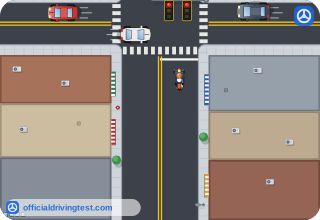
- Cars waiting on the cross street
- Pedestrians behind the motorcycle
- Traffic signals behind the rider
- Cars coming up from behind
Show answer
Correct answer: Cars coming up from behind
The rider should watch cars coming up from behind, because an inattentive driver could be on top of the rider before seeing the motorcycle.
Source: New Mexico Driver Manual (Version 11.19.19), page 37
-
Why should a motorcyclist check the mirrors before slowing down?
- The driver behind may not expect the rider to slow
- The rider must signal to the driver ahead first
- A slowing motorcycle can lose its rear brake
- The mirrors show how far away the next turn is
Show answer
Correct answer: The driver behind may not expect the rider to slow
The driver behind may not expect the rider to slow, or may be unsure about where the rider will slow.
Source: New Mexico Driver Manual (Version 11.19.19), page 37
-
How do the rounded (convex) mirrors on most motorcycles affect what the rider sees?
- They give a narrower view behind and make cars seem closer than they are
- They show exactly the same view as flat mirrors do
- They give a wider view behind but make cars seem farther away than they really are
- They give a wider view behind and make cars seem closer than they are
Show answer
Correct answer: They give a wider view behind but make cars seem farther away than they really are
Convex mirrors provide a wider view of the road behind than flat mirrors do, but they make cars seem farther away than they really are.
Source: New Mexico Driver Manual (Version 11.19.19), page 37
-
When should a motorcyclist use the high beam at night?
- Whenever not following or meeting a car
- Only when passing another vehicle
- Only on roads inside a city
- Only when following a car closely
Show answer
Correct answer: Whenever not following or meeting a car
The manual says to use the high beam whenever you are not following or meeting a car, to get all the light you can.
Source: New Mexico Driver Manual (Version 11.19.19), page 38