New Mexico: Right-of-way and turning — Part 1 Practice Test
Questions in this part include: “When may you back a vehicle in a travel lane?” · “If you are confused about where to go while in a travel lane, what should you do instead of stopping there?”
Independent educational site · not affiliated with any government agency or DMV
Ready? Test yourself
- Instant feedback with an explanation
- Every answer cites its source in the manual
- Your best score is saved on this device
- Keyboard: press 1 to 4 to answer and Enter for the next question
Questions are original and based on the official manual "New Mexico Driver Manual" (Version 11.19.19), New Mexico Motor Vehicle Division (MVD).
All 18 questions in this practice test
Take the test above first, then use this list to study. Tap “Show answer” to see the correct answer and explanation.
Show the questions and answersHide the questions
-
When turning right or left at an intersection, what should you watch for?
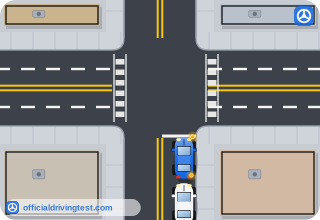
- Vehicles that are parked far behind you
- Trains that are approaching in the distance
- Vehicles that are changing lanes a block away
- Pedestrians crossing in front of your vehicle
Show answer
Correct answer: Pedestrians crossing in front of your vehicle
When turning right or left, you should watch for pedestrians crossing in front of your vehicle.
Source: New Mexico Driver Manual (Version 11.19.19), page 4
-
What are shared center lanes reserved for?
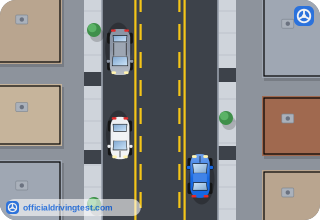
- Left turns by vehicles traveling in one direction only
- Passing slower vehicles in either direction
- Emergency vehicles traveling in both directions
- Left turns by vehicles traveling in both directions
Show answer
Correct answer: Left turns by vehicles traveling in both directions
Shared center lanes are reserved for left turns (or U-turns when permitted) and can be used by vehicles traveling in both directions.
Source: New Mexico Driver Manual (Version 11.19.19), page 9
-
When may you back a vehicle in a travel lane?
- When you miss your turn
- When the road behind you is clear
- When another driver is waiting behind you
- Only to parallel park
Show answer
Correct answer: Only to parallel park
You must never back a vehicle in any travel lane except to parallel park; it is illegal and unsafe.
Source: New Mexico Driver Manual (Version 11.19.19), page 10
-
What should you do if you miss your turn or exit?
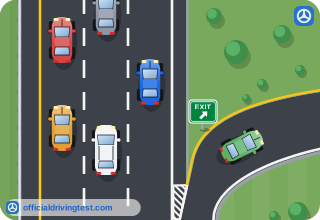
- Back up along the shoulder to the turn
- Stop in the lane and wait for a gap
- Go on to where you can safely turn around
- Back up slowly with your hazard lights on
Show answer
Correct answer: Go on to where you can safely turn around
Do not back up if you miss your turn or exit; go on to where you can safely turn around.
Source: New Mexico Driver Manual (Version 11.19.19), page 10
-
If you are confused about where to go while in a travel lane, what should you do instead of stopping there?
- Keep moving until you can safely pull off the road
- Stop and turn on your hazard lights
- Slow to a stop in the center travel lane
- Stop only long enough to let out a passenger
Show answer
Correct answer: Keep moving until you can safely pull off the road
You should not stop in travel lanes for any reason; keep moving until you can safely pull off the road.
Source: New Mexico Driver Manual (Version 11.19.19), page 10
-
On a road with two or more lanes traveling in the same direction, which lane should you stay in except to pass?
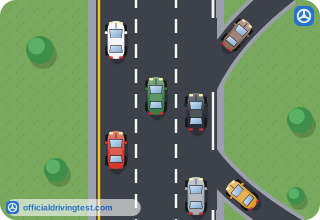
- The left lane
- The right lane
- The center lane
- The lane with the least traffic
Show answer
Correct answer: The right lane
On a road with two or more lanes in the same direction, you should stay in the right lane except to pass.
Source: New Mexico Driver Manual (Version 11.19.19), page 10
-
On a road with three or more lanes traveling in your direction and a lot of entering or exiting traffic, which lane should you use?
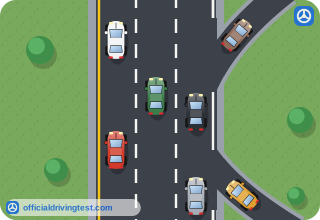
- The left-most lane
- The center travel lane
- The shoulder
- Whichever lane has the fewest cars
Show answer
Correct answer: The center travel lane
On a road with three or more lanes in the same direction, use the center travel lane if there is a lot of entering or exiting traffic.
Source: New Mexico Driver Manual (Version 11.19.19), page 10
-
When may you drive on the shoulder of the road?
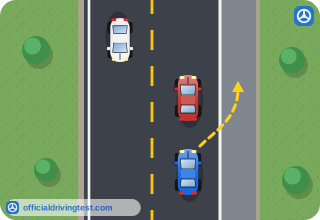
- When traffic ahead is moving slowly
- When you are passing a slower vehicle
- Only when told to do so by officials
- When the shoulder is paved
Show answer
Correct answer: Only when told to do so by officials
Unless officials tell you to, you must never drive on the shoulder of the road.
Source: New Mexico Driver Manual (Version 11.19.19), page 10
-
On multi-lane roads, which lane is intended to be used for passing slower vehicles?
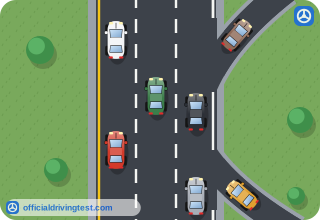
- The left-most lane
- The right-most lane
- The center lane
- The shoulder
Show answer
Correct answer: The left-most lane
On multi-lane roads, the left-most lane is intended to be used for passing slower vehicles.
Source: New Mexico Driver Manual (Version 11.19.19), page 10
-
According to the manual, what can happen if you pass on the right?
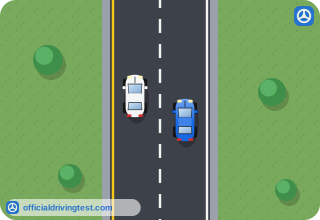
- The other driver will be unable to hear your horn and may speed up
- Your vehicle may be too wide to fit between the lanes
- Your headlights may blind the driver you are passing
- The other driver may have difficulty seeing you and suddenly change lanes
Show answer
Correct answer: The other driver may have difficulty seeing you and suddenly change lanes
If you pass on the right, the other driver may have difficulty seeing you and might suddenly change lanes in front of you.
Source: New Mexico Driver Manual (Version 11.19.19), page 10
-
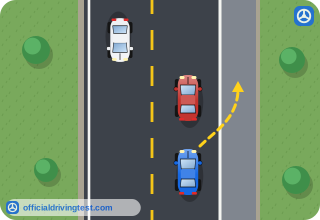
May you pass on the shoulder if it is paved?
- Yes, if the shoulder is paved
- No, never pass on the shoulder, paved or not
- Yes, if the shoulder is wide enough for your vehicle
- Yes, if you sound your horn first
Show answer
Correct answer: No, never pass on the shoulder, paved or not
You must never pass on the shoulder, whether it is paved or not, because other drivers will never expect you there.
Source: New Mexico Driver Manual (Version 11.19.19), page 10
-
Where there are no signs or lane markings to control turning, which lane should you turn from?
- The center lane, whatever direction you plan to turn
- The lane with the least traffic in it at that moment
- The left-most lane, whatever direction you plan to turn
- The lane closest to the direction you want to go
Show answer
Correct answer: The lane closest to the direction you want to go
You should turn from the lane that is closest to the direction you want to go and turn into the lane closest to the one you came from.
Source: New Mexico Driver Manual (Version 11.19.19), page 10
-
Why should you turn from the closest lane into the lane closest to the one you came from when no signs or markings control the turn?
- You will be able to turn faster
- You will not need to use a turn signal
- You will cross the fewest lanes of traffic
- You will avoid stopping at the intersection
Show answer
Correct answer: You will cross the fewest lanes of traffic
Turning from the closest lane into the closest lane means you will cross the fewest lanes of traffic.
Source: New Mexico Driver Manual (Version 11.19.19), page 10
-
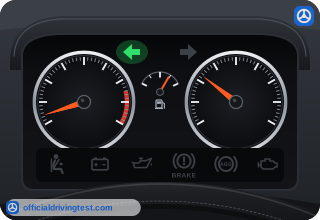
When should you use turn signals?
- Always, when changing lanes or turning
- Only when other vehicles are nearby
- Only at night
- Only when turning left
Show answer
Correct answer: Always, when changing lanes or turning
You should always use turn signals when changing lanes or turning.
Source: New Mexico Driver Manual (Version 11.19.19), page 10
-
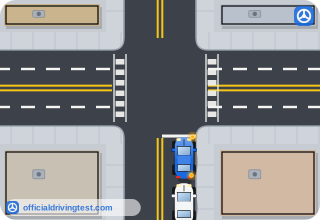
What should you avoid when making a right turn?
- Slowing down before you begin the turn
- Using your right turn signal early
- Checking traffic behind you first
- Swinging wide to the left before turning
Show answer
Correct answer: Swinging wide to the left before turning
On right turns, avoid swinging wide to the left before turning.
Source: New Mexico Driver Manual (Version 11.19.19), page 10
-
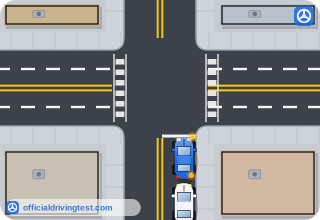
If you swing wide to the left before a right turn, what might the driver behind you do?
- Stop and wait for you to finish
- Try to pass you on the right
- Turn left at the same time
- Follow you around the turn
Show answer
Correct answer: Try to pass you on the right
If you swing wide, the driver behind you may think you are changing lanes or turning left and may try to pass you on the right.
Source: New Mexico Driver Manual (Version 11.19.19), page 10
-
When making a left turn, what should you be sure to leave room for?
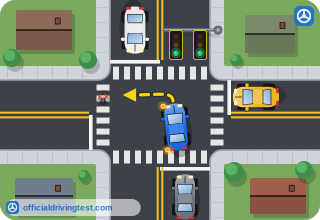
- Oncoming vehicles to turn left in front of you
- Vehicles behind you to pass you on the right
- Pedestrians to cross behind your vehicle
- Other drivers to merge into your lane
Show answer
Correct answer: Oncoming vehicles to turn left in front of you
When making a left turn, be sure to leave room for oncoming vehicles to turn left in front of you.
Source: New Mexico Driver Manual (Version 11.19.19), page 11
-
What should you avoid when making a left turn?
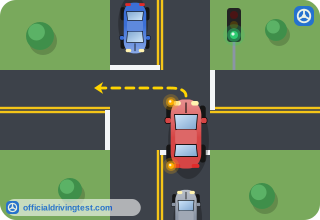
- Using your turn signal
- Slowing down before the turn
- Cutting the corner too sharply
- Looking for oncoming vehicles
Show answer
Correct answer: Cutting the corner too sharply
When making a left turn, avoid cutting the corner so sharply that you run into someone approaching from the left.
Source: New Mexico Driver Manual (Version 11.19.19), page 11