New Mexico: Right-of-way and turning
Who yields at intersections, four-way stops and traffic circles, turning on one-way streets, passing and keeping space around your car. Split into 4 shorter tests so you're not stuck in one long quiz.
Independent educational site · not affiliated with any government agency or DMV
Choose a part
Right-of-way and turning — Part 1
Questions in this part include: “When may you back a vehicle in a travel lane?”
StartRight-of-way and turning — Part 2
Questions in this part include: “What does the law say about the right-of-way?”
StartRight-of-way and turning — Part 3
Questions in this part include: “Before turning right, which traffic must you make sure is not in your way?”
StartRight-of-way and turning — Part 4
Questions in this part include: “Where is the greatest potential for conflict between a motorcyclist and other traffic?”
StartAll 72 Right-of-way and turning questions with answers
Choose a part above to take a practice test, or study every question and answer here.
Show the questions and answersHide the questions
-
When turning right or left at an intersection, what should you watch for?
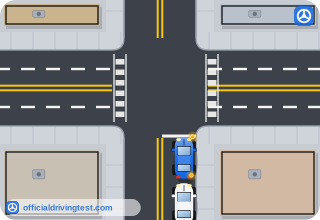
- Vehicles that are parked far behind you
- Trains that are approaching in the distance
- Vehicles that are changing lanes a block away
- Pedestrians crossing in front of your vehicle
Show answer
Correct answer: Pedestrians crossing in front of your vehicle
When turning right or left, you should watch for pedestrians crossing in front of your vehicle.
Source: New Mexico Driver Manual (Version 11.19.19), page 4
-
What are shared center lanes reserved for?
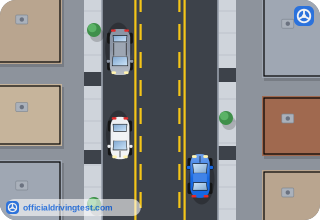
- Left turns by vehicles traveling in one direction only
- Passing slower vehicles in either direction
- Emergency vehicles traveling in both directions
- Left turns by vehicles traveling in both directions
Show answer
Correct answer: Left turns by vehicles traveling in both directions
Shared center lanes are reserved for left turns (or U-turns when permitted) and can be used by vehicles traveling in both directions.
Source: New Mexico Driver Manual (Version 11.19.19), page 9
-
When may you back a vehicle in a travel lane?
- When you miss your turn
- When the road behind you is clear
- When another driver is waiting behind you
- Only to parallel park
Show answer
Correct answer: Only to parallel park
You must never back a vehicle in any travel lane except to parallel park; it is illegal and unsafe.
Source: New Mexico Driver Manual (Version 11.19.19), page 10
-
What should you do if you miss your turn or exit?
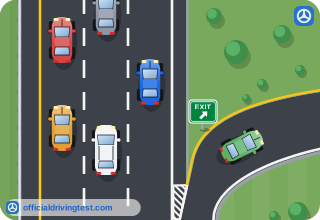
- Back up along the shoulder to the turn
- Stop in the lane and wait for a gap
- Go on to where you can safely turn around
- Back up slowly with your hazard lights on
Show answer
Correct answer: Go on to where you can safely turn around
Do not back up if you miss your turn or exit; go on to where you can safely turn around.
Source: New Mexico Driver Manual (Version 11.19.19), page 10
-
If you are confused about where to go while in a travel lane, what should you do instead of stopping there?
- Keep moving until you can safely pull off the road
- Stop and turn on your hazard lights
- Slow to a stop in the center travel lane
- Stop only long enough to let out a passenger
Show answer
Correct answer: Keep moving until you can safely pull off the road
You should not stop in travel lanes for any reason; keep moving until you can safely pull off the road.
Source: New Mexico Driver Manual (Version 11.19.19), page 10
-
On a road with two or more lanes traveling in the same direction, which lane should you stay in except to pass?
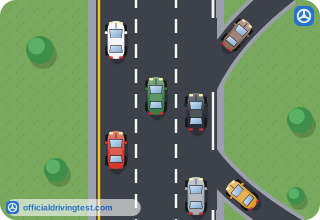
- The left lane
- The right lane
- The center lane
- The lane with the least traffic
Show answer
Correct answer: The right lane
On a road with two or more lanes in the same direction, you should stay in the right lane except to pass.
Source: New Mexico Driver Manual (Version 11.19.19), page 10
-
On a road with three or more lanes traveling in your direction and a lot of entering or exiting traffic, which lane should you use?
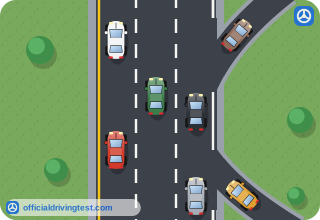
- The left-most lane
- The center travel lane
- The shoulder
- Whichever lane has the fewest cars
Show answer
Correct answer: The center travel lane
On a road with three or more lanes in the same direction, use the center travel lane if there is a lot of entering or exiting traffic.
Source: New Mexico Driver Manual (Version 11.19.19), page 10
-
When may you drive on the shoulder of the road?
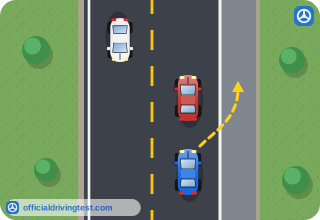
- When traffic ahead is moving slowly
- When you are passing a slower vehicle
- Only when told to do so by officials
- When the shoulder is paved
Show answer
Correct answer: Only when told to do so by officials
Unless officials tell you to, you must never drive on the shoulder of the road.
Source: New Mexico Driver Manual (Version 11.19.19), page 10
-
On multi-lane roads, which lane is intended to be used for passing slower vehicles?
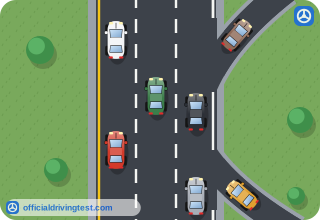
- The left-most lane
- The right-most lane
- The center lane
- The shoulder
Show answer
Correct answer: The left-most lane
On multi-lane roads, the left-most lane is intended to be used for passing slower vehicles.
Source: New Mexico Driver Manual (Version 11.19.19), page 10
-
According to the manual, what can happen if you pass on the right?
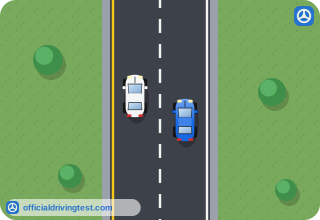
- The other driver will be unable to hear your horn and may speed up
- Your vehicle may be too wide to fit between the lanes
- Your headlights may blind the driver you are passing
- The other driver may have difficulty seeing you and suddenly change lanes
Show answer
Correct answer: The other driver may have difficulty seeing you and suddenly change lanes
If you pass on the right, the other driver may have difficulty seeing you and might suddenly change lanes in front of you.
Source: New Mexico Driver Manual (Version 11.19.19), page 10
-
May you pass on the shoulder if it is paved?
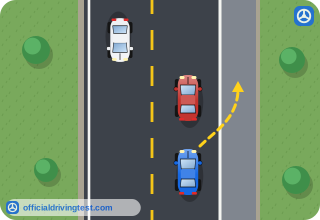
- Yes, if the shoulder is paved
- No, never pass on the shoulder, paved or not
- Yes, if the shoulder is wide enough for your vehicle
- Yes, if you sound your horn first
Show answer
Correct answer: No, never pass on the shoulder, paved or not
You must never pass on the shoulder, whether it is paved or not, because other drivers will never expect you there.
Source: New Mexico Driver Manual (Version 11.19.19), page 10
-
Where there are no signs or lane markings to control turning, which lane should you turn from?
- The center lane, whatever direction you plan to turn
- The lane with the least traffic in it at that moment
- The left-most lane, whatever direction you plan to turn
- The lane closest to the direction you want to go
Show answer
Correct answer: The lane closest to the direction you want to go
You should turn from the lane that is closest to the direction you want to go and turn into the lane closest to the one you came from.
Source: New Mexico Driver Manual (Version 11.19.19), page 10
-
Why should you turn from the closest lane into the lane closest to the one you came from when no signs or markings control the turn?
- You will be able to turn faster
- You will not need to use a turn signal
- You will cross the fewest lanes of traffic
- You will avoid stopping at the intersection
Show answer
Correct answer: You will cross the fewest lanes of traffic
Turning from the closest lane into the closest lane means you will cross the fewest lanes of traffic.
Source: New Mexico Driver Manual (Version 11.19.19), page 10
-
When should you use turn signals?
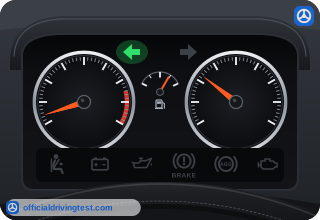
- Always, when changing lanes or turning
- Only when other vehicles are nearby
- Only at night
- Only when turning left
Show answer
Correct answer: Always, when changing lanes or turning
You should always use turn signals when changing lanes or turning.
Source: New Mexico Driver Manual (Version 11.19.19), page 10
-
What should you avoid when making a right turn?
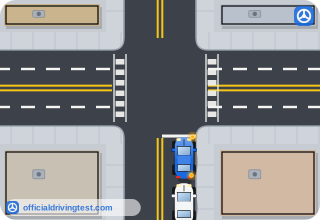
- Slowing down before you begin the turn
- Using your right turn signal early
- Checking traffic behind you first
- Swinging wide to the left before turning
Show answer
Correct answer: Swinging wide to the left before turning
On right turns, avoid swinging wide to the left before turning.
Source: New Mexico Driver Manual (Version 11.19.19), page 10
-
If you swing wide to the left before a right turn, what might the driver behind you do?
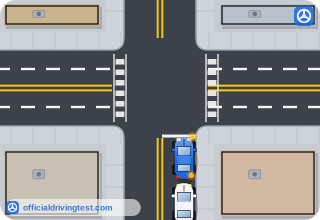
- Stop and wait for you to finish
- Try to pass you on the right
- Turn left at the same time
- Follow you around the turn
Show answer
Correct answer: Try to pass you on the right
If you swing wide, the driver behind you may think you are changing lanes or turning left and may try to pass you on the right.
Source: New Mexico Driver Manual (Version 11.19.19), page 10
-
When making a left turn, what should you be sure to leave room for?
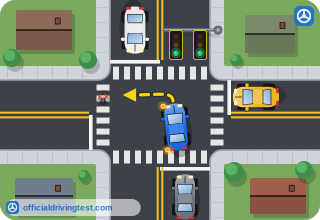
- Oncoming vehicles to turn left in front of you
- Vehicles behind you to pass you on the right
- Pedestrians to cross behind your vehicle
- Other drivers to merge into your lane
Show answer
Correct answer: Oncoming vehicles to turn left in front of you
When making a left turn, be sure to leave room for oncoming vehicles to turn left in front of you.
Source: New Mexico Driver Manual (Version 11.19.19), page 11
-
What should you avoid when making a left turn?
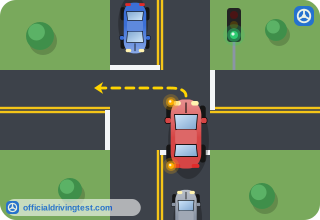
- Using your turn signal
- Slowing down before the turn
- Cutting the corner too sharply
- Looking for oncoming vehicles
Show answer
Correct answer: Cutting the corner too sharply
When making a left turn, avoid cutting the corner so sharply that you run into someone approaching from the left.
Source: New Mexico Driver Manual (Version 11.19.19), page 11
-
If signs or lane markings allow two or more turning lanes, what should you do during the turn?
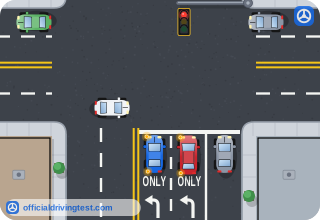
- Move into the left-most turning lane
- Move to the outside lane
- Change to the lane with fewer cars
- Stay in your lane
Show answer
Correct answer: Stay in your lane
Where signs or lane markings allow two or more turning lanes, you should stay in your lane during the turn.
Source: New Mexico Driver Manual (Version 11.19.19), page 11
-
What does the law say about the right-of-way?
- It says who must yield; it does not give anyone the right-of-way
- It gives the right-of-way to whichever driver is traveling faster
- It gives the right-of-way to the driver in the larger vehicle
- It gives the right-of-way to the driver who is turning right
Show answer
Correct answer: It says who must yield; it does not give anyone the right-of-way
The law says who must yield the right-of-way but does not give anyone the right-of-way.
Source: New Mexico Driver Manual (Version 11.19.19), page 11
-
Regardless of the circumstances, what must you do?
- Hold your speed and position whenever you have the right-of-way
- Sound your horn and continue when a pedestrian is in your path
- Do everything you can to avoid striking a pedestrian or another vehicle
- Stop only if the other driver has already come to a stop
Show answer
Correct answer: Do everything you can to avoid striking a pedestrian or another vehicle
You must do everything you can to prevent striking a pedestrian or another vehicle, regardless of the circumstances.
Source: New Mexico Driver Manual (Version 11.19.19), page 11
-
Whom must a driver turning left yield to?
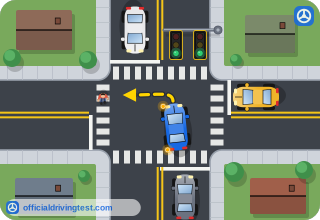
- Vehicles stopped behind the driver
- Only pedestrians in the crosswalk
- No one, because a turning driver goes first
- Oncoming vehicles going straight ahead
Show answer
Correct answer: Oncoming vehicles going straight ahead
Drivers turning left must yield to oncoming vehicles going straight ahead.
Source: New Mexico Driver Manual (Version 11.19.19), page 11
-
When entering a traffic circle or rotary, who must you yield to?
- Drivers entering the circle behind you
- Drivers already in the circle
- Only drivers who signal an exit
- No one, since you are entering the circle
Show answer
Correct answer: Drivers already in the circle
Drivers entering a traffic circle or rotary must yield to drivers already in the circle.
Source: New Mexico Driver Manual (Version 11.19.19), page 11
-
At an intersection with no stop sign, yield sign or traffic signal, who must you yield to?
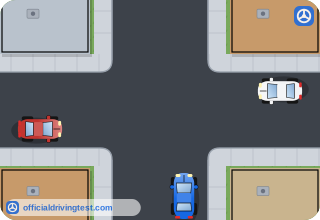
- Vehicles coming from the left
- Vehicles coming from behind
- Vehicles coming from the right
- Only the largest vehicle
Show answer
Correct answer: Vehicles coming from the right
At an intersection with no stop sign, yield sign or traffic signal, drivers must yield to vehicles coming from the right.
Source: New Mexico Driver Manual (Version 11.19.19), page 11
-
At a 4-way stop, who goes first?
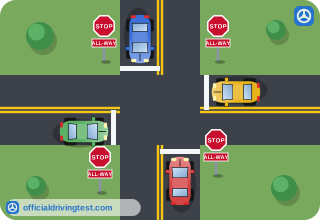
- The driver who arrives first, after stopping completely
- The driver in the largest vehicle at the intersection
- The driver who is traveling at the highest speed
- The driver who is on the main road through the area
Show answer
Correct answer: The driver who arrives first, after stopping completely
At a 4-way stop, the driver reaching the intersection first goes first, after coming to a complete stop.
Source: New Mexico Driver Manual (Version 11.19.19), page 11
-
If more than one vehicle arrives at a 4-way stop at the same time, which vehicle goes first?
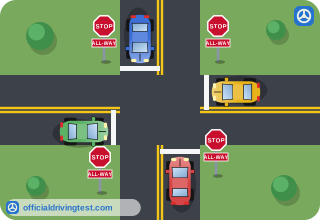
- The vehicle on the right
- The vehicle on the left
- The vehicle that signaled first
- The largest vehicle
Show answer
Correct answer: The vehicle on the right
If more than one vehicle arrives at a 4-way stop at the same time, the vehicle on the right goes first.
Source: New Mexico Driver Manual (Version 11.19.19), page 11
-
Whom must a driver entering a road from a driveway, alley or roadside yield to?
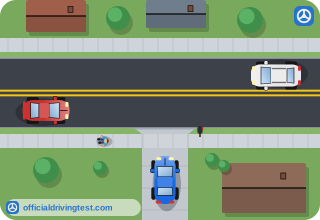
- Only vehicles coming from the right
- Vehicles already on the main road
- Only vehicles that are turning left
- No one, if the driver signals first
Show answer
Correct answer: Vehicles already on the main road
Drivers entering a road from a driveway, alley or roadside must yield to vehicles already on the main road.
Source: New Mexico Driver Manual (Version 11.19.19), page 11
-
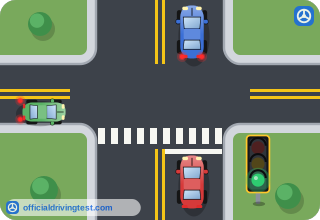
What should you do before entering an intersection when traffic ahead is backed up?
- Move into the intersection and stop behind the car ahead of you
- Enter the intersection and stop in the middle until traffic moves
- Wait until traffic ahead clears so you do not block the intersection
- Enter if your signal is green, whatever traffic is ahead
Show answer
Correct answer: Wait until traffic ahead clears so you do not block the intersection
You should wait until traffic ahead clears so that you are not blocking the intersection.
Source: New Mexico Driver Manual (Version 11.19.19), page 11
-
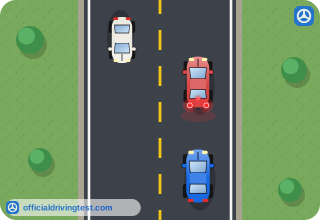
A driver is overtaking a vehicle traveling in the same direction, and that vehicle is slowing or coming to a stop. What must the overtaking driver do?
- Pass it on the right
- Sound the horn and pass quickly
- Assume it will yield
- Yield to that vehicle
Show answer
Correct answer: Yield to that vehicle
Drivers overtaking a vehicle traveling in the same direction must yield to that vehicle, even if it is slowing or coming to a stop.
Source: New Mexico Driver Manual (Version 11.19.19), page 12
-
On a road that has been made one-way, in which direction may you drive?
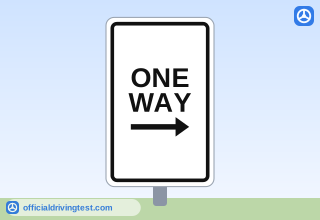
- Only in the direction the sign tells you to drive
- In either direction if no other vehicles are in sight
- In either direction when you are passing
- In either direction on the left side only
Show answer
Correct answer: Only in the direction the sign tells you to drive
You may only drive on a one-way road in the direction the sign tells you to drive.
Source: New Mexico Driver Manual (Version 11.19.19), page 12
-
What must the State do if it turns a public road into a one-way road?
- Mail a notice to every driver in the area
- Post signs that tell drivers it is one-way
- Paint the curbs along the road yellow
- Close the road for a trial period first
Show answer
Correct answer: Post signs that tell drivers it is one-way
If the State turns a public road into a one-way road, it must post signs that tell drivers it is one-way.
Source: New Mexico Driver Manual (Version 11.19.19), page 12
-
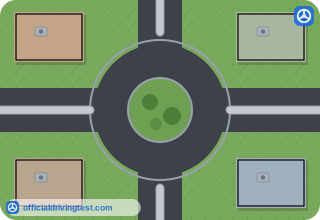
When you drive around a traffic circle, which side of the island must you drive on?
- The left side
- Either side
- The right side
- The side with the least traffic
Show answer
Correct answer: The right side
When you drive around a traffic circle you must drive on the right side of the island.
Source: New Mexico Driver Manual (Version 11.19.19), page 12
-
Where is looking to the sides especially important, because other vehicles or pedestrians may cross or enter your path?
- At intersections and railroad crossings
- On long, empty stretches of highway
- On roads with no side streets
- In your own driveway when parked
Show answer
Correct answer: At intersections and railroad crossings
The manual says you should look to the sides to make sure no one is coming, especially at intersections and railroad crossings.
Source: New Mexico Driver Manual (Version 11.19.19), page 15
-
How does the manual define intersections?
- Only places where two named streets cross
- Only places that have a traffic signal or a stop sign
- Any place where traffic merges or crosses
- Only places where a crosswalk is painted
Show answer
Correct answer: Any place where traffic merges or crosses
The manual says intersections are any place where traffic merges or crosses, including cross streets, side streets, driveways and shopping center or parking lot entrances.
Source: New Mexico Driver Manual (Version 11.19.19), page 16
-
Before you enter an intersection, in which direction should you look for approaching vehicles and crossing pedestrians?
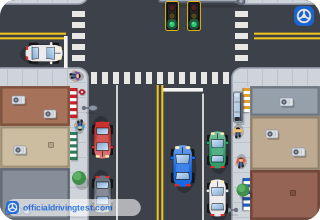
- Only to the left of your vehicle
- To both the left and right
- Only to the right of your vehicle
- Only straight ahead of your vehicle
Show answer
Correct answer: To both the left and right
The manual says to look to both the left and right for approaching vehicles and/or crossing pedestrians before you enter an intersection.
Source: New Mexico Driver Manual (Version 11.19.19), page 16
-
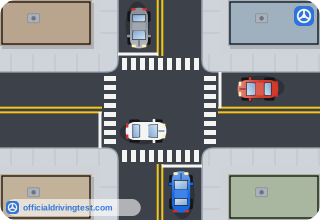
If you are stopped at an intersection, when should you look to both the left and right?
- Only once, when you first stop
- Only after you have started across
- Not at all, if you have a green light
- Just before you start moving
Show answer
Correct answer: Just before you start moving
The manual says that if stopped, you should look to both the left and right just before you start moving.
Source: New Mexico Driver Manual (Version 11.19.19), page 16
-
Why should you look across the intersection before you start to move?
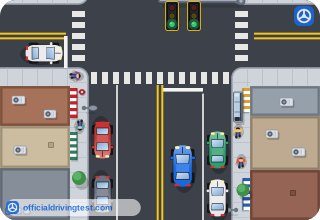
- To make sure the path is clear all the way through and you will not block it
- To check that no police vehicle is waiting on the cross street
- To decide whether you can speed up and beat the oncoming traffic
- To see whether the signal on the far side has turned green
Show answer
Correct answer: To make sure the path is clear all the way through and you will not block it
The manual says to look across the intersection to make sure the path is clear all the way through and you will not block it if you have to stop.
Source: New Mexico Driver Manual (Version 11.19.19), page 16
-
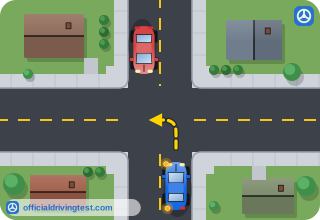
Before you turn left across oncoming traffic, what should you look for?
- A vehicle ahead that will turn first
- A turn lane with no signal
- A safe gap in the traffic
- A driver who will wave you through
Show answer
Correct answer: A safe gap in the traffic
The manual says to look for a safe gap in the traffic before you turn left across oncoming traffic.
Source: New Mexico Driver Manual (Version 11.19.19), page 16
-
Before you turn left, what should you check in the street you are turning into?
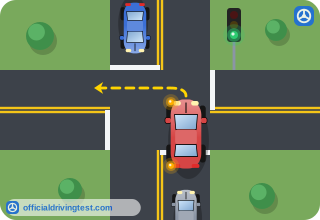
- That the street has more than one lane available
- That no vehicles or pedestrians are in your path
- That there are no traffic signs on the next block
- That no other driver is signaling a right turn
Show answer
Correct answer: That no vehicles or pedestrians are in your path
The manual says to look at the street you are turning into so that no vehicles or pedestrians in your path leave you stranded in the path of oncoming traffic.
Source: New Mexico Driver Manual (Version 11.19.19), page 16
-
Before turning right, which traffic must you make sure is not in your way?
- Traffic approaching from your right and oncoming traffic going straight
- Only traffic approaching from behind you in the right-hand lane
- Only the traffic signal, because other drivers will obey it
- Traffic approaching from your left and oncoming traffic turning left
Show answer
Correct answer: Traffic approaching from your left and oncoming traffic turning left
The manual says to make sure there is no traffic approaching from your left and no oncoming traffic turning left into your path before turning right.
Source: New Mexico Driver Manual (Version 11.19.19), page 16
-
Before you begin a right turn, what must you check for in addition to traffic?
- Pedestrians crossing where you will be turning
- Bicycles parked along the curb you are leaving
- Stop signs on the far side of the street
- Painted crosswalk lines on the pavement
Show answer
Correct answer: Pedestrians crossing where you will be turning
The manual says not to begin your turn without checking for pedestrians crossing where you will be turning.
Source: New Mexico Driver Manual (Version 11.19.19), page 16
-
According to the manual, when may you turn left on a red light from a one-way street into another one-way street?
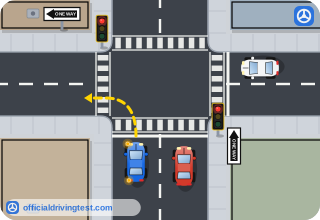
- Only when no pedestrians are nearby
- Unless it is prohibited
- Only when a green arrow is shown
- Never, because left turns need a two-way street
Show answer
Correct answer: Unless it is prohibited
The manual says that, besides turning right on red, you may also turn left from a one-way street into another one-way street unless prohibited.
Source: New Mexico Driver Manual (Version 11.19.19), page 16
-
Why should you look left and right at an intersection even if other traffic has a red light or a stop sign?
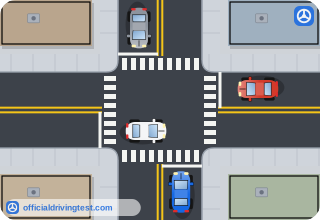
- Traffic signals are usually set to the wrong timing
- Stop signs only apply to some of the vehicles
- Red lights last only a few seconds at a time
- Some drivers do not obey traffic signals or signs
Show answer
Correct answer: Some drivers do not obey traffic signals or signs
The manual says not to rely on signals or signs to tell you no one will cross in front of you, because some drivers do not obey them.
Source: New Mexico Driver Manual (Version 11.19.19), page 16
-
When is it especially important to look left and right at an intersection?
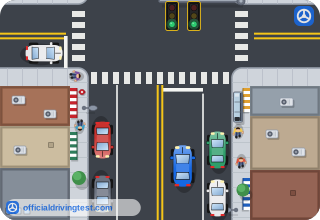
- Just after the light has turned green
- Only while your light is red
- Only when your light is flashing yellow
- Only after the light has been green for a full minute
Show answer
Correct answer: Just after the light has turned green
Just after the light turns green is when people on the cross street are most likely to hurry through the intersection before their light changes to red.
Source: New Mexico Driver Manual (Version 11.19.19), page 16
-
Besides reckless drivers, who does the manual say may not stop at an intersection?
- Drivers who are driving a bus or truck
- Drivers who have their headlights on
- Individuals who have been drinking
- Drivers who are looking for parking
Show answer
Correct answer: Individuals who have been drinking
The manual says others who may not stop are individuals who have been drinking or other reckless drivers.
Source: New Mexico Driver Manual (Version 11.19.19), page 16
-
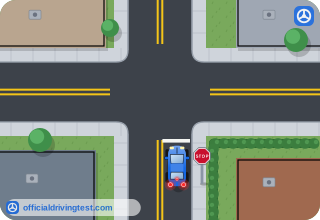
If you were stopped and your view of a cross street is blocked, what should you do?
- Accelerate into the intersection and look quickly
- Edge forward slowly until you can see
- Stay stopped until a driver on the cross street signals you
- Wait for the cross traffic to sound a horn
Show answer
Correct answer: Edge forward slowly until you can see
The manual says to edge forward slowly until you can see when your view of a cross street is blocked.
Source: New Mexico Driver Manual (Version 11.19.19), page 16
-
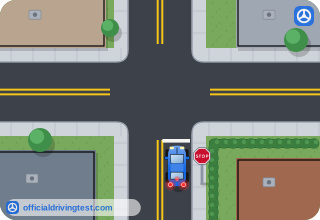
Why does moving forward slowly help when your view of a cross street is blocked?
- Your headlights make your vehicle easier for crossing drivers to see
- Crossing drivers will always stop when they see a slow vehicle
- Your engine can be heard by crossing drivers before you can see them
- Crossing drivers can see the front of your vehicle before you can see them
Show answer
Correct answer: Crossing drivers can see the front of your vehicle before you can see them
The manual says crossing drivers can see the front of your vehicle before you can see them, which gives them a chance to slow down and warn you if needed.
Source: New Mexico Driver Manual (Version 11.19.19), page 16
-
Why do you need space on both sides of your vehicle?
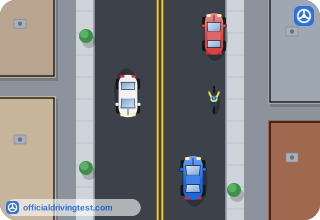
- To have room to turn or change lanes
- To let other vehicles park beside you
- To let the vehicle behind you pass
- To keep your mirrors from touching
Show answer
Correct answer: To have room to turn or change lanes
The manual says you need space on both sides of your vehicle to have room to turn or change lanes.
Source: New Mexico Driver Manual (Version 11.19.19), page 24
-
On a roadway that has two or more lanes, what should you do for vehicles entering the roadway?
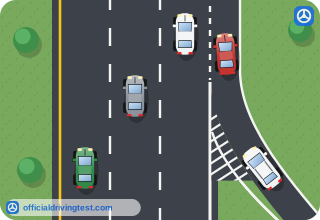
- Make room for them
- Speed up to pass them
- Sound your horn as they approach
- Stay in the lane closest to them
Show answer
Correct answer: Make room for them
The manual says to make room for vehicles entering on a roadway that has two or more lanes.
Source: New Mexico Driver Manual (Version 11.19.19), page 24
-
About how big a gap do you need to merge with other traffic?
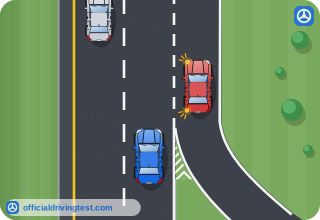
- About one second
- About four seconds
- About two seconds
- About ten seconds
Show answer
Correct answer: About four seconds
The manual says that anytime you want to merge with other traffic you need a gap of about four seconds.
Source: New Mexico Driver Manual (Version 11.19.19), page 24
-
If you want to cross several lanes, what should you do?
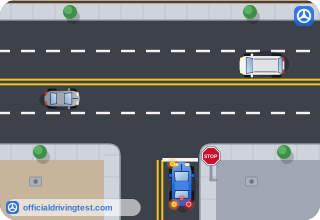
- Cross them all at once to save time
- Cross them quickly while sounding your horn
- Take them one at a time
- Wait until traffic is stopped in every lane
Show answer
Correct answer: Take them one at a time
The manual says that if you want to cross several lanes, you should take them one at a time.
Source: New Mexico Driver Manual (Version 11.19.19), page 24
-
When you enter traffic, what space do you need?
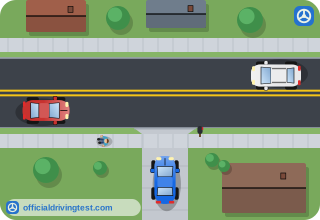
- Enough space to first turn and then get up to speed
- Enough space to first stop and then look both ways
- Enough space to turn and then brake in the lane
- Enough space to get all the way across the road
Show answer
Correct answer: Enough space to first turn and then get up to speed
The manual says that when you enter traffic you need enough space to first turn and then to get up to speed.
Source: New Mexico Driver Manual (Version 11.19.19), page 24
-
If you are turning left, what should you make sure of?
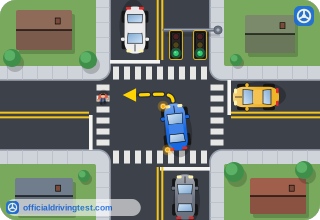
- That the vehicle behind you has slowed down enough to stop
- That you have a four second gap behind you
- That the oncoming driver has seen your signal
- That no vehicles or pedestrians are blocking your path
Show answer
Correct answer: That no vehicles or pedestrians are blocking your path
The manual says that if you are turning left you should make sure there are no vehicles or pedestrians blocking your path.
Source: New Mexico Driver Manual (Version 11.19.19), page 24
-
If you have the green light but vehicles are blocking your way across the intersection, what should you do?
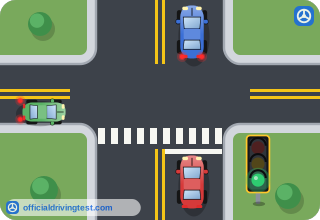
- Enter slowly and wait in the middle
- Not start across the intersection
- Enter and sound your horn
- Edge forward to block the cross traffic
Show answer
Correct answer: Not start across the intersection
The manual says that even if you have the green light you should not start across the intersection if there are vehicles blocking your way.
Source: New Mexico Driver Manual (Version 11.19.19), page 24
-
As a general rule, how many vehicles should you pass at one time?
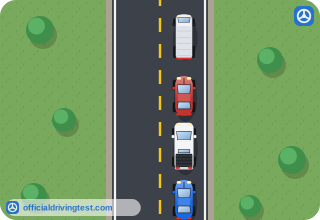
- Two vehicles
- Three vehicles
- As many as space allows
- Only one vehicle
Show answer
Correct answer: Only one vehicle
The manual says not to count on having enough time to pass several vehicles at once, and as a general rule to pass only one vehicle at a time.
Source: New Mexico Driver Manual (Version 11.19.19), page 24
-
At a speed of 55 mph, about how long do you need to pass?
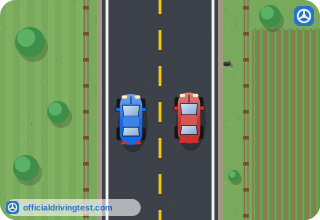
- About 10 seconds
- About 4 seconds
- About 6 seconds
- About 20 seconds
Show answer
Correct answer: About 10 seconds
The manual says that at 55 mph you need about 10 seconds to pass, so you need a 10 second gap in oncoming traffic and sight-distance.
Source: New Mexico Driver Manual (Version 11.19.19), page 25
-
What should you assume when your view is blocked by a curve or a hill?
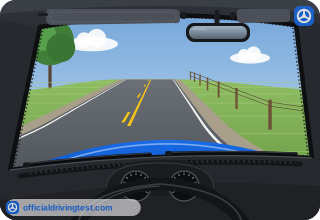
- That the road beyond is clear
- That drivers beyond it will be able to see you first
- That there is an oncoming vehicle just out of sight
- That the road beyond is a no-passing zone
Show answer
Correct answer: That there is an oncoming vehicle just out of sight
The manual says that when your view is blocked by a curve or a hill you should assume there is an oncoming vehicle just out of sight.
Source: New Mexico Driver Manual (Version 11.19.19), page 25
-
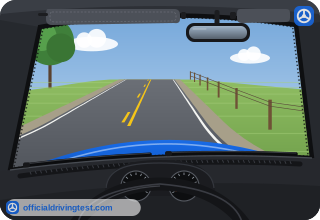
You should not start to pass if you are within what distance of a hill or curve?
- One-tenth of a mile
- Half a mile
- 500 feet
- One-third of a mile
Show answer
Correct answer: One-third of a mile
The manual says you have to be able to see at least one-third of a mile ahead, so you should not start to pass if you are within one-third of a mile of a hill or curve.
Source: New Mexico Driver Manual (Version 11.19.19), page 25
-
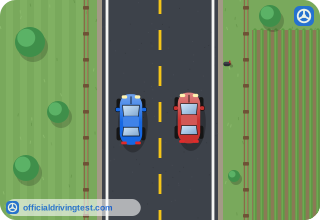
Where does the manual say it is dangerous to pass?
- On a straight road with no side streets or driveways
- Where a vehicle is likely to enter or cross the road
- On a road with a wide paved shoulder
- In a lane with no vehicles ahead
Show answer
Correct answer: Where a vehicle is likely to enter or cross the road
The manual says it is dangerous to pass where a vehicle is likely to enter or cross the road, such as intersections, railroad crossings and shopping center entrances.
Source: New Mexico Driver Manual (Version 11.19.19), page 25
-
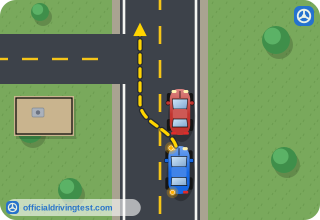
Why is it dangerous to pass near an intersection when drivers may turn right into the approaching lane?
- They always stop and wait for passing vehicles
- They are required to signal a full mile before they begin to turn
- They will not expect to find you approaching in their lane
- They can see your vehicle in their mirrors
Show answer
Correct answer: They will not expect to find you approaching in their lane
The manual says drivers turning right into the approaching lane will not expect to find you in their lane and may not even look your way.
Source: New Mexico Driver Manual (Version 11.19.19), page 25
-
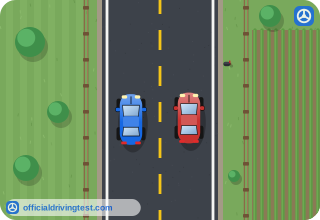
Which of these may cause you to lose your space, making it unsafe to pass?
- A patch of ice, a pothole or something on the road
- A clear lane ahead of the vehicle you are passing
- A road with a wide paved shoulder
- A passing lane that is free of traffic
Show answer
Correct answer: A patch of ice, a pothole or something on the road
The manual lists a patch of ice, a pothole or something on the road among the lane restrictions that may make it unsafe to pass.
Source: New Mexico Driver Manual (Version 11.19.19), page 25
-
Before you pass, what must you be sure you have?
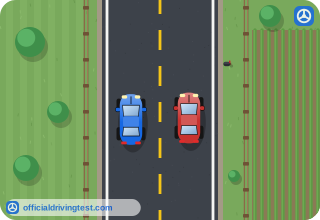
- Enough space to return to the driving lane
- A faster vehicle following right behind you
- A signal from the driver of the vehicle ahead
- A clear view of the next town on the road
Show answer
Correct answer: Enough space to return to the driving lane
The manual says not to pass unless you have enough space to return to the driving lane, and not to count on other drivers to make room for you.
Source: New Mexico Driver Manual (Version 11.19.19), page 25
-
After passing, when is it safe to return to the driving lane?
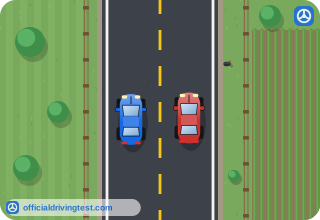
- As soon as the passed vehicle is even with your rear door
- When you can see both headlights of the passed vehicle in your mirror
- Once you have driven about one full car length past the vehicle you passed
- When the passed driver flashes lights to let you back in
Show answer
Correct answer: When you can see both headlights of the passed vehicle in your mirror
The manual says that when you can see both headlights of the vehicle you just passed in your rear-view mirror, it is safe to return to the driving lane.
Source: New Mexico Driver Manual (Version 11.19.19), page 25
-
Where is the greatest potential for conflict between a motorcyclist and other traffic?
- On freeways
- At intersections
- On long straight roads
- On mountain curves
Show answer
Correct answer: At intersections
The manual says the greatest potential for conflict between a rider and other traffic is at intersections.
Source: New Mexico Driver Manual (Version 11.19.19), page 38
-
Which is one of the two biggest dangers to a motorcyclist at an intersection?
- Cars stopped at a red light behind the rider
- Pedestrians waiting at the corner
- Bicyclists riding in the crosswalk
- Oncoming cars that turn left in front of the rider
Show answer
Correct answer: Oncoming cars that turn left in front of the rider
Oncoming cars that turn left in front of you, and cars on side streets that pull into your lane, are the two biggest dangers.
Source: New Mexico Driver Manual (Version 11.19.19), page 39
-
How should a motorcyclist treat "eye contact" with a driver at an intersection?
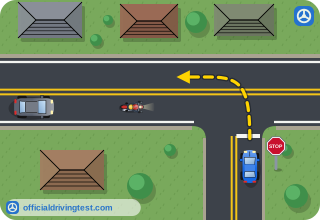
- Never count on it as a sign that the driver will yield
- As a sure sign that the driver will yield to the rider
- As proof that the driver will stay stopped for the rider
- As a signal that the rider can safely speed up and go
Show answer
Correct answer: Never count on it as a sign that the driver will yield
A driver may look right at a motorcyclist and still fail to see the rider, so never count on eye contact as a sign the driver will yield.
Source: New Mexico Driver Manual (Version 11.19.19), page 39
-
What can a motorcyclist do to increase the chance of being seen at intersections?
- Ride with the headlight off so it does not distract oncoming drivers
- Ride on the lane line so that both lanes of cars can see the rider
- Keep the headlight on and choose the lane position with the best view
- Ride in the portion of the lane farthest from oncoming traffic
Show answer
Correct answer: Keep the headlight on and choose the lane position with the best view
To be seen at intersections, ride with your headlight on in a lane position that provides the best view of oncoming traffic.
Source: New Mexico Driver Manual (Version 11.19.19), page 39
-
As a motorcyclist approaches an intersection, what should be covered to reduce reaction time?
- The horn and the headlight
- The clutch and both brakes
- The throttle and the mirrors
- The signal switch and the horn
Show answer
Correct answer: The clutch and both brakes
Cover the clutch and both brakes to reduce reaction time as you approach the intersection.
Source: New Mexico Driver Manual (Version 11.19.19), page 39
-
After entering an intersection, what should a motorcyclist do about oncoming vehicles preparing to turn?
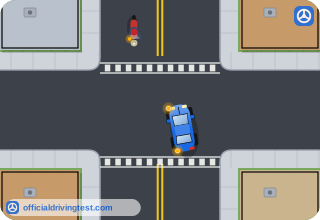
- Move toward them to be seen
- Stop in front of them
- Speed up and sound the horn
- Move away from them
Show answer
Correct answer: Move away from them
After entering the intersection, the rider should move away from oncoming vehicles preparing to turn.
Source: New Mexico Driver Manual (Version 11.19.19), page 39
-
Why should a motorcyclist not change speed or position radically in an intersection?
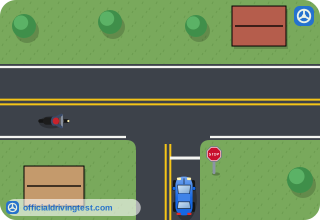
- The driver might think the rider is preparing to turn
- Tires lose traction on the painted lines and crosswalks
- Other riders behind the motorcycle may run into it
- The horn may not be heard over the sound of the engine
Show answer
Correct answer: The driver might think the rider is preparing to turn
Radical changes in speed or position may make a driver think the rider is preparing to turn.
Source: New Mexico Driver Manual (Version 11.19.19), page 39
-
At a blind intersection where there is a stop sign or stoplight, what should a motorcyclist do?
- Stop with the front wheel in the cross lane so that traffic can be seen
- Slow down and roll through to get a view of the cross street
- Stop there first, then edge forward and stop again short of the cross lane
- Sound the horn once and enter the intersection at low speed
Show answer
Correct answer: Stop there first, then edge forward and stop again short of the cross lane
The rider stops at the sign or light first, then edges forward and stops again just short of where the cross-traffic lane meets the rider's lane.
Source: New Mexico Driver Manual (Version 11.19.19), page 39
-
While leaning forward to look around buildings, parked cars or bushes at a blind intersection, what must stay out of the cross lane of travel?
- The rear wheel
- The front wheel
- The rider's left foot
- The side mirror
Show answer
Correct answer: The front wheel
The rider must make sure the front wheel stays out of the cross lane of travel while looking.
Source: New Mexico Driver Manual (Version 11.19.19), page 39