New Mexico: Emergencies and crashes — Part 1 Practice Test
Questions in this part include: “If you are having vehicle trouble and have to stop, what should you do if at all possible?” · “If available, what should you use to notify authorities that your vehicle has broken down?”
Independent educational site · not affiliated with any government agency or DMV
Ready? Test yourself
- Instant feedback with an explanation
- Every answer cites its source in the manual
- Your best score is saved on this device
- Keyboard: press 1 to 4 to answer and Enter for the next question
Questions are original and based on the official manual "New Mexico Driver Manual" (Version 11.19.19), New Mexico Motor Vehicle Division (MVD).
All 18 questions in this practice test
Take the test above first, then use this list to study. Tap “Show answer” to see the correct answer and explanation.
Show the questions and answersHide the questions
-
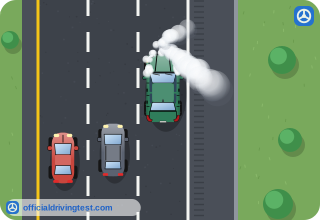
If your vehicle breaks down on a highway, what must you make sure of?
- That other drivers can see it
- That you have called a tow truck
- That the engine is turned off
- That the hood is raised
Show answer
Correct answer: That other drivers can see it
The manual says to make sure other drivers can see your vehicle, because crashes often occur when a driver did not see a stalled vehicle until too late.
Source: New Mexico Driver Manual (Version 11.19.19), page 19
-
If you are having vehicle trouble and have to stop, what should you do if at all possible?
- Stop in your lane so that other drivers notice you
- Coast to a stop just over the next hill and wait there
- Get your vehicle off the road and away from traffic
- Stop at the left edge of the roadway
Show answer
Correct answer: Get your vehicle off the road and away from traffic
The manual says to get your vehicle off the road and away from traffic if at all possible.
Source: New Mexico Driver Manual (Version 11.19.19), page 19
-
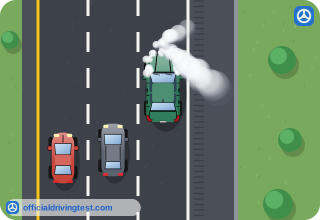
What should you turn on to show other drivers that you are having vehicle trouble?
- Your high-beam headlights
- Your fog lights
- Your parking lights
- Your emergency flashers
Show answer
Correct answer: Your emergency flashers
The manual says to turn on your emergency flashers to show you are having trouble.
Source: New Mexico Driver Manual (Version 11.19.19), page 19
-
If you cannot get your vehicle off the roadway, where should you try to stop?
- Just over a hill, with your flashers on
- Where other drivers have a clear view of it
- Just around a curve, with your flashers on
- Right beside a narrow bridge or a tunnel entrance
Show answer
Correct answer: Where other drivers have a clear view of it
The manual says to try to stop where other drivers have a clear view of your vehicle, and not just over a hill or just around a curve.
Source: New Mexico Driver Manual (Version 11.19.19), page 19
-
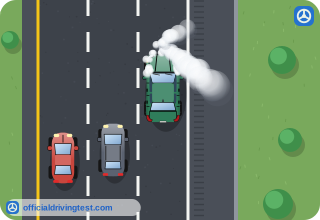
Where should you place emergency flares when your vehicle is stopped on the roadway?
- In front of the vehicle
- Beside the driver door
- Behind the vehicle
- On the roof of the vehicle
Show answer
Correct answer: Behind the vehicle
The manual says to place emergency flares behind the vehicle, which allows other drivers to change lanes if necessary.
Source: New Mexico Driver Manual (Version 11.19.19), page 19
-
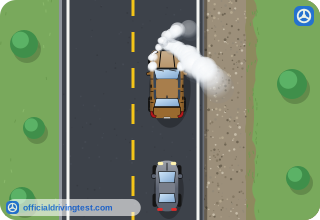
What does the manual say about changing a tire when your vehicle has broken down?
- Do not try it if you would have to be in a traffic lane
- Do it quickly with your emergency flashers on
- Do it only at night when traffic is light
- Do it only after flares are placed ahead of the vehicle
Show answer
Correct answer: Do not try it if you would have to be in a traffic lane
The manual says never to stand in the roadway and not to try to change a tire if it means being in a traffic lane.
Source: New Mexico Driver Manual (Version 11.19.19), page 19
-
If available, what should you use to notify authorities that your vehicle has broken down?
- Your 2-way radio or telephone
- A horn blown in short bursts
- A flashlight waved at passing cars
- A flag tied to your door handle
Show answer
Correct answer: Your 2-way radio or telephone
The manual says to use your 2-way radio or telephone, if available, to notify authorities of a breakdown.
Source: New Mexico Driver Manual (Version 11.19.19), page 19
-
If a very heavy downpour makes it hard to see well enough to drive, what should you do?
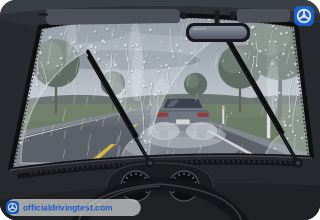
- Keep driving at 30 mph with your high beams on
- Pull off the road in a safe place and wait until it clears
- Stop in the traffic lane and turn on your emergency flashers
- Follow the taillights of the vehicle ahead
Show answer
Correct answer: Pull off the road in a safe place and wait until it clears
The manual says to pull off the road in a safe place and wait until the downpour clears.
Source: New Mexico Driver Manual (Version 11.19.19), page 23
-
Where does the manual say to find the recommended maintenance schedule for your vehicle?
- On the vehicle registration card
- In the New Mexico Driver Manual
- In the vehicle owner's manual
- On your insurance card
Show answer
Correct answer: In the vehicle owner's manual
You should follow the recommended maintenance schedule listed in the vehicle owner's manual, which greatly reduces the chance of a vehicle problem.
Source: New Mexico Driver Manual (Version 11.19.19), page 31
-
If your brakes stop working, what is the first thing the manual says to do?
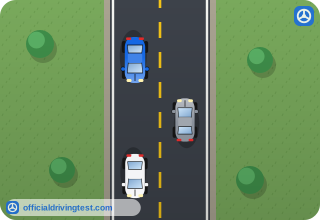
- Pump the brake pedal several times
- Pull the parking brake all the way at once
- Turn off the engine
- Shift to neutral
Show answer
Correct answer: Pump the brake pedal several times
If your brakes stop working, first pump the brake pedal several times, which will often build up enough brake pressure to stop.
Source: New Mexico Driver Manual (Version 11.19.19), page 31
-
How should you use the parking brake if pumping the brake pedal does not work?
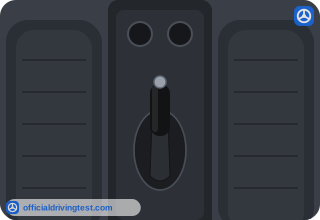
- Pull the handle quickly and hold it down firmly
- Pull the handle slowly, ready to release it if you skid
- Tap the handle on and off quickly and repeatedly
- Pull the handle only after shifting to neutral
Show answer
Correct answer: Pull the handle slowly, ready to release it if you skid
Pulling on the parking brake handle slowly keeps you from locking the rear wheels and causing a skid; be ready to release it if the vehicle skids.
Source: New Mexico Driver Manual (Version 11.19.19), page 31
-
If pumping the brake pedal and using the parking brake do not work, what does the manual say to do?
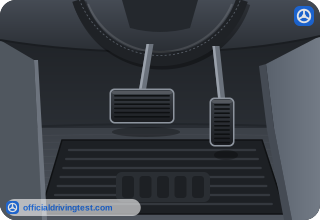
- Shift to neutral and coast to a stop on the shoulder
- Keep driving slowly to the nearest repair shop
- Turn off the engine and coast to a stop in the lane
- Shift to lower gears and look for a safe place to stop
Show answer
Correct answer: Shift to lower gears and look for a safe place to stop
If the other steps fail, start shifting to lower gears and look for a safe place to stop; make sure the vehicle is off the roadway and do not drive it without brakes.
Source: New Mexico Driver Manual (Version 11.19.19), page 31
-
If a tire suddenly goes flat, what should you do with the steering wheel?
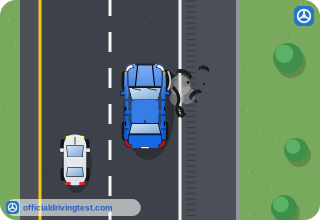
- Hold it tightly and keep the vehicle going straight
- Turn it sharply toward the side of the flat tire
- Let it move freely
- Turn it sharply away from the flat tire
Show answer
Correct answer: Hold it tightly and keep the vehicle going straight
In a tire blowout you should hold the steering wheel tightly and keep the vehicle going straight.
Source: New Mexico Driver Manual (Version 11.19.19), page 31
-
If a tire suddenly goes flat, how should you slow down?
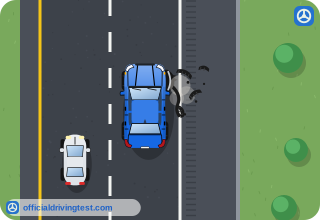
- Quickly, by braking as hard as you possibly can at once
- By shifting into reverse until the car slows down
- Gradually, by easing off the gas and braking lightly
- By pulling the parking brake all the way up at once
Show answer
Correct answer: Gradually, by easing off the gas and braking lightly
After a blowout you should slow down gradually, take your foot off the gas pedal and use the brakes lightly.
Source: New Mexico Driver Manual (Version 11.19.19), page 31
-
After a tire blowout, where should you stop if at all possible?
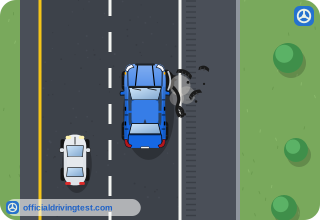
- In the lane you are driving in
- In the center of the road
- Off the road in a safe place, not on the road
- In the nearest traffic lane to the left
Show answer
Correct answer: Off the road in a safe place, not on the road
The manual says not to stop on the road if at all possible and to pull off the road in a safe place.
Source: New Mexico Driver Manual (Version 11.19.19), page 31
-
If the engine dies while you are driving, what should you expect from the steering?
- It may be hard to turn, but you can still turn it
- It will lock up and not turn at all anymore
- It will become much easier to turn than before
- It will pull steadily to the left side of the road
Show answer
Correct answer: It may be hard to turn, but you can still turn it
If the engine dies, keep a strong grip on the steering wheel; the steering may be difficult to turn, but you can turn it.
Source: New Mexico Driver Manual (Version 11.19.19), page 31
-
If the engine dies while you are driving, what about the brakes?
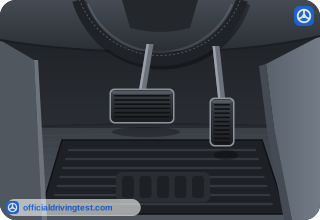
- They will not work at all until you restart the engine
- They will work with no extra effort at the pedal
- Only the parking brake will still work at all
- They still work, but you may need to push very hard
Show answer
Correct answer: They still work, but you may need to push very hard
After power failure you should pull off the roadway; the brakes will still work but you may have to push very hard on the brake pedal.
Source: New Mexico Driver Manual (Version 11.19.19), page 31
-
If your headlights suddenly go out, what does the manual say to try first?
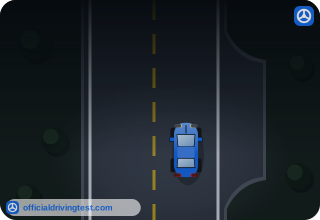
- Honk the horn and keep driving
- Try the headlight switch a few times
- Turn on the dome light
- Turn off all the lights and turn them on again at the next stop
Show answer
Correct answer: Try the headlight switch a few times
If your headlights suddenly go out, first try the headlight switch a few times.
Source: New Mexico Driver Manual (Version 11.19.19), page 31