New Mexico: Emergencies and crashes
Brake failure, blowouts, stuck gas pedals, skids, avoiding collisions, protecting yourself in a crash and what to do at the scene. Split into 4 shorter tests so you're not stuck in one long quiz.
Independent educational site · not affiliated with any government agency or DMV
Choose a part
Emergencies and crashes — Part 1
Questions in this part include: “If you are having vehicle trouble and have to stop, what should you do if at all possible?”
StartEmergencies and crashes — Part 2
Questions in this part include: “When should you pull off the road after your headlights fail?”
StartEmergencies and crashes — Part 3
Questions in this part include: “When should you stop at an accident you are not involved in?”
StartEmergencies and crashes — Part 4
Questions in this part include: “Whose names and addresses should you get after an accident?”
StartAll 72 Emergencies and crashes questions with answers
Choose a part above to take a practice test, or study every question and answer here.
Show the questions and answersHide the questions
-
If your vehicle breaks down on a highway, what must you make sure of?
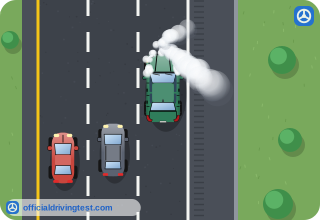
- That other drivers can see it
- That you have called a tow truck
- That the engine is turned off
- That the hood is raised
Show answer
Correct answer: That other drivers can see it
The manual says to make sure other drivers can see your vehicle, because crashes often occur when a driver did not see a stalled vehicle until too late.
Source: New Mexico Driver Manual (Version 11.19.19), page 19
-
If you are having vehicle trouble and have to stop, what should you do if at all possible?
- Stop in your lane so that other drivers notice you
- Coast to a stop just over the next hill and wait there
- Get your vehicle off the road and away from traffic
- Stop at the left edge of the roadway
Show answer
Correct answer: Get your vehicle off the road and away from traffic
The manual says to get your vehicle off the road and away from traffic if at all possible.
Source: New Mexico Driver Manual (Version 11.19.19), page 19
-
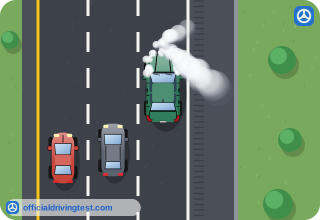
What should you turn on to show other drivers that you are having vehicle trouble?
- Your high-beam headlights
- Your fog lights
- Your parking lights
- Your emergency flashers
Show answer
Correct answer: Your emergency flashers
The manual says to turn on your emergency flashers to show you are having trouble.
Source: New Mexico Driver Manual (Version 11.19.19), page 19
-
If you cannot get your vehicle off the roadway, where should you try to stop?
- Just over a hill, with your flashers on
- Where other drivers have a clear view of it
- Just around a curve, with your flashers on
- Right beside a narrow bridge or a tunnel entrance
Show answer
Correct answer: Where other drivers have a clear view of it
The manual says to try to stop where other drivers have a clear view of your vehicle, and not just over a hill or just around a curve.
Source: New Mexico Driver Manual (Version 11.19.19), page 19
-
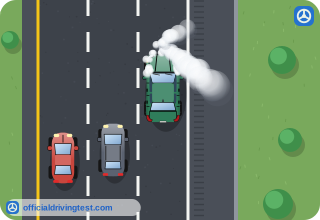
Where should you place emergency flares when your vehicle is stopped on the roadway?
- In front of the vehicle
- Beside the driver door
- Behind the vehicle
- On the roof of the vehicle
Show answer
Correct answer: Behind the vehicle
The manual says to place emergency flares behind the vehicle, which allows other drivers to change lanes if necessary.
Source: New Mexico Driver Manual (Version 11.19.19), page 19
-
What does the manual say about changing a tire when your vehicle has broken down?
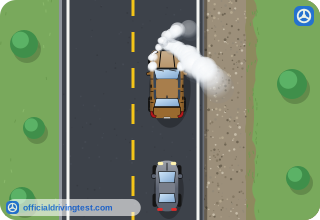
- Do not try it if you would have to be in a traffic lane
- Do it quickly with your emergency flashers on
- Do it only at night when traffic is light
- Do it only after flares are placed ahead of the vehicle
Show answer
Correct answer: Do not try it if you would have to be in a traffic lane
The manual says never to stand in the roadway and not to try to change a tire if it means being in a traffic lane.
Source: New Mexico Driver Manual (Version 11.19.19), page 19
-
If available, what should you use to notify authorities that your vehicle has broken down?
- Your 2-way radio or telephone
- A horn blown in short bursts
- A flashlight waved at passing cars
- A flag tied to your door handle
Show answer
Correct answer: Your 2-way radio or telephone
The manual says to use your 2-way radio or telephone, if available, to notify authorities of a breakdown.
Source: New Mexico Driver Manual (Version 11.19.19), page 19
-
If a very heavy downpour makes it hard to see well enough to drive, what should you do?
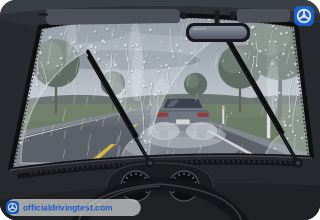
- Keep driving at 30 mph with your high beams on
- Pull off the road in a safe place and wait until it clears
- Stop in the traffic lane and turn on your emergency flashers
- Follow the taillights of the vehicle ahead
Show answer
Correct answer: Pull off the road in a safe place and wait until it clears
The manual says to pull off the road in a safe place and wait until the downpour clears.
Source: New Mexico Driver Manual (Version 11.19.19), page 23
-
Where does the manual say to find the recommended maintenance schedule for your vehicle?
- On the vehicle registration card
- In the New Mexico Driver Manual
- In the vehicle owner's manual
- On your insurance card
Show answer
Correct answer: In the vehicle owner's manual
You should follow the recommended maintenance schedule listed in the vehicle owner's manual, which greatly reduces the chance of a vehicle problem.
Source: New Mexico Driver Manual (Version 11.19.19), page 31
-
If your brakes stop working, what is the first thing the manual says to do?
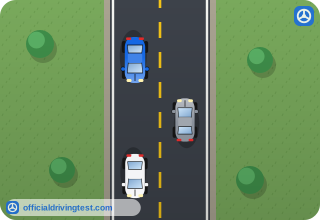
- Pump the brake pedal several times
- Pull the parking brake all the way at once
- Turn off the engine
- Shift to neutral
Show answer
Correct answer: Pump the brake pedal several times
If your brakes stop working, first pump the brake pedal several times, which will often build up enough brake pressure to stop.
Source: New Mexico Driver Manual (Version 11.19.19), page 31
-
How should you use the parking brake if pumping the brake pedal does not work?
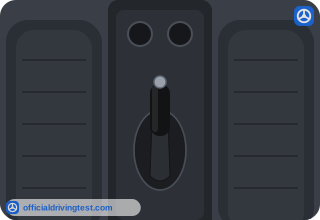
- Pull the handle quickly and hold it down firmly
- Pull the handle slowly, ready to release it if you skid
- Tap the handle on and off quickly and repeatedly
- Pull the handle only after shifting to neutral
Show answer
Correct answer: Pull the handle slowly, ready to release it if you skid
Pulling on the parking brake handle slowly keeps you from locking the rear wheels and causing a skid; be ready to release it if the vehicle skids.
Source: New Mexico Driver Manual (Version 11.19.19), page 31
-
If pumping the brake pedal and using the parking brake do not work, what does the manual say to do?
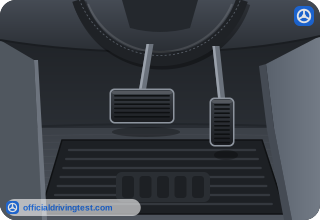
- Shift to neutral and coast to a stop on the shoulder
- Keep driving slowly to the nearest repair shop
- Turn off the engine and coast to a stop in the lane
- Shift to lower gears and look for a safe place to stop
Show answer
Correct answer: Shift to lower gears and look for a safe place to stop
If the other steps fail, start shifting to lower gears and look for a safe place to stop; make sure the vehicle is off the roadway and do not drive it without brakes.
Source: New Mexico Driver Manual (Version 11.19.19), page 31
-
If a tire suddenly goes flat, what should you do with the steering wheel?
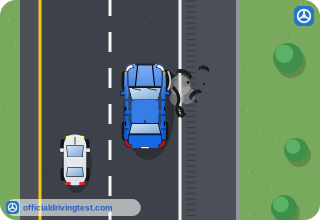
- Hold it tightly and keep the vehicle going straight
- Turn it sharply toward the side of the flat tire
- Let it move freely
- Turn it sharply away from the flat tire
Show answer
Correct answer: Hold it tightly and keep the vehicle going straight
In a tire blowout you should hold the steering wheel tightly and keep the vehicle going straight.
Source: New Mexico Driver Manual (Version 11.19.19), page 31
-
If a tire suddenly goes flat, how should you slow down?
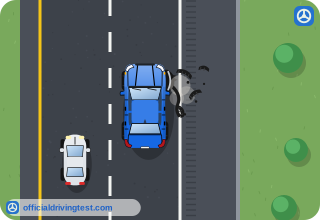
- Quickly, by braking as hard as you possibly can at once
- By shifting into reverse until the car slows down
- Gradually, by easing off the gas and braking lightly
- By pulling the parking brake all the way up at once
Show answer
Correct answer: Gradually, by easing off the gas and braking lightly
After a blowout you should slow down gradually, take your foot off the gas pedal and use the brakes lightly.
Source: New Mexico Driver Manual (Version 11.19.19), page 31
-
After a tire blowout, where should you stop if at all possible?
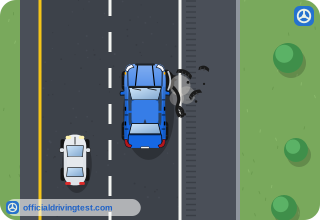
- In the lane you are driving in
- In the center of the road
- Off the road in a safe place, not on the road
- In the nearest traffic lane to the left
Show answer
Correct answer: Off the road in a safe place, not on the road
The manual says not to stop on the road if at all possible and to pull off the road in a safe place.
Source: New Mexico Driver Manual (Version 11.19.19), page 31
-
If the engine dies while you are driving, what should you expect from the steering?
- It may be hard to turn, but you can still turn it
- It will lock up and not turn at all anymore
- It will become much easier to turn than before
- It will pull steadily to the left side of the road
Show answer
Correct answer: It may be hard to turn, but you can still turn it
If the engine dies, keep a strong grip on the steering wheel; the steering may be difficult to turn, but you can turn it.
Source: New Mexico Driver Manual (Version 11.19.19), page 31
-
If the engine dies while you are driving, what about the brakes?
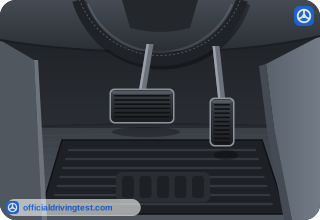
- They will not work at all until you restart the engine
- They will work with no extra effort at the pedal
- Only the parking brake will still work at all
- They still work, but you may need to push very hard
Show answer
Correct answer: They still work, but you may need to push very hard
After power failure you should pull off the roadway; the brakes will still work but you may have to push very hard on the brake pedal.
Source: New Mexico Driver Manual (Version 11.19.19), page 31
-
If your headlights suddenly go out, what does the manual say to try first?
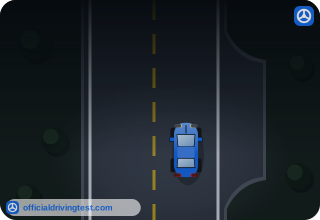
- Honk the horn and keep driving
- Try the headlight switch a few times
- Turn on the dome light
- Turn off all the lights and turn them on again at the next stop
Show answer
Correct answer: Try the headlight switch a few times
If your headlights suddenly go out, first try the headlight switch a few times.
Source: New Mexico Driver Manual (Version 11.19.19), page 31
-
If your headlights go out and the switch does not help, what does the manual say to put on?
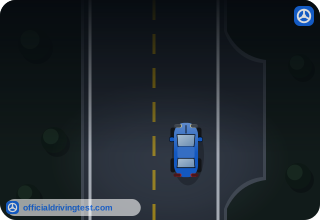
- Emergency flashers, turn signals or fog lights
- The dome light and the interior radio lights
- Only the parking brake, pulled all the way
- The horn, sounded continuously until you stop
Show answer
Correct answer: Emergency flashers, turn signals or fog lights
If trying the switch does not work, put on the emergency flashers, turn signals or fog lights if you have them, and pull off the road as soon as possible.
Source: New Mexico Driver Manual (Version 11.19.19), page 31
-
When should you pull off the road after your headlights fail?
- Only when you reach a gas station
- Only after the sun comes up
- As soon as possible
- Not until you reach your destination
Show answer
Correct answer: As soon as possible
After a headlight failure you should pull off the road as soon as possible.
Source: New Mexico Driver Manual (Version 11.19.19), page 31
-
If the gas pedal sticks and the motor keeps going faster and faster, what should you quickly do?
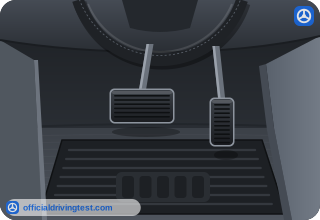
- Shift into park
- Shift to neutral
- Shift into reverse
- Pull the parking brake all the way
Show answer
Correct answer: Shift to neutral
With a stuck gas pedal, keep your eyes on the road and quickly shift to neutral.
Source: New Mexico Driver Manual (Version 11.19.19), page 31
-
After you shift to neutral because the gas pedal is stuck, what should you do?
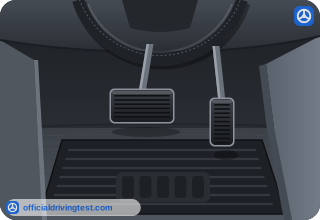
- Keep driving in neutral to a repair shop
- Shift back into drive and brake gently
- Stop in your lane and leave the engine running
- Pull off the road when safe and turn off the engine
Show answer
Correct answer: Pull off the road when safe and turn off the engine
After shifting to neutral, pull off the road when safe to do so and turn off the engine.
Source: New Mexico Driver Manual (Version 11.19.19), page 32
-
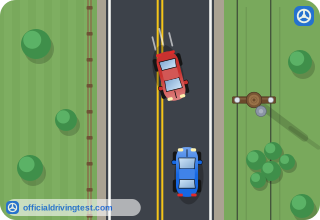
In avoiding a collision, what three options do drivers have?
- Stop, back up or honk
- Turn, honk or flash the lights
- Slow down, stop or reverse
- Stop, turn or speed up
Show answer
Correct answer: Stop, turn or speed up
The manual says that in avoiding a collision, drivers have three options: stop, turn or speed up.
Source: New Mexico Driver Manual (Version 11.19.19), page 32
-
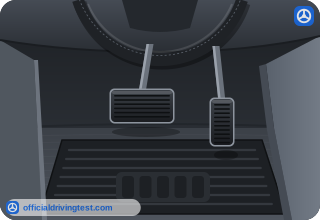
With an antilock braking system (ABS), what should you do if you need to stop quickly?
- Pump the brake pedal repeatedly
- Press on the brake pedal as hard as you can and keep pressing on it
- Press the brake lightly and then let up
- Press the brake and let up as soon as you feel it push back
Show answer
Correct answer: Press on the brake pedal as hard as you can and keep pressing on it
With ABS, press on the brake pedal as hard as you can and keep pressing on it.
Source: New Mexico Driver Manual (Version 11.19.19), page 32
-
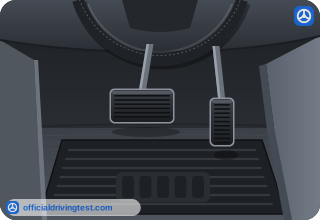
If you feel the brake pedal pushing back while the ABS is working, what should you do?
- Let up and press again
- Ease off the pedal until it stops pushing back
- Do not let up on the brake pedal
- Pump the pedal several times
Show answer
Correct answer: Do not let up on the brake pedal
The ABS system will only work with the brake pedal pushed down, so do not let up on the pedal when you feel it pushing back.
Source: New Mexico Driver Manual (Version 11.19.19), page 32
-
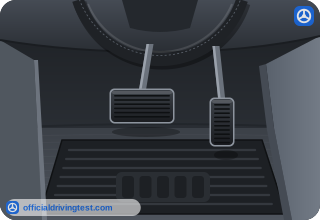
How hard should you brake to stop quickly in a vehicle without an antilock braking system?
- As hard as you can without locking the brakes
- As hard as you can, locking the wheels on purpose
- Lightly, never more than halfway down
- Only with the parking brake
Show answer
Correct answer: As hard as you can without locking the brakes
Without ABS, apply the brakes as hard as you can without locking them.
Source: New Mexico Driver Manual (Version 11.19.19), page 32
-
Without ABS, what should you do when the brakes lock up and the vehicle starts to skid?
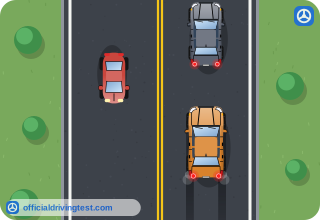
- Keep the brake pedal pushed down as hard as you can
- Let up on the pedal, then push down after the skid stops
- Shift to neutral and pull the parking brake all the way
- Turn the steering wheel sharply in both directions
Show answer
Correct answer: Let up on the pedal, then push down after the skid stops
If the brakes lock up, quickly let up on the pedal; as soon as the vehicle stops skidding, push down again and keep doing this until it has stopped.
Source: New Mexico Driver Manual (Version 11.19.19), page 32
-
In most cases, which can you do quicker?
- Stop the vehicle than turn it
- Stop and turn in about the same time
- Back up than turn
- Turn the vehicle than stop it
Show answer
Correct answer: Turn the vehicle than stop it
In most cases, you can turn the vehicle quicker than you can stop it, so you should consider turning to avoid a collision.
Source: New Mexico Driver Manual (Version 11.19.19), page 32
-
What can you do with ABS that you cannot safely do without it?
- Turn your vehicle while braking without skidding
- Stop without using the brake pedal
- Drive through a curve at any speed without a skid
- Turn the steering wheel sharply and plow ahead
Show answer
Correct answer: Turn your vehicle while braking without skidding
One aspect of having ABS is that you can turn your vehicle while braking without skidding.
Source: New Mexico Driver Manual (Version 11.19.19), page 32
-
Without ABS, how do you turn quickly to avoid a collision?
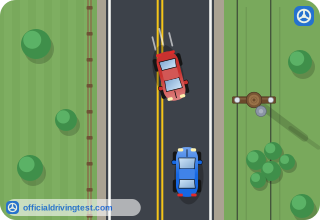
- Turn the steering wheel first, then brake hard
- Brake hard while turning the steering wheel
- Brake, then let up and turn the steering wheel
- Lock the front wheels, then turn sharply
Show answer
Correct answer: Brake, then let up and turn the steering wheel
Without ABS you should step on the brake pedal, then let up and turn the steering wheel.
Source: New Mexico Driver Manual (Version 11.19.19), page 32
-
Without ABS, why does braking before a quick turn help?
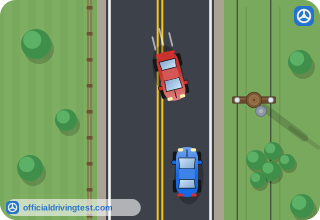
- It puts more weight on the rear tires for a better grip
- It locks the front wheels so the vehicle can pivot
- It puts more weight on the front tires for a quicker turn
- It turns off the skid control system while you turn
Show answer
Correct answer: It puts more weight on the front tires for a quicker turn
Braking will slow the vehicle, put more weight on the front tires, and allow for a quicker turn.
Source: New Mexico Driver Manual (Version 11.19.19), page 32
-
When may it be best or necessary to speed up to avoid a collision?
- When a vehicle is about to hit you from the side or behind
- When another vehicle is about to hit you from the front
- When you are approaching a red light at high speed
- When you are following another vehicle too closely
Show answer
Correct answer: When a vehicle is about to hit you from the side or behind
Speeding up may help when another vehicle is about to hit you from the side or from behind and there is room to the front to get out of danger.
Source: New Mexico Driver Manual (Version 11.19.19), page 32
-
After you speed up to avoid a collision, what should you be sure to do?
- Keep going at the higher speed for a while
- Stop in the nearest lane
- Switch to the left lane
- Slow down once the danger has passed
Show answer
Correct answer: Slow down once the danger has passed
The manual says to be sure to slow down once the danger has passed.
Source: New Mexico Driver Manual (Version 11.19.19), page 32
-
What causes skids?
- The engine is too hot
- The tires can no longer grip the road
- The brakes are too new
- The steering wheel is turned too slowly
Show answer
Correct answer: The tires can no longer grip the road
Skids are caused when the tires can no longer grip the road.
Source: New Mexico Driver Manual (Version 11.19.19), page 33
-
According to the manual, skids are caused by drivers doing what?
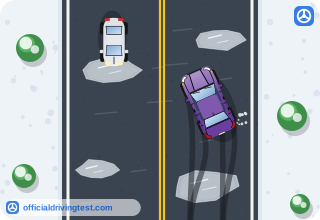
- Traveling too fast for conditions
- Driving too slowly on dry roads
- Using the horn too often
- Driving with ABS
Show answer
Correct answer: Traveling too fast for conditions
The manual states that skids are caused by drivers traveling too fast for conditions.
Source: New Mexico Driver Manual (Version 11.19.19), page 33
-
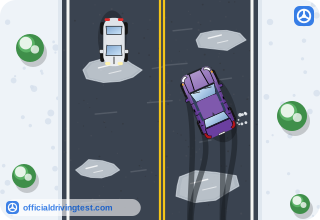
If your vehicle begins to skid, what should you do about the brake?
- Brake as hard as you can
- Pump the brake pedal quickly
- Stay off the brake
- Pull the parking brake all the way
Show answer
Correct answer: Stay off the brake
The manual says to stay off the brake because until the vehicle slows, your brakes will not work and could cause you to skid more.
Source: New Mexico Driver Manual (Version 11.19.19), page 33
-
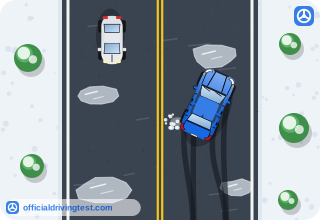
If your vehicle begins to skid, in which direction should you turn the steering wheel?
- Away from the direction you want to go
- In the direction you want the vehicle to go
- Toward the nearest ditch
- Toward the center line
Show answer
Correct answer: In the direction you want the vehicle to go
In a skid, turn the steering wheel in the direction you want the vehicle to go.
Source: New Mexico Driver Manual (Version 11.19.19), page 33
-
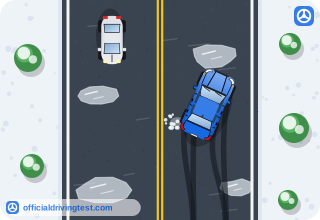
What can happen if you do not turn the steering wheel back the other way as the skidding vehicle straightens out?
- The brakes may lock and the vehicle may stop quickly
- The engine may stall and the steering may lock up
- The ABS may turn off and the brakes may fail
- It may swing around the other way and start a new skid
Show answer
Correct answer: It may swing around the other way and start a new skid
As soon as the vehicle begins to straighten out, turn the steering wheel back the other way, or it may swing around and start a new skid.
Source: New Mexico Driver Manual (Version 11.19.19), page 33
-
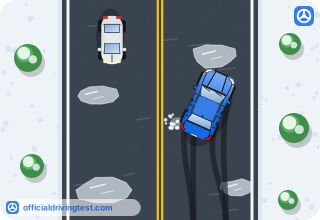
How long should you continue to correct your steering, left and right, during a skid?
- Until the vehicle comes to a complete stop
- Until you have reached the side of the road
- For at least ten seconds after the skid starts
- Until the vehicle is moving under your control
Show answer
Correct answer: Until the vehicle is moving under your control
Continue to correct your steering, left and right, until the vehicle is again moving down the road under your control.
Source: New Mexico Driver Manual (Version 11.19.19), page 33
-
If your vehicle is hit from the rear, what should you do?
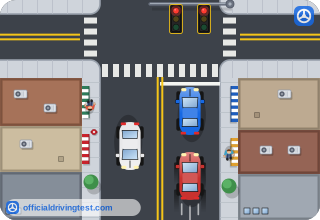
- Lean forward and brace against the steering wheel
- Slide down low in the seat and cover your head with your arms
- Press back into your seat, head against the head restraint
- Turn around and look out the rear window at the vehicle
Show answer
Correct answer: Press back into your seat, head against the head restraint
When hit from the rear, press yourself against the back of your seat with your head against the head restraint, and be ready to apply your brakes.
Source: New Mexico Driver Manual (Version 11.19.19), page 33
-
If your vehicle is hit from the side, your body will be thrown in which direction?
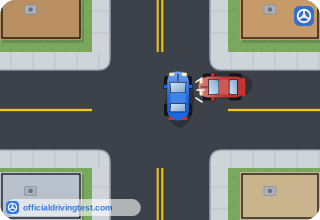
- Toward the side that is hit
- Away from the side that is hit
- Straight backward
- Straight forward
Show answer
Correct answer: Toward the side that is hit
If your vehicle is hit from the side, your body will be thrown towards the side that is hit.
Source: New Mexico Driver Manual (Version 11.19.19), page 33
-
If your vehicle is about to be hit from the front, what should you try to do?
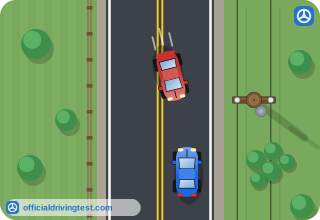
- Brake as hard as you can and hold your course
- Try to turn to get a glancing blow, not a head-on hit
- Steer straight ahead into the other vehicle's path
- Speed up as much as you can to reduce the impact
Show answer
Correct answer: Try to turn to get a glancing blow, not a head-on hit
If a collision is going to happen, try to turn the vehicle to have a "glancing blow" rather than being struck head on.
Source: New Mexico Driver Manual (Version 11.19.19), page 33
-
If your vehicle has an air bag, what happens to it after a crash?
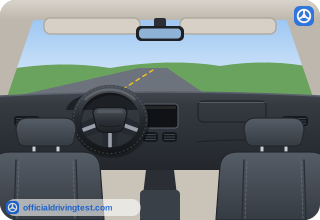
- It stays inflated and protects you until help arrives
- It inflates again if the vehicle has a second crash
- It must be reset by a mechanic before you can brake
- It deflates, so be ready to keep from hitting something
Show answer
Correct answer: It deflates, so be ready to keep from hitting something
The air bag will deflate following the crash, so be ready to prevent your vehicle from hitting something else.
Source: New Mexico Driver Manual (Version 11.19.19), page 33
-
When should you stop at an accident you are not involved in?
- Only if emergency help has not yet arrived
- Whenever you are able to see the crash
- Whenever you have a first aid kit
- Never, under any circumstances
Show answer
Correct answer: Only if emergency help has not yet arrived
The manual says not to stop at an accident unless you are involved or emergency help has not yet arrived.
Source: New Mexico Driver Manual (Version 11.19.19), page 33
-
Why should you never drive to the scene of an accident, fire or other disaster just to look?
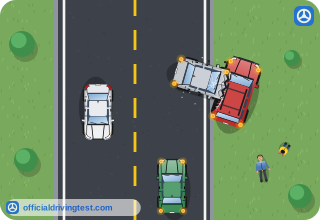
- You may be fined by the police officer at the scene
- You may damage your vehicle on debris in the road
- You may block the way for police and other rescue vehicles
- You may be asked to give a statement to the police
Show answer
Correct answer: You may block the way for police and other rescue vehicles
Driving to a scene just to look may block the way for police, firefighters, ambulances, tow trucks and other rescue vehicles.
Source: New Mexico Driver Manual (Version 11.19.19), page 33
-
If you are involved in an accident, what must you do?
- Stop only if someone is injured
- Stop only if the police are present
- Stop
- Stop only if the damage is large
Show answer
Correct answer: Stop
The manual states that if you are involved in an accident you must stop.
Source: New Mexico Driver Manual (Version 11.19.19), page 34
-
If you are involved in an accident with a parked vehicle, what must you try to do?
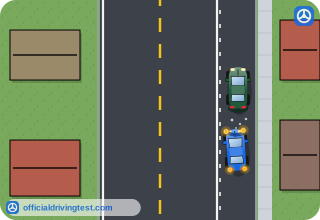
- Locate the owner
- Move the parked vehicle off the road
- Call the police and leave
- Leave a note and drive away without searching
Show answer
Correct answer: Locate the owner
If you are involved in an accident with a parked vehicle, you must try and locate the owner.
Source: New Mexico Driver Manual (Version 11.19.19), page 34
-
What does the manual say a basic vehicle emergency kit has?
- A spare tire, a jack, a flashlight and a tire gauge
- Jumper cables, a tow rope and a can of motor oil
- A fire extinguisher, a blanket and drinking water
- Emergency flares, first aid supplies and basic tools
Show answer
Correct answer: Emergency flares, first aid supplies and basic tools
These kits have emergency flares, first aid supplies and basic tools.
Source: New Mexico Driver Manual (Version 11.19.19), page 34
-
At an accident scene, what should you do with your vehicle if it can move?
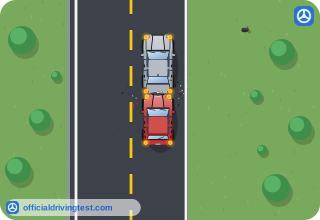
- Leave it in the lane so other drivers can see it
- Get it off the road so it does not block traffic
- Move it to the left lane next to the median
- Move it at least a mile away from the crash
Show answer
Correct answer: Get it off the road so it does not block traffic
If your vehicle can move, get it off the road so that it does not block traffic or cause another crash.
Source: New Mexico Driver Manual (Version 11.19.19), page 34
-
At an accident scene, why should you not stand or walk in traffic lanes?
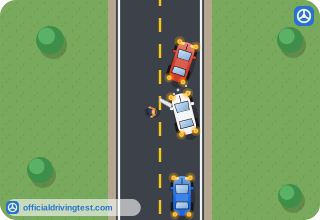
- You could be struck by another vehicle
- You could block the view of other drivers
- You could be fined by the police
- You could be asked to direct traffic
Show answer
Correct answer: You could be struck by another vehicle
The manual says not to stand or walk in traffic lanes because you could be struck by another vehicle.
Source: New Mexico Driver Manual (Version 11.19.19), page 34
-
At an accident scene, what should you do about the ignition of wrecked vehicles?
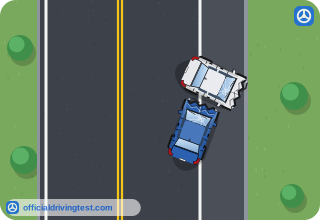
- Leave the engines running
- Turn on the emergency flashers only
- Turn it off
- Disconnect the battery of every vehicle
Show answer
Correct answer: Turn it off
The manual says to turn off the ignition of wrecked vehicles.
Source: New Mexico Driver Manual (Version 11.19.19), page 34
-
Why should you not smoke around wrecked vehicles?
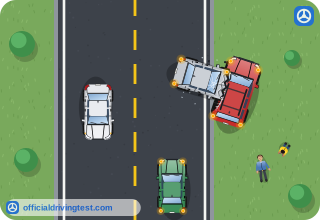
- Smoke can block the view of other drivers
- Fuel could have spilled and fire is a real danger
- Smoke can set off the air bags of the vehicles
- It is against the law only at night or in towns
Show answer
Correct answer: Fuel could have spilled and fire is a real danger
Do not smoke around wrecked vehicles because fuel could have spilled and fire is a real danger.
Source: New Mexico Driver Manual (Version 11.19.19), page 34
-
If power lines are down with wires in the road at an accident scene, what should you do?
- Move them off the road with a long stick
- Drive over them slowly
- Pull them aside with a rope
- Do not go near them
Show answer
Correct answer: Do not go near them
The manual says that if there are power lines down with wires in the road, you should not go near them.
Source: New Mexico Driver Manual (Version 11.19.19), page 34
-
How can you alert traffic of an accident so other vehicles will not be involved in the crash?
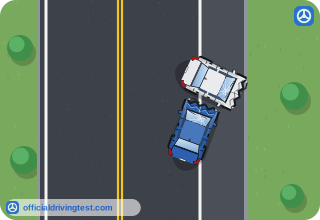
- Stand in the lane and wave your arms
- Leave your doors open and your engine on
- Turn off your own headlights and wait
- Use flares or other warning devices
Show answer
Correct answer: Use flares or other warning devices
Make sure other traffic will not be involved in the crash by using flares or other warning devices to alert traffic of the accident.
Source: New Mexico Driver Manual (Version 11.19.19), page 34
-
If someone is injured at an accident, what should you make sure of?
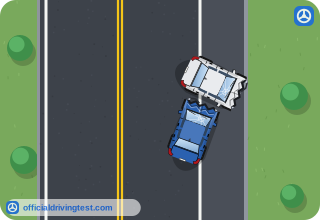
- The injured person has been driven to a hospital in a passing vehicle
- The police and emergency medical or rescue squad have been called
- The injured person has been moved off the road
- The injured person has been given something to drink
Show answer
Correct answer: The police and emergency medical or rescue squad have been called
The manual says to get help and make sure the police and emergency medical or rescue squad have been called.
Source: New Mexico Driver Manual (Version 11.19.19), page 34
-
When may you move an injured person?
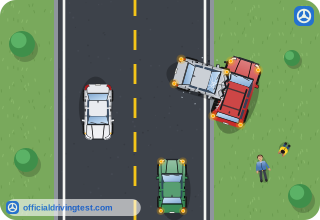
- If they ask you to move them to the side of the road
- If the ambulance has not arrived within ten minutes
- If they are in a burning vehicle or in other immediate danger
- If they are bleeding heavily from a wound on the leg
Show answer
Correct answer: If they are in a burning vehicle or in other immediate danger
Do not move the injured unless they are in a burning vehicle or in immediate danger of being hit by another vehicle, because moving a person can make injuries worse.
Source: New Mexico Driver Manual (Version 11.19.19), page 34
-
At an accident, whom should you help first?
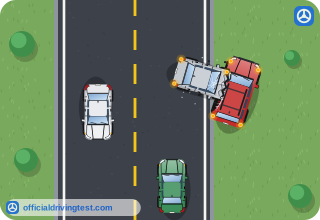
- Anyone who is not already walking and talking
- Anyone who is talking loudly
- The driver closest to you
- The person with the most visible damage to their vehicle
Show answer
Correct answer: Anyone who is not already walking and talking
The manual says to first help anyone who is not already walking and talking.
Source: New Mexico Driver Manual (Version 11.19.19), page 34
-
When helping an injured person, what should you check for first and then second?
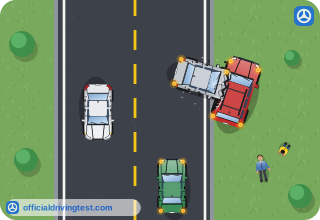
- Bleeding first, then breathing
- Breathing first, then bleeding
- Broken bones first, then bleeding
- Bleeding first, then broken bones
Show answer
Correct answer: Breathing first, then bleeding
The manual says to check for breathing and then check for bleeding.
Source: New Mexico Driver Manual (Version 11.19.19), page 34
-
If an injured person is bleeding, what should you do?
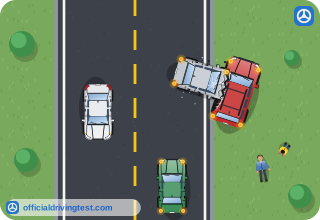
- Wrap the wound loosely and let it bleed freely at first
- Sit the person up and give a little water to drink
- Wait for help without touching the person at all
- Apply pressure directly on the wound with a hand or cloth
Show answer
Correct answer: Apply pressure directly on the wound with a hand or cloth
Apply pressure directly on the wound with your hand or a cloth; even severe bleeding can almost always be stopped or slowed this way.
Source: New Mexico Driver Manual (Version 11.19.19), page 34
-
What should you give an injured person to drink?
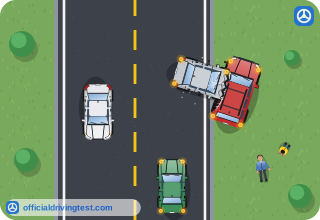
- Nothing, not even water
- Only small sips of water
- Warm tea or soup
- Juice or a soft drink
Show answer
Correct answer: Nothing, not even water
The manual says not to give injured persons anything to drink, not even water.
Source: New Mexico Driver Manual (Version 11.19.19), page 34
-
To help prevent an injured person from going into shock, what should you do?
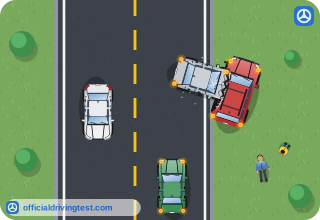
- Keep them standing and walking
- Give them a warm drink to sip
- Cover them with a blanket or coat
- Splash cold water on their face
Show answer
Correct answer: Cover them with a blanket or coat
To help prevent shock, cover the injured person with a blanket or coat to keep them warm.
Source: New Mexico Driver Manual (Version 11.19.19), page 34
-
Whose names and addresses should you get after an accident?
- Only the drivers of the other vehicles
- Only the injured persons and the police
- All people involved and any witnesses
- Only the drivers and the police officer
Show answer
Correct answer: All people involved and any witnesses
Get the names and addresses of all people involved in the accident and any witnesses, including injured persons.
Source: New Mexico Driver Manual (Version 11.19.19), page 34
-
Which of these should you exchange with other drivers involved in a crash?
- Your insurance company and policy number
- Your Social Security number and birth date
- Your employer's name and phone number
- The price you paid for your vehicle
Show answer
Correct answer: Your insurance company and policy number
The manual says to exchange name, address, driver license number, vehicle information and the insurance company and policy number if available.
Source: New Mexico Driver Manual (Version 11.19.19), page 34
-
If you cannot find the owner of a parked vehicle you hit, what should you do?
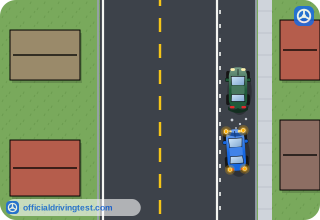
- Leave a note with only your license plate number
- Wait with the vehicle until the police come to take a report
- Drive away, since nobody saw the accident happen
- Leave a note with how to reach you and the date and time
Show answer
Correct answer: Leave a note with how to reach you and the date and time
If you cannot find the owner, leave a note in a place where it can be seen, saying how the owner can reach you and giving the date and time of the accident.
Source: New Mexico Driver Manual (Version 11.19.19), page 34
-
A dog chases a motorcyclist. What does the manual say to do?
- Kick at the animal to scare it away from the motorcycle
- Stop and wait beside the animal until it decides to leave
- Shift down, approach the animal slowly, then speed up and leave it
- Speed up right away and ride off without slowing or shifting
Show answer
Correct answer: Shift down, approach the animal slowly, then speed up and leave it
If chased, shift down and approach the animal slowly, then speed up and leave it behind; do not kick at the animal.
Source: New Mexico Driver Manual (Version 11.19.19), page 38
-
What is a motorcycle "wobble"?
- A skid of the rear wheel on wet or oily pavement at high speed
- A slow leak that steadily lowers the pressure in a front tire
- A sway of the whole motorcycle in a strong gusty crosswind
- The front wheel and handlebars suddenly shake from side to side
Show answer
Correct answer: The front wheel and handlebars suddenly shake from side to side
A wobble occurs when the front wheel and handlebars suddenly start to shake from side to side at any speed.
Source: New Mexico Driver Manual (Version 11.19.19), page 39
-
To what can most motorcycle wobbles be traced?
- Improper loading, unsuitable accessories, or incorrect tire pressure
- Using the high beam on a dark road at night or in fog
- Riding too slowly on straight, level roads in daylight
- Cold weather and a worn-out clutch lever on the handlebars
Show answer
Correct answer: Improper loading, unsuitable accessories, or incorrect tire pressure
Most wobbles can be traced to improper loading, unsuitable accessories, or incorrect tire pressure.
Source: New Mexico Driver Manual (Version 11.19.19), page 39
-
What happens if a rider tries to "accelerate out of a wobble"?
- The wobble will stop sooner
- The front tire will grip the road better
- It will only make the cycle more unstable
- The throttle will lock open
Show answer
Correct answer: It will only make the cycle more unstable
Trying to accelerate out of a wobble will only make the cycle more unstable.
Source: New Mexico Driver Manual (Version 11.19.19), page 39
-
What should a rider do with the throttle when the motorcycle starts to wobble?
- Open it wide until the shaking stops
- Close it gradually to slow the motorcycle
- Leave it alone and brake gently
- Close it suddenly and brake hard
Show answer
Correct answer: Close it gradually to slow the motorcycle
The rider should close the throttle gradually to slow the motorcycle.
Source: New Mexico Driver Manual (Version 11.19.19), page 39
-
What should a rider do about the brakes during a wobble?
- Apply the front brake only, to slow down quickly
- Apply both brakes firmly, to stop the shaking
- Apply the rear brake only, to keep the wheel straight
- Not apply them, because braking could make the wobble worse
Show answer
Correct answer: Not apply them, because braking could make the wobble worse
The rider should not apply the brakes during a wobble, because braking could make the wobble worse.
Source: New Mexico Driver Manual (Version 11.19.19), page 39
-
During a wobble, where should a rider move his or her weight?
- As far forward and down as possible
- As far back and up as possible
- Toward the left side of the seat
- Off the seat and onto the footpegs
Show answer
Correct answer: As far forward and down as possible
The manual says to move your weight as far forward and down as possible.
Source: New Mexico Driver Manual (Version 11.19.19), page 39
-
What should a rider do as soon as possible after a wobble starts?
- Ride on to the next town before stopping
- Keep riding until the wobble has stopped
- Pull off the road to fix the problem
- Park in the traffic lane and wait for help
Show answer
Correct answer: Pull off the road to fix the problem
The rider should pull off the road as soon as possible to fix the problem.
Source: New Mexico Driver Manual (Version 11.19.19), page 39