New Jersey: Seat belts & child safety
New Jersey seat belt, child car seat and air bag rules. Split into 3 shorter tests so you're not stuck in one long quiz.
Independent educational site · not affiliated with any government agency or DMV
Choose a part
Seat belts & child safety — Part 1
Questions in this part include: “Under New Jersey's GDL restrictions, who must wear a seat belt when a permit or probationary license holder is driving?”
StartSeat belts & child safety — Part 2
Questions in this part include: “In most new vehicles, where can the shoulder belt be adjusted to improve its fit?”
StartSeat belts & child safety — Part 3
Questions in this part include: “Federal safety standards require manufacturers to equip which new vehicles with air bags?”
StartAll 59 Seat belts & child safety questions with answers
Choose a part above to take a practice test, or study every question and answer here.
Show the questions and answersHide the questions
-
Under New Jersey's GDL restrictions, who must wear a seat belt when a permit or probationary license holder is driving?
- Only passengers under 18
- The driver and all passengers
- Only the driver
- The driver and the front-seat passenger
Show answer
Correct answer: The driver and all passengers
New Jersey's GDL restrictions require the permit or probationary license holder and all passengers to wear seat belts.
Source: New Jersey Driver Manual (2026), page 18 · Open this page in the manual (Manual page 18)
-
In New Jersey, who must wear a seat belt in a passenger vehicle such as a car, van, pickup truck or SUV?
- The driver and all passengers
- Only the driver and the front-seat passenger
- Only the driver and passengers under age 18
- Only passengers under age 8
Show answer
Correct answer: The driver and all passengers
New Jersey law requires the driver and all passengers of a passenger vehicle to wear a seat belt.
Source: New Jersey Driver Manual (2026), page 40 · Open this page in the manual (Manual page 40)
-
In New Jersey, not wearing a seat belt is a primary offense for which occupants?
- Only the driver
- Every occupant, including back-seat passengers 18 and older
- The driver, the front-seat passenger and children under 18
- Only children under age 8
Show answer
Correct answer: The driver, the front-seat passenger and children under 18
Failure of the driver, the front-seat passenger and children under 18 to buckle up is a primary offense; unbuckled back-seat adults fall under a secondary law.
Source: New Jersey Driver Manual (2026), page 40 · Open this page in the manual (Manual page 40)
-
In New Jersey, the driver is responsible for making sure that all passengers under what age wear seat belts?
- 21
- 18
- 8
- 16
Show answer
Correct answer: 18
The driver is responsible for all passengers under age 18; front-seat passengers 18 and over are responsible for themselves.
Source: New Jersey Driver Manual (2026), page 40 · Open this page in the manual (Manual page 40)
-
In New Jersey, who is responsible for a front-seat passenger aged 18 or older wearing a seat belt?
- The vehicle's registered owner
- The driver
- The driver and the owner together
- The passenger
Show answer
Correct answer: The passenger
Front-seat passengers 18 years of age and over are responsible for buckling up themselves.
Source: New Jersey Driver Manual (2026), page 40 · Open this page in the manual (Manual page 40)
-
Can a New Jersey police officer stop a motorist only because of a seat belt violation?
- No, only if another violation is also seen
- Only if the unbelted person is under age 8
- Yes, that reason alone is enough
- Only on highways with a speed limit of 55 mph or more
Show answer
Correct answer: Yes, that reason alone is enough
A police officer can stop a motorist solely for a violation of the seat belt law.
Source: New Jersey Driver Manual (2026), page 40 · Open this page in the manual (Manual page 40)
-
In New Jersey, when may an unbuckled back-seat passenger aged 18 or older be issued a summons?
- When the vehicle is stopped for another reason
- Only when the vehicle is driven at night
- Any time an officer sees the passenger unbuckled
- Never, because adult back-seat passengers are exempt
Show answer
Correct answer: When the vehicle is stopped for another reason
Under a secondary law, unbuckled back-seat occupants 18 and older may be issued a summons if the vehicle is stopped for another reason.
Source: New Jersey Driver Manual (2026), page 40 · Open this page in the manual (Manual page 40)
-
A New Jersey driver with a GDL permit or probationary license must make sure seat belts are used by whom?
- The driver and every passenger, in any seat
- The driver and the front-seat passenger only
- Only passengers under age 18
- Only the driver
Show answer
Correct answer: The driver and every passenger, in any seat
GDL permit and probationary license holders must wear seat belts and must require all passengers seated anywhere in the vehicle to use them.
Source: New Jersey Driver Manual (2026), page 40 · Open this page in the manual (Manual page 40)
-
Based on when it was built, which passenger vehicle is exempt from New Jersey's seat belt law?
- One manufactured before January 1, 1981
- One manufactured before January 1, 1998
- One manufactured before July 1, 1966
- Any vehicle more than 25 years old
Show answer
Correct answer: One manufactured before July 1, 1966
Passenger vehicles manufactured before July 1, 1966 are exempt, as are vehicles not required by federal law to have seat belt systems.
Source: New Jersey Driver Manual (2026), page 40 · Open this page in the manual (Manual page 40)
-
To be exempt from New Jersey's seat belt law for a physical or medical reason, the reason must be:
- Explained in person to the officer at the traffic stop
- Printed on the vehicle's registration
- Approved by your insurance company
- Verified in writing by a licensed physician
Show answer
Correct answer: Verified in writing by a licensed physician
A physical or medical reason that makes someone unable to wear a seat belt is an exemption only when verified in writing by a licensed physician.
Source: New Jersey Driver Manual (2026), page 40 · Open this page in the manual (Manual page 40)
-
Under New Jersey law, what must the driver of a passenger vehicle do for a passenger who uses a wheelchair?
- Nothing extra, because wheelchair users are exempt from these rules
- Secure them in a fastened wheelchair and occupant securement device
- Move the passenger to the front seat and use only the lap belt
- Leave the wheelchair unfastened as long as the passenger holds on tightly
Show answer
Correct answer: Secure them in a fastened wheelchair and occupant securement device
The driver must secure a passenger who uses a wheelchair in a properly adjusted and fastened wheelchair and occupant securement device.
Source: New Jersey Driver Manual (2026), page 40 · Open this page in the manual (Manual page 40)
-
According to the New Jersey Driver Manual, seat belts improve a motorist's chances of surviving a crash by about how much?
- 35 percent
- 60 percent
- 90 percent
- 20 percent
Show answer
Correct answer: 60 percent
The manual says seat belts can improve a motorist's chances of surviving a crash by 60 percent.
Source: New Jersey Driver Manual (2026), page 40 · Open this page in the manual (Manual page 40)
-
How much better are a motorist's chances of surviving a crash when wearing both a seat belt and a shoulder strap?
- One and a half times better
- Ten times better
- Three to four times better
- Twice as good
Show answer
Correct answer: Three to four times better
Wearing both a seat belt and a shoulder strap makes a motorist's chances of surviving a crash three to four times better.
Source: New Jersey Driver Manual (2026), page 40 · Open this page in the manual (Manual page 40)
-
According to the New Jersey Driver Manual, about how long does it take to fasten a seat belt?
- Three seconds
- One full minute
- 30 seconds
- 15 seconds
Show answer
Correct answer: Three seconds
Fastening a seat belt takes only three seconds and reduces the chances of death or injury.
Source: New Jersey Driver Manual (2026), page 40 · Open this page in the manual (Manual page 40)
-
Which is one way seat belts protect you in a crash?
- They make the air bag inflate faster
- They shorten the vehicle's stopping distance on dry roads
- They let you brace against the dashboard
- They keep you from being thrown from the vehicle
Show answer
Correct answer: They keep you from being thrown from the vehicle
Seat belts keep motorists and passengers from being thrown from the vehicle; someone held in place may have less severe injuries.
Source: New Jersey Driver Manual (2026), page 40 · Open this page in the manual (Manual page 40)
-
If a vehicle hits something, what happens to an occupant who is not wearing a seat belt?
- They are pushed backward into the seat
- They keep moving at the speed the vehicle was going
- They are held in place by the air bag alone
- They stop at exactly the same moment the vehicle stops
Show answer
Correct answer: They keep moving at the speed the vehicle was going
When a vehicle hits something it stops, but the person keeps going at the same speed; seat belts slow the body down with the vehicle.
Source: New Jersey Driver Manual (2026), page 41 · Open this page in the manual (Manual page 41)
-
According to the New Jersey Driver Manual, hitting the dashboard or windshield at 30 mph is like falling from:
- The top of a ten-story building
- The top of a one-story building
- The top of a twenty-story building
- The top of a three-story building
Show answer
Correct answer: The top of a three-story building
The manual compares hitting the dashboard or windshield at 30 mph to falling from the top of a three-story building.
Source: New Jersey Driver Manual (2026), page 41 · Open this page in the manual (Manual page 41)
-
How do seat belts help you during sudden stops and turns?
- They lock the steering wheel so it cannot turn too far
- They automatically apply the brakes for you
- They keep you in position to control the vehicle
- They switch on the hazard lights automatically
Show answer
Correct answer: They keep you in position to control the vehicle
Seat belts keep you from sliding on the seat during sudden stops and turns and keep you in position to control the vehicle.
Source: New Jersey Driver Manual (2026), page 41 · Open this page in the manual (Manual page 41)
-
According to the New Jersey Driver Manual's seat belt tips, which belts should you use?
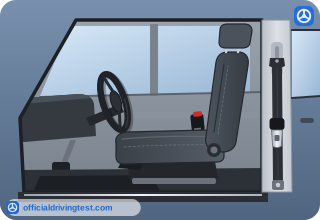
- Both the lap and shoulder belts on every trip
- Only the shoulder belt if the car has air bags
- The lap belt alone when sitting in the back seat
- Only the lap belt on short trips
Show answer
Correct answer: Both the lap and shoulder belts on every trip
Buckle up with both lap and shoulder belts on every trip; air bags are only supplemental protection.
Source: New Jersey Driver Manual (2026), page 41 · Open this page in the manual (Manual page 41)
-
Where should the lap belt be worn?
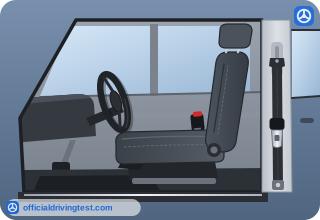
- Across the thighs, close to the knees
- Across the stomach, well over the hip bones
- Loosely across the lower chest
- Under the abdomen and low across the hips
Show answer
Correct answer: Under the abdomen and low across the hips
The lap belt should be worn under the abdomen and low across the hips.
Source: New Jersey Driver Manual (2026), page 41 · Open this page in the manual (Manual page 41)
-
Where should the shoulder portion of a seat belt cross your body?
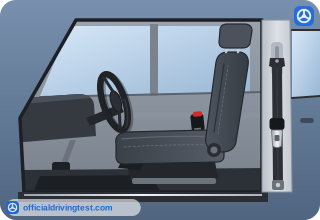
- Over the collar bone and across the breastbone
- Behind the back, below the shoulder blades
- Across the side of the neck, close to the chin
- Under your arm, across the lower part of the ribs
Show answer
Correct answer: Over the collar bone and across the breastbone
The shoulder belt should come over the collar bone, away from the neck, and cross over the breastbone.
Source: New Jersey Driver Manual (2026), page 41 · Open this page in the manual (Manual page 41)
-
In most new vehicles, where can the shoulder belt be adjusted to improve its fit?
- On the steering column
- On the side pillar
- On the headrest
- At the floor buckle
Show answer
Correct answer: On the side pillar
The shoulder belt in most new vehicles can be adjusted on the side pillar to improve fit.
Source: New Jersey Driver Manual (2026), page 41 · Open this page in the manual (Manual page 41)
-
According to the New Jersey Driver Manual's seat belt tips, why should you know how to release your seat belt?
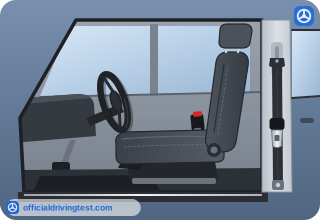
- So an officer can inspect it at a traffic stop
- So you can take it off during short trips
- In case you must get out of the vehicle quickly
- So you can loosen it while driving on a highway
Show answer
Correct answer: In case you must get out of the vehicle quickly
The manual says to know how to adjust seat belts and how to release them in case motorists or passengers have to get out of the vehicle quickly.
Source: New Jersey Driver Manual (2026), page 41 · Open this page in the manual (Manual page 41)
-
How many people may share one seat belt?
- Two small children
- Two people if both are under age 8
- Any number of children if it is a lap belt
- Only one person
Show answer
Correct answer: Only one person
The manual says never put more than one person in one belt.
Source: New Jersey Driver Manual (2026), page 41 · Open this page in the manual (Manual page 41)
-
Why should passengers in the back seat buckle up?
- Only to avoid a fine; a belt adds no safety in the back seat
- They can be thrown into others with deadly force or ejected
- Back-seat air bags will not work unless they buckle up
- It keeps the rear doors from opening while driving
Show answer
Correct answer: They can be thrown into others with deadly force or ejected
Without a seat belt, occupants can be thrown throughout the vehicle, into other occupants with deadly force, or ejected through the windshield or a window.
Source: New Jersey Driver Manual (2026), page 41 · Open this page in the manual (Manual page 41)
-
All child restraint systems built since what date must be designed to pass tough safety tests?
- January 1, 1981
- January 1, 1995
- January 1, 1998
- July 1, 1966
Show answer
Correct answer: January 1, 1981
All child restraint systems built since January 1, 1981 must be designed to pass tough safety tests.
Source: New Jersey Driver Manual (2026), page 41 · Open this page in the manual (Manual page 41)
-
What does the label on a child car seat that meets federal standards show?
- The only vehicle model it may be installed in
- An MVC approval stamp and its expiration date
- Its date of manufacture and federal safety compliance
- The name of the store where it was bought and its price
Show answer
Correct answer: Its date of manufacture and federal safety compliance
Approved seats carry a label giving the date of manufacture and stating that the seat conforms to all applicable Federal Motor Vehicle Safety Standards.
Source: New Jersey Driver Manual (2026), page 41 · Open this page in the manual (Manual page 41)
-
Which statement about infant car seats is correct, according to the New Jersey Driver Manual?
- An infant seat must never be faced forward
- An infant seat should face forward in the front seat
- An infant seat may face forward once the baby can sit up
- An infant seat may face either way if it has a federal label
Show answer
Correct answer: An infant seat must never be faced forward
Some seats can face forward once a child reaches the right weight, but an infant seat must never be faced forward; doing so would be extremely dangerous.
Source: New Jersey Driver Manual (2026), page 41 · Open this page in the manual (Manual page 41)
-
How can you find out the size and weight of the child a car seat is designed to protect?
- Look at your insurance ID card
- Ask at an MVC agency
- Check the label on the car seat
- Check the vehicle's registration card
Show answer
Correct answer: Check the label on the car seat
The manual says to always check the label on a car seat for the size and weight of the child it is designed to protect.
Source: New Jersey Driver Manual (2026), page 41 · Open this page in the manual (Manual page 41)
-
According to the New Jersey Driver Manual, what is the best protection a motorist can offer a child passenger?
- Seating the child directly in front of an air bag
- Using the adult seat belt alone
- Holding the child on an adult's lap
- Correct use of the car seat
Show answer
Correct answer: Correct use of the car seat
Using the car seat every time, and correctly each time, is the best protection a motorist can offer a child.
Source: New Jersey Driver Manual (2026), page 42 · Open this page in the manual (Manual page 42)
-
Under New Jersey law, how must a child under age 8 who is less than 57 inches tall ride?
- On an adult's lap, wearing the adult's seat belt
- In a forward-facing harness or booster seat, in the back
- In an adult lap and shoulder belt, in any seat of the car
- In a rear-facing seat, in the front passenger seat
Show answer
Correct answer: In a forward-facing harness or booster seat, in the back
Children under 8 who are under 57 inches tall must ride in a federally approved forward-facing restraint with a five-point harness, or a federally approved booster seat, in a rear seat.
Source: New Jersey Driver Manual (2026), page 42 · Open this page in the manual (Manual page 42)
-
New Jersey's child passenger safety law requires a child under age 8 who is shorter than how many inches to ride in a child restraint or booster seat in a rear seat?
- 57 inches (4 feet, 9 inches)
- 60 inches (5 feet)
- 48 inches (4 feet)
- 52 inches (4 feet, 4 inches)
Show answer
Correct answer: 57 inches (4 feet, 9 inches)
The rule covers children under age 8 who are less than 57 inches (4 feet, 9 inches) tall.
Source: New Jersey Driver Manual (2026), page 42 · Open this page in the manual (Manual page 42)
-
Under New Jersey law, how must a child under age 4 who weighs less than 40 pounds ride?
- In a federally approved booster seat in a rear seat
- In a booster seat in the front seat
- In an adult lap and shoulder belt in a rear seat
- In a five-point harness seat in a rear seat
Show answer
Correct answer: In a five-point harness seat in a rear seat
Children under 4 who weigh less than 40 pounds must ride in a rear seat in a car seat with a five-point harness: either rear-facing (then forward-facing once they outgrow it) or forward-facing.
Source: New Jersey Driver Manual (2026), page 42 · Open this page in the manual (Manual page 42)
-
Under New Jersey law, a child under age 4 who weighs less than how many pounds must ride in a five-point harness seat in a rear seat?
- 20 pounds
- 65 pounds
- 40 pounds
- 50 pounds
Show answer
Correct answer: 40 pounds
The harness-seat rule applies to children under age 4 who weigh less than 40 pounds.
Source: New Jersey Driver Manual (2026), page 42 · Open this page in the manual (Manual page 42)
-
Under New Jersey law, how must a child under age 2 who weighs less than 30 pounds ride?
- In an adult lap and shoulder belt
- In a booster seat
- In a forward-facing seat with a five-point harness
- In a rear-facing seat with a five-point harness
Show answer
Correct answer: In a rear-facing seat with a five-point harness
Children under age 2 and those under 30 pounds must ride in a federally approved rear-facing child restraint equipped with a five-point harness.
Source: New Jersey Driver Manual (2026), page 42 · Open this page in the manual (Manual page 42)
-
Under New Jersey law, all children under what age must be seated in a rear seat when the vehicle has one?
- 8
- 6
- 4
- 16
Show answer
Correct answer: 8
All children under age eight must be seated in a rear seat.
Source: New Jersey Driver Manual (2026), page 43 · Open this page in the manual (Manual page 43)
-
Under New Jersey law, if a vehicle has no rear seats, where may a child under age 8 ride?
- In the front seat with only the adult seat belt
- In a front seat, in an approved child seat or booster
- Nowhere; the child may not ride in that vehicle at all
- On an adult passenger's lap in the front seat
Show answer
Correct answer: In a front seat, in an approved child seat or booster
If the vehicle has no rear seats, children under 8 must be secured in a federally approved child restraint or booster seat in a front seat.
Source: New Jersey Driver Manual (2026), page 43 · Open this page in the manual (Manual page 43)
-
Under New Jersey law, a rear-facing child restraint may NOT be placed in the front seat of a vehicle that:
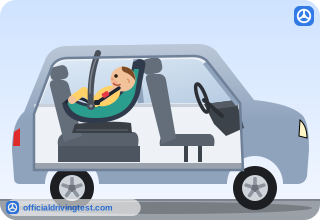
- Has a manual transmission instead of an automatic
- Is more than ten years old
- Has a passenger-side air bag that is switched on
- Has tinted windows on the rear side doors
Show answer
Correct answer: Has a passenger-side air bag that is switched on
A rear-facing child restraint cannot be used in the front seat of any vehicle with a passenger-side air bag that is not disabled or turned off.
Source: New Jersey Driver Manual (2026), page 43 · Open this page in the manual (Manual page 43)
-
What fine can a person face for violating New Jersey's child passenger safety law?
- $50 to $75, plus fees and court costs
- $100 to $250, plus fees and court costs
- $500 to $1,000, plus fees and court costs
- $20 to $40, plus fees and court costs
Show answer
Correct answer: $50 to $75, plus fees and court costs
Failure to comply with the child passenger safety law can bring a fine of not less than $50 nor more than $75, plus fees and court costs.
Source: New Jersey Driver Manual (2026), page 43 · Open this page in the manual (Manual page 43)
-
Under New Jersey law, may a child who would be required to use a child passenger restraint system ride as a passenger in an autocycle?
- Yes, on trips shorter than five miles from home
- No, the autocycle operator may not permit it
- Yes, if the child wears a helmet
- Yes, if a booster seat is installed
Show answer
Correct answer: No, the autocycle operator may not permit it
A person operating an autocycle must not let a child ride as a passenger if the child would be required to be secured in a child passenger restraint system.
Source: New Jersey Driver Manual (2026), page 43 · Open this page in the manual (Manual page 43)
-
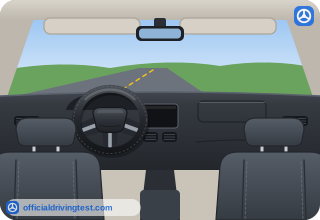
What are air bags designed to do?
- Protect mainly in rear-end crashes
- Protect small children riding in the front seat
- Replace seat belts in all types of crashes
- Supplement seat belts in frontal crashes
Show answer
Correct answer: Supplement seat belts in frontal crashes
Air bags are designed to supplement seat belts in frontal crashes, not replace them.
Source: New Jersey Driver Manual (2026), page 43 · Open this page in the manual (Manual page 43)
-
Federal safety standards require manufacturers to equip which new vehicles with air bags?
- Only vehicles that have a full back seat
- Only vehicles sold new in the state of New Jersey
- Only luxury cars and full-size SUVs
- All new passenger cars and light trucks
Show answer
Correct answer: All new passenger cars and light trucks
Federal safety standards require air bags in all new passenger cars and light trucks.
Source: New Jersey Driver Manual (2026), page 43 · Open this page in the manual (Manual page 43)
-
According to NHTSA statistics cited in the New Jersey Driver Manual, how many lives did frontal air bags save from 1987 to 2015?
- 14,869
- 144,869
- 44,869
- 4,869
Show answer
Correct answer: 44,869
NHTSA statistics show that frontal air bags saved 44,869 lives from 1987 to 2015.
Source: New Jersey Driver Manual (2026), page 43 · Open this page in the manual (Manual page 43)
-
How fast can air bags inflate to protect adults in a front-end crash?
- Up to 50 mph
- Up to 200 mph
- Up to 100 mph
- Up to 500 mph
Show answer
Correct answer: Up to 200 mph
Air bags inflate at speeds of up to 200 mph.
Source: New Jersey Driver Manual (2026), page 43 · Open this page in the manual (Manual page 43)
-
According to the New Jersey Driver Manual, an average-sized adult who is correctly belted:
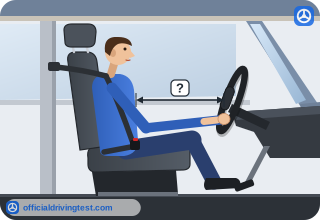
- Is not likely to meet the air bag until it is fully inflated
- Should sit within 5 inches of the steering wheel
- Is usually struck by the air bag while it is still inflating
- Does not need the air bag to be switched on
Show answer
Correct answer: Is not likely to meet the air bag until it is fully inflated
A correctly belted average-sized adult is not likely to encounter the air bag until it is fully inflated.
Source: New Jersey Driver Manual (2026), page 43 · Open this page in the manual (Manual page 43)
-
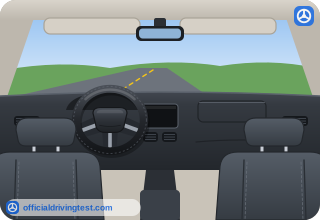
What danger do air bags pose, according to the New Jersey Driver Manual?
- They keep seat belts from locking properly during a crash
- They could seriously hurt or kill front-seat children
- They can disable the brakes after a crash
- They often go off on their own while the vehicle is parked
Show answer
Correct answer: They could seriously hurt or kill front-seat children
Air bags save many adult lives, but they could seriously injure or kill children sitting in the front seat.
Source: New Jersey Driver Manual (2026), page 43 · Open this page in the manual (Manual page 43)
-
In 1995, NHTSA allowed air bag cutoff switches in which vehicles?
- Pickups, sports cars and cars with no back seat
- Only vehicles built before January 1, 1981
- Only police cars, fire trucks and ambulances in service
- All SUVs, minivans and full-size passenger vans
Show answer
Correct answer: Pickups, sports cars and cars with no back seat
In 1995 NHTSA allowed cutoff switches in pickup trucks, sports cars, and autos with no back seat.
Source: New Jersey Driver Manual (2026), page 43 · Open this page in the manual (Manual page 43)
-
Since January 1998, who may install air bag on-off switches in vehicles once the proper application has been made?
- Only the local police department
- Only the vehicle manufacturer's factory
- Repair shops and dealers
- Only MVC inspection stations
Show answer
Correct answer: Repair shops and dealers
In January 1998 NHTSA allowed repair shops and dealers to install the switches after the appropriate application was made.
Source: New Jersey Driver Manual (2026), page 43 · Open this page in the manual (Manual page 43)
-
Who may qualify for an on-off switch for both the driver and passenger-side air bags?
- Anyone who mostly drives on local roads at low speeds
- Any driver over age 65 who asks the dealer for one
- Drivers who always wear both the lap belt and the shoulder belt
- Some people with medical conditions that make air bags riskier
Show answer
Correct answer: Some people with medical conditions that make air bags riskier
Switches for both air bags are for people with medical conditions when the risks of a deploying air bag exceed the risks of hitting the steering wheel, dashboard or windshield.
Source: New Jersey Driver Manual (2026), page 43 · Open this page in the manual (Manual page 43)
-
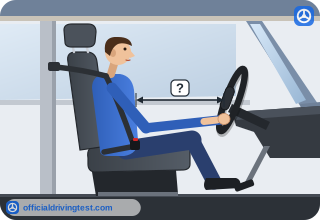
A driver-side air bag on-off switch may be allowed for people who cannot keep at least how much space between the center of the steering wheel and the center of their breastbone?
- 10 inches
- 18 inches
- 6 inches
- 3 inches
Show answer
Correct answer: 10 inches
Driver-side switches are for people who cannot operate the vehicle while keeping at least 10 inches between the center of the steering wheel and the center of the breastbone.
Source: New Jersey Driver Manual (2026), page 44 · Open this page in the manual (Manual page 44)
-
Which is a reason a person may qualify for a passenger-side air bag on-off switch?
- They drive a car with a sunroof or a convertible top
- They prefer that the front passenger sit close to the dashboard
- They must put an infant up front because there is no rear seat
- They usually drive alone and rarely carry any passengers
Show answer
Correct answer: They must put an infant up front because there is no rear seat
Passenger-side switches are for people who must place an infant in the front seat, for example because the vehicle (such as a pickup truck) has no rear seat.
Source: New Jersey Driver Manual (2026), page 44 · Open this page in the manual (Manual page 44)
-
The passenger-side air bag on-off switch category also covers people who must place children of what ages in the front seat (for example, because the vehicle has no rear seat)?
- 13 to 17 years old
- 5 to 15 years old
- 8 to 18 years old
- 1 to 12 years old
Show answer
Correct answer: 1 to 12 years old
It covers people who must place children 1 to 12 years old in the front seat because there is no rear seat, there are more children than rear seats, or a child's medical condition must be monitored.
Source: New Jersey Driver Manual (2026), page 44 · Open this page in the manual (Manual page 44)
-
According to the New Jersey Driver Manual, where are children of any age safest?
- On an adult's lap in the back seat
- Belted properly in the back seat
- In the front seat with the air bag on
- In the front seat with the seat moved all the way forward
Show answer
Correct answer: Belted properly in the back seat
Children of any age are safest belted properly in the back seat, especially in a vehicle with a passenger-side air bag.
Source: New Jersey Driver Manual (2026), page 44 · Open this page in the manual (Manual page 44)
-
In a vehicle with air bags, where should an infant ride?
- In a forward-facing seat in the front seat
- In a rear-facing infant seat in the back seat
- In a booster seat in the back seat
- In a rear-facing infant seat in the front seat
Show answer
Correct answer: In a rear-facing infant seat in the back seat
Always put an infant in a rear-facing infant child safety seat in the back seat of a vehicle with air bags.
Source: New Jersey Driver Manual (2026), page 44 · Open this page in the manual (Manual page 44)
-
According to the New Jersey Driver Manual's air bag safety points, children up to what age should always ride in the back seat?
- 16 years old
- 3 years old
- 6 years old
- 12 years old
Show answer
Correct answer: 12 years old
The manual says always be sure that children 12 years old and younger ride in the back seat.
Source: New Jersey Driver Manual (2026), page 44 · Open this page in the manual (Manual page 44)
-
Which letters on the steering wheel or dashboard show that a vehicle has an air bag?
- SRS or SIR
- GDL or MVC
- TPMS or TCS
- ABS or ESC
Show answer
Correct answer: SRS or SIR
The words air bag or the letters SRS (supplemental restraint system) or SIR (supplemental inflatable restraint) on the steering wheel and dashboard show a vehicle has an air bag.
Source: New Jersey Driver Manual (2026), page 44 · Open this page in the manual (Manual page 44)
-
Besides the steering wheel and dashboard, where might a manufacturer put air bag warning labels?
- On the tire sidewalls and the wheel rims
- On the rear bumper, next to the license plate
- On the sun visors or the open-door frame
- Inside the trunk lid, near the spare tire
Show answer
Correct answer: On the sun visors or the open-door frame
Manufacturers may mark the sun visors or the sides of the open-door frame with warning labels, or put a warning in the owner's manual.
Source: New Jersey Driver Manual (2026), page 44 · Open this page in the manual (Manual page 44)
-
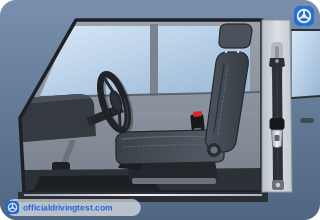
According to the New Jersey starting checklist, how should seat belts and shoulder harnesses be fastened?
- Loosely, with several inches of slack
- With the shoulder harness tucked behind your back
- As tight as they will go, even if uncomfortable
- So that they are firm and comfortable
Show answer
Correct answer: So that they are firm and comfortable
The checklist says seat belts and shoulder harnesses should be fastened so that they are firm and comfortable.
Source: New Jersey Driver Manual (2026), page 49 · Open this page in the manual (Manual page 49)
-
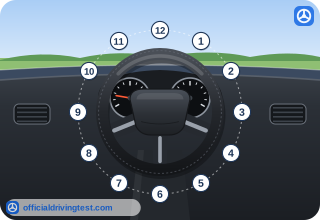
Why does the New Jersey Driver Manual recommend gripping the steering wheel at the 9 and 3 o'clock positions?
- It keeps your arms fully straight and locked
- It lowers the risk of arm injury if the air bag deploys
- It lets you steer safely with one hand at highway speeds
- It lets you grip the inside of the rim more easily
Show answer
Correct answer: It lowers the risk of arm injury if the air bag deploys
Gripping the wheel at 9 and 3 o'clock diminishes the risk of hand, wrist or arm injury if the air bag is deployed.
Source: New Jersey Driver Manual (2026), page 51 · Open this page in the manual (Manual page 51)