New Jersey: Seat belts & child safety — Part 1 Practice Test
Questions in this part include: “Under New Jersey's GDL restrictions, who must wear a seat belt when a permit or probationary license holder is driving?” · “A New Jersey driver with a GDL permit or probationary license must make sure seat belts are used by whom?”
Independent educational site · not affiliated with any government agency or DMV
Ready? Test yourself
- Instant feedback with an explanation
- Every answer cites its source in the manual
- Your best score is saved on this device
Questions are original and based on the official manual "New Jersey Driver Manual" (2026), New Jersey Motor Vehicle Commission (MVC).
All 20 questions in this practice test
Take the test above first, then use this list to study. Tap “Show answer” to see the correct answer and explanation.
Show the questions and answersHide the questions
-
Under New Jersey's GDL restrictions, who must wear a seat belt when a permit or probationary license holder is driving?
- Only passengers under 18
- The driver and all passengers
- Only the driver
- The driver and the front-seat passenger
Show answer
Correct answer: The driver and all passengers
New Jersey's GDL restrictions require the permit or probationary license holder and all passengers to wear seat belts.
Source: New Jersey Driver Manual (2026), page 18 · Open this page in the manual (Manual page 18)
-
In New Jersey, who must wear a seat belt in a passenger vehicle such as a car, van, pickup truck or SUV?
- The driver and all passengers
- Only the driver and the front-seat passenger
- Only the driver and passengers under age 18
- Only passengers under age 8
Show answer
Correct answer: The driver and all passengers
New Jersey law requires the driver and all passengers of a passenger vehicle to wear a seat belt.
Source: New Jersey Driver Manual (2026), page 40 · Open this page in the manual (Manual page 40)
-
In New Jersey, not wearing a seat belt is a primary offense for which occupants?
- Only the driver
- Every occupant, including back-seat passengers 18 and older
- The driver, the front-seat passenger and children under 18
- Only children under age 8
Show answer
Correct answer: The driver, the front-seat passenger and children under 18
Failure of the driver, the front-seat passenger and children under 18 to buckle up is a primary offense; unbuckled back-seat adults fall under a secondary law.
Source: New Jersey Driver Manual (2026), page 40 · Open this page in the manual (Manual page 40)
-
In New Jersey, the driver is responsible for making sure that all passengers under what age wear seat belts?
- 21
- 18
- 8
- 16
Show answer
Correct answer: 18
The driver is responsible for all passengers under age 18; front-seat passengers 18 and over are responsible for themselves.
Source: New Jersey Driver Manual (2026), page 40 · Open this page in the manual (Manual page 40)
-
In New Jersey, who is responsible for a front-seat passenger aged 18 or older wearing a seat belt?
- The vehicle's registered owner
- The driver
- The driver and the owner together
- The passenger
Show answer
Correct answer: The passenger
Front-seat passengers 18 years of age and over are responsible for buckling up themselves.
Source: New Jersey Driver Manual (2026), page 40 · Open this page in the manual (Manual page 40)
-
Can a New Jersey police officer stop a motorist only because of a seat belt violation?
- No, only if another violation is also seen
- Only if the unbelted person is under age 8
- Yes, that reason alone is enough
- Only on highways with a speed limit of 55 mph or more
Show answer
Correct answer: Yes, that reason alone is enough
A police officer can stop a motorist solely for a violation of the seat belt law.
Source: New Jersey Driver Manual (2026), page 40 · Open this page in the manual (Manual page 40)
-
In New Jersey, when may an unbuckled back-seat passenger aged 18 or older be issued a summons?
- When the vehicle is stopped for another reason
- Only when the vehicle is driven at night
- Any time an officer sees the passenger unbuckled
- Never, because adult back-seat passengers are exempt
Show answer
Correct answer: When the vehicle is stopped for another reason
Under a secondary law, unbuckled back-seat occupants 18 and older may be issued a summons if the vehicle is stopped for another reason.
Source: New Jersey Driver Manual (2026), page 40 · Open this page in the manual (Manual page 40)
-
A New Jersey driver with a GDL permit or probationary license must make sure seat belts are used by whom?
- The driver and every passenger, in any seat
- The driver and the front-seat passenger only
- Only passengers under age 18
- Only the driver
Show answer
Correct answer: The driver and every passenger, in any seat
GDL permit and probationary license holders must wear seat belts and must require all passengers seated anywhere in the vehicle to use them.
Source: New Jersey Driver Manual (2026), page 40 · Open this page in the manual (Manual page 40)
-
Based on when it was built, which passenger vehicle is exempt from New Jersey's seat belt law?
- One manufactured before January 1, 1981
- One manufactured before January 1, 1998
- One manufactured before July 1, 1966
- Any vehicle more than 25 years old
Show answer
Correct answer: One manufactured before July 1, 1966
Passenger vehicles manufactured before July 1, 1966 are exempt, as are vehicles not required by federal law to have seat belt systems.
Source: New Jersey Driver Manual (2026), page 40 · Open this page in the manual (Manual page 40)
-
To be exempt from New Jersey's seat belt law for a physical or medical reason, the reason must be:
- Explained in person to the officer at the traffic stop
- Printed on the vehicle's registration
- Approved by your insurance company
- Verified in writing by a licensed physician
Show answer
Correct answer: Verified in writing by a licensed physician
A physical or medical reason that makes someone unable to wear a seat belt is an exemption only when verified in writing by a licensed physician.
Source: New Jersey Driver Manual (2026), page 40 · Open this page in the manual (Manual page 40)
-
Under New Jersey law, what must the driver of a passenger vehicle do for a passenger who uses a wheelchair?
- Nothing extra, because wheelchair users are exempt from these rules
- Secure them in a fastened wheelchair and occupant securement device
- Move the passenger to the front seat and use only the lap belt
- Leave the wheelchair unfastened as long as the passenger holds on tightly
Show answer
Correct answer: Secure them in a fastened wheelchair and occupant securement device
The driver must secure a passenger who uses a wheelchair in a properly adjusted and fastened wheelchair and occupant securement device.
Source: New Jersey Driver Manual (2026), page 40 · Open this page in the manual (Manual page 40)
-
According to the New Jersey Driver Manual, seat belts improve a motorist's chances of surviving a crash by about how much?
- 35 percent
- 60 percent
- 90 percent
- 20 percent
Show answer
Correct answer: 60 percent
The manual says seat belts can improve a motorist's chances of surviving a crash by 60 percent.
Source: New Jersey Driver Manual (2026), page 40 · Open this page in the manual (Manual page 40)
-
How much better are a motorist's chances of surviving a crash when wearing both a seat belt and a shoulder strap?
- One and a half times better
- Ten times better
- Three to four times better
- Twice as good
Show answer
Correct answer: Three to four times better
Wearing both a seat belt and a shoulder strap makes a motorist's chances of surviving a crash three to four times better.
Source: New Jersey Driver Manual (2026), page 40 · Open this page in the manual (Manual page 40)
-
According to the New Jersey Driver Manual, about how long does it take to fasten a seat belt?
- Three seconds
- One full minute
- 30 seconds
- 15 seconds
Show answer
Correct answer: Three seconds
Fastening a seat belt takes only three seconds and reduces the chances of death or injury.
Source: New Jersey Driver Manual (2026), page 40 · Open this page in the manual (Manual page 40)
-
Which is one way seat belts protect you in a crash?
- They make the air bag inflate faster
- They shorten the vehicle's stopping distance on dry roads
- They let you brace against the dashboard
- They keep you from being thrown from the vehicle
Show answer
Correct answer: They keep you from being thrown from the vehicle
Seat belts keep motorists and passengers from being thrown from the vehicle; someone held in place may have less severe injuries.
Source: New Jersey Driver Manual (2026), page 40 · Open this page in the manual (Manual page 40)
-
If a vehicle hits something, what happens to an occupant who is not wearing a seat belt?
- They are pushed backward into the seat
- They keep moving at the speed the vehicle was going
- They are held in place by the air bag alone
- They stop at exactly the same moment the vehicle stops
Show answer
Correct answer: They keep moving at the speed the vehicle was going
When a vehicle hits something it stops, but the person keeps going at the same speed; seat belts slow the body down with the vehicle.
Source: New Jersey Driver Manual (2026), page 41 · Open this page in the manual (Manual page 41)
-
According to the New Jersey Driver Manual, hitting the dashboard or windshield at 30 mph is like falling from:
- The top of a ten-story building
- The top of a one-story building
- The top of a twenty-story building
- The top of a three-story building
Show answer
Correct answer: The top of a three-story building
The manual compares hitting the dashboard or windshield at 30 mph to falling from the top of a three-story building.
Source: New Jersey Driver Manual (2026), page 41 · Open this page in the manual (Manual page 41)
-
How do seat belts help you during sudden stops and turns?
- They lock the steering wheel so it cannot turn too far
- They automatically apply the brakes for you
- They keep you in position to control the vehicle
- They switch on the hazard lights automatically
Show answer
Correct answer: They keep you in position to control the vehicle
Seat belts keep you from sliding on the seat during sudden stops and turns and keep you in position to control the vehicle.
Source: New Jersey Driver Manual (2026), page 41 · Open this page in the manual (Manual page 41)
-
According to the New Jersey Driver Manual's seat belt tips, which belts should you use?
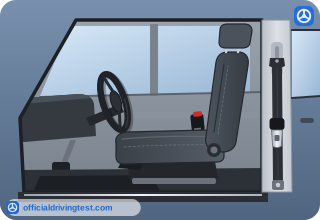
- Both the lap and shoulder belts on every trip
- Only the shoulder belt if the car has air bags
- The lap belt alone when sitting in the back seat
- Only the lap belt on short trips
Show answer
Correct answer: Both the lap and shoulder belts on every trip
Buckle up with both lap and shoulder belts on every trip; air bags are only supplemental protection.
Source: New Jersey Driver Manual (2026), page 41 · Open this page in the manual (Manual page 41)
-
Where should the lap belt be worn?
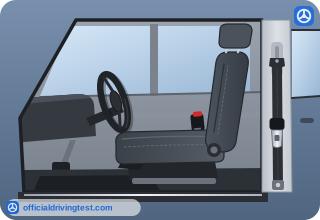
- Across the thighs, close to the knees
- Across the stomach, well over the hip bones
- Loosely across the lower chest
- Under the abdomen and low across the hips
Show answer
Correct answer: Under the abdomen and low across the hips
The lap belt should be worn under the abdomen and low across the hips.
Source: New Jersey Driver Manual (2026), page 41 · Open this page in the manual (Manual page 41)