New Hampshire: Sharing the road
Bicyclists and the passing clearance, motorcycles, slow-moving vehicles, large trucks and their blind spots, and school buses. Split into 3 shorter tests so you're not stuck in one long quiz.
Independent educational site · not affiliated with any government agency or DMV
Choose a part
Sharing the road — Part 1
Questions in this part include: “What does it mean to drive defensively?”
StartSharing the road — Part 2
Questions in this part include: “Although bicyclists are required to ride in the direction of traffic, where should drivers look for them?”
StartSharing the road — Part 3
Questions in this part include: “Under ideal conditions, a loaded truck at 55 mph needs a stopping distance of how many times that of a car?”
StartAll 56 Sharing the road questions with answers
Choose a part above to take a practice test, or study every question and answer here.
Show the questions and answersHide the questions
-
At least how far in any direction must drivers stop from a school bus stopped with its red lights flashing?
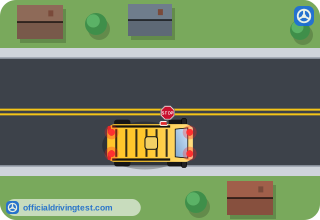
- 10 feet
- 50 feet
- 100 feet
- 25 feet
Show answer
Correct answer: 25 feet
Drivers must stop at least 25 feet in any direction from a school bus stopped with its red lights flashing or its stop arm extended.
Source: New Hampshire Driver’s Manual (DSMV 360 (Rev. 11/25)), page 27 · Open this page in the manual (Manual page 27)
-
When are drivers not required to stop for a school bus with its red lights flashing or stop arm extended?
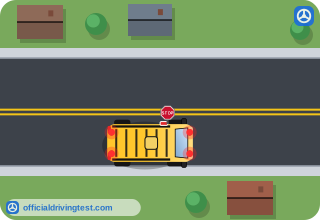
- When no children are visible near the bus
- When the bus is on the other side of a two-lane road
- When the roadway is separated by a physical barrier
- When the driver is on a rural road
Show answer
Correct answer: When the roadway is separated by a physical barrier
The stopping rule applies at all times unless the roadway is separated by a physical barrier.
Source: New Hampshire Driver’s Manual (DSMV 360 (Rev. 11/25)), page 27 · Open this page in the manual (Manual page 27)
-
How long must drivers remain stopped for a school bus with its red lights flashing?
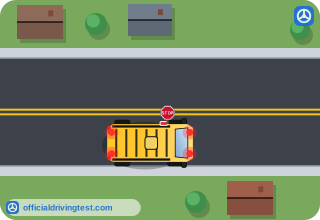
- Until the bus moves or the flashing red lights stop
- For one full minute after the bus stops
- Until the driver of the bus waves them on
- Until the driver ahead of them begins to move
Show answer
Correct answer: Until the bus moves or the flashing red lights stop
Drivers shall remain stopped until the school bus resumes motion or until the flashing red lights cease to operate.
Source: New Hampshire Driver’s Manual (DSMV 360 (Rev. 11/25)), page 27 · Open this page in the manual (Manual page 27)
-
How should drivers proceed once they may move past a school bus?
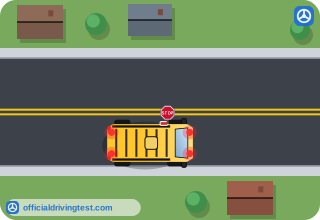
- At normal speed once the bus is behind them
- Quickly, to clear the area
- Only after sounding the horn
- Slowly, while always watching for children
Show answer
Correct answer: Slowly, while always watching for children
After the bus resumes motion or the lights stop, drivers should proceed slowly while always watching for children.
Source: New Hampshire Driver’s Manual (DSMV 360 (Rev. 11/25)), page 27 · Open this page in the manual (Manual page 27)
-
Why should drivers search to the sides?
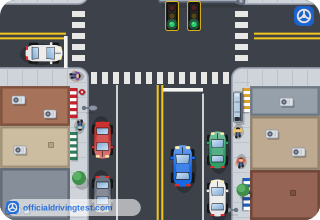
- To make sure other roadway users will not cross the path
- To find parking spaces along the side of the roadway
- To read road signs that are far ahead of the vehicle
- To check how closely the vehicle behind is following
Show answer
Correct answer: To make sure other roadway users will not cross the path
Drivers should search to the sides to make sure other roadway users will not cross the path of travel.
Source: New Hampshire Driver’s Manual (DSMV 360 (Rev. 11/25)), page 30 · Open this page in the manual (Manual page 30)
-
Why should drivers avoid driving next to other vehicles for long periods of time?
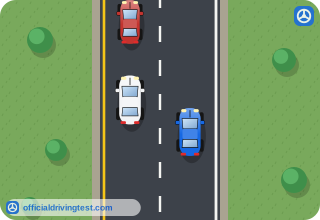
- It makes it harder to read the signs ahead of them
- It increases the following distance needed behind
- The vehicle may be in their blind-spot
- It makes the center line harder to see
Show answer
Correct answer: The vehicle may be in their blind-spot
Driving next to another vehicle for a long time may put it in the driver's blind-spot and reduces the space needed to avoid a collision.
Source: New Hampshire Driver’s Manual (DSMV 360 (Rev. 11/25)), page 31 · Open this page in the manual (Manual page 31)
-
How should drivers position their vehicle in relation to the center line marking?
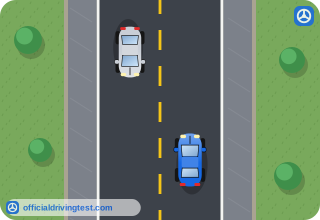
- Drive directly on the center line to leave room on the right
- Keep as much space as possible between the vehicle and oncoming traffic
- Stay as close to the center line as possible to avoid the shoulder
- Keep the left wheels on the line so the vehicle stays centered
Show answer
Correct answer: Keep as much space as possible between the vehicle and oncoming traffic
Drivers should avoid crowding the center line marking and try to keep as much space as possible between the vehicle and oncoming traffic.
Source: New Hampshire Driver’s Manual (DSMV 360 (Rev. 11/25)), page 31 · Open this page in the manual (Manual page 31)
-
An approaching vehicle in the opposite lane is on a curve or is a large vehicle. What must drivers be careful about?
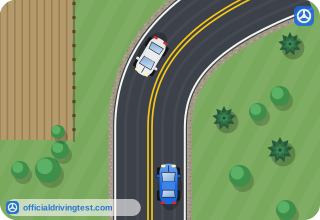
- Not crowding the center lane so the vehicle can pass safely
- Not moving toward the right edge of the road
- Not signaling until the vehicle has passed
- Not leaving too much space behind the vehicle ahead
Show answer
Correct answer: Not crowding the center lane so the vehicle can pass safely
When an approaching vehicle in the opposite lane is on a curve or is a large vehicle, drivers must be careful not to crowd the center lane so it can pass safely.
Source: New Hampshire Driver’s Manual (DSMV 360 (Rev. 11/25)), page 31 · Open this page in the manual (Manual page 31)
-
What does it mean to drive defensively?
- Driving below the speed limit so other drivers will pass safely and quickly
- Following all rules and assuming other road users will do the same
- Avoiding all roads where other drivers might ignore the rules
- Watching for others' illegal acts and driving errors and adjusting to avoid a crash
Show answer
Correct answer: Watching for others' illegal acts and driving errors and adjusting to avoid a crash
Driving defensively means watching for illegal acts and the driving errors of other drivers and adjusting driving accordingly to avoid a crash.
Source: New Hampshire Driver’s Manual (DSMV 360 (Rev. 11/25)), page 32 · Open this page in the manual (Manual page 32)
-
How are bicycles treated when they are on roadways?
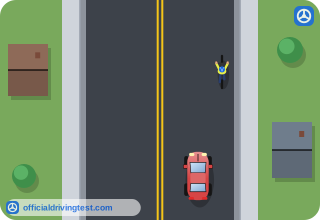
- As pedestrians
- As equipment exempt from traffic laws
- As vehicles
- As moving obstacles
Show answer
Correct answer: As vehicles
The manual says bicycles are considered vehicles when on roadways, with the same rights, privileges and responsibilities as any driver.
Source: New Hampshire Driver’s Manual (DSMV 360 (Rev. 11/25)), page 36 · Open this page in the manual (Manual page 36)
-
At 30 miles per hour or less, what is the least distance between a vehicle and a bicycle that is presumed to be reasonable and prudent?
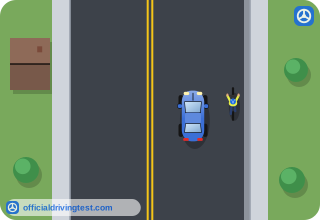
- 2 feet
- 3 feet
- 4 feet
- 6 feet
Show answer
Correct answer: 3 feet
The distance is presumed reasonable and prudent if it is at least 3 feet when the vehicle is traveling at 30 miles per hour or less.
Source: New Hampshire Driver’s Manual (DSMV 360 (Rev. 11/25)), page 36 · Open this page in the manual (Manual page 36)
-
How much extra clearance is required between a vehicle and a bicycle for every 10 miles per hour above 30 miles per hour?
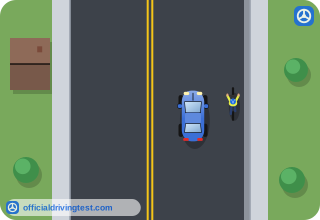
- Six additional inches
- Two additional feet
- Three additional feet
- One additional foot
Show answer
Correct answer: One additional foot
One additional foot of clearance is required for every 10 miles per hour above 30 miles per hour.
Source: New Hampshire Driver’s Manual (DSMV 360 (Rev. 11/25)), page 37 · Open this page in the manual (Manual page 37)
-
What must a driver do when a bicycle path or bike lane intersects a road?
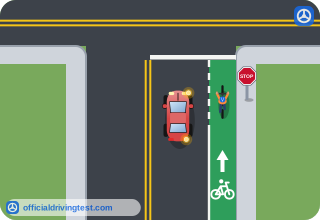
- Yield right of way
- Sound the horn and proceed
- Stop and wait for the cyclist to wave
- Speed up to cross first
Show answer
Correct answer: Yield right of way
Drivers must yield right of way when a bicycle path or bike lane intersects a road.
Source: New Hampshire Driver’s Manual (DSMV 360 (Rev. 11/25)), page 37 · Open this page in the manual (Manual page 37)
-
In which situation may a driver stop, park, or drive on a designated bicycle path or lane?
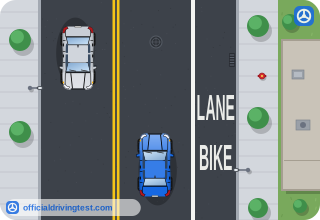
- When waiting for a parking space nearby
- When dropping off a passenger
- When entering or leaving an alley or driveway
- When traffic ahead is moving slowly
Show answer
Correct answer: When entering or leaving an alley or driveway
A driver may not stop, park or drive on a designated bicycle lane unless entering or leaving an alley or driveway, performing official duties, directed by a police officer, or in an emergency.
Source: New Hampshire Driver’s Manual (DSMV 360 (Rev. 11/25)), page 37 · Open this page in the manual (Manual page 37)
-
What should a driver do when a cyclist is in the intersection where the driver wants to turn?
- Turn quickly before the cyclist reaches the turn
- Slow down and let the cyclist clear the intersection
- Sound the horn so the cyclist moves aside
- Turn behind the cyclist, close to the curb
Show answer
Correct answer: Slow down and let the cyclist clear the intersection
The manual says to slow down and let the cyclist clear the intersection before making your turn.
Source: New Hampshire Driver’s Manual (DSMV 360 (Rev. 11/25)), page 37 · Open this page in the manual (Manual page 37)
-
Why should a driver avoid slowing down or stopping quickly near a bicyclist?
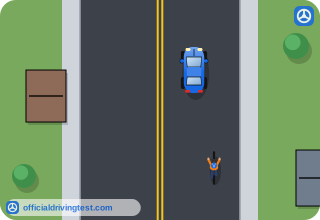
- Quick stops make the bicyclist lose sight of the signals
- The bicyclist may be unable to hear the engine
- Bicycles cannot be seen in the rear window
- A vehicle's brakes are more powerful than a bicycle's
Show answer
Correct answer: A vehicle's brakes are more powerful than a bicycle's
A motor vehicle's brakes are more powerful than a bicycle's, so slowing or stopping quickly could cause a crash.
Source: New Hampshire Driver’s Manual (DSMV 360 (Rev. 11/25)), page 37 · Open this page in the manual (Manual page 37)
-
Why should drivers avoid sounding the horn close to bicyclists unless there is a chance of a crash?
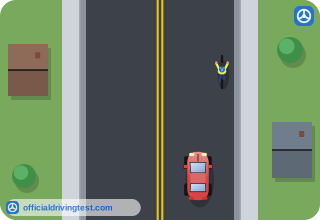
- It may startle them into steering into the driver's path
- It may make them stop pedaling and fall behind the vehicle
- It may make them think the driver is turning
- It may be mistaken for an emergency vehicle
Show answer
Correct answer: It may startle them into steering into the driver's path
Sounding the horn to alert your presence may startle bicyclists and cause them to steer into your path and crash.
Source: New Hampshire Driver’s Manual (DSMV 360 (Rev. 11/25)), page 37 · Open this page in the manual (Manual page 37)
-
Why should a driver be especially careful when seeing children riding bikes on the sidewalk?
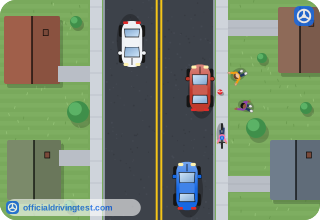
- They have the right of way on every sidewalk
- They cannot hear an approaching vehicle
- They may come onto the road
- They are required to ride against traffic
Show answer
Correct answer: They may come onto the road
Children riding bikes on the sidewalk may come onto the road, so drivers should watch carefully for bicyclists entering the lane.
Source: New Hampshire Driver’s Manual (DSMV 360 (Rev. 11/25)), page 37 · Open this page in the manual (Manual page 37)
-
What should a driver avoid doing around a bicyclist?
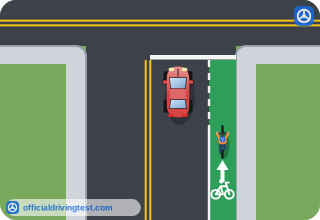
- Passing the bicyclist on the left
- Turning sharply in front of the bicyclist
- Checking for bicyclists before backing
- Allowing as much space as possible
Show answer
Correct answer: Turning sharply in front of the bicyclist
Drivers should avoid turning sharply in front of a bicyclist and must not force a bicyclist off the road.
Source: New Hampshire Driver’s Manual (DSMV 360 (Rev. 11/25)), page 37 · Open this page in the manual (Manual page 37)
-
Although bicyclists are required to ride in the direction of traffic, where should drivers look for them?
- Only along the right edge of the roadway
- Only in bike lanes
- Only on the sidewalk
- Anywhere on the roadway
Show answer
Correct answer: Anywhere on the roadway
The manual says that although bicyclists must ride in the direction of traffic, drivers should look for them riding anywhere on the roadway.
Source: New Hampshire Driver’s Manual (DSMV 360 (Rev. 11/25)), page 37 · Open this page in the manual (Manual page 37)
-
When should a driver be particularly careful around bicyclists?
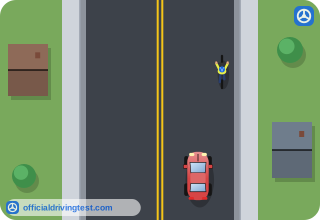
- When the road is wet or covered with sand or gravel
- When the roadway is dry, clear and well lit
- When the bicyclist is wearing bright clothing
- When the bicyclist is riding in a bike lane
Show answer
Correct answer: When the road is wet or covered with sand or gravel
Wet roadways and roadways covered with sand or gravel affect bicycles much more than vehicles.
Source: New Hampshire Driver’s Manual (DSMV 360 (Rev. 11/25)), page 37 · Open this page in the manual (Manual page 37)
-
What are bicyclists required to do when turning and stopping?
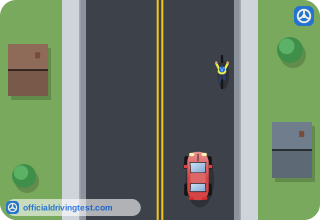
- Sound a bell
- Walk the bicycle across the road
- Use hand signals
- Stop and dismount
Show answer
Correct answer: Use hand signals
Bicyclists are required to use hand signals when turning and stopping.
Source: New Hampshire Driver’s Manual (DSMV 360 (Rev. 11/25)), page 37 · Open this page in the manual (Manual page 37)
-
Which clue can show that a bicyclist who cannot signal is about to change lane position?
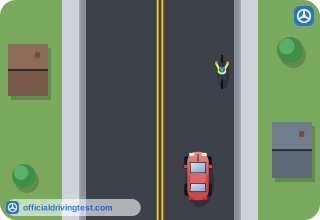
- Slowing the pedals until the bicycle stops
- Turning their head or looking over a shoulder
- Moving the bicycle closer to parked vehicles
- Ringing a bell or shouting at the driver
Show answer
Correct answer: Turning their head or looking over a shoulder
Since bicyclists may be unable to signal, drivers should look for clues such as turning their head or looking over their shoulder before changing lane position.
Source: New Hampshire Driver’s Manual (DSMV 360 (Rev. 11/25)), page 37 · Open this page in the manual (Manual page 37)
-
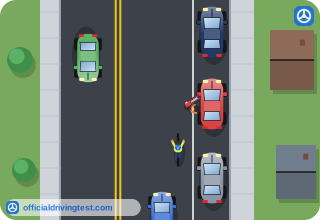
What should a driver do before opening the door of a vehicle parked on the street?
- Sound the horn to warn nearby bicyclists
- Turn on the hazard flashers and wait
- Wait until the engine has cooled down
- Check to the sides and rear for bicyclists
Show answer
Correct answer: Check to the sides and rear for bicyclists
When parked on the street, drivers should check to the sides and rear for bicyclists before opening the door.
Source: New Hampshire Driver’s Manual (DSMV 360 (Rev. 11/25)), page 37 · Open this page in the manual (Manual page 37)
-
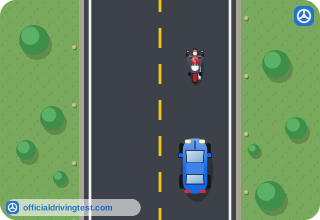
About how wide are most motorcycles, making them hard to identify in traffic?
- About two feet
- About one foot
- About four feet
- About five feet
Show answer
Correct answer: About two feet
Most motorcycles are only about two feet wide, so they may not be easily identifiable in traffic and can be hidden in a vehicle's blind spot.
Source: New Hampshire Driver’s Manual (DSMV 360 (Rev. 11/25)), page 37 · Open this page in the manual (Manual page 37)
-
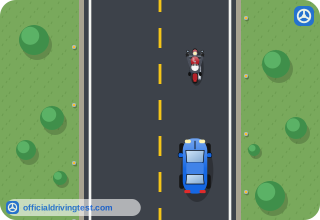
What should a driver never attempt to do with a motorcycle?
- Check for it before a left turn
- Pass it on the left
- Share a lane with it
- Signal before turning near it
Show answer
Correct answer: Share a lane with it
Motorcycles are entitled to the same full lane width as all other vehicles, so drivers should never attempt to share a lane with one.
Source: New Hampshire Driver’s Manual (DSMV 360 (Rev. 11/25)), page 37 · Open this page in the manual (Manual page 37)
-
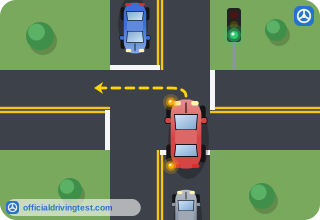
Before taking a left turn across traffic, what should a driver carefully check oncoming traffic for?
- Slow-moving vehicles only
- Motorcycles
- Pedestrians only
- Bicycles only
Show answer
Correct answer: Motorcycles
Drivers should always carefully check oncoming traffic for motorcycles before a left turn across traffic and know its speed before making the turn.
Source: New Hampshire Driver’s Manual (DSMV 360 (Rev. 11/25)), page 37 · Open this page in the manual (Manual page 37)
-
What following distance should a driver allow when behind a motorcycle?
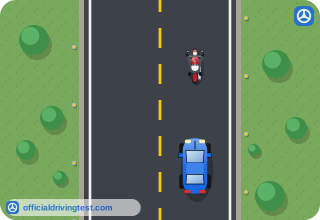
- At least two seconds
- At least three seconds
- At least six seconds
- At least four seconds
Show answer
Correct answer: At least four seconds
The manual says to allow at least four seconds following distance when behind a motorcycle.
Source: New Hampshire Driver’s Manual (DSMV 360 (Rev. 11/25)), page 37 · Open this page in the manual (Manual page 37)
-
What should a driver be sure of before turning in front of a motorcycle with its turn signal on?
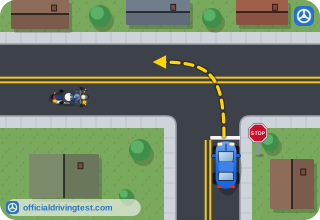
- That the rider is actually turning
- That the rider has slowed to under 25 mph
- That the rider is in the right lane
- That the rider has seen the signal
Show answer
Correct answer: That the rider is actually turning
Most motorcycles do not have automatic cancel for turn signals, so a driver should be sure the rider is actually turning.
Source: New Hampshire Driver’s Manual (DSMV 360 (Rev. 11/25)), page 37 · Open this page in the manual (Manual page 37)
-
Where should drivers watch for motorcyclists being moved out of their lane by cross winds?
- Narrow residential streets and parking lots
- Tunnels and underpasses with low ceilings
- Wide open, long stretches of highway and bridges
- Roads lined with tall trees and hedges
Show answer
Correct answer: Wide open, long stretches of highway and bridges
Windy conditions can move a motorcycle out of its lane of travel, especially on wide open, long stretches of highway and bridges.
Source: New Hampshire Driver’s Manual (DSMV 360 (Rev. 11/25)), page 38 · Open this page in the manual (Manual page 38)
-
What have fast moving large trucks been known to create that can startle a cyclist?
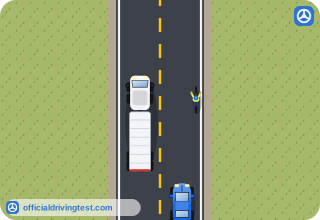
- Loud engine noise
- Wind blasts
- Spray from the tires
- Sudden glare from headlights
Show answer
Correct answer: Wind blasts
Fast moving large trucks have been known to create wind blasts which can startle a cyclist and may even move a cyclist out of their path of travel.
Source: New Hampshire Driver’s Manual (DSMV 360 (Rev. 11/25)), page 38 · Open this page in the manual (Manual page 38)
-
What may motorcyclists experience when traveling over metal or grated bridges?
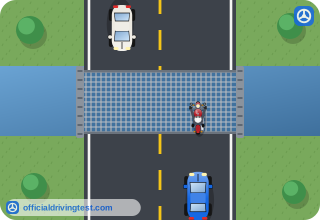
- A loss of engine power
- Increased tire grip
- Strong glare from the surface
- A wobbling sensation
Show answer
Correct answer: A wobbling sensation
Motorcyclists may experience a wobbling sensation on metal or grated bridges, so they may slow down or change direction.
Source: New Hampshire Driver’s Manual (DSMV 360 (Rev. 11/25)), page 38 · Open this page in the manual (Manual page 38)
-
In bad weather, what do rain, wind, dust and fog affect for a cyclist?
- The cyclist's vision
- The cyclist's tire pressure
- The cyclist's engine power
- The cyclist's helmet fit
Show answer
Correct answer: The cyclist's vision
Rain, wind, dust and fog affect a cyclist's vision, and wet and slippery roads can create glare that is hard to see at night.
Source: New Hampshire Driver’s Manual (DSMV 360 (Rev. 11/25)), page 38 · Open this page in the manual (Manual page 38)
-
A vehicle displays a fluorescent or reflective orange and red triangle on its rear. What does it mean about the vehicle?
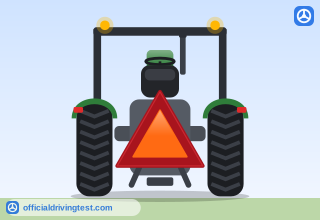
- It is carrying hazardous materials
- It is making frequent stops
- It is traveling less than 25 mph
- It is traveling less than 45 mph
Show answer
Correct answer: It is traveling less than 25 mph
A fluorescent or reflective orange and red triangle on the rear of animal-drawn vehicles, farm equipment or construction equipment means the vehicle is traveling less than 25 mph.
Source: New Hampshire Driver’s Manual (DSMV 360 (Rev. 11/25)), page 38 · Open this page in the manual (Manual page 38)
-
What should a driver remember when passing farm machinery?
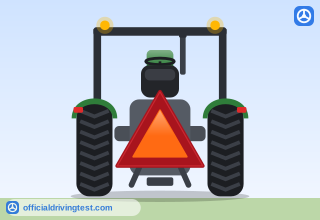
- The operator always signals before turning
- The operator cannot hear approaching vehicles
- Farm machinery never uses state highways
- Farm machinery is exempt from the rules of the road
Show answer
Correct answer: The operator cannot hear approaching vehicles
The manual says to pass farm machinery with caution and remember that the operator cannot hear approaching vehicles.
Source: New Hampshire Driver’s Manual (DSMV 360 (Rev. 11/25)), page 38 · Open this page in the manual (Manual page 38)
-
Compared with motor vehicles, what rights do animal drawn vehicles and horseback riders have to use the road?
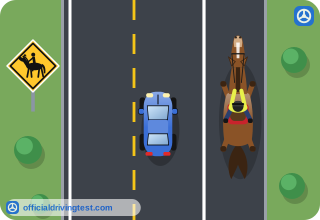
- Fewer rights, because they are slower
- More rights, because they are rural
- No right to use state highways
- The same rights
Show answer
Correct answer: The same rights
Animal drawn vehicles and horseback riders have the same rights to use the road as a motor vehicle and must follow the same rules of the road.
Source: New Hampshire Driver’s Manual (DSMV 360 (Rev. 11/25)), page 38 · Open this page in the manual (Manual page 38)
-
What should drivers never do when approaching a horse?
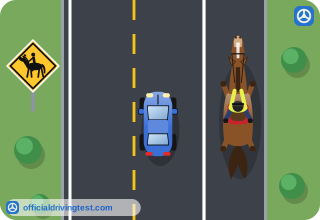
- Use the horn or rev the engine
- Reduce speed near the horse
- Assess the situation
- Pass with caution
Show answer
Correct answer: Use the horn or rev the engine
Drivers approaching any horse should reduce speed, assess the situation and pass with caution, and never use the horn or rev the engine.
Source: New Hampshire Driver’s Manual (DSMV 360 (Rev. 11/25)), page 38 · Open this page in the manual (Manual page 38)
-
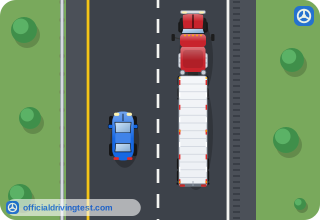
Compared with cars, how large are the blind spots of commercial vehicles?
- About the same
- Slightly smaller
- Much larger
- Smaller on the sides, larger in front
Show answer
Correct answer: Much larger
Commercial vehicles are generally larger and less maneuverable than a car and have much larger blind spots.
Source: New Hampshire Driver’s Manual (DSMV 360 (Rev. 11/25)), page 38 · Open this page in the manual (Manual page 38)
-
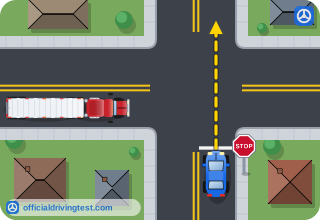
Compared with a car, what do commercial vehicles need?
- Shorter stopping distances but a lot more room to turn
- Longer stopping and accelerating distances and more room to turn
- Less room to turn but much longer accelerating distances
- The same stopping distance but wider lanes to turn
Show answer
Correct answer: Longer stopping and accelerating distances and more room to turn
Commercial vehicles have longer stopping and accelerating distances and need more room to turn.
Source: New Hampshire Driver’s Manual (DSMV 360 (Rev. 11/25)), page 38 · Open this page in the manual (Manual page 38)
-
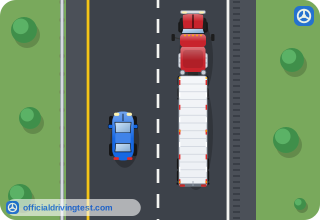
What is the No-Zone?
- The area where passing a large truck is against the law
- The distance a large truck needs to come to a stop
- The lane reserved for trucks on steep hills
- The blind-spot area around large trucks and buses
Show answer
Correct answer: The blind-spot area around large trucks and buses
The No-Zone is the area around large trucks or buses where vehicles disappear from the commercial driver's view into blind spots.
Source: New Hampshire Driver’s Manual (DSMV 360 (Rev. 11/25)), page 38 · Open this page in the manual (Manual page 38)
-
Where are the blind spots of a large truck or bus?
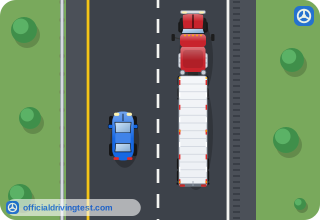
- On the sides, rear and front
- Only directly behind it
- Only on the right side
- Only on the left side and rear
Show answer
Correct answer: On the sides, rear and front
The No-Zone blind spots are on the sides, rear and front of the large vehicle.
Source: New Hampshire Driver’s Manual (DSMV 360 (Rev. 11/25)), page 38 · Open this page in the manual (Manual page 38)
-
If you cannot see the truck driver's face in the truck's side view mirror, what does that mean?
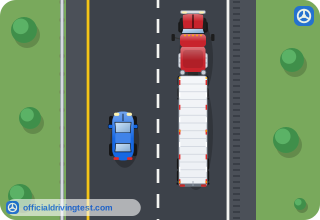
- The truck driver is about to change lanes
- The truck driver is slowing down
- The truck driver cannot see your vehicle
- The truck driver is looking in the rear-view mirror
Show answer
Correct answer: The truck driver cannot see your vehicle
If the truck driver's face cannot be seen in the side view mirror, then the truck driver cannot see the other vehicle.
Source: New Hampshire Driver’s Manual (DSMV 360 (Rev. 11/25)), page 39 · Open this page in the manual (Manual page 39)
-
Where does a truck's large blind spot on its right side extend?
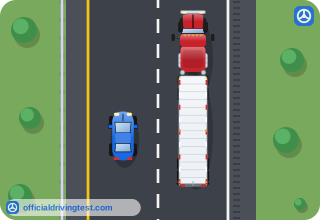
- Only beside the front tires
- From behind the cab up to the length of the truck
- Only at the rear bumper
- From the front bumper to the middle of the trailer
Show answer
Correct answer: From behind the cab up to the length of the truck
Trucks have a large blind spot on their right side starting behind the cab and extending up to the length of the truck.
Source: New Hampshire Driver’s Manual (DSMV 360 (Rev. 11/25)), page 39 · Open this page in the manual (Manual page 39)
-
How long should a driver stay alongside a large vehicle?
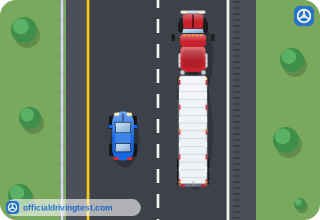
- At least as long as it takes to pass twice
- Until the truck driver waves
- As long as traffic allows
- No longer than required
Show answer
Correct answer: No longer than required
If the truck driver needs to swerve or change lanes, the chances of a collision are greatly increased, so drivers should avoid driving alongside a large vehicle for any longer than required.
Source: New Hampshire Driver’s Manual (DSMV 360 (Rev. 11/25)), page 39 · Open this page in the manual (Manual page 39)
-
Under ideal conditions, a loaded truck with good tires and properly adjusted brakes traveling at 55 mph needs at least how many feet to come to a complete stop?
- 335 feet
- 235 feet
- 285 feet
- 435 feet
Show answer
Correct answer: 335 feet
A loaded truck with good tires and properly adjusted brakes, under ideal conditions, traveling at 55 mph requires a minimum of 335 feet before coming to a complete stop.
Source: New Hampshire Driver’s Manual (DSMV 360 (Rev. 11/25)), page 39 · Open this page in the manual (Manual page 39)
-
Under ideal conditions, a loaded truck at 55 mph needs a stopping distance of how many times that of a car?
- About the same distance
- Exactly twice
- Greater than 1½ times
- Less than half
Show answer
Correct answer: Greater than 1½ times
A loaded truck traveling at 55 mph needs a minimum of 335 feet to stop, or greater than 1½ times the stopping distance of a car.
Source: New Hampshire Driver’s Manual (DSMV 360 (Rev. 11/25)), page 39 · Open this page in the manual (Manual page 39)
-
When passing a large vehicle, what should a driver see in the rear-view mirror before pulling in front?
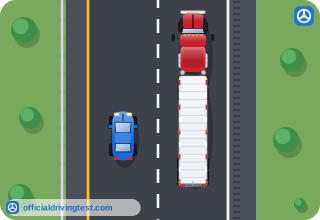
- The truck's rear wheels
- The whole front of the vehicle
- The truck's headlights only
- The truck driver's hands
Show answer
Correct answer: The whole front of the vehicle
When passing a large vehicle, look for the whole front of the vehicle in the rear-view mirror before pulling in front and maintaining speed.
Source: New Hampshire Driver’s Manual (DSMV 360 (Rev. 11/25)), page 39 · Open this page in the manual (Manual page 39)
-
How far behind a large vehicle can its huge blind spot extend?
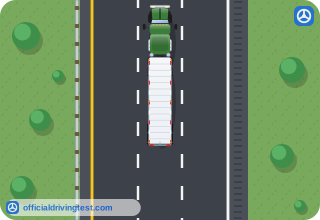
- Up to 50 feet
- Up to 100 feet
- Up to 500 feet
- Up to 200 feet
Show answer
Correct answer: Up to 200 feet
Large vehicles have huge blind spots directly behind them that extend up to 200 feet.
Source: New Hampshire Driver’s Manual (DSMV 360 (Rev. 11/25)), page 39 · Open this page in the manual (Manual page 39)
-
How should a driver position their vehicle when following a large vehicle?
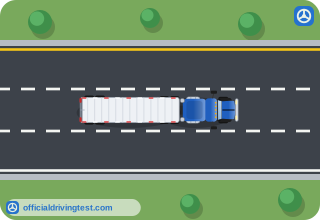
- So the truck driver can see it in the side mirrors
- Directly in the middle of the truck's rear bumper
- As close as possible behind the trailer
- Only in the lane to the right of the truck
Show answer
Correct answer: So the truck driver can see it in the side mirrors
Drivers should avoid following too closely and position their vehicle so the truck driver can see the vehicle in their side mirrors.
Source: New Hampshire Driver’s Manual (DSMV 360 (Rev. 11/25)), page 39 · Open this page in the manual (Manual page 39)
-
Which lane should drivers avoid, if possible, when traveling up or down hills or near truck weigh stations?
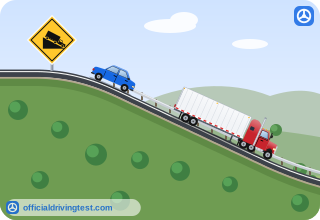
- The left lane
- The center of a three-lane road
- The right lane
- The lane next to the median
Show answer
Correct answer: The right lane
Large vehicles typically use the right lane on steep hills and near truck weigh stations, so avoiding the right lane there reduces the chance of a crash.
Source: New Hampshire Driver’s Manual (DSMV 360 (Rev. 11/25)), page 39 · Open this page in the manual (Manual page 39)
-
When a truck or bus needs to make a right turn, what may it need to do?
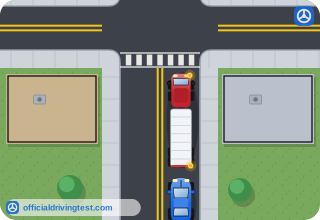
- Stay close to the curb
- Swing wide to the left
- Stop in the middle of the intersection
- Turn from the left lane only
Show answer
Correct answer: Swing wide to the left
When a truck or bus makes a right turn, it may need to swing wide to the left to clear the corner of a curb or other obstruction.
Source: New Hampshire Driver’s Manual (DSMV 360 (Rev. 11/25)), page 39 · Open this page in the manual (Manual page 39)
-
To avoid a crash near a turning truck or bus, when should a driver turn?
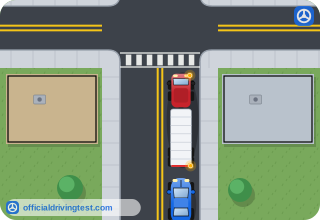
- As soon as the truck's turn signal comes on
- Between the truck and the curb
- Right after the truck begins to swing wide
- Not until the truck or bus has completed its turn
Show answer
Correct answer: Not until the truck or bus has completed its turn
If a driver tries to get between the truck or bus and the curb, the vehicle can be squeezed and suffer a serious crash, so do not turn until the truck or bus has completed its turn.
Source: New Hampshire Driver’s Manual (DSMV 360 (Rev. 11/25)), page 39 · Open this page in the manual (Manual page 39)
-
When meeting a truck coming from the opposite direction, where should a driver keep the vehicle?
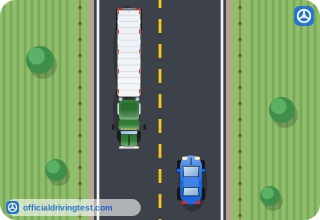
- As far to the right as possible
- Close to the center line
- On the left side of the lane
- On the shoulder with hazard flashers on
Show answer
Correct answer: As far to the right as possible
Keeping as far as possible to the right side avoids a sideswipe crash and reduces the wind turbulence between the two vehicles.
Source: New Hampshire Driver’s Manual (DSMV 360 (Rev. 11/25)), page 39 · Open this page in the manual (Manual page 39)
-
What should a driver do when in doubt about the speed of an oncoming truck or bus before a left turn?
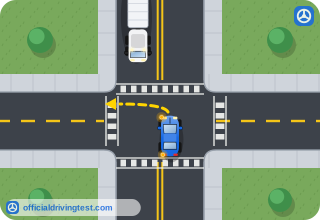
- Turn quickly before it arrives
- Flash the headlights and turn
- Not turn left in its path
- Turn left once its driver waves you on
Show answer
Correct answer: Not turn left in its path
When in doubt about the speed of an oncoming truck or bus, do not turn left in its path, since it takes a longer stopping distance than a car.
Source: New Hampshire Driver’s Manual (DSMV 360 (Rev. 11/25)), page 40 · Open this page in the manual (Manual page 40)
-
What do stop lines at many intersections help give larger vehicles?
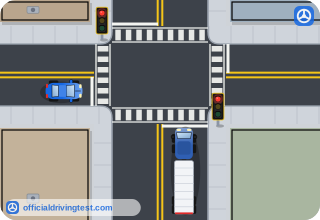
- Longer green signals
- More turning space
- Shorter stopping distances
- A separate turning lane
Show answer
Correct answer: More turning space
Stop lines help to set a vehicle farther back at an intersection to give larger vehicles more turning space, so drivers should always stop behind them.
Source: New Hampshire Driver’s Manual (DSMV 360 (Rev. 11/25)), page 40 · Open this page in the manual (Manual page 40)
-
What should a driver not do to a large vehicle in traffic or on the highway?
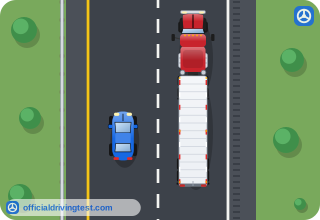
- Pass it on its left side
- Follow it at a safe distance
- Stay behind the stop line when it is turning
- Cut it off to reach an exit or turn
Show answer
Correct answer: Cut it off to reach an exit or turn
The manual says not to cut off a large vehicle to reach an exit or turn or to beat a truck into a single-lane construction zone.
Source: New Hampshire Driver’s Manual (DSMV 360 (Rev. 11/25)), page 40 · Open this page in the manual (Manual page 40)