New Hampshire: Vision, fatigue and distractions Practice Test
Seeing well, fatigue, hand-held phones and other distractions, aggressive driving and emotions behind the wheel.
Independent educational site · not affiliated with any government agency or DMV
Ready? Test yourself
- Instant feedback with an explanation
- Every answer cites its source in the manual
- Your best score is saved on this device
- Keyboard: press 1 to 4 to answer and Enter for the next question
Questions are original and based on the official manual "New Hampshire Driver’s Manual" (DSMV 360 (Rev. 11/25)), New Hampshire Division of Motor Vehicles (DMV).
All 31 questions in this practice test
Take the test above first, then use this list to study. Tap “Show answer” to see the correct answer and explanation.
Show the questions and answersHide the questions
-
May a driver under 18 use a mobile telephone with a hands-free device while driving a motor vehicle?
- Yes, if the telephone is hands-free
- Yes, but only when temporarily stopped in traffic
- Yes, if the call is to a parent or guardian
- No, whether hands-free or not
Show answer
Correct answer: No, whether hands-free or not
Drivers under 18 may not use a cellular or mobile telephone or other mobile electronic device while driving or temporarily stopped in traffic, whether hands-free or not, except to report an emergency to the enhanced 911 system or any public safety agency.
Source: New Hampshire Driver’s Manual (DSMV 360 (Rev. 11/25)), page 4 · Open this page in the manual (Manual page 4)
-
A driver under 18 may use a mobile electronic device while driving only to do what?
- Report an emergency to the enhanced 911 system
- Call a parent or guardian about the trip
- Check directions to the destination of the trip
- Report a traffic jam to a radio station
Show answer
Correct answer: Report an emergency to the enhanced 911 system
The only exception for drivers under 18 is to report an emergency to the enhanced 911 system or any public safety agency.
Source: New Hampshire Driver’s Manual (DSMV 360 (Rev. 11/25)), page 4 · Open this page in the manual (Manual page 4)
-
A driver who is required to wear corrective lenses should avoid which of these at night?
- Using dark or tinted corrective lenses
- Wearing clear corrective lenses
- Using lenses with an anti-glare coating
- Wearing glasses instead of contact lenses
Show answer
Correct answer: Using dark or tinted corrective lenses
The manual tells drivers who must wear corrective lenses to avoid dark or tinted corrective lenses at night.
Source: New Hampshire Driver’s Manual (DSMV 360 (Rev. 11/25)), page 7 · Open this page in the manual (Manual page 7)
-
Because seeing well is so important to safe driving, what does the manual say drivers should have regularly?
- Hearing tests
- Vehicle inspections
- Eye examinations
- Blood pressure checks
Show answer
Correct answer: Eye examinations
The manual says drivers should have eye examinations regularly because good vision is important for safe driving.
Source: New Hampshire Driver’s Manual (DSMV 360 (Rev. 11/25)), page 7 · Open this page in the manual (Manual page 7)
-
According to the manual, how can fatigue affect a driver?
- It improves focus but makes the driver slower to steer
- It can affect vision and increase the time to make decisions
- It reduces hearing but leaves reaction time unchanged
- It affects only the driver’s balance, not decision making
Show answer
Correct answer: It can affect vision and increase the time to make decisions
The manual says fatigue can affect a driver’s vision and increase the time to make decisions.
Source: New Hampshire Driver’s Manual (DSMV 360 (Rev. 11/25)), page 7 · Open this page in the manual (Manual page 7)
-
A driver who has been awake for a continuous 18 hours typically performs like a person with which Blood Alcohol Concentration (BAC)?
- 0.01%
- 0.03%
- 0.12%
- 0.05%
Show answer
Correct answer: 0.05%
The manual says 18 continuous hours awake typically produces performance similar to a BAC of 0.05%.
Source: New Hampshire Driver’s Manual (DSMV 360 (Rev. 11/25)), page 7 · Open this page in the manual (Manual page 7)
-
After 21 hours without sleep, driver performance mimics which Blood Alcohol Concentration (BAC)?
- 0.02%
- 0.04%
- 0.15%
- 0.08%
Show answer
Correct answer: 0.08%
The manual says that after 21 hours without sleep, performance mimics a BAC of 0.08%.
Source: New Hampshire Driver’s Manual (DSMV 360 (Rev. 11/25)), page 7 · Open this page in the manual (Manual page 7)
-
After 24 hours without sleep, driver performance mimics which Blood Alcohol Concentration (BAC)?
- 0.03%
- 0.10%
- 0.06%
- 0.20%
Show answer
Correct answer: 0.10%
The manual says that after 24 hours without sleep, performance mimics a BAC of 0.10%.
Source: New Hampshire Driver’s Manual (DSMV 360 (Rev. 11/25)), page 7 · Open this page in the manual (Manual page 7)
-
According to the manual, who must make the responsible choice not to drive when tired?
- Passengers
- Police officers
- The driver
- The DMV
Show answer
Correct answer: The driver
The manual says it is up to the driver to make the responsible choice not to drive if they are tired.
Source: New Hampshire Driver’s Manual (DSMV 360 (Rev. 11/25)), page 7 · Open this page in the manual (Manual page 7)
-
According to the manual, how much sleep does the average person need to maintain proper alertness during the day?
- 7 to 9 hours
- 4 to 6 hours
- 5 to 7 hours
- 10 to 12 hours
Show answer
Correct answer: 7 to 9 hours
The manual says the average person needs 7 to 9 hours of sleep to maintain proper alertness during the day.
Source: New Hampshire Driver’s Manual (DSMV 360 (Rev. 11/25)), page 7 · Open this page in the manual (Manual page 7)
-
To avoid fatigue on long trips, how often does the manual say to plan to stop?
- At least every 2 hours
- At least every 3 hours
- At least every 4 hours
- At least every 6 hours
Show answer
Correct answer: At least every 2 hours
The manual advises stopping at least every 2 hours during long trips to stretch or get a drink.
Source: New Hampshire Driver’s Manual (DSMV 360 (Rev. 11/25)), page 7 · Open this page in the manual (Manual page 7)
-
Before getting too tired, a driver should pull off at the next exit or rest area to take what kind of nap?
- A 5 to 10 minute nap
- A 30 to 45 minute nap
- A 15 to 20 minute nap
- A 1 to 2 hour nap
Show answer
Correct answer: A 15 to 20 minute nap
The manual says to stop before getting too tired and take a 15 to 20 minute nap or find a place to sleep for the night.
Source: New Hampshire Driver’s Manual (DSMV 360 (Rev. 11/25)), page 7 · Open this page in the manual (Manual page 7)
-
Which is one of the ways to avoid fatigue that the manual lists?
- Drive only on highways after dark
- Try not to drive late at night
- Skip breaks to arrive sooner
- Schedule trips for the late evening
Show answer
Correct answer: Try not to drive late at night
The manual lists not driving late at night among its ways to avoid fatigue.
Source: New Hampshire Driver’s Manual (DSMV 360 (Rev. 11/25)), page 7 · Open this page in the manual (Manual page 7)
-
What is a distraction, according to the manual?
- Only a phone call made while the vehicle is moving
- Any noise made by a passenger inside the vehicle
- Only something that happens outside the vehicle
- Anything that takes a driver’s attention away from driving
Show answer
Correct answer: Anything that takes a driver’s attention away from driving
The manual defines a distraction as anything that takes a driver’s attention away from driving.
Source: New Hampshire Driver’s Manual (DSMV 360 (Rev. 11/25)), page 7 · Open this page in the manual (Manual page 7)
-
How does the manual describe mental activities that take the operator’s mind away from driving?
- Less dangerous than looking away from the road
- Harmless if the driver’s hands stay on the wheel
- A problem only for drivers under age 21
- Just as dangerous as other distractions
Show answer
Correct answer: Just as dangerous as other distractions
The manual says mental activities that take the operator’s mind away from driving are just as dangerous.
Source: New Hampshire Driver’s Manual (DSMV 360 (Rev. 11/25)), page 7 · Open this page in the manual (Manual page 7)
-
The risk of an accident, injury, death or property damage is increased if a driver takes their eyes off the road, or takes what else off the steering wheel?
- Their foot
- Their hands
- Their knee
- Their elbow
Show answer
Correct answer: Their hands
The manual says the risk increases if a driver takes their eyes off the road or their hands off the steering wheel.
Source: New Hampshire Driver’s Manual (DSMV 360 (Rev. 11/25)), page 7 · Open this page in the manual (Manual page 7)
-
Which of these does New Hampshire law list as prohibited while driving a moving vehicle with a hand-held mobile electronic device?
- Changing the station on the vehicle’s built-in radio dial
- Adjusting the vehicle’s air conditioning and fan controls
- Reading, composing, viewing or posting an electronic message
- Checking the speedometer and the fuel gauge on the dashboard
Show answer
Correct answer: Reading, composing, viewing or posting an electronic message
The law bars using a hand-held device for reading, composing, viewing, or posting any electronic message while driving.
Source: New Hampshire Driver’s Manual (DSMV 360 (Rev. 11/25)), page 7 · Open this page in the manual (Manual page 7)
-
The New Hampshire law on hand-held mobile electronic devices applies to a driver of a moving vehicle and also when the vehicle is in what situation?
- Halted in traffic for a traffic control device
- Parked in a lot with the engine turned off
- Stopped in a parking space at a store
- Pulled over to the side of a rural road
Show answer
Correct answer: Halted in traffic for a traffic control device
The law covers a driver while driving a moving motor vehicle or temporarily halted in traffic for a traffic control device or other momentary delay.
Source: New Hampshire Driver’s Manual (DSMV 360 (Rev. 11/25)), page 7 · Open this page in the manual (Manual page 7)
-
What is an operator who holds a cellular telephone near his or her ear while the vehicle is in motion presumed to be doing?
- Engaging in a call
- Checking the time
- Adjusting a hearing aid
- Waving to another driver
Show answer
Correct answer: Engaging in a call
The law presumes that an operator holding a phone in the immediate proximity of the ear while the vehicle is in motion is engaging in a call.
Source: New Hampshire Driver’s Manual (DSMV 360 (Rev. 11/25)), page 8 · Open this page in the manual (Manual page 8)
-
Under New Hampshire law, drivers under 18 may not use a cellular or mobile telephone, whether it is hands-free or not, except for what reason?
- To tell a parent that they are on the way home
- To check a map when they are lost
- To report an emergency to the enhanced 911 system
- To make a call while stopped at a red light
Show answer
Correct answer: To report an emergency to the enhanced 911 system
The only exception is to report an emergency to the enhanced 911 system or any public safety agency.
Source: New Hampshire Driver’s Manual (DSMV 360 (Rev. 11/25)), page 8 · Open this page in the manual (Manual page 8)
-
The law’s definition of a hands-free electronic device does not rule out using either hand merely to do what?
- Type a message on the telephone’s keyboard
- Activate, deactivate or initiate a function of the telephone
- Hold the telephone against the ear
- Read an electronic message on the telephone’s screen
Show answer
Correct answer: Activate, deactivate or initiate a function of the telephone
The definition does not preclude using either hand merely to activate, deactivate or initiate a function of the telephone.
Source: New Hampshire Driver’s Manual (DSMV 360 (Rev. 11/25)), page 8 · Open this page in the manual (Manual page 8)
-
How does the manual say pets should be secured when driving?
- On the front passenger’s lap, held by hand
- Loose in the rear seat or cargo area
- Tied by a leash to the headrest
- In a pet carrier or portable kennel
Show answer
Correct answer: In a pet carrier or portable kennel
The manual says to properly secure pets in a pet carrier or portable kennel.
Source: New Hampshire Driver’s Manual (DSMV 360 (Rev. 11/25)), page 8 · Open this page in the manual (Manual page 8)
-
Which of these does the manual say to avoid when driving?
- Listening to quiet music at a low volume on the radio
- Talking calmly with a passenger about the route to take next
- Keeping both hands on the steering wheel at all times
- Arguments and stressful or emotional conversations with passengers
Show answer
Correct answer: Arguments and stressful or emotional conversations with passengers
The manual tells drivers to avoid arguments and stressful or emotional conversations with passengers.
Source: New Hampshire Driver’s Manual (DSMV 360 (Rev. 11/25)), page 8 · Open this page in the manual (Manual page 8)
-
What does the manual say a driver should avoid doing while driving?
- Using the turn signal
- Eating
- Checking the mirrors
- Wearing a safety belt
Show answer
Correct answer: Eating
The manual says to avoid eating while driving.
Source: New Hampshire Driver’s Manual (DSMV 360 (Rev. 11/25)), page 8 · Open this page in the manual (Manual page 8)
-
When driving, what does the manual say a driver should be sure of regarding children in the vehicle?
- That they are seated in the front passenger seat
- That they are given a snack to stay calm
- That they are properly and safely buckled up
- That they are facing the rear window
Show answer
Correct answer: That they are properly and safely buckled up
The manual says to be sure children are properly and safely buckled up.
Source: New Hampshire Driver’s Manual (DSMV 360 (Rev. 11/25)), page 8 · Open this page in the manual (Manual page 8)
-
According to the manual, when does aggressive driving occur?
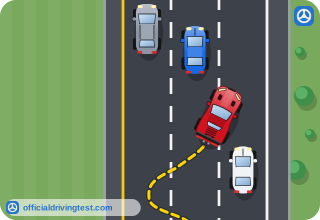
- When a driver intentionally endangers other persons or property
- When a driver makes an honest mistake and corrects it right away
- When a driver slows down to let other vehicles merge safely ahead
- When a driver is delayed by heavy traffic on a long highway trip
Show answer
Correct answer: When a driver intentionally endangers other persons or property
The manual defines aggressive driving as an individual intentionally committing an action which endangers other persons or property.
Source: New Hampshire Driver’s Manual (DSMV 360 (Rev. 11/25)), page 8 · Open this page in the manual (Manual page 8)
-
Which behavior is typically associated with aggressive driving, according to the manual?
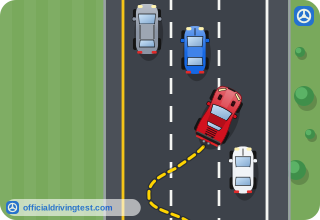
- Following too closely
- Signaling well before a turn
- Obeying traffic control devices
- Making a complete stop at a stop sign
Show answer
Correct answer: Following too closely
The manual lists speeding, following too closely, unsafe lane changes, improper signaling and failing to obey traffic control devices as aggressive driving behaviors.
Source: New Hampshire Driver’s Manual (DSMV 360 (Rev. 11/25)), page 8 · Open this page in the manual (Manual page 8)
-
What does the manual advise drivers to be toward other users of the road?
- Quick and assertive
- Firm and competitive
- Patient and courteous
- Silent and distant
Show answer
Correct answer: Patient and courteous
The manual says to concentrate on driving and be patient and courteous to other users of the road.
Source: New Hampshire Driver’s Manual (DSMV 360 (Rev. 11/25)), page 8 · Open this page in the manual (Manual page 8)
-
According to the manual, what may emotions interfere with in a driver?
- The ability to see colors clearly
- The ability to process information
- The ability to hear sirens nearby
- The ability to smell smoke or fuel
Show answer
Correct answer: The ability to process information
The manual says emotions may interfere with a driver’s ability to process information.
Source: New Hampshire Driver’s Manual (DSMV 360 (Rev. 11/25)), page 9 · Open this page in the manual (Manual page 9)
-
Which of these may help a driver who is upset take time to calm down before getting behind the wheel?
- Driving faster to burn off energy
- Turning up the radio
- Skipping the safety belt to relax
- Taking a short walk or nap
Show answer
Correct answer: Taking a short walk or nap
The manual says a driver should take time to calm down before driving, and a short walk or nap may help.
Source: New Hampshire Driver’s Manual (DSMV 360 (Rev. 11/25)), page 10 · Open this page in the manual (Manual page 10)
-
How does the manual suggest drivers avoid stressful situations?
- Drive faster than usual to make up for lost time on the road
- Choose the route with the most traffic lights and intersections
- Leave at the last minute so there is no time to wait around
- Leave a few minutes early and plan for congestion and poor weather
Show answer
Correct answer: Leave a few minutes early and plan for congestion and poor weather
The manual advises leaving a few minutes early and planning for traffic congestion and/or poor weather conditions.
Source: New Hampshire Driver’s Manual (DSMV 360 (Rev. 11/25)), page 10 · Open this page in the manual (Manual page 10)