Pavement markings in Minnesota
The Minnesota Driver’s Manual shows or names everything on this page: 17 in all, on pages 35, 69–71.
Independent educational site · not affiliated with any government agency or DMV
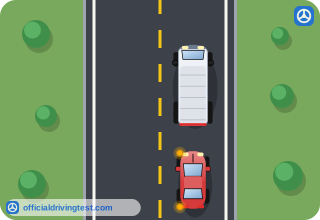
Broken Yellow Centerline (May Pass)
Two-lane road with traffic moving in both directions. Traffic is separated by a line of yellow dashes, which means you may pass from either lane.
Manual page 69
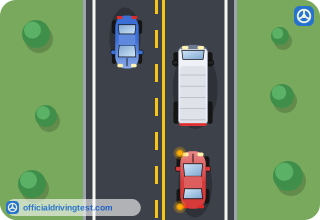
Solid and Broken Yellow Line
Two-lane road with traffic moving in both directions. Do not pass in the lane with the solid yellow line.
Manual page 69
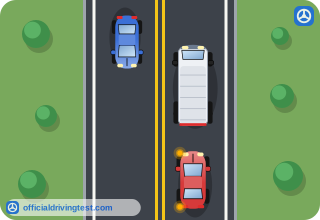
Double Solid Yellow Lines
Two-lane road with traffic moving in both directions. You must not pass, regardless of which direction you are driving.
Manual page 70
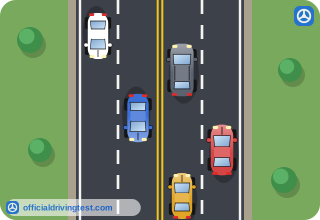
Four-Lane Road with Double Yellow Center
Road with four lanes, two in each direction separated by two solid yellow lines. Do not cross solid yellow lines to pass.
Manual page 70
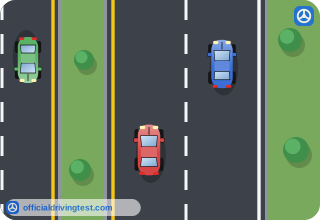
Divided Road (Solid Divider, Yellow Lines)
Multilane road with traffic moving in both directions separated by a solid traffic divider. No shoulders at inner edges of roadway.
Manual page 70
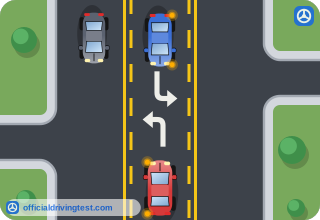
Center Turn Lane (Both Directions)
A center lane between lanes of traffic traveling in opposite directions may be designated for left turns only. This type of lane is marked by parallel solid and dashed yellow lines. These lines are sometimes accompanied by white arrows on the pavement. Vehicles traveling in either direction can use these lanes to make left turns onto another roadway or a driveway.
Manual page 71
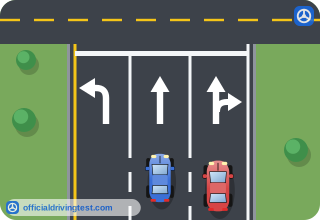
Turn Lane Arrows
White arrows, sometimes accompanied by the word "only," indicate that drivers must stay within a designated lane while turning onto the cross street. If your vehicle is in this type of lane, you must turn. Some turn lanes have multiple arrows, allowing you to turn left or right, or to go straight.
Manual page 71
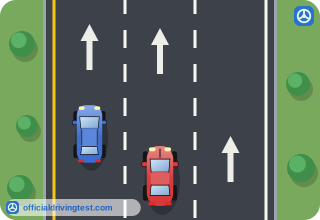
White Dashes (Lane Lines)
White dashes: You can change lanes where this marking is present.
Manual page 69
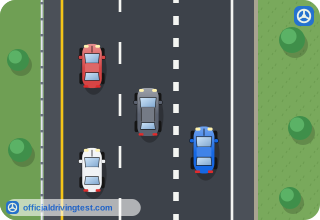
Shorter, Thicker White Dashes
Shorter and thicker white dashes: The lane is ending.
Manual page 69
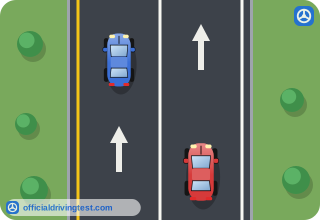
Solid White Line
Solid white line: You should not change lanes. Solid white lines also mark crosswalks, stop lines at intersections, parking stalls and the edges of a roadway.
Manual page 69
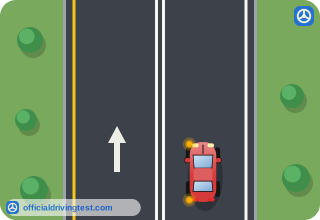
Double Solid White Lines
Double solid white lines: You must not change lanes.
Manual page 69
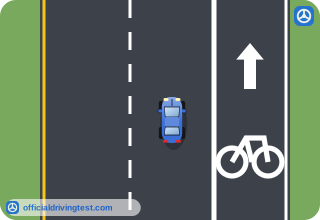
Solid White Line with Bicycle Symbol
Solid white line with bicycle insignia: This area is for bicycle or electric-assist bicycle traffic only. If you are on a bicycle, you must travel in the same direction as adjacent traffic.
Manual page 69
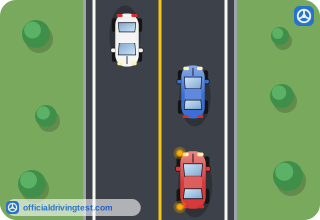
Solid Yellow Line
Solid yellow line: You must not pass. Passing in a no-passing zone is illegal.
Manual page 69
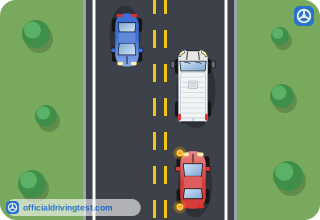
Dashed Double Yellow Lines (Reversible Lane)
Reversible lanes help keep traffic flowing during rush-hour periods. They are separated by dashed double yellow lines. You may cross these lines only if the overhead signal above the lane you wish to enter has a green arrow, or if a sign permits you to do so.
Manual page 71
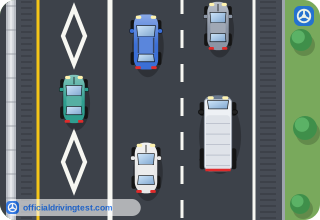
Diamond Lane Marking
They are marked by a diamond symbol or with "Carpool Only" signs. They are usually located on the far-left side of a freeway and are separated from other traffic lanes by combinations of white or yellow lines.
Manual page 71
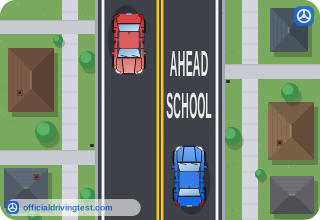
Pavement Words (SCHOOL AHEAD)
Pavement messages may be used to warn you of certain conditions, such as "School Zone Ahead."
Manual page 71
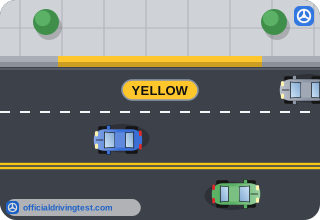
Yellow Curb
Parking is not allowed in the following areas: … Beside a curb that is painted yellow or where official "No Parking" signs are posted
Manual page 35