Michigan: Emergencies and special situations — Part 5 Practice Test
Questions in this part include: “Which of the following should you NOT rely on to avoid hitting deer?” · “Most cars have at least how many blind spots that cannot be seen with the side-view mirrors?”
Independent educational site · not affiliated with any government agency or DMV
Ready? Test yourself
- Instant feedback with an explanation
- Every answer cites its source in the manual
- Your best score is saved on this device
Questions are original and based on the official manual "What Every Driver Must Know" (October 2025), Michigan Secretary of State.
Did you know?
- In 1930, Fisher Body introduced the slanted windshield to reduce glare from the lights of oncoming traffic at night.
- In 1955, Ford Motor Co. announced that seat belts would be offered as a factory-installed option.
- In 1974, the first mass-produced air bags were offered as an option in some Cadillacs and Buicks.
More background reading from the manual →
All 16 questions in this practice test
Take the test above first, then use this list to study. Tap “Show answer” to see the correct answer and explanation.
Show the questions and answersHide the questions
-
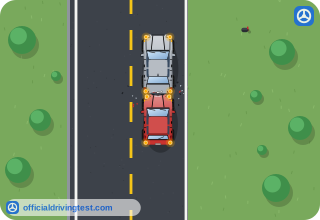
After a crash that does not involve serious injury or death, if the vehicle can be driven and it's safe, it should be:
- Abandoned at the scene
- Driven immediately to a repair shop
- Moved off the main roadway to the shoulder, median, or a nearby parking lot
- Left exactly where it stopped, blocking traffic, until police arrive
Show answer
Correct answer: Moved off the main roadway to the shoulder, median, or a nearby parking lot
Vehicles in crashes without serious injury or death should be moved from the main roadway to a safe location like the shoulder, median, or a nearby parking lot, if drivable and safe.
Source: What Every Driver Must Know (October 2025), page 65 · Open this page in the manual (Manual page 65)
-
After a crash, drivers involved should exchange:
- Nothing at all until the police arrive at the scene
- Only insurance company names
- Only their phone numbers, nothing else
- Names, addresses, license numbers, registration and insurance
Show answer
Correct answer: Names, addresses, license numbers, registration and insurance
Exchange names, addresses, driver's license numbers, registration and insurance information with the other drivers involved.
Source: What Every Driver Must Know (October 2025), page 65 · Open this page in the manual (Manual page 65)
-
If you hit a deer, you should report it to local law enforcement, the county sheriff, Michigan State Police, or the DNR, because:
- Only insurance companies need to know
- They can provide a permit to keep the deer
- It has no benefit to you
- It is required only if the deer survives
Show answer
Correct answer: They can provide a permit to keep the deer
If you hit a deer, report it to authorities, who can provide a permit to keep it.
Source: What Every Driver Must Know (October 2025), page 65 · Open this page in the manual (Manual page 65)
-
Which of the following should you NOT rely on to avoid hitting deer?
- Watching for deer crossing signs
- Deer whistles, flashing high beams, or honking
- Slowing down when you see one deer
- Staying especially alert at dawn and dusk
Show answer
Correct answer: Deer whistles, flashing high beams, or honking
Do not rely on gimmicks - deer whistles, flashing your high-beam headlights or honking your horn will not deter deer.
Source: What Every Driver Must Know (October 2025), page 65 · Open this page in the manual (Manual page 65)
-
According to the manual, when should you be especially alert for deer?
- Only on freeways, never on local roads
- Only in winter, when roads are icy
- At noon, in the summer months
- At dawn and dusk, and in fall and spring
Show answer
Correct answer: At dawn and dusk, and in fall and spring
Be especially alert for deer at dawn and dusk, and in fall and spring, though vehicle-deer crashes can occur at any time of the year.
Source: What Every Driver Must Know (October 2025), page 65 · Open this page in the manual (Manual page 65)
-
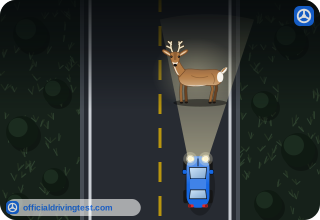
If a vehicle-deer crash is unavoidable, after coming to a controlled stop, you should:
- Reverse back onto the road
- Immediately restart and continue your trip
- Get out immediately to check on the deer
- Steer your vehicle well off the roadway
Show answer
Correct answer: Steer your vehicle well off the roadway
After coming to a controlled stop following an unavoidable deer collision, steer your vehicle well off the roadway.
Source: What Every Driver Must Know (October 2025), page 65 · Open this page in the manual (Manual page 65)
-
Most cars have at least how many blind spots that cannot be seen with the side-view mirrors?
- Four
- One, directly behind the vehicle
- None
- Two, to the left and right rear
Show answer
Correct answer: Two, to the left and right rear
Most cars have at least two blind spots, areas to the left and right rear of the vehicle that you cannot see with your side-view mirrors.
Source: What Every Driver Must Know (October 2025), page 66 · Open this page in the manual (Manual page 66)
-
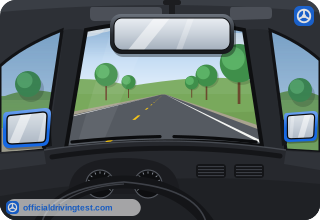
To minimize blind spots, your outside mirrors should be adjusted to:
- Show only the sky
- Show the interior of your own vehicle
- Match the inside rearview mirror exactly
- See the edges of your vehicle
Show answer
Correct answer: See the edges of your vehicle
Adjust the left and right outside mirrors to see the edges of the vehicle when seated in a normal driving position, to minimize blind spots.
Source: What Every Driver Must Know (October 2025), page 66 · Open this page in the manual (Manual page 66)
-
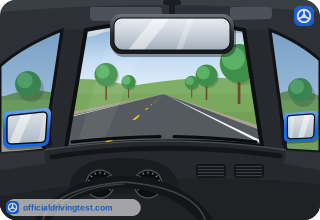
In the alternate blind-spot mirror adjustment method described in the manual, you should:
- Adjust mirrors while the vehicle is moving at freeway speed
- Only adjust the inside rearview mirror, never the outside ones
- Fold both mirrors in completely
- Lean left, then right, setting each mirror to barely show the rear edge
Show answer
Correct answer: Lean left, then right, setting each mirror to barely show the rear edge
Lean left to touch your head to the driver side window and adjust the left mirror to barely show the rear edge of the vehicle. Then lean right to position your head above the center console or in line with the rearview mirror, and adjust the right mirror to barely show the rear edge of the vehicle.
Source: What Every Driver Must Know (October 2025), page 66 · Open this page in the manual (Manual page 66)
-
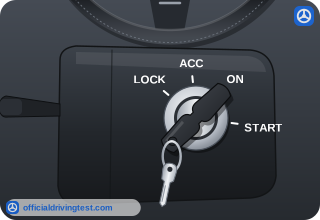
Why should you never turn the ignition to the 'lock' position while your vehicle is in motion?
- It has no real effect while you are driving
- The steering will lock and you could lose control
- It will trigger the alarm
- It will drain the battery
Show answer
Correct answer: The steering will lock and you could lose control
Never turn the ignition to the "lock" position while your vehicle is in motion - the steering will lock and you could lose control.
Source: What Every Driver Must Know (October 2025), page 66 · Open this page in the manual (Manual page 66)
-
If someone acting suspiciously approaches your vehicle, you should:
- Turn off your engine and wait
- Roll down your window to talk to them
- Get out to confront them
- Try to drive away or sound the horn
Show answer
Correct answer: Try to drive away or sound the horn
If someone acting suspiciously approaches your vehicle, try to drive away or sound the horn.
Source: What Every Driver Must Know (October 2025), page 66 · Open this page in the manual (Manual page 66)
-
Under Michigan law, is it allowed to use a mobile phone while driving to report an emergency?
- Only for passengers, never the driver
- Yes, it is allowed
- No, it is always illegal
- Only if the vehicle is parked
Show answer
Correct answer: Yes, it is allowed
Use of a mobile phone while driving to report emergencies is allowed under Michigan law.
Source: What Every Driver Must Know (October 2025), page 67 · Open this page in the manual (Manual page 67)
-
If a carjacker wants your vehicle, the manual advises you to:
- Argue with the carjacker
- Give it up without a fight
- Try to drive away at high speed
- Fight to keep the vehicle
Show answer
Correct answer: Give it up without a fight
If a carjacker wants the vehicle, give it up without a fight; a car can be replaced but personal safety is priceless.
Source: What Every Driver Must Know (October 2025), page 67 · Open this page in the manual (Manual page 67)
-
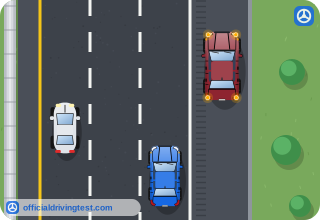
If you must leave a disabled vehicle and walk to safety, you should remember that:
- You should hitchhike instead
- It is dangerous and illegal to walk on the freeway
- You must walk in the travel lane, not the shoulder
- It is legal and safe to walk along any freeway
Show answer
Correct answer: It is dangerous and illegal to walk on the freeway
It is dangerous and illegal for a pedestrian to walk on the freeway.
Source: What Every Driver Must Know (October 2025), page 67 · Open this page in the manual (Manual page 67)
-
If you believe a traffic stop or the ticket you received was inappropriate, you should:
- Drive away without accepting the ticket
- Discuss it with the court, not the officer
- Refuse to sign the ticket
- Argue with the officer at the scene
Show answer
Correct answer: Discuss it with the court, not the officer
Cooperate with the officer's directions, and if you feel the stop or ticket is inappropriate, discuss the matter with the court, not the officer.
Source: What Every Driver Must Know (October 2025), page 67 · Open this page in the manual (Manual page 67)
-
Whose directions take priority over other traffic control devices?
- A road sign
- A traffic light
- A law enforcement officer's orders
- A construction worker's sign only
Show answer
Correct answer: A law enforcement officer's orders
Always obey a law enforcement officer's orders; an officer's directions take priority over other traffic control devices.
Source: What Every Driver Must Know (October 2025), page 67 · Open this page in the manual (Manual page 67)