Massachusetts: Signals and vehicle controls
Hand and turn signals, the horn, headlights and high beams, brakes and antilock brakes, driver assistance systems, mirrors and checking your vehicle’s condition. Split into 3 shorter tests so you're not stuck in one long quiz.
Independent educational site · not affiliated with any government agency or DMV
Choose a part
Signals and vehicle controls — Part 1
Questions in this part include: “A passenger vehicle must have a working, undamaged safety belt for whom?”
StartSignals and vehicle controls — Part 2
Questions in this part include: “For which purpose should you use your horn?”
StartSignals and vehicle controls — Part 3
Questions in this part include: “When you are driving on a roadway, what are other drivers expected to assume you will do unless you show otherwise?”
StartAll 53 Signals and vehicle controls questions with answers
Choose a part above to take a practice test, or study every question and answer here.
Show the questions and answersHide the questions
-
A passenger vehicle must have a working, undamaged safety belt for whom?
- The driver and all passengers
- The driver only
- The driver and the front-seat passenger
- The driver and passengers under 16
Show answer
Correct answer: The driver and all passengers
Each passenger vehicle must have a working, undamaged safety belt for the driver and all passengers.
Source: Massachusetts Driver's Manual (Revised April 2026), page 34 · Open this page in the manual (Manual page 34)
-
How many approved white headlights must a passenger vehicle have in the front?
- One
- Three
- Two
- Four
Show answer
Correct answer: Two
The manual says there must be two approved white headlights in the front.
Source: Massachusetts Driver's Manual (Revised April 2026), page 34 · Open this page in the manual (Manual page 34)
-
How many red stop (brake) lights must a passenger vehicle have in the back?
- One
- Three
- Four
- Five
Show answer
Correct answer: Three
A passenger vehicle must have three red stop (brake) lights in the back.
Source: Massachusetts Driver's Manual (Revised April 2026), page 34 · Open this page in the manual (Manual page 34)
-
What small light must a passenger vehicle have above the back license plate?
- A small red light
- A small yellow light
- A small blue light
- A small white light
Show answer
Correct answer: A small white light
The manual requires a small white light above the back license plate.
Source: Massachusetts Driver's Manual (Revised April 2026), page 34 · Open this page in the manual (Manual page 34)
-
If the directional signals or brake lights on your vehicle stop working, what must you do until they are fixed?
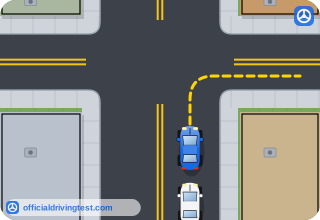
- Drive only during daylight hours
- Sound the horn before every turn or stop
- Use hand signals when turning or slowing
- Keep the headlights on high beam
Show answer
Correct answer: Use hand signals when turning or slowing
You must have the lights fixed right away, and until then you must use hand signals when turning or slowing.
Source: Massachusetts Driver's Manual (Revised April 2026), page 34 · Open this page in the manual (Manual page 34)
-
How often must every vehicle pass a safety and emissions inspection?
- Once a year
- Every two years
- Every three years
- Only when it is sold
Show answer
Correct answer: Once a year
The manual states that every vehicle must pass an annual safety and emissions inspection.
Source: Massachusetts Driver's Manual (Revised April 2026), page 34 · Open this page in the manual (Manual page 34)
-
For what may a passenger vehicle's spot light be used?
- To light the road ahead on dark roads without street lights
- To signal other drivers that you want to pass them
- To see better when backing up at night
- To read signs, or as an emergency light if the headlights fail
Show answer
Correct answer: To read signs, or as an emergency light if the headlights fail
A spot light may only be used to read signs or as an emergency light if the headlights are not working.
Source: Massachusetts Driver's Manual (Revised April 2026), page 34 · Open this page in the manual (Manual page 34)
-
How high above the roadway can a passenger vehicle's spot light shine, 30 feet away from the vehicle?
- Six feet
- Two feet
- Ten feet
- Four feet
Show answer
Correct answer: Two feet
A spot light can only shine two feet above the roadway 30 feet away from the vehicle.
Source: Massachusetts Driver's Manual (Revised April 2026), page 34 · Open this page in the manual (Manual page 34)
-
What do you need to have flashing, rotating, oscillating, or strobe lights on a vehicle?
- An inspection sticker from a licensed station
- A permit from the RMV
- Written approval from the local police department
- A commercial driver license
Show answer
Correct answer: A permit from the RMV
Emergency lights are not allowed on a vehicle unless you get a permit from the RMV.
Source: Massachusetts Driver's Manual (Revised April 2026), page 34 · Open this page in the manual (Manual page 34)
-
How much may you darken the side and rear windows of a passenger vehicle with glass tinting?
- Up to 20 percent
- Up to 50 percent
- Up to 70 percent
- Up to 35 percent
Show answer
Correct answer: Up to 35 percent
You can darken your side and rear windows up to 35 percent.
Source: Massachusetts Driver's Manual (Revised April 2026), page 34 · Open this page in the manual (Manual page 34)
-
Which part of a passenger vehicle is it illegal to tint?
- The windshield
- The driver's side window
- The rear window
- The rear side windows
Show answer
Correct answer: The windshield
Glass tinting is allowed on passenger vehicles with restrictions, but it is illegal to tint the windshield.
Source: Massachusetts Driver's Manual (Revised April 2026), page 34 · Open this page in the manual (Manual page 34)
-
Every time you enter your vehicle, what should you make a quick visual check for?
- Low fuel or oil levels
- Low tire pressure or damage
- A burned-out headlight bulb
- Loose or missing plates
Show answer
Correct answer: Low tire pressure or damage
The manual says to make a quick visual check for low tire pressure or damage every time you enter your vehicle.
Source: Massachusetts Driver's Manual (Revised April 2026), page 42 · Open this page in the manual (Manual page 42)
-
If you feel your vehicle pull to one side when you brake, what may be needed?
- A tire rotation and balance
- Brake adjustment or repair
- A new steering column
- New windshield wipers
Show answer
Correct answer: Brake adjustment or repair
If the vehicle pulls to one side when you brake, your brakes may need adjustment or repair.
Source: Massachusetts Driver's Manual (Revised April 2026), page 42 · Open this page in the manual (Manual page 42)
-
How often should you rotate your tires?
- Every 1,000 miles you drive
- Once a year at the inspection
- Only after the tread is worn down
- As the manufacturer recommends
Show answer
Correct answer: As the manufacturer recommends
The manual says to rotate your tires as often as recommended by the vehicle or tire manufacturer.
Source: Massachusetts Driver's Manual (Revised April 2026), page 42 · Open this page in the manual (Manual page 42)
-
How much tread depth must tires have in the proper grooves?
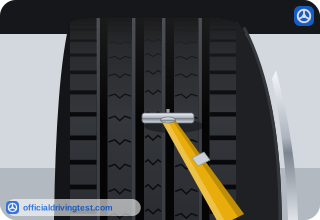
- At least 2/32 inches
- At least 1/32 inches
- At least 4/32 inches
- At least 6/32 inches
Show answer
Correct answer: At least 2/32 inches
Tires must have at least 2/32 inches of tread depth in the proper grooves and no fabric breaks or exposed cords.
Source: Massachusetts Driver's Manual (Revised April 2026), page 42 · Open this page in the manual (Manual page 42)
-
You slide a penny into a tread groove and can see the top of Lincoln's head. What does this mean?
- Your tires have enough tread
- Your tires are properly inflated
- Your tires are worn out
- Your tires need rotation only
Show answer
Correct answer: Your tires are worn out
If you can see the top of Lincoln's head when a penny is slid into a tread groove, your tires are worn out.
Source: Massachusetts Driver's Manual (Revised April 2026), page 42 · Open this page in the manual (Manual page 42)
-
If your vehicle makes a high-pitched noise when you turn, what should you do?
- Replace the front tires at once
- Check the brake fluid level
- Have the wheels aligned
- Have your power steering inspected
Show answer
Correct answer: Have your power steering inspected
The manual says to have your power steering inspected if the vehicle makes a high-pitched noise when you turn.
Source: Massachusetts Driver's Manual (Revised April 2026), page 43 · Open this page in the manual (Manual page 43)
-
When should you change your windshield wipers?
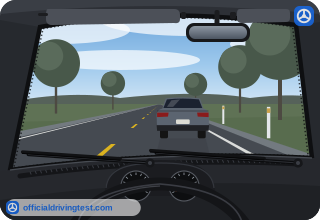
- Once every year, in the spring season
- If they streak or fail to clear it well
- Every six months of use
- Only after they start to squeak
Show answer
Correct answer: If they streak or fail to clear it well
The manual says to change your windshield wipers if they streak or fail to clear your windshield properly.
Source: Massachusetts Driver's Manual (Revised April 2026), page 43 · Open this page in the manual (Manual page 43)
-
For which purpose should you use your horn?
- To warn pedestrians or other drivers of possible trouble
- To show anger or complain about another driver’s mistake on the road
- To get a slower driver to move faster
- To get vehicles moving in a traffic jam
Show answer
Correct answer: To warn pedestrians or other drivers of possible trouble
The manual says to use your horn to warn pedestrians or other drivers of possible trouble and to avoid crashes.
Source: Massachusetts Driver's Manual (Revised April 2026), page 45 · Open this page in the manual (Manual page 45)
-
You are stopped in a traffic jam. Which is the manual’s advice about your horn?
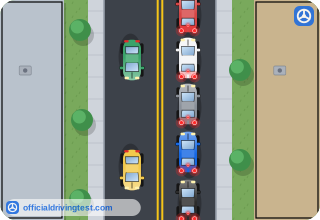
- Tap it to get vehicles moving
- Use it to hurry the car ahead
- Use it every few seconds to show the cars ahead you are ready
- Do not use it to try to get other vehicles moving
Show answer
Correct answer: Do not use it to try to get other vehicles moving
The manual lists trying to get other vehicles moving in a traffic jam as something you should not use your horn for.
Source: Massachusetts Driver's Manual (Revised April 2026), page 45 · Open this page in the manual (Manual page 45)
-
When must you use your headlights and taillights?
- From sunset until sunrise only
- From one-half hour after sunset until one-half hour before sunrise
- From one hour after sunset until one hour before sunrise, every day
- Only when it is completely dark
Show answer
Correct answer: From one-half hour after sunset until one-half hour before sunrise
You must use headlights and taillights from one-half hour after sunset until one-half hour before sunrise.
Source: Massachusetts Driver's Manual (Revised April 2026), page 45 · Open this page in the manual (Manual page 45)
-
You must use your headlights and taillights when you cannot clearly see people or vehicles how far ahead due to insufficient light or weather conditions?
- 500 feet
- 100 feet
- 250 feet
- 1,000 feet
Show answer
Correct answer: 500 feet
You must use headlights and taillights when you cannot clearly see people or vehicles 500 feet ahead because of poor light or weather.
Source: Massachusetts Driver's Manual (Revised April 2026), page 45 · Open this page in the manual (Manual page 45)
-
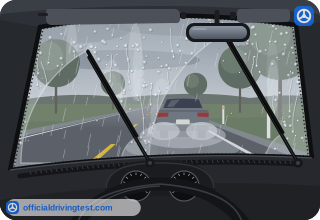
What does the law require you to use whenever you use your windshield wipers?
- Daytime running lights alone
- Parking lights only
- Headlights and taillights
- Fog lights only
Show answer
Correct answer: Headlights and taillights
The law requires headlights and taillights whenever you use your windshield wipers, and daytime running lights are not sufficient.
Source: Massachusetts Driver's Manual (Revised April 2026), page 47 · Open this page in the manual (Manual page 47)
-
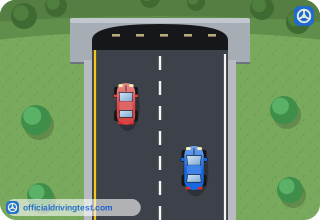
What must you do with your lights while driving through a tunnel?
- Use only your parking lights
- Use your headlights and taillights
- Turn them off to avoid glare
- Use them only if the tunnel is long
Show answer
Correct answer: Use your headlights and taillights
The manual says you must use your headlights and taillights while driving through a tunnel.
Source: Massachusetts Driver's Manual (Revised April 2026), page 45 · Open this page in the manual (Manual page 45)
-
Which is a reason the manual gives for using your headlights and taillights?
- To tell another driver to speed up
- To show another driver may go first
- To warn another driver behind you that you are about to stop
- To alert another driver to turn on their headlights
Show answer
Correct answer: To alert another driver to turn on their headlights
One of the times you must use headlights and taillights is to alert another driver to turn on their headlights.
Source: Massachusetts Driver's Manual (Revised April 2026), page 45 · Open this page in the manual (Manual page 45)
-
What does the manual say about Advanced Driver Assistance Systems (ADAS)?
- They can make driving safer, but only if used correctly
- They make driving safe without any effort or attention from the driver
- They do not need to be learned before use
- They are required on every vehicle
Show answer
Correct answer: They can make driving safer, but only if used correctly
ADAS can make driving safer, but only if used correctly.
Source: Massachusetts Driver's Manual (Revised April 2026), page 46 · Open this page in the manual (Manual page 46)
-
How does the manual say to start learning about your vehicle’s Advanced Driver Assistance Systems?
- Ask another driver to explain them
- Read the owner’s manual
- Test them on a busy road
- Wait until a warning light appears
Show answer
Correct answer: Read the owner’s manual
The manual says to read the owner’s manual to start learning about your vehicle’s systems.
Source: Massachusetts Driver's Manual (Revised April 2026), page 46 · Open this page in the manual (Manual page 46)
-
What does the manual say is still the most important safety feature in your car?
- The antilock brakes
- The driver assistance systems
- The airbags
- The driver
Show answer
Correct answer: The driver
The manual reminds you that the driver is still the most important safety feature in your car.
Source: Massachusetts Driver's Manual (Revised April 2026), page 46 · Open this page in the manual (Manual page 46)
-
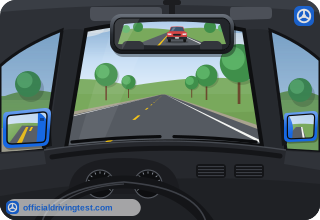
What does putting your inside rearview mirror in the "night" position do?
- Shows more of the road ahead of your vehicle
- Dims your own headlights for oncoming traffic
- Reduces the glare from headlights behind you
- Widens your view of the blind spots
Show answer
Correct answer: Reduces the glare from headlights behind you
The "night" position of the inside rearview mirror reduces the glare from headlights behind you.
Source: Massachusetts Driver's Manual (Revised April 2026), page 46 · Open this page in the manual (Manual page 46)
-
At night, what should you do with the lights inside your vehicle?
- Keep them off
- Keep them on for visibility
- Turn them on when passing
- Dim them halfway
Show answer
Correct answer: Keep them off
The manual says to keep inside lights off when driving at night.
Source: Massachusetts Driver's Manual (Revised April 2026), page 46 · Open this page in the manual (Manual page 46)
-
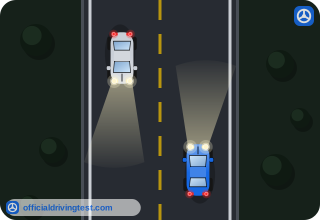
If another driver flashes headlights at you at night, what may be the reason?
- Your brake lights or turn signal may be broken
- Your headlights may be off or your high beams may be on
- The other driver may be asking you to speed up and pass them
- Your windshield wipers may be left on
Show answer
Correct answer: Your headlights may be off or your high beams may be on
If another driver flashes headlights at you, your headlights may be off or your high beams may be on.
Source: Massachusetts Driver's Manual (Revised April 2026), page 46 · Open this page in the manual (Manual page 46)
-
How far ahead do high beam headlights normally let you see?
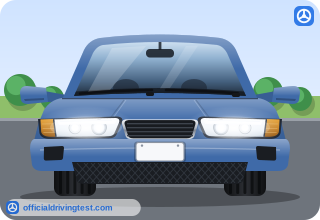
- About 350 feet
- About 100 feet
- About 200 feet
- About 500 feet
Show answer
Correct answer: About 350 feet
High beam headlights normally let you see about 350 feet ahead.
Source: Massachusetts Driver's Manual (Revised April 2026), page 46 · Open this page in the manual (Manual page 46)
-
How far ahead do low beam headlights normally let you see?
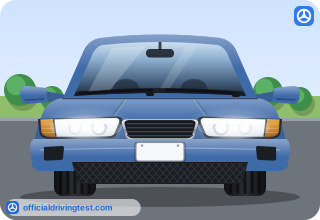
- About 50 feet
- About 200 feet
- About 100 feet
- About 350 feet
Show answer
Correct answer: About 100 feet
Low beam headlights normally let you see about 100 feet ahead.
Source: Massachusetts Driver's Manual (Revised April 2026), page 46 · Open this page in the manual (Manual page 46)
-
When should you use high beams?
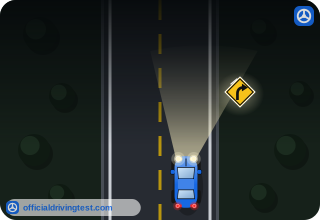
- Whenever you drive after sunset
- Only in dark areas where you cannot see the road surface ahead
- Whenever another vehicle is far ahead
- On any road with no streetlights, even when other vehicles are near
Show answer
Correct answer: Only in dark areas where you cannot see the road surface ahead
Use high beams only in dark areas where you cannot see the road surface ahead.
Source: Massachusetts Driver's Manual (Revised April 2026), page 46 · Open this page in the manual (Manual page 46)
-
You must lower your high beams to low beam when you are within how far of an oncoming vehicle?
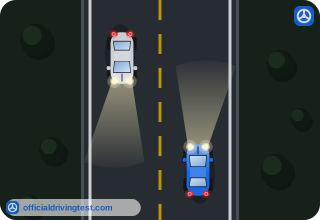
- 100 feet
- 200 feet
- 1,000 feet
- 500 feet
Show answer
Correct answer: 500 feet
You must lower your high beams to low beam when within 500 feet of an oncoming vehicle.
Source: Massachusetts Driver's Manual (Revised April 2026), page 46 · Open this page in the manual (Manual page 46)
-
You must lower your high beams to low beam when you are within how far of a vehicle traveling ahead of you?
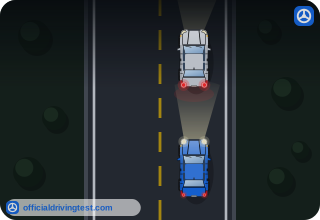
- 100 feet
- 350 feet
- 500 feet
- 200 feet
Show answer
Correct answer: 200 feet
You must lower your high beams to low beam when within 200 feet of a vehicle traveling ahead of you.
Source: Massachusetts Driver's Manual (Revised April 2026), page 46 · Open this page in the manual (Manual page 46)
-
A driver coming toward you does not change from high beams to low beams after you flick your headlights. What should you do?
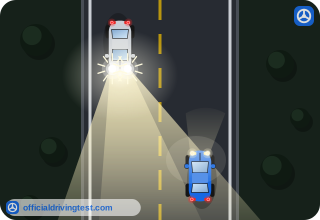
- Turn on your own high beams to match the other driver
- Stay to the right and do not turn on your high beams
- Slow down and stop in your lane until they pass
- Move toward the center line to give them room
Show answer
Correct answer: Stay to the right and do not turn on your high beams
If the oncoming driver does not change to low beams, stay to the right and do not turn on your high beams.
Source: Massachusetts Driver's Manual (Revised April 2026), page 46 · Open this page in the manual (Manual page 46)
-
In fog, which headlights should you use to reduce glare?
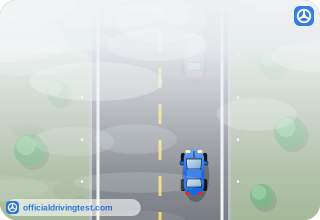
- High beam headlights
- Parking lights only
- Low beam headlights
- No headlights
Show answer
Correct answer: Low beam headlights
In fog, use your low beam headlights to reduce glare.
Source: Massachusetts Driver's Manual (Revised April 2026), page 47 · Open this page in the manual (Manual page 47)
-
What does the manual say about turn signals when driving in rain or fog?
- Always use your turn signals
- Use them only on highways
- Skip them when roads are empty
- Use them only at night
Show answer
Correct answer: Always use your turn signals
The manual says to always use your turn signals when driving in rain or fog.
Source: Massachusetts Driver's Manual (Revised April 2026), page 47 · Open this page in the manual (Manual page 47)
-
When you are driving on a roadway, what are other drivers expected to assume you will do unless you show otherwise?
- Slow down at the next intersection
- Drive straight ahead
- Move into the right lane
- Pull over to the side of the road
Show answer
Correct answer: Drive straight ahead
The manual says you are expected to drive straight ahead unless you show otherwise, which is why you must signal.
Source: Massachusetts Driver's Manual (Revised April 2026), page 93 · Open this page in the manual (Manual page 93)
-
What do your signals do?
- Give you the right-of-way over pedestrians and other motorists
- Allow you to turn without first checking the traffic around you
- Show other drivers the speed at which you are traveling now
- Alert other road users to what you are doing and give them time to react
Show answer
Correct answer: Alert other road users to what you are doing and give them time to react
Signals alert pedestrians and motorists of what you are doing and give them time to react.
Source: Massachusetts Driver's Manual (Revised April 2026), page 93 · Open this page in the manual (Manual page 93)
-
What must you use if the electronic signals on your vehicle are not working?
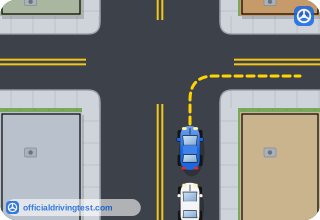
- The three hand signals, made through the driver's side window
- Your horn, sounded once before each move you make
- Your hazard lights, turned on before each move you make
- Your headlights, flashed before each move you make
Show answer
Correct answer: The three hand signals, made through the driver's side window
If the electronic signals are not working, you must use the three hand signals, which should be made through the driver's side window.
Source: Massachusetts Driver's Manual (Revised April 2026), page 93 · Open this page in the manual (Manual page 93)
-
According to the manual, what must you know to pass the road test?
- The location of every RMV Service Center
- The speed limit on each type of road
- The hand signals
- The name of each part of the engine
Show answer
Correct answer: The hand signals
The manual says you must know the hand signals to pass the road test.
Source: Massachusetts Driver's Manual (Revised April 2026), page 93 · Open this page in the manual (Manual page 93)
-
How is the hand signal for a left turn made?
- The arm is bent upward at the elbow
- The arm is held straight out to the side
- The arm is held down at an angle
- The arm is held straight up
Show answer
Correct answer: The arm is held straight out to the side
The left-turn hand signal is shown with the driver's arm extended straight out the driver's side window.
Source: Massachusetts Driver's Manual (Revised April 2026), page 93 · Open this page in the manual (Manual page 93)
-
How is the hand signal for a right turn made?
- The arm is held straight out to the side
- The arm is held down at an angle
- The arm is waved up and down
- The arm is bent upward at the elbow
Show answer
Correct answer: The arm is bent upward at the elbow
The right-turn hand signal is shown with the forearm raised upward from the elbow.
Source: Massachusetts Driver's Manual (Revised April 2026), page 93 · Open this page in the manual (Manual page 93)
-
How is the hand signal for slowing or stopping made?
- The arm is held down at an angle
- The arm is held straight out to the side
- The arm is bent upward at the elbow
- The arm is held straight up
Show answer
Correct answer: The arm is held down at an angle
The slow-or-stop hand signal is shown with the arm angled downward.
Source: Massachusetts Driver's Manual (Revised April 2026), page 93 · Open this page in the manual (Manual page 93)
-
Once you have completed your move, what must you do with your signal?
- Leave it on for another 100 feet
- Leave it on until you change lanes again
- Turn it off
- Flash it twice to thank other drivers
Show answer
Correct answer: Turn it off
Once you have completed your move, you must turn your signal off.
Source: Massachusetts Driver's Manual (Revised April 2026), page 93 · Open this page in the manual (Manual page 93)
-
Before you merge, join traffic from a stopped position, or change lanes, what is the first step?
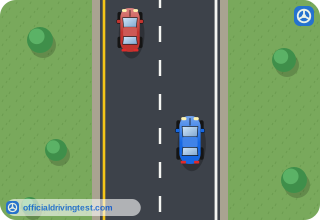
- Signal your intent to move
- Check your mirrors and your blind spot
- Make your move
- Sound your horn to warn nearby drivers
Show answer
Correct answer: Check your mirrors and your blind spot
The manual lists three steps: check your mirrors and blind spot, signal your intent, then make your move.
Source: Massachusetts Driver's Manual (Revised April 2026), page 93 · Open this page in the manual (Manual page 93)
-
When you check your blind spot before a move, which side do you check?
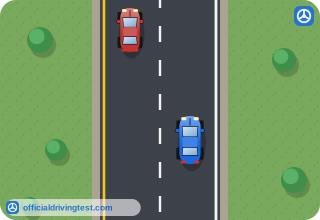
- The side away from the direction you are turning
- Always the left side, whichever way you are turning
- Always the right side, whichever way you are turning
- The side you are moving or turning toward
Show answer
Correct answer: The side you are moving or turning toward
You must check the blind spot on the side you are moving or turning toward.
Source: Massachusetts Driver's Manual (Revised April 2026), page 93 · Open this page in the manual (Manual page 93)
-
Which arm may bicyclists use to signal?
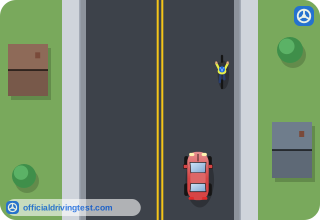
- Either arm
- Only the left arm
- Only the right arm
- Neither arm; they use a hand-held light
Show answer
Correct answer: Either arm
The manual says bicyclists may use either arm to signal.
Source: Massachusetts Driver's Manual (Revised April 2026), page 93 · Open this page in the manual (Manual page 93)
-
Which of these is against Massachusetts law?
- Parking between the white lines of a marked parking space
- Waiting for vehicles in the travel lane to pass before you pull away from the curb
- Bypassing or cutting out a motor vehicle's muffler system
- Using a crosswalk when one is available to cross the road
Show answer
Correct answer: Bypassing or cutting out a motor vehicle's muffler system
The manual says it is illegal to bypass or cut out a motor vehicle's muffler system.
Source: Massachusetts Driver's Manual (Revised April 2026), page 112 · Open this page in the manual (Manual page 112)
-
Where must you return used motor oil, transmission fluid, and other hazardous materials?
- To any licensed repair garage
- To the nearest town dump
- To the place you bought them
- To a Registry of Motor Vehicles office
Show answer
Correct answer: To the place you bought them
The manual says you must return used motor oil, transmission fluid, and other hazardous materials to the place you bought them.
Source: Massachusetts Driver's Manual (Revised April 2026), page 112 · Open this page in the manual (Manual page 112)
-
Who is responsible for disposing of used motor oil and other hazardous materials you return?
- The garage or store that sold it to you
- You, the person who bought it and returned it
- Your city or town, through its local dump
- The company that originally made the oil
Show answer
Correct answer: The garage or store that sold it to you
The manual says the garage or store that sold the materials to you is responsible for disposing of them.
Source: Massachusetts Driver's Manual (Revised April 2026), page 112 · Open this page in the manual (Manual page 112)