Massachusetts: Signals and vehicle controls — Part 1 Practice Test
Questions in this part include: “A passenger vehicle must have a working, undamaged safety belt for whom?” · “What do you need to have flashing, rotating, oscillating, or strobe lights on a vehicle?”
Independent educational site · not affiliated with any government agency or DMV
Ready? Test yourself
- Instant feedback with an explanation
- Every answer cites its source in the manual
- Your best score is saved on this device
Questions are original and based on the official manual "Massachusetts Driver's Manual" (Revised April 2026), Massachusetts Registry of Motor Vehicles.
All 18 questions in this practice test
Take the test above first, then use this list to study. Tap “Show answer” to see the correct answer and explanation.
Show the questions and answersHide the questions
-
A passenger vehicle must have a working, undamaged safety belt for whom?
- The driver and all passengers
- The driver only
- The driver and the front-seat passenger
- The driver and passengers under 16
Show answer
Correct answer: The driver and all passengers
Each passenger vehicle must have a working, undamaged safety belt for the driver and all passengers.
Source: Massachusetts Driver's Manual (Revised April 2026), page 34 · Open this page in the manual (Manual page 34)
-
How many approved white headlights must a passenger vehicle have in the front?
- One
- Three
- Two
- Four
Show answer
Correct answer: Two
The manual says there must be two approved white headlights in the front.
Source: Massachusetts Driver's Manual (Revised April 2026), page 34 · Open this page in the manual (Manual page 34)
-
How many red stop (brake) lights must a passenger vehicle have in the back?
- One
- Three
- Four
- Five
Show answer
Correct answer: Three
A passenger vehicle must have three red stop (brake) lights in the back.
Source: Massachusetts Driver's Manual (Revised April 2026), page 34 · Open this page in the manual (Manual page 34)
-
What small light must a passenger vehicle have above the back license plate?
- A small red light
- A small yellow light
- A small blue light
- A small white light
Show answer
Correct answer: A small white light
The manual requires a small white light above the back license plate.
Source: Massachusetts Driver's Manual (Revised April 2026), page 34 · Open this page in the manual (Manual page 34)
-
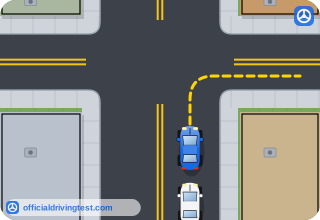
If the directional signals or brake lights on your vehicle stop working, what must you do until they are fixed?
- Drive only during daylight hours
- Sound the horn before every turn or stop
- Use hand signals when turning or slowing
- Keep the headlights on high beam
Show answer
Correct answer: Use hand signals when turning or slowing
You must have the lights fixed right away, and until then you must use hand signals when turning or slowing.
Source: Massachusetts Driver's Manual (Revised April 2026), page 34 · Open this page in the manual (Manual page 34)
-
How often must every vehicle pass a safety and emissions inspection?
- Once a year
- Every two years
- Every three years
- Only when it is sold
Show answer
Correct answer: Once a year
The manual states that every vehicle must pass an annual safety and emissions inspection.
Source: Massachusetts Driver's Manual (Revised April 2026), page 34 · Open this page in the manual (Manual page 34)
-
For what may a passenger vehicle's spot light be used?
- To light the road ahead on dark roads without street lights
- To signal other drivers that you want to pass them
- To see better when backing up at night
- To read signs, or as an emergency light if the headlights fail
Show answer
Correct answer: To read signs, or as an emergency light if the headlights fail
A spot light may only be used to read signs or as an emergency light if the headlights are not working.
Source: Massachusetts Driver's Manual (Revised April 2026), page 34 · Open this page in the manual (Manual page 34)
-
How high above the roadway can a passenger vehicle's spot light shine, 30 feet away from the vehicle?
- Six feet
- Two feet
- Ten feet
- Four feet
Show answer
Correct answer: Two feet
A spot light can only shine two feet above the roadway 30 feet away from the vehicle.
Source: Massachusetts Driver's Manual (Revised April 2026), page 34 · Open this page in the manual (Manual page 34)
-
What do you need to have flashing, rotating, oscillating, or strobe lights on a vehicle?
- An inspection sticker from a licensed station
- A permit from the RMV
- Written approval from the local police department
- A commercial driver license
Show answer
Correct answer: A permit from the RMV
Emergency lights are not allowed on a vehicle unless you get a permit from the RMV.
Source: Massachusetts Driver's Manual (Revised April 2026), page 34 · Open this page in the manual (Manual page 34)
-
How much may you darken the side and rear windows of a passenger vehicle with glass tinting?
- Up to 20 percent
- Up to 50 percent
- Up to 70 percent
- Up to 35 percent
Show answer
Correct answer: Up to 35 percent
You can darken your side and rear windows up to 35 percent.
Source: Massachusetts Driver's Manual (Revised April 2026), page 34 · Open this page in the manual (Manual page 34)
-
Which part of a passenger vehicle is it illegal to tint?
- The windshield
- The driver's side window
- The rear window
- The rear side windows
Show answer
Correct answer: The windshield
Glass tinting is allowed on passenger vehicles with restrictions, but it is illegal to tint the windshield.
Source: Massachusetts Driver's Manual (Revised April 2026), page 34 · Open this page in the manual (Manual page 34)
-
Every time you enter your vehicle, what should you make a quick visual check for?
- Low fuel or oil levels
- Low tire pressure or damage
- A burned-out headlight bulb
- Loose or missing plates
Show answer
Correct answer: Low tire pressure or damage
The manual says to make a quick visual check for low tire pressure or damage every time you enter your vehicle.
Source: Massachusetts Driver's Manual (Revised April 2026), page 42 · Open this page in the manual (Manual page 42)
-
If you feel your vehicle pull to one side when you brake, what may be needed?
- A tire rotation and balance
- Brake adjustment or repair
- A new steering column
- New windshield wipers
Show answer
Correct answer: Brake adjustment or repair
If the vehicle pulls to one side when you brake, your brakes may need adjustment or repair.
Source: Massachusetts Driver's Manual (Revised April 2026), page 42 · Open this page in the manual (Manual page 42)
-
How often should you rotate your tires?
- Every 1,000 miles you drive
- Once a year at the inspection
- Only after the tread is worn down
- As the manufacturer recommends
Show answer
Correct answer: As the manufacturer recommends
The manual says to rotate your tires as often as recommended by the vehicle or tire manufacturer.
Source: Massachusetts Driver's Manual (Revised April 2026), page 42 · Open this page in the manual (Manual page 42)
-
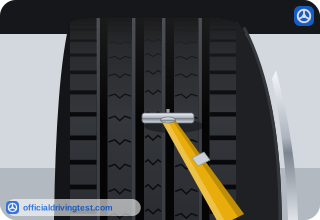
How much tread depth must tires have in the proper grooves?
- At least 2/32 inches
- At least 1/32 inches
- At least 4/32 inches
- At least 6/32 inches
Show answer
Correct answer: At least 2/32 inches
Tires must have at least 2/32 inches of tread depth in the proper grooves and no fabric breaks or exposed cords.
Source: Massachusetts Driver's Manual (Revised April 2026), page 42 · Open this page in the manual (Manual page 42)
-
You slide a penny into a tread groove and can see the top of Lincoln's head. What does this mean?
- Your tires have enough tread
- Your tires are properly inflated
- Your tires are worn out
- Your tires need rotation only
Show answer
Correct answer: Your tires are worn out
If you can see the top of Lincoln's head when a penny is slid into a tread groove, your tires are worn out.
Source: Massachusetts Driver's Manual (Revised April 2026), page 42 · Open this page in the manual (Manual page 42)
-
If your vehicle makes a high-pitched noise when you turn, what should you do?
- Replace the front tires at once
- Check the brake fluid level
- Have the wheels aligned
- Have your power steering inspected
Show answer
Correct answer: Have your power steering inspected
The manual says to have your power steering inspected if the vehicle makes a high-pitched noise when you turn.
Source: Massachusetts Driver's Manual (Revised April 2026), page 43 · Open this page in the manual (Manual page 43)
-
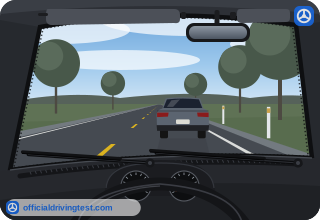
When should you change your windshield wipers?
- Once every year, in the spring season
- If they streak or fail to clear it well
- Every six months of use
- Only after they start to squeak
Show answer
Correct answer: If they streak or fail to clear it well
The manual says to change your windshield wipers if they streak or fail to clear your windshield properly.
Source: Massachusetts Driver's Manual (Revised April 2026), page 43 · Open this page in the manual (Manual page 43)