Maine: Emergencies and crashes — Part 1 Practice Test
Avoiding crashes, skids, brake and tire problems, a stuck gas pedal, breakdowns, what to do after a crash, and winter and flood driving. — Part 1
Independent educational site · not affiliated with any government agency or DMV
Ready? Test yourself
- Instant feedback with an explanation
- Every answer cites its source in the manual
- Your best score is saved on this device
Questions are original and based on the official manual "Maine Driver’s License Manual" (Rev 4/24), Maine Bureau of Motor Vehicles.
All 34 questions in this practice test
Take the test above first, then use this list to study. Tap “Show answer” to see the correct answer and explanation.
Show the questions and answersHide the questions
-
Which item does the manual say it is advisable to carry in your car in the event of a breakdown or emergency?
- A fire extinguisher
- A tow rope
- A flashlight
- A tire pressure gauge
Show answer
Correct answer: A flashlight
A flashlight is on the list of items it is advisable to carry in case of a breakdown or emergency.
Source: Maine Driver’s License Manual (Rev 4/24), page 2-6 · Open this page in the manual (Manual page 2-6)
-
If an emergency makes you stop on an expressway, how should you signal your need for assistance?
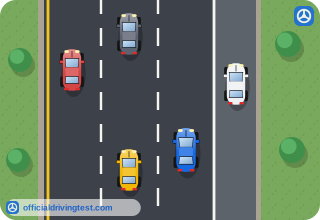
- Turn on your high beams
- Leave all four doors open
- Raise your hood
- Sound your horn repeatedly
Show answer
Correct answer: Raise your hood
The manual says to raise your hood to signal your need for assistance.
Source: Maine Driver’s License Manual (Rev 4/24), page 7-5 · Open this page in the manual (Manual page 7-5)
-
What should you do if the roadway ahead is flooded?
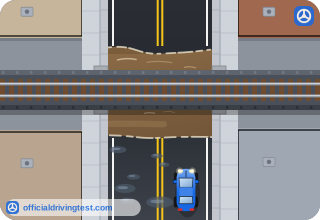
- Drive through it slowly in a low gear
- Follow another vehicle through the water
- Drive through it at a steady speed
- Find another route
Show answer
Correct answer: Find another route
Drivers should not drive through large bodies of standing water. If the roadway is flooded, find another route.
Source: Maine Driver’s License Manual (Rev 4/24), page 8-7 · Open this page in the manual (Manual page 8-7)
-
If you have car trouble and must stop along the side of the road, what should you do if possible?
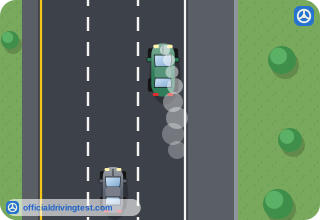
- Stop in the right lane and wait there for help to come
- Stop on the shoulder with one wheel on the road
- Pull all the way off the road so you are well out of traffic
- Pull off only as far as the edge line
Show answer
Correct answer: Pull all the way off the road so you are well out of traffic
If possible, pull all the way off the road so you are well out of traffic.
Source: Maine Driver’s License Manual (Rev 4/24), page 8-18 · Open this page in the manual (Manual page 8-18)
-
If your car has no emergency flashers, what should you use?
- Your high beams
- The proper turn signal
- Your parking lights
- Your horn repeatedly
Show answer
Correct answer: The proper turn signal
If your car doesn't have flashers, use the proper turn signal.
Source: Maine Driver’s License Manual (Rev 4/24), page 8-18 · Open this page in the manual (Manual page 8-18)
-
Which action does the manual list as a way to signal an emergency when your car is stopped along the road?
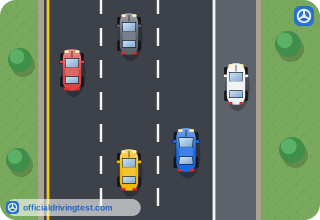
- Turn off all your lights
- Open all the doors
- Sound your horn continuously
- Lift the hood
Show answer
Correct answer: Lift the hood
The manual says to lift the hood to signal an emergency.
Source: Maine Driver’s License Manual (Rev 4/24), page 8-18 · Open this page in the manual (Manual page 8-18)
-
If you cannot get completely off the roadway, where should you try to stop?
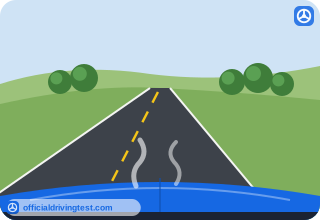
- Where people have a clear view of you
- Just over the top of a hill on the road
- Right around a curve in the road
- In your traffic lane just past a curve
Show answer
Correct answer: Where people have a clear view of you
Try to stop where people have a clear view of you, and try not to stop just over a hill or around a curve.
Source: Maine Driver’s License Manual (Rev 4/24), page 8-18 · Open this page in the manual (Manual page 8-18)
-
If you do not have emergency flares, what should you do?
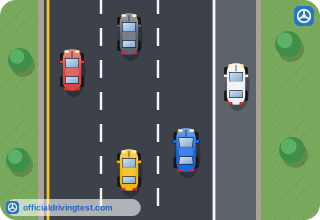
- Stand in the traffic lane behind your car and wave a cloth
- Walk along the roadway until you find help
- Stand by the side of the road and wave traffic around
- Sit in your car in the traffic lane with your seat belt off
Show answer
Correct answer: Stand by the side of the road and wave traffic around
Without flares, stand by the side of the road and wave traffic around, using a cloth or a flag if you have it, and stay off the roadway.
Source: Maine Driver’s License Manual (Rev 4/24), page 8-18 · Open this page in the manual (Manual page 8-18)
-
If changing a flat tire would mean standing in a traffic lane, what should you do?
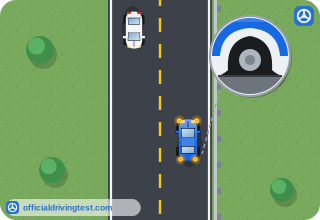
- Change it quickly while wearing bright clothing
- Do not change it there; stay off the roadway
- Change it while someone waves traffic around
- Change it only if no cars are in sight
Show answer
Correct answer: Do not change it there; stay off the roadway
The manual says to stay off the roadway and not even to change a tire if it means you must stand in a traffic lane.
Source: Maine Driver’s License Manual (Rev 4/24), page 8-18 · Open this page in the manual (Manual page 8-18)
-
Which three ways does the manual list to avoid a crash or reduce its impact?
- Braking, honking, or flashing your lights
- Steering, signaling, or coasting
- Braking, steering, or speeding up
- Honking, signaling, or coasting
Show answer
Correct answer: Braking, steering, or speeding up
The manual says you have three ways to avoid a crash or reduce its impact: braking, steering, or speeding up.
Source: Maine Driver’s License Manual (Rev 4/24), page 9-1 · Open this page in the manual (Manual page 9-1)
-
What does the manual say is generally the best way to stop the car in an emergency?
- Locking the wheels with one hard push
- Pumping the brakes
- Shifting into neutral
- Using the parking brake
Show answer
Correct answer: Pumping the brakes
Pumping the brakes is generally the best way to stop the car in an emergency.
Source: Maine Driver’s License Manual (Rev 4/24), page 9-1 · Open this page in the manual (Manual page 9-1)
-
Why does pumping the brakes work well in an emergency?
- It locks the wheels so the car stops sooner
- It keeps the brake lights from flashing at other drivers
- It lets the engine slow the car with no pedal pressure
- It allows the car to stop quickly while you continue steering
Show answer
Correct answer: It allows the car to stop quickly while you continue steering
Pumping allows the car to stop quickly while allowing you to continue steering.
Source: Maine Driver’s License Manual (Rev 4/24), page 9-1 · Open this page in the manual (Manual page 9-1)
-
If your car has anti-lock brakes (ABS) and you must stop in an emergency, what should you do?
- Hold the pedal down firmly and keep pressure on it
- Press the pedal lightly so the wheels keep turning
- Shift into neutral and coast to a stop
- Apply the parking brake instead of the foot brake
Show answer
Correct answer: Hold the pedal down firmly and keep pressure on it
With anti-lock brakes you simply hold the pedal down firmly and let the car do the work.
Source: Maine Driver’s License Manual (Rev 4/24), page 9-1 · Open this page in the manual (Manual page 9-1)
-
The brake pedal vibrates and you hear a clicking noise while the ABS is working. What does the manual say about this?
- The brakes are about to fail
- The ABS has been turned off
- It is normal
- The wheels are about to lock
Show answer
Correct answer: It is normal
The manual says that a vibrating pedal and a clicking noise are normal when the ABS is engaged.
Source: Maine Driver’s License Manual (Rev 4/24), page 9-1 · Open this page in the manual (Manual page 9-1)
-
According to the manual, what must you do for ABS to keep working during a stop?
- Switch it on with a dashboard button
- Keep pressure on the brake pedal
- Drive below a set speed
- Shift to a lower gear first
Show answer
Correct answer: Keep pressure on the brake pedal
ABS only works if you keep pressure on the brake pedal.
Source: Maine Driver’s License Manual (Rev 4/24), page 9-1 · Open this page in the manual (Manual page 9-1)
-
What does an ABS (Anti-lock Braking System) help you do?
- Accelerate faster on wet and slippery roads
- Brake hard without pressing the brake pedal
- Steer without turning the steering wheel
- Stop without skidding and keep steering control
Show answer
Correct answer: Stop without skidding and keep steering control
An ABS braking system helps you stop without skidding and helps to maintain steering control.
Source: Maine Driver’s License Manual (Rev 4/24), page 9-1 · Open this page in the manual (Manual page 9-1)
-
How does the manual describe controlled braking?
- Push down until just before the wheels lock, release, repeat
- Alternate quickly between the brake pedal and the gas pedal
- Tap the pedal once, then steer without braking again
- Use only the parking brake until the car stops moving
Show answer
Correct answer: Push down until just before the wheels lock, release, repeat
Controlled braking means pushing the brake pedal down until just before the wheels lock (without ABS), then releasing and repeating until the car stops.
Source: Maine Driver’s License Manual (Rev 4/24), page 9-1 · Open this page in the manual (Manual page 9-1)
-
If you can see that you will not stop in time to avoid hitting something, what does the manual say to do?
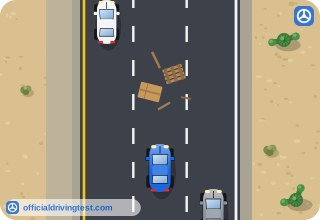
- Keep steering straight and brake harder
- Turn toward it to reduce the impact
- Turn away from it
- Turn the wheel back and forth rapidly
Show answer
Correct answer: Turn away from it
If you can see that you won't stop in time to avoid hitting something, you should turn away from it.
Source: Maine Driver’s License Manual (Rev 4/24), page 9-1 · Open this page in the manual (Manual page 9-1)
-
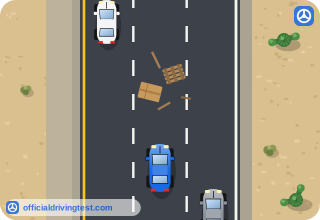
Why does the manual say to stay off the brakes while turning around a hazard, if you can?
- It keeps the tires from wearing unevenly
- It lessens the chance of a skid
- It lets the engine cool faster
- It stops the ABS from engaging
Show answer
Correct answer: It lessens the chance of a skid
Staying off the brakes while turning lessens the chance of a skid, particularly when turning onto a soft shoulder.
Source: Maine Driver’s License Manual (Rev 4/24), page 9-1 · Open this page in the manual (Manual page 9-1)
-
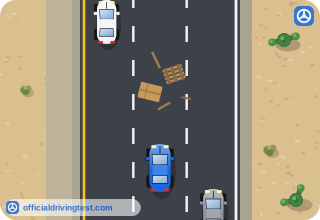
After you steer away from an obstacle and clear it, what does the manual say to do with the steering wheel?
- Keep it turned and continue on the shoulder
- Hold it still and brake hard until stopped
- Let go of it so it can center itself
- Turn it the opposite way to get back in your lane
Show answer
Correct answer: Turn it the opposite way to get back in your lane
Once you clear the obstacle, you turn the steering wheel in the opposite direction to get back in your lane, ready to turn back again quickly if need be.
Source: Maine Driver’s License Manual (Rev 4/24), page 9-2 · Open this page in the manual (Manual page 9-2)
-
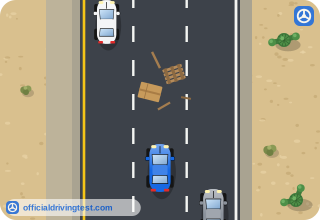
Why does the manual say to use caution when swerving?
- People steer away from one collision into another
- Swerving always damages the tires and the wheels
- Swerving is against the law in the state of Maine
- The steering wheel locks at higher speeds
Show answer
Correct answer: People steer away from one collision into another
The manual warns that many people steer away from one collision only to end up in another.
Source: Maine Driver’s License Manual (Rev 4/24), page 9-2 · Open this page in the manual (Manual page 9-2)
-
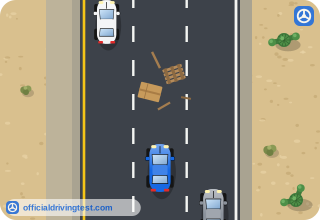
Once you have missed a hazard by steering around it, what should you do?
- Brake hard and stop where you are
- Speed up to get away from the hazard
- Straighten your vehicle and slow down
- Keep the wheel turned until you reach the shoulder
Show answer
Correct answer: Straighten your vehicle and slow down
After you have missed the hazard, you straighten your vehicle and slow down.
Source: Maine Driver’s License Manual (Rev 4/24), page 9-2 · Open this page in the manual (Manual page 9-2)
-
The manual says it is sometimes necessary to speed up to avoid a collision. When may this happen?
- When a car ahead of you slows down to turn left
- When a car is about to hit you from the side or behind
- When you are driving through a work zone
- When your engine floods
Show answer
Correct answer: When a car is about to hit you from the side or behind
Speeding up may be necessary when another car is about to hit you from the side or from behind.
Source: Maine Driver’s License Manual (Rev 4/24), page 9-2 · Open this page in the manual (Manual page 9-2)
-
In a car with manual transmission, what may you need to do to speed up and avoid a collision?
- Shift into a higher gear and ease onto the gas pedal
- Shift to neutral and let the car coast
- Stay in gear and tap the gas pedal gently
- Shift into a lower gear and push the gas pedal to the floor
Show answer
Correct answer: Shift into a lower gear and push the gas pedal to the floor
In a manual transmission car you may need to shift into a lower gear and push the gas pedal to the floor.
Source: Maine Driver’s License Manual (Rev 4/24), page 9-2 · Open this page in the manual (Manual page 9-2)
-
If a car has an automatic transmission, how can you speed up to avoid a collision?
- Simply push the gas pedal to the floor
- Shift into park first, then press the gas pedal
- Shift to neutral and rev the engine
- Press the gas pedal lightly and the brake together
Show answer
Correct answer: Simply push the gas pedal to the floor
With an automatic transmission you can do the same thing by simply pushing the gas pedal to the floor.
Source: Maine Driver’s License Manual (Rev 4/24), page 9-2 · Open this page in the manual (Manual page 9-2)
-
If you are about to be hit from the rear, why should you be ready to apply your brake?
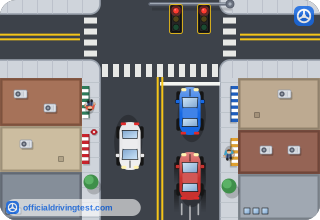
- So your tires will lock and the car will stop sooner
- So the car behind can pass you
- So your ABS will turn on
- So you won't be pushed into another car
Show answer
Correct answer: So you won't be pushed into another car
Being ready to apply your brake keeps you from being pushed into another car.
Source: Maine Driver’s License Manual (Rev 4/24), page 9-2 · Open this page in the manual (Manual page 9-2)
-
If you are about to be hit from the rear, how should you brace yourself?
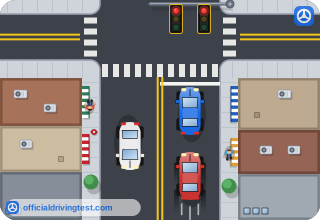
- Between the steering wheel and seat back
- With your head resting on the steering wheel
- By turning around to look at the other car
- By letting go of the steering wheel
Show answer
Correct answer: Between the steering wheel and seat back
The manual says to brace yourself between the steering wheel and seat back.
Source: Maine Driver’s License Manual (Rev 4/24), page 9-2 · Open this page in the manual (Manual page 9-2)
-
If you are about to be hit from the rear and your car has head restraints, what should you do?
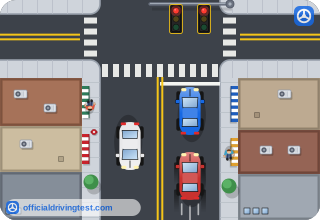
- Lean your head forward onto the steering wheel
- Turn your head to look at the car behind you
- Press your head firmly against the head restraint
- Tilt your head toward the side window
Show answer
Correct answer: Press your head firmly against the head restraint
If your car has head restraints, you press the back of your head firmly against the head restraint.
Source: Maine Driver’s License Manual (Rev 4/24), page 9-2 · Open this page in the manual (Manual page 9-2)
-
If you are about to be hit from the side, how does the manual say to keep from being thrown against the side of the car?
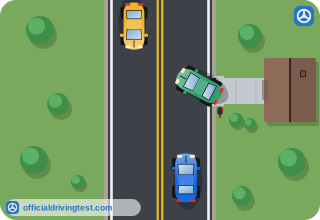
- Grip the door handle
- Brace yourself with the steering wheel
- Press your feet against the door
- Lean away from the steering wheel
Show answer
Correct answer: Brace yourself with the steering wheel
You brace yourself with the steering wheel to keep from being thrown against the side of the car.
Source: Maine Driver’s License Manual (Rev 4/24), page 9-2 · Open this page in the manual (Manual page 9-2)
-
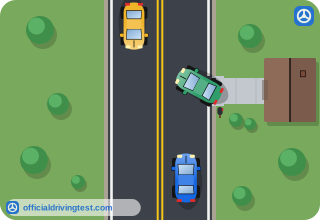
If you are about to be hit from the side, what else should you get ready to do?
- Brake hard so the car cannot slide sideways at all
- Open the door so you can get out
- Take both hands off the steering wheel
- Steer quickly to control the car if it spins
Show answer
Correct answer: Steer quickly to control the car if it spins
You get ready to steer quickly so that if the car spins around you can attempt to control the vehicle.
Source: Maine Driver’s License Manual (Rev 4/24), page 9-2 · Open this page in the manual (Manual page 9-2)
-
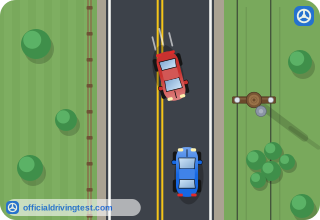
If you are about to be hit from the front and you are wearing a shoulder strap, what should you do?
- Use your arms and hands to protect your face
- Duck down below the dashboard
- Press your head against the head restraint
- Hold the steering wheel with your head down
Show answer
Correct answer: Use your arms and hands to protect your face
With a shoulder strap on, you use your arms and hands to protect your face when about to be hit from the front.
Source: Maine Driver’s License Manual (Rev 4/24), page 9-2 · Open this page in the manual (Manual page 9-2)
-
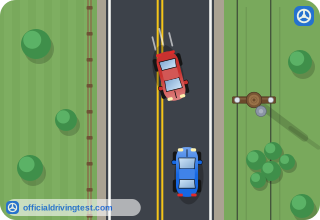
If you are about to be hit from the front and you are not using a shoulder strap, what should you do?
- Brace both hands against the windshield
- Lean back firmly against the head restraint
- Throw yourself across the seat
- Press your face against the steering wheel
Show answer
Correct answer: Throw yourself across the seat
Without a shoulder strap you throw yourself across the seat so you don't hit the steering column or the windshield.
Source: Maine Driver’s License Manual (Rev 4/24), page 9-3 · Open this page in the manual (Manual page 9-3)
-
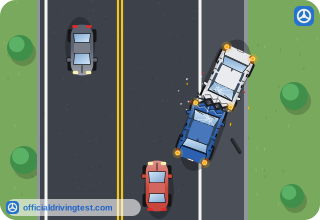
What is the first thing the manual says to do if you are involved in an accident?
- Drive to the nearest police station to report it
- Stop your car at once and render all possible aid
- Call your insurance company to report the crash
- Move your car away and leave a note on it
Show answer
Correct answer: Stop your car at once and render all possible aid
You must stop your car at once and render all possible aid to any injured people, sending for an ambulance if needed.
Source: Maine Driver’s License Manual (Rev 4/24), page 9-3 · Open this page in the manual (Manual page 9-3)
-
When does the manual say you may move an injured person after an accident?
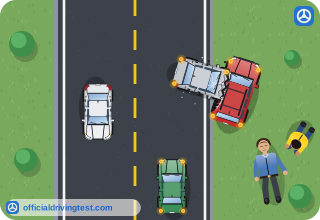
- As soon as you have called for an ambulance to come
- Whenever they say they are not badly hurt
- As soon as you arrive, so you can clear the lane
- Only when another danger requires moving them to safety
Show answer
Correct answer: Only when another danger requires moving them to safety
Do not move an injured person unless there is another danger that would require them to be moved to safety.
Source: Maine Driver’s License Manual (Rev 4/24), page 9-3 · Open this page in the manual (Manual page 9-3)