Louisiana: Seat belts and child safety
Louisiana’s seat belt law, air bags, and child safety seats and booster seats. Split into 3 shorter tests so you're not stuck in one long quiz.
Independent educational site · not affiliated with any government agency or DMV
Choose a part
Seat belts and child safety — Part 1
Questions in this part include: “The manual says deaths per 100 million miles traveled have dropped. What is most of that decrease due to?”
StartSeat belts and child safety — Part 2
Questions in this part include: “A child falls into more than one category for age or weight. Which category must be chosen?”
StartSeat belts and child safety — Part 3
Questions in this part include: “Which passengers should sit in the back seat of a vehicle equipped with air bags?”
StartAll 48 Seat belts and child safety questions with answers
Choose a part above to take a practice test, or study every question and answer here.
Show the questions and answersHide the questions
-
Vehicles manufactured after which year must be equipped with functional seat belts, according to the road skills test note?
- 1964
- 1954
- 1974
- 1984
Show answer
Correct answer: 1964
The note states that all vehicles manufactured after 1964 must be equipped with functional seat belts.
Source: Class D & E Driver’s Guide (Revised August 2025 (DPSMV2052 R08/25)), page 9 · Open this page in the manual (Manual page 9)
-
The manual says deaths per 100 million miles traveled have dropped. What is most of that decrease due to?
- Lower speed limits on the nation’s highways and roads
- Fewer miles driven by Americans in their vehicles each year
- Seat belts, airbags and improved safety features in vehicles
- Stricter punishment for drivers brought before traffic courts
Show answer
Correct answer: Seat belts, airbags and improved safety features in vehicles
The manual says most of the decrease in deaths per 100 million miles traveled is due to seat belts, airbags and improved safety features in vehicles.
Source: Class D & E Driver’s Guide (Revised August 2025 (DPSMV2052 R08/25)), page 19 · Open this page in the manual (Manual page 19)
-
Under Louisiana's mandatory safety belt use law, who must be properly buckled?
- All passengers in both the front and back seats of cars, vans and pickup trucks
- Only the driver and the front seat passenger in cars, vans and pickup trucks
- Only drivers and passengers under 18 years old in cars and vans
- Only front seat passengers in cars and vans, but not in pickup trucks
Show answer
Correct answer: All passengers in both the front and back seats of cars, vans and pickup trucks
Louisiana's mandatory safety belt use law requires all passengers in both the front and back seats in cars, vans and pickup trucks to be properly buckled.
Source: Class D & E Driver’s Guide (Revised August 2025 (DPSMV2052 R08/25)), page 39 · Open this page in the manual (Manual page 39)
-
According to the manual, which automotive safety device saves more lives than any other?
- The front air bag
- The headrest
- The three-point safety belt
- The anti-lock braking system
Show answer
Correct answer: The three-point safety belt
The manual says the three-point safety belt saves more lives than any other automotive safety device.
Source: Class D & E Driver’s Guide (Revised August 2025 (DPSMV2052 R08/25)), page 39 · Open this page in the manual (Manual page 39)
-
Your safety belt should fit snugly across which part of your body?
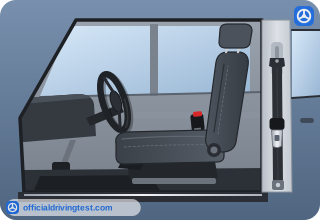
- Your ribs
- Your hips
- Your upper thighs
- Your lower back
Show answer
Correct answer: Your hips
The manual says a safety belt should fit snugly across your hips, because the strong hip bones can absorb more of the impact.
Source: Class D & E Driver’s Guide (Revised August 2025 (DPSMV2052 R08/25)), page 39 · Open this page in the manual (Manual page 39)
-
How should the upper strap of a safety belt be positioned?
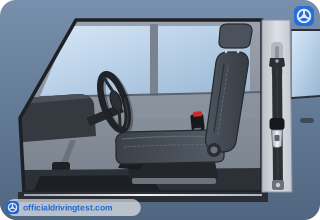
- Under the arm and snugly across the lower stomach
- Behind your back and across the hips
- Across the neck and over the opposite arm
- Over the shoulder and securely across the chest
Show answer
Correct answer: Over the shoulder and securely across the chest
The shoulder strap should slide over the shoulder and securely across the chest.
Source: Class D & E Driver’s Guide (Revised August 2025 (DPSMV2052 R08/25)), page 39 · Open this page in the manual (Manual page 39)
-
What can happen to unbelted backseat passengers in a crash?
- They are protected because the front seats absorb the force of the crash
- They are held in place by the headrests of the front seats
- They can be thrown into other passengers or ejected from the vehicle
- They are at risk only if the vehicle rolls over
Show answer
Correct answer: They can be thrown into other passengers or ejected from the vehicle
Backseat passengers who are not belted can be thrown into other passengers as well as ejected from the vehicle in a crash.
Source: Class D & E Driver’s Guide (Revised August 2025 (DPSMV2052 R08/25)), page 39 · Open this page in the manual (Manual page 39)
-
How does wearing a safety belt help if there is danger from fire or water after a crash?
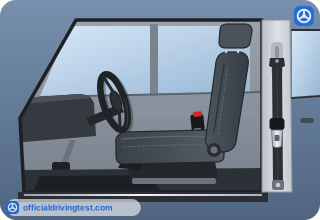
- There is much less chance of being knocked unconscious, so you can get out quickly
- The belt locks the doors so that fire and water cannot enter the vehicle during the crash
- The belt holds you in the seat so that rescuers can find you quickly after the crash
- The belt keeps your body away from the windows until help arrives at the scene
Show answer
Correct answer: There is much less chance of being knocked unconscious, so you can get out quickly
A belted occupant has much less chance of being knocked unconscious or seriously injured, so they can get out quickly if there is danger from fire or water.
Source: Class D & E Driver’s Guide (Revised August 2025 (DPSMV2052 R08/25)), page 39 · Open this page in the manual (Manual page 39)
-
How does a safety belt help you control the car in a crash?
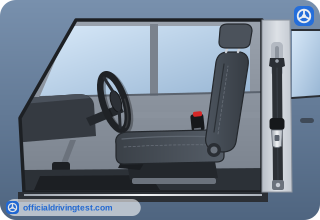
- It stops the vehicle sooner than an unbelted driver would be able to stop it
- It keeps the steering wheel from turning during the impact
- It keeps your foot pressed on the brake pedal during the crash
- It keeps you in position behind the wheel instead of being thrown from it
Show answer
Correct answer: It keeps you in position behind the wheel instead of being thrown from it
Safety belts keep you in a position so you can control the car, since the first impact in a crash frequently throws the driver from behind the wheel.
Source: Class D & E Driver’s Guide (Revised August 2025 (DPSMV2052 R08/25)), page 39 · Open this page in the manual (Manual page 39)
-
If you are pregnant, what should you wear to be much safer?
- Only a lap belt, without the shoulder strap
- A lap and shoulder belt
- No belt, so the unborn child is not squeezed
- Only the shoulder strap, across the chest
Show answer
Correct answer: A lap and shoulder belt
If you are pregnant, you and your unborn child are much safer if you wear a lap and shoulder belt.
Source: Class D & E Driver’s Guide (Revised August 2025 (DPSMV2052 R08/25)), page 40 · Open this page in the manual (Manual page 40)
-
According to the manual, what is your best defense against a drunk driver?
- A seat belt
- Air bags
- A headrest
- Tinted windows
Show answer
Correct answer: A seat belt
The manual states that a seat belt is your best defense against a drunk driver.
Source: Class D & E Driver’s Guide (Revised August 2025 (DPSMV2052 R08/25)), page 40 · Open this page in the manual (Manual page 40)
-
What does the Louisiana Child Passenger Restraint law (R.S. 32:295) require for all children?
- To ride in a rear-facing car seat until they are six years old, regardless of their size
- To use whichever seat belt or car seat the parent prefers, as long as they are buckled
- To be properly restrained in an age- or size-appropriate system that meets federal safety standards
- To ride in a booster seat until they are 13 years old, regardless of their weight and height
Show answer
Correct answer: To be properly restrained in an age- or size-appropriate system that meets federal safety standards
The law requires all children to be properly restrained and secured in an age- or size-appropriate passenger restraint system that meets the applicable federal motor vehicle safety standards.
Source: Class D & E Driver’s Guide (Revised August 2025 (DPSMV2052 R08/25)), page 40 · Open this page in the manual (Manual page 40)
-
Under the Louisiana law that sets child restraints by age, how must a 1-year-old child ride?
- In a forward facing, federally approved car seat
- In a rear facing, federally approved car seat
- In a booster seat with restraints
- In a lap shoulder seat belt secured correctly on the vehicle seat
Show answer
Correct answer: In a rear facing, federally approved car seat
From birth to at least 2 years, a child rides in a rear facing, federally approved car seat.
Source: Class D & E Driver’s Guide (Revised August 2025 (DPSMV2052 R08/25)), page 40 · Open this page in the manual (Manual page 40)
-
Which restraint does the Louisiana law list for children 2-4 years old?
- In a rear facing, federally approved car seat
- In a booster seat with restraints
- In a lap shoulder seat belt secured correctly on the vehicle seat
- In a forward facing, federally approved car seat
Show answer
Correct answer: In a forward facing, federally approved car seat
Children aged 2-4 years ride in a forward facing, federally approved car seat.
Source: Class D & E Driver’s Guide (Revised August 2025 (DPSMV2052 R08/25)), page 40 · Open this page in the manual (Manual page 40)
-
Under the Louisiana law that sets child restraints by age, how must a 6-year-old child ride?
- In a rear facing, federally approved car seat
- In a forward facing, federally approved car seat
- In a booster seat with restraints
- In a lap shoulder seat belt with no booster seat
Show answer
Correct answer: In a booster seat with restraints
Children aged 4-9 years ride in a booster seat with restraints.
Source: Class D & E Driver’s Guide (Revised August 2025 (DPSMV2052 R08/25)), page 40 · Open this page in the manual (Manual page 40)
-
Where should a child younger than 13 ride, when a rear seat is available?
- In the rear seat of the vehicle, properly restrained
- In the front passenger seat so the driver can watch the child
- In the front seat once the child reaches 9 years of age
- In either the front or rear seat, as long as the child is buckled
Show answer
Correct answer: In the rear seat of the vehicle, properly restrained
A child younger than 13 years rides in the rear seat of a vehicle, when available and properly restrained.
Source: Class D & E Driver’s Guide (Revised August 2025 (DPSMV2052 R08/25)), page 40 · Open this page in the manual (Manual page 40)
-
A child falls into more than one category for age or weight. Which category must be chosen?
- The less protective category
- The category that matches the child's age only
- The category the parent finds more comfortable
- The more protective category
Show answer
Correct answer: The more protective category
A child who falls into more than one category for age or weight must choose the more protective category.
Source: Class D & E Driver’s Guide (Revised August 2025 (DPSMV2052 R08/25)), page 41 · Open this page in the manual (Manual page 41)
-
Which of these must you never do when a small child rides with you?
- Place the child in an age- and size-appropriate car seat
- Buckle yourself and the child into a single safety belt
- Use a seat belt yourself on every trip, even a short one
- Seat the child in the back seat when one is available
Show answer
Correct answer: Buckle yourself and the child into a single safety belt
The manual says never to hold a child on your lap or buckle yourself and a child into a single safety belt, because you are not strong enough to hold onto even a small child in a crash.
Source: Class D & E Driver’s Guide (Revised August 2025 (DPSMV2052 R08/25)), page 41 · Open this page in the manual (Manual page 41)
-
How must a child never be allowed to ride in a vehicle?
- Standing on a seat
- In the middle of the back seat
- In a booster seat with restraints
- Buckled in the rear seat
Show answer
Correct answer: Standing on a seat
The manual says never to allow a child to ride standing on a seat.
Source: Class D & E Driver’s Guide (Revised August 2025 (DPSMV2052 R08/25)), page 41 · Open this page in the manual (Manual page 41)
-
As a parent or caregiver, on which trips should you use a seat belt to set a good example?
- Only trips on the interstate or other highways
- Only trips when children are riding with you
- Every trip, no matter how short
- Only trips longer than ten miles
Show answer
Correct answer: Every trip, no matter how short
A parent or caregiver should use a seat belt on every trip, no matter how short, which sets a good example.
Source: Class D & E Driver’s Guide (Revised August 2025 (DPSMV2052 R08/25)), page 41 · Open this page in the manual (Manual page 41)
-
How does the middle of the back seat in a passenger car compare with the front seat?
- It is less safe than the front seat
- It is safer than the front seat
- It is equally safe as the front seat
- It is safer only for adult passengers
Show answer
Correct answer: It is safer than the front seat
The middle of the back seat in a passenger car is safer than the front seat.
Source: Class D & E Driver’s Guide (Revised August 2025 (DPSMV2052 R08/25)), page 41 · Open this page in the manual (Manual page 41)
-
An air bag inflates rapidly with air or another gas during which kind of collision?
- Any hard braking or sudden stop
- A low-speed bump while parking
- Only a collision above highway speed
- A head on or nearly head on collision
Show answer
Correct answer: A head on or nearly head on collision
An airbag is a flexible membrane that inflates rapidly during a head on or nearly head on collision.
Source: Class D & E Driver’s Guide (Revised August 2025 (DPSMV2052 R08/25)), page 41 · Open this page in the manual (Manual page 41)
-
In which situation do air bags not deploy?
- When you are in a head on collision
- When you are in a nearly head on collision
- When you are rear-ended by another car
- When you are wearing a safety belt
Show answer
Correct answer: When you are rear-ended by another car
The manual states that air bags do not deploy when you are rear-ended by another car.
Source: Class D & E Driver’s Guide (Revised August 2025 (DPSMV2052 R08/25)), page 41 · Open this page in the manual (Manual page 41)
-
How do air bags relate to safety belts?
- They supplement the protection of safety belts but do not replace them
- They replace safety belts in vehicles that have front and side air bags
- They work only when the safety belt has been left unbuckled
- They protect the lower body while safety belts protect the head
Show answer
Correct answer: They supplement the protection of safety belts but do not replace them
Air bags do not replace safety belts; they supplement the safety that belts provide.
Source: Class D & E Driver’s Guide (Revised August 2025 (DPSMV2052 R08/25)), page 41 · Open this page in the manual (Manual page 41)
-
The manual calls air bags what kind of system?
- A Primary Restraint System
- A Replacement Restraint System
- A Secondary Braking System
- A Supplementary Restraint System
Show answer
Correct answer: A Supplementary Restraint System
Air bags are a Supplementary Restraint System, while your safety belt is your primary restraint.
Source: Class D & E Driver’s Guide (Revised August 2025 (DPSMV2052 R08/25)), page 42 · Open this page in the manual (Manual page 42)
-
What do air bags reduce the chance of?
- A whiplash injury from being struck from behind by another vehicle
- A head or upper body injury from the vehicle's interior equipment
- An injury to the lower body from striking the dashboard or pedals
- An injury from being thrown out of the vehicle through a window
Show answer
Correct answer: A head or upper body injury from the vehicle's interior equipment
Air bags reduce the chance of the occupant sustaining a head or upper body injury from encounters with the vehicle's interior equipment.
Source: Class D & E Driver’s Guide (Revised August 2025 (DPSMV2052 R08/25)), page 41 · Open this page in the manual (Manual page 41)
-
At about what speed does a deploying air bag come out?
- 50 to 75 miles per hour
- 80 to 100 miles per hour
- 150 to 200 miles per hour
- 250 to 300 miles per hour
Show answer
Correct answer: 150 to 200 miles per hour
The air bag, when it deploys, comes out at speeds of 150 to 200 miles per hour.
Source: Class D & E Driver’s Guide (Revised August 2025 (DPSMV2052 R08/25)), page 41 · Open this page in the manual (Manual page 41)
-
Why is the traditional 10 and 2 hand position no longer recommended in vehicles with air bags?
- It blocks your view of the instrument panel at the moment the air bag inflates
- A deploying air bag can throw your hands into your head or break your wrist or forearm
- It keeps the air bag from inflating fully when there is a head on collision
- It makes hand-over-hand steering impossible when driving at low speeds
Show answer
Correct answer: A deploying air bag can throw your hands into your head or break your wrist or forearm
If your hands are on the upper part of the wheel, a deploying air bag can throw them into your head, causing a serious head injury, or break your wrist or forearm.
Source: Class D & E Driver’s Guide (Revised August 2025 (DPSMV2052 R08/25)), page 41 · Open this page in the manual (Manual page 41)
-
What is the purpose of a passenger air bag on-off switch in the off position?
- To disable the driver's air bag for a driver who sits very close to the steering wheel
- To disable the side air bags so that a rear seat passenger can lean on the door
- To disable the passenger air bag for any passenger who is not wearing a safety belt
- To disable the front passenger air bag so a child age 12 or under can ride in the right front seat
Show answer
Correct answer: To disable the front passenger air bag so a child age 12 or under can ride in the right front seat
The off position disables the front passenger air bag so that a child age 12 or under can be transported in the right front passenger seat.
Source: Class D & E Driver’s Guide (Revised August 2025 (DPSMV2052 R08/25)), page 41 · Open this page in the manual (Manual page 41)
-
Which vehicles commonly have a passenger air bag on-off switch as standard equipment?
- Large sedans that have a wide back seat and side impact air bags in the doors
- Vans and station wagons that have three rows of seats for many passengers
- Vehicles without rear seats or with small rear seats, such as pickup trucks or sports cars
- Any vehicle that was built with a driver's side air bag as standard equipment
Show answer
Correct answer: Vehicles without rear seats or with small rear seats, such as pickup trucks or sports cars
Most vehicles without rear seats or with small rear seats, such as pickup trucks or sports cars, have a passenger air bag on-off switch as standard equipment.
Source: Class D & E Driver’s Guide (Revised August 2025 (DPSMV2052 R08/25)), page 41 · Open this page in the manual (Manual page 41)
-
Drivers of vehicles equipped with air bags must sit at least how far from the steering wheel?
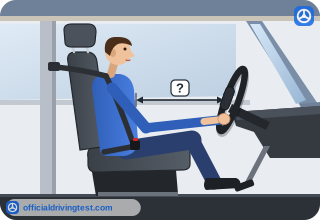
- 10 inches
- 5 inches
- 6 inches
- 14 inches
Show answer
Correct answer: 10 inches
The driver must sit at least 10 inches away from a steering wheel equipped with an air bag, otherwise the bag can explode into the driver and cause serious harm.
Source: Class D & E Driver’s Guide (Revised August 2025 (DPSMV2052 R08/25)), page 41 · Open this page in the manual (Manual page 41)
-
In a vehicle with air bags, how should a tilting steering wheel be set?
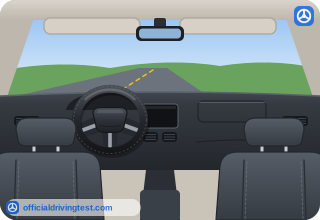
- Tilted toward the driver's head so the bag cannot reach the chest
- Level with the driver's eyes so the horn can be seen
- Tilted toward the floor to leave room for the knees
- Tilted away from the head, preferably toward the chest
Show answer
Correct answer: Tilted away from the head, preferably toward the chest
With a tilt function, the wheel should be tilted away from the head, preferably toward the chest.
Source: Class D & E Driver’s Guide (Revised August 2025 (DPSMV2052 R08/25)), page 41 · Open this page in the manual (Manual page 41)
-
Which passengers should sit in the back seat of a vehicle equipped with air bags?
- Only passengers who are pregnant or who are holding infants
- Older, frail persons and children 12 and under
- Only children younger than five years old
- Only passengers who are not wearing a safety belt
Show answer
Correct answer: Older, frail persons and children 12 and under
Front seat air bags have killed children and older people, so older, frail persons and children 12 and under should sit in the back seat.
Source: Class D & E Driver’s Guide (Revised August 2025 (DPSMV2052 R08/25)), page 41 · Open this page in the manual (Manual page 41)
-
How do seatbelts help protect an occupant in a crash?
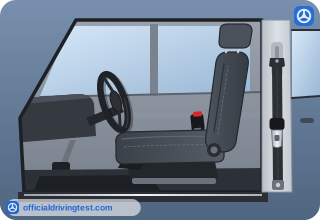
- They harden to hold the occupant completely still on impact
- They spread the force of the crash away from the passenger compartment
- They stretch to slow down the occupant's deceleration
- They inflate to cushion the occupant against the vehicle's interior
Show answer
Correct answer: They stretch to slow down the occupant's deceleration
Seatbelts limit the forward motion of an occupant, stretch to slow down the occupant's deceleration in a crash, and prevent occupants being ejected.
Source: Class D & E Driver’s Guide (Revised August 2025 (DPSMV2052 R08/25)), page 43 · Open this page in the manual (Manual page 43)
-
In a crash, what is "force" in the manual's words?
- The gradual loss of speed
- The weight of the vehicle
- The sudden transfer of energy
- The distance traveled before stopping
Show answer
Correct answer: The sudden transfer of energy
The manual describes the force of a crash as the sudden transfer of energy in a crash.
Source: Class D & E Driver’s Guide (Revised August 2025 (DPSMV2052 R08/25)), page 38 · Open this page in the manual (Manual page 38)
-
If you are not wearing a safety belt, what happens to your body after your car hits something and stops?
- It stays in the seat because the car has already come to a complete stop
- It is thrown forward until stopped by the windshield, dashboard or steering wheel
- It is thrown backward into the seat and the headrest until the car stops rolling
- It is pressed upward against the roof of the vehicle by the force of the crash
Show answer
Correct answer: It is thrown forward until stopped by the windshield, dashboard or steering wheel
Without a safety belt, your body is thrown forward until you are stopped by something like the windshield, the dashboard or the steering wheel.
Source: Class D & E Driver’s Guide (Revised August 2025 (DPSMV2052 R08/25)), page 38 · Open this page in the manual (Manual page 38)
-
In a crash, what happens after your body comes to a stop against some part of the car?
- The force of the crash ends as soon as your body has stopped moving
- The force of the crash passes harmlessly into the ground through the tires
- The seat absorbs the rest of the force before it reaches your body
- The force of the crash goes on inside you, and your internal organs crash too
Show answer
Correct answer: The force of the crash goes on inside you, and your internal organs crash too
Once your body stops against part of the car, the force of the crash goes on inside you, which causes many internal injuries.
Source: Class D & E Driver’s Guide (Revised August 2025 (DPSMV2052 R08/25)), page 38 · Open this page in the manual (Manual page 38)
-
According to the manual, what is your best protection in a crash?
- Driving only in daylight on roads you know well and avoiding bad weather
- Relying on air bags instead of safety belts when you take long trips
- Properly buckling up every time, obeying speed limit laws and always driving safely
- Avoiding the interstate and driving the shortest route to your destination
Show answer
Correct answer: Properly buckling up every time, obeying speed limit laws and always driving safely
Your best protection is to properly buckle up every time, obey the speed limit laws and always drive safely.
Source: Class D & E Driver’s Guide (Revised August 2025 (DPSMV2052 R08/25)), page 38 · Open this page in the manual (Manual page 38)
-
When can a safety belt protect you?
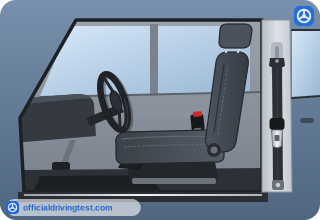
- Whenever it is in the vehicle, even if it is not fastened
- Only in the front seat of the vehicle
- Only if it is worn and worn correctly
- Only at speeds above 40 miles an hour
Show answer
Correct answer: Only if it is worn and worn correctly
A safety belt can protect you only if it is worn and worn correctly.
Source: Class D & E Driver’s Guide (Revised August 2025 (DPSMV2052 R08/25)), page 39 · Open this page in the manual (Manual page 39)
-
How often does the manual suggest inspecting seat belts for unusual wear or malfunctioning parts?
- Weekly
- Monthly
- Every six months
- Once a year
Show answer
Correct answer: Weekly
Inspecting seat belts for unusual wear or malfunctioning parts is on the suggested weekly checks.
Source: Class D & E Driver’s Guide (Revised August 2025 (DPSMV2052 R08/25)), page 44 · Open this page in the manual (Manual page 44)
-
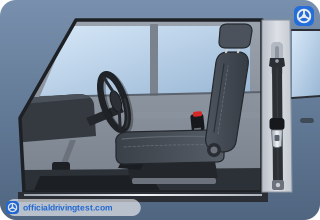
Before starting your engine, what should you make sure about yourself and your passengers?
- That passengers sit in the front seat
- That passengers have their seat belts unfastened until moving
- That only the driver is belted
- That you and your passengers are correctly belted
Show answer
Correct answer: That you and your passengers are correctly belted
The manual says to make sure you and the passengers are correctly belted before starting the engine.
Source: Class D & E Driver’s Guide (Revised August 2025 (DPSMV2052 R08/25)), page 45 · Open this page in the manual (Manual page 45)
-
Which of these does the manual tell drivers not to do in the heat of summer?
- Share the travel itinerary with family
- Have the car serviced before a trip
- Use a sun shield when parked
- Leave pets or children waiting in a car
Show answer
Correct answer: Leave pets or children waiting in a car
The manual says the summer sun can create dangerously hot temperatures in a vehicle and tells drivers not to leave pets or children waiting in a car.
Source: Class D & E Driver’s Guide (Revised August 2025 (DPSMV2052 R08/25)), page 51 · Open this page in the manual (Manual page 51)
-
One of the National Safety Council’s guidelines says you should not start the engine until you have done what?
- Warmed up the engine for at least five minutes
- Secured each passenger, including children and pets
- Filled the fuel tank completely
- Told a friend which route you plan to take
Show answer
Correct answer: Secured each passenger, including children and pets
The guideline is not to start the engine without securing each passenger in the car, including children and pets.
Source: Class D & E Driver’s Guide (Revised August 2025 (DPSMV2052 R08/25)), page 54 · Open this page in the manual (Manual page 54)
-
Persons under what age may not be passengers in the open bed of a truck?
- Ten years
- Sixteen years
- Eighteen years
- Twelve years
Show answer
Correct answer: Twelve years
The manual says no person under the age of twelve years may be a passenger in the open bed of a truck.
Source: Class D & E Driver’s Guide (Revised August 2025 (DPSMV2052 R08/25)), page 96 · Open this page in the manual (Manual page 96)
-
When is a person of any age not permitted to be a passenger in the open bed of a truck?
- When the truck is moving faster than 35 mph
- When the truck is moving upon an interstate highway
- When the truck is moving on a two-lane road
- When the truck is moving after dark
Show answer
Correct answer: When the truck is moving upon an interstate highway
The manual says no person of any age may ride in the open bed of a truck that is moving upon an interstate highway.
Source: Class D & E Driver’s Guide (Revised August 2025 (DPSMV2052 R08/25)), page 96 · Open this page in the manual (Manual page 96)
-
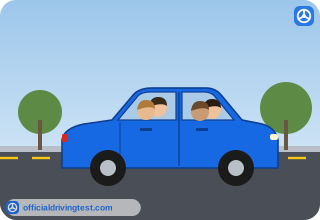
Before you start your engine, what should you verify about the occupants of the vehicle?
- That all of them are seated in the back
- That all of them are wearing seat belts
- That all of them know the route
- That all of them are over twelve years old
Show answer
Correct answer: That all of them are wearing seat belts
One of the things to remember before starting the engine is to verify that all occupants are wearing seat belts.
Source: Class D & E Driver’s Guide (Revised August 2025 (DPSMV2052 R08/25)), page 110 · Open this page in the manual (Manual page 110)
-
According to the manual, what is the best protection before a crash?
- Driving only short trips on roads that you know very well
- Keeping all loose items on the back seat of your vehicle
- Buckling your seat belt and shoulder harness before every trip
- Holding the steering wheel loosely with both of your hands
Show answer
Correct answer: Buckling your seat belt and shoulder harness before every trip
The best protection before a crash is to buckle your seat belt and shoulder harness before you start any trip, no matter how short.
Source: Class D & E Driver’s Guide (Revised August 2025 (DPSMV2052 R08/25)), page 114 · Open this page in the manual (Manual page 114)
-
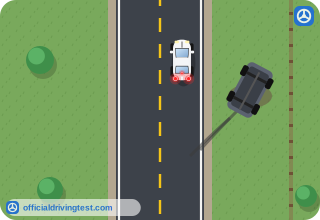
According to the manual, what is the most effective way to reduce the risk of injury or death in a rollover?
- Drive a taller vehicle
- Open the windows
- Use your safety belt
- Carry extra cargo for weight
Show answer
Correct answer: Use your safety belt
Without safety belts, occupants can be thrown from a rolling vehicle, so using your safety belt is the most effective protection.
Source: Class D & E Driver’s Guide (Revised August 2025 (DPSMV2052 R08/25)), page 115 · Open this page in the manual (Manual page 115)