Pavement markings in Indiana
The Indiana Driver’s Manual shows or names everything on this page: 12 in all, on pages 35, 37, 39–40, 53, 55.
Independent educational site · not affiliated with any government agency or DMV
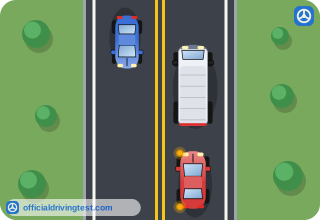
Two-Lane Road with Double Solid Yellow Line
Yellow lane markings separate multiple lanes of traffic going in opposite directions. You may cross a broken yellow line to pass another vehicle when it is safe, but you should not cross a solid yellow line except to turn.
Manual page 37 · Open this page in the manual (Manual page 37)
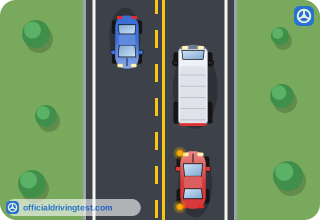
Solid and Broken Yellow Line
Yellow lane markings separate multiple lanes of traffic going in opposite directions. You may cross a broken yellow line to pass another vehicle when it is safe, but you should not cross a solid yellow line except to turn.
Manual page 37 · Open this page in the manual (Manual page 37)
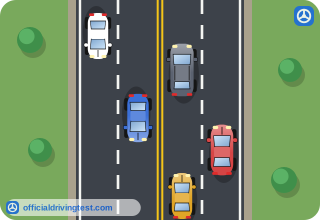
Four-Lane Road with Solid Yellow Line
Yellow lane markings separate multiple lanes of traffic going in opposite directions. You may cross a broken yellow line to pass another vehicle when it is safe, but you should not cross a solid yellow line except to turn.
Manual page 37 · Open this page in the manual (Manual page 37)
Three Lanes with Broken White Lines
White lane markings separate multiple lanes of traffic going in the same direction. Most roads with more than two lanes have broken white lines to separate the lanes. You may cross a broken white line when it is safe to change lanes, but you should not cross a solid white line.
Manual page 37 · Open this page in the manual (Manual page 37)
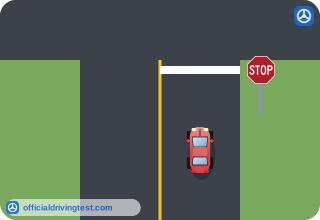
Stop Line
If you are approaching a red light or a stop sign, you must stop at the solid white stop line.
Manual page 35 · Open this page in the manual (Manual page 35)
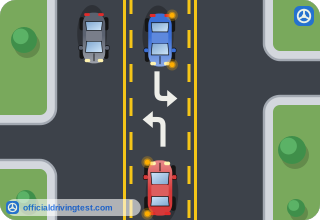
Center Turn Lane
Busy roads on which there are many places a vehicle may make a left turn often have a center lane designated solely for the left-turning vehicles. ... Never use this type of center lane for passing other vehicles. Designated center lanes for left turns can usually be identified by a sign with alternate directional arrows that state “CENTER LANE ONLY” or with pavement arrows, although some center lanes do not have signs or pavement arrows.
Manual page 39 · Open this page in the manual (Manual page 39)
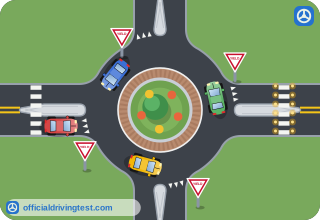
Yield Line Markings (Roundabout)
The manual does not state it
Manual page 40 · Open this page in the manual (Manual page 40)
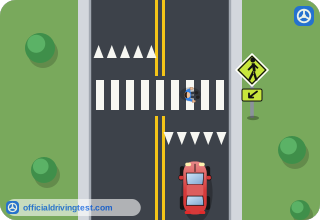
Crosswalk (Ladder Style)
Approaching vehicles must yield to pedestrians in the crosswalk and to traffic in the roundabout.
Manual page 40 · Open this page in the manual (Manual page 40)
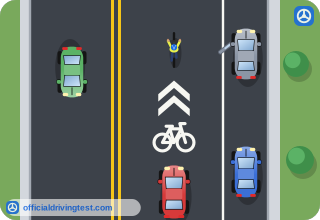
Sharrow Marking
Sharrow markings are pavement markings of a bike with two arrows above it and are intended to help cyclists position themselves away from parked cars and to alert other road users to expect cyclists to occupy travel lanes.
Manual page 53 · Open this page in the manual (Manual page 53)
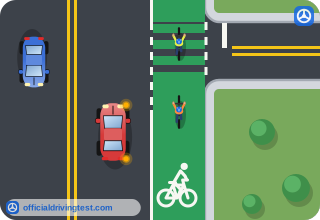
Bike Lane Through Intersection (Green)
Green colored pavement may be used to enhance the visibility of bike lanes.
Manual page 53 · Open this page in the manual (Manual page 53)
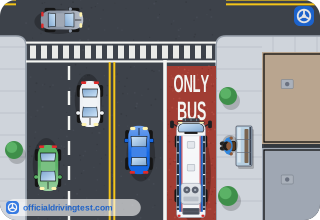
Red Bus-Only Lane
Red colored pavement may be used to enhance the visibility of bus or transit lanes that are designated for buses, taxis, or other modes of public transit.
Manual page 53 · Open this page in the manual (Manual page 53)
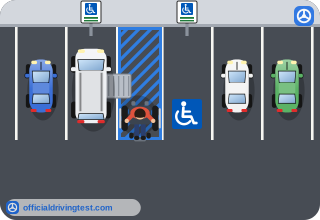
Accessible Parking Spaces (Blue Striped Aisle)
Parking in the diagonally striped area next to an accessible parking space is prohibited. This striped space allows a wheelchair user to transfer in and out of his or her vehicle. If the wheelchair user has an accessible vehicle, this space is required to deploy its ramp so the wheelchair user can safely enter and exit the vehicle. Parking in this striped area is prohibited even if you are in possession of a valid parking placard.
Manual page 55 · Open this page in the manual (Manual page 55)