Hawaii: Speed and following distance
Hawaii speed limits, the basic speed rule, following distance, seeing ahead and driving in bad conditions. Split into 3 shorter tests so you're not stuck in one long quiz.
Independent educational site · not affiliated with any government agency or DMV
Choose a part
Speed and following distance — Part 1
Questions in this part include: “When you are towing another vehicle, how much space must you leave ahead of your vehicle?”
StartSpeed and following distance — Part 2
Questions in this part include: “Where does the manual say special attention should be devoted?”
StartSpeed and following distance — Part 3
Questions in this part include: “At what speed may partial hydroplaning start?”
StartAll 57 Speed and following distance questions with answers
Choose a part above to take a practice test, or study every question and answer here.
Show the questions and answersHide the questions
-
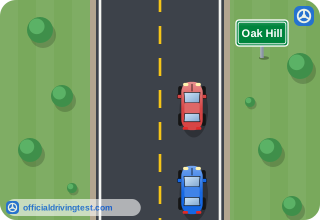
How closely may you follow another vehicle?
- As close as you like when traffic is moving slowly
- No closer than is reasonable and prudent for the conditions
- No closer than one car length at any speed or in any weather
- As close as the vehicle ahead allows in good weather
Show answer
Correct answer: No closer than is reasonable and prudent for the conditions
You must not follow closer than is reasonable and prudent for the speed, traffic, road and weather conditions.
Source: Hawaii Driver's Manual (2023), page 27 · Open this page in the manual (Manual page 27)
-
When you are towing another vehicle, how much space must you leave ahead of your vehicle?
- The same space you would leave when you are not towing
- Enough space for the towed vehicle to stop before your own vehicle does
- No extra space is needed as long as you drive slowly
- Enough to allow an overtaking vehicle to occupy the space safely
Show answer
Correct answer: Enough to allow an overtaking vehicle to occupy the space safely
When towing another vehicle you must leave enough space ahead to allow an overtaking vehicle to occupy the space safely.
Source: Hawaii Driver's Manual (2023), page 27 · Open this page in the manual (Manual page 27)
-
Under the basic speed law, which speed must you NOT drive at?
- A speed below the average speed of other traffic
- A speed 10 mph below the posted limit
- A speed greater than is reasonable and prudent
- A speed above the speed of the vehicle ahead
Show answer
Correct answer: A speed greater than is reasonable and prudent
The basic law is that you must not drive at a speed that is greater than is reasonable and prudent.
Source: Hawaii Driver's Manual (2023), page 28 · Open this page in the manual (Manual page 28)
-
Which of these must you consider when choosing a safe appropriate speed?
- The age of your vehicle
- The presence of pedestrians
- The color of the road signs
- The number of passengers in your vehicle
Show answer
Correct answer: The presence of pedestrians
A safe appropriate speed depends on the area, the type and condition of the road traffic, the presence of pedestrians, the weather and light conditions.
Source: Hawaii Driver's Manual (2023), page 28 · Open this page in the manual (Manual page 28)
-
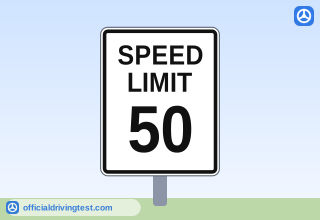
What is the highest speed you may drive on a road with a posted maximum limit?
- 5 mph over the posted limit
- The speed of the fastest vehicle nearby
- Any speed that feels safe
- The posted maximum limit
Show answer
Correct answer: The posted maximum limit
You must not drive at a speed that is greater than the posted maximum limit.
Source: Hawaii Driver's Manual (2023), page 28 · Open this page in the manual (Manual page 28)
-
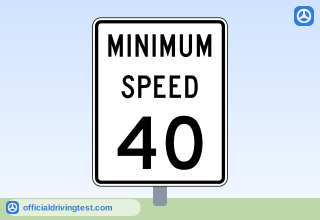
What is the lowest speed you may drive on a road with a posted minimum speed limit?
- Half of the posted maximum limit
- The speed of the vehicle ahead
- The posted minimum speed limit
- The speed that feels safe in the lane
Show answer
Correct answer: The posted minimum speed limit
You must not drive at a speed that is less than the posted minimum speed limit.
Source: Hawaii Driver's Manual (2023), page 28 · Open this page in the manual (Manual page 28)
-
If you cannot keep up with traffic, what must you do?
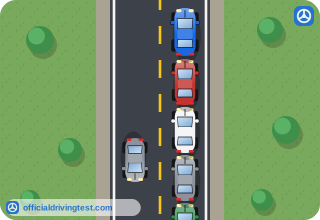
- Pull off the roadway and let other traffic pass
- Turn on your hazard lights and keep driving in your lane
- Move to the left lane so others can see you
- Stop in your lane until traffic clears
Show answer
Correct answer: Pull off the roadway and let other traffic pass
You must not drive so slowly that you hold back other traffic; if you cannot keep up, pull off the roadway and let other traffic pass or change to another route.
Source: Hawaii Driver's Manual (2023), page 28 · Open this page in the manual (Manual page 28)
-
If you drive more slowly than traffic on a multilane road, which lane should you use?
- The left-hand lane, so that others can safely pass you on the right
- The center lane, so others can pass on either side
- Any lane, as long as you signal
- The right-hand lane, so others can pass you on your left side
Show answer
Correct answer: The right-hand lane, so others can pass you on your left side
On a multilane road, a slower driver should drive in the right-hand lane so others can pass on the left side.
Source: Hawaii Driver's Manual (2023), page 28 · Open this page in the manual (Manual page 28)
-
Which of these is prohibited on a public street or highway?
- Stopping briefly to yield to a pedestrian
- Any race, speed contest or speed exhibition
- Using your headlamps during the daytime
- Driving at exactly the posted minimum speed limit
Show answer
Correct answer: Any race, speed contest or speed exhibition
You must not engage in any race, speed contest or speed exhibition of any kind on a public street or highway.
Source: Hawaii Driver's Manual (2023), page 28 · Open this page in the manual (Manual page 28)
-
At locations marked with a "School Crossing" sign, when are reduced speed limits required?
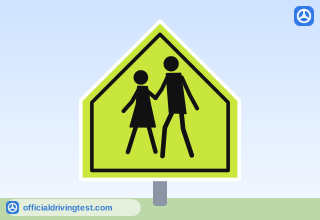
- At all times of day
- When children are present
- Only during the morning hours
- Only when a crossing guard is present
Show answer
Correct answer: When children are present
Reduced speed limits are required at locations marked with a "School Crossing" sign when children are present.
Source: Hawaii Driver's Manual (2023), page 28 · Open this page in the manual (Manual page 28)
-
Besides streets near schools and playgrounds, where are reduced speed limits required?
- On highways with two lanes in each direction
- On roads that have a posted minimum speed
- On any road at night
- On streets in residential or business areas
Show answer
Correct answer: On streets in residential or business areas
Reduced speed limits are required on streets in residential or business areas.
Source: Hawaii Driver's Manual (2023), page 28 · Open this page in the manual (Manual page 28)
-
Which statement about the special speed limits shown on speed limit signs is correct?
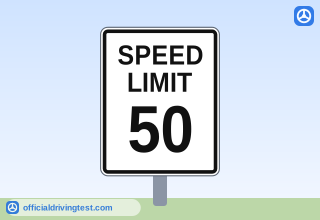
- They may apply at certain times or to certain kinds of vehicles
- They apply only to vehicles registered in another county
- They apply only during hours of darkness on weekends
- They apply only to drivers carrying passengers
Show answer
Correct answer: They may apply at certain times or to certain kinds of vehicles
Speed limit signs may indicate special limits that apply at certain times, under certain conditions, or to certain kinds of vehicles.
Source: Hawaii Driver's Manual (2023), page 44 · Open this page in the manual (Manual page 44)
-
According to the manual, what does an impatient driver do when he cannot weave in and out of traffic?
- Pulls over to rest
- Slows down to the speed limit
- Tailgates other drivers
- Stops and waits for traffic to clear
Show answer
Correct answer: Tailgates other drivers
The impatient driver speeds from stop to stop, weaving in and out of traffic, and tailgates other drivers when he cannot weave.
Source: Hawaii Driver's Manual (2023), page 57 · Open this page in the manual (Manual page 57)
-
How does the manual define defensive driving?
- Driving slowly in every situation
- Reacting quickly after another driver makes a serious mistake
- Spotting dangerous situations and acting before a crash develops
- Staying in the right lane at all times
Show answer
Correct answer: Spotting dangerous situations and acting before a crash develops
Defensive driving means you identify dangerous situations and take action to defend against the danger before a crash situation develops.
Source: Hawaii Driver's Manual (2023), page 59 · Open this page in the manual (Manual page 59)
-
If you display aggressive, careless or impulsive characteristics yourself, what does the manual say you must do first?
- Let other drivers pass you
- Defend against yourself
- Pull over and call the police
- Increase your following distance only
Show answer
Correct answer: Defend against yourself
The manual says that if you display any of these characteristics, you must first defend against yourself.
Source: Hawaii Driver's Manual (2023), page 59 · Open this page in the manual (Manual page 59)
-
According to the manual, what should a defensive driver do with the eyes in order to stay aware of developing traffic situations?
- Keep them fixed on the vehicle ahead
- Keep them on the instrument panel
- Keep them on the side mirrors
- Keep them moving
Show answer
Correct answer: Keep them moving
A defensive driver stays alert and keeps the eyes moving to be aware of developing traffic situations at all times.
Source: Hawaii Driver's Manual (2023), page 59 · Open this page in the manual (Manual page 59)
-
Why does the manual tell a defensive driver to look well ahead of the vehicle?
- To read all the signs earlier
- To avoid using the brakes at all
- To anticipate a chain reaction
- To reduce the need for mirrors
Show answer
Correct answer: To anticipate a chain reaction
A defensive driver looks well ahead and anticipates the possibility of a chain reaction traffic situation.
Source: Hawaii Driver's Manual (2023), page 59 · Open this page in the manual (Manual page 59)
-
What does the manual say a defensive driver should always leave himself?
- A way out
- A full lane to the left
- A second set of directions
- An extra five minutes of travel time
Show answer
Correct answer: A way out
The manual says to have an alternate plan of action ready for an unexpected event and always leave yourself a way out.
Source: Hawaii Driver's Manual (2023), page 59 · Open this page in the manual (Manual page 59)
-
According to the manual, how do you obtain almost all of the information you need to drive a vehicle safely?
- By listening to the radio
- By following other vehicles
- By checking the instrument panel
- By looking and seeing
Show answer
Correct answer: By looking and seeing
Almost all of the information needed to drive safely is obtained by looking and SEEING.
Source: Hawaii Driver's Manual (2023), page 59 · Open this page in the manual (Manual page 59)
-
Where does the manual say special attention should be devoted?
- To conditions directly behind your vehicle
- To conditions far ahead of your vehicle
- To conditions only inside your vehicle
- To conditions at the sides of the road only
Show answer
Correct answer: To conditions far ahead of your vehicle
Special attention should be devoted to conditions at a considerable distance ahead of your vehicle.
Source: Hawaii Driver's Manual (2023), page 59 · Open this page in the manual (Manual page 59)
-
In the scanning pattern the manual describes, where should most of your attention be devoted?
- The rear view mirror
- The situation ahead
- The instrument panel
- The sides of the road
Show answer
Correct answer: The situation ahead
The scanning pattern puts most attention on the situation ahead, with glances to either side, in the mirror and at the instrument panel at regular and frequent intervals.
Source: Hawaii Driver's Manual (2023), page 60 · Open this page in the manual (Manual page 60)
-
According to the manual, what does a driver’s statement beginning “I didn’t see ....” often mean?
- “The road was poorly marked.”
- “The other driver was speeding.”
- “The sun was in my eyes.”
- “I wasn’t paying attention.”
Show answer
Correct answer: “I wasn’t paying attention.”
The manual says that in many cases “I didn’t see” means “I wasn’t paying attention.”
Source: Hawaii Driver's Manual (2023), page 60 · Open this page in the manual (Manual page 60)
-
What does the manual say happens to your field of vision as your speed increases?
- It gets wider
- It stays the same
- It is reduced
- It changes only at night
Show answer
Correct answer: It is reduced
Under the heading "Speed reduces your field of vision", the manual shows the field of vision getting narrower at higher speeds.
Source: Hawaii Driver's Manual (2023), page 59 · Open this page in the manual (Manual page 59)
-
According to the manual's figure, how wide is a driver's field of vision when the vehicle is stationary?
- About 45 degrees
- 180 degrees or more
- About 90 degrees
- About 120 degrees
Show answer
Correct answer: 180 degrees or more
The manual's figure shows a field of vision of 180 degrees or more when the vehicle is stationary.
Source: Hawaii Driver's Manual (2023), page 59 · Open this page in the manual (Manual page 59)
-
According to the manual's figure, at 60 mph your field of vision is reduced to approximately what?
- One-half
- Three-quarters
- One-tenth
- One-fifth
Show answer
Correct answer: One-fifth
The manual's figure shows the field of vision reduced to approximately one-fifth at 60 mph.
Source: Hawaii Driver's Manual (2023), page 59 · Open this page in the manual (Manual page 59)
-
To what must the proper safe vehicle speed be adjusted?
- The speed of the fastest vehicle in sight
- The power of your vehicle
- The experience of the driver behind you
- Traffic, weather and road conditions
Show answer
Correct answer: Traffic, weather and road conditions
The proper safe speed must be adjusted to traffic, weather and road conditions and should always be within the posted speed limits.
Source: Hawaii Driver's Manual (2023), page 66 · Open this page in the manual (Manual page 66)
-
Why should you keep pace with traffic?
- Slower vehicles are never involved in any type of crash
- It lets you follow other vehicles more closely
- Vehicles at the same speed in the same direction never collide
- It uses less fuel on every kind of road
Show answer
Correct answer: Vehicles at the same speed in the same direction never collide
Keeping pace is advised because vehicles moving in the same direction at the same speed never collide, while moving faster causes constant extra conflicts.
Source: Hawaii Driver's Manual (2023), page 67 · Open this page in the manual (Manual page 67)
-
What should you do if you cannot keep up with traffic?
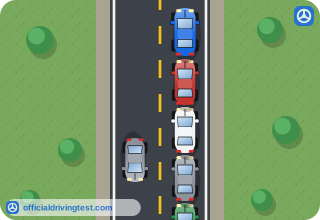
- Move as far to the right as possible
- Move to the center of the lane
- Stop on the shoulder until traffic clears
- Turn on your hazard lights and stay in the left lane
Show answer
Correct answer: Move as far to the right as possible
If you cannot keep up with traffic, you move as far to the right as possible.
Source: Hawaii Driver's Manual (2023), page 67 · Open this page in the manual (Manual page 67)
-
You note when the vehicle ahead is opposite a marker and count "one thousand one, one thousand two." You reach the word two before you pass the marker. What interval do you have?
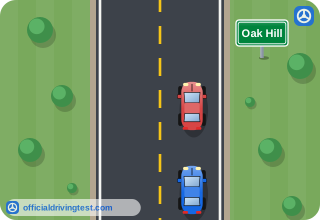
- At least a four second interval
- About a one second interval
- No interval at all
- At least a two second interval
Show answer
Correct answer: At least a two second interval
If you get to the word two before your vehicle reaches the marker, you have at least a two second interval, and you should never have less.
Source: Hawaii Driver's Manual (2023), page 67 · Open this page in the manual (Manual page 67)
-
One of the most common types of crashes is striking the vehicle ahead. What usually causes it?
- Driving too far to the right
- Following too closely
- Stopping too early
- Passing on the left
Show answer
Correct answer: Following too closely
Striking the vehicle ahead is one of the most common crashes and is usually caused by following too closely.
Source: Hawaii Driver's Manual (2023), page 67 · Open this page in the manual (Manual page 67)
-
How does following too closely affect you?
- It reduces your ability to see road and traffic conditions ahead
- It gives you more time to react to what is ahead
- It lets you pass the vehicle in front of you sooner
- It lowers your risk of being struck by a vehicle behind
Show answer
Correct answer: It reduces your ability to see road and traffic conditions ahead
Following too closely reduces your ability to see road and traffic conditions ahead, so you cannot avoid trouble when it develops.
Source: Hawaii Driver's Manual (2023), page 67 · Open this page in the manual (Manual page 67)
-
Why should you maintain a steady speed?
- It lets you become the fastest driver on the road
- Steady speed makes the posted speed limit lower
- Changing speed confuses other drivers about what you intend
- Other drivers will then know that you plan to pass them
Show answer
Correct answer: Changing speed confuses other drivers about what you intend
Constantly changing speed confuses other drivers as to your intentions, and bursts of speed and heavy braking are wasteful and dangerous.
Source: Hawaii Driver's Manual (2023), page 67 · Open this page in the manual (Manual page 67)
-
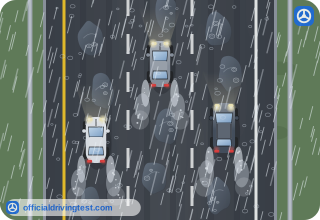
Why should you reduce your speed in poor road or weather conditions?
- You are allowed to follow the vehicle ahead more closely
- You keep better control and have more time to avoid danger
- Other drivers will pass you more quickly and safely
- The posted speed limit no longer applies to you then
Show answer
Correct answer: You keep better control and have more time to avoid danger
At slower speeds you can maintain better control of your vehicle and you have more time to avoid dangerous situations.
Source: Hawaii Driver's Manual (2023), page 67 · Open this page in the manual (Manual page 67)
-
According to the manual, what should never determine the speed of your vehicle?
- Traffic conditions
- Weather conditions
- Road conditions
- Your emotions
Show answer
Correct answer: Your emotions
The manual says to never let your emotions determine the speed of your vehicle and never to be in a hurry.
Source: Hawaii Driver's Manual (2023), page 67 · Open this page in the manual (Manual page 67)
-
What causes most of the weather-related driving problems in Hawaii?
- Snow
- Dense fog at low elevations
- Rain
- Extreme heat
Show answer
Correct answer: Rain
The manual says weather problems associated with driving in Hawaii are primarily due to rain.
Source: Hawaii Driver's Manual (2023), page 75 · Open this page in the manual (Manual page 75)
-
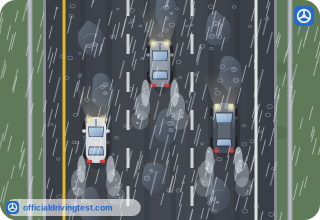
What two basic driving problems does rain cause?
- It reduces engine power and wears out the tires
- It reduces the driver’s visibility and changes the road surface condition
- It weakens the head lamps and makes the horn sound quieter to others
- It slows reaction time and overheats the engine
Show answer
Correct answer: It reduces the driver’s visibility and changes the road surface condition
Rain reduces the driver’s visibility and changes the condition of the road surface.
Source: Hawaii Driver's Manual (2023), page 75 · Open this page in the manual (Manual page 75)
-
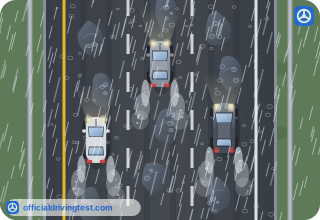
When are roads most slippery in the rain?
- After it has rained for several hours
- Once the road is completely flooded
- Just after the rain stops
- When the first few drops of rain fall
Show answer
Correct answer: When the first few drops of rain fall
Roads are most slippery at first because the oil dropped from passing cars has not been washed away.
Source: Hawaii Driver's Manual (2023), page 75 · Open this page in the manual (Manual page 75)
-
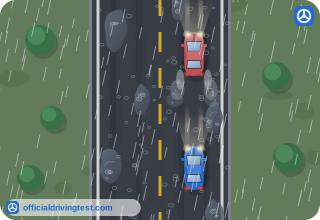
In the first moments of rain, how much following distance should you allow?
- The normal following distance, as long as you reduce speed
- Half the normal following distance
- At least twice the normal following distance
- Exactly the normal following distance with the wipers on
Show answer
Correct answer: At least twice the normal following distance
The manual says to reduce speed, use extra caution, and allow at least twice the normal following distance.
Source: Hawaii Driver's Manual (2023), page 75 · Open this page in the manual (Manual page 75)
-
What is it called when tires ride up on a layer of water on the road like a surfboard?
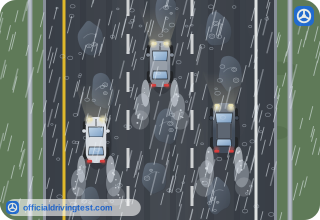
- Hydroplaning
- Skidding
- Fishtailing
- Brake fade
Show answer
Correct answer: Hydroplaning
The manual calls tires riding up on the layer of water “hydroplaning”.
Source: Hawaii Driver's Manual (2023), page 75 · Open this page in the manual (Manual page 75)
-
At what speed may partial hydroplaning start?
- 15 miles per hour (24 km/h)
- 25 miles per hour (40 km/h)
- 45 miles per hour (72 km/h)
- 35 miles per hour (56 km/h)
Show answer
Correct answer: 35 miles per hour (56 km/h)
Partial hydroplaning may start at 35 miles per hour (56 km/h) and increases with speed and the amount of water.
Source: Hawaii Driver's Manual (2023), page 75 · Open this page in the manual (Manual page 75)
-
At about what speed in a heavy rain may tires lose all contact with the pavement?
- 15 miles per hour (24 km/h)
- 55 miles per hour (89 km/h)
- 25 miles per hour (40 km/h)
- 40 miles per hour (64 km/h)
Show answer
Correct answer: 55 miles per hour (89 km/h)
At 55 miles per hour in a heavy rain the tires may lose all contact with the pavement.
Source: Hawaii Driver's Manual (2023), page 75 · Open this page in the manual (Manual page 75)
-
What happens when hydroplaning makes the tires lose all contact with the pavement?
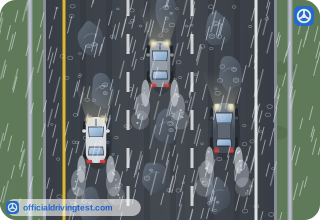
- You can still brake, but you cannot steer
- You cannot brake, accelerate or turn
- You can still steer, but you cannot accelerate
- Gentle braking restores control
Show answer
Correct answer: You cannot brake, accelerate or turn
The manual says you cannot brake, accelerate or turn and have no control over your vehicle.
Source: Hawaii Driver's Manual (2023), page 75 · Open this page in the manual (Manual page 75)
-
Compared with tires that have good tread, at what speeds will worn or bald tires hydroplane?
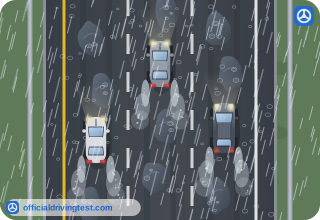
- Higher speeds
- The same speeds
- Speeds above 55 mph only
- Lower speeds
Show answer
Correct answer: Lower speeds
Worn or bald tires will hydroplane at lower speeds.
Source: Hawaii Driver's Manual (2023), page 76 · Open this page in the manual (Manual page 76)
-
To help prevent hydroplaning, how should the tires be inflated?
- To the proper pressure
- Slightly above the proper pressure
- Slightly below the proper pressure
- Pressure does not matter if the tread is good
Show answer
Correct answer: To the proper pressure
The manual says to insure that the tires are inflated to the proper pressure, because under-inflated tires hydroplane at lower speeds.
Source: Hawaii Driver's Manual (2023), page 76 · Open this page in the manual (Manual page 76)
-
What should you do when your brakes are wet after driving through deep water?
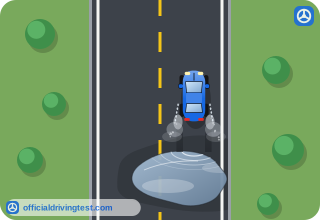
- Apply the brakes firmly and repeatedly while keeping your normal speed
- Shift to neutral and coast until they dry
- Reduce speed and apply gentle brake pressure until they work properly again
- Turn on the hazard warning signals and keep your speed
Show answer
Correct answer: Reduce speed and apply gentle brake pressure until they work properly again
The manual says wet brakes may pull to one side or not hold, so reduce speed and apply gentle pressure on the brake pedal until they work again.
Source: Hawaii Driver's Manual (2023), page 76 · Open this page in the manual (Manual page 76)
-
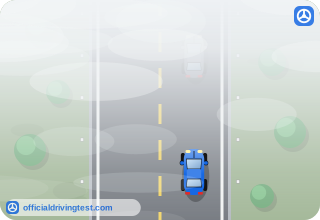
Where may fog be encountered on Hawaii roads?
- At higher elevations where low-lying clouds meet the ground
- Mostly at lower elevations along the coast and beaches
- Mostly on freeways at sea level
- Only along rivers at dawn
Show answer
Correct answer: At higher elevations where low-lying clouds meet the ground
In Hawaii fog almost never occurs at lower elevations; it may be met at higher elevations where low-lying clouds meet the ground.
Source: Hawaii Driver's Manual (2023), page 76 · Open this page in the manual (Manual page 76)
-
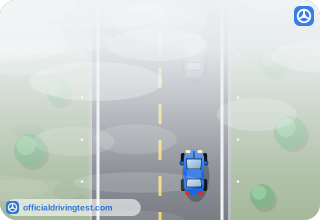
Why are patches of fog particularly hazardous?
- They always last for several hours after heavy rain has stopped
- They make the road surface icy
- They stop head lamps from working
- You may encounter them suddenly without being aware of their presence
Show answer
Correct answer: You may encounter them suddenly without being aware of their presence
Patches of fog are particularly hazardous because you may encounter them suddenly without being aware of their presence.
Source: Hawaii Driver's Manual (2023), page 76 · Open this page in the manual (Manual page 76)
-
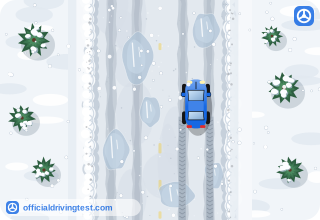
If you plan to drive under winter conditions in other areas, how should you equip your car?
- With snowtread tires
- With worn tires that have little tread
- With under-inflated tires for extra grip
- With the same highway tires used in Hawaii
Show answer
Correct answer: With snowtread tires
One winter driving suggestion is to equip your car with snowtread tires.
Source: Hawaii Driver's Manual (2023), page 76 · Open this page in the manual (Manual page 76)
-
Where may ice accumulate even when the rest of the road is clear?
- On wide, straight road sections
- In places that get direct sun
- On or under bridges
- On the clear, dry portions of the road
Show answer
Correct answer: On or under bridges
The manual warns that ice may accumulate on or under bridges even when the rest of the road is clear.
Source: Hawaii Driver's Manual (2023), page 77 · Open this page in the manual (Manual page 77)
-
Where do snow and ice melt more slowly?
- In areas exposed to full sun
- In shady areas
- On the clear, dry portions of the road
- Near the center line
Show answer
Correct answer: In shady areas
The manual says snow and ice melt more slowly in shady areas.
Source: Hawaii Driver's Manual (2023), page 77 · Open this page in the manual (Manual page 77)
-
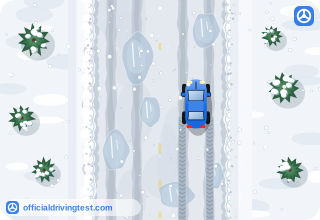
How should you use your brakes if you must stop on packed snow or ice?
- Firmly and continuously
- With one hard application and hold it
- Only when going downhill
- Very cautiously and intermittently
Show answer
Correct answer: Very cautiously and intermittently
The manual says to use brakes very cautiously and intermittently, because locked wheels mean you lose control.
Source: Hawaii Driver's Manual (2023), page 77 · Open this page in the manual (Manual page 77)
-
When is the lack of light before sunrise and after sunset worse?
- When the sky is clear
- When the road is dry
- When the sun is directly overhead
- When the sky is cloudy
Show answer
Correct answer: When the sky is cloudy
The manual says this condition is worse when the sky is cloudy.
Source: Hawaii Driver's Manual (2023), page 77 · Open this page in the manual (Manual page 77)
-
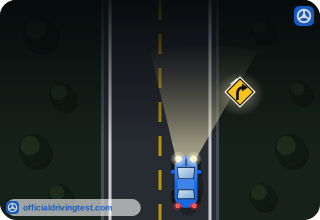
At night, how should you adjust your speed?
- So that you match the speed of the vehicle ahead
- So that you can stop within the distance you can see ahead
- So that you travel at the posted limit at all times
- So that you keep pace with the fastest traffic
Show answer
Correct answer: So that you can stop within the distance you can see ahead
The manual says to reduce your speed so that you can stop within the distance you can see ahead.
Source: Hawaii Driver's Manual (2023), page 77 · Open this page in the manual (Manual page 77)
-
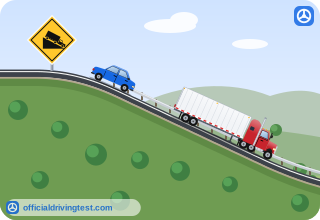
What should drivers of large vehicles do before descending a steep hill?
- Shift to a higher gear to save fuel
- Keep the brakes applied continuously
- Shift to an appropriate lower gear
- Shift into neutral to coast down
Show answer
Correct answer: Shift to an appropriate lower gear
They should shift to an appropriate lower gear before descending a steep hill to minimize the possibility of overheating the brakes.
Source: Hawaii Driver's Manual (2023), page 86 · Open this page in the manual (Manual page 86)
-
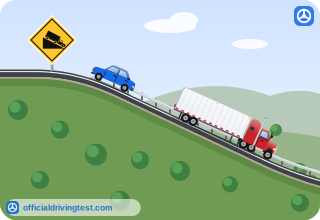
What happens when brakes are applied continuously to control speed on a downgrade?
- The brakes grip harder
- The brakes become ineffective
- The vehicle slows more safely
- The engine overheats
Show answer
Correct answer: The brakes become ineffective
The continuous application of brakes on downgrades causes the brakes to become ineffective, which is more dangerous with large vehicles.
Source: Hawaii Driver's Manual (2023), page 86 · Open this page in the manual (Manual page 86)
-
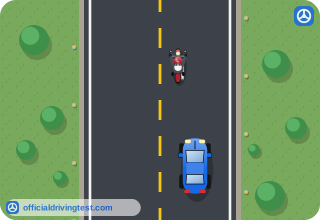
What is the minimum following distance when driving behind a motorcycle?
- 1 second
- 2 seconds
- 4 seconds
- 6 seconds
Show answer
Correct answer: 2 seconds
The manual says to allow at least a 2-second following distance behind a motorcycle.
Source: Hawaii Driver's Manual (2023), page 93 · Open this page in the manual (Manual page 93)
-
Because it is hard to judge a motorcycle’s speed and distance, what should you do with the space between you and the motorcycle?
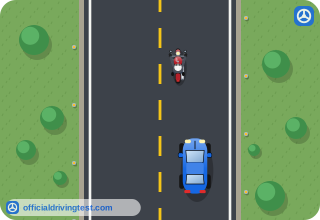
- Decrease it so the rider can see you
- Keep it the same as when following a car
- Keep it as small as the traffic allows
- Increase it, to avoid sudden braking
Show answer
Correct answer: Increase it, to avoid sudden braking
The space between the two vehicles should be increased to avoid sudden braking.
Source: Hawaii Driver's Manual (2023), page 93 · Open this page in the manual (Manual page 93)