Hawaii: Speed and following distance — Part 1 Practice Test
Questions in this part include: “When you are towing another vehicle, how much space must you leave ahead of your vehicle?” · “According to the manual, what does an impatient driver do when he cannot weave in and out of traffic?”
Independent educational site · not affiliated with any government agency or DMV
Ready? Test yourself
- Instant feedback with an explanation
- Every answer cites its source in the manual
- Your best score is saved on this device
Questions are original and based on the official manual "Hawaii Driver's Manual" (2023), Hawaii Department of Transportation.
All 19 questions in this practice test
Take the test above first, then use this list to study. Tap “Show answer” to see the correct answer and explanation.
Show the questions and answersHide the questions
-
How closely may you follow another vehicle?
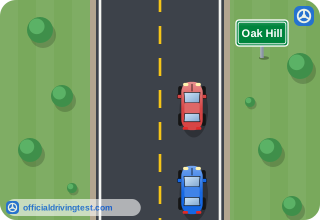
- As close as you like when traffic is moving slowly
- No closer than is reasonable and prudent for the conditions
- No closer than one car length at any speed or in any weather
- As close as the vehicle ahead allows in good weather
Show answer
Correct answer: No closer than is reasonable and prudent for the conditions
You must not follow closer than is reasonable and prudent for the speed, traffic, road and weather conditions.
Source: Hawaii Driver's Manual (2023), page 27 · Open this page in the manual (Manual page 27)
-
When you are towing another vehicle, how much space must you leave ahead of your vehicle?
- The same space you would leave when you are not towing
- Enough space for the towed vehicle to stop before your own vehicle does
- No extra space is needed as long as you drive slowly
- Enough to allow an overtaking vehicle to occupy the space safely
Show answer
Correct answer: Enough to allow an overtaking vehicle to occupy the space safely
When towing another vehicle you must leave enough space ahead to allow an overtaking vehicle to occupy the space safely.
Source: Hawaii Driver's Manual (2023), page 27 · Open this page in the manual (Manual page 27)
-
Under the basic speed law, which speed must you NOT drive at?
- A speed below the average speed of other traffic
- A speed 10 mph below the posted limit
- A speed greater than is reasonable and prudent
- A speed above the speed of the vehicle ahead
Show answer
Correct answer: A speed greater than is reasonable and prudent
The basic law is that you must not drive at a speed that is greater than is reasonable and prudent.
Source: Hawaii Driver's Manual (2023), page 28 · Open this page in the manual (Manual page 28)
-
Which of these must you consider when choosing a safe appropriate speed?
- The age of your vehicle
- The presence of pedestrians
- The color of the road signs
- The number of passengers in your vehicle
Show answer
Correct answer: The presence of pedestrians
A safe appropriate speed depends on the area, the type and condition of the road traffic, the presence of pedestrians, the weather and light conditions.
Source: Hawaii Driver's Manual (2023), page 28 · Open this page in the manual (Manual page 28)
-
What is the highest speed you may drive on a road with a posted maximum limit?
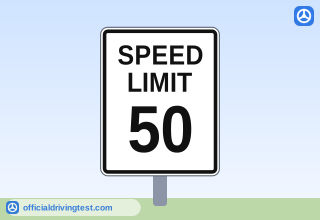
- 5 mph over the posted limit
- The speed of the fastest vehicle nearby
- Any speed that feels safe
- The posted maximum limit
Show answer
Correct answer: The posted maximum limit
You must not drive at a speed that is greater than the posted maximum limit.
Source: Hawaii Driver's Manual (2023), page 28 · Open this page in the manual (Manual page 28)
-
What is the lowest speed you may drive on a road with a posted minimum speed limit?
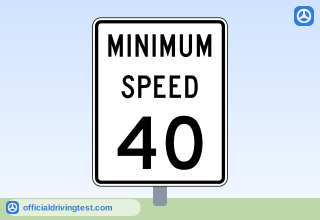
- Half of the posted maximum limit
- The speed of the vehicle ahead
- The posted minimum speed limit
- The speed that feels safe in the lane
Show answer
Correct answer: The posted minimum speed limit
You must not drive at a speed that is less than the posted minimum speed limit.
Source: Hawaii Driver's Manual (2023), page 28 · Open this page in the manual (Manual page 28)
-
If you cannot keep up with traffic, what must you do?
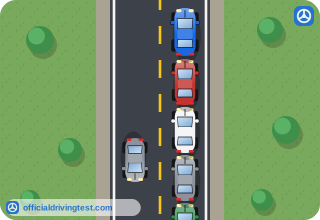
- Pull off the roadway and let other traffic pass
- Turn on your hazard lights and keep driving in your lane
- Move to the left lane so others can see you
- Stop in your lane until traffic clears
Show answer
Correct answer: Pull off the roadway and let other traffic pass
You must not drive so slowly that you hold back other traffic; if you cannot keep up, pull off the roadway and let other traffic pass or change to another route.
Source: Hawaii Driver's Manual (2023), page 28 · Open this page in the manual (Manual page 28)
-
If you drive more slowly than traffic on a multilane road, which lane should you use?
- The left-hand lane, so that others can safely pass you on the right
- The center lane, so others can pass on either side
- Any lane, as long as you signal
- The right-hand lane, so others can pass you on your left side
Show answer
Correct answer: The right-hand lane, so others can pass you on your left side
On a multilane road, a slower driver should drive in the right-hand lane so others can pass on the left side.
Source: Hawaii Driver's Manual (2023), page 28 · Open this page in the manual (Manual page 28)
-
Which of these is prohibited on a public street or highway?
- Stopping briefly to yield to a pedestrian
- Any race, speed contest or speed exhibition
- Using your headlamps during the daytime
- Driving at exactly the posted minimum speed limit
Show answer
Correct answer: Any race, speed contest or speed exhibition
You must not engage in any race, speed contest or speed exhibition of any kind on a public street or highway.
Source: Hawaii Driver's Manual (2023), page 28 · Open this page in the manual (Manual page 28)
-
At locations marked with a "School Crossing" sign, when are reduced speed limits required?
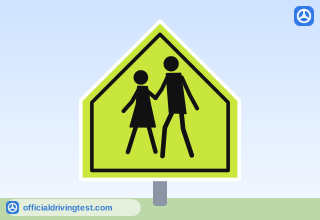
- At all times of day
- When children are present
- Only during the morning hours
- Only when a crossing guard is present
Show answer
Correct answer: When children are present
Reduced speed limits are required at locations marked with a "School Crossing" sign when children are present.
Source: Hawaii Driver's Manual (2023), page 28 · Open this page in the manual (Manual page 28)
-
Besides streets near schools and playgrounds, where are reduced speed limits required?
- On highways with two lanes in each direction
- On roads that have a posted minimum speed
- On any road at night
- On streets in residential or business areas
Show answer
Correct answer: On streets in residential or business areas
Reduced speed limits are required on streets in residential or business areas.
Source: Hawaii Driver's Manual (2023), page 28 · Open this page in the manual (Manual page 28)
-
Which statement about the special speed limits shown on speed limit signs is correct?
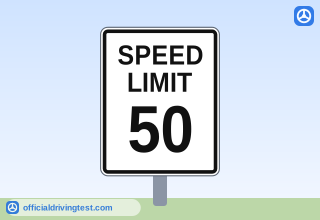
- They may apply at certain times or to certain kinds of vehicles
- They apply only to vehicles registered in another county
- They apply only during hours of darkness on weekends
- They apply only to drivers carrying passengers
Show answer
Correct answer: They may apply at certain times or to certain kinds of vehicles
Speed limit signs may indicate special limits that apply at certain times, under certain conditions, or to certain kinds of vehicles.
Source: Hawaii Driver's Manual (2023), page 44 · Open this page in the manual (Manual page 44)
-
According to the manual, what does an impatient driver do when he cannot weave in and out of traffic?
- Pulls over to rest
- Slows down to the speed limit
- Tailgates other drivers
- Stops and waits for traffic to clear
Show answer
Correct answer: Tailgates other drivers
The impatient driver speeds from stop to stop, weaving in and out of traffic, and tailgates other drivers when he cannot weave.
Source: Hawaii Driver's Manual (2023), page 57 · Open this page in the manual (Manual page 57)
-
How does the manual define defensive driving?
- Driving slowly in every situation
- Reacting quickly after another driver makes a serious mistake
- Spotting dangerous situations and acting before a crash develops
- Staying in the right lane at all times
Show answer
Correct answer: Spotting dangerous situations and acting before a crash develops
Defensive driving means you identify dangerous situations and take action to defend against the danger before a crash situation develops.
Source: Hawaii Driver's Manual (2023), page 59 · Open this page in the manual (Manual page 59)
-
If you display aggressive, careless or impulsive characteristics yourself, what does the manual say you must do first?
- Let other drivers pass you
- Defend against yourself
- Pull over and call the police
- Increase your following distance only
Show answer
Correct answer: Defend against yourself
The manual says that if you display any of these characteristics, you must first defend against yourself.
Source: Hawaii Driver's Manual (2023), page 59 · Open this page in the manual (Manual page 59)
-
According to the manual, what should a defensive driver do with the eyes in order to stay aware of developing traffic situations?
- Keep them fixed on the vehicle ahead
- Keep them on the instrument panel
- Keep them on the side mirrors
- Keep them moving
Show answer
Correct answer: Keep them moving
A defensive driver stays alert and keeps the eyes moving to be aware of developing traffic situations at all times.
Source: Hawaii Driver's Manual (2023), page 59 · Open this page in the manual (Manual page 59)
-
Why does the manual tell a defensive driver to look well ahead of the vehicle?
- To read all the signs earlier
- To avoid using the brakes at all
- To anticipate a chain reaction
- To reduce the need for mirrors
Show answer
Correct answer: To anticipate a chain reaction
A defensive driver looks well ahead and anticipates the possibility of a chain reaction traffic situation.
Source: Hawaii Driver's Manual (2023), page 59 · Open this page in the manual (Manual page 59)
-
What does the manual say a defensive driver should always leave himself?
- A way out
- A full lane to the left
- A second set of directions
- An extra five minutes of travel time
Show answer
Correct answer: A way out
The manual says to have an alternate plan of action ready for an unexpected event and always leave yourself a way out.
Source: Hawaii Driver's Manual (2023), page 59 · Open this page in the manual (Manual page 59)
-
According to the manual, how do you obtain almost all of the information you need to drive a vehicle safely?
- By listening to the radio
- By following other vehicles
- By checking the instrument panel
- By looking and seeing
Show answer
Correct answer: By looking and seeing
Almost all of the information needed to drive safely is obtained by looking and SEEING.
Source: Hawaii Driver's Manual (2023), page 59 · Open this page in the manual (Manual page 59)