Washington, D.C.: Vehicle controls and signals — Part 1 Practice Test
Questions in this part include: “Which of these is a way to let other drivers and pedestrians know what you are going to do?” · “When should you sound your horn?”
Independent educational site · not affiliated with any government agency or DMV
Ready? Test yourself
Answer to start, or tap Start below:
Which of these is a way to let other drivers and pedestrians know what you are going to do?
- Instant feedback with an explanation
- Every answer cites its source in the manual
- Your best score is saved on this device
- Keyboard: press 1 to 4 to answer and Enter for the next question
Questions are original and based on the official manual "District of Columbia Driver Manual" (Updated January 2024), District of Columbia Department of Motor Vehicles (DC DMV).
All 22 questions in this practice test
Take the test above first, then use this list to study. Tap “Show answer” to see the correct answer and explanation.
Show the questions and answersHide the questions
-
Which of these is a way to let other drivers and pedestrians know what you are going to do?
- The color and model of your vehicle
- The condition of your tires and wipers
- The position of your vehicle
- The tint of the windows on your vehicle
Show answer
Correct answer: The position of your vehicle
You let others know what you will do through hand signals, turn signals, headlights, brake lights and the position of your vehicle.
Source: District of Columbia Driver Manual (Updated January 2024), page 20
-
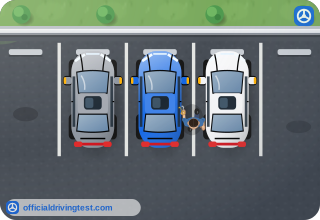
When you look over the outside of the vehicle before driving, what should you inspect?
- Only the paint and body panels
- Only the license plate and tags
- Only the windshield wipers
- Tires, loose objects, and leaks
Show answer
Correct answer: Tires, loose objects, and leaks
The basic safety rules say to inspect the tires and look for loose objects, leaks and similar problems.
Source: District of Columbia Driver Manual (Updated January 2024), page 22
-
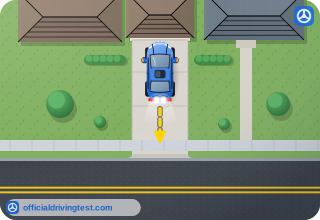
How should you check behind you before backing up?
- Glance in the rearview mirror, then back up quickly
- Look out the rear window and check both side mirrors
- Check only the side mirror nearest the curb and back up
- Rely on the rearview mirror alone and back slowly
Show answer
Correct answer: Look out the rear window and check both side mirrors
The manual says to turn your head, look back out the rear window and check both side view mirrors, never depending on the one rearview mirror alone.
Source: District of Columbia Driver Manual (Updated January 2024), page 23
-
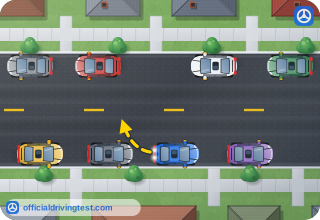
Instead of backing up fast or far, what should you do?
- Back up in short, quick bursts
- Back up with the door open
- Sound your horn as you back
- Find a way to turn around
Show answer
Correct answer: Find a way to turn around
The manual says never to back up fast or far; find a way to turn around instead.
Source: District of Columbia Driver Manual (Updated January 2024), page 23
-
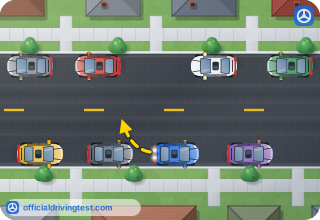
Rather than backing out into an intersection, what could you do?
- Back across it slowly with a helper
- Back into it when traffic looks clear
- Stop in the intersection and wait
- Drive around the block
Show answer
Correct answer: Drive around the block
The manual says never to back out of or into an intersection; turn into a side street and turn around there or drive around the block.
Source: District of Columbia Driver Manual (Updated January 2024), page 23
-
If you use a driveway to turn around, what is safer?
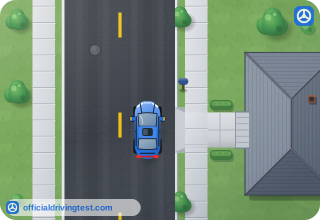
- Driving in forward and backing out into the street
- Backing into it and driving out
- Backing out of it only at night
- Driving in and out without stopping
Show answer
Correct answer: Backing into it and driving out
The manual says it is safer to back into a driveway and drive out than the other way around.
Source: District of Columbia Driver Manual (Updated January 2024), page 23
-
When should you sound your horn?
- To tell a pedestrian that you are approaching a crosswalk ahead
- To signal a cyclist that you are about to pass
- Only to warn a pedestrian, cyclist, or driver in an emergency
- To hurry a slow driver ahead of you at a light
Show answer
Correct answer: Only to warn a pedestrian, cyclist, or driver in an emergency
The horn is only for warning a pedestrian, cyclist or driver of another vehicle in an emergency.
Source: District of Columbia Driver Manual (Updated January 2024), page 23
-
The horn is not intended to take the place of your:
- Brakes
- Turn signals
- Headlights
- Hand signals
Show answer
Correct answer: Brakes
The manual states the horn is not intended to take the place of brakes.
Source: District of Columbia Driver Manual (Updated January 2024), page 23
-
When you must back out of a garage or driveway, what may you need to do to be sure nothing is in your way?
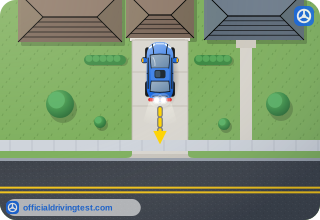
- Leave your car and check behind it
- Honk your horn and back out
- Back out slowly with the window up
- Open the trunk to see behind
Show answer
Correct answer: Leave your car and check behind it
The manual says you may need to leave your car to be sure nothing is in your way when you back out.
Source: District of Columbia Driver Manual (Updated January 2024), page 23
-
Before entering the street from a garage or driveway, you should:
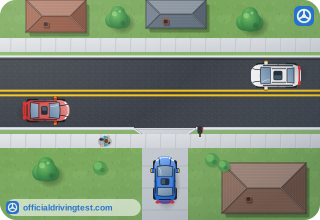
- Roll slowly onto the sidewalk and keep going
- Enter the street at a crawl without stopping
- Stop and look again before proceeding
- Pull out quickly to avoid blocking the walkway
Show answer
Correct answer: Stop and look again before proceeding
The manual says to stop before entering the street and look again before proceeding.
Source: District of Columbia Driver Manual (Updated January 2024), page 23
-
You should use hand signals in addition to your turn signals when:
- You are driving on an interstate highway at night
- You are slowing down for a green light
- A vehicle right behind you hides your turn signal
- You are driving in very light traffic
Show answer
Correct answer: A vehicle right behind you hides your turn signal
The manual says to use hand signals as well when vehicles immediately behind you obscure your turn signal.
Source: District of Columbia Driver Manual (Updated January 2024), page 23
-
Which lights should be clean and in working order to help lessen the chance of being hit from the rear?
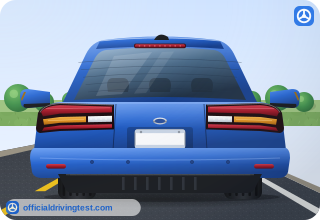
- Your parking lights only
- Your stoplights
- Your fog lights only
- Your dome light
Show answer
Correct answer: Your stoplights
Clean, working stoplights let the driver behind see when you are slowing or stopping, which lowers the risk of a rear-end crash.
Source: District of Columbia Driver Manual (Updated January 2024), page 30
-
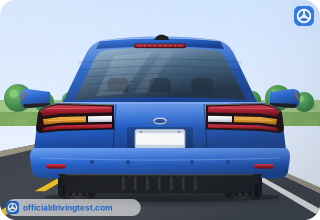
When do you need to signal to help lessen the chance of being hit from the rear?
- Only when you are already stopping or turning
- Only when another vehicle is close behind you
- Only at night or in bad weather
- Well in advance for stops, turns and lane changes
Show answer
Correct answer: Well in advance for stops, turns and lane changes
Signaling well ahead warns following drivers about what you are about to do, so they can slow down in time.
Source: District of Columbia Driver Manual (Updated January 2024), page 30
-
What is the most common mistake drivers make when backing up?
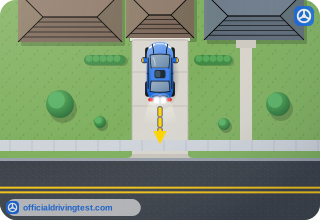
- Failing to look both ways behind them
- Backing too slowly for the traffic behind
- Using only the right-side outside mirror
- Turning the steering wheel too early
Show answer
Correct answer: Failing to look both ways behind them
Mirrors do not give a full view, so drivers must look both ways behind them.
Source: District of Columbia Driver Manual (Updated January 2024), page 32
-
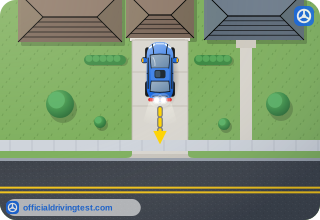
To see as much as possible when backing up, how should you turn?
- Turn only your head to the left and rely on your mirrors for the rest
- Look at the rear-view mirror alone and back up very slowly
- Turn your body and head to the right and look out through the rear window
- Lean out the side window and look at the rear wheels
Show answer
Correct answer: Turn your body and head to the right and look out through the rear window
Mirrors do not give you a full view, so you turn your body and head to the right and look out the rear window.
Source: District of Columbia Driver Manual (Updated January 2024), page 32
-
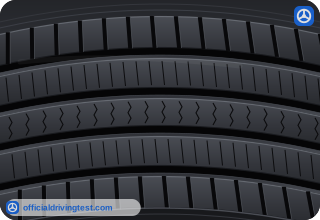
What tread depth do you need in every major groove on the front wheels?
- At least 1/32 inch
- At least 4/32 inch
- At least 2/32 inch
- At least 8/32 inch
Show answer
Correct answer: At least 4/32 inch
The manual requires at least 4/32 inch of tread in every major groove of the front wheels.
Source: District of Columbia Driver Manual (Updated January 2024), page 34
-
What tread depth do you need on the wheels other than the front wheels?
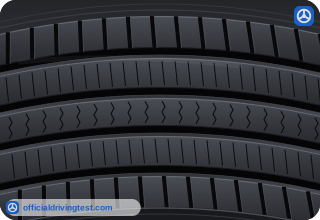
- 1/32 inch
- 4/32 inch
- 6/32 inch
- 2/32 inch
Show answer
Correct answer: 2/32 inch
Front wheels need at least 4/32 inch, but the other wheels need 2/32 inch.
Source: District of Columbia Driver Manual (Updated January 2024), page 34
-
How much fabric may show through a tire’s tread or sidewall?
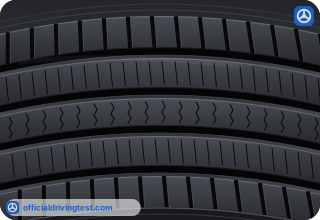
- None
- A small amount, if the tire still holds air
- Some on the rear tires only
- Some on the sidewall, but not on the tread
Show answer
Correct answer: None
If fabric shows, the tire is too worn to be safe.
Source: District of Columbia Driver Manual (Updated January 2024), page 34
-
Which tire problem is listed among the things to look for?
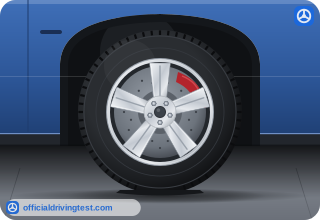
- Two tires of the same size on the same axle
- A tire inflated to the pressure on the door label
- Radial and bias-ply tires used together on the same axle
- New tires on the front wheels
Show answer
Correct answer: Radial and bias-ply tires used together on the same axle
Mixing radial and bias-ply tires on one axle is a listed tire problem.
Source: District of Columbia Driver Manual (Updated January 2024), page 34
-
What may rust around the wheel nuts mean?
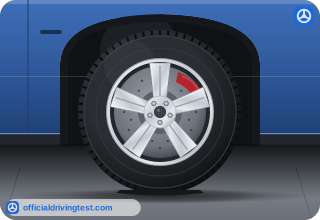
- The tire is overinflated and may need some air let out
- The nuts may be loose, so check their tightness
- The brakes need new fluid before the next trip
- The wheel is well balanced and needs no checking
Show answer
Correct answer: The nuts may be loose, so check their tightness
Rust around the wheel nuts is a warning that they may have loosened.
Source: District of Columbia Driver Manual (Updated January 2024), page 34
-
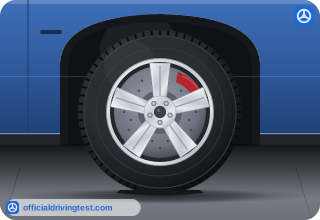
After a tire has been changed, what should you do a short while later?
- Replace the valve stem and check the tire pressure
- Add air to the other tires
- Rotate the tires to the other axle
- Stop and recheck the tightness of the nuts
Show answer
Correct answer: Stop and recheck the tightness of the nuts
Wheel nuts can loosen after a change, so you stop a short while later and recheck them.
Source: District of Columbia Driver Manual (Updated January 2024), page 34
-
What does the manual say about wheels or rims that have had welding repairs?
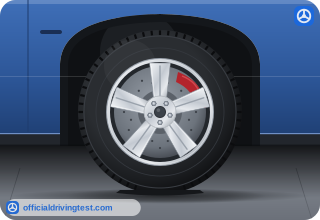
- They are not safe
- They are safe if the weld is smooth
- They are safe on the rear wheels
- They are safe after a test drive
Show answer
Correct answer: They are not safe
Welded wheels or rims are listed among the unsafe wheel and rim problems.
Source: District of Columbia Driver Manual (Updated January 2024), page 34