Pavement markings in Connecticut
The Connecticut Driver's Manual shows or names everything on this page: 16 in all, on pages 37, 43–44.
Independent educational site · not affiliated with any government agency or DMV
Painted Curb (No Parking)
Some parking restrictions are indicated by colored curb markings.
Manual page 37 · Open this page in the manual (Manual page 37)
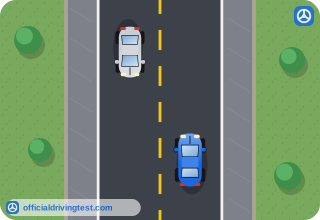
Solid White Edge Line
Edge lines are solid lines along the side of the road that show you where the edge of the road is located. Solid White Lines are used on the right of the roadway edge.
Manual page 43 · Open this page in the manual (Manual page 43)
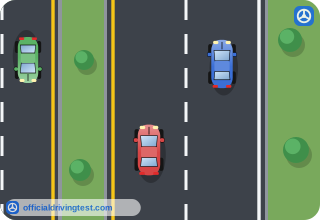
Solid Yellow Left Edge Line
Solid Yellow Lines are used on the left of the roadway edge of divided streets or roadways.
Manual page 43 · Open this page in the manual (Manual page 43)
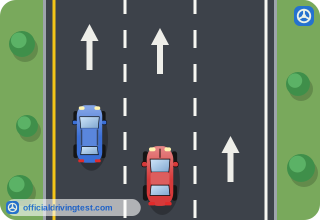
Dashed White Lines
Dashed White Lines are between lanes of traffic moving in the same direction that indicate you may cross to change lanes if it is safe to do so.
Manual page 43 · Open this page in the manual (Manual page 43)
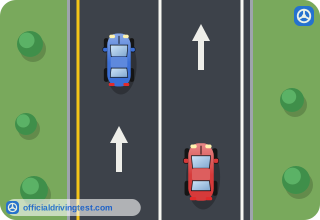
Solid White Lines
Solid White Lines are between lanes of traffic that indicate you should stay in your lane unless a special situation requires you to change lanes.
Manual page 43 · Open this page in the manual (Manual page 43)
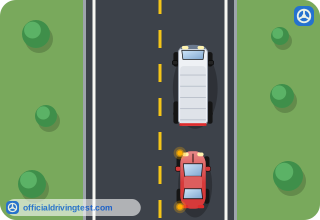
Dashed Yellow Lines
Center lines are yellow lines that separate lanes of traffic moving in opposite directions. Dashed Yellow Lines separate single lanes of traffic moving in opposite directions. Passing is allowed.
Manual page 43 · Open this page in the manual (Manual page 43)
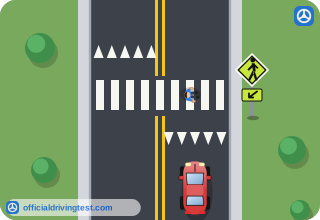
Yield Lines
Yield Lines are used at locations where drivers are required to yield, such as a mid-block crosswalk.
Manual page 43 · Open this page in the manual (Manual page 43)
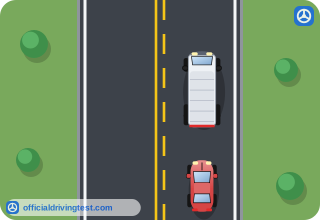
Dashed Yellow Line Alongside a Solid Yellow Line
Dashed Yellow Line Alongside a Solid Yellow Line indicates that passing is permitted on the side of the broken line, but not on the side of the solid line.
Manual page 44 · Open this page in the manual (Manual page 44)
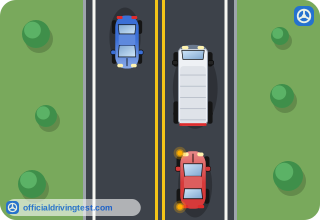
Solid Double Yellow Lines
Solid Double Yellow Lines are used where there are lanes with traffic moving in opposite directions. Two solid lines mark the center of the roadway. Solid yellow lines may be crossed to make a left turn to or from an alley, private road, driveway, or street.
Manual page 44 · Open this page in the manual (Manual page 44)
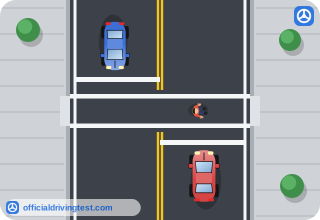
Marked Crosswalk (Two Lines)
Crosswalks define the area where pedestrians may cross the roadway. You must yield to pedestrians in or about to enter a crosswalk. Not all crosswalks are marked.
Manual page 44 · Open this page in the manual (Manual page 44)
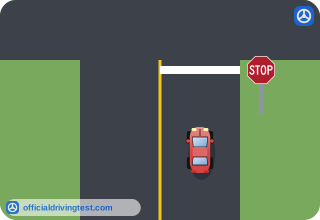
Stop Line
When required to stop because of a sign or signal, you must stop before your vehicle reaches the stop line.
Manual page 44 · Open this page in the manual (Manual page 44)
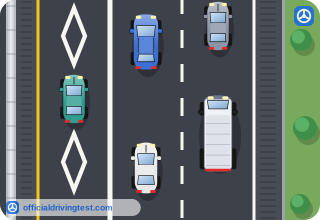
Reserved Lane Diamond Marking
Reserved lanes are marked by signs stating that the lane is reserved for special use and often have a white diamond posted at the side of the road or painted on the road surface.
Manual page 44 · Open this page in the manual (Manual page 44)
Diagonal Stripes at a Fixed Obstruction
Yellow or white diagonal stripes are used to mark fixed obstructions.
Manual page 44 · Open this page in the manual (Manual page 44)
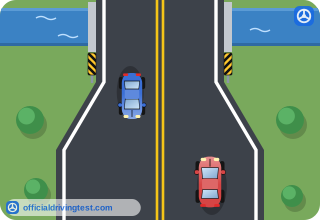
Channelizing Lines
Solid white or yellow lines are sometimes used to channel traffic around a hazard.
Manual page 44 · Open this page in the manual (Manual page 44)
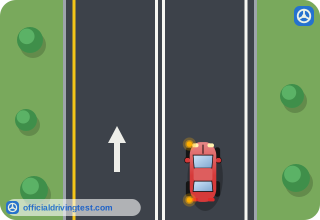
Double Solid White Line
A double solid white line prohibits lane changing.
Manual page 44 · Open this page in the manual (Manual page 44)
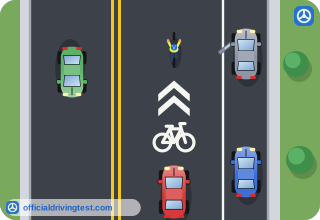
Sharrow (Shared Lane Marking)
A bicycle sharrow, two chevrons painted above a bicycle symbol on the road, indicates the lane is shared. Vehicle or bicycle traffic may be in the lane. Although you should always keep on the lookout for bicyclists, this serves as an additional warning to watch for bicycles in the lane.
Manual page 44 · Open this page in the manual (Manual page 44)