Arizona: Emergencies
Crashes, dust storms, floods, skids, brake and tire failures, wrong-way drivers and vehicle fires. Split into 6 shorter tests so you're not stuck in one long quiz.
Independent educational site · not affiliated with any government agency or DMV
Choose a part
Emergencies — Part 1
Questions in this part include: “If it is necessary to leave your vehicle parked on a highway or street, where should you pull?”
StartEmergencies — Part 2
Questions in this part include: “What may happen if you or your vehicle needs to be removed from a flooded road?”
StartEmergencies — Part 3
Questions in this part include: “What can you do to reduce your chances of a tire blowout?”
StartEmergencies — Part 4
Questions in this part include: “If pumping does not stop a vehicle without antilock brakes, how should you apply the parking brake?”
StartEmergencies — Part 5
Questions in this part include: “Which of these does the manual list as debris that poses a hazard on the road?”
StartEmergencies — Part 6
Questions in this part include: “In the rule about moving a vehicle after a crash, what does safely operable mean?”
StartAll 101 Emergencies questions with answers
Choose a part above to take a practice test, or study every question and answer here.
Show the questions and answersHide the questions
-
If it is necessary to leave your vehicle parked on a highway or street, where should you pull?
- Onto the shoulder, as close to the travel lane as possible
- Into the right lane, close to the edge of the pavement
- Into the median between the roadways
- Onto the shoulder of the road, as far away from traffic as possible
Show answer
Correct answer: Onto the shoulder of the road, as far away from traffic as possible
You should pull onto the shoulder as far away from traffic as possible.
Source: Arizona Driver License Manual and Customer Service Guide (Revised March 2026), page 31
-
If there is a curb where you must park in an emergency, how close should you pull your vehicle to it?
- As close to the curb as possible
- About two feet from the curb
- Far enough that the doors can open freely
- At least one car width from the curb
Show answer
Correct answer: As close to the curb as possible
If there is a curb, you pull your vehicle as close to the curb as possible.
Source: Arizona Driver License Manual and Customer Service Guide (Revised March 2026), page 31
-
When you leave your vehicle parked in an emergency, what should you do with the brake, transmission and engine?
- Release the parking brake and leave the engine idling in neutral for the lights
- Set the parking brake and leave the engine running to keep the heater on
- Set the parking brake, shift into park or leave a manual in gear, and turn off the engine
- Shift into neutral, release the brake and leave the engine on to power the lights
Show answer
Correct answer: Set the parking brake, shift into park or leave a manual in gear, and turn off the engine
The manual says to set the parking brake, shift into park or leave the vehicle in gear (manual transmission), and turn off the engine.
Source: Arizona Driver License Manual and Customer Service Guide (Revised March 2026), page 31
-
What should you do to warn other drivers when you leave your vehicle parked on a highway in an emergency?
- Turn off all lights to save the battery
- Sound the horn repeatedly
- Set out proper emergency signals
- Park with the wheels pointing into the traffic lane
Show answer
Correct answer: Set out proper emergency signals
The manual says to set out proper emergency signals.
Source: Arizona Driver License Manual and Customer Service Guide (Revised March 2026), page 31
-
After parking your vehicle in an emergency, what should you do if possible until assistance arrives?
- Stay with your vehicle
- Walk along the road to find help
- Wait in the car of a passing driver
- Leave and return after an hour
Show answer
Correct answer: Stay with your vehicle
The manual says to stay with your vehicle if possible until assistance arrives.
Source: Arizona Driver License Manual and Customer Service Guide (Revised March 2026), page 31
-
If you have to leave your emergency-parked vehicle, what should you do?
- Leave the doors unlocked so helpers can reach it
- Leave the engine running
- Leave a window open for ventilation
- Lock your vehicle
Show answer
Correct answer: Lock your vehicle
The manual says to lock your vehicle if you have to leave it.
Source: Arizona Driver License Manual and Customer Service Guide (Revised March 2026), page 31
-
If you need assistance on the freeway, where should you pull over?
- Onto the left shoulder of the freeway
- Into the median between the two roadways
- Onto the nearest entrance or exit ramp
- Onto the right shoulder as far as possible
Show answer
Correct answer: Onto the right shoulder as far as possible
The manual says to pull over onto the right shoulder as far as possible.
Source: Arizona Driver License Manual and Customer Service Guide (Revised March 2026), page 32
-
Where should you avoid stopping your vehicle when you need assistance on the freeway?
- On the right shoulder as far from traffic as possible
- On or near freeway ramps
- On the right shoulder with your flashers on
- On a wide shoulder away from the ramps
Show answer
Correct answer: On or near freeway ramps
The manual says to avoid stopping your vehicle on or near freeway ramps.
Source: Arizona Driver License Manual and Customer Service Guide (Revised March 2026), page 32
-
Which of these is a way to signal for assistance on the freeway?
- Turn on your emergency flashers or raise the hood of the car
- Honk the horn continuously until help comes
- Flash your high beams at passing traffic until someone stops
- Leave the driver’s door open and stand by it
Show answer
Correct answer: Turn on your emergency flashers or raise the hood of the car
To signal for assistance on the freeway, turn on your emergency flashers or raise the hood of the car.
Source: Arizona Driver License Manual and Customer Service Guide (Revised March 2026), page 32
-
How can you signal for assistance on the freeway after dark?
- Turn off all lights and wait quietly inside the vehicle
- Flash your high beams and sound your horn at every passing car on the freeway
- Turn on your inside dome light and/or set out flares or portable warning signals
- Leave the driver’s door open and stand beside the lane
Show answer
Correct answer: Turn on your inside dome light and/or set out flares or portable warning signals
After dark you turn on your inside dome light and/or set out flares or portable warning signals.
Source: Arizona Driver License Manual and Customer Service Guide (Revised March 2026), page 32
-
While waiting for help on the freeway, what must you not do?
- Raise the hood of the car
- Walk along the freeway
- Turn on your emergency flashers
- Use your inside dome light after dark
Show answer
Correct answer: Walk along the freeway
The manual says to wait for help and not to walk along the freeway.
Source: Arizona Driver License Manual and Customer Service Guide (Revised March 2026), page 32
-
If your vehicle breaks down on a highway, what does the manual say to do?
- Stay in the lane with your hazard lights on
- Stop on the left side of the lane
- Pull off the highway as far as you can
- Stop in the road so others see you
Show answer
Correct answer: Pull off the highway as far as you can
The manual says to pull off the highway as far as you can, because a parked vehicle struck by a moving vehicle suffers more severe damage.
Source: Arizona Driver License Manual and Customer Service Guide (Revised March 2026), page 52
-
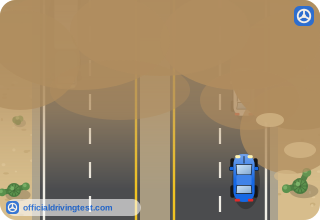
According to the manual, how far can a dust storm reduce a driver’s visibility at times?
- To about 500 feet
- To about half a mile
- To zero
- To one car length
Show answer
Correct answer: To zero
The manual says dust storms can at times reduce visibility to zero.
Source: Arizona Driver License Manual and Customer Service Guide (Revised March 2026), page 55
-
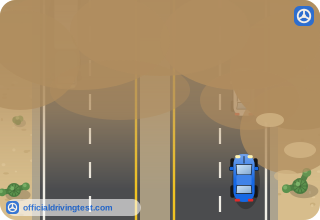
If you encounter a dust storm, what should you do first?
- Speed up and turn on your high beams
- Check traffic around you and begin slowing down
- Stop in the travel lane with your flashers on
- Close your eyes and wait for the dust to clear
Show answer
Correct answer: Check traffic around you and begin slowing down
You immediately check traffic around your vehicle and begin slowing down.
Source: Arizona Driver License Manual and Customer Service Guide (Revised March 2026), page 55
-
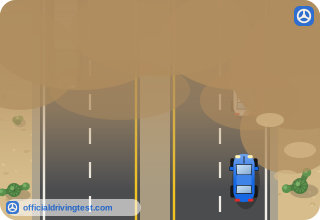
If you encounter a severe dust storm, where should you stop?
- In the emergency lane, as far from the traffic as you can
- In the left lane, close to the highway median wall
- In the middle of the lane you were already driving in
- Completely off the highway, as far to the right as possible
Show answer
Correct answer: Completely off the highway, as far to the right as possible
You drive completely off the highway and stop as far to the right as possible, not in the travel lane or emergency lane.
Source: Arizona Driver License Manual and Customer Service Guide (Revised March 2026), page 55
-
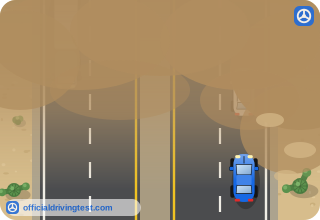
After you stop during a severe dust storm, what should you do with your lights and the brake pedal?
- Turn off your lights and take your foot off the brake
- Keep your lights on and hold the brake firmly
- Turn on your high beams and press the brake
- Flash your lights and release the parking brake
Show answer
Correct answer: Turn off your lights and take your foot off the brake
The manual says to turn off your lights and take your foot off the brake.
Source: Arizona Driver License Manual and Customer Service Guide (Revised March 2026), page 55
-
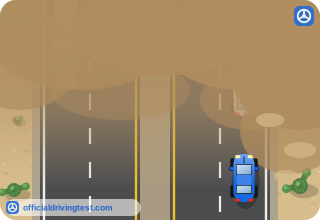
Where should you wait for a severe dust storm to pass?
- Outside the vehicle, away from the road
- Beside the vehicle with the hazard flashers on
- In the vehicle with your seat belts buckled
- In the vehicle with your seat belts unbuckled
Show answer
Correct answer: In the vehicle with your seat belts buckled
You stay in the vehicle with your seat belts buckled until the dust storm has passed.
Source: Arizona Driver License Manual and Customer Service Guide (Revised March 2026), page 55
-
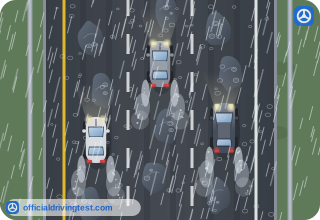
If your car hydroplanes, what should you do with the accelerator?
- Take your foot off it
- Press it harder to get across the water
- Tap it repeatedly
- Hold it at the same position
Show answer
Correct answer: Take your foot off it
If your car hydroplanes, you take your foot off the accelerator.
Source: Arizona Driver License Manual and Customer Service Guide (Revised March 2026), page 56
-
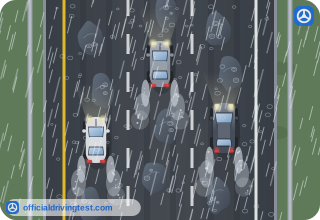
If your car hydroplanes, what should you do about braking?
- Brake hard until the car stops
- Pump the brakes quickly
- Do not brake
- Brake lightly with your left foot
Show answer
Correct answer: Do not brake
The manual says not to brake if your car hydroplanes.
Source: Arizona Driver License Manual and Customer Service Guide (Revised March 2026), page 56
-
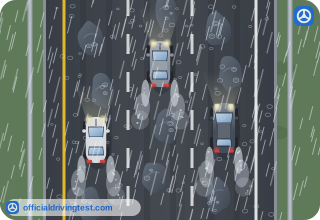
If your car hydroplanes, what should you do with the steering wheel?
- Turn sharply in the direction the car is sliding
- Avoid steering changes if possible and hold it firmly
- Swing it from side to side to try to find grip
- Let go of it until the tires grip the road again
Show answer
Correct answer: Avoid steering changes if possible and hold it firmly
You avoid steering changes if possible and hold the wheel firmly until the tires grip the road again.
Source: Arizona Driver License Manual and Customer Service Guide (Revised March 2026), page 56
-
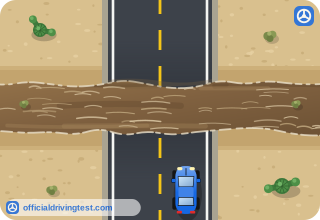
What should you do about a flooded wash in Arizona?
- Cross it quickly at high speed
- Cross it behind the vehicle ahead of you
- Cross it with your headlights on low beam
- Do not cross it
Show answer
Correct answer: Do not cross it
The manual says not to cross flooded washes, because heavy rain frequently causes flash floods in them.
Source: Arizona Driver License Manual and Customer Service Guide (Revised March 2026), page 56
-
Which of these is a danger of driving into flood water, according to the manual?
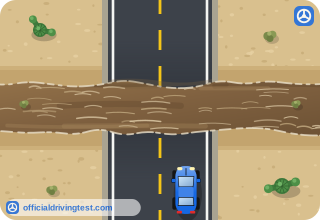
- The water can hide potholes
- The water can freeze the brake lines
- The water can fill the fuel tank
- The water can blow out the tires
Show answer
Correct answer: The water can hide potholes
The manual says water can stall your engine, hide potholes and carry your vehicle downstream.
Source: Arizona Driver License Manual and Customer Service Guide (Revised March 2026), page 56
-
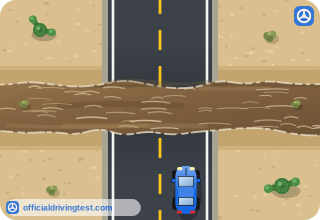
How does the manual say you can estimate the depth of water on a road?
- By walking into the water before you start to drive
- By checking whether it covers the road center line
- By looking at parked cars or other objects along the road
- By pushing a stick down from your driver window
Show answer
Correct answer: By looking at parked cars or other objects along the road
You estimate the depth by looking at parked cars or other objects along the road and watching other vehicles.
Source: Arizona Driver License Manual and Customer Service Guide (Revised March 2026), page 56
-
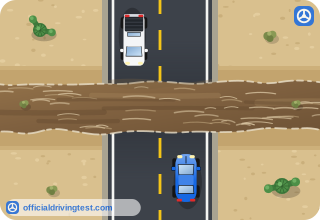
What should two vehicles that would meet in deep water do?
- Both slow down and pass in the middle of the water
- One goes entirely through before the other starts
- Both enter the water together, side by side
- The larger one backs out of the water completely
Show answer
Correct answer: One goes entirely through before the other starts
One vehicle should go entirely through before another starts from the other direction, reducing stalling caused by waves.
Source: Arizona Driver License Manual and Customer Service Guide (Revised March 2026), page 56
-
What may happen if you or your vehicle needs to be removed from a flooded road?
- Your license is suspended for a full year
- You must retake the knowledge test again
- Your vehicle registration is cancelled outright
- You may be charged for emergency response expenses
Show answer
Correct answer: You may be charged for emergency response expenses
The manual says you may be charged for emergency response expenses.
Source: Arizona Driver License Manual and Customer Service Guide (Revised March 2026), page 56
-
A driver who drives around barricades set up due to flooding is liable for what?
- A fine for each barricade that the driver passes
- The cost of repairing or replacing all the barricades
- Emergency response costs to remove the driver or passengers
- The cost of towing the vehicle back to the driver's home
Show answer
Correct answer: Emergency response costs to remove the driver or passengers
The driver is liable for the expenses of any emergency response required to remove the driver or any passenger.
Source: Arizona Driver License Manual and Customer Service Guide (Revised March 2026), page 56
-
What does "expenses of an emergency response" mean in the flood-area liability rule?
- The full cost of every vehicle damaged in the flood area
- Reasonable costs directly incurred by agencies responding appropriately
- All costs the driver or passengers later claim from insurers
- Any costs billed by private towing companies that clear a road
Show answer
Correct answer: Reasonable costs directly incurred by agencies responding appropriately
The manual defines it as reasonable costs directly incurred by agencies that make an appropriate emergency response to an incident.
Source: Arizona Driver License Manual and Customer Service Guide (Revised March 2026), page 56
-
According to the manual, how often should you stop to walk and exercise to help stay alert on a long highway trip?
- Every hour
- Every two hours
- Every three hours
- Every 30 minutes
Show answer
Correct answer: Every hour
The manual says to stop every hour to walk and exercise, which helps keep you alert.
Source: Arizona Driver License Manual and Customer Service Guide (Revised March 2026), page 58
-
What does the manual tell you to do any time you become tired while traveling?
- Speed up to finish the trip sooner
- Move to the left lane and keep going
- Pull over and rest
- Switch to local streets and keep driving
Show answer
Correct answer: Pull over and rest
The manual says that any time you become tired when traveling, you should pull over and rest.
Source: Arizona Driver License Manual and Customer Service Guide (Revised March 2026), page 58
-
What is "Highway Hypnosis" or "White Line Fever" as the manual describes it?
- A loss of vision caused by glare from white lines at night
- A trance-like state during a long period of highway driving
- A fear of driving on freeways that comes from heavy traffic
- A short burst of anger at drivers who cross the white lines
Show answer
Correct answer: A trance-like state during a long period of highway driving
The manual defines it as a trance-like state that can occur during a long period of highway driving.
Source: Arizona Driver License Manual and Customer Service Guide (Revised March 2026), page 58
-
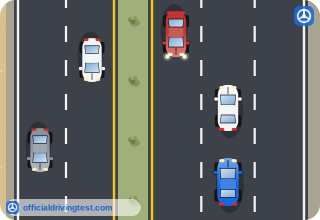
Why does the manual tell you not to tailgate as a defense against wrong-way drivers?
- So the wrong-way driver can see your headlights from a greater distance
- So you have room to turn around and follow the wrong-way driver
- So you have time to react if the vehicle ahead suddenly changes lanes to avoid one
- So other drivers can merge in front of you during an alert
Show answer
Correct answer: So you have time to react if the vehicle ahead suddenly changes lanes to avoid one
The manual says to leave enough space so you will have time to react if the vehicle in front makes a sudden lane change to avoid a wrong-way driver.
Source: Arizona Driver License Manual and Customer Service Guide (Revised March 2026), page 58
-
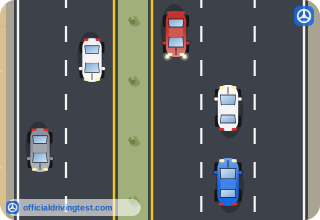
On a divided highway, you see a vehicle coming toward you. What does the manual say to do first?
- Brake hard and stop in your lane
- Slow down by easing your foot off the gas
- Flash your headlights and speed up
- Move to the left lane and stay there
Show answer
Correct answer: Slow down by easing your foot off the gas
The manual says to slow down by easing your foot off the gas when a vehicle is coming toward you on a divided highway.
Source: Arizona Driver License Manual and Customer Service Guide (Revised March 2026), page 58
-
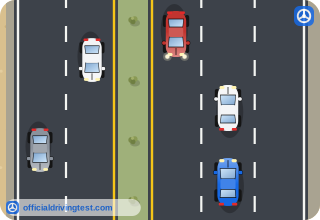
When you meet a wrong-way driver on a divided highway, what should you make sure of before steering away?
- That the wrong-way driver has turned on their lights
- That no emergency vehicle is behind you
- That your horn is working
- That there is no vehicle next to you
Show answer
Correct answer: That there is no vehicle next to you
The manual says to make sure there is no vehicle next to you and then steer away from the wrong-way driver.
Source: Arizona Driver License Manual and Customer Service Guide (Revised March 2026), page 58
-
After avoiding a wrong-way driver, what does the manual tell you to do?
- Get to a safe place, call 911 and report the wrong-way driver
- Follow the wrong-way driver to see where it goes
- Keep driving and report it at the next MVD office
- Pull onto the shoulder and wait for the driver to return
Show answer
Correct answer: Get to a safe place, call 911 and report the wrong-way driver
The manual says to get to a safe place, call 911 and report the wrong-way driver.
Source: Arizona Driver License Manual and Customer Service Guide (Revised March 2026), page 58
-
What does the manual say to have in mind so you will not waste a moment if you meet a wrong-way driver?
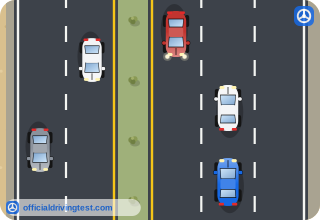
- A plan for taking emergency evasive action
- A list of nearby exits to follow the driver
- A plan to stop your vehicle in the travel lane
- A habit of driving close to the vehicle ahead
Show answer
Correct answer: A plan for taking emergency evasive action
The manual says to have a plan in mind so you can take emergency evasive action that could save your life.
Source: Arizona Driver License Manual and Customer Service Guide (Revised March 2026), page 59
-
What can you do to reduce your chances of a tire blowout?
- Rotate your tires before every trip
- Keep your tires slightly overinflated
- Check your tire pressure regularly
- Replace your tires every year
Show answer
Correct answer: Check your tire pressure regularly
The manual says you reduce your chances of a blowout by checking your tire pressure regularly.
Source: Arizona Driver License Manual and Customer Service Guide (Revised March 2026), page 68
-
If a tire blows out, how should you hold the steering wheel?
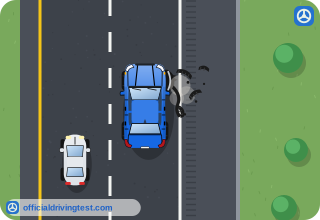
- Loosely, letting the vehicle drift to the shoulder
- Tightly, keeping the vehicle going straight
- Tightly, turning sharply toward the side of the road
- With one hand, keeping the other free for the signal
Show answer
Correct answer: Tightly, keeping the vehicle going straight
The manual says to hold the steering wheel tightly and keep your vehicle going straight.
Source: Arizona Driver License Manual and Customer Service Guide (Revised March 2026), page 68
-
After a tire blowout, what should you do with the pedals at first?
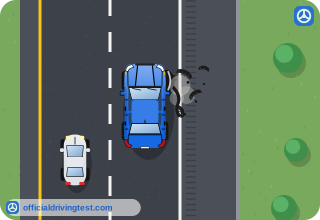
- Brake firmly to stop as soon as you possibly can
- Press the gas pedal to keep control
- Pump the brake pedal rapidly
- Ease off the gas pedal and do not apply the brakes
Show answer
Correct answer: Ease off the gas pedal and do not apply the brakes
The manual says to ease off the gas pedal and not to apply the brakes, letting the vehicle slow down.
Source: Arizona Driver License Manual and Customer Service Guide (Revised March 2026), page 68
-
When should you apply the brakes after a tire blowout?
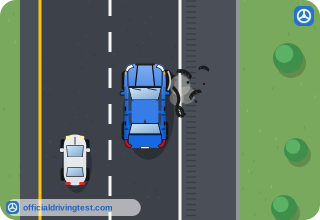
- Only after you have pulled off the roadway
- Immediately, as soon as the tire blows out
- As soon as you feel the vehicle begin to slow
- Before you activate your turn signal
Show answer
Correct answer: Only after you have pulled off the roadway
You let the vehicle slow almost to a stop, signal, pull off the roadway and only then apply the brakes.
Source: Arizona Driver License Manual and Customer Service Guide (Revised March 2026), page 68
-
Just before your vehicle stops after a tire blowout, why do you activate your turn signal?
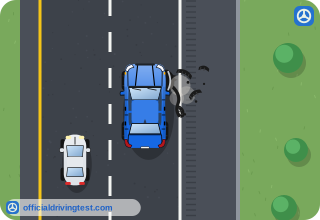
- To warn drivers behind you that you are braking hard
- To show that you plan to turn at the next intersection
- To let other drivers know you are moving to the side of the road
- To tell other drivers you are changing lanes
Show answer
Correct answer: To let other drivers know you are moving to the side of the road
The signal tells other drivers you are moving to the side of the road before you pull off.
Source: Arizona Driver License Manual and Customer Service Guide (Revised March 2026), page 68
-
What usually causes vehicle fires, according to the manual?
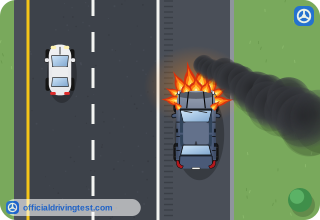
- An overfilled fuel tank that leaks gasoline
- A short circuit in the electrical system
- Worn brake pads overheating the wheels
- Tires that have overheated on the highway
Show answer
Correct answer: A short circuit in the electrical system
The manual states that fires are usually caused by a short circuit in the electrical system.
Source: Arizona Driver License Manual and Customer Service Guide (Revised March 2026), page 68
-
If your vehicle is on fire, what should you do with the ignition?
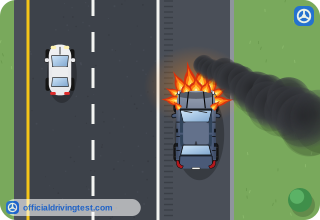
- Leave it on to run the cooling fan
- Leave it on so the hazard flashers keep working
- Restart it to see whether the fire goes out
- Shut it off to cut electrical power
Show answer
Correct answer: Shut it off to cut electrical power
The manual says to pull off the road and shut off the ignition to cut electrical power.
Source: Arizona Driver License Manual and Customer Service Guide (Revised March 2026), page 68
-
Which type of extinguisher does the manual say is best for vehicle fires?
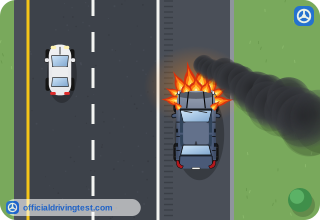
- An ABC rated dry chemical extinguisher
- A water-based pressurized extinguisher
- A foam extinguisher for kitchen fires
- A carbon dioxide extinguisher
Show answer
Correct answer: An ABC rated dry chemical extinguisher
The manual states an ABC rated dry chemical extinguisher is best for vehicle fires.
Source: Arizona Driver License Manual and Customer Service Guide (Revised March 2026), page 68
-
Why should you not use water on a vehicle fire if gasoline is burning?
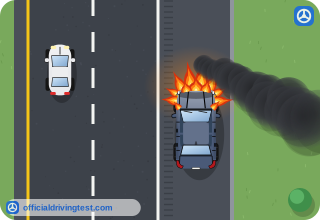
- It will damage the electrical system
- It will cause the fuel tank to explode
- It will spread the flames
- It will make the smoke toxic
Show answer
Correct answer: It will spread the flames
The manual says water will spread the flames when gasoline is burning.
Source: Arizona Driver License Manual and Customer Service Guide (Revised March 2026), page 68
-
If you have no fire extinguisher, what can help smother the flames of a vehicle fire?
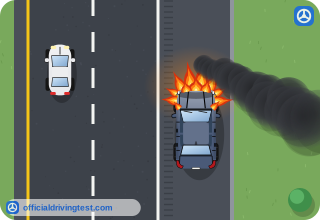
- A floor mat, a spare tire or gravel
- A heavy blanket, a heavy coat or sand
- A seat cushion or a rolled-up newspaper
- Opening all the doors and windows
Show answer
Correct answer: A heavy blanket, a heavy coat or sand
The manual lists a heavy blanket, a heavy coat or sand as ways to smother flames without an extinguisher.
Source: Arizona Driver License Manual and Customer Service Guide (Revised March 2026), page 68
-
If you have any indication that a vehicle fire may be beyond your control, what should you do?
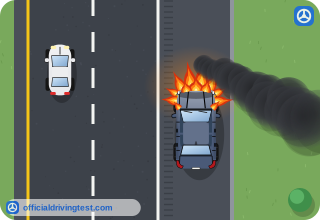
- Open the hood to let the heat escape
- Drive to the nearest service station
- Try to put it out with floor mats
- Get away from the vehicle
Show answer
Correct answer: Get away from the vehicle
The manual says fires are dangerous and you should get away from the vehicle if it may be beyond your control.
Source: Arizona Driver License Manual and Customer Service Guide (Revised March 2026), page 68
-
Steam coming from under your hood may mean what?
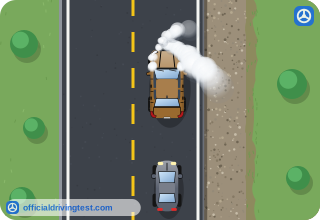
- Your cooling system has overheated
- Your brakes have completely failed
- Your battery is being overcharged
- Your tires are badly overinflated
Show answer
Correct answer: Your cooling system has overheated
The manual says steam from under the hood may mean the cooling system has overheated.
Source: Arizona Driver License Manual and Customer Service Guide (Revised March 2026), page 68
-
If steam comes from under your hood, what should you do first?
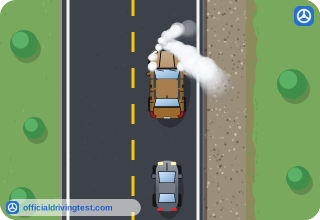
- Drive slowly to the nearest service station and ask for help
- Open the radiator cap right away to let the steam out
- Pull to the side of the road and turn off your engine immediately
- Turn off the engine only after the temperature drops
Show answer
Correct answer: Pull to the side of the road and turn off your engine immediately
The manual says to pull to the side of the road and turn off the engine immediately.
Source: Arizona Driver License Manual and Customer Service Guide (Revised March 2026), page 68
-
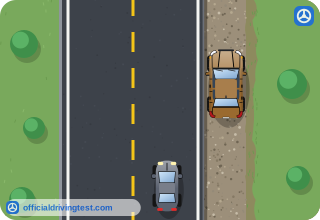
Why should you not open the radiator cap while the engine is hot?
- The coolant may freeze solid
- Steam may escape and cause severe burns
- The cooling fan may start and injure you
- The hood may fall shut on you
Show answer
Correct answer: Steam may escape and cause severe burns
The manual says opening the radiator cap on a hot engine may let steam escape and cause severe burns.
Source: Arizona Driver License Manual and Customer Service Guide (Revised March 2026), page 68
-
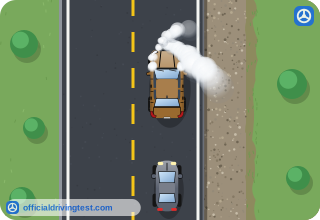
When should you add water to the radiator of an overheated engine?
- While the engine is running, to cool it faster
- Immediately after you turn the engine off
- While the engine is hot, a little at a time
- Only after the engine has cooled
Show answer
Correct answer: Only after the engine has cooled
The manual says to add water only after the engine has cooled and never while it is hot.
Source: Arizona Driver License Manual and Customer Service Guide (Revised March 2026), page 68
-
If your engine dies as you pull around a corner and you lose power steering, what should you do with the wheel?
- Grip it firmly with both hands to complete the turn
- Let go of the wheel so the vehicle can straighten itself
- Grip it with one hand and steer gently toward the left
- Straighten the wheel and coast through the corner
Show answer
Correct answer: Grip it firmly with both hands to complete the turn
The manual says to firmly grip the steering wheel with both hands to complete the turn and move to the right side of the road.
Source: Arizona Driver License Manual and Customer Service Guide (Revised March 2026), page 69
-
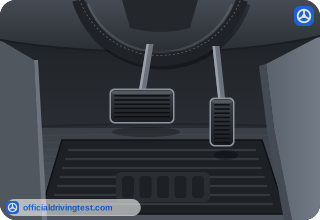
If your power steering fails and your vehicle has power brakes, how hard should you push the brakes to stop the car?
- Very lightly
- In short, quick taps
- Extra hard
- Only after shifting to neutral
Show answer
Correct answer: Extra hard
The manual says to push the brakes extra hard if your vehicle has power brakes.
Source: Arizona Driver License Manual and Customer Service Guide (Revised March 2026), page 69
-
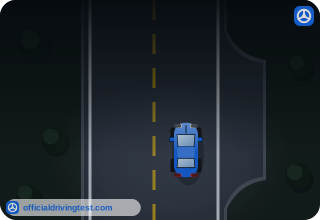
What can you try first if your headlights fail?
- Turn on the interior dome light
- Try the high beam/low beam switch
- Pull off immediately and turn the engine off
- Tap the headlight lenses with your hand
Show answer
Correct answer: Try the high beam/low beam switch
The first step the manual gives is the high beam/low beam switch, which may restore normal function.
Source: Arizona Driver License Manual and Customer Service Guide (Revised March 2026), page 69
-
If your headlights fail and the high beam/low beam switch does not help, what else should you try?
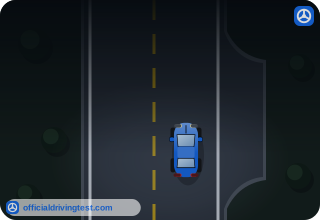
- Hold the headlight switch in the on position
- Switch between the headlights and the fog lights
- Keep driving slowly with the high beams on
- Turn the headlight switch on and off several times
Show answer
Correct answer: Turn the headlight switch on and off several times
The manual lists turning the headlight switch on and off several times as the next step.
Source: Arizona Driver License Manual and Customer Service Guide (Revised March 2026), page 69
-
If your headlights fail and nothing restores them, what should you do?
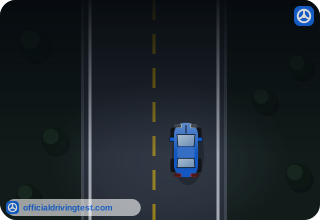
- Use parking lights, emergency flashers or turn signals, pull to the side and stop
- Follow the taillights of the vehicle ahead until you find a safe place
- Turn on the interior dome light and keep driving at a reduced speed
- Keep driving to the next exit with only your brake lights working
Show answer
Correct answer: Use parking lights, emergency flashers or turn signals, pull to the side and stop
The manual says to put on the parking lights, emergency flashers or turn signals, pull to the side of the road and stop.
Source: Arizona Driver License Manual and Customer Service Guide (Revised March 2026), page 69
-
Which rule applies to vehicles equipped with antilock braking systems (ABS) when braking?
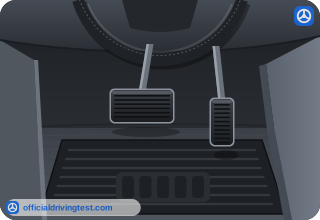
- Pump the brakes rapidly
- Apply the parking brake first
- Do not pump the brakes
- Shift to neutral before braking
Show answer
Correct answer: Do not pump the brakes
The manual states that anti-lock brakes must not be pumped.
Source: Arizona Driver License Manual and Customer Service Guide (Revised March 2026), page 69
-
If the brakes fail on a vehicle without antilock brakes, what should you do first?
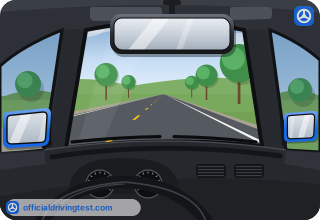
- Shift to a higher gear
- Pump the brakes rapidly
- Turn off the engine and coast
- Apply the parking brake as hard as you can
Show answer
Correct answer: Pump the brakes rapidly
The manual says to pump the brakes rapidly, which may build up enough pressure to stop the vehicle.
Source: Arizona Driver License Manual and Customer Service Guide (Revised March 2026), page 69
-
If pumping does not stop a vehicle without antilock brakes, how should you apply the parking brake?
- Quickly and fully, keeping it pulled up until the vehicle comes to a stop
- Gradually, but only after you have shifted into park or neutral gear
- Lightly, in short taps, and only while you are still in top gear
- Slowly, holding the brake release so you can ease off if the rear wheels lock
Show answer
Correct answer: Slowly, holding the brake release so you can ease off if the rear wheels lock
The manual says to apply the parking brake slowly and hold the release so you can ease off if the rear wheels lock and the car skids.
Source: Arizona Driver License Manual and Customer Service Guide (Revised March 2026), page 69
-
In a brake failure without antilock brakes, what should you do with the gears while looking for a safe place to stop?
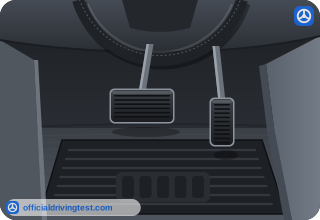
- Shift to a lower gear
- Shift to a higher gear
- Shift into park
- Shift into reverse
Show answer
Correct answer: Shift to a lower gear
The manual says to shift to lower gear and look for a safe place to stop.
Source: Arizona Driver License Manual and Customer Service Guide (Revised March 2026), page 69
-
You are stopped at a traffic light and a vehicle is approaching from behind at a high rate of speed. What should you do if possible?
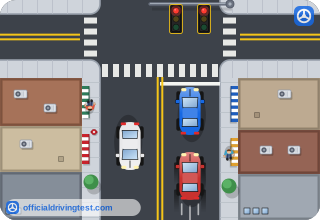
- Stay where you are with your foot hard on the brake
- Back up slightly so the other driver sees your reverse lights
- Pull your vehicle forward to give it more room to stop
- Turn on your hazard flashers and step out of the vehicle
Show answer
Correct answer: Pull your vehicle forward to give it more room to stop
The manual says to pull forward, if possible, to give the approaching vehicle more room to stop.
Source: Arizona Driver License Manual and Customer Service Guide (Revised March 2026), page 69
-
A vehicle is coming up fast behind you while you are stopped and the crash cannot be avoided. What should you do?
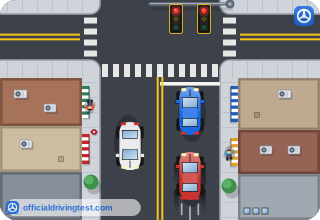
- Brace yourself and press the brake pedal as hard as you can
- Brace yourself and release your brake an instant before impact
- Keep your foot hard on the brake and look in your mirror
- Let go of the steering wheel and cover your face
Show answer
Correct answer: Brace yourself and release your brake an instant before impact
The manual says to brace yourself between the steering wheel and seat back and release your brake an instant before impact to lessen the impact.
Source: Arizona Driver License Manual and Customer Service Guide (Revised March 2026), page 69
-
If you are in danger of a potential head-on crash, how can you try to warn the other driver?
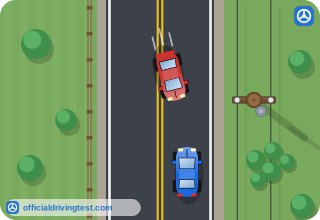
- Turn on your hazard flashers and stop in your lane
- Speed up and pull toward the center line
- Turn off your headlights and slow down
- Flash your headlights and use your horn
Show answer
Correct answer: Flash your headlights and use your horn
The manual says to reduce speed and flash your headlights and use your horn to warn the other driver.
Source: Arizona Driver License Manual and Customer Service Guide (Revised March 2026), page 69
-
In danger of a potential head-on crash, where should you steer if you can?
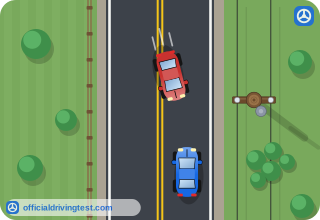
- Toward the shoulder and away from the oncoming driver
- Toward the center line to pass the oncoming driver
- Straight ahead, holding your lane
- Into the oncoming driver’s lane to go around them
Show answer
Correct answer: Toward the shoulder and away from the oncoming driver
One option the manual gives is to head for the shoulder and get off the road away from the oncoming driver.
Source: Arizona Driver License Manual and Customer Service Guide (Revised March 2026), page 69
-
If you cannot avoid a head-on crash, what should you try to do?
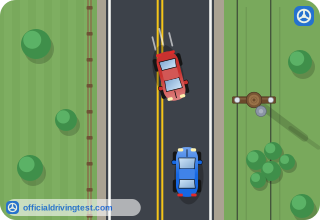
- Brake as hard as possible and hold your lane until impact
- Steer toward the center of the road
- Maneuver your vehicle to lessen the severity of the impact
- Turn off the engine and cover your face
Show answer
Correct answer: Maneuver your vehicle to lessen the severity of the impact
The manual says to try to maneuver your vehicle in such a way as to lessen the severity of impact.
Source: Arizona Driver License Manual and Customer Service Guide (Revised March 2026), page 69
-
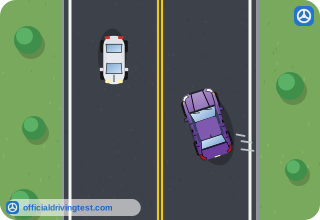
What can throw your vehicle into a skid?
- Driving on dry pavement at a slow and steady speed
- Easing off the gas pedal gradually while going straight
- Driving on a slippery surface or braking too sharply
- Using the parking lights while driving on a curve
Show answer
Correct answer: Driving on a slippery surface or braking too sharply
The manual says a slippery roadway surface or braking too sharply can throw your vehicle into a skid.
Source: Arizona Driver License Manual and Customer Service Guide (Revised March 2026), page 70
-
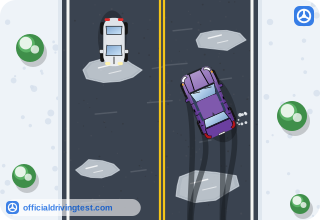
What should you do with the brake pedal when your vehicle starts to skid?
- Press it harder to regain traction
- Do not press it any further
- Press it firmly and hold it until you stop
- Release it and press the gas pedal firmly
Show answer
Correct answer: Do not press it any further
The manual says pressing the brake any further will only make the skid worse.
Source: Arizona Driver License Manual and Customer Service Guide (Revised March 2026), page 70
-
To recover from a skid, which way should you first turn the wheel?
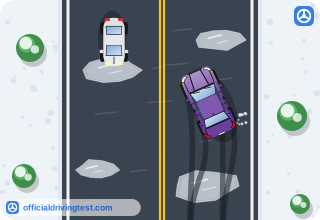
- Slowly, away from the direction you want to go
- Quickly, away from the direction you want to go
- Hold it straight and do not turn it
- Quickly, in the direction you want your vehicle to go
Show answer
Correct answer: Quickly, in the direction you want your vehicle to go
The manual says to turn the wheel quickly in the direction you want your vehicle to follow, the direction of the skid.
Source: Arizona Driver License Manual and Customer Service Guide (Revised March 2026), page 70
-
During skid recovery, why do you turn the wheel quickly back the other way as the car begins to straighten out?
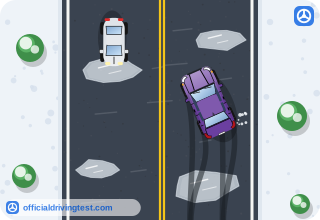
- So your vehicle does not skid in the opposite direction
- So the tires can cool down while you are steering
- So the vehicle will turn around and face the other way
- So the brakes can grip the pavement again quickly
Show answer
Correct answer: So your vehicle does not skid in the opposite direction
The manual says this keeps the vehicle from skidding in the opposite direction.
Source: Arizona Driver License Manual and Customer Service Guide (Revised March 2026), page 70
-
How long should you keep turning the wheel back and forth when recovering from a skid?
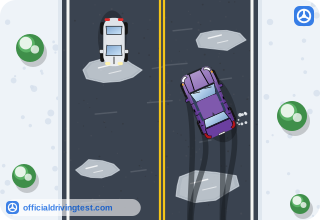
- Until you have come to a complete stop on the road
- Until the brakes have cooled down enough to use
- Until your vehicle straightens to its normal path
- Until you reach the shoulder of the road
Show answer
Correct answer: Until your vehicle straightens to its normal path
The manual says to continue turning the wheel back and forth as necessary until the vehicle straightens to its normal path.
Source: Arizona Driver License Manual and Customer Service Guide (Revised March 2026), page 70
-
Which of these does the manual list as debris that poses a hazard on the road?
- Fresh paint on the pavement surface
- Unsecured materials falling off trucks
- Overhead lane-control signs on the freeway
- Painted crosswalk lines at intersections
Show answer
Correct answer: Unsecured materials falling off trucks
The manual lists pieces of blown tires, unsecured materials falling off trucks and rocks falling during a storm as debris hazards.
Source: Arizona Driver License Manual and Customer Service Guide (Revised March 2026), page 70
-
What is a common crash related to debris on the road?
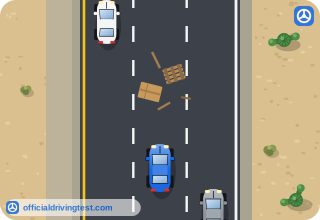
- A driver braking hard and being hit from behind by the next vehicle
- A driver driving over the debris and suffering a blowout, then stopping in a lane
- A driver stopping in the lane to remove the debris and being struck by traffic
- A driver swerving to avoid the hazard, losing control and leaving the roadway
Show answer
Correct answer: A driver swerving to avoid the hazard, losing control and leaving the roadway
The manual says a common debris crash is a driver swerving to avoid the hazard, losing control and leaving the roadway.
Source: Arizona Driver License Manual and Customer Service Guide (Revised March 2026), page 70
-
In some crashes involving debris, what would have resulted in a much less severe incident than swerving?
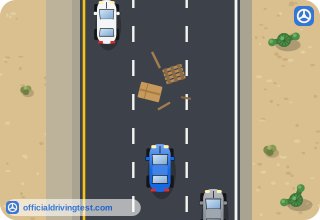
- Driving over the debris
- Braking hard in the lane
- Stopping in the travel lane
- Driving onto the shoulder
Show answer
Correct answer: Driving over the debris
The manual notes that in some cases driving over the debris would have resulted in a much less severe incident.
Source: Arizona Driver License Manual and Customer Service Guide (Revised March 2026), page 70
-
How may livestock such as cows and horses end up on the road?
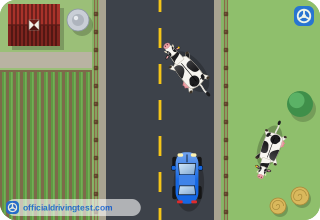
- They only wander onto roads during the night
- They are released by highway crews during road work
- People may leave gates open or cut fences
- They follow wildlife that crosses at marked crossings
Show answer
Correct answer: People may leave gates open or cut fences
The manual says livestock may be let onto the road by people leaving gates open or cutting fences.
Source: Arizona Driver License Manual and Customer Service Guide (Revised March 2026), page 70
-
If you encounter an animal on the road, what should you do?
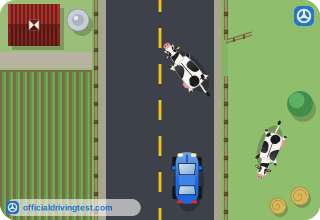
- Stop in the traffic lane and wait until the animal has moved away
- Slow down as much as you can and avoid a direct crash without losing control
- Swerve sharply around it, even if you lose some control of the vehicle
- Speed up to pass the animal before it can move farther into your path
Show answer
Correct answer: Slow down as much as you can and avoid a direct crash without losing control
The manual says to slow down as much as you can and maneuver to avoid a direct crash without losing control of your vehicle.
Source: Arizona Driver License Manual and Customer Service Guide (Revised March 2026), page 70
-
If an animal is not yet on the road, why should you not sound your horn?
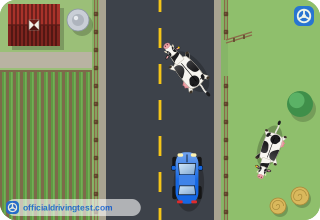
- It may cause the animal to freeze in place beside the roadway
- It may attract more animals toward the roadway you are using
- It may confuse drivers behind you into thinking you are braking
- It may startle the animal and cause it to run out in front of you
Show answer
Correct answer: It may startle the animal and cause it to run out in front of you
The manual says the horn may startle the animal and cause it to run out in front of you.
Source: Arizona Driver License Manual and Customer Service Guide (Revised March 2026), page 70
-
If you see an animal on the road that is a hazard to traffic, what should you do?
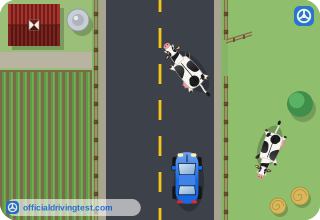
- Call 911 and report it to law enforcement
- Try to herd it off the road yourself
- Stop and wait until it moves away
- Report it at the next MVD office
Show answer
Correct answer: Call 911 and report it to law enforcement
The manual says to call 911 and report a hazardous animal to law enforcement.
Source: Arizona Driver License Manual and Customer Service Guide (Revised March 2026), page 70
-
If you are involved in a crash, what are you to do?
- Drive to the nearest police station to report the crash in person
- Leave the scene once you have exchanged names with the other driver
- Remain at the scene to assist anyone injured and exchange information
- Wait inside your vehicle without speaking to the other drivers
Show answer
Correct answer: Remain at the scene to assist anyone injured and exchange information
The manual says you are to remain at the scene to assist injured people and exchange information with the other drivers.
Source: Arizona Driver License Manual and Customer Service Guide (Revised March 2026), page 71
-
Which of these should you provide to the other drivers after a crash?
- Your Social Security number and date of birth
- Your insurance company name and policy number
- Your employer’s name and work telephone number
- Your vehicle’s purchase date and price
Show answer
Correct answer: Your insurance company name and policy number
The manual lists insurance company name and policy number among the information to provide.
Source: Arizona Driver License Manual and Customer Service Guide (Revised March 2026), page 71
-
Which of these is on the manual’s list of information to provide after a crash?
- Your date of birth
- Your vehicle’s odometer reading
- The name of your employer
- Information on witnesses of the crash
Show answer
Correct answer: Information on witnesses of the crash
The manual’s list includes information on witnesses of the crash, along with license plate numbers.
Source: Arizona Driver License Manual and Customer Service Guide (Revised March 2026), page 71
-
If anyone is injured in a crash, what are you required to do immediately?
- Call the police
- Move all vehicles off the road
- Notify your insurance company
- Drive the injured person to a hospital
Show answer
Correct answer: Call the police
The manual says that in case of injury you are required to immediately call the police.
Source: Arizona Driver License Manual and Customer Service Guide (Revised March 2026), page 71
-
If you are one of the first persons to come upon the scene of a crash, what should you do with your vehicle?
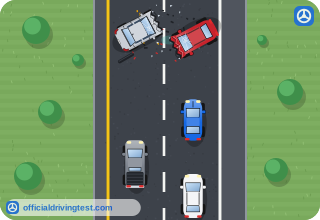
- Stop in the nearest traffic lane to block following traffic
- Park in the traffic lane behind the crash with headlights off
- Pull it off the road and turn on your hazard flashers
- Stop beside the crash and turn on your high beams
Show answer
Correct answer: Pull it off the road and turn on your hazard flashers
The manual says to pull your vehicle off the road and turn on your hazard flashers.
Source: Arizona Driver License Manual and Customer Service Guide (Revised March 2026), page 71
-
When you come upon a crash scene, what should you do about the ignition of the vehicles involved?
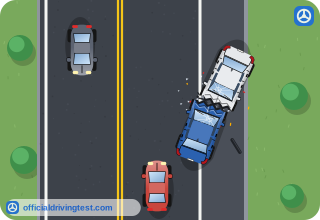
- Leave the engines running so the hazard flashers keep working
- Turn off the ignition of each vehicle involved
- Turn off only the ignition of the most badly damaged vehicle
- Remove the keys and give them to the first police officer
Show answer
Correct answer: Turn off the ignition of each vehicle involved
The manual says to turn off the ignition of vehicles involved in the crash.
Source: Arizona Driver License Manual and Customer Service Guide (Revised March 2026), page 71
-
Whom should you notify if you come upon the scene of a crash?
- Your insurance company, by phone
- The nearest MVD office
- Only the other drivers’ insurance companies
- Emergency officials, by calling 911
Show answer
Correct answer: Emergency officials, by calling 911
The manual says to notify emergency officials by calling 911.
Source: Arizona Driver License Manual and Customer Service Guide (Revised March 2026), page 71
-
Which of these applies when you stop to help at the scene of a crash?
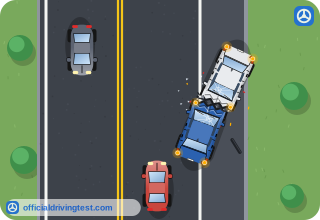
- Do not stand or walk in traffic lanes
- Walk back along the traffic lanes to flag down traffic
- Stand in the lane to direct traffic around the crash
- Walk between lanes to check on each vehicle
Show answer
Correct answer: Do not stand or walk in traffic lanes
The manual says not to stand or walk in traffic lanes.
Source: Arizona Driver License Manual and Customer Service Guide (Revised March 2026), page 71
-
At the scene of a crash, what should you ask others who have stopped to do?
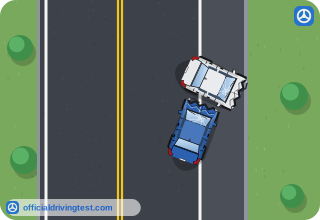
- Move the injured people into their vehicles
- Leave the scene at once
- Warn the approaching traffic
- Direct traffic from the center lane
Show answer
Correct answer: Warn the approaching traffic
The manual says to ask others who have stopped to warn the approaching traffic.
Source: Arizona Driver License Manual and Customer Service Guide (Revised March 2026), page 71
-
After a crash with no serious physical injury or fatality, what shall be done with the vehicles involved?
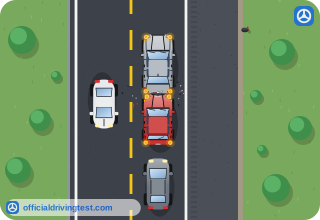
- They must be left where they stopped until the police arrive
- They shall be removed from the main traveled portions of the roadway
- They may be moved only by a tow truck
- They must be photographed and left in the lane
Show answer
Correct answer: They shall be removed from the main traveled portions of the roadway
The manual says vehicles shall be removed from the main traveled portions of the roadway when there is no serious injury or fatality.
Source: Arizona Driver License Manual and Customer Service Guide (Revised March 2026), page 71
-
In the rule about moving a vehicle after a crash, what does safely operable mean?
- It has no visible damage and all of its lights and mirrors work
- It has valid insurance and a current registration sticker on the plate
- It can be pushed out of the travel lane by two or more bystanders
- It does not require towing and can be operated under its own power
Show answer
Correct answer: It does not require towing and can be operated under its own power
The manual defines safely operable as not requiring towing and able to be operated under its own power.
Source: Arizona Driver License Manual and Customer Service Guide (Revised March 2026), page 71
-
A person moves a motor vehicle from the main traveled portion of the roadway before law enforcement arrives. How is fault affected?
- The person is not held liable or at fault solely because the vehicle was moved
- The person is automatically held at fault for the crash because the scene changed
- The person is held partly at fault unless police later give permission
- The person is liable for any damage later found on either vehicle
Show answer
Correct answer: The person is not held liable or at fault solely because the vehicle was moved
The manual says such a person shall not be held liable or at fault based solely on the fact the vehicle was moved.
Source: Arizona Driver License Manual and Customer Service Guide (Revised March 2026), page 71
-
What does state law require of a driver involved in a minor crash without injuries?
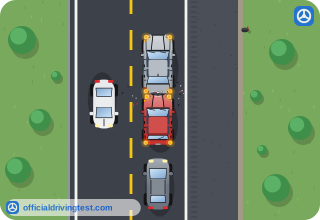
- Leave the vehicle exactly where it stopped until police permit it to be moved
- Call a tow truck before moving the vehicle even a short distance
- Remove the vehicle from the roadway if it is operable and can be moved safely
- Take photos of the vehicle positions and wait for police at the scene
Show answer
Correct answer: Remove the vehicle from the roadway if it is operable and can be moved safely
The manual states the law requires removing an operable vehicle from the roadway after a minor crash without injuries when it can be moved safely.
Source: Arizona Driver License Manual and Customer Service Guide (Revised March 2026), page 71
-
Which of these is given as a reason to move your vehicle out of travel lanes after a minor crash?
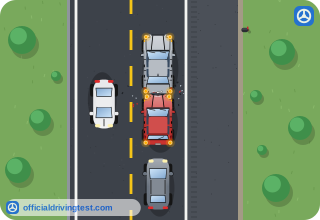
- It removes the need to notify the police
- It reduces the chance of a secondary crash
- It ends your duty to remain at the scene
- It lets you avoid inspecting the vehicle for damage
Show answer
Correct answer: It reduces the chance of a secondary crash
The manual says moving out of travel lanes keeps lanes clear for other vehicles, reducing the chance of a secondary crash.
Source: Arizona Driver License Manual and Customer Service Guide (Revised March 2026), page 71
-
Quickly moving your vehicle out of travel lanes after a minor crash provides a safer environment to do what?
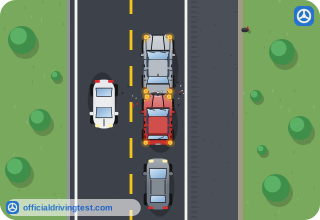
- Wait for a tow truck
- Repair minor damage
- Complete an insurance claim
- Inspect your car for damage
Show answer
Correct answer: Inspect your car for damage
The manual says moving out of travel lanes provides a safer environment to inspect your car for damage.
Source: Arizona Driver License Manual and Customer Service Guide (Revised March 2026), page 71
-
After a minor crash on a highway, if the occupants are OK and your vehicle is operable, what should you do?
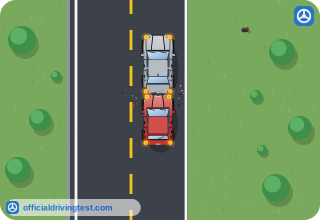
- Move to the emergency shoulder or median, or exit the highway, and call 911
- Stop in the nearest travel lane and wait for a tow truck to arrive
- Stay in the travel lane and wait for the other driver
- Leave quickly and report the crash later by mail
Show answer
Correct answer: Move to the emergency shoulder or median, or exit the highway, and call 911
The manual says to move an operable vehicle to the emergency shoulder, median or off the highway, and call 911.
Source: Arizona Driver License Manual and Customer Service Guide (Revised March 2026), page 72
-
After a crash, what should you do about the travel lanes while you are at the scene?
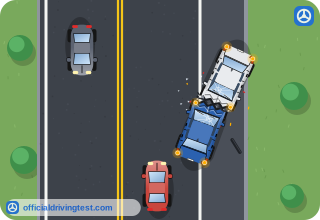
- Stand in the travel lanes to warn drivers
- Walk across the lanes to talk to the other drivers about it
- Stay out of travel lanes, be alert and watch approaching traffic
- Wait in the left lane for law enforcement
Show answer
Correct answer: Stay out of travel lanes, be alert and watch approaching traffic
The manual tells you to stay out of travel lanes and to watch approaching traffic.
Source: Arizona Driver License Manual and Customer Service Guide (Revised March 2026), page 72
-
What does the manual say you must never do after a crash?
- Call 911 for help
- Leave the scene of the crash
- Give aid to an injured person
- Turn on your hazard flashers
Show answer
Correct answer: Leave the scene of the crash
The manual reminds drivers: never leave the scene of a crash.
Source: Arizona Driver License Manual and Customer Service Guide (Revised March 2026), page 72
-
When are you required by law to stop your vehicle and remain at the scene of a crash?
- Only when someone is killed
- Only when a police officer arrives first
- Only when your own vehicle is too damaged to drive
- When the crash involves damage to a vehicle, injury or death
Show answer
Correct answer: When the crash involves damage to a vehicle, injury or death
The law requires a driver in a crash with vehicle damage, injury or death to stop and remain at the scene.
Source: Arizona Driver License Manual and Customer Service Guide (Revised March 2026), page 72
-
As a driver involved in a crash, what must you do for any injured person?
- Move the person to the roadside right away
- Wait for the other driver to decide what should be done
- Provide aid, including arranging medical treatment by calling 911
- Give aid only if the person asks for it
Show answer
Correct answer: Provide aid, including arranging medical treatment by calling 911
The manual requires providing aid to any injured person, including arranging medical treatment by calling 911.
Source: Arizona Driver License Manual and Customer Service Guide (Revised March 2026), page 72
-
Under the failure-to-stop rules, what must a driver in a crash give to emergency providers and law enforcement?
- Your name, address and license plate number
- Your Social Security number and employer
- Your date of birth and phone number
- Your insurance agent and bank account number
Show answer
Correct answer: Your name, address and license plate number
The manual lists your name, address and license plate number as what to provide.
Source: Arizona Driver License Manual and Customer Service Guide (Revised March 2026), page 72
-
If you are involved in a crash, what is the first action to take?
- Make sure you and the occupants in your vehicle are OK
- Take photos of both vehicles before anything is moved
- Exchange insurance details with the other driver
- Call your insurance company to report the crash
Show answer
Correct answer: Make sure you and the occupants in your vehicle are OK
The manual says the first action after a crash is to make sure you and the occupants in your vehicle are OK.
Source: Arizona Driver License Manual and Customer Service Guide (Revised March 2026), page 72
-
Which item does the manual list for an emergency kit?
- Snow shovel
- Flares
- Tent
- Portable generator
Show answer
Correct answer: Flares
Flares are among the emergency kit items the manual lists.
Source: Arizona Driver License Manual and Customer Service Guide (Revised March 2026), page 74
-
Which of these is listed in the manual’s emergency kit?
- Binoculars
- Tow strap
- Folding chair
- Jumper cables
Show answer
Correct answer: Jumper cables
Jumper cables are among the emergency kit items the manual lists.
Source: Arizona Driver License Manual and Customer Service Guide (Revised March 2026), page 74
-
The manual suggests packing an emergency kit with which of these tools?
- Jack, lug wrench and spare tire
- Hammer, nails and a hand saw
- Chainsaw and ax
- Welding torch and clamps
Show answer
Correct answer: Jack, lug wrench and spare tire
The manual lists a jack, lug wrench and spare tire among the kit items.
Source: Arizona Driver License Manual and Customer Service Guide (Revised March 2026), page 74