Virginia: Vehicle controls and equipment — Part 2 Practice Test
Questions in this part include: “How often must your vehicle pass a safety inspection?” · “In certain localities, what must your vehicle also pass?”
Independent educational site · not affiliated with any government agency or DMV
Ready? Test yourself
- Instant feedback with an explanation
- Every answer cites its source in the manual
- Your best score is saved on this device
- Keyboard: press 1 to 4 to answer and Enter for the next question
Questions are original and based on the official manual "Virginia Driver's Manual" (DMV 39 (April 27, 2026)), Virginia Department of Motor Vehicles (DMV).
All 23 questions in this practice test
Take the test above first, then use this list to study. Tap “Show answer” to see the correct answer and explanation.
Show the questions and answersHide the questions
-
In cities and towns, except on streets with no lighting, which headlights should you use?
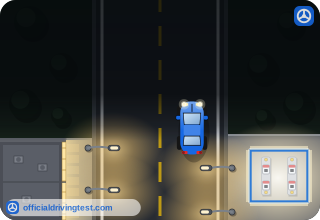
- High beams
- Parking lights
- Low beams
- Hazard lights
Show answer
Correct answer: Low beams
Low beams are for driving in cities and towns, except on streets where there is no lighting.
Source: Virginia Driver's Manual (DMV 39 (April 27, 2026)), page 23 · Open this page in the manual (Manual page 23)
-
What should you do with your headlights when you meet oncoming traffic at night?
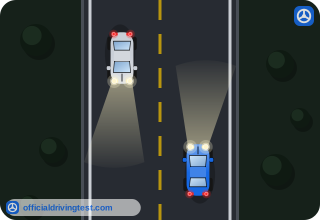
- Switch to low beams
- Keep your high beams on so you can see farther
- Flash your high beams as a warning
- Turn your headlights off until the vehicle passes
Show answer
Correct answer: Switch to low beams
Low beams keep you from blinding the oncoming driver.
Source: Virginia Driver's Manual (DMV 39 (April 27, 2026)), page 23 · Open this page in the manual (Manual page 23)
-
When following another vehicle at night, you should use low beams whenever you are within how many feet of the vehicle ahead?
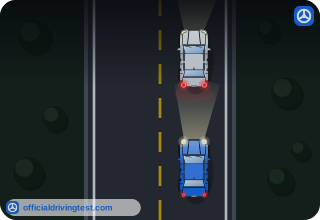
- 100 feet
- 200 feet
- 300 feet
- 1,000 feet
Show answer
Correct answer: 200 feet
The manual says to use low beams when you are within 200 feet of the vehicle ahead.
Source: Virginia Driver's Manual (DMV 39 (April 27, 2026)), page 23 · Open this page in the manual (Manual page 23)
-
On highways, you should use high-beam headlights unless another vehicle is within how many feet coming toward you?
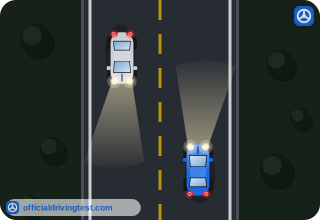
- 250 feet
- 750 feet
- 1,000 feet
- 500 feet
Show answer
Correct answer: 500 feet
High beams are fine on highways until another vehicle is within 500 feet coming toward you.
Source: Virginia Driver's Manual (DMV 39 (April 27, 2026)), page 23 · Open this page in the manual (Manual page 23)
-
The high beams of an oncoming car are on. What should you do?
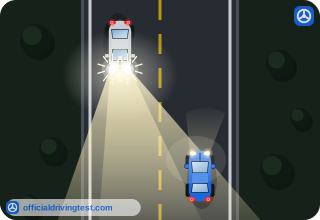
- Glance toward the side of the road instead of looking at the lights
- Flash your own high beams at the driver to remind him to dim
- Look directly at the oncoming lights to judge the other vehicle’s position
- Stop in your lane and wait until the other vehicle has passed
Show answer
Correct answer: Glance toward the side of the road instead of looking at the lights
Avoid looking directly at the bright lights; glance toward the side of the road, then look quickly ahead to find the other vehicle.
Source: Virginia Driver's Manual (DMV 39 (April 27, 2026)), page 23 · Open this page in the manual (Manual page 23)
-
An oncoming driver does not dim his headlights. What should you do with your high beams?
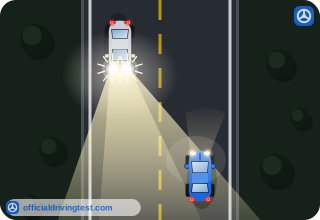
- Turn them on until the driver dims
- Flash them once as a reminder
- Keep them off
- Turn them on only for a moment
Show answer
Correct answer: Keep them off
Even if the other driver does not dim, you should not turn on your high beams.
Source: Virginia Driver's Manual (DMV 39 (April 27, 2026)), page 23 · Open this page in the manual (Manual page 23)
-
Which headlights should you use in heavy fog?
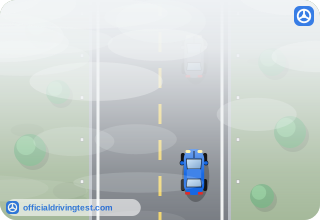
- High-beam headlights
- Parking lights only
- Low-beam headlights
- Hazard lights only
Show answer
Correct answer: Low-beam headlights
The manual says to use low-beam headlights in heavy fog.
Source: Virginia Driver's Manual (DMV 39 (April 27, 2026)), page 23 · Open this page in the manual (Manual page 23)
-
Which headlights should you use in the rain to see and be seen?
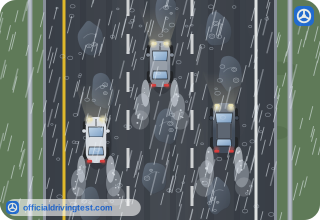
- High-beam headlights
- Low-beam headlights
- Parking lights only
- Hazard lights only
Show answer
Correct answer: Low-beam headlights
The manual says low beams let you see and be seen in the rain.
Source: Virginia Driver's Manual (DMV 39 (April 27, 2026)), page 23 · Open this page in the manual (Manual page 23)
-
In light rain or drizzle, what should you turn on to improve visibility?
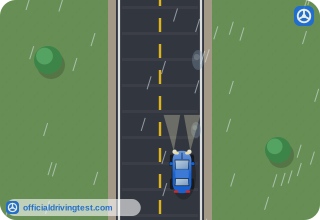
- Your hazard lights
- Your high-beam headlights
- Your rear window defroster
- Your windshield wipers
Show answer
Correct answer: Your windshield wipers
In light rain or drizzle, wipers improve your visibility.
Source: Virginia Driver's Manual (DMV 39 (April 27, 2026)), page 23 · Open this page in the manual (Manual page 23)
-
Why can using your wipers for sprinkles be a problem?
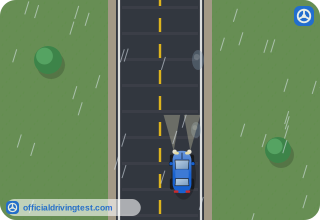
- It may use up the battery and stall the engine
- It may crack the windshield in cold weather
- It may wear out the blades and the motor
- It may smear the windshield and make it harder to see
Show answer
Correct answer: It may smear the windshield and make it harder to see
Using the wipers for sprinkles may smear the windshield and make it harder to see.
Source: Virginia Driver's Manual (DMV 39 (April 27, 2026)), page 23 · Open this page in the manual (Manual page 23)
-
Before you start driving in snow, which parts of the car must you clear of snow and ice?
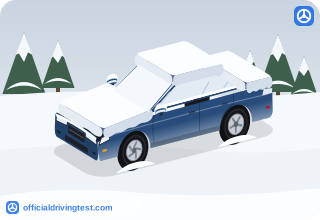
- Only the windshield and the driver’s side windows
- Only the hood and the roof of the vehicle
- Only the parts you can reach from the driver’s seat
- The entire car, including the roof, hood and rear
Show answer
Correct answer: The entire car, including the roof, hood and rear
The manual says to remove snow and ice from your entire car, including roof, hood and rear.
Source: Virginia Driver's Manual (DMV 39 (April 27, 2026)), page 23 · Open this page in the manual (Manual page 23)
-
Why must you remove snow and ice left on your car?
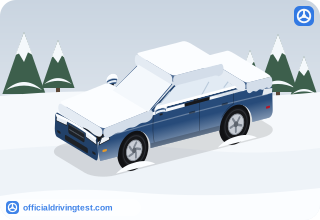
- It can fly off and create a hazard for other motorists
- It can add enough weight to damage the suspension
- It can melt and make the inside of the car wet
- It can make your tires wear faster
Show answer
Correct answer: It can fly off and create a hazard for other motorists
Snow and ice left on the car can fly off at speed and endanger other motorists.
Source: Virginia Driver's Manual (DMV 39 (April 27, 2026)), page 23 · Open this page in the manual (Manual page 23)
-
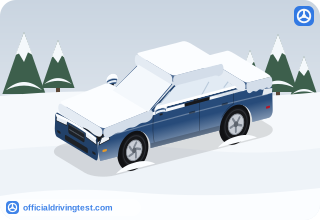
Which parts of your car must you clear of snow or ice so you can see and communicate with other drivers?
- Only the windshield and the mirrors
- Only the front windows and the headlights
- All windows, mirrors and front and rear lights
- Only the windshield and the taillights
Show answer
Correct answer: All windows, mirrors and front and rear lights
Windows, mirrors and lights must be clear so you can see and be seen.
Source: Virginia Driver's Manual (DMV 39 (April 27, 2026)), page 23 · Open this page in the manual (Manual page 23)
-
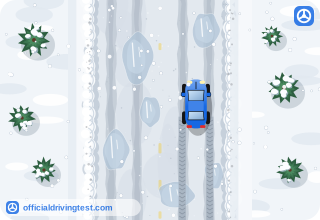
What should you equip your car with to help prevent skidding and reduce stopping distance in snow?
- Summer tires and a spare
- Wider wheels or heavier brakes
- All-weather snow tires or chains
- Racing tires or wheel covers
Show answer
Correct answer: All-weather snow tires or chains
All-weather snow tires or chains help prevent skidding and reduce stopping distance.
Source: Virginia Driver's Manual (DMV 39 (April 27, 2026)), page 23 · Open this page in the manual (Manual page 23)
-
How often must your vehicle pass a safety inspection?
- Every six months
- Every two years
- Every year
- Only when you sell the vehicle
Show answer
Correct answer: Every year
Virginia requires an annual vehicle safety inspection and a valid inspection sticker.
Source: Virginia Driver's Manual (DMV 39 (April 27, 2026)), page 33 · Open this page in the manual (Manual page 33)
-
In certain localities, what must your vehicle also pass?
- An emissions inspection
- A noise inspection
- A second safety inspection each year
- A tire alignment inspection
Show answer
Correct answer: An emissions inspection
Some localities add an emissions inspection to the annual safety inspection.
Source: Virginia Driver's Manual (DMV 39 (April 27, 2026)), page 33 · Open this page in the manual (Manual page 33)
-
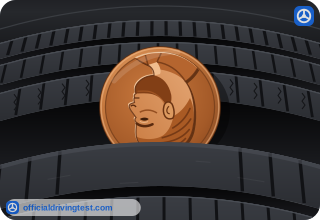
How often should you check your tires for wear and damage using the penny test?
- Once every year, at the safety inspection
- Only when a tire looks flat
- Once every week, before driving to work
- Once every month, or before a long road trip
Show answer
Correct answer: Once every month, or before a long road trip
The penny test is recommended monthly and before long trips.
Source: Virginia Driver's Manual (DMV 39 (April 27, 2026)), page 33 · Open this page in the manual (Manual page 33)
-
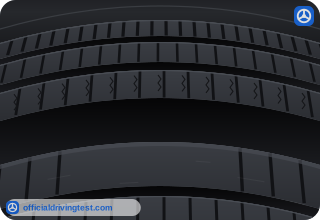
In the penny test, what part of Abraham Lincoln do you hold between your thumb and forefinger?
- His head
- His body
- His hat
- His portrait frame
Show answer
Correct answer: His body
The test starts by holding the penny by Lincoln’s body so his head can go into the tread groove.
Source: Virginia Driver's Manual (DMV 39 (April 27, 2026)), page 33 · Open this page in the manual (Manual page 33)
-
In the penny test, where on the tire should you place Lincoln’s head into a groove?
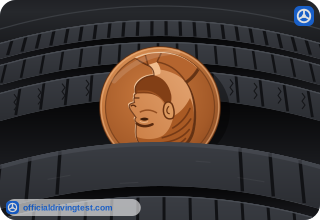
- At the point where the tread appears to be lowest
- At the point where the tread appears to be highest
- At the center of the tire sidewall
- At any point near the tire valve
Show answer
Correct answer: At the point where the tread appears to be lowest
You test the spot that looks most worn, which is where the tread is lowest.
Source: Virginia Driver's Manual (DMV 39 (April 27, 2026)), page 34 · Open this page in the manual (Manual page 34)
-
In the penny test, how do you know you are driving with a safe amount of tread?
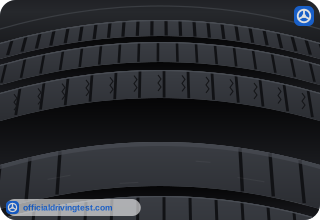
- All of Lincoln’s head is visible above the tread
- Lincoln’s whole body disappears into the groove
- Any part of Lincoln’s head is covered by the tread
- The tread covers none of the penny
Show answer
Correct answer: Any part of Lincoln’s head is covered by the tread
If the tread covers any part of Lincoln’s head, there is still a safe amount of tread.
Source: Virginia Driver's Manual (DMV 39 (April 27, 2026)), page 34 · Open this page in the manual (Manual page 34)
-
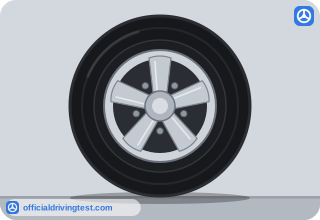
What happens when your tire tread wears below the safe amount?
- Your tire pressure rises above the recommended PSI level
- Your car’s grip on the road in adverse conditions is greatly reduced
- Your vehicle will no longer be able to pass an emissions inspection
- Your car’s braking distance stays the same on wet roads
Show answer
Correct answer: Your car’s grip on the road in adverse conditions is greatly reduced
Worn tread greatly reduces grip in bad conditions.
Source: Virginia Driver's Manual (DMV 39 (April 27, 2026)), page 34 · Open this page in the manual (Manual page 34)
-
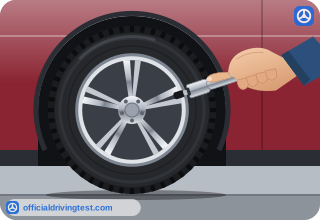
When should you check your tire pressure with a tire pressure gauge?
- After driving a long distance
- Only after a tire looks flat
- Right after the vehicle is started
- Prior to entering the vehicle
Show answer
Correct answer: Prior to entering the vehicle
The manual says to check pressure before you enter the vehicle.
Source: Virginia Driver's Manual (DMV 39 (April 27, 2026)), page 34 · Open this page in the manual (Manual page 34)
-
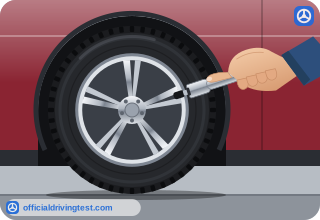
Where is the recommended tire pressure (PSI) for your vehicle located?
- Printed on the tread surface of each tire near the rim
- On the vehicle registration card kept in the glove box
- On the safety inspection sticker on the windshield
- The owner’s manual or the driver’s side door jamb
Show answer
Correct answer: The owner’s manual or the driver’s side door jamb
The recommended PSI is in the owner’s manual or on the driver’s side door jamb.
Source: Virginia Driver's Manual (DMV 39 (April 27, 2026)), page 34 · Open this page in the manual (Manual page 34)