Virginia: Vehicle controls and equipment — Part 1 Practice Test
Questions in this part include: “After you complete a turn or lane change, what should you make sure of?” · “During which hours must you use your headlights?”
Independent educational site · not affiliated with any government agency or DMV
Ready? Test yourself
- Instant feedback with an explanation
- Every answer cites its source in the manual
- Your best score is saved on this device
- Keyboard: press 1 to 4 to answer and Enter for the next question
Questions are original and based on the official manual "Virginia Driver's Manual" (DMV 39 (April 27, 2026)), Virginia Department of Motor Vehicles (DMV).
All 23 questions in this practice test
Take the test above first, then use this list to study. Tap “Show answer” to see the correct answer and explanation.
Show the questions and answersHide the questions
-
If your steering wheel were a clock, at which positions should your hands be placed?
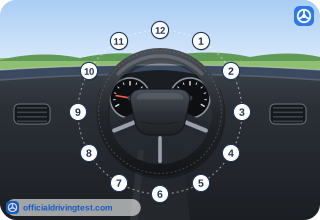
- 8 o’clock and 4 o’clock
- 10 o’clock and 2 o’clock
- 9 o’clock and 3 o’clock
- 7 o’clock and 5 o’clock
Show answer
Correct answer: 8 o’clock and 4 o’clock
The manual says your hands belong at the 8 o’clock and 4 o’clock positions on the wheel.
Source: Virginia Driver's Manual (DMV 39 (April 27, 2026)), page 14 · Open this page in the manual (Manual page 14)
-
How should you hold the steering wheel?
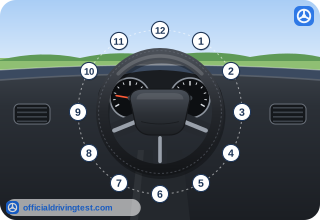
- With your palms pressed flat against the rim
- With your fingertips only, keeping your thumbs off the wheel
- With your fingers and thumbs, not gripping it with your palms
- With one hand at the top and the other resting in your lap
Show answer
Correct answer: With your fingers and thumbs, not gripping it with your palms
The manual says to hold the wheel with your fingers and thumbs and to avoid gripping it with your palms.
Source: Virginia Driver's Manual (DMV 39 (April 27, 2026)), page 14 · Open this page in the manual (Manual page 14)
-
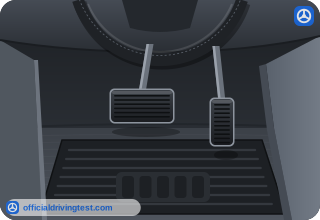
What should you remember about antilock brakes?
- Pump them in short, quick presses
- Never pump them
- Pump them only on wet pavement
- Pump them only when stopping from high speed
Show answer
Correct answer: Never pump them
The manual says never to pump antilock brakes.
Source: Virginia Driver's Manual (DMV 39 (April 27, 2026)), page 15 · Open this page in the manual (Manual page 15)
-
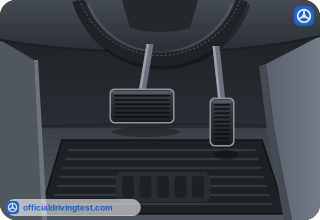
If your vehicle has antilock brakes, what should you do before you go out on the road?
- Have them replaced with standard brakes first
- Check your vehicle owner’s manual and practice braking
- Drive only on dry pavement until they warm up
- Turn the antilock system off before braking
Show answer
Correct answer: Check your vehicle owner’s manual and practice braking
You should understand how the brakes work by reading the owner’s manual and practicing braking before driving on the road.
Source: Virginia Driver's Manual (DMV 39 (April 27, 2026)), page 15 · Open this page in the manual (Manual page 15)
-
Whether you are changing lanes, passing, or entering or exiting a highway, what should you always do?
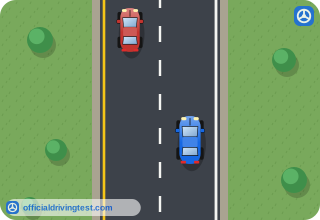
- Use your turn signals and check traffic to the rear and sides
- Sound your horn and speed up to get ahead of traffic
- Turn on your hazard flashers
- Move to the left lane first
Show answer
Correct answer: Use your turn signals and check traffic to the rear and sides
The manual says always to use your turn signals and check traffic to the rear and sides.
Source: Virginia Driver's Manual (DMV 39 (April 27, 2026)), page 17 · Open this page in the manual (Manual page 17)
-
Using your turn signal when you change lanes, turn, or enter or exit a highway is:
- Required only on roads with several lanes
- Required by law
- Required only when other traffic is nearby
- Recommended but not required by law
Show answer
Correct answer: Required by law
The manual says using your turn signal is required by law and lets nearby drivers know your intended movement.
Source: Virginia Driver's Manual (DMV 39 (April 27, 2026)), page 18 · Open this page in the manual (Manual page 18)
-
What does the manual say about using turn signals or hand signals when no other traffic is on the road?
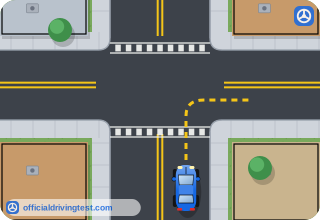
- Skip them, since no one can see them
- Use them only after dark
- Use them only at intersections
- Use them anyway, as a good habit
Show answer
Correct answer: Use them anyway, as a good habit
You should develop the habit of signaling even when no other traffic is on the road.
Source: Virginia Driver's Manual (DMV 39 (April 27, 2026)), page 18 · Open this page in the manual (Manual page 18)
-
A driver gives a hand signal with the left hand and arm pointing straight out. What does this signal mean?
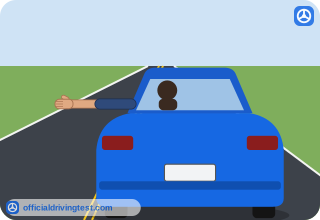
- Left turn
- Right turn
- Slow or stop
- Pass on the left
Show answer
Correct answer: Left turn
A left arm pointing straight out signals a left turn.
Source: Virginia Driver's Manual (DMV 39 (April 27, 2026)), page 18 · Open this page in the manual (Manual page 18)
-
A driver gives a hand signal with the left hand and arm pointing upward. What does this signal mean?
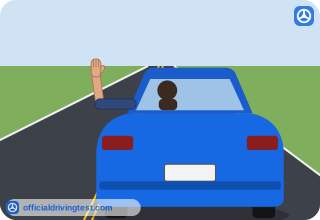
- Left turn
- Slow or stop
- Right turn
- Pass on the right
Show answer
Correct answer: Right turn
A left arm pointing upward signals a right turn.
Source: Virginia Driver's Manual (DMV 39 (April 27, 2026)), page 18 · Open this page in the manual (Manual page 18)
-
A driver gives a hand signal with the left hand and arm pointing downward. What does this signal mean?
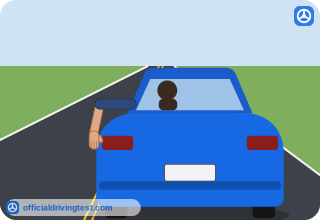
- Left turn
- Slow or stop
- Right turn
- Back up
Show answer
Correct answer: Slow or stop
A left arm pointing downward signals that the driver is slowing or stopping.
Source: Virginia Driver's Manual (DMV 39 (April 27, 2026)), page 18 · Open this page in the manual (Manual page 18)
-
After you complete a turn or lane change, what should you make sure of?
- That the turn signal is left on for a few seconds
- That your hazard flashers are turned on
- That you sound the horn to alert drivers behind you
- That the turn signal stops flashing
Show answer
Correct answer: That the turn signal stops flashing
The turn signal should be off once the turn or lane change is complete.
Source: Virginia Driver's Manual (DMV 39 (April 27, 2026)), page 18 · Open this page in the manual (Manual page 18)
-
How should the inside rear view mirror be adjusted before you drive?
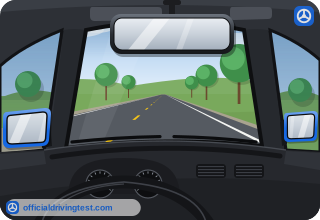
- So it shows mostly the road surface behind you
- So it shows the sides of your vehicle
- So it frames the entire back window
- So it is tilted toward the left side mirror
Show answer
Correct answer: So it frames the entire back window
The inside mirror should frame the whole back window.
Source: Virginia Driver's Manual (DMV 39 (April 27, 2026)), page 20 · Open this page in the manual (Manual page 20)
-
How should the side mirrors be adjusted before you drive?
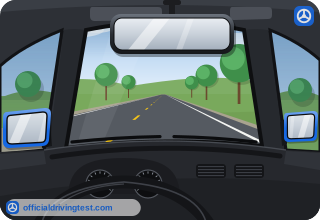
- So you can see as much of your vehicle as possible
- So you can barely see the sides of your vehicle
- So they show only the lane next to your vehicle
- So they point straight down at the road
Show answer
Correct answer: So you can barely see the sides of your vehicle
The side mirrors should be set so you can barely see the sides of your own vehicle.
Source: Virginia Driver's Manual (DMV 39 (April 27, 2026)), page 20 · Open this page in the manual (Manual page 20)
-
What are blind spots?
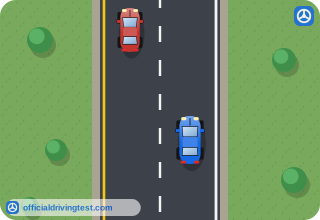
- Places on the road where signs are hidden by trees or buildings
- Areas behind your vehicle that mirrors show only in poor light
- Parts of an intersection that are hidden from the driver ahead
- Danger areas where vehicles around you cannot be easily seen
Show answer
Correct answer: Danger areas where vehicles around you cannot be easily seen
Blind spots are danger areas around your vehicle where other vehicles cannot be easily seen.
Source: Virginia Driver's Manual (DMV 39 (April 27, 2026)), page 20 · Open this page in the manual (Manual page 20)
-
What is the best way to see a car in your blind spot?
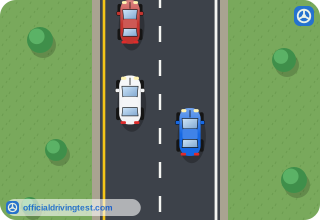
- Quickly turn your head and glance over your shoulder
- Look into your rearview mirror for a few seconds
- Look into your side mirror and then slow down
- Sound your horn and watch for a reaction
Show answer
Correct answer: Quickly turn your head and glance over your shoulder
A quick glance over your shoulder before changing lanes or passing is the best way to check a blind spot.
Source: Virginia Driver's Manual (DMV 39 (April 27, 2026)), page 20 · Open this page in the manual (Manual page 20)
-
According to the manual, what is the most common mistake drivers make when backing up?
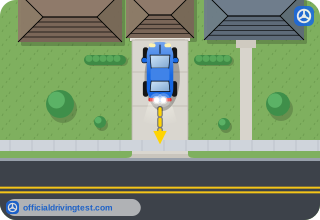
- Failing to look both ways behind them
- Backing up with the headlights on
- Glancing quickly to either side while backing
- Turning their head to look out of the rear window
Show answer
Correct answer: Failing to look both ways behind them
The most common backing mistake is failing to look both ways behind the vehicle; mirrors do not give a full view.
Source: Virginia Driver's Manual (DMV 39 (April 27, 2026)), page 22 · Open this page in the manual (Manual page 22)
-
When backing up, how should you position yourself to see as much as possible?
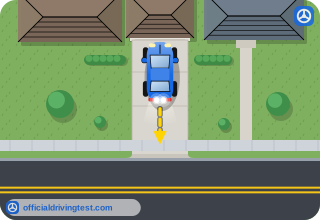
- Turn your body and head to the left and look out through the side window
- Stay facing forward and rely on your inside and outside mirrors
- Turn your body and head to the right and look out through the rear window
- Keep both hands on the wheel and look only at the side mirrors
Show answer
Correct answer: Turn your body and head to the right and look out through the rear window
Turning your body and head to the right lets you look out through the rear window, which shows more than the mirrors do.
Source: Virginia Driver's Manual (DMV 39 (April 27, 2026)), page 22 · Open this page in the manual (Manual page 22)
-
How should you back up?
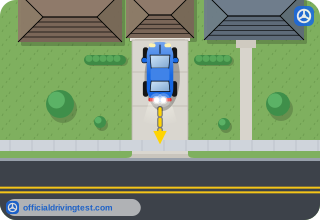
- Quickly, so that you block the road for as little time as possible
- Slowly, glancing quickly to either side for pedestrians and traffic
- Slowly, keeping your eyes fixed only on the rear window
- At normal speed, using only your mirrors to check for traffic
Show answer
Correct answer: Slowly, glancing quickly to either side for pedestrians and traffic
You should back up slowly and glance quickly to either side to check for pedestrians and approaching traffic.
Source: Virginia Driver's Manual (DMV 39 (April 27, 2026)), page 22 · Open this page in the manual (Manual page 22)
-
You must use your headlights at night and at which other times?
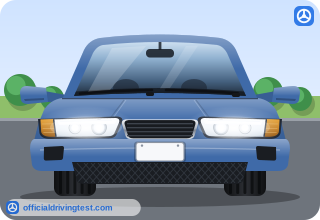
- Only when you are driving on a highway
- At other times when it’s hard to see
- Only when you are stopped on a shoulder
- Only when you are following another vehicle
Show answer
Correct answer: At other times when it’s hard to see
Besides night, you must use headlights whenever it is hard to see.
Source: Virginia Driver's Manual (DMV 39 (April 27, 2026)), page 22 · Open this page in the manual (Manual page 22)
-
Virginia law requires headlights in rain, fog, snow or sleet when visibility is reduced to how many feet?
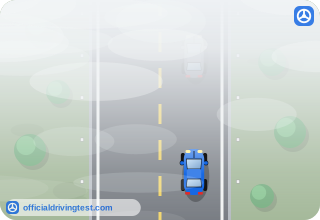
- 500 feet
- 100 feet
- 300 feet
- 1,000 feet
Show answer
Correct answer: 500 feet
Headlights are required in inclement weather when visibility drops to 500 feet.
Source: Virginia Driver's Manual (DMV 39 (April 27, 2026)), page 22 · Open this page in the manual (Manual page 22)
-
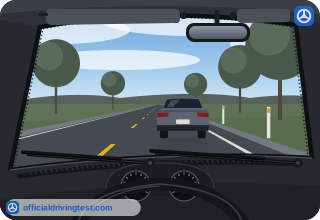
When must you use your headlights because of your windshield wipers?
- Only if the wipers are on their fastest setting
- Only if you are also driving at night
- Whenever you use the wipers because of bad weather
- Only if fog is present as well
Show answer
Correct answer: Whenever you use the wipers because of bad weather
Using the wipers because of bad weather means your headlights must be on too.
Source: Virginia Driver's Manual (DMV 39 (April 27, 2026)), page 22 · Open this page in the manual (Manual page 22)
-
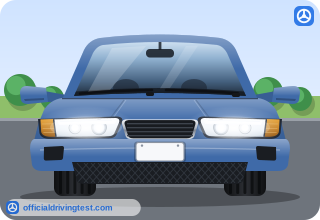
What does using headlights at all times, including during the day, do for your vehicle?
- It reduces glare for other drivers
- It increases your vehicle’s visibility
- It makes your turn signals unnecessary
- It lets you skip using low beams
Show answer
Correct answer: It increases your vehicle’s visibility
Daytime headlights make your vehicle easier for others to see.
Source: Virginia Driver's Manual (DMV 39 (April 27, 2026)), page 22 · Open this page in the manual (Manual page 22)
-
During which hours must you use your headlights?
- Only after it is completely dark
- From sunset to sunrise
- From sunset until midnight
- Only on roads that have no lighting
Show answer
Correct answer: From sunset to sunrise
Headlights are required from sunset to sunrise, and should go on as soon as light begins to fade.
Source: Virginia Driver's Manual (DMV 39 (April 27, 2026)), page 23 · Open this page in the manual (Manual page 23)