Virginia: Sharing the road — Part 2 Practice Test
Questions in this part include: “Before which of these actions should you always check for bicyclists?” · “Which requirements must low speed vehicles meet?”
Independent educational site · not affiliated with any government agency or DMV
Ready? Test yourself
- Instant feedback with an explanation
- Every answer cites its source in the manual
- Your best score is saved on this device
- Keyboard: press 1 to 4 to answer and Enter for the next question
Questions are original and based on the official manual "Virginia Driver's Manual" (DMV 39 (April 27, 2026)), Virginia Department of Motor Vehicles (DMV).
All 21 questions in this practice test
Take the test above first, then use this list to study. Tap “Show answer” to see the correct answer and explanation.
Show the questions and answersHide the questions
-
What should you do when you approach bicyclists?
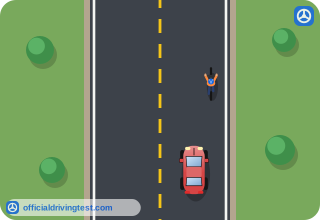
- Speed up to pass them quickly
- Sound your horn as a warning
- Slow down
- Move to the left of the center line
Show answer
Correct answer: Slow down
The manual says to slow down when you approach bicyclists and be prepared to stop suddenly.
Source: Virginia Driver's Manual (DMV 39 (April 27, 2026)), page 20 · Open this page in the manual (Manual page 20)
-
State law requires motorists to pass cyclists with at least how much clearance?
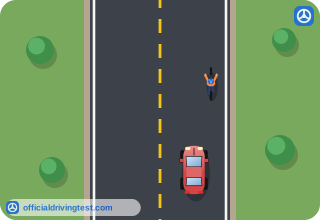
- One foot
- Three feet
- Two feet
- Five feet
Show answer
Correct answer: Three feet
Motorists must leave at least three feet of clearance when passing cyclists.
Source: Virginia Driver's Manual (DMV 39 (April 27, 2026)), page 20 · Open this page in the manual (Manual page 20)
-
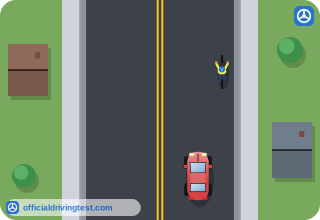
The lane is not wide enough to give a bicyclist three feet of clearance. What must the motorist do to pass?
- Pass in the same lane at a slower speed
- Wait until the bicyclist stops and then pass
- Sound the horn and pass on the shoulder
- Change lanes to pass safely
Show answer
Correct answer: Change lanes to pass safely
If the lane is too narrow for three feet of clearance, the motorist must change lanes to pass safely.
Source: Virginia Driver's Manual (DMV 39 (April 27, 2026)), page 20 · Open this page in the manual (Manual page 20)
-
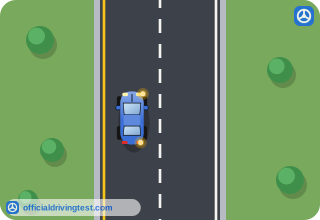
Why should you check your blind spots for bicyclists?
- A bicycle’s small size allows it to slip into your blind spot easily
- Bicyclists are required to ride in the driver’s blind spot
- Bicyclists always travel faster than motor vehicles
- A bicycle is wider than most drivers expect
Show answer
Correct answer: A bicycle’s small size allows it to slip into your blind spot easily
A bicycle is small enough to slip easily into your blind spot.
Source: Virginia Driver's Manual (DMV 39 (April 27, 2026)), page 20 · Open this page in the manual (Manual page 20)
-
Before which of these actions should you always check for bicyclists?
- Turning on your headlights
- Adjusting your seat belt
- Opening your vehicle’s door
- Starting your engine
Show answer
Correct answer: Opening your vehicle’s door
You should check for bicyclists before you pull out, change lanes, turn, back up, open the door or go through an intersection.
Source: Virginia Driver's Manual (DMV 39 (April 27, 2026)), page 20 · Open this page in the manual (Manual page 20)
-
When approaching a motorcyclist, how many times should you look for the motorcycle?
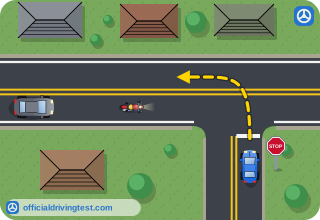
- Once
- Twice
- Three times
- Four times
Show answer
Correct answer: Twice
The manual says to look twice for motorcyclists and to check twice before pulling out into traffic.
Source: Virginia Driver's Manual (DMV 39 (April 27, 2026)), page 20 · Open this page in the manual (Manual page 20)
-
You are following a motorcycle. How should you adjust the following distance rule?
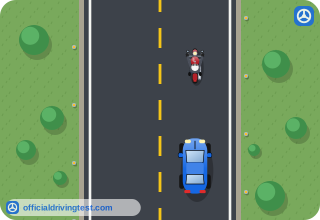
- Subtract a second
- Add three extra seconds
- Keep the same distance as for a car
- Add an extra second
Show answer
Correct answer: Add an extra second
Allow plenty of braking distance by adding one extra second to the following distance rule.
Source: Virginia Driver's Manual (DMV 39 (April 27, 2026)), page 20 · Open this page in the manual (Manual page 20)
-
You are following a motorcycle in inclement weather. What should you do with your following distance?
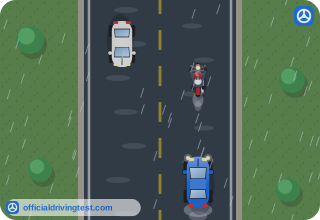
- Double it
- Keep it the same
- Add half a second
- Reduce it by a second
Show answer
Correct answer: Double it
In inclement weather, you double the following distance behind a motorcycle.
Source: Virginia Driver's Manual (DMV 39 (April 27, 2026)), page 20 · Open this page in the manual (Manual page 20)
-
Although a motorcycle is not as wide as the lane, how much of the lane will the rider use as traffic situations and road conditions change?
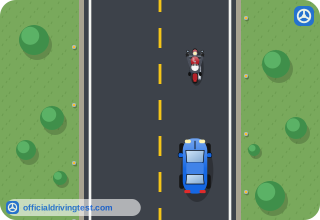
- Only the center of the lane
- Only the left half of the lane
- The entire lane
- Only the right edge of the lane
Show answer
Correct answer: The entire lane
A rider will use the whole lane and may make sudden moves within it.
Source: Virginia Driver's Manual (DMV 39 (April 27, 2026)), page 20 · Open this page in the manual (Manual page 20)
-
Which of these should you never do around a motorcycle?
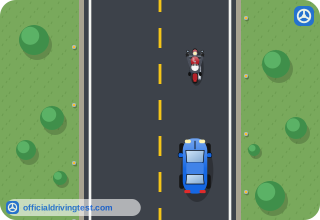
- Follow a motorcycle with extra following distance
- Drive beside a motorcycle in the same lane
- Yield to a motorcycle before you pull out
- Check twice before you pull out in front of a motorcycle
Show answer
Correct answer: Drive beside a motorcycle in the same lane
The manual says never to drive beside a motorcycle in the same lane.
Source: Virginia Driver's Manual (DMV 39 (April 27, 2026)), page 20 · Open this page in the manual (Manual page 20)
-
Why should you yield to motorcycles?
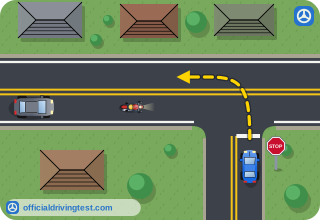
- Motorcycles always have the right-of-way over cars
- Motorcycles cannot stop as quickly as bicycles
- Motorcycle riders are not required to obey traffic signals or signs
- The size of a motorcycle can cause you to misjudge its speed and distance
Show answer
Correct answer: The size of a motorcycle can cause you to misjudge its speed and distance
A motorcycle’s small size makes its speed and distance hard to judge.
Source: Virginia Driver's Manual (DMV 39 (April 27, 2026)), page 20 · Open this page in the manual (Manual page 20)
-
What is the maximum speed range of low speed vehicles?
- 10 to 15 MPH
- 30 to 35 MPH
- 21 to 25 MPH
- 40 to 45 MPH
Show answer
Correct answer: 21 to 25 MPH
Low speed vehicles have a maximum speed ranging from 21 to 25 MPH.
Source: Virginia Driver's Manual (DMV 39 (April 27, 2026)), page 21 · Open this page in the manual (Manual page 21)
-
On which public roads may low speed vehicles be operated?
- Roads with speed limits of 25 MPH or less
- Roads with speed limits of 35 MPH or less
- Roads with speed limits of 45 MPH or less
- Any public road except interstates
Show answer
Correct answer: Roads with speed limits of 35 MPH or less
Low speed vehicles may use public roads with speed limits of 35 MPH or less.
Source: Virginia Driver's Manual (DMV 39 (April 27, 2026)), page 21 · Open this page in the manual (Manual page 21)
-
Who may operate a low speed vehicle on public roads?
- Only licensed drivers who are age 21 or older and have a clean record
- Anyone who is at least 14 years old
- Licensed drivers and learner’s permit holders driving alone
- Licensed drivers, or learner’s permit holders accompanied by a licensed driver
Show answer
Correct answer: Licensed drivers, or learner’s permit holders accompanied by a licensed driver
Licensed drivers and learner’s permit holders accompanied by a licensed driver may operate low speed vehicles.
Source: Virginia Driver's Manual (DMV 39 (April 27, 2026)), page 21 · Open this page in the manual (Manual page 21)
-
Which requirements must low speed vehicles meet?
- Federal safety standards and Virginia’s registration and insurance requirements
- Only Virginia’s passenger vehicle registration and plate requirements
- Only the federal safety standards for motorcycles
- Only the insurance requirements of the owner’s city
Show answer
Correct answer: Federal safety standards and Virginia’s registration and insurance requirements
Low speed vehicles must meet federal safety standards plus Virginia’s registration and insurance requirements.
Source: Virginia Driver's Manual (DMV 39 (April 27, 2026)), page 21 · Open this page in the manual (Manual page 21)
-
Are golf carts classified as low speed vehicles?
- Yes, if they are powered by electricity
- Yes, if they have four wheels
- No, golf carts are not classified as low speed vehicles
- Yes, if they are driven on roads of 35 MPH or less
Show answer
Correct answer: No, golf carts are not classified as low speed vehicles
The manual says golf carts are not classified as low speed vehicles.
Source: Virginia Driver's Manual (DMV 39 (April 27, 2026)), page 21 · Open this page in the manual (Manual page 21)
-
What are the danger areas around trucks, tractor-trailers, buses and RVs where crashes are more likely to occur called?
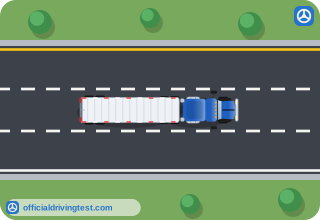
- Safe-Zones
- No-Zones
- Stop-Zones
- Caution-Zones
Show answer
Correct answer: No-Zones
The danger areas around large vehicles are called No-Zones.
Source: Virginia Driver's Manual (DMV 39 (April 27, 2026)), page 21 · Open this page in the manual (Manual page 21)
-
You are driving beside a truck. What does the manual say about the truck driver’s side view mirror?
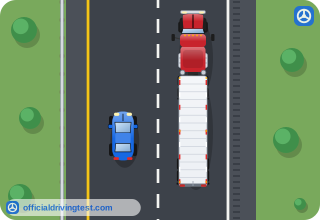
- If you can’t see the driver’s face in it, he can’t see you
- If you can see the truck’s rear wheels, the driver can see you
- It shows the driver every car beside the trailer
- It removes the blind spots on both sides of the truck
Show answer
Correct answer: If you can’t see the driver’s face in it, he can’t see you
If you cannot see the driver’s face in the side view mirror, the driver cannot see you.
Source: Virginia Driver's Manual (DMV 39 (April 27, 2026)), page 21 · Open this page in the manual (Manual page 21)
-
What could happen if you follow too closely in the rear No-Zone and the truck, bus or RV brakes or stops suddenly?
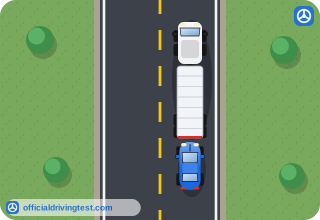
- You could crash into the rear-end of the vehicle
- The driver would see you and move forward
- The vehicle would slide toward your lane
- The brakes of the vehicle would lock up
Show answer
Correct answer: You could crash into the rear-end of the vehicle
In the rear No-Zone you have no place to go if the vehicle stops suddenly, so you could hit its rear end.
Source: Virginia Driver's Manual (DMV 39 (April 27, 2026)), page 21 · Open this page in the manual (Manual page 21)
-
Compared with cars, how much time and room do trucks, buses and RVs need to stop?
- About the same
- Nearly half as much
- Nearly twice as much
- About three times as much
Show answer
Correct answer: Nearly twice as much
These vehicles need nearly twice the time and room to stop as cars.
Source: Virginia Driver's Manual (DMV 39 (April 27, 2026)), page 21 · Open this page in the manual (Manual page 21)
-
How long may a truck and its trailer be?
- As long as 30 feet
- As long as 65 feet
- As long as 45 feet
- As long as 100 feet
Show answer
Correct answer: As long as 65 feet
A truck and its trailer may be as long as 65 feet.
Source: Virginia Driver's Manual (DMV 39 (April 27, 2026)), page 21 · Open this page in the manual (Manual page 21)