Vermont: Pedestrians Practice Test
Yielding to pedestrians at crosswalks, blind pedestrians, children and school zones.
Independent educational site · not affiliated with any government agency or DMV
Ready? Test yourself
- Instant feedback with an explanation
- Every answer cites its source in the manual
- Your best score is saved on this device
- Keyboard: press 1 to 4 to answer and Enter for the next question
Questions are original and based on the official manual "Vermont Driver's Manual" (2025 edition (VN-007 07/2024)), Vermont Department of Motor Vehicles.
All 23 questions in this practice test
Take the test above first, then use this list to study. Tap “Show answer” to see the correct answer and explanation.
Show the questions and answersHide the questions
-
If pedestrians are crossing the street you are turning left into, what must you do?
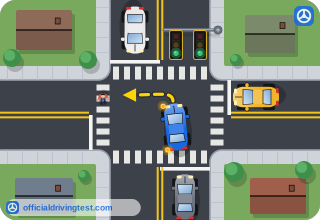
- Sound your horn and continue the turn
- Turn before they reach the middle of the street
- Yield the right-of-way to them
- Stop only if they are in a marked crosswalk
Show answer
Correct answer: Yield the right-of-way to them
A driver turning left must look for pedestrians crossing the street and must yield the right-of-way to them.
Source: Vermont Driver's Manual (2025 edition (VN-007 07/2024)), page 26 · Open this page in the manual (Manual page 26)
-
As you make a right turn, who must you yield to?
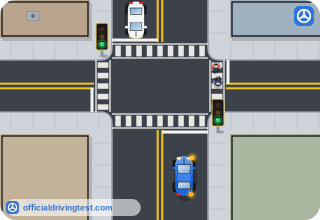
- Any pedestrian or bicyclist
- Only pedestrians in a marked crosswalk
- Only bicyclists in a bike lane
- Only vehicles behind you
Show answer
Correct answer: Any pedestrian or bicyclist
When turning right you must yield to any pedestrian or bicyclist on the right side of the road.
Source: Vermont Driver's Manual (2025 edition (VN-007 07/2024)), page 27 · Open this page in the manual (Manual page 27)
-
Which pedestrians are the most frequent victims in motor vehicle and pedestrian collisions, according to the manual?
- Young, elderly, disabled, or intoxicated pedestrians
- Pedestrians who cross at marked crosswalks
- Pedestrians who walk on the left side of the road
- Pedestrians who carry bags, umbrellas, or other items
Show answer
Correct answer: Young, elderly, disabled, or intoxicated pedestrians
Drivers should be especially alert for young, elderly, disabled, or intoxicated pedestrians, who are hit most often.
Source: Vermont Driver's Manual (2025 edition (VN-007 07/2024)), page 37 · Open this page in the manual (Manual page 37)
-
A vehicle ahead of you has stopped for a pedestrian and the road has two lanes in your direction. What should you do?
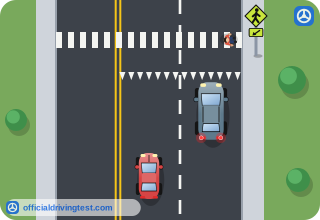
- Do not pass the stopped vehicle
- Pass the stopped vehicle in the other lane if it is clear
- Pass the stopped vehicle slowly while watching for the pedestrian
- Sound your horn and pass the stopped vehicle
Show answer
Correct answer: Do not pass the stopped vehicle
Passing a vehicle that has stopped for a pedestrian is a frequent cause of pedestrian deaths, even when there are two lanes.
Source: Vermont Driver's Manual (2025 edition (VN-007 07/2024)), page 38 · Open this page in the manual (Manual page 38)
-
A pedestrian crosses the street carelessly, for example against a red light or outside a marked crosswalk. What must the driver do?
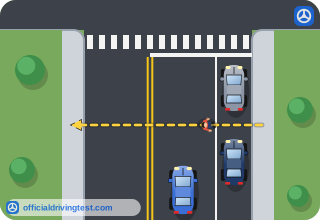
- Continue, because the pedestrian is breaking the law
- Sound the horn and drive on
- Yield to the pedestrian
- Stop only if the pedestrian is in a marked crosswalk
Show answer
Correct answer: Yield to the pedestrian
Even when pedestrians cross carelessly, the driver is still required to yield.
Source: Vermont Driver's Manual (2025 edition (VN-007 07/2024)), page 38 · Open this page in the manual (Manual page 38)
-
What should you NOT do when you are stopped, or waiting to make a turn, at a crosswalk?
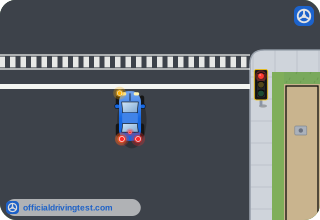
- Keep your foot on the brake while you wait
- Block the crosswalk with all or part of your vehicle
- Keep your turn signal on while you wait
- Watch for pedestrians crossing the side street
Show answer
Correct answer: Block the crosswalk with all or part of your vehicle
Blocking a crosswalk forces pedestrians to go around your vehicle and puts them in a dangerous position.
Source: Vermont Driver's Manual (2025 edition (VN-007 07/2024)), page 38 · Open this page in the manual (Manual page 38)
-
When does the manual tell you to watch for pedestrians because your vehicle is crossing a sidewalk or road shoulder?
- Only when you are entering or leaving a freeway ramp
- Only when you are driving through a school zone area
- Only when a crosswalk is painted across the road ahead
- When entering or leaving an alley, driveway or private road
Show answer
Correct answer: When entering or leaving an alley, driveway or private road
The manual tells drivers to watch for pedestrians whenever they cross a sidewalk or shoulder, such as at an alley, driveway or private road.
Source: Vermont Driver's Manual (2025 edition (VN-007 07/2024)), page 38 · Open this page in the manual (Manual page 38)
-
Where does the manual say not to stop to pick up hitchhikers?
- On the Interstate or its ramps
- In a residential area
- Within a school zone
- On any road with a speed limit above 35 mph
Show answer
Correct answer: On the Interstate or its ramps
The manual says not to stop for hitchhikers on the Interstate or the ramps.
Source: Vermont Driver's Manual (2025 edition (VN-007 07/2024)), page 38 · Open this page in the manual (Manual page 38)
-
A pedestrian with a white cane is crossing, or waiting to cross, the street ahead of you. What must you do?
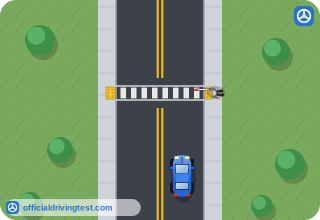
- Slow down and sound your horn
- Pass behind the pedestrian without stopping
- Stop and yield the right-of-way
- Stop only if the pedestrian has stepped off the curb
Show answer
Correct answer: Stop and yield the right-of-way
A pedestrian with a white cane or a guide dog is a blind pedestrian, and the driver must stop and yield the right-of-way.
Source: Vermont Driver's Manual (2025 edition (VN-007 07/2024)), page 38 · Open this page in the manual (Manual page 38)
-
A pedestrian sign may be placed on the road at marked crosswalks. What does it remind drivers of?
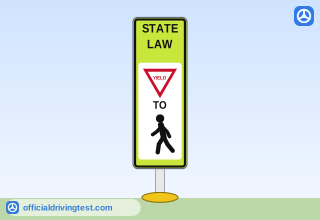
- They are required to yield to pedestrians within crosswalks
- They must stop 50 feet before every crosswalk they see
- They may not sound the horn anywhere near a crosswalk
- They must slow down to 10 mph when near a crosswalk
Show answer
Correct answer: They are required to yield to pedestrians within crosswalks
The sign is a reminder that drivers must yield to pedestrians in the crosswalk.
Source: Vermont Driver's Manual (2025 edition (VN-007 07/2024)), page 38 · Open this page in the manual (Manual page 38)
-
Regular school hours are NOT the only time to expect children at a school. Why?
- School buses make many more trips during the weekend
- After-school and weekend activities often take place there
- Students are only present at schools at night
- Crossing guards work at the school all day long
Show answer
Correct answer: After-school and weekend activities often take place there
Activities after school and on weekends mean children can be present outside regular hours.
Source: Vermont Driver's Manual (2025 edition (VN-007 07/2024)), page 38 · Open this page in the manual (Manual page 38)
-
What should a driver be especially careful about when backing in or out of a driveway?
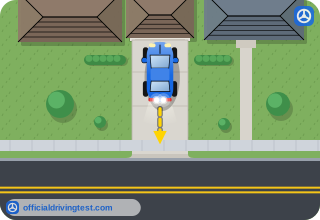
- Other drivers who are following too closely
- Cars parked across the street
- The sun shining into the mirrors
- Children who may run or play behind the vehicle
Show answer
Correct answer: Children who may run or play behind the vehicle
Children may be behind your vehicle, so extra watchfulness is needed when backing.
Source: Vermont Driver's Manual (2025 edition (VN-007 07/2024)), page 39 · Open this page in the manual (Manual page 39)
-
When must a pedestrian NOT leave a curb or other safe waiting place and walk into the path of a vehicle?
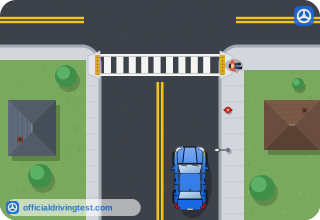
- When the vehicle is so close that it is an immediate hazard
- When the vehicle is a large bus or a heavy truck
- When there is no sidewalk along the road ahead
- When the pedestrian is wearing light colored clothing
Show answer
Correct answer: When the vehicle is so close that it is an immediate hazard
Vehicles cannot stop at once, so a pedestrian must not step in front of a vehicle that is too close.
Source: Vermont Driver's Manual (2025 edition (VN-007 07/2024)), page 39 · Open this page in the manual (Manual page 39)
-
The pedestrian signal is flashing "Don’t Walk" and you have not yet started to cross. What should you do?
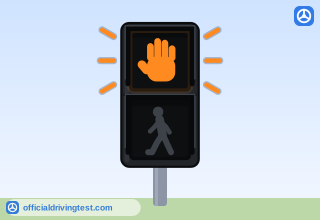
- Cross quickly while the flashing continues
- Cross if no vehicle is turning
- Not start to cross
- Start to cross if the light for traffic is red
Show answer
Correct answer: Not start to cross
The manual says not to start crossing during a flashing "Don’t Walk."
Source: Vermont Driver's Manual (2025 edition (VN-007 07/2024)), page 39 · Open this page in the manual (Manual page 39)
-
You started to cross during the "walk" signal and it now flashes "Don’t Walk." What does the manual say?
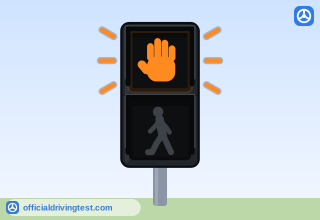
- You must go back to the starting curb
- You will have time to safely complete your crossing
- You must stop where you are until the next walk signal
- You should run to the other side
Show answer
Correct answer: You will have time to safely complete your crossing
A crossing begun during the "walk" signal can be safely completed during the flashing "Don’t Walk."
Source: Vermont Driver's Manual (2025 edition (VN-007 07/2024)), page 39 · Open this page in the manual (Manual page 39)
-
When a pedestrian faces a yellow or red light, when should the pedestrian cross?
- Whenever no vehicles are moving
- As soon as the light turns yellow
- Only if a driver waves the pedestrian across
- Only if a "Walk" sign is showing
Show answer
Correct answer: Only if a "Walk" sign is showing
Facing a yellow or red light, a pedestrian should not cross unless a "Walk" sign is showing.
Source: Vermont Driver's Manual (2025 edition (VN-007 07/2024)), page 39 · Open this page in the manual (Manual page 39)
-
There are no pedestrian signals at an intersection. When does the manual say a pedestrian should cross?
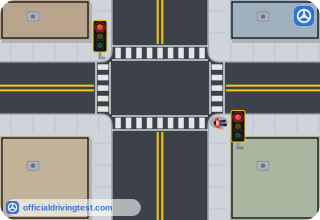
- When the light turns green for traffic going in the same direction
- When the light turns red for all of the traffic at the intersection
- When the light turns yellow for the cross traffic
- Whenever no vehicle is in sight in either direction
Show answer
Correct answer: When the light turns green for traffic going in the same direction
Without pedestrian signals, a pedestrian crosses with the green light for traffic moving the same way.
Source: Vermont Driver's Manual (2025 edition (VN-007 07/2024)), page 39 · Open this page in the manual (Manual page 39)
-
There is no sidewalk along a road. Where should a pedestrian walk?
- On the right side, with traffic coming from behind you
- In the center of the lane, away from both curbs
- As far to the left side of the road as possible, facing traffic
- On the right side, facing the same way as the traffic
Show answer
Correct answer: As far to the left side of the road as possible, facing traffic
Without sidewalks, pedestrians walk on the left, facing approaching traffic.
Source: Vermont Driver's Manual (2025 edition (VN-007 07/2024)), page 39 · Open this page in the manual (Manual page 39)
-
What is the main purpose of crosswalks?
- To give pedestrians the right to stop all traffic at any location
- To encourage pedestrians to cross only where crossings can be made safely
- To mark the places where vehicles are required to park
- To show the places where the speed limit changes
Show answer
Correct answer: To encourage pedestrians to cross only where crossings can be made safely
Crosswalks send pedestrians to certain locations where crossing is safer.
Source: Vermont Driver's Manual (2025 edition (VN-007 07/2024)), page 39 · Open this page in the manual (Manual page 39)
-
What does the manual suggest a pedestrian do when walking at dusk or at night?
- Wear dark clothing so that drivers do not notice you
- Walk in the center of the road ahead of traffic
- Wear headphones so that you stay calm at night
- Wear light colored or reflective clothing and carry a light
Show answer
Correct answer: Wear light colored or reflective clothing and carry a light
Light or reflective clothing and a light make a pedestrian easier for drivers to see.
Source: Vermont Driver's Manual (2025 edition (VN-007 07/2024)), page 39 · Open this page in the manual (Manual page 39)
-
Why does the manual advise pedestrians not to wear headphones, especially in busy areas?
- Being able to hear approaching traffic adds to safety
- Headphones are against the law for all pedestrians
- Headphones block a pedestrian’s view of the signals
- Headphones make the crosswalks unsafe to use
Show answer
Correct answer: Being able to hear approaching traffic adds to safety
Hearing approaching traffic helps pedestrians stay safe.
Source: Vermont Driver's Manual (2025 edition (VN-007 07/2024)), page 39 · Open this page in the manual (Manual page 39)
-
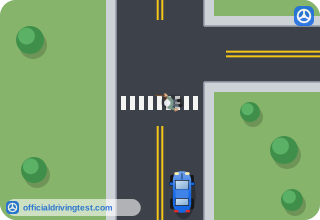
What does the manual say about elderly pedestrians?
- They always cross the street faster than other pedestrians
- They are exempt from the rules about pedestrian signals
- They may not be alert to the dangers of traffic situations
- They never cross against a light or outside a crosswalk
Show answer
Correct answer: They may not be alert to the dangers of traffic situations
The manual advises caution in the presence of elderly pedestrians.
Source: Vermont Driver's Manual (2025 edition (VN-007 07/2024)), page 38 · Open this page in the manual (Manual page 38)
-
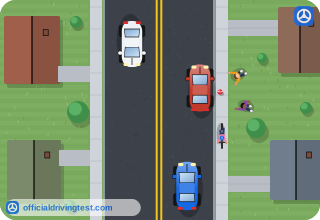
Why should you use caution when children are playing in or near the street?
- Children are required to stop for the drivers nearby
- Children often move quickly and do not check for traffic
- Children always stay on the sidewalk and out of the street
- Children carefully obey all of the traffic signals
Show answer
Correct answer: Children often move quickly and do not check for traffic
Children move quickly and may enter traffic without looking.
Source: Vermont Driver's Manual (2025 edition (VN-007 07/2024)), page 38 · Open this page in the manual (Manual page 38)