Tennessee: Parking rules
Where parking is illegal and the distances to keep, painted curbs, parallel parking, and parking on hills. Split into 3 shorter tests so you're not stuck in one long quiz.
Independent educational site · not affiliated with any government agency or DMV
Choose a part
Parking rules — Part 1
Questions in this part include: “If you are stopping at a curb, within how many inches of the curb should you move for proper parking?”
StartParking rules — Part 2
Questions in this part include: “It is illegal to park within how many feet of a fire hydrant?”
StartParking rules — Part 3
Questions in this part include: “After you complete parallel parking, how far from the curb should your vehicle be at most?”
StartAll 62 Parking rules questions with answers
Choose a part above to take a practice test, or study every question and answer here.
Show the questions and answersHide the questions
-
If you are stopping at a curb, within how many inches of the curb should you move for proper parking?
- 18 inches
- 6 inches
- 12 inches
- 24 inches
Show answer
Correct answer: 18 inches
The manual says to move to within 18 inches of the curb when stopping at a curb for proper parking.
Source: Tennessee Comprehensive Driver License Manual (March 2025 printing), page 29 · Open this page in the manual (Manual page 29)
-
The use of reserved handicapped parking spaces by others than those entitled to them is:
- Allowed for 15 minutes
- Prohibited by law
- Allowed when no other spaces are open
- Allowed for loading only
Show answer
Correct answer: Prohibited by law
The manual says that use of reserved handicapped spaces by others is prohibited by law.
Source: Tennessee Comprehensive Driver License Manual (March 2025 printing), page 40 · Open this page in the manual (Manual page 40)
-
Which of these is another name for a vehicle's parking brake?
- Foot brake
- Service brake
- Emergency brake
- Anti-lock brake
Show answer
Correct answer: Emergency brake
The secondary braking system is commonly called the parking brake, also referred to as the emergency or hand brake.
Source: Tennessee Comprehensive Driver License Manual (March 2025 printing), page 65 · Open this page in the manual (Manual page 65)
-
The manual calls applying the parking brake particularly important when you are parked in which place?
- On level ground in an empty parking lot
- Beside a curb on a level street
- On a steep hill or incline
- In your own garage at night
Show answer
Correct answer: On a steep hill or incline
Using the parking brake is especially important when parked on steep hills or inclines.
Source: Tennessee Comprehensive Driver License Manual (March 2025 printing), page 65 · Open this page in the manual (Manual page 65)
-
The manual calls applying the parking brake particularly important when you are parked near which kind of place?
- A crosswalk where children are present
- An empty field beside a quiet road
- A level street with no pedestrians
- A highway on-ramp with no traffic
Show answer
Correct answer: A crosswalk where children are present
The parking brake is especially important near a crosswalk where children are present, such as at a school or playground.
Source: Tennessee Comprehensive Driver License Manual (March 2025 printing), page 65 · Open this page in the manual (Manual page 65)
-
Where does the manual say you should park so that your vehicle is not a hazard?
- Close to the travel lane so that you can pull out easily
- Shielded from view so other drivers are not distracted
- Where drivers from one direction can see it
- Far enough from any travel lane not to interfere with traffic
Show answer
Correct answer: Far enough from any travel lane not to interfere with traffic
A parked vehicle should be far enough from the travel lane not to interfere with traffic and easily visible from both directions.
Source: Tennessee Comprehensive Driver License Manual (March 2025 printing), page 65 · Open this page in the manual (Manual page 65)
-
When parking next to a roadway outside the city limits, what does the manual say about your wheels?
- Only the front wheels must be off the pavement
- All four wheels must be off the pavement, if possible
- Two wheels must be off the pavement
- Only the right-side wheels must be off the pavement
Show answer
Correct answer: All four wheels must be off the pavement, if possible
Outside city limits, park with all four wheels off the pavement when possible.
Source: Tennessee Comprehensive Driver License Manual (March 2025 printing), page 65 · Open this page in the manual (Manual page 65)
-
When parking next to a roadway outside the city limits, how much road width must you leave for other traffic to pass?
- At least 18 feet
- At least 8 feet
- At least 12 feet
- At least 25 feet
Show answer
Correct answer: At least 18 feet
You must leave at least 18 feet of road width so other traffic can pass your parked vehicle.
Source: Tennessee Comprehensive Driver License Manual (March 2025 printing), page 65 · Open this page in the manual (Manual page 65)
-
When parking next to a roadway outside the city limits, how far in either direction must your vehicle be visible?
- At least 100 feet
- At least 300 feet
- At least 200 feet
- At least 50 feet
Show answer
Correct answer: At least 200 feet
The parked vehicle must be visible for at least 200 feet in both directions.
Source: Tennessee Comprehensive Driver License Manual (March 2025 printing), page 65 · Open this page in the manual (Manual page 65)
-
In cities and towns, what usually marks a “NO PARKING ZONE”?
- Parking meters with expired time
- Signs or yellow painted curbs
- A broken white line along the curb
- Reflective orange posts at the roadside
Show answer
Correct answer: Signs or yellow painted curbs
Signs or yellow painted curbs usually mark a no parking zone in cities and towns.
Source: Tennessee Comprehensive Driver License Manual (March 2025 printing), page 65 · Open this page in the manual (Manual page 65)
-
What does the manual say about leaving the engine running in a parked unattended vehicle?
- It is allowed for up to five minutes
- It is allowed if the doors are locked
- It is allowed in cold weather
- It is against the law
Show answer
Correct answer: It is against the law
Leaving the engine running in a parked, unattended vehicle is against the law.
Source: Tennessee Comprehensive Driver License Manual (March 2025 printing), page 65 · Open this page in the manual (Manual page 65)
-
What should you do with the ignition keys of a parked and unattended vehicle?
- Leave them in the ignition if the doors are locked
- Hide them under the floor mat
- Leave them with a passenger in the vehicle
- Remove them
Show answer
Correct answer: Remove them
The manual says to remove the ignition keys from a parked and unattended vehicle.
Source: Tennessee Comprehensive Driver License Manual (March 2025 printing), page 65 · Open this page in the manual (Manual page 65)
-
What does the manual call a good safety habit when your vehicle is left parked and unattended?
- Leaving the windows down for air
- Locking the doors
- Leaving the interior lights on
- Leaving valuables on the seat
Show answer
Correct answer: Locking the doors
Locking the doors of a vehicle left parked and unattended is a good safety habit.
Source: Tennessee Comprehensive Driver License Manual (March 2025 printing), page 65 · Open this page in the manual (Manual page 65)
-
When you park a vehicle with an automatic transmission, how should you leave it?
- In park, with the parking brake set
- In neutral, with the parking brake off
- In drive, with the parking brake set
- In reverse, with the parking brake off
Show answer
Correct answer: In park, with the parking brake set
The manual says to set the parking brake and leave an automatic in park (a manual in gear).
Source: Tennessee Comprehensive Driver License Manual (March 2025 printing), page 65 · Open this page in the manual (Manual page 65)
-
When you park a vehicle with a manual transmission, how should you leave it?
- In neutral, with the parking brake set
- In gear, with the parking brake set
- In park, with the parking brake off
- In neutral, with the parking brake off
Show answer
Correct answer: In gear, with the parking brake set
The manual says to set the parking brake and leave a manual-transmission vehicle in gear.
Source: Tennessee Comprehensive Driver License Manual (March 2025 printing), page 65 · Open this page in the manual (Manual page 65)
-
What does the manual say about double parking?
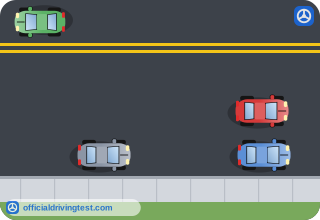
- It is prohibited by law
- It is allowed for up to five minutes
- It is allowed if your flashers are on
- It is allowed while you load or unload
Show answer
Correct answer: It is prohibited by law
Double parking is prohibited by law.
Source: Tennessee Comprehensive Driver License Manual (March 2025 printing), page 65 · Open this page in the manual (Manual page 65)
-
You are parked facing downhill next to a curb. How should you turn your front wheels?
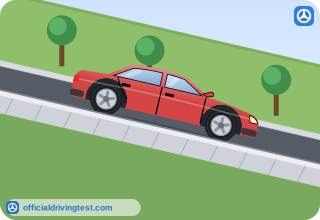
- Away from the curb (left)
- Straight ahead
- Toward the curb (right)
- Toward the center of the road
Show answer
Correct answer: Toward the curb (right)
Turning the wheels toward the curb means that if the car rolls, it rolls into the curb and not the roadway.
Source: Tennessee Comprehensive Driver License Manual (March 2025 printing), page 65 · Open this page in the manual (Manual page 65)
-
You are parked facing uphill next to a curb. How should you turn your front wheels?
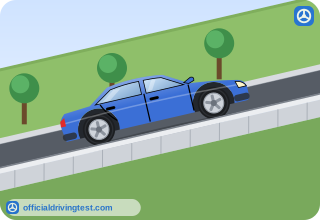
- Toward the curb (right)
- Straight ahead
- Away from the curb (left)
- Toward the center of the road
Show answer
Correct answer: Away from the curb (left)
Turning the wheels left, away from the curb, means a rolling-back car rolls into the curb instead of into traffic.
Source: Tennessee Comprehensive Driver License Manual (March 2025 printing), page 65 · Open this page in the manual (Manual page 65)
-
You are parked facing downhill where there is no curb. How should you turn your front wheels?
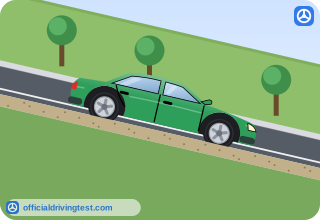
- Toward the edge of the roadway (right)
- Toward the center of the road (left)
- Straight ahead
- Away from the edge of the roadway
Show answer
Correct answer: Toward the edge of the roadway (right)
Turning the wheels toward the edge of the road keeps the vehicle from rolling into traffic if the brake fails.
Source: Tennessee Comprehensive Driver License Manual (March 2025 printing), page 65 · Open this page in the manual (Manual page 65)
-
You are parked facing uphill where there is no curb. What does the manual say about turning your front wheels toward the edge of the roadway (right)?
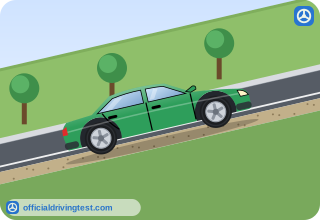
- It lets the car roll back into the center of the road if the brakes fail
- It keeps the front wheels from sinking into a soft shoulder
- It lets the parking brake hold the car without being set
- It lets the car roll away from the center of the road if the brakes fail
Show answer
Correct answer: It lets the car roll away from the center of the road if the brakes fail
Turning the wheels toward the edge of the roadway lets the car roll away from the center of the road if the brakes fail.
Source: Tennessee Comprehensive Driver License Manual (March 2025 printing), page 65 · Open this page in the manual (Manual page 65)
-
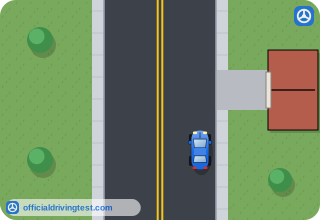
What does the manual say about parking in front of a public or private driveway?
- It is allowed for up to 15 minutes
- It is illegal
- It is allowed on private driveways only
- It is allowed if you stay with the vehicle
Show answer
Correct answer: It is illegal
Parking in front of a public or private driveway is illegal.
Source: Tennessee Comprehensive Driver License Manual (March 2025 printing), page 65 · Open this page in the manual (Manual page 65)
-
What does the manual say about parking on the paved and unpaved portions of an interstate entrance or exit ramp?
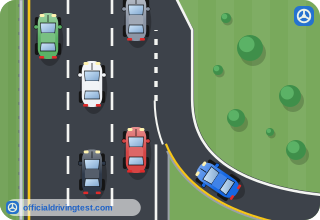
- It is illegal, except when the vehicle is disabled
- It is allowed on the unpaved part of the ramp only
- It is allowed for up to one hour on a wide ramp
- It is allowed if you leave the flashers on
Show answer
Correct answer: It is illegal, except when the vehicle is disabled
Parking on interstate ramps, paved or unpaved, is illegal unless the vehicle is disabled.
Source: Tennessee Comprehensive Driver License Manual (March 2025 printing), page 65 · Open this page in the manual (Manual page 65)
-
It is illegal to park within how many feet of a fire hydrant?
- 5 feet
- 10 feet
- 15 feet
- 25 feet
Show answer
Correct answer: 15 feet
Parking within 15 feet of a fire hydrant is illegal.
Source: Tennessee Comprehensive Driver License Manual (March 2025 printing), page 65 · Open this page in the manual (Manual page 65)
-
It is illegal to park within how many feet of a crosswalk?
- 10 feet
- 20 feet
- 15 feet
- 30 feet
Show answer
Correct answer: 20 feet
Parking within 20 feet of a crosswalk, or in the marked crosswalk area, is illegal.
Source: Tennessee Comprehensive Driver License Manual (March 2025 printing), page 65 · Open this page in the manual (Manual page 65)
-
It is illegal to park within how many feet of a fire station driveway on the same side of the street?
- 10 feet
- 30 feet
- 50 feet
- 20 feet
Show answer
Correct answer: 20 feet
Parking within 20 feet of a fire station driveway on the same side of the street is illegal.
Source: Tennessee Comprehensive Driver License Manual (March 2025 printing), page 65 · Open this page in the manual (Manual page 65)
-
It is illegal to park within how many feet of a fire station driveway when you are on the other side of the street?
- 30 feet
- 50 feet
- 100 feet
- 75 feet
Show answer
Correct answer: 75 feet
On the other side of the street, parking within 75 feet of the fire station driveway is illegal.
Source: Tennessee Comprehensive Driver License Manual (March 2025 printing), page 65 · Open this page in the manual (Manual page 65)
-
It is illegal to park within how many feet of a traffic signal, stop sign or other traffic control device?
- 15 feet
- 30 feet
- 20 feet
- 50 feet
Show answer
Correct answer: 30 feet
Parking within 30 feet of a traffic signal, stop sign or other traffic control device is illegal.
Source: Tennessee Comprehensive Driver License Manual (March 2025 printing), page 65 · Open this page in the manual (Manual page 65)
-
It is illegal to park within how many feet of a railroad crossing?
- 15 feet
- 30 feet
- 50 feet
- 100 feet
Show answer
Correct answer: 50 feet
Parking within 50 feet of a railroad crossing is illegal.
Source: Tennessee Comprehensive Driver License Manual (March 2025 printing), page 65 · Open this page in the manual (Manual page 65)
-
What does the manual say about parking on a sidewalk?
- It is illegal
- It is allowed if pedestrians can pass
- It is allowed for up to 15 minutes
- It is allowed where there is no curb
Show answer
Correct answer: It is illegal
Parking on a sidewalk is illegal.
Source: Tennessee Comprehensive Driver License Manual (March 2025 printing), page 65 · Open this page in the manual (Manual page 65)
-
What does the manual say about parking upon any bridge or within a tunnel?
- It is allowed in the right lane only
- It is illegal
- It is allowed if your flashers are on
- It is allowed for up to five minutes
Show answer
Correct answer: It is illegal
Parking upon any bridge or within a tunnel is illegal.
Source: Tennessee Comprehensive Driver License Manual (March 2025 printing), page 65 · Open this page in the manual (Manual page 65)
-
What does the manual say about parking on the shoulder of an interstate?
- It is allowed for up to 15 minutes
- It is allowed in daylight hours only
- It is allowed if you stay inside the vehicle
- It is illegal, except in an emergency
Show answer
Correct answer: It is illegal, except in an emergency
Parking on the shoulder of any interstate is illegal except for an emergency situation.
Source: Tennessee Comprehensive Driver License Manual (March 2025 printing), page 65 · Open this page in the manual (Manual page 65)
-
What does the manual say about parking within an intersection?
- It is illegal
- It is allowed if you stay with the vehicle
- It is allowed on one-way streets
- It is allowed for up to five minutes
Show answer
Correct answer: It is illegal
Parking within an intersection is illegal.
Source: Tennessee Comprehensive Driver License Manual (March 2025 printing), page 65 · Open this page in the manual (Manual page 65)
-
Where signs prohibit stopping or standing, what does the manual say about parking there?
- It is allowed if you stay with the vehicle
- It is allowed only for loading or unloading
- It is illegal
- It is allowed after dark
Show answer
Correct answer: It is illegal
Parking is illegal where official signs prohibit stopping or standing.
Source: Tennessee Comprehensive Driver License Manual (March 2025 printing), page 65 · Open this page in the manual (Manual page 65)
-
What does a white painted curb mean?
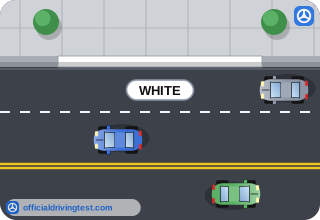
- Stop only long enough to load or unload and stay with your car
- Do not stop, stand or park there under any condition
- Stop only long enough to pick up or drop off passengers
- Park for any length of time during daylight hours
Show answer
Correct answer: Stop only long enough to pick up or drop off passengers
A white curb allows stopping only long enough to pick up or drop off passengers.
Source: Tennessee Comprehensive Driver License Manual (March 2025 printing), page 66 · Open this page in the manual (Manual page 66)
-
What does a yellow painted curb mean?
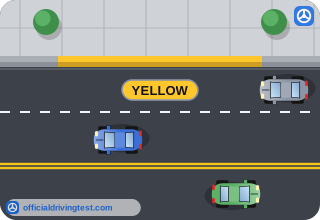
- Stop only long enough to load or unload, and stay with your car
- Stop only long enough to pick up or drop off passengers
- Do not stop, stand or park there under any condition
- Park for any length of time after business hours
Show answer
Correct answer: Stop only long enough to load or unload, and stay with your car
A yellow curb allows stopping only long enough to load or unload, and you must stay with your car.
Source: Tennessee Comprehensive Driver License Manual (March 2025 printing), page 66 · Open this page in the manual (Manual page 66)
-
What does a red painted curb mean?
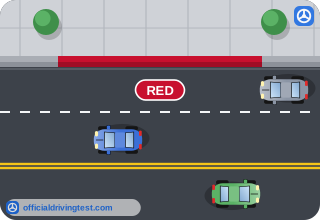
- Stop only long enough to pick up or drop off passengers
- Stop only long enough to load or unload and stay with your car
- Park only if you stay with your vehicle
- Do not stop, stand or park there under any condition
Show answer
Correct answer: Do not stop, stand or park there under any condition
A red curb means you may not stop, stand or park there under any condition.
Source: Tennessee Comprehensive Driver License Manual (March 2025 printing), page 66 · Open this page in the manual (Manual page 66)
-
At the start of parallel parking, you stop even with the car in front of the open space. Where should your rear bumper be?
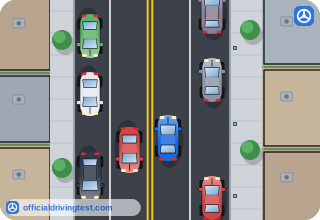
- One car length past the other car's bumper
- Even with the bumper of the other parked car
- Touching the other car's bumper
- Even with the curb at the end of the space
Show answer
Correct answer: Even with the bumper of the other parked car
In step 1 your rear bumper should line up with the bumper of the other parked car.
Source: Tennessee Comprehensive Driver License Manual (March 2025 printing), page 66 · Open this page in the manual (Manual page 66)
-
When you stop beside the other car to begin parallel parking, how close may your vehicle be to it?
- No closer than two feet
- No closer than six inches
- No closer than five feet
- No closer than one foot
Show answer
Correct answer: No closer than two feet
Your vehicle should not be any closer than two feet from the other vehicle at the start.
Source: Tennessee Comprehensive Driver License Manual (March 2025 printing), page 66 · Open this page in the manual (Manual page 66)
-
When you begin backing into a parallel parking space, how do you turn the steering wheel?
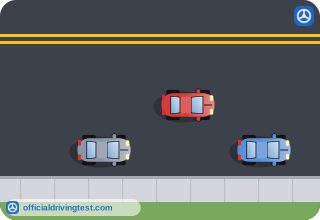
- Sharply to the left
- Slightly to the left
- Sharply to the right
- Keep it straight
Show answer
Correct answer: Sharply to the right
In step 2 you back very slowly with the steering wheel turned sharply to the right.
Source: Tennessee Comprehensive Driver License Manual (March 2025 printing), page 66 · Open this page in the manual (Manual page 66)
-
While backing into a parallel parking space with the wheel turned sharply right, you turn until the car is at about what angle with the street?
- 15 degrees
- 45 degrees
- 30 degrees
- 90 degrees
Show answer
Correct answer: 45 degrees
You turn until the car is at about a 45-degree angle with the street.
Source: Tennessee Comprehensive Driver License Manual (March 2025 printing), page 66 · Open this page in the manual (Manual page 66)
-
When backing into a parallel space, when should you quickly straighten the front wheels and back straight?
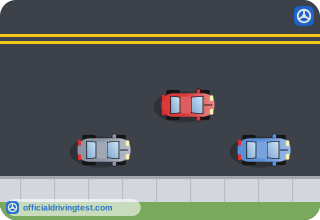
- When the rear bumper touches the curb
- When the car is parallel to the curb
- When your front bumper is even with the other car’s back bumper
- As the front passenger side door passes the rear bumper of the other car
Show answer
Correct answer: As the front passenger side door passes the rear bumper of the other car
You straighten the front wheels as the front passenger door passes the other car’s rear bumper, then keep backing straight.
Source: Tennessee Comprehensive Driver License Manual (March 2025 printing), page 66 · Open this page in the manual (Manual page 66)
-
While parallel parking, your front bumper is even with the other car’s back bumper. What should you do?
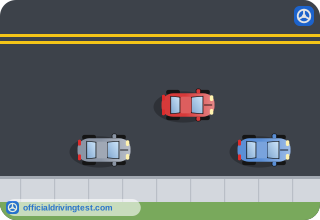
- Turn the wheels sharply to the right and stop
- Straighten the wheels and back up straight
- Shift to drive and pull straight forward
- Turn the wheels sharply and rapidly to the left
Show answer
Correct answer: Turn the wheels sharply and rapidly to the left
In step 3, when the front bumper lines up with the other car’s back bumper, you turn the wheels sharply and rapidly left.
Source: Tennessee Comprehensive Driver License Manual (March 2025 printing), page 66 · Open this page in the manual (Manual page 66)
-
What is the last step of parallel parking after the wheels have been turned left?
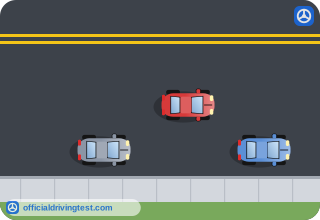
- Turn the steering wheel sharply to the left and back up to the curb
- Turn the wheel sharply right and pull slowly toward the curb
- Straighten the wheels and stop with the rear wheels on the curb
- Keep the wheels turned left and pull forward until the car stops
Show answer
Correct answer: Turn the wheel sharply right and pull slowly toward the curb
Step 4 is to turn the wheel sharply right and pull slowly toward the curb, adjusting until the car is centered in the space.
Source: Tennessee Comprehensive Driver License Manual (March 2025 printing), page 66 · Open this page in the manual (Manual page 66)
-
After you complete parallel parking, how far from the curb should your vehicle be at most?
- No farther than 6 inches
- No farther than 12 inches
- No farther than 18 inches
- No farther than 3 feet
Show answer
Correct answer: No farther than 18 inches
The vehicle should be no farther from the curb than 18 inches when the maneuver is complete.
Source: Tennessee Comprehensive Driver License Manual (March 2025 printing), page 66 · Open this page in the manual (Manual page 66)
-
Before opening the driver side door to get out after parallel parking, what should you do?
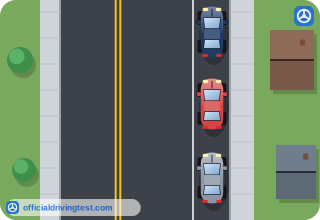
- Check the traffic
- Turn off the hazard lights
- Shift into reverse
- Roll down the window
Show answer
Correct answer: Check the traffic
Check traffic before opening the driver side door, wait for it to pass, then get out quickly and shut the door.
Source: Tennessee Comprehensive Driver License Manual (March 2025 printing), page 66 · Open this page in the manual (Manual page 66)
-
What does the international symbol of access on reserved parking signs, placards and license plates stand for?
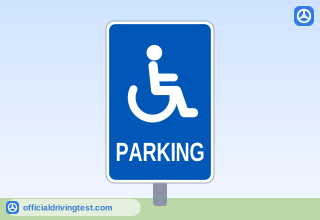
- A vehicle that may be parked for loading only
- A parking space reserved for official vehicles
- A person who is a veteran of the armed forces
- A person with a physical disability
Show answer
Correct answer: A person with a physical disability
The handicap parking symbol is the international symbol of access for persons with a physical disability.
Source: Tennessee Comprehensive Driver License Manual (March 2025 printing), page 66 · Open this page in the manual (Manual page 66)
-
What is the penalty for improperly parking in a space reserved for a person with a physical disability?
- A misdemeanor punishable by a $100 fine
- A misdemeanor punishable by a $50 fine
- A misdemeanor punishable by a $250 fine
- A warning for a first offense only
Show answer
Correct answer: A misdemeanor punishable by a $100 fine
Improper parking there is a misdemeanor punishable by a $100 fine, and the vehicle could be towed.
Source: Tennessee Comprehensive Driver License Manual (March 2025 printing), page 66 · Open this page in the manual (Manual page 66)
-
When are parking meter regulations usually in effect?
- At all hours of every day
- Only on weekdays before noon
- During posted days and hours
- Only when the meter shows time left
Show answer
Correct answer: During posted days and hours
Meter regulations are usually in effect during the posted days and hours.
Source: Tennessee Comprehensive Driver License Manual (March 2025 printing), page 66 · Open this page in the manual (Manual page 66)
-
What may happen if you exceed a parking meter's time limit or fail to pay the meter fee?
- Your license may be suspended on the spot
- A parking ticket, and the vehicle may be towed
- You must appear in court the following day
- Points are added to your driving record
Show answer
Correct answer: A parking ticket, and the vehicle may be towed
Exceeding the limit or not paying the meter fee can bring a parking ticket, and the vehicle may be towed.
Source: Tennessee Comprehensive Driver License Manual (March 2025 printing), page 66 · Open this page in the manual (Manual page 66)
-
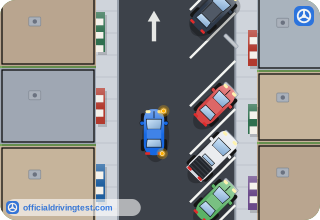
When entering an angle parking space on your right, what should you watch for?
- Traffic ahead only
- Traffic behind only
- Traffic on the left side only
- Traffic both ahead and behind
Show answer
Correct answer: Traffic both ahead and behind
Watch for traffic both ahead and behind, then signal and begin slowing down.
Source: Tennessee Comprehensive Driver License Manual (March 2025 printing), page 66 · Open this page in the manual (Manual page 66)
-
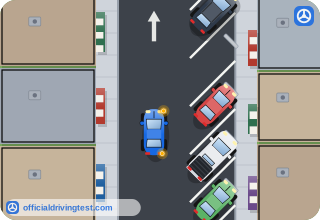
When you enter an angle parking space, what must you make sure about the rear of your car?
- It will touch the curb first
- It is closer to the center of the lot
- It is turned toward the oncoming traffic
- It will clear the parked cars
Show answer
Correct answer: It will clear the parked cars
Before turning in, make sure the rear of your car will clear the parked cars.
Source: Tennessee Comprehensive Driver License Manual (March 2025 printing), page 67 · Open this page in the manual (Manual page 67)
-
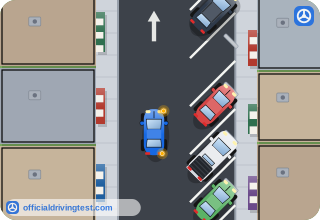
How do you finish entering an angle parking space?
- Enter slowly with the wheels straight and turn sharply at the end
- Steer sharply into the space, then straighten the wheels to center the car
- Steer in a wide arc and keep the wheels turned until you stop
- Drive in straight and then back to the center of the space
Show answer
Correct answer: Steer sharply into the space, then straighten the wheels to center the car
You steer sharply into the space and then straighten the wheels, centering the car in the space.
Source: Tennessee Comprehensive Driver License Manual (March 2025 printing), page 67 · Open this page in the manual (Manual page 67)
-
What should you do before backing out of an angle parking space?
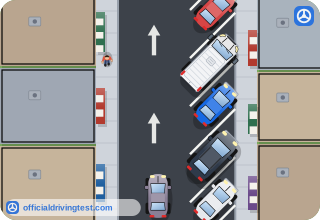
- Sound your horn three times before you move
- Turn on your hazard flashers and wait
- Walk around to make sure nothing is in your way
- Let the engine warm up for a minute or so
Show answer
Correct answer: Walk around to make sure nothing is in your way
Before backing out of an angle space, walk around the vehicle to check that nothing is in the way.
Source: Tennessee Comprehensive Driver License Manual (March 2025 printing), page 67 · Open this page in the manual (Manual page 67)
-
When you back out of an angle parking space, what should you remember about the front of your car?
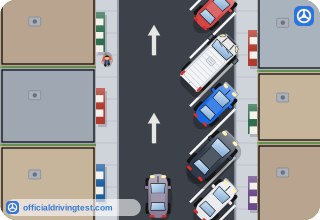
- It will swing opposite to the direction of the turn
- It will swing in the same direction as the turn
- It will stay in line with the parked cars
- It will drop lower as the car moves back
Show answer
Correct answer: It will swing opposite to the direction of the turn
The front of the car swings opposite to the direction of the turn when backing out of an angle space.
Source: Tennessee Comprehensive Driver License Manual (March 2025 printing), page 67 · Open this page in the manual (Manual page 67)
-
When backing out of an angle parking space, how should you move your car back?
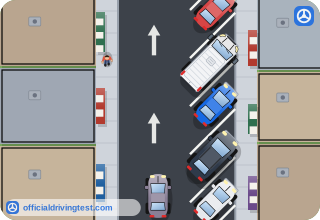
- Quickly, to clear the lane before traffic arrives
- Slowly, making sure traffic is clear in the backing lane
- At a steady speed that matches the traffic in the lane
- Slowly, but only after you sound the horn twice
Show answer
Correct answer: Slowly, making sure traffic is clear in the backing lane
It is hard to see oncoming traffic, so back slowly and be sure the lane is clear.
Source: Tennessee Comprehensive Driver License Manual (March 2025 printing), page 67 · Open this page in the manual (Manual page 67)
-
When backing out of an angle parking space, why should you maintain a cautious speed?
- So the parked cars do not hide you from view
- So you can avoid using the brake pedal at all
- So the front of the car stays in line with the lane
- So you can yield to pedestrians or oncoming vehicles
Show answer
Correct answer: So you can yield to pedestrians or oncoming vehicles
A cautious speed lets you yield to pedestrians or oncoming vehicles if necessary.
Source: Tennessee Comprehensive Driver License Manual (March 2025 printing), page 67 · Open this page in the manual (Manual page 67)
-
When you can see past the tops of the cars parked next to you while backing out of an angle space, what should you do?
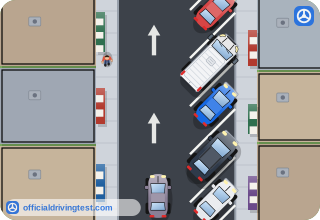
- Stop and look again, back and to each side
- Speed up to get clear of the parked cars
- Turn the wheels fully and keep backing up
- Sound the horn and keep backing slowly
Show answer
Correct answer: Stop and look again, back and to each side
Once you can see past the parked cars, stop and look again for other drivers behind and to each side.
Source: Tennessee Comprehensive Driver License Manual (March 2025 printing), page 67 · Open this page in the manual (Manual page 67)
-
When backing out of an angle parking space, how long do you back while turning?
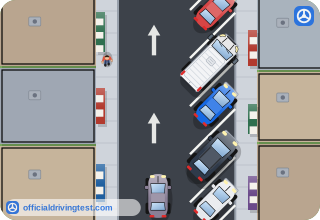
- Until your rear bumper reaches the center of the traffic lane
- Until your right front wheel clears the car parked on the right
- Until your left front wheel passes the car parked on the left
- Until the car is at a 45-degree angle to the traffic lane
Show answer
Correct answer: Until your left front wheel passes the car parked on the left
You keep backing and turning until your left front wheel passes the rear bumper of the car on the left, then straighten the wheels.
Source: Tennessee Comprehensive Driver License Manual (March 2025 printing), page 67 · Open this page in the manual (Manual page 67)
-
As the car comes back into the lane for traffic when you back out of an angle space, what should you do with the wheels?
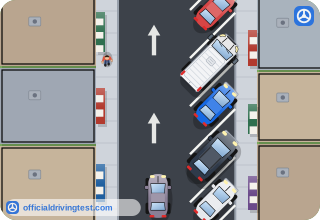
- Turn them fully to the left
- Turn them fully to the right
- Straighten them
- Lock them toward the curb
Show answer
Correct answer: Straighten them
The wheels are straightened as the car comes back into the traffic lane.
Source: Tennessee Comprehensive Driver License Manual (March 2025 printing), page 67 · Open this page in the manual (Manual page 67)
-
When is it legal to park a motor vehicle on an entrance or exit ramp of a highway?
- When the driver stays with the vehicle
- When it is on the unpaved part of the ramp
- Only when the vehicle is disabled
- When the stop lasts less than 15 minutes
Show answer
Correct answer: Only when the vehicle is disabled
Parking on any part of an entrance or exit ramp, paved or unpaved, attended or not, is illegal unless the vehicle is disabled.
Source: Tennessee Comprehensive Driver License Manual (March 2025 printing), page 70 · Open this page in the manual (Manual page 70)
-
When is parking on the shoulder of the interstate allowed?
- Only in cases of emergency
- For a rest of 15 minutes or less
- Whenever your flashers are on
- When you want to check a map
Show answer
Correct answer: Only in cases of emergency
Parking on the interstate shoulder is prohibited except in an emergency.
Source: Tennessee Comprehensive Driver License Manual (March 2025 printing), page 71 · Open this page in the manual (Manual page 71)
-
Why should you not leave your headlights on when parked at night, even briefly?
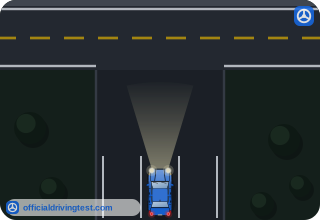
- They can blind approaching drivers just as when moving
- They turn off automatically after a few minutes
- They are only a problem on interstate highways
- They make your car harder to see from behind
Show answer
Correct answer: They can blind approaching drivers just as when moving
Parked headlights are just as likely to blind approaching drivers as moving ones, and they can confuse drivers about where the road is.
Source: Tennessee Comprehensive Driver License Manual (March 2025 printing), page 75 · Open this page in the manual (Manual page 75)