South Dakota: Emergencies and winter driving — Part 2 Practice Test
Questions in this part include: “Where should you stop after a tire blowout?” · “What should you do before driving again after your accelerator pedal stuck?”
Independent educational site · not affiliated with any government agency or DMV
Ready? Test yourself
- Instant feedback with an explanation
- Every answer cites its source in the manual
- Your best score is saved on this device
- Keyboard: press 1 to 4 to answer and Enter for the next question
Questions are original and based on the official manual "South Dakota Driver License Manual" (Revised 11/2024), South Dakota Department of Public Safety.
All 18 questions in this practice test
Take the test above first, then use this list to study. Tap “Show answer” to see the correct answer and explanation.
Show the questions and answersHide the questions
-
If your brakes stop working while you are driving, how should you apply the parking brake?
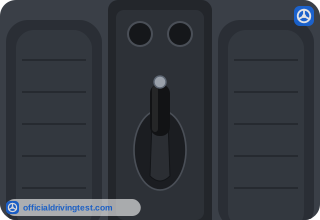
- Quickly and fully, to stop as fast as possible
- Slowly, so you do not lock the rear wheels and cause a skid
- Only after you have reached the shoulder
- Only after you shift into neutral and turn off the engine
Show answer
Correct answer: Slowly, so you do not lock the rear wheels and cause a skid
Applying the parking brake slowly avoids locking the rear wheels; be ready to release it if the vehicle skids.
Source: South Dakota Driver License Manual (Revised 11/2024), page 58
-
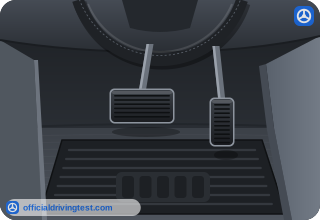
If the parking brake does not stop a vehicle whose brakes have failed, what should you do?
- Keep driving slowly in the right lane with the flashers on
- Shift into reverse to stop the vehicle
- Turn off the engine and look for a safe place to slow to a stop
- Drive to the nearest repair shop at low speed
Show answer
Correct answer: Turn off the engine and look for a safe place to slow to a stop
The manual says to turn off the engine and find a safe place to slow down and stop off the roadway; never keep driving without working brakes.
Source: South Dakota Driver License Manual (Revised 11/2024), page 58
-
What happens when a front tire blows out?
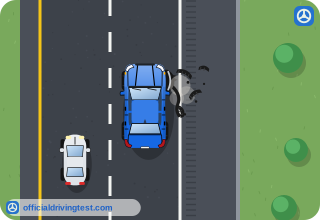
- The vehicle pulls sharply in the direction of the blowout
- The vehicle wobbles but does not pull to either side
- The vehicle pulls sharply away from the blowout
- The vehicle speeds up and the steering wheel locks
Show answer
Correct answer: The vehicle pulls sharply in the direction of the blowout
A front tire blowout makes the vehicle pull sharply toward the side of the blown tire.
Source: South Dakota Driver License Manual (Revised 11/2024), page 58
-
What happens when a rear tire blows out?
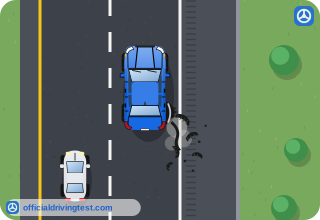
- The vehicle wobbles, shakes, and pulls some in the direction of the blowout
- The vehicle pulls sharply in the opposite direction of the blowout
- The vehicle speeds up and the steering wheel locks in place
- The vehicle keeps straight with no change in how it feels
Show answer
Correct answer: The vehicle wobbles, shakes, and pulls some in the direction of the blowout
A rear blowout makes the vehicle wobble and shake and pull somewhat toward the blown tire.
Source: South Dakota Driver License Manual (Revised 11/2024), page 58
-
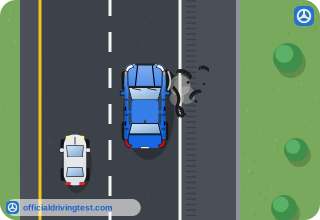
If a tire blows out or suddenly goes flat, how should you handle the steering wheel?
- Steer sharply toward the shoulder
- Loosen your grip so the wheel moves freely
- Grip it firmly and keep the vehicle going straight
- Turn it back and forth to find the grip
Show answer
Correct answer: Grip it firmly and keep the vehicle going straight
You hold the wheel firmly and keep the vehicle going straight after a blowout.
Source: South Dakota Driver License Manual (Revised 11/2024), page 58
-
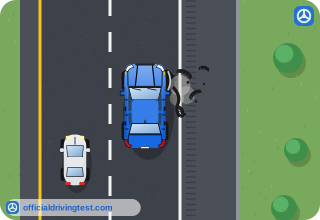
After a tire blowout, what should you do about braking?
- Brake hard right away so the vehicle stops as quickly as it can
- Do not brake; let the vehicle slow itself, or brake gently if needed
- Brake firmly and steer toward the shoulder at once
- Pump the brake pedal until the vehicle comes to a stop
Show answer
Correct answer: Do not brake; let the vehicle slow itself, or brake gently if needed
The manual says not to brake after a blowout, but to let the vehicle slow on its own or brake gently if needed.
Source: South Dakota Driver License Manual (Revised 11/2024), page 58
-
Where should you stop after a tire blowout?
- In the nearest travel lane so other drivers can see you
- Anywhere on the road, as quickly as possible
- In the left lane with the turn signal on
- Off the road in a safe place with the emergency flashers on
Show answer
Correct answer: Off the road in a safe place with the emergency flashers on
After a blowout you should not stop on the road if you can avoid it; pull off in a safe place and turn on the emergency flashers.
Source: South Dakota Driver License Manual (Revised 11/2024), page 58
-
The engine shuts off while you are driving. What should you expect about the steering wheel?
- It will lock and you will not be able to turn it at all
- It will turn more easily than usual because the engine is off
- It will turn only in the direction you were already going
- It may be difficult to turn, but you can still turn it
Show answer
Correct answer: It may be difficult to turn, but you can still turn it
After a power failure the steering wheel may be hard to turn, but you keep control by gripping it firmly.
Source: South Dakota Driver License Manual (Revised 11/2024), page 58
-
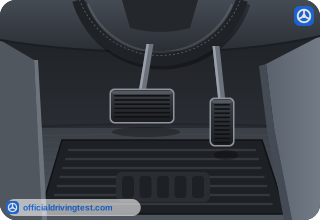
The engine shuts off while you are driving. How should you brake?
- Hard, to stop as quickly as possible
- With steady pressure on the pedal, not hard
- Not at all until the vehicle rolls to a stop
- By pumping the pedal rapidly
Show answer
Correct answer: With steady pressure on the pedal, not hard
The manual says not to brake hard but to use steady pressure to slow down, then pull off the roadway.
Source: South Dakota Driver License Manual (Revised 11/2024), page 58
-
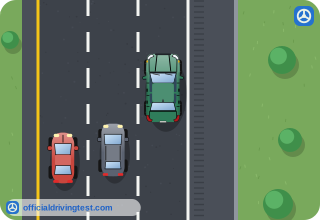
You cannot restart the engine after it shut off while driving. What should you do?
- Keep trying to restart it until the battery is completely dead
- Turn off the flashers and wait for traffic to pass by
- Raise the hood, turn on the emergency flashers, and call for help
- Roll to the center of the road so others can see you
Show answer
Correct answer: Raise the hood, turn on the emergency flashers, and call for help
If the engine will not restart, raising the hood and using the emergency flashers warns others while you call for help.
Source: South Dakota Driver License Manual (Revised 11/2024), page 58
-
The vehicle is accelerating out of control. What should you do?
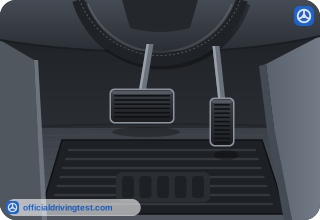
- Turn off the engine, shift to neutral, and search for an escape path
- Brake as hard as you can and keep the engine running until it stops
- Shift into park and steer toward the shoulder
- Pump the accelerator pedal and keep steering straight
Show answer
Correct answer: Turn off the engine, shift to neutral, and search for an escape path
For a stuck accelerator, the manual says to turn off the engine, shift to neutral, and look for an escape path.
Source: South Dakota Driver License Manual (Revised 11/2024), page 58
-
What should you do before driving again after your accelerator pedal stuck?
- Have the pedal repaired at a service center
- Drive only on roads with low speed limits
- Wait until the engine has cooled down
- Replace all four tires
Show answer
Correct answer: Have the pedal repaired at a service center
The pedal should be repaired at a service center before the vehicle is driven again.
Source: South Dakota Driver License Manual (Revised 11/2024), page 58
-
If your vehicle breaks down and you must stop, where should you get it?
- Into the right travel lane near the curb
- Onto the center line so others can see it
- Off the road and away from traffic
- Just over a hill or around a curve
Show answer
Correct answer: Off the road and away from traffic
The manual says to get the vehicle off the road and away from traffic.
Source: South Dakota Driver License Manual (Revised 11/2024), page 58
-
Your vehicle breaks down and you must stop. What should you turn on to show it is disabled?
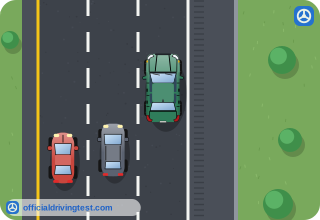
- The high beams
- The emergency flashers
- The right turn signal only
- The interior light only
Show answer
Correct answer: The emergency flashers
The emergency flashers show other drivers that the vehicle is disabled.
Source: South Dakota Driver License Manual (Revised 11/2024), page 58
-
How far behind a disabled vehicle should you place emergency flares?
- About 25 to 50 feet
- About 75 to 100 feet
- About 400 to 500 feet
- About 200 to 300 feet
Show answer
Correct answer: About 200 to 300 feet
Flares placed about 200 to 300 feet behind the vehicle give other drivers time to change lanes.
Source: South Dakota Driver License Manual (Revised 11/2024), page 58
-
What does the manual say to try first when the headlights suddenly go out?
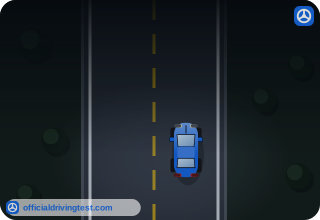
- Stop in the lane and wait for help
- Turn on the high beams
- Speed up to leave the dark area
- Try the headlight switch a few times
Show answer
Correct answer: Try the headlight switch a few times
The first step for headlight failure is to try the headlight switch a few times.
Source: South Dakota Driver License Manual (Revised 11/2024), page 58
-
The headlights went out and trying the switch did not help. What should you put on if possible?
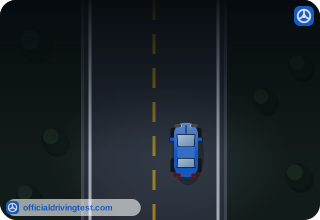
- Only the parking lights, since they use little power
- The emergency flashers, turn signals, or fog lights
- Only the interior lights inside the vehicle
- Nothing, so that the battery is saved
Show answer
Correct answer: The emergency flashers, turn signals, or fog lights
If the switch does not work, you use the emergency flashers, turn signals, or fog lights if possible.
Source: South Dakota Driver License Manual (Revised 11/2024), page 58
-
When your headlights go out, how soon should you pull off the road?
- Only after you reach a repair shop
- At the next exit
- As soon as possible
- Only if it is raining or snowing
Show answer
Correct answer: As soon as possible
The manual says to pull off the road as soon as possible after headlight failure.
Source: South Dakota Driver License Manual (Revised 11/2024), page 58