South Dakota: Emergencies and winter driving
Braking with and without ABS, skids, blowouts, brake failure, what to do after a crash, and driving on snow and ice. Split into 4 shorter tests so you're not stuck in one long quiz.
Independent educational site · not affiliated with any government agency or DMV
Choose a part
Emergencies and winter driving — Part 1
Questions in this part include: “Which three options does the manual give for avoiding a crash or reducing its impact?”
StartEmergencies and winter driving — Part 2
Questions in this part include: “Where should you stop after a tire blowout?”
StartEmergencies and winter driving — Part 3
Questions in this part include: “What must you do if you are involved in an accident?”
StartEmergencies and winter driving — Part 4
Questions in this part include: “When may you move an injured person?”
StartAll 73 Emergencies and winter driving questions with answers
Choose a part above to take a practice test, or study every question and answer here.
Show the questions and answersHide the questions
-
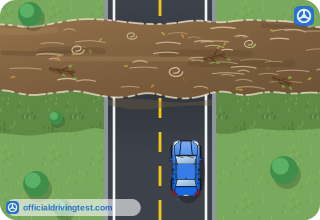
What should you do if you see a flooded roadway?
- Drive through slowly in a low gear
- Find another route to your destination
- Drive through quickly to avoid stalling
- Follow the vehicle ahead through the water
Show answer
Correct answer: Find another route to your destination
The manual says not to drive through large bodies of standing water on a road.
Source: South Dakota Driver License Manual (Revised 11/2024), page 50
-
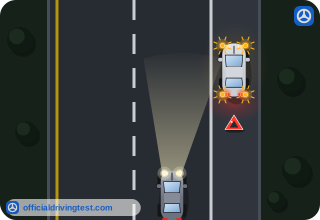
Why should you place emergency flares or triangles behind a broken-down vehicle?
- So other drivers can change lanes if necessary
- So the police arrive at the scene sooner
- So the vehicle can be towed free
- So you can leave the vehicle unlocked
Show answer
Correct answer: So other drivers can change lanes if necessary
Many crashes occur because a driver did not see a stalled vehicle until too late.
Source: South Dakota Driver License Manual (Revised 11/2024), page 55
-
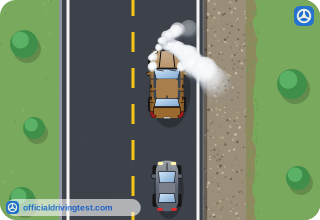
If you must stop because of vehicle trouble, what should you turn on?
- The 4-way emergency flashers
- The high beams
- The parking lights only
- The windshield wipers and fan
Show answer
Correct answer: The 4-way emergency flashers
The flashers show other drivers that you are having trouble.
Source: South Dakota Driver License Manual (Revised 11/2024), page 55
-
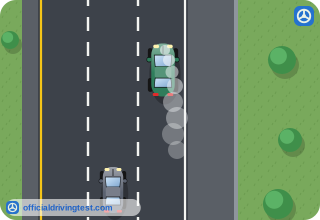
If you cannot get completely off the road with vehicle trouble, where should you try to stop?
- Just over a hill
- Just around a curve
- Where other drivers have a clear view of the vehicle
- In the lane right next to the curb in the dark
Show answer
Correct answer: Where other drivers have a clear view of the vehicle
Do not stop just over a hill or just around a curve.
Source: South Dakota Driver License Manual (Revised 11/2024), page 55
-
Where should you stand when your vehicle has trouble?
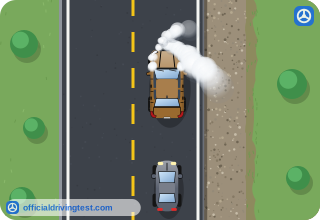
- In the roadway just behind the vehicle
- Off the road where you are safe from traffic
- In the center lane
- Next to the traffic lane
Show answer
Correct answer: Off the road where you are safe from traffic
Never stand in the roadway, and do not change a tire if it puts you in a traffic lane.
Source: South Dakota Driver License Manual (Revised 11/2024), page 55
-
How can you signal an emergency with your vehicle?
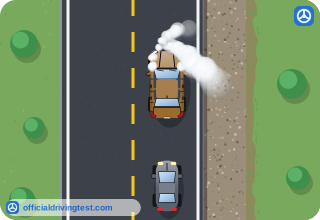
- Flash the headlights twice
- Hold your hand out the window and wave it up and down
- Leave the dome light on
- Raise the hood or tie a white cloth to the antenna or a mirror
Show answer
Correct answer: Raise the hood or tie a white cloth to the antenna or a mirror
A raised hood or a white cloth tells other drivers you are having an emergency.
Source: South Dakota Driver License Manual (Revised 11/2024), page 55
-
Which three options does the manual give for avoiding a crash or reducing its impact?
- Braking, steering, or accelerating
- Braking, honking, or flashing the lights
- Steering, signaling, or downshifting
- Slowing, stopping, or parking
Show answer
Correct answer: Braking, steering, or accelerating
The manual names braking, steering, and accelerating as the three ways to avoid a crash or lessen its impact.
Source: South Dakota Driver License Manual (Revised 11/2024), page 57
-
What does ABS (anti-lock braking system) allow you to do when you stop the vehicle?
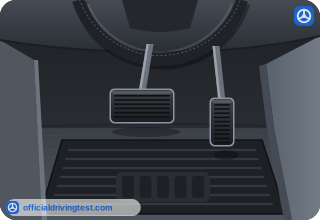
- Stop in a shorter distance on any surface
- Steer without turning the steering wheel
- Stop without skidding and keep steering control
- Brake without pressing the brake pedal
Show answer
Correct answer: Stop without skidding and keep steering control
ABS lets you stop the vehicle without skidding while you keep steering control.
Source: South Dakota Driver License Manual (Revised 11/2024), page 57
-
How should you use the brake pedal in a vehicle with ABS when you need to stop quickly?
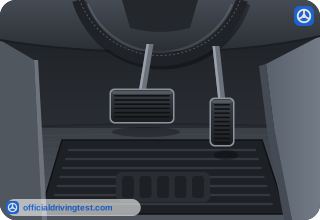
- Release the pedal and steer around the problem
- Press as hard as you can and keep applying pressure
- Press lightly, then release it quickly
- Press once and ease off when the pedal vibrates
Show answer
Correct answer: Press as hard as you can and keep applying pressure
ABS works only if you keep pressure on the brake pedal, so press hard and hold it.
Source: South Dakota Driver License Manual (Revised 11/2024), page 57
-
You brake hard in a vehicle with ABS. The pedal vibrates and you hear a clicking noise. What does this mean?
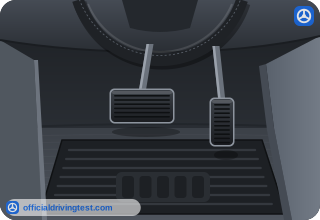
- The brakes are failing and need to be released
- The ABS is broken and has shut off
- One of the tires is about to blow out
- It is normal while the ABS is working
Show answer
Correct answer: It is normal while the ABS is working
Pedal vibration and clicking are normal signs that ABS is working, so keep pressing the pedal.
Source: South Dakota Driver License Manual (Revised 11/2024), page 57
-
When you swerve to steer quickly around a problem, how should you hold the steering wheel?
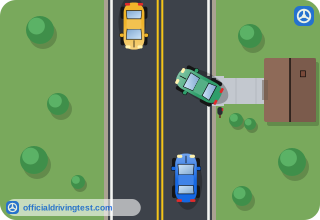
- With one hand while the other hand signals
- Loosely, so the wheel can turn by itself
- Only at the very top of the wheel
- With a good grip using both hands
Show answer
Correct answer: With a good grip using both hands
The manual says to make sure you have a good grip with both hands on the steering wheel.
Source: South Dakota Driver License Manual (Revised 11/2024), page 57
-
When you swerve to avoid a problem, which way should you steer?
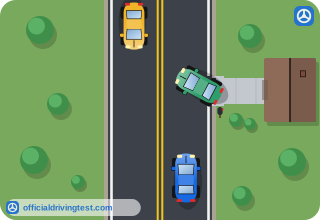
- Toward the problem so the vehicle slows down
- Where you want to go, avoiding other traffic
- Away from the direction you want to go
- Toward the shoulder in every case
Show answer
Correct answer: Where you want to go, avoiding other traffic
You steer where you want to go, taking care not to hit other traffic.
Source: South Dakota Driver License Manual (Revised 11/2024), page 57
-
After you have steered around a problem, what should you do next?
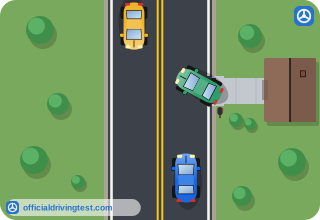
- Keep steering the same way until the vehicle stops
- Brake as hard as you can while still turning
- Steer the opposite way to straighten out and start slowing
- Let go of the wheel so it straightens by itself
Show answer
Correct answer: Steer the opposite way to straighten out and start slowing
Steering the other way straightens the vehicle, helps you regain control, and lets you begin slowing.
Source: South Dakota Driver License Manual (Revised 11/2024), page 57
-
When does the manual say it may be necessary to accelerate to avoid a crash?
- When another vehicle is about to hit you from behind or the side
- When your tires begin to skid on a wet road
- When a vehicle ahead of you stops suddenly in your lane
- When a pedestrian steps into the crosswalk ahead
Show answer
Correct answer: When another vehicle is about to hit you from behind or the side
Accelerating can help when another vehicle is about to hit you from behind or from the side.
Source: South Dakota Driver License Manual (Revised 11/2024), page 57
-
According to the manual, which of these causes a skid?
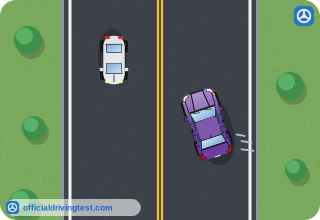
- Traveling too fast for conditions
- Using a turn signal too early
- Driving with the headlights on low beam
- Following another vehicle from too far back
Show answer
Correct answer: Traveling too fast for conditions
The manual says skids are caused by traveling too fast for conditions, stopping too suddenly, or tires that can no longer grip the road.
Source: South Dakota Driver License Manual (Revised 11/2024), page 57
-
If your vehicle begins to skid, what should you do with the brake and the accelerator?
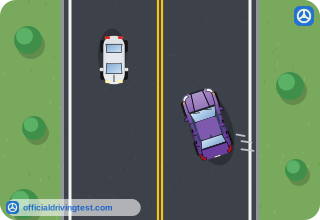
- Press both harder to regain grip
- Turn the steering wheel sharply back and forth
- Release pressure from the brake or accelerator
- Accelerate sharply to pull out of the skid
Show answer
Correct answer: Release pressure from the brake or accelerator
In a skid you ease off the brake or accelerator rather than pressing harder.
Source: South Dakota Driver License Manual (Revised 11/2024), page 57
-
If your vehicle begins to skid, where should you look?
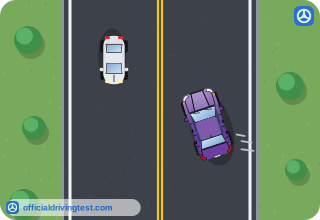
- At the object you might hit
- Where you want to go
- At the pavement just in front of the hood
- At the speedometer
Show answer
Correct answer: Where you want to go
The manual tells you to look where you want the vehicle to go while it skids.
Source: South Dakota Driver License Manual (Revised 11/2024), page 57
-
The wheels of your vehicle leave the paved road surface. What should you do?
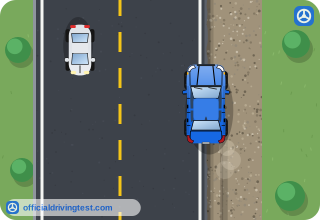
- Steer back onto the pavement as soon as the wheels leave it
- Brake hard and stop with the wheels on the road edge
- Accelerate to get back onto the road as quickly as you can
- Slow down gradually and, when safe, turn back onto the pavement
Show answer
Correct answer: Slow down gradually and, when safe, turn back onto the pavement
Panic steering back onto the pavement can cause a serious crash, so slow down gradually and return when it is safe.
Source: South Dakota Driver License Manual (Revised 11/2024), page 57
-
What does a brake warning light tell you?
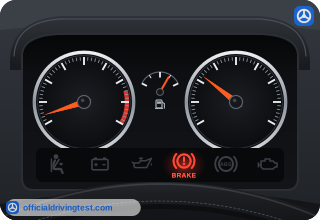
- The brake lights are not working
- The parking brake needs oil
- The tires need air
- The brakes are not working properly
Show answer
Correct answer: The brakes are not working properly
A brake warning light means the brakes are not working properly, and the manual says not to drive when you see it.
Source: South Dakota Driver License Manual (Revised 11/2024), page 58
-
If your brakes stop working while you are driving, how should you apply the parking brake?
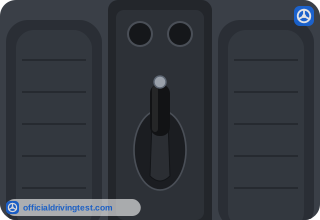
- Quickly and fully, to stop as fast as possible
- Slowly, so you do not lock the rear wheels and cause a skid
- Only after you have reached the shoulder
- Only after you shift into neutral and turn off the engine
Show answer
Correct answer: Slowly, so you do not lock the rear wheels and cause a skid
Applying the parking brake slowly avoids locking the rear wheels; be ready to release it if the vehicle skids.
Source: South Dakota Driver License Manual (Revised 11/2024), page 58
-
If the parking brake does not stop a vehicle whose brakes have failed, what should you do?
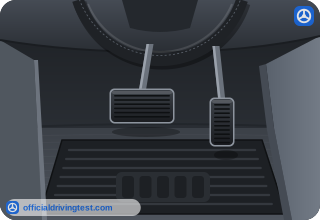
- Keep driving slowly in the right lane with the flashers on
- Shift into reverse to stop the vehicle
- Turn off the engine and look for a safe place to slow to a stop
- Drive to the nearest repair shop at low speed
Show answer
Correct answer: Turn off the engine and look for a safe place to slow to a stop
The manual says to turn off the engine and find a safe place to slow down and stop off the roadway; never keep driving without working brakes.
Source: South Dakota Driver License Manual (Revised 11/2024), page 58
-
What happens when a front tire blows out?
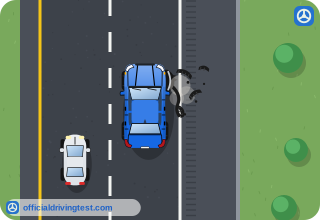
- The vehicle pulls sharply in the direction of the blowout
- The vehicle wobbles but does not pull to either side
- The vehicle pulls sharply away from the blowout
- The vehicle speeds up and the steering wheel locks
Show answer
Correct answer: The vehicle pulls sharply in the direction of the blowout
A front tire blowout makes the vehicle pull sharply toward the side of the blown tire.
Source: South Dakota Driver License Manual (Revised 11/2024), page 58
-
What happens when a rear tire blows out?
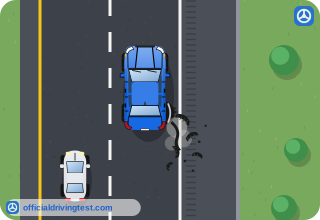
- The vehicle wobbles, shakes, and pulls some in the direction of the blowout
- The vehicle pulls sharply in the opposite direction of the blowout
- The vehicle speeds up and the steering wheel locks in place
- The vehicle keeps straight with no change in how it feels
Show answer
Correct answer: The vehicle wobbles, shakes, and pulls some in the direction of the blowout
A rear blowout makes the vehicle wobble and shake and pull somewhat toward the blown tire.
Source: South Dakota Driver License Manual (Revised 11/2024), page 58
-
If a tire blows out or suddenly goes flat, how should you handle the steering wheel?
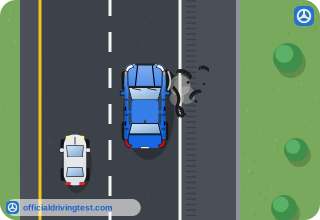
- Steer sharply toward the shoulder
- Loosen your grip so the wheel moves freely
- Grip it firmly and keep the vehicle going straight
- Turn it back and forth to find the grip
Show answer
Correct answer: Grip it firmly and keep the vehicle going straight
You hold the wheel firmly and keep the vehicle going straight after a blowout.
Source: South Dakota Driver License Manual (Revised 11/2024), page 58
-
After a tire blowout, what should you do about braking?
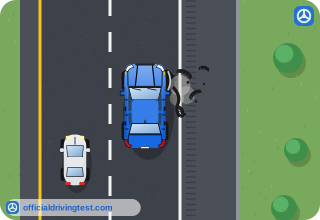
- Brake hard right away so the vehicle stops as quickly as it can
- Do not brake; let the vehicle slow itself, or brake gently if needed
- Brake firmly and steer toward the shoulder at once
- Pump the brake pedal until the vehicle comes to a stop
Show answer
Correct answer: Do not brake; let the vehicle slow itself, or brake gently if needed
The manual says not to brake after a blowout, but to let the vehicle slow on its own or brake gently if needed.
Source: South Dakota Driver License Manual (Revised 11/2024), page 58
-
Where should you stop after a tire blowout?
- In the nearest travel lane so other drivers can see you
- Anywhere on the road, as quickly as possible
- In the left lane with the turn signal on
- Off the road in a safe place with the emergency flashers on
Show answer
Correct answer: Off the road in a safe place with the emergency flashers on
After a blowout you should not stop on the road if you can avoid it; pull off in a safe place and turn on the emergency flashers.
Source: South Dakota Driver License Manual (Revised 11/2024), page 58
-
The engine shuts off while you are driving. What should you expect about the steering wheel?
- It will lock and you will not be able to turn it at all
- It will turn more easily than usual because the engine is off
- It will turn only in the direction you were already going
- It may be difficult to turn, but you can still turn it
Show answer
Correct answer: It may be difficult to turn, but you can still turn it
After a power failure the steering wheel may be hard to turn, but you keep control by gripping it firmly.
Source: South Dakota Driver License Manual (Revised 11/2024), page 58
-
The engine shuts off while you are driving. How should you brake?
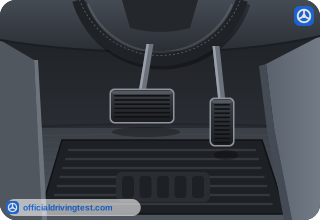
- Hard, to stop as quickly as possible
- With steady pressure on the pedal, not hard
- Not at all until the vehicle rolls to a stop
- By pumping the pedal rapidly
Show answer
Correct answer: With steady pressure on the pedal, not hard
The manual says not to brake hard but to use steady pressure to slow down, then pull off the roadway.
Source: South Dakota Driver License Manual (Revised 11/2024), page 58
-
You cannot restart the engine after it shut off while driving. What should you do?
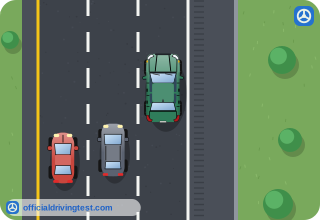
- Keep trying to restart it until the battery is completely dead
- Turn off the flashers and wait for traffic to pass by
- Raise the hood, turn on the emergency flashers, and call for help
- Roll to the center of the road so others can see you
Show answer
Correct answer: Raise the hood, turn on the emergency flashers, and call for help
If the engine will not restart, raising the hood and using the emergency flashers warns others while you call for help.
Source: South Dakota Driver License Manual (Revised 11/2024), page 58
-
The vehicle is accelerating out of control. What should you do?
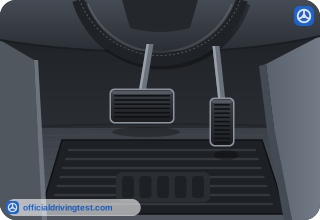
- Turn off the engine, shift to neutral, and search for an escape path
- Brake as hard as you can and keep the engine running until it stops
- Shift into park and steer toward the shoulder
- Pump the accelerator pedal and keep steering straight
Show answer
Correct answer: Turn off the engine, shift to neutral, and search for an escape path
For a stuck accelerator, the manual says to turn off the engine, shift to neutral, and look for an escape path.
Source: South Dakota Driver License Manual (Revised 11/2024), page 58
-
What should you do before driving again after your accelerator pedal stuck?
- Have the pedal repaired at a service center
- Drive only on roads with low speed limits
- Wait until the engine has cooled down
- Replace all four tires
Show answer
Correct answer: Have the pedal repaired at a service center
The pedal should be repaired at a service center before the vehicle is driven again.
Source: South Dakota Driver License Manual (Revised 11/2024), page 58
-
If your vehicle breaks down and you must stop, where should you get it?
- Into the right travel lane near the curb
- Onto the center line so others can see it
- Off the road and away from traffic
- Just over a hill or around a curve
Show answer
Correct answer: Off the road and away from traffic
The manual says to get the vehicle off the road and away from traffic.
Source: South Dakota Driver License Manual (Revised 11/2024), page 58
-
Your vehicle breaks down and you must stop. What should you turn on to show it is disabled?
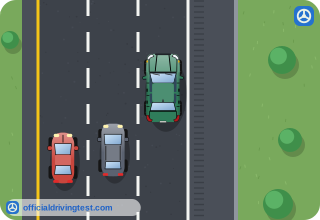
- The high beams
- The emergency flashers
- The right turn signal only
- The interior light only
Show answer
Correct answer: The emergency flashers
The emergency flashers show other drivers that the vehicle is disabled.
Source: South Dakota Driver License Manual (Revised 11/2024), page 58
-
How far behind a disabled vehicle should you place emergency flares?
- About 25 to 50 feet
- About 75 to 100 feet
- About 400 to 500 feet
- About 200 to 300 feet
Show answer
Correct answer: About 200 to 300 feet
Flares placed about 200 to 300 feet behind the vehicle give other drivers time to change lanes.
Source: South Dakota Driver License Manual (Revised 11/2024), page 58
-
What does the manual say to try first when the headlights suddenly go out?
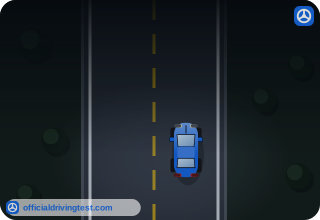
- Stop in the lane and wait for help
- Turn on the high beams
- Speed up to leave the dark area
- Try the headlight switch a few times
Show answer
Correct answer: Try the headlight switch a few times
The first step for headlight failure is to try the headlight switch a few times.
Source: South Dakota Driver License Manual (Revised 11/2024), page 58
-
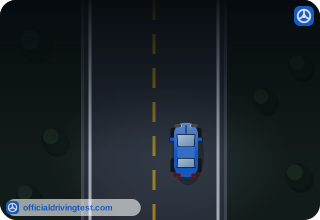
The headlights went out and trying the switch did not help. What should you put on if possible?
- Only the parking lights, since they use little power
- The emergency flashers, turn signals, or fog lights
- Only the interior lights inside the vehicle
- Nothing, so that the battery is saved
Show answer
Correct answer: The emergency flashers, turn signals, or fog lights
If the switch does not work, you use the emergency flashers, turn signals, or fog lights if possible.
Source: South Dakota Driver License Manual (Revised 11/2024), page 58
-
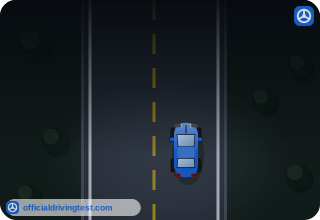
When your headlights go out, how soon should you pull off the road?
- Only after you reach a repair shop
- At the next exit
- As soon as possible
- Only if it is raining or snowing
Show answer
Correct answer: As soon as possible
The manual says to pull off the road as soon as possible after headlight failure.
Source: South Dakota Driver License Manual (Revised 11/2024), page 58
-
When should you stop at an accident scene?
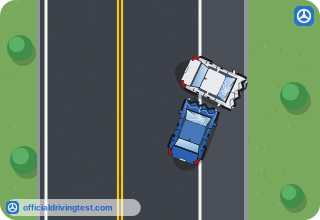
- Only if you are involved or if emergency help has not yet arrived
- Always, so you can see whether anyone needs a ride home
- Whenever the accident is on your side of the road
- Whenever you see people standing in the road ahead
Show answer
Correct answer: Only if you are involved or if emergency help has not yet arrived
You should not stop at an accident unless you are involved or emergency help has not yet arrived; otherwise keep moving.
Source: South Dakota Driver License Manual (Revised 11/2024), page 59
-
Why should you never drive to the scene of an accident just to look?
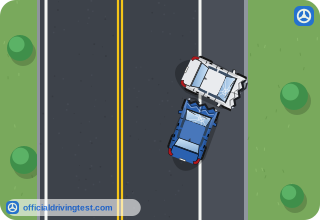
- You may block rescue vehicles from getting through
- You may be required to give a witness statement
- Your license can be suspended for slowing down
- You may be ticketed for stopping near police
Show answer
Correct answer: You may block rescue vehicles from getting through
Sightseers may block the way for police, firefighters, ambulances, tow trucks, and other rescue vehicles.
Source: South Dakota Driver License Manual (Revised 11/2024), page 59
-
What must you do if you are involved in an accident?
- Keep moving if the damage is slight
- Drive to the nearest police station first
- Stop
- Leave once you have photographed the damage
Show answer
Correct answer: Stop
The manual says that if you are involved in an accident, you must stop.
Source: South Dakota Driver License Manual (Revised 11/2024), page 59
-
If you are involved in an accident with a parked vehicle, what must you try to do?
- Move the parked vehicle off the road
- Locate the owner
- Call a tow truck
- Wait for another driver to come
Show answer
Correct answer: Locate the owner
The manual says you must try to locate the owner of a parked vehicle you hit.
Source: South Dakota Driver License Manual (Revised 11/2024), page 59
-
In which situation must the police be notified of an accident?
- Only if a vehicle has to be towed
- Only if the other driver asks for it
- Only if the crash happens on an interstate
- If any person is injured or killed
Show answer
Correct answer: If any person is injured or killed
The police must be notified whenever any person is injured or killed.
Source: South Dakota Driver License Manual (Revised 11/2024), page 59
-
Which items does the manual say a basic vehicle emergency kit has?
- A spare tire, a jack, and a fire extinguisher
- Emergency flares, first aid supplies, and basic tools
- Jumper cables, a tow rope, and a gas can
- Road maps, drinking water, and a flashlight
Show answer
Correct answer: Emergency flares, first aid supplies, and basic tools
The manual says such a kit has emergency flares, first aid supplies, and basic tools.
Source: South Dakota Driver License Manual (Revised 11/2024), page 59
-
Your vehicle is hit from the rear. What should you do with your body?
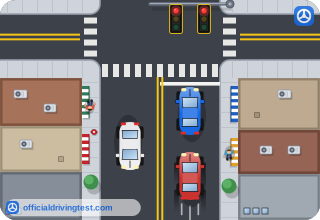
- Press against the seat and put your head against the head restraint
- Lean forward and put your head down near the steering wheel
- Turn toward the door and brace your arms on the dashboard
- Slide down in the seat so your head is below the headrest
Show answer
Correct answer: Press against the seat and put your head against the head restraint
When hit from behind, your body is thrown backward, so you press against the seat back and keep your head against the head restraint.
Source: South Dakota Driver License Manual (Revised 11/2024), page 59
-
When your vehicle is hit from the rear, why should you be ready to apply the brakes?
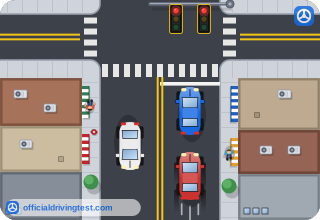
- So you will not be pushed into another vehicle
- So the vehicle behind you can stop in time
- So the air bags will inflate
- So the head restraint can lock in place
Show answer
Correct answer: So you will not be pushed into another vehicle
Being ready to brake keeps you from being pushed into another vehicle after a rear impact.
Source: South Dakota Driver License Manual (Revised 11/2024), page 59
-
Your vehicle is hit from the side. What helps keep you behind the wheel?
- The front air bags in the dashboard
- The head restraint behind your head
- The lap and shoulder belts
- The armrest on the door beside you
Show answer
Correct answer: The lap and shoulder belts
Front air bags will not help in a side hit; the lap and shoulder belts keep you behind the wheel.
Source: South Dakota Driver License Manual (Revised 11/2024), page 59
-
When your vehicle is hit from the side, toward which side is your body thrown?
- The side opposite the hit
- The side that is hit
- Straight forward
- Straight backward
Show answer
Correct answer: The side that is hit
Your body is thrown toward the side of the vehicle that is struck.
Source: South Dakota Driver License Manual (Revised 11/2024), page 59
-
If your vehicle is about to be hit from the front, what should you try to have?
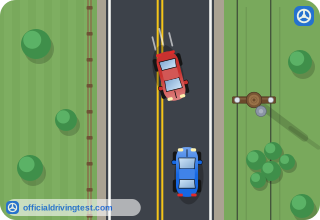
- A head-on hit so the air bag takes the force
- A full stop before the other vehicle reaches you
- A hit from behind instead of from the front
- A glancing blow rather than being struck head on
Show answer
Correct answer: A glancing blow rather than being struck head on
Turning the vehicle so the impact is a glancing blow is better than a head-on collision.
Source: South Dakota Driver License Manual (Revised 11/2024), page 59
-
What happens to an air bag after it inflates in a crash?
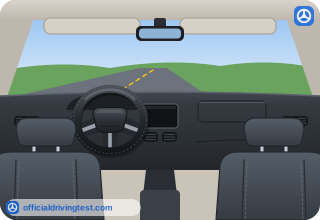
- It stays inflated until the engine is turned off
- It stays inflated for several minutes
- It inflates again in a second crash
- It deflates following the crash
Show answer
Correct answer: It deflates following the crash
The air bag deflates after the crash, so you must be ready to keep the vehicle from hitting something else.
Source: South Dakota Driver License Manual (Revised 11/2024), page 59
-
After a crash, what should you do if your vehicle can still move?
- Leave it where it stopped so police can see the crash position
- Get it off the road so it does not block traffic or cause another crash
- Move it only after your insurance company gives approval
- Drive it straight home before calling anyone
Show answer
Correct answer: Get it off the road so it does not block traffic or cause another crash
A vehicle that can move should be taken off the road so it does not block traffic or cause another crash.
Source: South Dakota Driver License Manual (Revised 11/2024), page 59
-
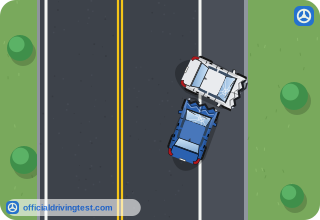
At an accident scene, why should you not stand or walk in traffic lanes?
- You could damage evidence
- You could be asked to direct traffic
- You could be struck by another vehicle
- You could block the emergency crews
Show answer
Correct answer: You could be struck by another vehicle
People standing in traffic lanes can be struck by other vehicles.
Source: South Dakota Driver License Manual (Revised 11/2024), page 59
-
At an accident scene, what should you do with the ignition of wrecked vehicles?
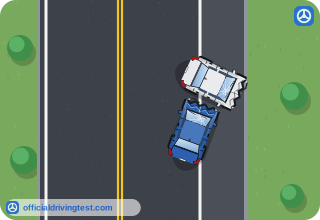
- Turn it off
- Leave it on so the lights stay on
- Restart each engine to check for damage
- Turn it on only to move the vehicles
Show answer
Correct answer: Turn it off
The manual says to turn off the ignition of wrecked vehicles at an accident scene.
Source: South Dakota Driver License Manual (Revised 11/2024), page 59
-
Why should you not smoke around wrecked vehicles?
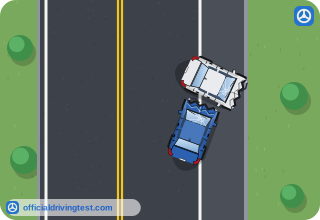
- Fuel could have spilled, and fire is a real danger
- Smoke can hide the vehicles from approaching drivers
- Smoking near a vehicle is prohibited in every case
- Smoke can make injured people cough
Show answer
Correct answer: Fuel could have spilled, and fire is a real danger
Spilled fuel makes fire a real danger near wrecked vehicles.
Source: South Dakota Driver License Manual (Revised 11/2024), page 59
-
At an accident scene, what should you do about power lines that are down with wires in or on the road?
- Move the wires off the road with a dry stick
- Drive over them quickly
- Do not go near them
- Pull the wires away from injured people
Show answer
Correct answer: Do not go near them
Downed power lines are dangerous, so stay away from them.
Source: South Dakota Driver License Manual (Revised 11/2024), page 59
-
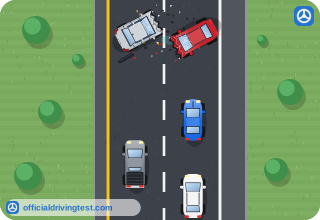
How should you alert other traffic to an accident ahead?
- Stand in the road and wave your arms
- Use flares or other warning devices
- Sound your horn continuously until help arrives
- Turn off all vehicle lights to avoid glare
Show answer
Correct answer: Use flares or other warning devices
Flares or other warning devices warn traffic so that no one else is involved in the crash.
Source: South Dakota Driver License Manual (Revised 11/2024), page 59
-
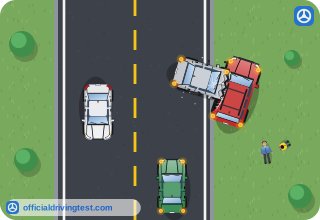
Someone is injured at a crash scene. What should you make sure of when getting help?
- The injured person has been moved into your own vehicle
- Another driver has made the call before you do anything
- Your insurance company has been told about the crash
- The police and emergency medical or rescue squad have been called
Show answer
Correct answer: The police and emergency medical or rescue squad have been called
You must make sure the police and emergency medical or rescue squad have been called.
Source: South Dakota Driver License Manual (Revised 11/2024), page 59
-
When may you move an injured person?
- Whenever they ask to be moved to a more comfortable place
- As soon as you have finished checking for breathing and bleeding
- Whenever emergency help is taking a long time to arrive
- Only if they are in a burning vehicle or other immediate danger
Show answer
Correct answer: Only if they are in a burning vehicle or other immediate danger
Moving a person can make injuries worse, so it is only done for burning vehicles or other immediate danger.
Source: South Dakota Driver License Manual (Revised 11/2024), page 59
-
At a crash scene, whom should you help first?
- The person who seems the most upset or frightened
- Anyone who is not already walking and talking
- The driver of the other vehicle in the crash
- The person who is standing closest to your vehicle
Show answer
Correct answer: Anyone who is not already walking and talking
The manual says to first help anyone who is not already walking and talking.
Source: South Dakota Driver License Manual (Revised 11/2024), page 59
-
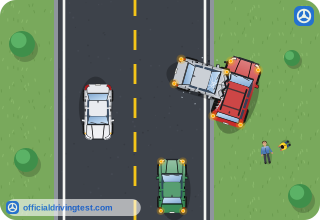
In what order do you check an injured person?
- Check for bleeding, then check for breathing
- Check for broken bones, then for bleeding
- Check for breathing, then check for bleeding
- Check for shock, then for broken bones
Show answer
Correct answer: Check for breathing, then check for bleeding
The manual says to check for breathing first and then for bleeding.
Source: South Dakota Driver License Manual (Revised 11/2024), page 59
-
How should you treat bleeding from an injured person?
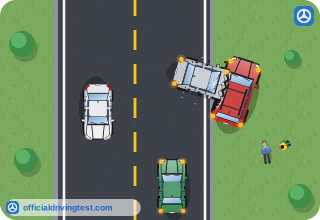
- Apply pressure directly on the wound with your hand or a cloth
- Raise the person’s head and give them a little water
- Wait for emergency help before you touch the wound at all
- Clean the wound and leave it uncovered in the open air
Show answer
Correct answer: Apply pressure directly on the wound with your hand or a cloth
Direct pressure on the wound can almost always stop or slow even severe bleeding.
Source: South Dakota Driver License Manual (Revised 11/2024), page 59
-
An injured person asks for a drink. What should you do?
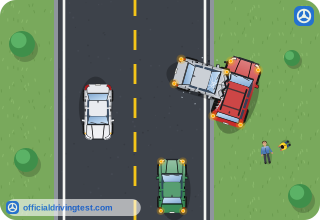
- Give them nothing to drink, not even water
- Give them small sips of water only
- Give them water only if they are awake and talking
- Give them a warm drink to keep them warm
Show answer
Correct answer: Give them nothing to drink, not even water
The manual says not to give injured persons anything to drink, not even water.
Source: South Dakota Driver License Manual (Revised 11/2024), page 59
-
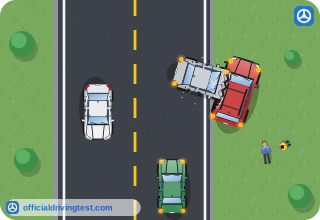
How can you help prevent an injured person from going into shock?
- Have them stand up and walk around the scene
- Pour cool water over their face and head
- Cover them with a blanket or coat to keep them warm
- Sit them up and keep them talking to you
Show answer
Correct answer: Cover them with a blanket or coat to keep them warm
Keeping the injured person warm with a blanket or coat helps prevent shock.
Source: South Dakota Driver License Manual (Revised 11/2024), page 59
-
After an accident, whose names and addresses should you get?
- Only the other drivers who were involved in the crash
- All people involved, any witnesses, and injured persons
- Only people who were injured or killed in the crash
- Only the owners of vehicles that were damaged
Show answer
Correct answer: All people involved, any witnesses, and injured persons
The manual says to get names and addresses of everyone involved, any witnesses, and injured persons.
Source: South Dakota Driver License Manual (Revised 11/2024), page 60
-
Which of these is part of the information you should exchange with other drivers in a crash?
- Your Social Security number and date of birth
- Your employer’s name and your work address
- Your vehicle’s purchase price and loan balance
- Insurance company and policy number, if available
Show answer
Correct answer: Insurance company and policy number, if available
The manual lists name, address, driver license number, vehicle information, and insurance company and policy number if available.
Source: South Dakota Driver License Manual (Revised 11/2024), page 60
-
What should you record about the vehicles involved in a crash?
- The tread depth of each tire
- The mileage on each vehicle
- The age of each battery
- Any damage to them
Show answer
Correct answer: Any damage to them
The manual says to record any damage to the vehicles involved.
Source: South Dakota Driver License Manual (Revised 11/2024), page 60
-
You hit a parked vehicle and cannot find its owner. What should you leave?
- A note only if the damage is over a set dollar amount
- A visible note with how to reach you and the date and time
- Nothing, if you move the parked vehicle to a safe place
- Nothing, if you photograph the damage and no one is around
Show answer
Correct answer: A visible note with how to reach you and the date and time
The note should be left where it can be seen and tell the owner how to reach you and the date and time of the accident.
Source: South Dakota Driver License Manual (Revised 11/2024), page 60
-
If there is an injury or a death, when does the law require you to give the police information on the accident?
- Only after you have notified your insurance company
- At the end of the following week
- At the time of the accident
- Within 30 days, by mail
Show answer
Correct answer: At the time of the accident
The law requires you to give the police information on the accident at the time of the accident.
Source: South Dakota Driver License Manual (Revised 11/2024), page 60
-
When should you notify your own insurance company after an accident?
- As soon as possible
- Only if the other driver files a claim
- Only after the police finish their report
- Only after the vehicle has been repaired
Show answer
Correct answer: As soon as possible
The manual says to notify your own insurance company as soon as possible.
Source: South Dakota Driver License Manual (Revised 11/2024), page 60
-
You are injured in an accident and cannot complete the report. Who may file it?
- Someone else may file it for you
- No one; the report is waived
- Only a police officer
- Only your insurance company
Show answer
Correct answer: Someone else may file it for you
If you are injured and unable to complete the report, someone may file it for you.
Source: South Dakota Driver License Manual (Revised 11/2024), page 60
-
You damage an unattended vehicle and cannot find its owner. Whom should you contact?
- Only your own insurance company
- The nearest tow truck company
- The nearest law enforcement agency
- The state vehicle registration office
Show answer
Correct answer: The nearest law enforcement agency
You contact the nearest law enforcement agency and leave your information where the owner can find it.
Source: South Dakota Driver License Manual (Revised 11/2024), page 60
-
Which item must you leave on the paper after damaging an unattended vehicle?
- Your date of birth
- Your driver license number
- Your employer’s name
- Your vehicle’s purchase date
Show answer
Correct answer: Your driver license number
The paper must carry your name, address and phone number, driver license number, license plate number, date and time, and the damage.
Source: South Dakota Driver License Manual (Revised 11/2024), page 60
-
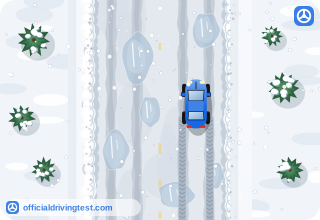
What should you do if winter conditions are too bad for travel?
- Drive in the center of the road
- Wait for a snowplow and follow it closely
- Drive well above the posted speed limit
- Stay home
Show answer
Correct answer: Stay home
The manual says to plan extra time, consider an alternate route, and stay home if conditions are too bad.
Source: South Dakota Driver License Manual (Revised 11/2024), page 67
-
What could happen if you get stuck while traveling on a closed road?
- You will be towed home free of charge by the state
- Emergency services will always reach you right away
- You could be ticketed and held accountable for rescue costs
- Nothing, because closed roads are patrolled by police
Show answer
Correct answer: You could be ticketed and held accountable for rescue costs
Emergency services may not reach you quickly, and you could be ticketed and held responsible for costs of rescuing you, your passengers, or the vehicle.
Source: South Dakota Driver License Manual (Revised 11/2024), page 67